83 Jean St, Grange QLD 4051
Mon-Fri 07:30 AM - 04:00 PM - Sat - 8:00 - 12 - Sunday Closed

On a Brisbane afternoon when the air feels heavy before lunch and the bedrooms are already warming up, the air conditioner stops being a convenience. It becomes the one system in the house everyone notices immediately. You hear the indoor fan, but the room never quite cools. Or the unit starts dripping. Or it keeps running and running while the house still feels sticky.
That's usually the point people start searching for ac maintenance services. Not because they suddenly love home maintenance, but because Brisbane's heat and humidity don't leave much margin for a struggling system. A unit that's slightly dirty, partly blocked, or developing an electrical issue can limp along in mild weather and then show its real problems when the next hot spell arrives.
From an electrician's point of view, proper AC maintenance isn't about ticking a generic “annual service” box. It's about keeping the system safe, keeping airflow where it should be, and catching the sort of faults that turn into expensive breakdowns at the worst time.
In Brisbane, the failure rarely happens on a mild day. It happens when the system has been running hard for hours, the house has soaked up heat, and everyone's relying on the unit to pull humidity out of the air as much as cool it.
That's why maintenance matters. It shifts the job from reactive repair to preventative care. Instead of waiting for a capacitor to fail, a drain to block, or a dirty coil to choke performance, a proper service deals with the conditions that cause those problems in the first place.
The reliance is real. In 2021, 74.9% of Australian households had a non-portable air conditioner, according to Australian household air conditioning data referenced here. In Brisbane, where systems often run for long periods, that installed base means maintenance isn't a niche service. It's part of basic summer readiness.
A few local conditions change the equation:
Practical rule: If your AC only gets attention once it stops cooling, you're usually paying for deferred maintenance plus urgent repair.
I see this most often with homes where the filters haven't been cleaned for too long, the outdoor unit is buried in debris, or the owner has been told the system “just needs gas” without anyone diagnosing why performance dropped. In many cases, the problem wasn't a dramatic failure. It was a gradual loss of airflow, heat transfer, or electrical reliability.
For homeowners in places like Grange, Windsor, and across North Brisbane, regular maintenance is what keeps a normal summer inconvenience from becoming a house that's uncomfortable, damp, and difficult to cool when you need it most.
A proper service should look more like a system health check than a quick wipe-over. Good ac maintenance services combine cleaning, testing, and diagnosis. If a technician only glances at the unit, sprays something on the coil, and leaves, that's not much help when the underlying issue is low airflow, a drain problem, or an electrical fault developing in the outdoor unit.
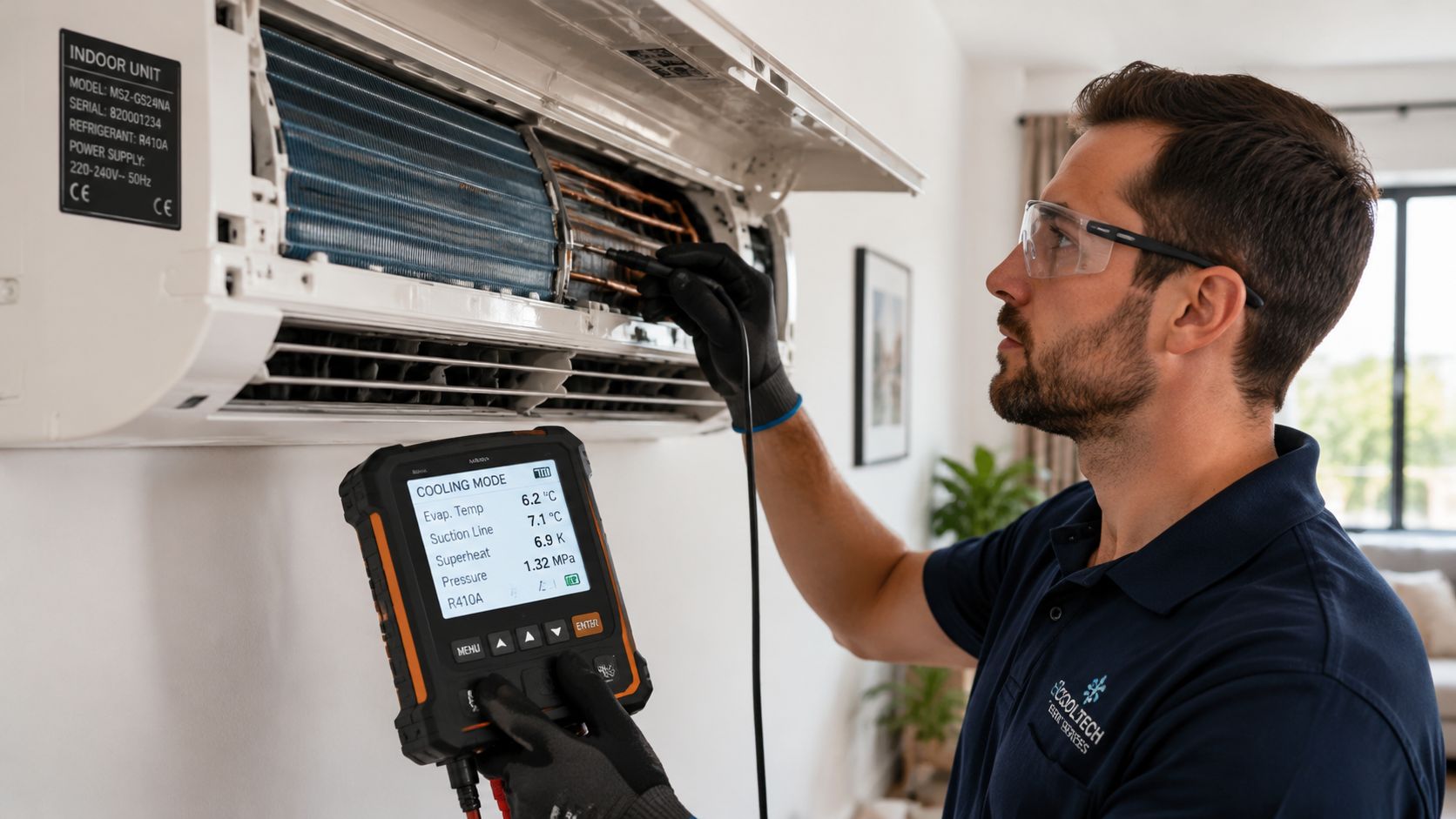
Most problems homeowners notice start at the indoor unit. Poor cooling, musty odours, water leaks, and weak airflow often trace back to issues here.
A technician should commonly inspect and service:
Before the visit, it helps if you make access easy. Move furniture away from the indoor head unit, clear space around the outdoor condenser, and let the technician know about any recent symptoms such as dripping, noise, tripping, or rooms not cooling evenly.
The outdoor unit does the hard work of rejecting heat. If it's dirty, electrically stressed, or short on airflow, the whole system loses capacity.
A competent service should include attention to:
A clean-looking unit can still have underlying faults. Performance problems often show up in measurements before they become obvious by eye.
That's why the technical side matters. A thorough AC service involves more than just a visual check. Competent technicians verify refrigerant operating pressures, measure voltage and current on motors, and test thermostat calibration, as outlined in these NREL service guidelines. That diagnostic approach is what helps uncover small leaks, electrical resistance, or abnormal operation before they turn into major component failures.
Professional work distinguishes itself from basic cleaning. Refrigerant pressures, motor current draw, and control performance tell you how the system is behaving under load. Without those checks, people end up replacing parts based on hunches or getting sold a refrigerant top-up when the actual issue sits elsewhere.
If you want a more specific look at what's involved with a wall-mounted split system, DLG Electrical's guide to split system service work is worth reviewing before booking.
Servicing isn't booked out of enjoyment for maintenance. Instead, the motivation is to ensure the AC cools properly, keeps the house feeling clean and dry, and avoids a breakdown in the middle of a hot week. Those are sensible reasons. They're also exactly where regular servicing pays off.
When filters clog and coils foul up, the system has to run longer to hit the same set temperature. That extra runtime isn't abstract. It shows up in power use and in the amount of strain placed on the compressor and fan motors.
Dirty filters and fouled coils force an AC system's compressor to run longer and work harder to reach the thermostat's setpoint, which increases electricity use and wear on components, according to this maintenance guidance from ENERGY STAR.
For Brisbane homes, that matters more than people think. Humid air is harder to condition well, and once airflow starts dropping, comfort falls away before the unit fully fails. You notice rooms feeling clammy, not just warm.
A neglected system often tells on itself by smell before anything else. The odour can be stale dust, dampness, or the early signs of mould growth around the coil or drain area.
Regular servicing helps because it deals with the places moisture and grime collect. That won't turn an AC into a medical device, but it does reduce the conditions that let dirt, damp residue, and odours build up inside the unit.
The biggest benefit isn't glamorous. It's reliability.
When your system has already been checked, cleaned, and tested, you're less likely to discover a preventable issue during a heatwave, when technicians are busy and every uncomfortable house in the suburb is trying to book the same day.
Worth remembering: The best service visit is usually the one that prevents a repair call later.
There's also a broader household energy angle here. Homeowners trying to reduce electricity waste often look beyond air conditioning alone, in much the same way they might compare bigger energy decisions such as assessing Florida solar panel profitability. The principle is similar. The equipment you already own needs to run efficiently before any wider energy strategy makes sense.
Homeowners can and should do a few basic checks themselves. That's not a substitute for professional servicing, but it does help keep the system in better shape between visits and can prevent avoidable airflow problems.
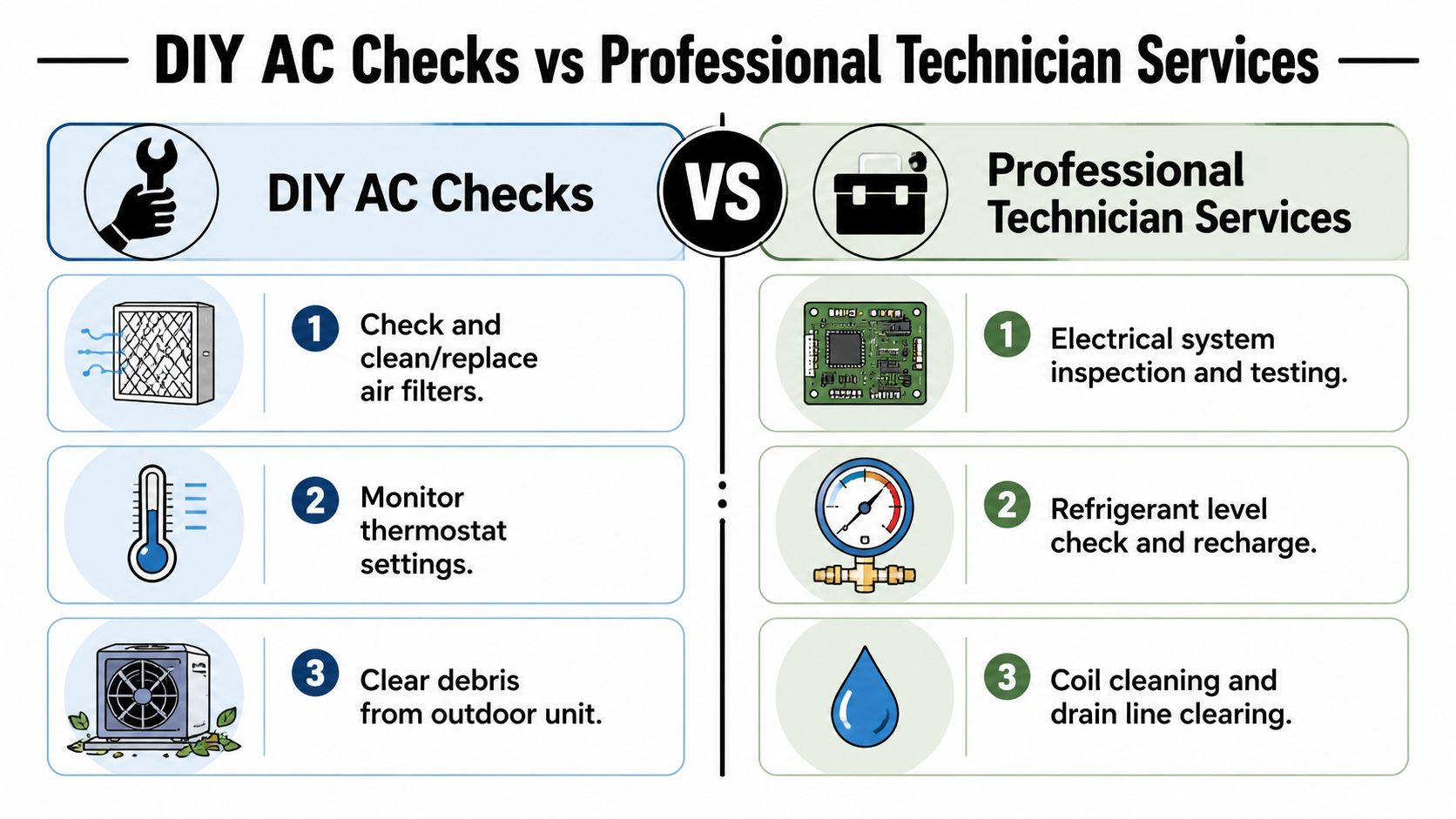
The safe homeowner tasks are simple and mostly visual.
Those tasks are worthwhile because they address the most common day-to-day causes of poor performance. A blocked filter alone can drag a system down quickly.
Once the job involves refrigerant, internal electrics, control testing, or proper performance diagnosis, it's no longer DIY territory.
That includes:
Here's the simple comparison.
| Maintenance Task | DIY (Homeowner) | Professional (Licensed Technician) |
|---|---|---|
| Check and clean basic air filters | Yes | Yes |
| Confirm thermostat mode and settings | Yes | Yes |
| Remove debris from around outdoor unit | Yes | Yes |
| Inspect internal electrical components | No | Yes |
| Measure refrigerant pressures | No | Yes |
| Diagnose poor cooling performance | Limited | Yes |
| Clear complex drain blockages | Limited | Yes |
| Test motor voltage and current | No | Yes |
A quick visual guide can help make that distinction clearer before you decide what to handle yourself.
If the unit is icing up, tripping power, leaking repeatedly, or running without cooling properly, homeowner checks are no longer enough. At that stage, more cleaning won't fix a refrigerant issue, failing capacitor, damaged sensor, or electrical resistance at a connection.
If your system has already crossed into fault symptoms, it's better to move from maintenance to proper diagnosis, which is where information on air conditioner repair problems becomes more relevant than another DIY checklist.
Two fair questions are commonly asked. How often should the system be serviced, and what changes the price? The honest answer is that Brisbane homes don't all use air conditioning the same way, so the schedule and cost depend on load, environment, and system type.
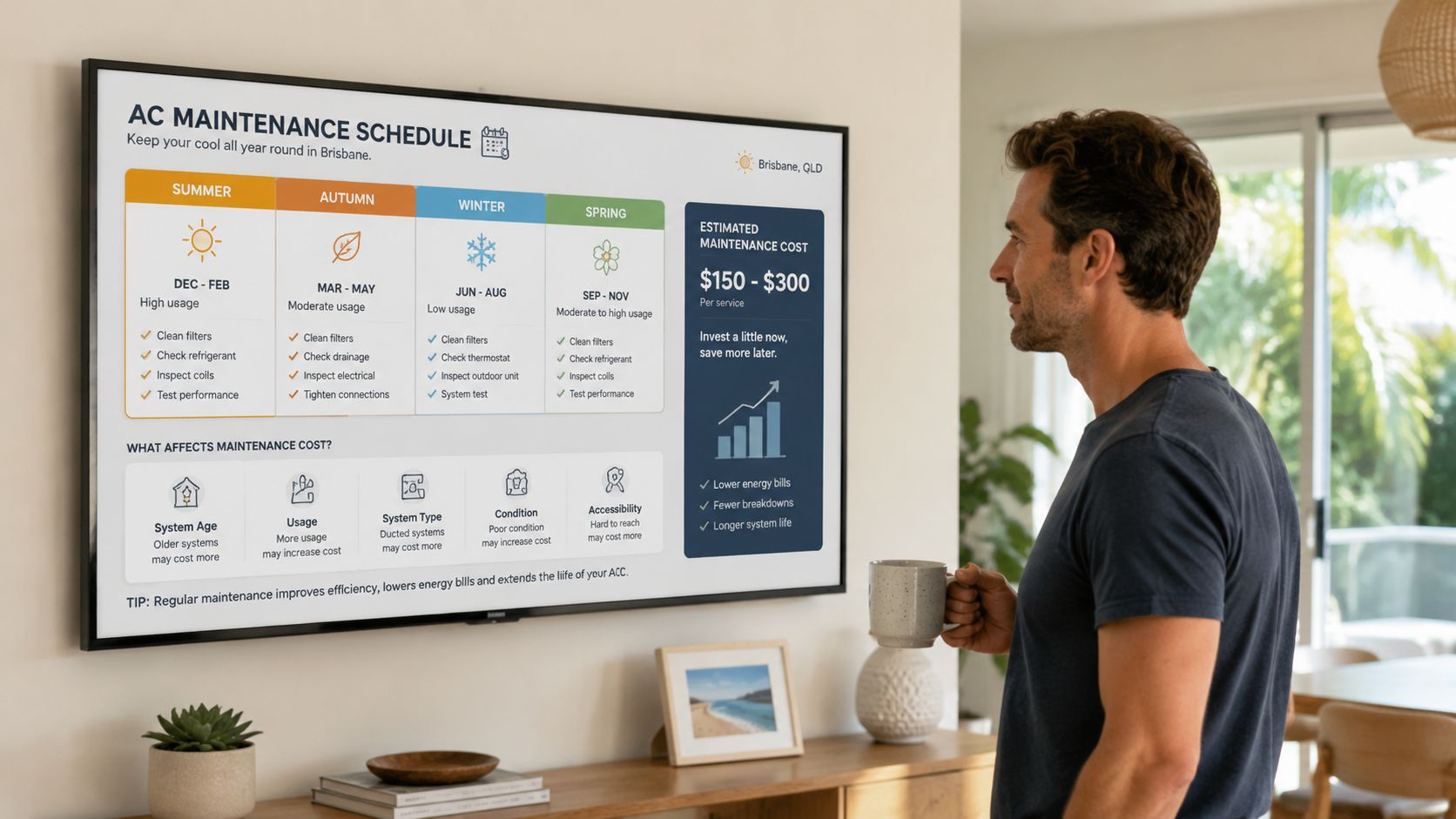
A good baseline for many homes is a regular professional service cycle paired with homeowner filter checks in between. But “once a year” isn't a magic rule.
Homes that usually need more attention include:
The bigger point is readiness. In Australia, air conditioning is a primary driver of peak household electricity demand during heat events, and poor airflow from blocked filters can increase running costs, as noted in this discussion of AC use during heat events. In Brisbane, servicing is less about following a calendar and more about making sure the system is ready before the worst weather hits.
Pricing varies because not every job is the same. A straightforward split system service is different from a large ducted system with access issues, neglected components, or faults that need repair on top of maintenance.
Cost usually moves based on:
Servicing is usually cheapest when the system is still basically healthy. Once maintenance has been skipped for too long, the job often becomes cleaning plus diagnosis plus repair.
If you're already planning seasonal upkeep around the house, a broader Sparkle Tech home maintenance resource can be useful for lining AC servicing up with other practical tasks such as drainage, cleaning, and exterior checks.
A good technician doesn't just arrive with gauges and a ladder. They explain what they found, tell you what matters now versus later, and don't hide behind vague phrases like “it just needs a regas” when there's no proper diagnosis behind it.
For North Brisbane homeowners, especially in suburbs like Grange and Windsor, choosing well matters because local climate conditions punish poor workmanship. If drains aren't cleared properly, humidity exposes it. If electrical checks are skipped, summer load exposes it.

Start with the essentials.
A short phone call usually tells you a lot. Ask:
A reliable technician won't be annoyed by those questions. They'll answer them clearly.
Not every cheap service is bad, but some patterns should make you pause.
| Good sign | Red flag |
|---|---|
| Explains what will be inspected and tested | Gives only a vague “service special” |
| Provides licence details when asked | Avoids credential questions |
| Notes repair issues separately from routine servicing | Bundles everything into unclear charges |
| Talks through options | Pressures you into immediate decisions |
| Gives written records or clear verbal findings | Leaves with no useful explanation |
If a technician can't explain why the unit is underperforming, they probably haven't diagnosed it properly.
Local presence matters too. A contractor who works regularly in North Brisbane is more likely to understand common installation layouts, weather exposure, and the way high humidity affects drains, wall splits, and outdoor units over time.
Yes. Modern inverter systems are efficient and generally smarter in how they modulate output, but they're not self-maintaining. Many homeowners assume modern inverter systems are “set and forget,” but they still require regular inspection of condensate drains, coils, fans, and control boards to prevent costly failures, as noted in this summary of modern AC servicing issues.
In practice, newer systems often need better diagnostics, not less attention.
No. Refrigerant doesn't get “used up” like fuel. If the system is low, that points to a leak or another fault that needs diagnosis. Adding refrigerant without addressing the cause is poor practice and usually delays a proper repair.
That's one reason experienced technicians focus on measurements and fault-finding rather than defaulting to “gas top-up” language.
Mould risk often starts where moisture sits too long. Inside an AC system, that usually means condensate problems, grime on the indoor coil, or poor drainage.
Servicing helps by keeping the drain path clear, cleaning the areas where residue builds up, and spotting water issues before they become visible on the wall or obvious in the smell of the room. If your unit is already dripping indoors, this guide to why an aircon is leaking water can help you understand the likely causes.
You can, but that's how hidden issues become expensive ones. Many systems still produce cool air while running inefficiently, carrying dirt on the coil, or developing drain and electrical problems. By the time cooling drops sharply, the system may already be under unnecessary strain.
Good maintenance isn't about doing more work than needed. It's about doing the work that actually protects airflow, drainage, electrics, and reliable cooling.
If your air conditioner is running longer than it should, smelling musty, leaking, or not coping with Brisbane heat the way it used to, it's worth having it checked properly. DLG Electrical provides electrical and air conditioning support for Brisbane homes, including the kind of practical fault-finding and maintenance that helps keep systems safe, efficient, and ready for summer.

Master Electrician with over 30 years of experience. Founded DLG Electrical in 2005 after international project work including electrical installations at Stamford Bridge Stadium, London(Home of Chelsea FC).

Local Electricians that can fix all Electric Hot water Systems.
Motion sensor lights are a versatile addition to any home, offering nu
