83 Jean St, Grange QLD 4051
Mon-Fri 07:30 AM - 04:00 PM - Sat - 8:00 - 12 - Sunday Closed
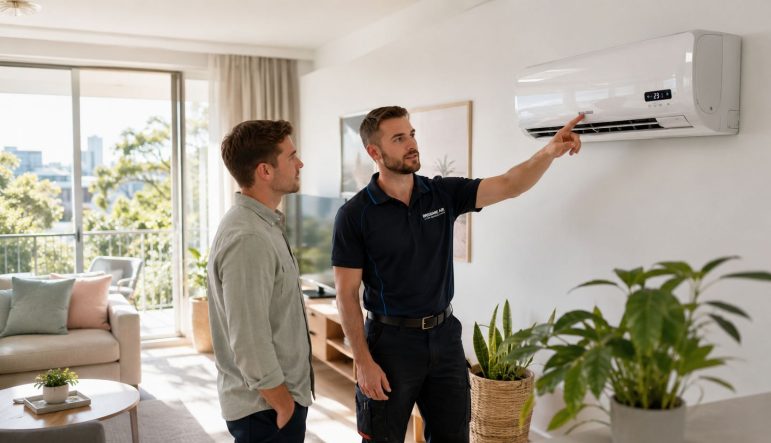
You're usually standing in the same spot when the decision lands. The quote's in hand, summer's building, and the old fan in the loungeroom isn't cutting it anymore. In Brisbane, that's when air con installation stops being a “someday” upgrade and becomes a practical fix for heat, humidity, sleep, and sanity.
A lot of homeowners still treat the install itself like a black box. Buy the unit, book the job, hope for the best. That's the part I'd push back on, because the decisions you can still control on install day, placement, drainage, electrical capacity, and who signs off the work, are the ones that decide whether the first summer feels easy or turns into callbacks and nuisance trips.
A Brisbane homeowner usually doesn't start with a spreadsheet. They start with a hot night, a bedroom that won't cool down, and a partner who's had enough of the pedestal fan rattling away at 2 a.m. By the time they're calling for air con installation, the core question is no longer whether the house needs cooling. It is where the unit should go, what type suits the home, and how to avoid a job that looks fine on day one but turns into annoyance by January.
That shift is visible in household cooling habits across Australia. The ABS trend summary shows fixed cooling appliances became far more common over time, while portable units and evaporative coolers stayed smaller parts of the mix (ABS trend summary). The point for Brisbane owners is simple, fixed systems are now the default choice because they handle heat better and usually make more sense for daily use.
Queensland homes live with heat for long stretches, and Brisbane's mix of older timber houses, newer infill builds, and tight suburban blocks makes cooling decisions more personal than most national guides admit. Homes without ducting often need a retrofit approach, while renovated properties may already be set up for a more integrated system. For a practical look at what that choice does to the bill, this DLG Electrical guide on the cost of running aircon gives a useful starting point.
Practical rule: if a Brisbane home feels uncomfortable for months, not days, cooling isn't a luxury add-on anymore. It becomes part of how the house works.
Homeowners comparing options outside Queensland can also learn from other hot-climate markets, like browse 2026 AC systems for Arizona, because the same basic truth still applies. Climate shapes the install, not the other way around. In Brisbane, that usually means thinking less about whether air con is worth it and more about what type of install will still make sense after the first sticky summer.
The right system usually falls out of the house layout before it falls out of brand loyalty. In Brisbane, the three systems that matter most on install day are wall split, multi-split, and ducted. A good installer starts by matching the system to room count, ceiling access, and how much of the home you want to cool at once.
A single wall split is the clean answer for one main living area, a master bedroom, or a space where you want independent control without tearing up the rest of the house. A multi-split makes sense when you want several rooms cooled but don't want a separate outdoor unit for each one. Ducted suits whole-home comfort, especially in finished homes where roof access is available and the owner wants a consistent temperature across multiple rooms.
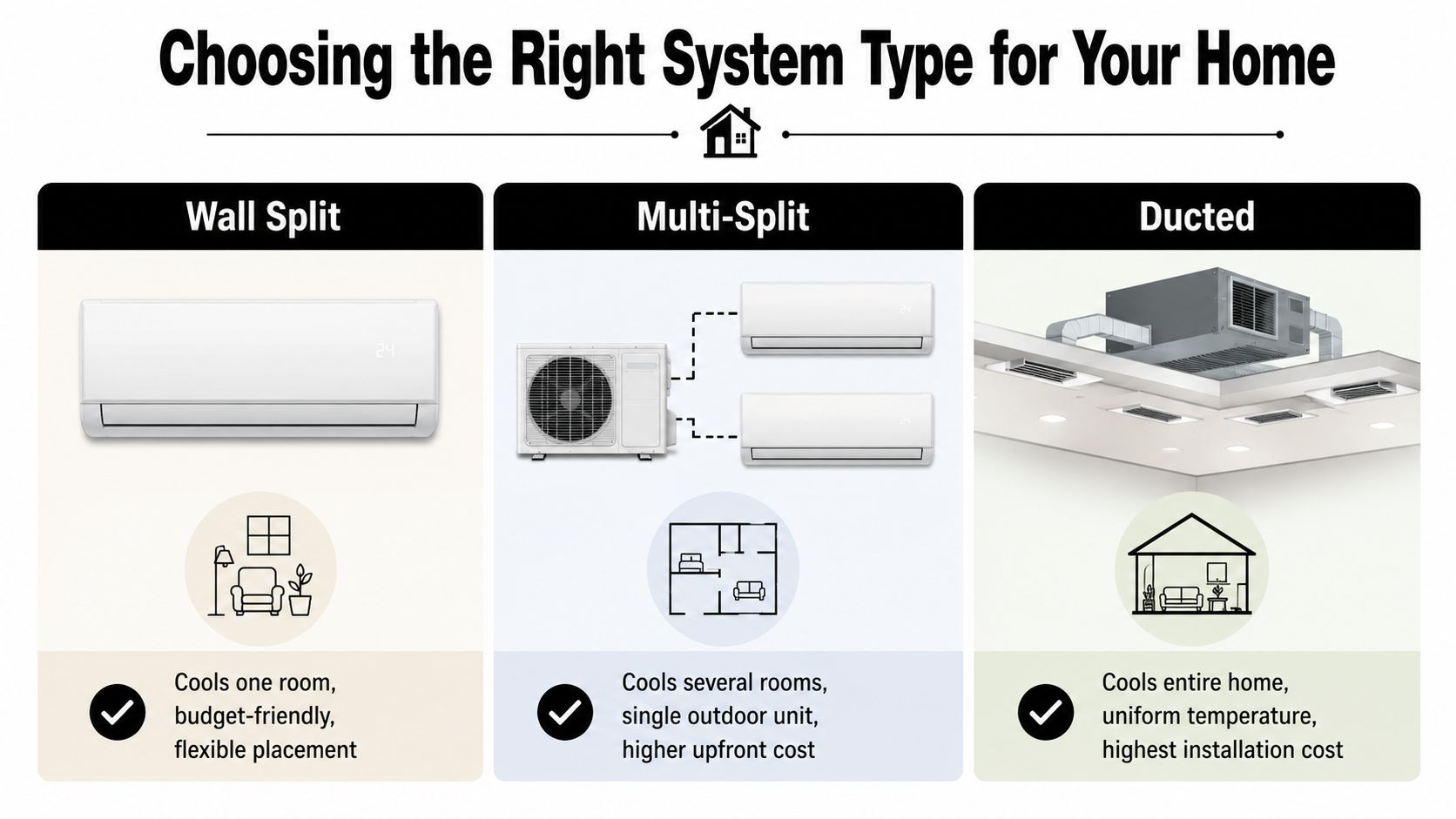
If you're only cooling one or two rooms, a split system is usually the most practical place to start. If you've got several bedrooms but want some independence between them, a multi-split can avoid clutter outside while still giving separate zones. If the goal is to treat the whole house as one conditioned space, ducted is the option to discuss, provided the roof cavity, structure, and access all cooperate.
Older Queenslanders often expose the main constraint fast, roof space. A lot of homeowners arrive thinking ducted is the “proper” answer, then discover the ceiling cavity or layout makes it awkward, expensive, or not worth forcing. That's why a careful site inspection matters more than the brochure.
For a plain-English overview of how the systems differ mechanically, this DLG Electrical explanation of how an air conditioner works is a handy companion read. It helps you understand why some units are easier to fit into older homes and why others need more space, more planning, and more electrical support.
A good quote should leave you with one clear shortlist, not six confusing options. If it doesn't, the installer probably hasn't looked hard enough at the house.
The part most homeowners never see is often the part that causes the biggest headache later. An air con system is not just a box on the wall, it adds load to the electrical system, and Brisbane homes, especially older ones, do not always have a switchboard ready to take that load cleanly. A licensed electrician earns the fee by checking that the installation will work safely in the house as it stands.
A proper install normally needs a dedicated circuit, RCD protection, and an outdoor isolator positioned so the unit can be safely disconnected for maintenance or fault finding. Those are required parts of safe, compliant work, and they help reduce nuisance tripping, overheating, and unsafe servicing conditions. If you want a broader sense of how power arrangements can change the job, this DLG Electrical guide on single phase and three phase power is useful background.
The electrical side is not just about pulling cable. The electrician should assess the existing switchboard, confirm the circuit path, check supply capacity, and make sure the unit can start and run without stressing the house wiring. HVAC procurement/spec guidance also points installers toward systems rated at 35°C outdoor ambient, with a power factor above 0.95 and EER greater than 10 for continuous-duty operation, which is why electrical sizing and commissioning matter so much (HVAC procurement/spec guidance).
That same guidance also calls for duct insulation of at least 12 mm in standard ceiling spaces and 20 mm where ducts run directly under the roof or through vertical shafts, because heat gain steals performance before the room ever feels the benefit. For building-related paperwork and scope awareness, Queensland building code compliance requirements for HVAC systems is a good adjacent reference.
You want the electrical certificate of testing, the quote scope, and the equipment details filed away after the job. That paperwork matters for insurance, resale, property management, and any future fault tracing. If a contractor will not name who is doing the electrical work, or cannot show that the wiring side is licensed and documented, keep looking.
Short answer: if the quote ignores the switchboard, it is not a full quote. It is a partial guess.
A clean installation day has a rhythm to it. The crew arrives, protects the floors, checks the agreed locations, and makes sure the quote still matches the house in front of them. If the access is clear and the electrical plan is already sorted, the job tends to move smoothly instead of stalling on avoidable details.
The usual sequence is simple enough to follow. The indoor bracket goes up first, then the wall opening is drilled for refrigerant and condensate lines, the outdoor unit is set on its base or bracket, and the cabling runs back to the switchboard. After that, the lines are pressure tested, evacuated, and commissioned, and the homeowner should get a proper walkthrough before the crew leaves.
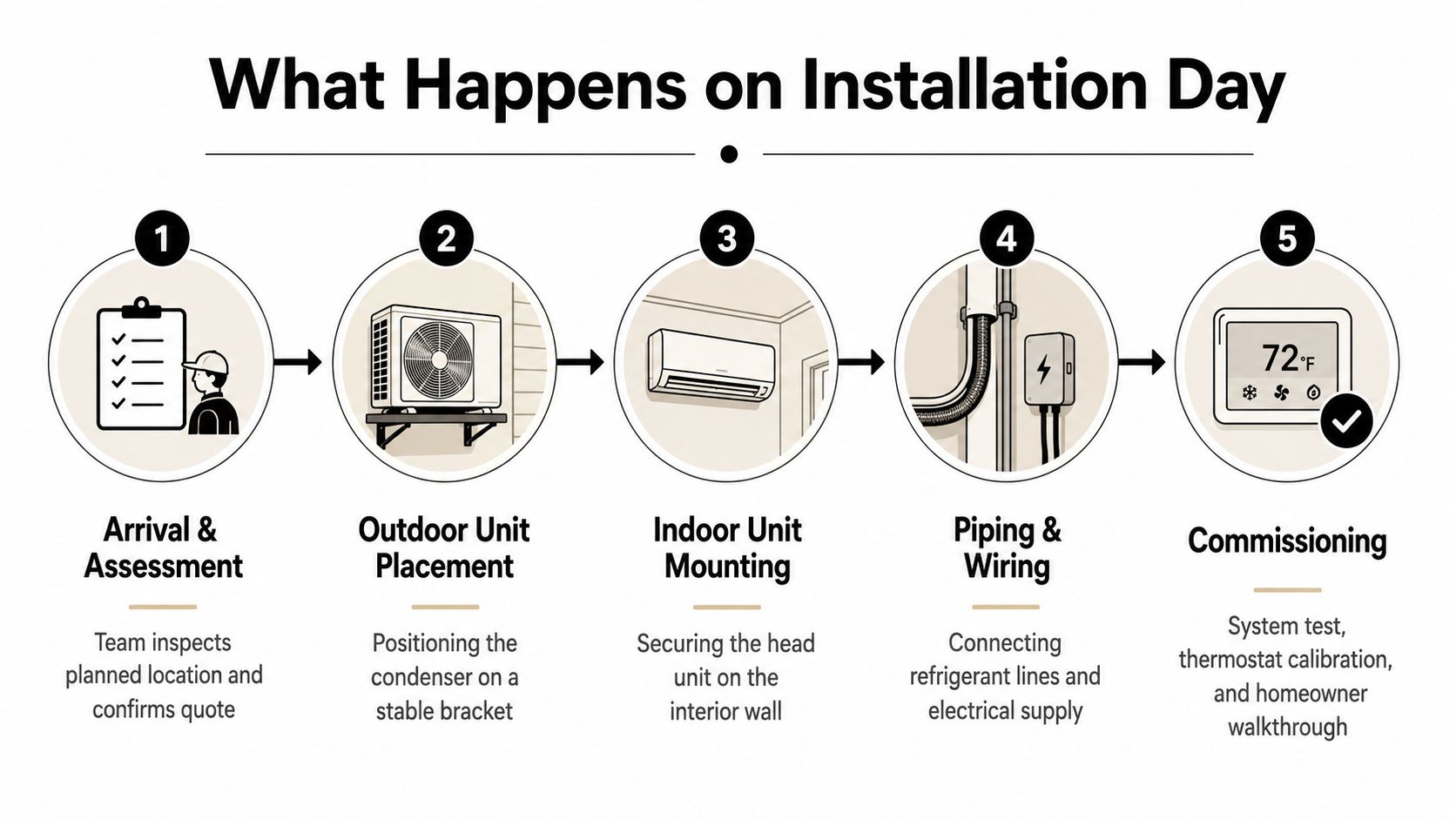
A single split often fills most of a day once drilling, wiring, and commissioning are included. Multi-split and ducted jobs take longer, commonly stretching across one to three days depending on access and complexity. That spread isn't about slowness, it's about getting the details right so the system behaves properly in real use.
Household prep makes a difference. Clear a path to the outdoor location, move bikes and storage away from the switchboard, and don't park the ute in the only spot the installer needs to work from. Those little things save time and stop the team from rushing the parts that really matter.
Before the crew leaves, they should confirm the unit is draining correctly, the controls respond as expected, and the system isn't vibrating, rubbing, or recirculating hot air around the outdoor unit. The commissioning step is where a good installer proves the work, not where they just flick the system on and hope the rest sorts itself out.
The embedded walkthrough below is useful if you want to see the sequence from another angle.
Price gets messy fast because people mix up the unit cost with the install cost. They're not the same thing. In Brisbane, the better question is what the labour, electrical work, mounting, drainage, and commissioning are likely to add once the hardware has already been chosen.
The quote usually moves up for a few predictable reasons. A longer cable run from the switchboard takes more time and materials. A switchboard upgrade adds labour and compliance work. Upper-storey installs, difficult roof access, condensate routing challenges, and awkward outdoor unit locations also lift the total because the installer is solving more than one problem at once.
The lowest price often leaves out the parts that stop callbacks. Reused insulation, missing isolators, rushed drainage, or skipped commissioning can all look like savings until the first hot spell exposes the shortcut. That's why a quote needs to show the scope plainly, not just the headline number.
It's also worth watching how the job has been scoped. If the installer hasn't asked about the switchboard, the roof cavity, the route to the outdoor unit, or how the condensate will drain, they're probably pricing a generic job rather than your house. Generic pricing is fine for generic houses. Brisbane homes rarely are.
For homeowners who want a local contractor to assess the job, DLG Electrical handles electrical diagnosis and installation assessment before AC installation. That's the kind of work that prevents scope drift later, because the wiring and the cooling plan are checked together instead of separately.
A fair quote is rarely the cheapest one. It's the one that explains why the price is what it is.
The best installer isn't the one who talks fastest. It's the one who can show the right licences, explain the plan without bluster, and leave you with paperwork that stands up later. If a contractor can't do that, the price difference usually isn't a bargain, it's a warning sign.
Start with the hard checks. You want a licensed electrical contractor, the right refrigeration handling authorisation for the refrigerant involved, public liability insurance, and workers' compensation cover. Then ask for the quote in writing with the model numbers, the workmanship warranty, the equipment warranty, and the electrical certificate of testing on completion.
DLG Electrical notes that it has been servicing Brisbane homes and businesses for over 19 years and holds a five-star Google rating as a fully licensed and insured electrical contractor (DLG Electrical). If you're comparing local operators, that's the sort of factual profile to look for, long-established, licensed, insured, and willing to stand behind the work.
A proper site visit usually tells you more than the quote. Good operators turn up when they say they will, ask about access, explain the trade-offs in plain language, and don't mind being challenged on placement or electrical scope. If they brush off questions or keep saying “we'll make it work,” that's not reassurance, it's vagueness.
It also helps to ask for local references or suburb experience, especially if your home sits in a tight block or has older wiring. A team that's comfortable around Brisbane layouts, from Grange to Windsor and across North Brisbane, is more likely to spot service access issues before they become expensive fixes.
For end-of-life replacements and safe disposal planning, a business guide on AC recycling is a useful reference point. Even if you're not recycling the old unit yourself, it's helpful to know how responsible contractors think about removal and disposal.
If the contractor can't show the licence, the insurance, and the paper trail, don't let a polite phone manner talk you into it.
A good install can still feel bad by the first humid spell if nobody looks after it. Brisbane weather is hard on cooling gear, so the habits that matter are simple, regular, and boring. That's exactly why they work.
Clean or replace the filters during heavy use, keep the outdoor unit clear of leaves and garden growth, and check the condensate drain before the wet, sticky part of the season settles in. A professional service before summer is smart, not because the unit needs a ceremonial tune-up, but because small issues are easier to fix before the house starts depending on the system every night.
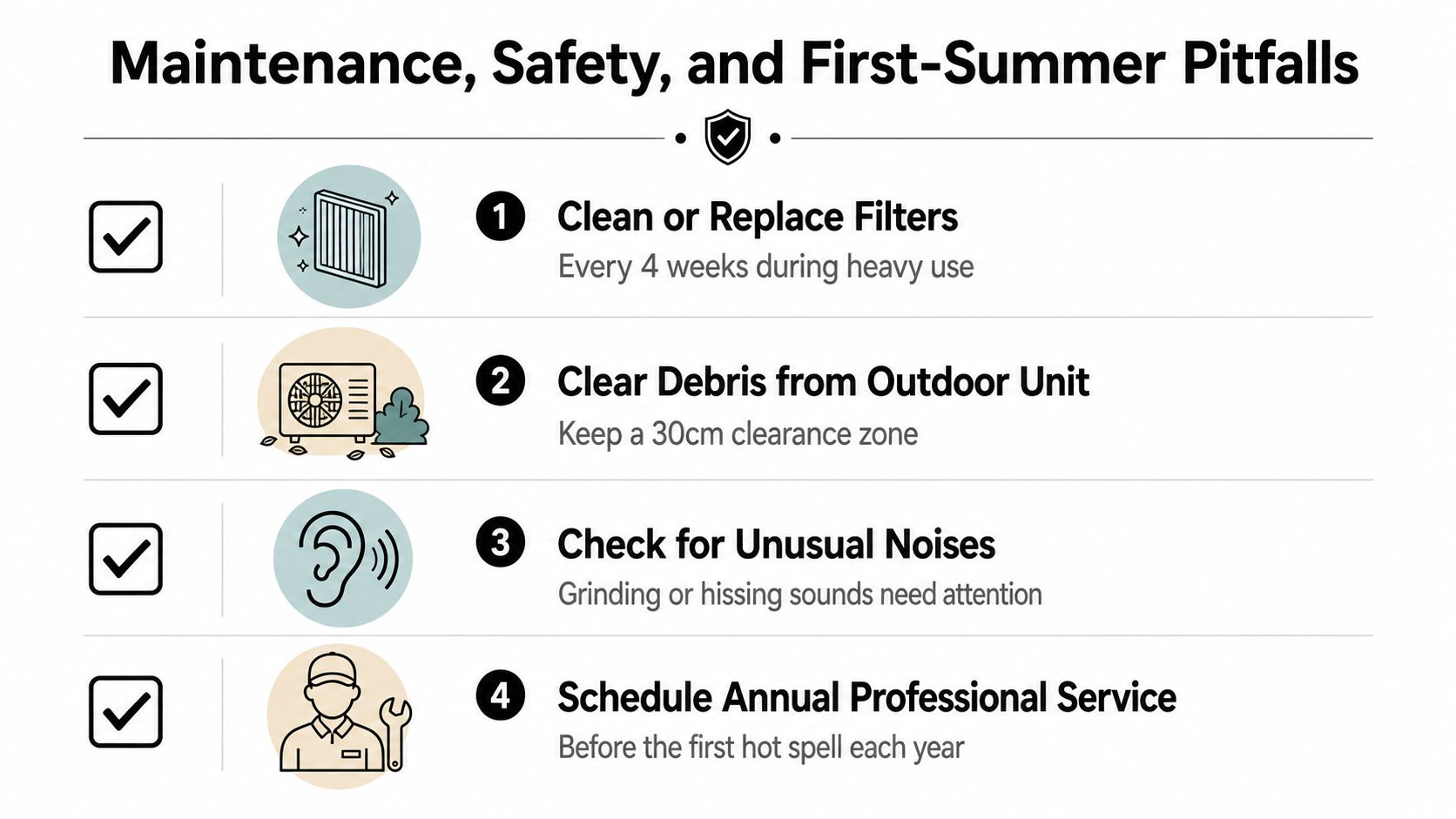
A leaking indoor unit in humid weather often points back to drainage or installation geometry, not just a bad machine. The same goes for unexpected RCD trips, which can reflect circuit stress, poor supply setup, or a wiring issue that was never fully sorted during installation. Noisy outdoor units at night are often a placement or mounting problem too, especially in tight suburban blocks where vibration, reflected noise, and poor clearance all pile on.
Practical rule: if a fault shows up only when the weather turns muggy or the system works harder, suspect the install first, not the refrigerant.
A homeowner can check a few things before calling the installer back. Look for blocked filters, obvious debris around the outdoor unit, water staining under the indoor head, and anything touching or vibrating against the wall around the outdoor mount. If the unit drips more on humid days, the condensate path deserves attention fast.
The main lesson is simple. A correctly installed system should cool, drain, and stay quiet enough to live with. If it doesn't, the fix is often in the workmanship around it, not in the headline brand name on the casing.
Rental homes raise different questions, especially when a landlord, tenant, and property manager are all involved. The safe answer is to confirm who's paying, who's approving the work, and who keeps the compliance paperwork, because electrical and cooling upgrades should never be treated as casual add-ons in a tenancy.
Noise is another common concern in Brisbane's tighter suburban blocks. A well-placed outdoor unit should sit in a stable, open location with enough breathing room around it, and it shouldn't be pointed straight at a neighbour's bedroom window if you can avoid that outcome. In compact yards, service access matters just as much as airflow.
Rebates are the one question people hope has a simple answer. In 2026, the honest approach is to check what's available at the time you're booking, because incentives and eligibility change and shouldn't be assumed. A good installer won't promise savings that aren't confirmed.
A standard install can move quickly once the site visit is done, but it still depends on access, electrical scope, and whether any upgrade work is needed first. The cleaner the quote stage, the fewer surprises there are once the crew turns up.
For Brisbane homeowners who want the electrical side handled by a licensed local contractor, DLG Electrical offers free quotes and is available Monday to Friday from 7:30 AM to 4:00 PM to discuss air con installation projects, from a single split in Grange to a ducted reno across North Brisbane (DLG Electrical).
If you want the wiring, switchboard, and compliance side handled by a Brisbane team that treats the install as a complete job, visit DLG Electrical and book a free quote. You'll get a practical assessment of what your home needs, not a one-size-fits-all guess, and a clear path to a first summer that feels comfortable instead of complicated.

Master Electrician with over 30 years of experience. Founded DLG Electrical in 2005 after international project work including electrical installations at Stamford Bridge Stadium, London(Home of Chelsea FC).

Local Electricians that can fix all Electric Hot water Systems.
Motion sensor lights are a versatile addition to any home, offering nu
