83 Jean St, Grange QLD 4051
Mon-Fri 07:30 AM - 04:00 PM - Sat - 8:00 - 12 - Sunday Closed

You're home on a Brisbane afternoon, the house is holding heat, and the air conditioner that was working yesterday is now blowing warm air, dripping water, tripping a breaker, or refusing to start at all. That's not just uncomfortable. In older Brisbane homes, it can also point to an electrical problem sitting behind what looks like a simple cooling fault.
Most homeowners start by thinking about gas, filters, or the outdoor unit. Those are valid places to look. But plenty of air conditioner repair jobs turn out to involve power supply issues, tired capacitors, overloaded circuits, or switchboards that were never designed for today's cooling loads.
That's why a useful guide needs to do more than list symptoms. It needs to help you work out what's safe to check yourself, what usually causes the fault, and when the smartest move is to stop troubleshooting and bring in a licensed professional. For a broader example of how emergency response is handled in another market, this piece on fast air conditioning restoration by Covenant is a helpful comparison.
A failed unit during a heatwave rarely gives you much warning. One day it's keeping the bedroom comfortable. The next day it's humming, clicking, icing up, or shutting off after a few minutes.
In Brisbane, the timing matters. Hot weather puts more strain on compressors, fans, control boards, and the home's electrical system. If your unit has already been running with a dirty coil, weak capacitor, or unstable power supply, extreme demand often exposes the problem.
Practical rule: If the system has suddenly changed behaviour, don't keep restarting it over and over. Repeated reset attempts can turn a small fault into a larger repair.
A lot of homeowners lose time chasing the wrong issue. They suspect the remote, then the batteries, then the refrigerant, then the weather itself. Sometimes it is simple. Often it isn't. A split system depends on refrigeration components, airflow, drainage, sensors, controls, and a stable electrical feed all working together. When one part falls out of range, the whole system can look “dead” even though the root cause is more specific.
The first job is to separate inconvenience from risk. Warm air is frustrating. A burning smell, buzzing switchboard, visible ice, or a breaker that won't stay on is a different category.
Start by noticing the pattern:
Older Queensland homes often have electrical infrastructure that's been upgraded in stages. The kitchen may have been modernised. The hot water may have been changed. Then a new split system was added later. That patchwork approach can leave an air conditioner sharing circuits or relying on gear that isn't in great shape.
That's why good air conditioner repair in Brisbane isn't only about the refrigeration side. The electrical side has to be checked with the same care.
A lot of AC faults overlap. Low refrigerant, poor airflow, a failing fan motor, and an electrical supply problem can all show up as “it runs, but it's not cooling properly.” That is why a proper diagnosis matters. Replacing parts based on symptoms alone is how repair bills climb.
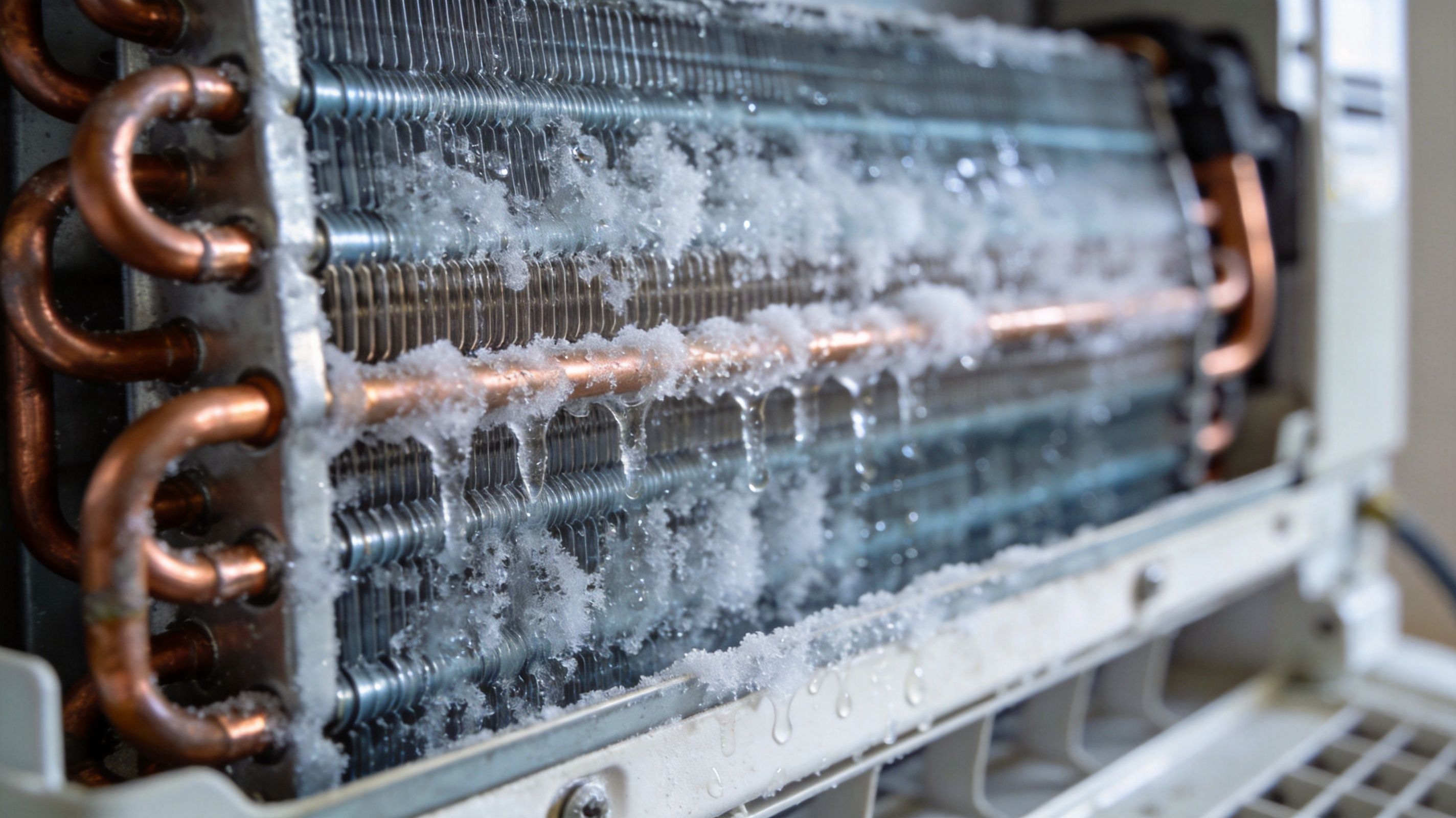
Refrigerant carries heat out of the home. In a healthy system, it stays in a sealed circuit. If the charge is low, there is usually a leak, or the unit was not charged correctly during a past repair or installation.
According to this guide to understanding AC repair, improper refrigerant charge accounts for up to 40% of service requests, and undercharging by 10% can cut cooling capacity by 15 to 20% while increasing energy use by 25%. In practice, homeowners usually notice longer run times first. The unit keeps working, but the room never quite gets there.
Ice on the indoor coil is a common clue, but it is not a diagnosis by itself. Low refrigerant can cause it. So can restricted airflow. So can a fan problem. The cost-effective approach is to confirm the cause before topping up gas, because adding refrigerant to a leaking system only delays the necessary repair.
Brisbane homes deal with fine dust, pollen, pet hair, and humidity for long stretches of the year. Filters catch the larger debris, but the evaporator coil behind them still gets dirty over time. Once that coil is coated, heat transfer drops and airflow can fall away enough to make the system feel weak, noisy, or inconsistent.
A clean filter helps. It does not prove the coil is clean.
Homeowners often describe this fault as “the aircon still works, just not like it used to.” That is a useful description because airflow problems usually develop gradually. You still get some air out of the head unit, but it is less volume, less cooling, and more strain on the blower motor. If you want a quick refresher on the parts involved, this guide explaining how an aircon works in simple terms gives the basic layout.
A leaking indoor unit is usually a drainage problem, not a refrigerant problem. The system removes moisture from the air as it cools. That water has to run away through the condensate drain. If the drain line blocks, the tray overflows, or the unit is not draining with the right fall, water ends up inside the room.
There is a second pattern worth knowing. A frozen coil can later thaw and dump water fast enough to look like a sudden leak. In those cases, cleaning the water up is only the first step. The cause of the icing still needs to be found, or the leak will return.
This is the fault group that gets missed most often in Brisbane homes. I see plenty of systems reported as “low on gas” or “probably worn out” when the actual issue sits in the electrical side. An air conditioner depends on motors, capacitors, relays, sensors, control boards, isolators, breakers, and the switchboard feeding them. If one of those is failing, the refrigeration side can be perfectly sound and the unit will still perform badly or stop altogether.
Typical examples include:
These faults matter because they change the repair decision. A refrigerant technician looking only at pressures can miss a supply problem. An electrician looking only at the breaker can miss an airflow or drainage issue. The cheaper outcome usually comes from checking both sides together, so the actual failed component gets repaired once instead of after two or three callouts.
On a hot Brisbane afternoon, a lot of air conditioners get called "broken" when the actual problem is smaller. A flat remote battery, a blocked filter, a tripped breaker, or a water leak near the indoor unit can all stop cooling. The aim here is to sort out what you can check safely, without turning a minor fault into an expensive repair.
Keep the boundary clear. If a check involves removing covers, touching wiring, or resetting protection devices more than once, stop and book a technician. Air conditioners sit across both refrigeration and electrical systems, and plenty of faults only show their full shape once both sides are checked properly.
Work through these in order before assuming the unit has failed:
Check the operating mode
Confirm the system is set to cool. Fan mode will blow air without lowering the room temperature, and dry mode can behave differently from what homeowners expect.
Lower the set temperature
Set it well below the current room temperature so the system has a clear call for cooling.
Replace the remote batteries
Weak batteries can cause patchy signals, delayed response, or settings that do not send properly to the head unit.
Look for signs of power at the indoor unit
If there are no indicator lights, no beep, and no response, that points more toward a power supply, control, or circuit issue than an airflow problem.
That quick check can save a service call.
If the filter is user-accessible, take it out and inspect it. If it is dusty, wash it, let it dry fully, and refit it properly. Never reinstall a wet filter.
Restricted airflow puts strain on the system. It can reduce cooling, increase running costs, and in some cases lead to icing at the indoor coil. It also makes diagnosis harder, because airflow faults can look similar to refrigerant or sensor problems.
Check the room as well. Closed-off returns, curtains pulled across the unit, or furniture placed directly under the discharge can all affect performance.
Safety note: Cleaning a removable filter is fine. Opening the casing to clean internal coils or fans is a technician job.
If the system is dead or partly dead, go to the switchboard and check whether the air conditioner breaker or safety switch has tripped. Reset it once if needed.
Once is enough.
If it trips again, leave it off. Repeated tripping can point to a failing capacitor, damaged wiring, moisture ingress, a fault in the outdoor unit, or a circuit issue back at the switchboard. In older Brisbane homes, I often find the air conditioner fault and the electrical supply issue at the same visit. Treating it as only an AC problem can miss the cause and lead to another callout later.
If water is leaking indoors, switch the system off before the leak reaches nearby electrical points or wall cavities. This guide on why an aircon leaks water explains the common causes and what to look for first.
Walk to the outdoor unit and inspect it from the outside only. No panels off. No hands inside.
Look for:
Those signs matter because they help separate a simple airflow issue from a likely electrical or mechanical fault.
| Symptom | Potential DIY Check | When to Call a Professional Immediately |
|---|---|---|
| Unit won't start | Check remote batteries, mode, set temperature, visible power | No response after basic checks, burning smell, breaker won't hold |
| Weak airflow | Clean filter, clear obstructions around indoor unit | Air still weak after filter clean, visible ice, rattling fan noise |
| Warm air | Confirm cool mode and lower set point | Outdoor unit not running, repeated shutoffs, suspected refrigerant issue |
| Water dripping indoors | Turn system off, inspect filter, note when leak started | Ongoing leak, ceiling staining, ice buildup, electrical concern nearby |
| Breaker tripping | Reset once only | Trips again, switchboard buzzing, any sign of overheating |
It is 6:30 on a humid Brisbane evening, the house is holding heat, and the air conditioner starts, hums, then trips the power again. That is the point to stop resetting it and get a qualified technician involved.
Some faults cross the safe DIY line straight away. Smoke, a burnt smell, repeat breaker trips, ice on the unit, or sharp mechanical noise usually mean the problem is no longer just comfort. It may involve a failing motor, overheating wiring, a damaged capacitor, or a supply fault back at the switchboard.
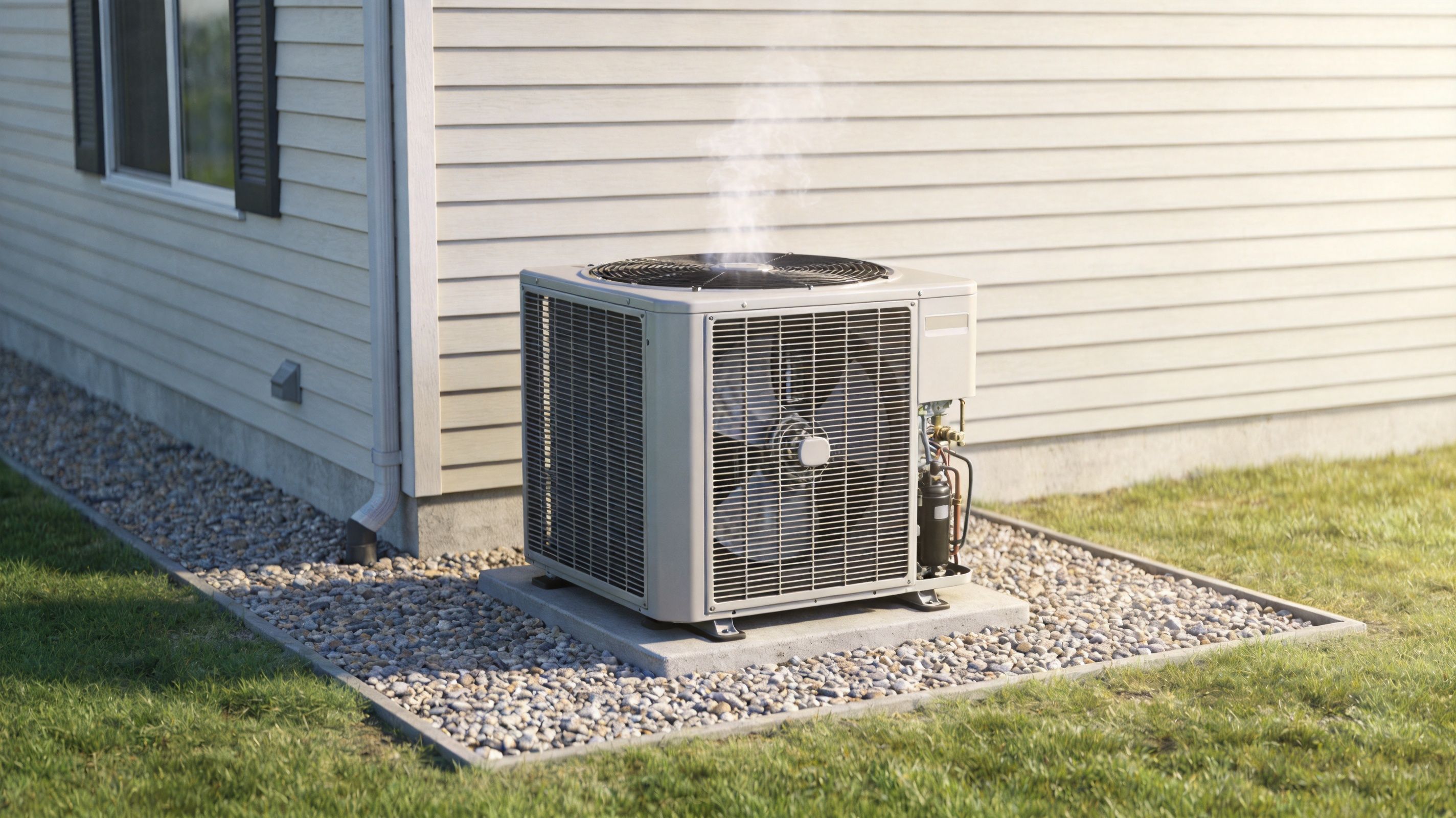
These signs usually justify a professional callout the same day:
Each one points to a fault that can damage expensive components if the unit keeps running. A dimming-light complaint, for example, is often treated as “the aircon working hard,” but it can also point to startup current problems, a weak capacitor, poor connections, or supply issues that need electrical testing.
Many AC callouts focus first on filters, fan performance, airflow, and refrigerant pressures. Those checks matter, but they do not tell the whole story. In Brisbane homes, especially older properties, the electrical path feeding the system is often part of the fault.
Loose terminations, aging breakers, tired isolators, undersized circuits, and switchboards that have had extra load added over the years can all cause poor starting, nuisance tripping, intermittent shutdowns, and shortened compressor life. I see this regularly in homes where the air conditioner itself is blamed first, but the supply side is what is causing the stress.
A proper diagnosis should include both the refrigeration side and the electrical side. If your system is tripping power or cutting out under load, it is worth having the supply checked by a licensed Brisbane electrician who understands air conditioner fault finding, not just the unit in isolation.
A useful service call does more than suggest a regas. It should confirm what is failing, why it is failing, and whether the fault sits inside the air conditioner or upstream in the electrical supply.
That usually includes:
Here's a quick visual that shows some of the warning signs technicians look for during a fault assessment:
Pre-2000 homes often have electrical setups that were never designed for today's cooling loads. Over time, kitchens get upgraded, new circuits are added, and larger split systems go in, but the original switchboard layout or protection may stay much the same. The result is an air conditioner that appears unreliable when the actual issue is shared load, heat at terminations, or weak protection devices.
That is why the right trade matters. If the unit is leaking water onto electrical fittings, tripping breakers, or dimming lights on startup, call a professional with the electrical licence and AC experience to test both sides of the system.
If you want a rough idea of how repair pricing is often broken down in another market, you can find current Arizona HVAC repair rates and compare the categories. The figures are not Brisbane prices, but the split between labour, parts, access, and diagnostic time is still useful context.
Repair cost matters, but so does getting the diagnosis right the first time. The cheapest callout can become the expensive option if it misses an electrical issue, regasses a leaking system without finding the leak, or replaces a part that wasn't the fault.
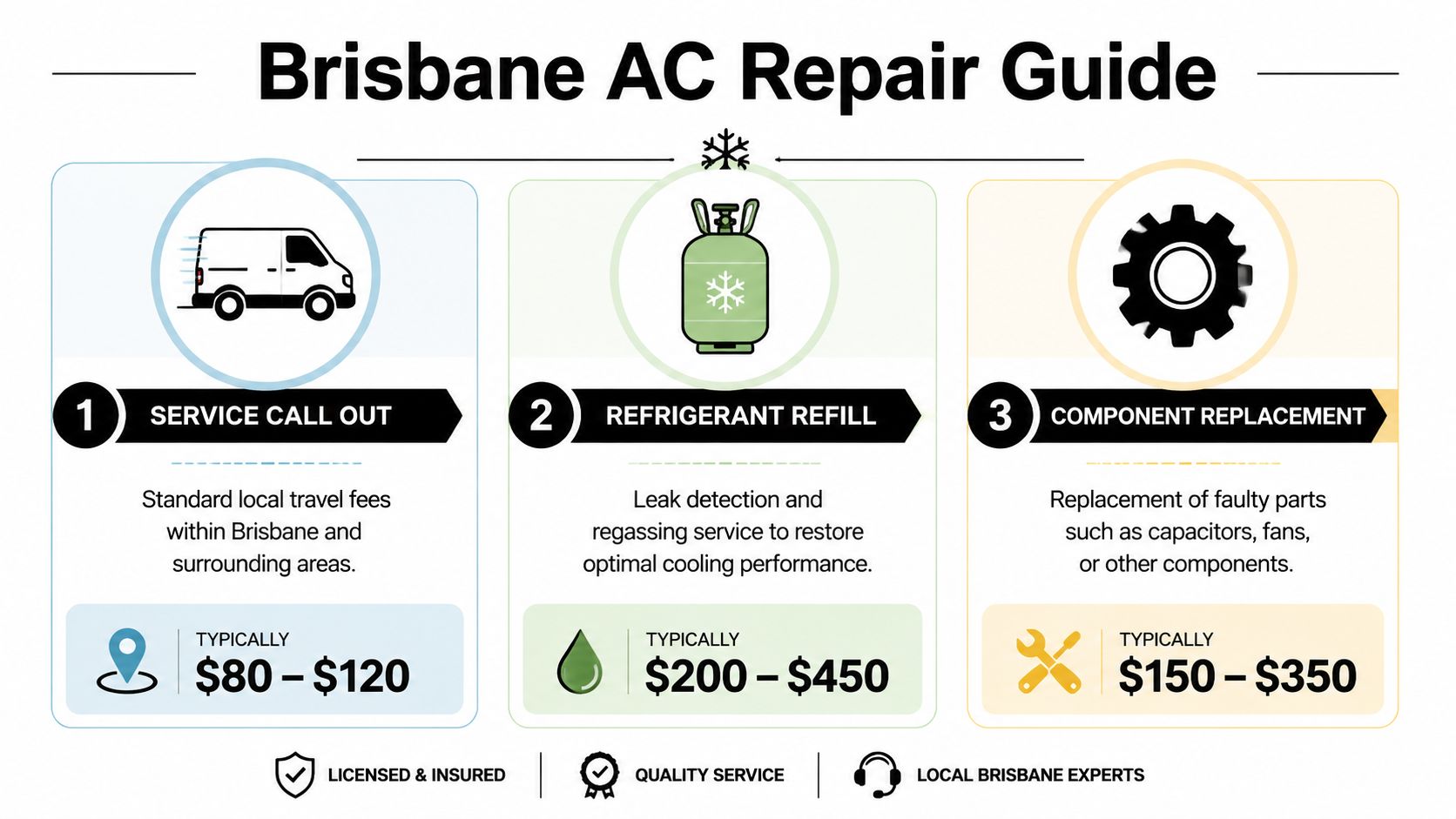
Air conditioner repair pricing tends to move on four things.
For a rough comparison of how repair pricing is broken down in another market, you can find current Arizona HVAC repair rates and see the same general principle at work. The exact figures aren't directly transferable to Brisbane, but the categories are useful.
A few examples come up repeatedly in residential work.
A unit is short on refrigerant, gets topped up, and cools again for a while. The leak remains. The homeowner pays twice.
A breaker trips, gets reset, and the system runs until the next hot day. The underlying issue was a failing capacitor or supply-side overload.
A leaking indoor head gets cleaned superficially, but nobody checks whether icing, poor airflow, or installation fall is part of the problem. The stain on the wall returns.
Those are the trade-offs that matter. A proper diagnosis costs more than guesswork, but less than repeat repairs.
Don't choose only on who can arrive first. Choose on whether they can solve the right problem safely.
Use this checklist:
That last point matters more than many people realise. The HVAC industry is dealing with a technician shortage, and delays account for 55% of negative reviews, according to this HVAC statistics article. That's one reason established local businesses with strong systems and a long operating history are often the safer choice when you need reliable attendance.
A professional callout should be organised, not vague.
You should expect:
If you're dealing with an older home and suspect broader electrical wear, it also helps to understand what a licensed Brisbane electrician should check beyond the appliance itself. This overview of what to expect from a Brisbane electrician gives useful context.
Key takeaway: The best repair visit doesn't just restore cooling. It lowers the chance of the same fault coming back in a month.
Most air conditioner failures don't begin on the day they stop working. They build up through neglected filters, blocked drains, dirty coils, electrical wear, and months of extra strain that nobody notices until the first very hot week.
The good news is that prevention is straightforward if you keep it consistent.
You don't need a complicated schedule. You need a few habits done on time.
These checks won't replace a professional service, but they do help catch issues before they become expensive ones.
There's a strong case for annual servicing, especially in Brisbane's climate. Air conditioning systems that receive professional preventative maintenance extend their lifespan by approximately 40%. With an average lifespan of 15 years, that can mean an extra 6 years of service before replacement, based on the figures in this HVAC maintenance statistics article.
That extra life doesn't come from magic. It comes from catching faults while they're still small. A technician can spot a weakening capacitor, dirty coil, drainage issue, or supply concern before it cascades into compressor damage or repeat breakdowns.
Regular servicing is less about “tuning up” a healthy unit and more about finding the early signs that homeowners can't reasonably be expected to see.
For most homes, this rhythm works well:
Home maintenance works the same way across systems. If you've ever looked at broader property upkeep, resources like Arizona Roofers expert repair resources make the same basic point. Small maintenance tasks cost less than emergency repairs.
A well-maintained air conditioner is cheaper to own, more dependable in peak weather, and less likely to hide an electrical problem until the worst possible day.
If your air conditioner is tripping power, leaking, blowing warm air, or showing signs that the issue may be electrical as well as mechanical, DLG Electrical can help with practical fault-finding and safe, licensed repair support across Brisbane.

Master Electrician with over 30 years of experience. Founded DLG Electrical in 2005 after international project work including electrical installations at Stamford Bridge Stadium, London(Home of Chelsea FC).

Local Electricians that can fix all Electric Hot water Systems.
Motion sensor lights are a versatile addition to any home, offering nu
