83 Jean St, Grange QLD 4051
Mon-Fri 07:30 AM - 04:00 PM - Sat - 8:00 - 12 - Sunday Closed
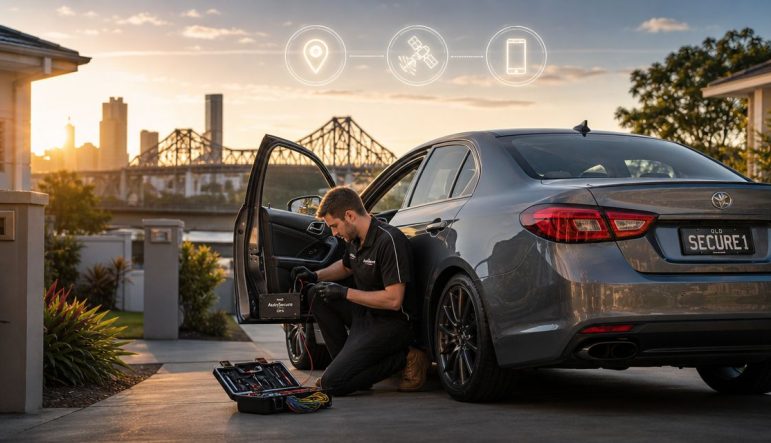
If you're parked on the street in Brisbane, or even in your own driveway, it's reasonable to wonder whether your factory security is enough. Most owners don't start researching alarm system installation for car until there's been a theft nearby, a break-in at work, or that uneasy moment when the car is left outside overnight and you realise you're relying on little more than central locking.
That's where the conversation needs to be practical, not theatrical. A good alarm system isn't about adding noise for the sake of it. It's about layered protection, clean electrical integration, and making sure the vehicle still operates safely, legally, and reliably after the job is done.
Brisbane owners usually ask the same blunt question first. Is it worth fitting an aftermarket alarm at all?
In Australia, that answer is easier to justify than many people realise. The Australian Bureau of Statistics reported 55,188 motor vehicle thefts in 2022–23, which was 9.1% higher than the previous year, and a professional aftermarket alarm install typically sits around $200 to $500 for a basic system, while more advanced systems with GPS tracking can exceed $1,000 according to this Australian cost overview. That makes the decision less about gadget-buying and more about risk management.
A lot of Brisbane households already think this way about home protection. They'll compare sensor coverage, camera placement, and response options before spending money. Vehicle security deserves the same mindset. If you're already reviewing broader vehicle security tips, it makes sense to look at the alarm as one part of a wider protection plan rather than a standalone fix.
People still picture car alarms as basic sirens that trigger when a door opens. Some are. But a modern system can do much more depending on the vehicle and the owner's priorities. It can monitor entry points, work with an immobiliser, report tampering, or add location-based recovery features.
That matters in Brisbane because parking conditions vary a lot. A car kept in a locked garage has a different risk profile from one parked at a train station, under a carport, or on a suburban kerb every night. A basic audible deterrent might suit one owner. Another owner may want immobilisation or tracking because the vehicle itself is harder to replace.
Practical rule: Buy the level of protection that matches the vehicle, where it's parked, and how disruptive a theft would be to your week.
The alarm itself is only half the job. The installation quality decides whether the system protects the car or creates electrical headaches. Brisbane drivers often underestimate that part because many online guides make it look like a simple accessory add-on.
It isn't. This sits much closer to electrical integration than cosmetic fitting. That's why owners who care about reliability often treat it the same way they'd treat any other security work around the property, whether it's cameras, sensors, or a professionally planned home security system installation in Brisbane.
A well-chosen alarm can add confidence. A badly installed one can leave you with false triggers, battery drain, and a car that's harder to diagnose later.
Choosing a car alarm is a bit like choosing home security. Some people only need a front-door deterrent. Others want layered protection with monitoring, access control, and recovery options. Cars work the same way.
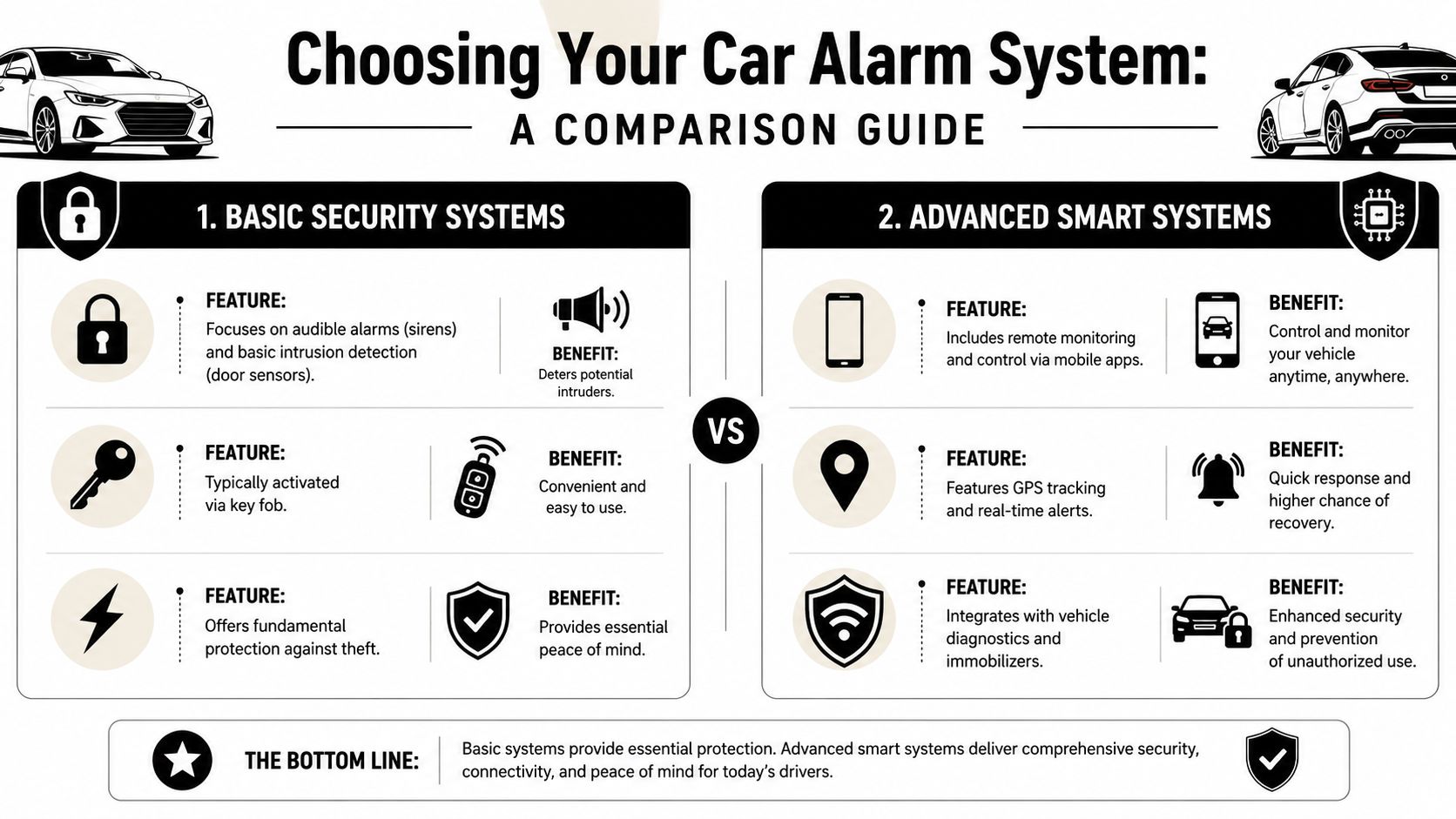
This is the entry point. These systems focus on audible warning and simple intrusion detection, usually through door triggers and a siren output. They suit older vehicles, lower-risk parking situations, or owners who want a visible and audible deterrent without paying for more advanced features.
They can be worthwhile when installed properly, but they're also the easiest type to overestimate. If the only response is noise, the system relies on someone hearing it and acting.
Security starts to become harder to defeat in practice. Instead of only making noise, the system can stop the vehicle from being started or driven away without the correct sequence or signal.
For many owners, this is the best middle ground. It adds a stronger theft barrier without moving fully into high-end tracking hardware. If the car is a daily essential for work, school runs, or business travel, immobilisation often offers more real-world value than a louder siren.
A loud alarm can attract attention. An immobilised vehicle can stop the theft from progressing.
These systems add recovery potential. They're often chosen for higher-value vehicles, vehicles parked in exposed areas, or situations where the owner wants more than deterrence. They won't suit every budget, but they do offer a different benefit from a standard alarm. They help after the initial event, not just during it.
That's often why advanced systems cost more than entry-level units. You're paying for another layer of capability, not just another remote.
These appeal to owners who want alerts, remote control, and a more app-based experience. They can be convenient, especially for people who like managing security from their phone rather than carrying separate remotes.
Convenience isn't the same as suitability, though. Some cars accept this type of integration more cleanly than others. Before choosing one, it's worth reading a broader guide to vehicle security to compare the idea of deterrence, immobilisation, and monitoring across different security styles.
For homeowners, the easiest analogy is this. Basic alarms are like a porch light. Immobiliser systems are like a deadlock. GPS and smart alarms are closer to monitored security.
If you're already weighing broader property protection upgrades such as security camera installation for home, that same layered thinking applies well to a vehicle. Start with your actual exposure, then choose the alarm category that solves that problem.
The DIY option looks appealing until you get into the wiring. On paper, it seems simple enough. Buy a kit, find a wiring guide, remove some trim, make a few connections, and save on labour.
That approach can go wrong quickly on modern vehicles.
The National Motor Vehicle Theft Reduction Council reported 32,161 motor vehicles stolen nationally in the year to June 2024, and Australian guidance also makes it clear that modifications can affect roadworthiness and insurance expectations, which is why this installation guidance points owners toward effective, compliant protection rather than casual add-ons. The issue isn't just whether the alarm works on the day you fit it. The issue is whether the car still behaves properly months later.
DIY usually saves money upfront. That's the honest attraction.
But the hidden risks are what catch people. Interior trim clips break. A wire that looked correct turns out to be part of a more sensitive circuit. A poor ground gives you intermittent faults that only show up after rain, heat, or vibration. Then the owner ends up chasing ghost problems across locking, dash warnings, battery condition, or body electronics.
| Factor | DIY Installation | Professional Installation |
|---|---|---|
| Initial cost | Lower upfront spend | Higher upfront spend |
| Vehicle wiring knowledge | Depends on the owner's research and confidence | Based on trade experience and vehicle-specific diagnosis |
| Reliability | More exposed to loose joins, poor grounds, and trim-related issues | Usually stronger when the system is integrated and tested properly |
| Warranty and insurance risk | Higher chance of questions if workmanship is poor or undocumented | Easier to justify when the work is compliant and professionally fitted |
| Fault finding later | Harder if wires were tapped inconsistently or undocumented | Easier when the job is neat and methods are repeatable |
| Time and disruption | Often longer than expected | Usually more efficient and structured |
Bottom line: A car alarm is a security system tied into the vehicle's electrical system. That's not the place for guesswork.
A professional installer doesn't just connect wires. They assess the vehicle platform, decide where the module should live, choose the safest integration points, and test the finished result in a way a casual fitment often misses.
That's particularly important if you're already comparing spending across household security upgrades and want to understand value clearly. Looking at a broader home security system cost guide can help frame the same principle. Cheap installation is only cheap if it doesn't create problems afterward.
With alarms, labour isn't just about convenience. It buys cleaner wiring, fewer electrical risks, and a much better chance that the system still works properly when you need it.
A proper install starts before a single panel comes off. The first job is confirming what vehicle is in front of the technician, what system is being fitted, and how that system should interface with the car without upsetting existing electrical functions.
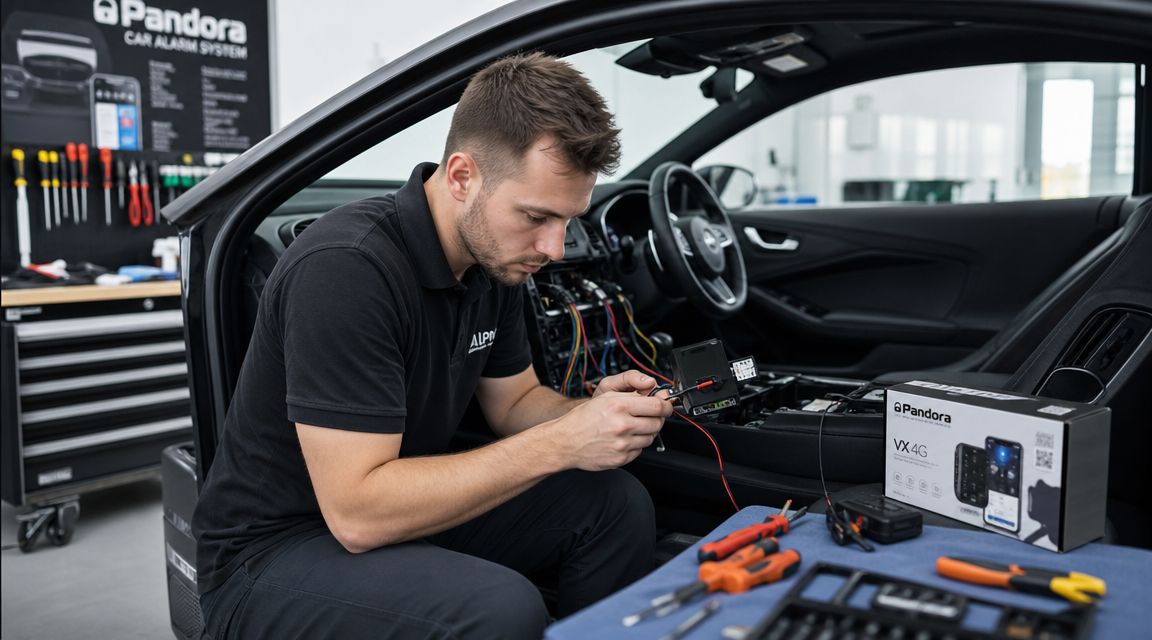
A professional installation prioritises wiring integrity. That means using the correct vehicle wiring diagram, securely soldering or crimping splices, and routing harnesses away from moving parts to avoid intermittent faults, false triggers, or parasitic battery drain, as outlined in this installer-focused wiring reference.
Good installers don't treat every car the same. They identify the ignition and accessory circuits, door trigger behaviour, suitable earth points, and the safest path for the loom. On some vehicles, that's straightforward. On others, especially with newer electronics, it requires more care around body modules and existing harness runs.
This early stage also determines where the alarm brain and any supporting components should be mounted. The placement matters. If it's too exposed, it's easier to tamper with. If it's jammed into a poor location, trim may rub through wiring later.
The neatest-looking job isn't always the best one, but messy wiring is nearly always a warning sign. Proper work usually includes:
A lot of amateur jobs fail here. The system may arm and disarm in the driveway, then start misbehaving once the car is used normally.
Clean wiring is not cosmetic. It directly affects reliability, battery behaviour, and future diagnostics.
Testing is where the installer proves the job. Every protected opening should trigger as intended. The siren output should behave correctly. The arm and disarm sequence should be consistent. The vehicle also needs to settle properly once its electronics enter sleep mode.
This walkthrough gives a useful visual sense of how careful installation work is approached in practice.
The owner should leave knowing where the controls are, how the alarm behaves, and what's normal. If the installer can't explain the finished system clearly, that's usually a sign the process wasn't as disciplined as it should've been.
Most owners ask for a price first. Fair enough. But the better move is to ask a few sharp questions before you compare quotes, because two alarm installs that look similar on paper can be very different in quality.
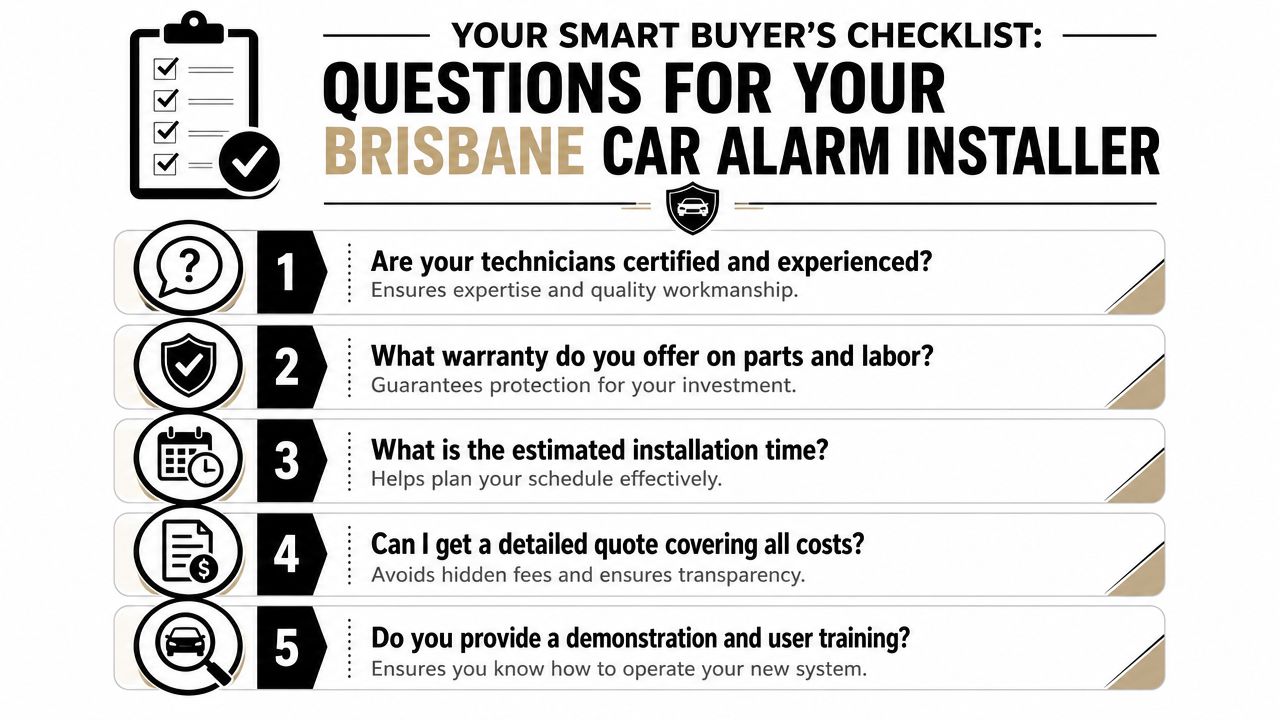
For Australian compliance, the alarm must not interfere with mandatory vehicle systems, and professional installers should verify correct operation through trigger checks on all circuits, siren testing, and current-draw measurement after sleep mode, according to this compliance-focused installation guide.
A good installer usually answers in plain language. They won't hide behind jargon, and they won't wave away concerns about warranty, insurance, or electrical load. They should be comfortable talking about current draw, protected wiring routes, and post-install testing.
A weak answer often sounds vague. “We just hook it up.” “It's pretty standard.” “Should be right.” None of those responses inspire confidence when the job touches a modern vehicle's electrical system.
Ask how they verify the car's sleep-state current draw. If they can explain that clearly, they probably understand the electrical side of the work.
Price still matters. It should. But the cheapest quote can become the most expensive outcome if the car returns with false triggers, battery issues, or trim damage.
The best quote is usually the one that shows thought. It should reflect the vehicle, the alarm type, the fitting method, and the testing required to hand the car back safely.
A car alarm should do two things well. It should make the vehicle harder to steal, and it shouldn't introduce new electrical problems. That's the standard worth holding.
For Brisbane owners, the decision isn't only about hardware. It's about whether the installation is suitable for the way the car is used, where it's parked, and how important compliance, reliability, and warranty protection are to you. A cheap unit installed badly won't feel cheap once you're chasing parasitic drain, intermittent locking faults, or insurer questions after a claim.
The best outcomes usually come from matching the system to the vehicle and the owner's actual risk.
That's the practical takeaway. Security hardware gets the attention. Workmanship decides whether the result is worth having.
A Brisbane-based installer who understands local conditions tends to make better recommendations than a generic online guide. They know the difference between a car that lives in a secure garage and one that sits outdoors through summer storms, shopping-centre parking, school pick-ups, and overnight street parking.
They also know what homeowners care about. Customers don't want a hobby project; they want the car protected, the wiring tidy, the system explained clearly, and the job done once.
If that's what you're after, choose an installer who treats alarm system installation for car as electrical and security work combined. That's the level of care the vehicle deserves.
If you want a safe, tidy, and compliant alarm installation from a local team, DLG Electrical is a strong choice for Brisbane homeowners. With 19+ years of experience, a family-owned approach, fully licensed and insured electricians, and a five-star Google reputation, they understand how to deliver work that's reliable from day one and still dependable later. If you're in North Brisbane, Grange, Windsor, or nearby, contact DLG Electrical for a free quote and practical advice on the right vehicle security setup for your car.

Master Electrician with over 30 years of experience. Founded DLG Electrical in 2005 after international project work including electrical installations at Stamford Bridge Stadium, London(Home of Chelsea FC).

Local Electricians that can fix all Electric Hot water Systems.
Motion sensor lights are a versatile addition to any home, offering nu
