83 Jean St, Grange QLD 4051
Mon-Fri 07:30 AM - 04:00 PM - Sat - 8:00 - 12 - Sunday Closed

You open the power bill, see another jump, and immediately do the maths in your head. Then a summer storm rolls through, the lights flicker, and you start thinking about the other side of the question. It’s not just cost. It’s whether your fridge, internet, security, and a few key circuits stay on when the grid doesn’t.
That’s why Brisbane homeowners keep asking the same thing. Are solar batteries worth it? In South East Queensland, that answer isn’t the same as it is in Melbourne, Perth, or the US. Local feed-in tariffs, Energex-style time-of-use pricing, summer air-con use, and storm outages all change the equation.
A battery can be a smart move. It can also be the wrong move if your usage pattern, budget, or house setup don’t suit one. The value comes from matching the battery to how you live, not buying one because it sounds like the next logical upgrade after solar.
For a lot of households, this question starts with two frustrations.
The first is simple. You’ve got solar on the roof, but the bill still feels too high, especially after a humid run of days with the air-con working hard into the evening. The second is practical. Brisbane storms don’t ask permission, and losing power at the wrong time is more than an inconvenience.
That’s why the battery question isn’t about gadgets. It’s about whether spending money now gives you enough return in lower bills, more control, and backup power when the weather turns ugly.
Brisbane homeowners also face a local wrinkle that generic guides usually miss. The old idea of exporting spare solar to the grid and getting a worthwhile credit for it isn’t what it used to be. That changes the value of storing your own energy and using it later.
If you’re trying to get a handle on your wider household energy costs first, this breakdown of Brisbane energy costs and simple ways to lower your bill is worth a look before you price a battery.
Practical rule: If your pain point is evening grid use or blackout protection, a battery is worth looking at. If your home is empty most evenings and outages barely bother you, the answer is less clear.
A solar battery stores the excess solar your panels produce during the day so your home can use it later, usually after sunset when grid power costs more.
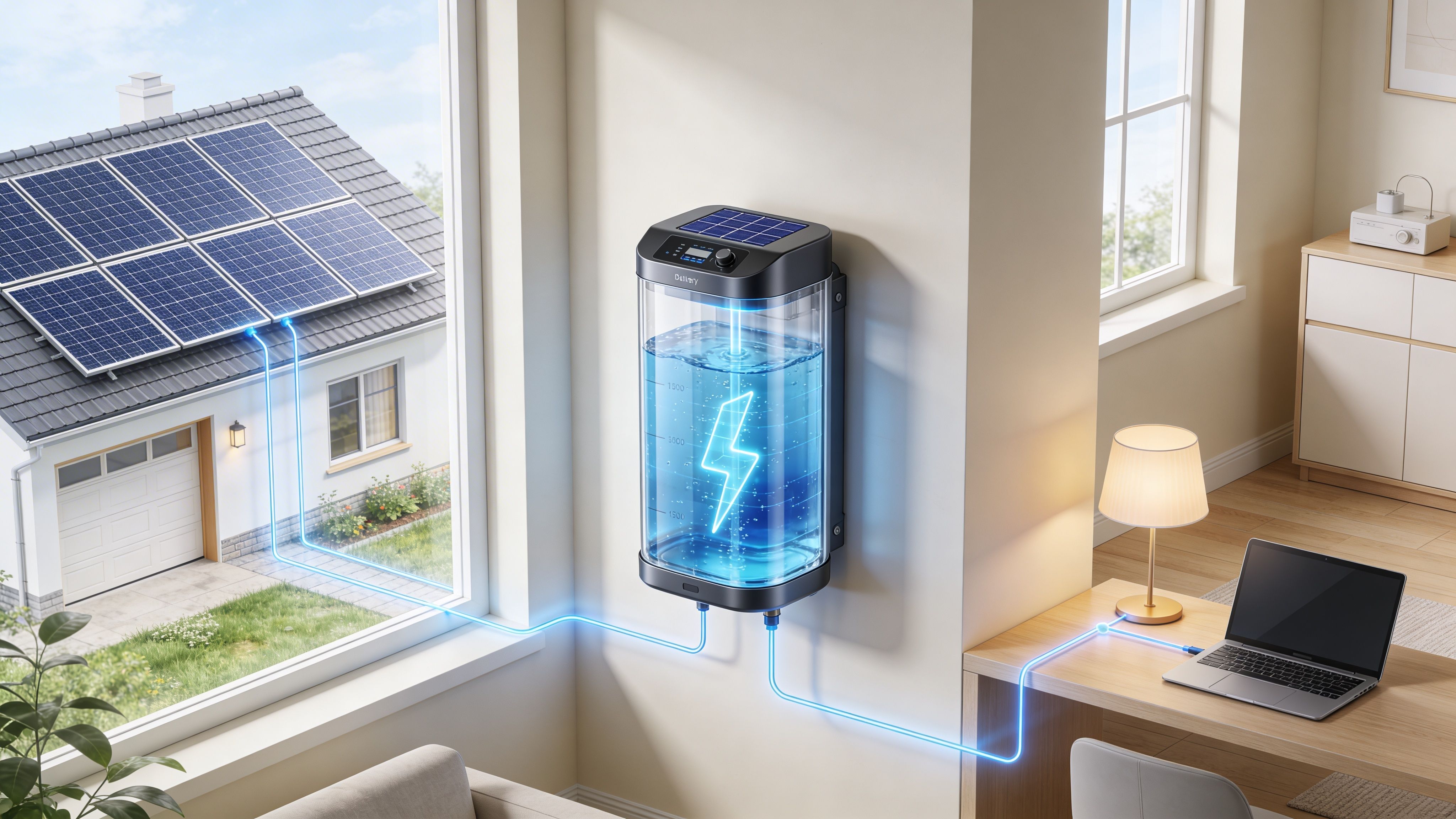
On a typical Brisbane day, panels do their best work from late morning through the afternoon. That often lines up badly with how families use power. The house might be quiet while the sun is strong, then demand jumps in the evening when people get home, the air-con goes on, dinner starts, and screens, lights, and appliances all stack up at once.
Without a battery, unused solar is exported to the grid. With a battery, more of that surplus stays on site and can cover part of your night-time load instead.
During the day, the battery charges from spare solar after the home’s live demand is covered. The inverter manages that flow automatically. You do not need to manually switch between solar, battery, and grid supply.
For Brisbane and the wider south-east corner, that local use matters because exported solar is usually worth far less than the electricity you buy back later. The gap is even more noticeable on homes with time-of-use pricing, where late afternoon and evening power can be the expensive part of the day under Energex network areas.
Battery performance over time also affects the value you get. A unit that holds its capacity well will keep doing this job properly for years, which is why it helps to understand how long solar batteries typically last in real homes before choosing one.
Once solar output drops, the battery discharges into the home first, then the grid tops up any shortfall.
That is the basic financial logic. Store lower-value daytime excess. Use it during higher-cost evening periods.
In practice, the biggest wins usually come from homes with strong after-dark usage. Air-conditioning is a big one in Brisbane. So are pool pumps set badly, electric cooking, and families who are out during the day and home every evening. Those homes tend to feel the difference faster because they are replacing more grid imports at the times tariffs hurt most.
Many homeowners get caught out in this scenario.
A battery does not automatically run the whole house during an outage. For safety, standard grid-connected solar shuts down when the grid goes down unless the system is specifically designed for backup. Even then, many battery setups only support a backed-up sub-board with selected circuits.
That usually includes:
For Brisbane homes, that backup question is not theoretical. Summer storms knock power out often enough that battery backup has a value beyond the bill savings, but only if the system is configured for the loads you care about. Running a few lights and the fridge is very different from keeping ducted air-con, an oven, and an EV charger alive.
Queensland homeowners also tend to look at the battery decision alongside broader cost relief, including state-based electricity rebates, but the battery itself still needs to match your evening usage and backup expectations.
The better battery systems are built around your actual night-time load, your tariff, and the circuits you want alive during a storm outage. Brochure promises about “energy independence” do not tell you that.
The money side is often where households either move ahead or walk away.
Batteries aren’t cheap. Even with stronger rebates, they still need to earn their place. The good news is that Brisbane is one of the better places to make the numbers work, because the gap between low solar export value and higher evening import prices is now large enough to matter.
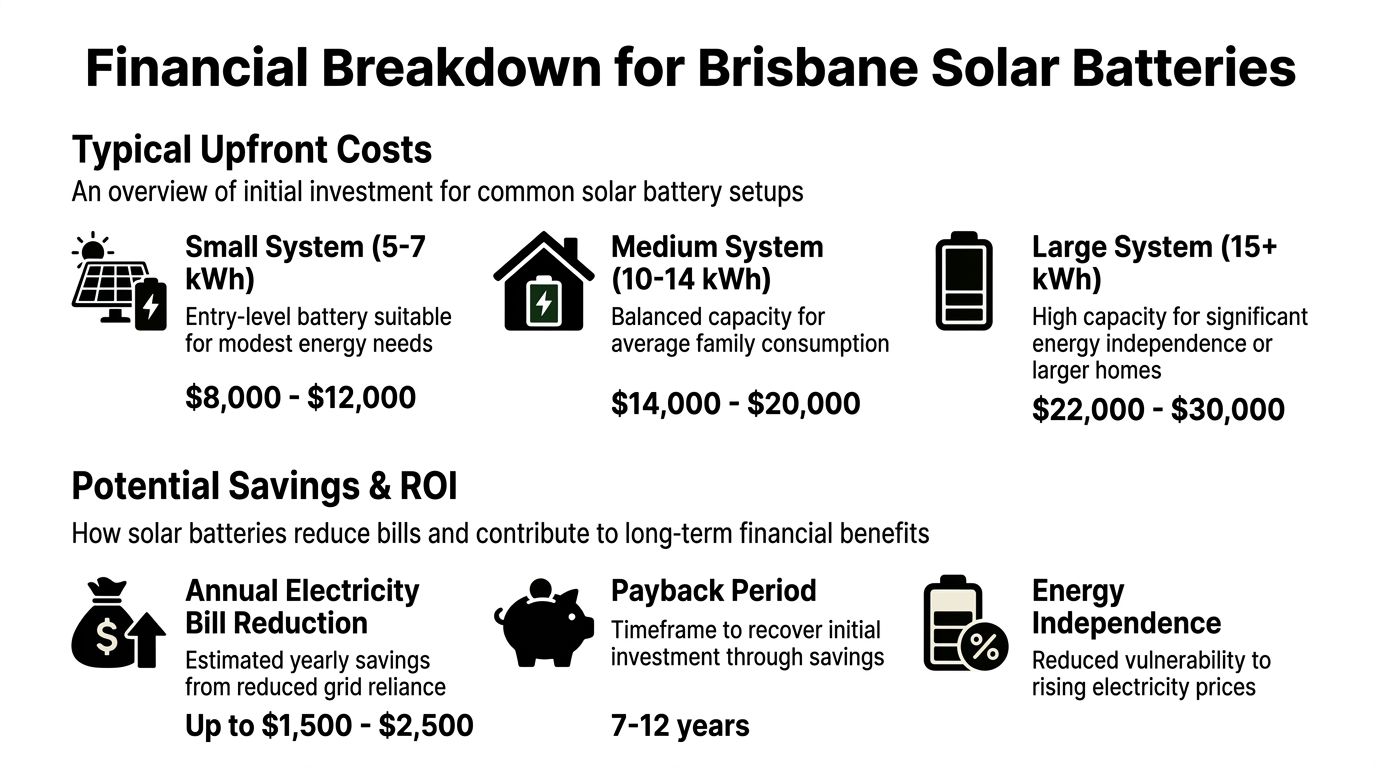
The biggest shift has been the federal rebate environment.
In Australia, the Cheaper Home Batteries Program, launched in 2025, cuts upfront battery costs by approximately 30%, reducing a typical $15,000 to $20,000 system to around $10,500 to $14,000 after rebates, based on the figures cited by Zecar’s review of whether home solar batteries make financial sense.
That matters because upfront cost has always been the main obstacle. A battery that looked marginal at the old price can look a lot healthier once that initial spend drops.
There are also households looking at broader support and tax planning around energy costs, and this guide to state-based electricity rebates is useful for understanding how different rebate settings can affect the overall household budget.
The core savings mechanism is straightforward. You store daytime solar and use it when grid power is expensive.
Verified Queensland data indicates batteries can shift substantial energy daily from low export periods to peak self-use, potentially leading to notable annual savings on a typical system under local time-of-use settings. Separate verified data also suggests annual household savings can be considerable for some solar-plus-battery setups, with even greater benefits for households making strong use of self-consumption and peak avoidance.
That doesn’t mean every home will hit the top end.
A household that’s empty all afternoon, has modest evening loads, and rarely uses air-con after dark won’t squeeze the same value out of a battery as a family home with cooling, cooking, laundry, and device charging all stacked into the evening window.
Verified data for Queensland and Australian installations suggests battery payback can occur over a period of years for batteries paired with solar in some cases, while other verified scenarios indicate a varied payback timeframe after rebate improvements, and some broader examples show diverse standalone or paired payback periods.
That spread is normal. Payback changes based on:
If you want a deeper read on battery lifespan before focusing only on payback, DLG Electrical has a practical guide on how long solar batteries last.
| Metric | Estimated Value |
|---|---|
| Typical battery system cost before rebate | $15,000 to $20,000 |
| Typical battery system cost after rebate | $10,500 to $14,000 |
| Potential annual savings from self-consumption and peak avoidance | $1,200 to $2,000 |
| Higher-use household savings potential | $1,500 to $2,500 |
| Typical payback range seen in verified data | 5 to 9 years |
Some conditions make the battery case stronger.
A good example is a home with high late-afternoon and evening demand. If you’re using air-con into the evening, cooking at home, and charging devices or an EV, you’re replacing expensive imported power with stored solar.
Another factor is solar export economics. If your panels already produce plenty of excess energy but that energy is being sold cheaply, storing it for your own use is often better than exporting it.
If your roof already produces more power than the house can use during the day, the battery’s job is simple. Keep more of that value in the house instead of sending it out cheaply and buying it back later at a premium.
Not every battery quote is a good financial decision.
A battery tends to look weaker if:
That last point catches people out. Sometimes the battery itself isn’t the only cost. Integration, switchboard suitability, and backup-circuit design can change the final quote.
Savings matter, but in Brisbane a lot of people buy a battery for a different reason. They want the house to stay live when the street goes dark.
Queensland storms are hard on power infrastructure. Verified data shows outage frequency averaging 100 to 200 minutes per year across recent years, with 50+ thunderstorm events per season, and that’s why battery backup has more practical value here than it does in calmer parts of the country, as noted in SolarQuotes’ Tesla Powerwall review.
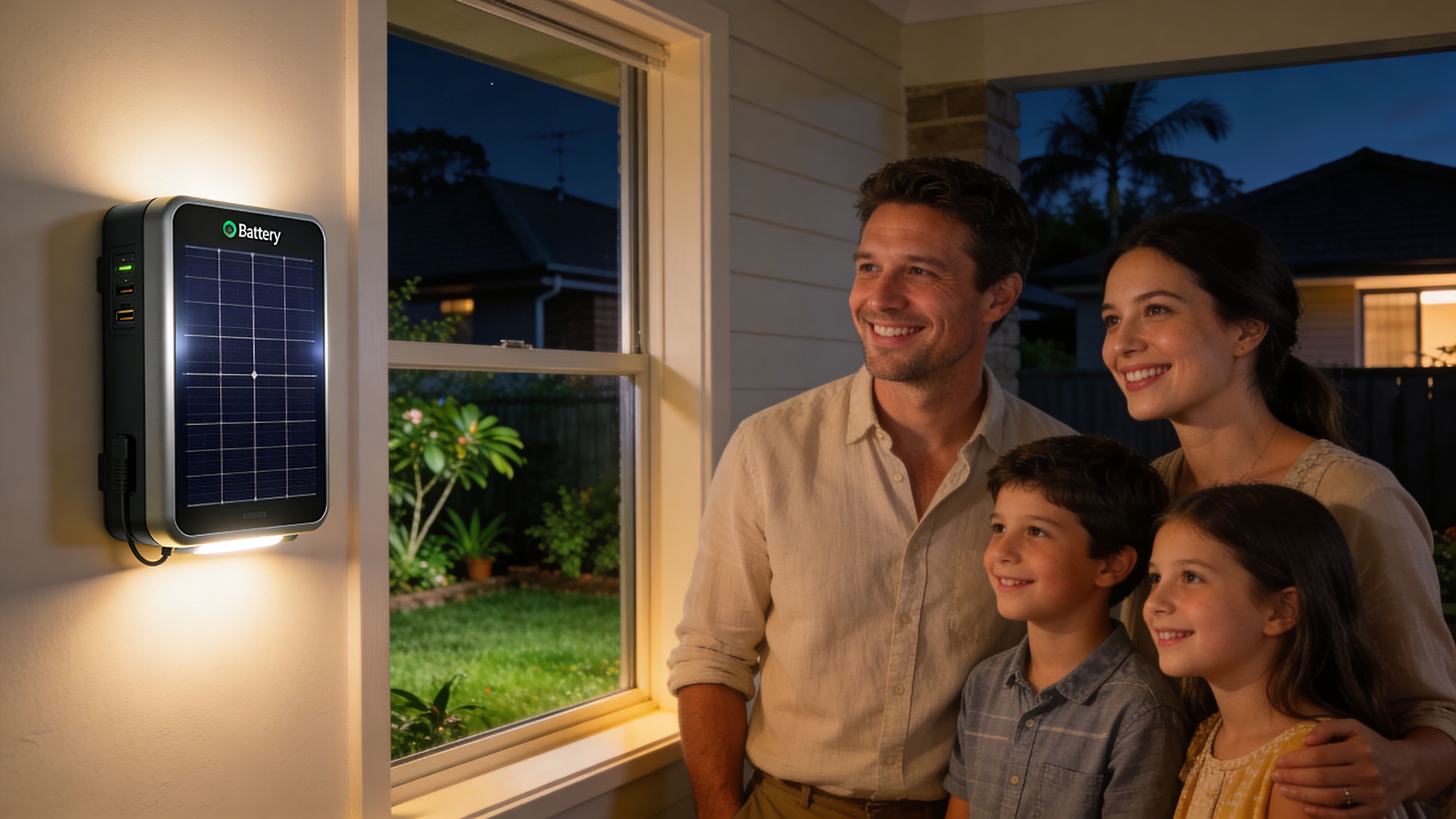
The biggest non-financial benefit is backup power without the generator headache.
When a battery system is designed for blackout support, it can keep selected circuits running automatically. You don’t wheel anything out. You don’t fill jerry cans. You don’t deal with noise or extension leads in the rain.
That’s a strong quality-of-life upgrade in homes with:
There’s also a comfort factor. During a short outage, a well-set-up battery can make the event feel more like an inconvenience than a disruption.
Battery value is often highest in homes that care about certainty.
If the idea of losing power for a while doesn’t bother you, backup may not be worth paying for. But some households care far more about continuity than they do about pure payback.
A battery can also make your home feel more self-directed. You’re less exposed to every tariff tweak, and you make better use of the energy your roof already produces.
A battery is partly a financial product and partly an insurance product. Some buyers focus on payback. Others care more about what happens on the worst day of the year.
For a visual explanation of backup and home energy flow, this video gives useful context before you compare product options:
The first drawback is still the obvious one. Batteries are expensive enough that even a decent rebate doesn’t make them casual spending.
The second is that performance changes over time. Batteries don’t stay at day-one capacity forever. That doesn’t make them a bad investment, but it does mean homeowners should think in terms of useful long-term performance, not permanent full output.
The third is backup expectations. A lot of people assume one battery means whole-home operation exactly as normal. That’s rarely the right design approach. Most sensible systems prioritise essentials and selected loads.
Some setups disappoint because the owner wanted the battery to solve every problem at once.
That usually looks like one of these:
A battery is a targeted tool. It works well when the goal is clear.
The most common sizing mistake is simple. People match the battery to the solar array instead of matching it to what the house uses after sunset.
That’s backwards.
A battery earns its keep in the evening, overnight, and during outages. So the first number to care about is your real household load in those periods, especially the late afternoon and evening window.
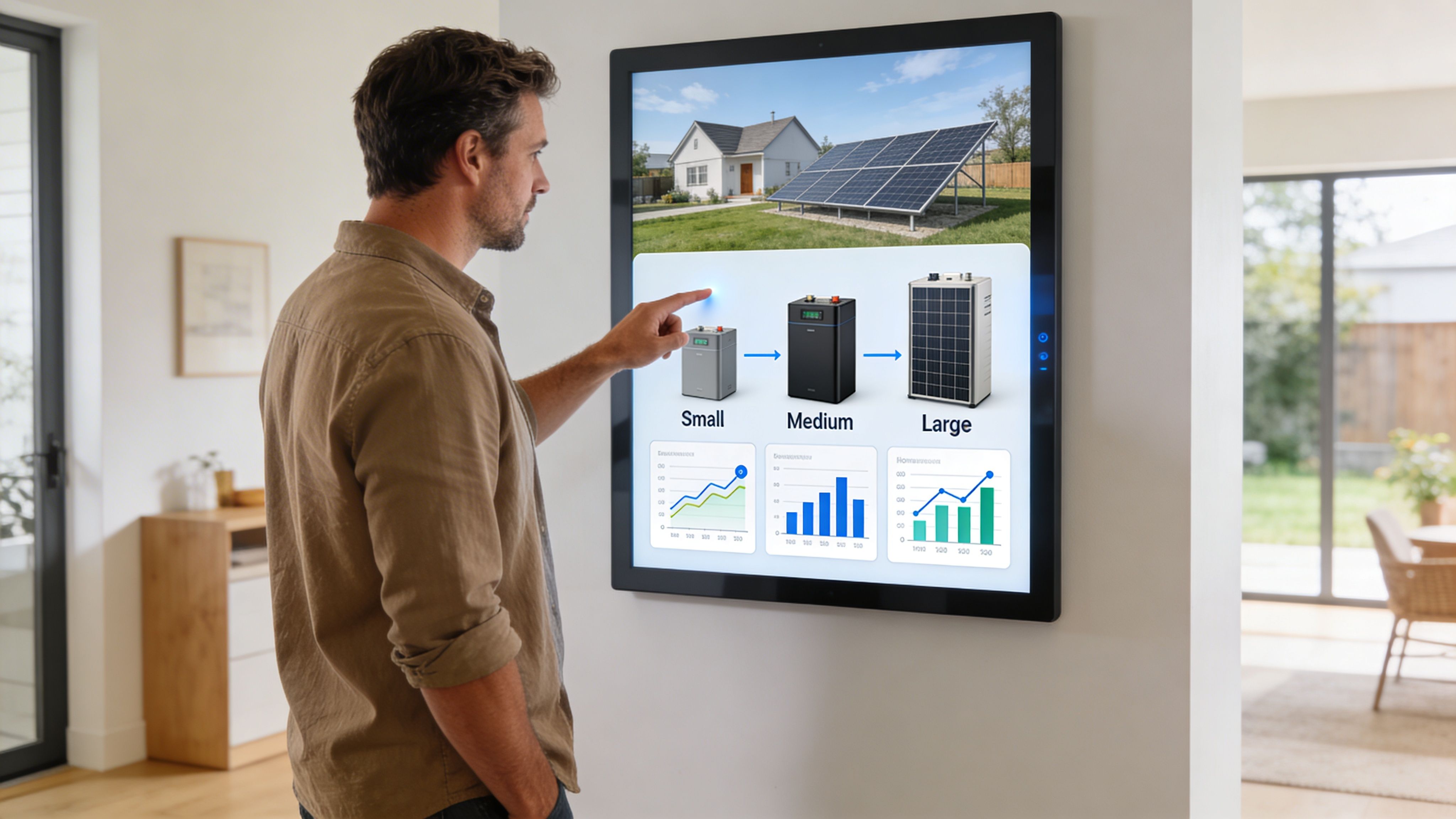
Look at your power bill and your routine.
Ask practical questions:
Verified Queensland data suggests many North Brisbane homes should consider appropriate battery sizing for resilience and storm-related backup needs, particularly when the owner wants more than minimal emergency support.
If you want a starting point before getting a site assessment, this guide on what size solar battery do I need is a useful reference.
Battery projects are never just about the battery box on the wall.
You also need to think about:
Here, a proper electrical assessment matters. In Brisbane homes, especially older stock in areas like Grange and Windsor, existing board layout and available space can shape the whole design.
A battery can do more than save your own solar for later.
Verified data shows that Queensland VPP programs can boost ROI by 20 to 30%, with providers such as Tesla Energy and Sonnen paying $200 to $400/kWh dispatched annually, according to Paradise Solar Energy’s guide to solar batteries.
That doesn’t mean everyone should join a VPP.
For some owners, extra cycling, control conditions, or contract terms won’t be worth it. For others, VPP income is what turns a borderline battery investment into a sensible one.
Check your evening load first
If your usage is mostly daytime, a battery may not return much.
Confirm you have enough spare solar
A battery needs excess daytime production to charge properly.
Decide your blackout priority
Essentials-only backup is very different from trying to run most of the house.
Assess the switchboard and inverter
DLG Electrical handles switchboard upgrades and battery-ready electrical work as part of broader home energy projects.
Ask about VPP compatibility
Some systems are more flexible than others if you want that option later.
The right battery size is the one that fits your evening habits and backup priorities. Bigger isn’t automatically better if the house can’t use or charge it properly.
A lot of Brisbane homeowners ask about batteries when the first summer blackout hits. Fair enough. But a battery is not always the first upgrade that makes financial sense.
Sometimes the smarter move is to keep the solar you have and change how you use it.
This is the cheapest path upfront because you are not buying extra hardware.
The catch is the gap between what retailers pay for exported solar and what they charge you to buy power back later. In Queensland, that gap is wide, as noted earlier, which why battery quotes start to look more appealing once households check their evening usage.
If someone is home through the day, runs air conditioning, pool equipment, or major appliances while the system is producing, exporting can still be fine. If the house sits empty until 6 pm and the big loads start after dark, the economics are usually weaker.
For storm backup alone, a generator can cost less than a battery.
That said, it solves a different problem. A generator gives you occasional emergency power. It does not help much with day-to-day bill savings, and it comes with fuel storage, servicing, noise, and setup issues. In a real Brisbane storm season, some owners are happy to wheel one out for the fridge and a few lights. Others want backup that cuts in automatically and does not depend on petrol being available.
That is where batteries earn their keep. They are quieter, easier to live with, and better suited to homes that want both backup and better solar self-use.
This is the alternative I recommend most often before anyone signs for a battery.
Load shifting means pushing flexible usage into solar hours. Put the dishwasher, washing machine, hot water heating, EV charging, and pool pump into the middle of the day where possible. On an Energex time-of-use setup, that can matter twice. You use more of your own solar, and you buy less power during the expensive periods.
It will not give you blackout protection. It also will not help much if the house is empty all day and there is nothing flexible to shift. But for plenty of SEQ homes, a few timer changes and one or two appliance upgrades make a noticeable difference without battery cost.
Some households are better served by treating solar, backup circuits, smart controls, and storage as one system instead of buying a battery in isolation. That approach matters more in Brisbane than many national guides admit, because storm outages, tariff structures, and future EV charging can all change what the best setup looks like over the next few years.
If that is the direction you are heading, it helps to explore home microgrid systems and look at how each part works together.
The short version is simple. If your main goal is the lowest upfront cost, exporting and smarter daytime usage usually beat a battery. If you want quiet backup during Queensland storms, protection from pricey evening imports, and better control over how your solar is used, a battery starts to make more sense.
For the right Brisbane home, yes. A solar battery can be a smart move in 2026.
Not because every battery is automatically a bargain. And not because every solar owner should rush into one. It’s smart when the local conditions line up with how your household uses power.
A battery is usually a good fit if most of these points sound like you:
You may want to hold off if the opposite is true. Low evening usage, short ownership plans, or limited concern about outages can all weaken the case.
Verified data cited by Zecar notes that homes with solar, and increasingly batteries, can command a significantly higher market value, which is relevant in Brisbane’s buyer market where energy performance matters.
That doesn’t mean a battery should be bought purely for resale. But it does mean the value isn’t only on the bill. For some owners, it improves the home’s appeal as well as its daily function.
The strongest battery decisions are usually boring in the best way. The numbers stack up, the backup plan is clear, the system is sized properly, and the owner knows what they want it to do.
Most modern home batteries are built for long service life, but they don’t all age the same way.
Verified Queensland battery data indicates a strong cycle life for common LiFePO4 systems, which is one reason they’re widely used in residential installs. In practical terms, homeowners should focus on the warranty terms, expected retained capacity over time, and whether the battery chemistry suits Brisbane conditions.
Not much in normal residential use.
Most modern home batteries are largely low-maintenance from the owner’s perspective. The key job is keeping the installation environment suitable, monitoring the app or portal for faults, and having any electrical issues checked by a licensed professional rather than trying to troubleshoot the system yourself.
Often, yes.
Retrofitting depends on the current inverter, switchboard arrangement, available wall space, and whether the design is going to be AC-coupled or integrated through a hybrid inverter setup. Some homes are straightforward. Others need extra electrical work before the battery can be installed safely and legally.
Sometimes, but that shouldn’t be the default assumption.
Most sensible Brisbane battery designs focus on backed-up circuits and essential loads first. If whole-home backup is the goal, the system size and project cost can rise quickly. For many households, a well-planned essentials backup setup is the better balance.
Yes.
Verified data indicates LiFePO4 is well-suited for Brisbane conditions because of its thermal stability and durability. That matters in a subtropical climate where heat, humidity, and enclosed installation spaces all need proper consideration.
If you want a straight answer on whether a battery makes sense for your home, the next step is a site-specific assessment. DLG Electrical can inspect the existing solar setup, switchboard, and backup requirements, then give you a practical recommendation based on how your Brisbane household uses power.

Master Electrician with over 30 years of experience. Founded DLG Electrical in 2005 after international project work including electrical installations at Stamford Bridge Stadium, London(Home of Chelsea FC).

Local Electricians that can fix all Electric Hot water Systems.
Motion sensor lights are a versatile addition to any home, offering nu
