83 Jean St, Grange QLD 4051
Mon-Fri 07:30 AM - 04:00 PM - Sat - 8:00 - 12 - Sunday Closed
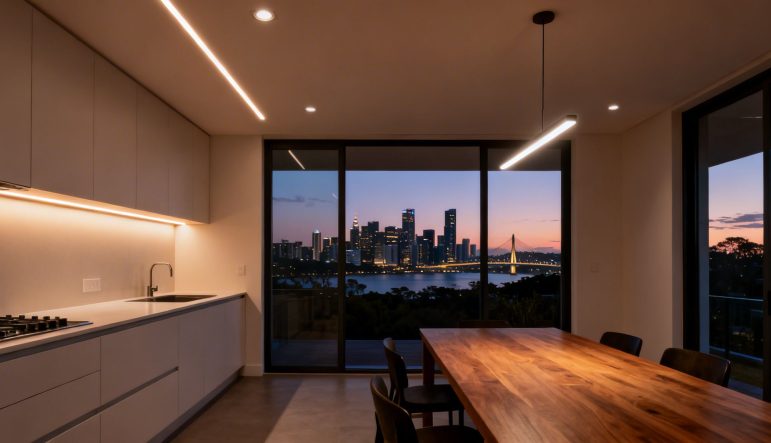
In Brisbane’s dynamic property market, staying ahead means making smart, cost-effective upgrades. From the classic Queenslander in Grange to modern commercial spaces in the CBD, property owners are discovering that one of the most impactful changes they can make is upgrading their lighting. While traditional incandescent and halogen bulbs are being phased out, LED (Light Emitting Diode) technology has emerged as the clear winner, offering a powerful combination of efficiency, longevity, and quality.
The full spectrum of the benefits of LED lighting, however, extends far beyond just a lower electricity bill. A well-planned upgrade can improve a property’s safety, aesthetics, and overall value. For those looking to implement such changes, a focus on comprehensive energy-efficient lighting design is crucial. It’s about creating a system that works for your specific space, whether it’s a family home in Windsor or a bustling North Brisbane business.
This guide, created specifically for Brisbane homeowners and commercial property managers, will explore the top ten reasons why now is the perfect time to make the switch. We will unpack quantifiable savings with real-world return on investment examples, explore local compliance factors, and outline the practical steps for a seamless transition. With the help of trusted local experts like DLG Electrical, you can illuminate your property’s future and start capitalising on these advantages today. Let’s dive into why making the bright switch is one of the smartest decisions you can make for your property.
The most immediate and significant of the benefits of LED lighting is its remarkable energy efficiency, which translates directly into lower power bills for Brisbane homes and businesses. LEDs are a complete departure from older lighting technologies. Where incandescent and halogen bulbs wasted up to 90% of their energy producing heat, LEDs efficiently convert electricity directly into light with minimal thermal loss.
This efficiency is substantial. LEDs consume approximately 75-80% less energy than traditional incandescent bulbs and around 50% less than compact fluorescent lamps (CFLs). This isn’t just a minor improvement; it’s a fundamental change in how your property uses electricity. For a typical family home in suburbs like Grange or Windsor, making the switch can easily reduce annual energy costs by $150 to $300 from lighting alone.
For commercial properties, from retail stores in Ascot to office buildings in the CBD, the savings are multiplied across hundreds of fixtures, leading to a significant reduction in operational overheads and a stronger bottom line.
For those unsure about the differences between older lights, understanding the direct comparison between halogen and LED lights is a great starting point for appreciating the savings potential. This efficiency not only saves money but also places less strain on the energy grid, contributing to a more sustainable community.
Beyond energy savings, another of the core benefits of LED lighting is its incredible operational lifespan, which dramatically reduces the frequency and cost of replacements. LED bulbs are engineered for endurance, commonly rated for 25,000 to 50,000+ hours of service. This longevity stands in stark contrast to older technologies, with traditional incandescent bulbs lasting only around 1,000 hours and fluorescent tubes reaching about 8,000-10,000 hours.
For a typical household in Brisbane, this lifespan can translate into decades of reliable light from a single bulb. This “set and forget” quality is especially valuable for landlords and property managers. Replacing outdoor security lights every 10+ years instead of quarterly, or eliminating seasonal lighting maintenance budgets for a commercial property, significantly cuts down on labour costs, tenant complaints, and administrative hassle. Many homes in Windsor with professional LED installations from 2015 are still operating perfectly, demonstrating real-world durability.
This long-term reliability makes LEDs an investment in property value and operational efficiency, not just a simple purchase. The peace of mind that comes from knowing your lights will work for years, especially in hard-to-reach fixtures like high ceilings or stairwells, is a practical advantage for any property owner.
Understanding the factors that contribute to this extended operational life is key. For a deeper look into the specifics, finding out more about how long LED lights last can provide valuable context for your upgrade plans. This durability solidifies the long-term value proposition of making the switch.
Beyond just illumination, one of the most compelling benefits of LED lighting is its ability to render colours with exceptional accuracy and vibrancy, completely changing the feel of a space. Modern LEDs offer a high Colour Rendering Index (CRI) – a measure of how faithfully a light source reveals the true colours of objects. With CRI ratings typically between 80 and 98, LEDs ensure that everything from your wall paint to your food looks natural and rich, unlike the washed-out or distorted appearance often caused by older fluorescent lights.

This superior light quality extends to their performance. LEDs provide instant, full brightness the moment you flick the switch, with none of the slow warm-up time associated with CFLs. They also deliver flicker-free operation, which can reduce eye strain and headaches. For a Grange homeowner, this means creating a more inviting and aesthetically pleasing interior. For commercial properties across North Brisbane, it translates into a better customer experience and improved employee productivity.
Real estate agents have even reported that properties upgraded with high-quality LED lighting often present better during viewings and can sell faster. The ability to choose the perfect colour temperature, from a cosy warm white to a crisp cool daylight, gives you complete control over the mood and function of every room.
Understanding the options available, especially when considering different types of fittings, is key. Our guide to LED down lights offers further insight into making the right choice for your Brisbane home or business. By choosing the right LED, you’re not just lighting a room; you’re enhancing its character and function.
Beyond saving money, another of the core benefits of LED lighting is the immense improvement in safety for homes and businesses across Brisbane. Older lighting technologies, particularly incandescent and halogen bulbs, are notorious for generating extreme heat. LEDs, however, operate at significantly lower temperatures, converting most of their energy into light, not heat, which drastically reduces fire risk.
This low-heat operation is crucial, especially in enclosed fixtures or areas with insulation, a common concern in Queenslander-style homes. For landlords and property managers in suburbs like Grange, switching to LEDs eliminates a prominent fire hazard, protecting both tenants and the property itself. Furthermore, LEDs produce no UV or infrared radiation, making them the safest choice for illuminating delicate items like artworks in a library, valuable fabrics in a retail store, or fresh produce in a commercial kitchen without causing degradation or spoilage.
The reliability of LEDs also plays a key role in safety compliance. Their instant-on nature and extremely low failure rates make them the ideal solution for emergency and exit lighting, ensuring clear evacuation paths during a power outage or incident. This helps property owners meet the strict requirements of Australian Standards (AS/NZS) and the Building Code of Australia.
For rental property owners, updating to LED emergency lighting is a straightforward way to improve safety and compliance. This focus on reduced heat, reliability, and adherence to standards not only protects people and assets but also provides valuable peace of mind.
Choosing LED lighting is a powerful step towards environmental responsibility, significantly reducing the carbon footprint of Brisbane properties. Beyond just saving energy, one of the key benefits of LED lighting is its positive lifecycle impact. Unlike fluorescent lamps, LEDs contain no mercury or other hazardous materials, making them safer for the environment during use and upon disposal. Their incredibly long lifespan also means fewer bulbs are produced and discarded, directly reducing landfill waste.
For environmentally-conscious homeowners and property managers, switching to LEDs supports both local and national climate goals. A commercial property portfolio in Brisbane, for instance, can reduce its carbon footprint by 5-8 tonnes annually simply through a complete LED conversion. This commitment to sustainability also improves corporate image and can contribute to achieving Green Star or Energy Star recognition, a valuable asset in today’s market.
This green credential is also a marketable feature in the residential sector. Landlords in North Brisbane suburbs are finding that advertising properties with energy-efficient LED lighting attracts eco-conscious tenants. On a municipal scale, cities converting street lighting to LEDs are making substantial cuts to their overall emissions, creating a healthier community for everyone.
Further enhancing sustainability, advancements in technologies like solar powered LED skylights enable homes to utilize renewable energy for their lighting needs, contributing to a smaller environmental footprint. By making a conscious choice with your lighting, you contribute positively to a more sustainable Brisbane.
While the initial purchase price of LEDs can be higher than traditional bulbs, one of the most compelling benefits of LED lighting is the outstanding return on investment (ROI). The total cost of ownership is significantly lower due to their minimal energy consumption and exceptional longevity. This financial advantage makes LEDs a smart long-term investment for any Brisbane property.
These savings come from two primary areas: drastically reduced electricity bills and virtually eliminated maintenance costs. A Grange homeowner spending $800 on a complete LED conversion could see annual electricity savings of over $200, resulting in the upgrade paying for itself in under four years. For a commercial property in North Brisbane, switching to LEDs can slash lighting-related energy costs by 40-50%, often translating to savings between $5,000 and $15,000 annually.
Property managers see these benefits amplified across multiple sites. A landlord with ten rental properties could easily save over $2,000 per year on electricity and another $500 on the cost and labour of replacing failed bulbs. After the initial payback period of just 1-3 years, these savings go directly to improving the property’s net operating income.
A key benefit of LED lighting, especially for Brisbane’s varied climate, is its exceptional durability. Unlike traditional bulbs that rely on fragile filaments or delicate glass tubes, LEDs are solid-state devices. This construction makes them inherently resistant to shock, vibration, and physical impact, drastically reducing the risk of breakage and the need for frequent replacements.
This toughness means LEDs operate reliably across a wide range of temperatures and in humid or coastal conditions. For a coastal property in Sandgate, marine-grade LEDs can withstand the corrosive salt air that would quickly degrade inferior fixtures. Similarly, in a workshop in Brendale, shock-resistant LEDs will continue to function flawlessly despite constant vibrations from heavy machinery, while older fluorescent tubes would flicker or fail.
This inherent resilience is a major advantage for outdoor and hard-to-reach installations. Whether it’s landscape lighting enduring seasonal downpours or high-bay lights in a warehouse, the robust nature of LEDs ensures consistent performance and minimises maintenance, saving both time and money.
Beyond just illumination, one of the most exciting benefits of LED lighting is its innate compatibility with advanced control systems and smart home technology. Modern LEDs offer a spectrum of control, from simple dimmers to complete integration with smart assistants. This capability transforms lighting from a basic utility into a dynamic part of your home or business environment, improving convenience, security, and energy management.
This adaptability means LEDs can work seamlessly with timers, motion sensors, and sophisticated smart platforms. For Brisbane homeowners, this could mean using an app to adjust living room lighting from the couch or automating outdoor lights for security. For a rental property manager, it allows for setting automated evening patio lighting to enhance tenant safety and property appeal. The technology puts precise control at your fingertips.
Imagine a home in Grange where you can use voice commands via Google Home or Alexa to dim the bedroom lights, or a commercial space in North Brisbane where occupancy sensors automatically turn lights off in empty rooms, reducing energy waste by a notable 20-30%. This level of customisation was once a complex luxury but is now an accessible feature of modern LED systems.
A key advantage of LED lighting is its immediate, full-power performance and flexible control. Unlike old fluorescent or CFL bulbs that needed time to warm up and often flickered, LEDs reach 100% brightness the instant you flip the switch. This instant-on, flicker-free behaviour provides everyday convenience and is critical for safety and security applications, offering reliable visibility without delay.
This responsiveness makes LEDs perfect for areas where immediate light is essential. For a family home in Grange, this means no more stumbling in a dark hallway or bedroom at night. For outdoor security lighting, it ensures motion-activated fixtures instantly illuminate your property, deterring intruders. Furthermore, LEDs offer superior dimming capabilities. Whereas older bulbs would often hum, flicker, or shift colour when dimmed, quality LEDs dim smoothly across a wide range without impacting their lifespan or colour integrity, giving you complete control over your home’s ambience.
For landlords with rental properties, installing dimmable LED lighting in living rooms can significantly improve tenant satisfaction and add a modern touch. In commercial settings, this instant-on functionality is crucial for emergency and egress lighting, ensuring immediate compliance and occupant safety during a power outage.
One of the most powerful long-term benefits of LED lighting is the drastic reduction in maintenance, which directly translates to less downtime and lower operational costs for Brisbane properties. The exceptional lifespan and durability of LED fixtures mean that the constant cycle of replacing blown bulbs becomes a thing of the past. This is a game-changer for property managers and business owners who are accustomed to frequent maintenance calls.
For a landlord managing a portfolio of 20 rental properties in Windsor, this could mean reducing maintenance calls from over 30 per year to just two or three. For a commercial building in North Brisbane, it can completely eliminate quarterly bulb replacement schedules. The predictable, long-term performance of LEDs allows for planned, proactive maintenance rather than disruptive, reactive repairs, improving operational efficiency and keeping tenants or employees happy. A Grange property manager could reclaim over 200 hours annually that were previously spent organising lighting fixes.
This reliability is especially critical for hard-to-reach fixtures, such as high ceilings in commercial spaces or outdoor security lighting, where a single bulb replacement can involve specialist equipment and significant cost. An LED security light installation can often operate for over 15 years with zero maintenance.
| Item | 🔄 Implementation Complexity | ⚡ Resource Requirements | 📊 Expected Outcomes | 💡 Ideal Use Cases | ⭐ Key Advantages |
|---|---|---|---|---|---|
| Energy Efficiency and Lower Power Consumption | Low — simple bulb swaps; bulk installs require coordination | Low ongoing energy; moderate upfront purchase cost | Large electricity bill reductions (40–80%) | High-use areas, whole-property retrofits | Major energy and cost savings; qualifies for rebates |
| Extended Lifespan and Longevity | Low — replace less often; planning for system-wide changes | Low maintenance resources; higher initial spend | Decades-long service life; fewer replacements | Hard-to-reach fixtures, rental portfolios, commercial sites | Fewer maintenance calls; lower TCO over time |
| Superior Light Quality and Color Rendering | Moderate — select correct CRI / CCT per space | Varies by product (high-CRI cost premium) | Improved aesthetics, reduced eye strain, better colour accuracy | Living spaces, retail, photo/colour-critical areas | Natural colours, mood and productivity benefits |
| Safety, Reduced Heat and Compliance | Moderate — specify for code and emergency systems | Low heat output; may need certified fixtures | Lower fire risk, safer touch temps, code compliance | Enclosed fixtures, emergency lighting, museums | Safer operation; reduces HVAC and liability risks |
| Environmental Impact and Sustainability | Low — straightforward swap improves footprint | Low operational emissions; consider recycling | Reduced lifecycle emissions; less hazardous waste | Eco-focused properties, public projects, portfolios | Lower carbon footprint; avoids mercury in lamps |
| Cost Savings and Return on Investment | Moderate — ROI planning recommended for bulk projects | Upfront capital; rapid payback through energy savings | Payback typically 1–3 years; long-term savings thereafter | Property managers, commercial buildings, high-use homes | Fast ROI, predictable savings, increases property value |
| Durability and Resistance to Harsh Conditions | Moderate — choose IP/temperature-rated products | Robust physical resistance; select appropriate drivers | Fewer breakages, reliable in extreme conditions | Outdoor, coastal, industrial, garages | Shock/vibration resistant; tolerates temperature extremes |
| Flexible Control and Smart Technology Integration | High — requires ecosystem planning and setup | Higher product and integration costs; needs network | Improved automation, energy optimisation, security | Smart homes, managed rentals, commercial automation | Customisable schedules, remote control, energy reductions |
| Instant-On and Dimmability Without Performance Loss | Low — ensure dimmer compatibility during install | Minimal extra resources; requires LED-compatible dimmers | Immediate full brightness; smooth dimming without colour shift | Safety lighting, living spaces, hospitality | Instant response, consistent colour, no lifespan penalty |
| Lower Maintenance and Reduced Downtime | Low — fewer scheduled replacements; planning needed | Reduced labour and spare inventory over time | Large maintenance savings; predictable lifecycle planning | Large rental portfolios, commercial facilities | Significant reduction in maintenance workload and costs |
The evidence is undeniable. As we’ve explored, the decision to upgrade to LED lighting is one of the most effective and financially sound improvements a Brisbane home or business owner can undertake. This isn’t just about changing a light bulb; it’s a fundamental upgrade to your property’s efficiency, safety, and operational intelligence. The argument for making the switch has never been stronger, moving from a simple “nice-to-have” to a modern necessity for any forward-thinking property owner.
We’ve seen how the benefits of led lighting create a powerful ripple effect. It starts with immediate and substantial reductions in your power bills, thanks to energy consumption that can be up to 80% lower than traditional lighting. But the financial upside doesn’t stop there. The incredible lifespan of LEDs, often exceeding 50,000 hours, means the constant cycle of buying and replacing bulbs becomes a thing of the past. For a Grange homeowner, this means fewer trips to the hardware store and more time enjoying your home. For a commercial property manager in the CBD, it translates directly into lower maintenance overheads and zero operational downtime from lighting failures.
The advantages extend far beyond pure economics. Consider the immediate improvement in safety. LEDs operate at a fraction of the temperature of halogen or incandescent bulbs, drastically reducing the risk of burns or fire hazards, a critical factor for compliance in any Brisbane property. This cool operation, combined with their robust, shatter-resistant construction, creates a safer environment for families and employees alike.
Furthermore, the superior quality of light produced by modern LEDs cannot be overstated. With high Colour Rendering Index (CRI) ratings, they reveal the true colours of your interiors, enhancing everything from the paint on your walls to the products on your shelves. When integrated with smart technology, this control becomes even more refined. Imagine adjusting the warmth and brightness of your Windsor home’s lighting to suit any mood or activity, all from your smartphone. This is the level of customisation and control that LED technology delivers today.
Making the transition to LED is a clear-cut win for your property’s value, sustainability, and daily running costs. You are not just installing a new light source; you are investing in a long-term solution that pays dividends for years. The key takeaways are simple and compelling:
The path forward is clear, and the benefits are waiting. By choosing to upgrade, you are making a strategic decision that improves your financial position, enhances your property’s safety and aesthetic appeal, and aligns with modern sustainability goals. This single change provides a cascade of positive outcomes, making it one of the most rewarding upgrades available.
Ready to see these benefits firsthand in your Brisbane home or business? The licensed and experienced team at DLG Electrical specialises in seamless LED lighting upgrades, ensuring every installation is safe, compliant, and optimised for maximum performance and savings. Contact DLG Electrical today for a no-obligation quote and let our expert electricians illuminate the true potential of your property.

Master Electrician with over 30 years of experience. Founded DLG Electrical in 2005 after international project work including electrical installations at Stamford Bridge Stadium, London(Home of Chelsea FC).

Local Electricians that can fix all Electric Hot water Systems.
Motion sensor lights are a versatile addition to any home, offering nu
