83 Jean St, Grange QLD 4051
Mon-Fri 07:30 AM - 04:00 PM - Sat - 8:00 - 12 - Sunday Closed

Thinking about rewiring your house? The first question on everyone’s mind is usually, “What’s this going to cost me?”
Generally speaking, you can expect the cost of rewiring a house in Australia to fall somewhere between $4,000 for a small, simple home to over $12,000 for a larger, more complex property. This is a broad range, I know. That’s because the final price tag includes both labour and materials, and it hinges heavily on your home’s size, age, and just how easy (or difficult) it is for an electrician to get to the wiring.

Trying to understand the cost of a full rewire can feel a bit overwhelming, but it doesn’t have to be a mystery. The best way to think about it isn’t as a single, fixed price, but more like a spectrum.
At one end, you’ve got a straightforward job in a modern, single-storey home with easy access to the roof space and under the floor. At the other end? A complex project in an old double-brick heritage house where every centimetre of cable is a battle to run.
Ultimately, your home’s unique story and structure are the biggest drivers of the final quote. The goal here is to give you a clear, upfront look at the numbers so you can start planning with confidence.
The most significant factor influencing the price is, without a doubt, the size of your property. More bedrooms, bigger living areas, and extra storeys all mean more cable, more power points, more light fittings, and—you guessed it—more hours on the job for the electrician.
To give you a clearer picture, here’s a look at what you might expect to pay based on your property’s size.
This table breaks down the average cost ranges you can expect for different property sizes. It’s a great starting point for figuring out your initial budget.
| House Size | Average Cost Range (AUD) |
|---|---|
| 2-Bedroom House/Unit | $4,000 – $6,000 |
| 3-Bedroom House | $6,500 – $9,000 |
| 4-Bedroom House | $9,000 – $12,000+ |
| 5+ Bedroom House | $12,000+ |
As you can see, a smaller 2-bedroom home might cost between $4,000 and $6,000, while a typical 3-bedroom house could be in the $6,500 to $9,000 range. For larger properties with four or more bedrooms, costs can easily climb from $9,000 to over $12,000. If you want to dive deeper into the numbers, you can discover more insights about Australian rewiring costs to get a comprehensive view.
While size is the big one, several other variables play a crucial role in shaping the final cost. These are the details your electrician will be looking at closely when they prepare your quote.
When you put all these factors together, you start to see the unique financial blueprint for your specific rewiring project.
Here is the rewritten section, crafted to sound human-written by an experienced expert, following the provided style guide and requirements.
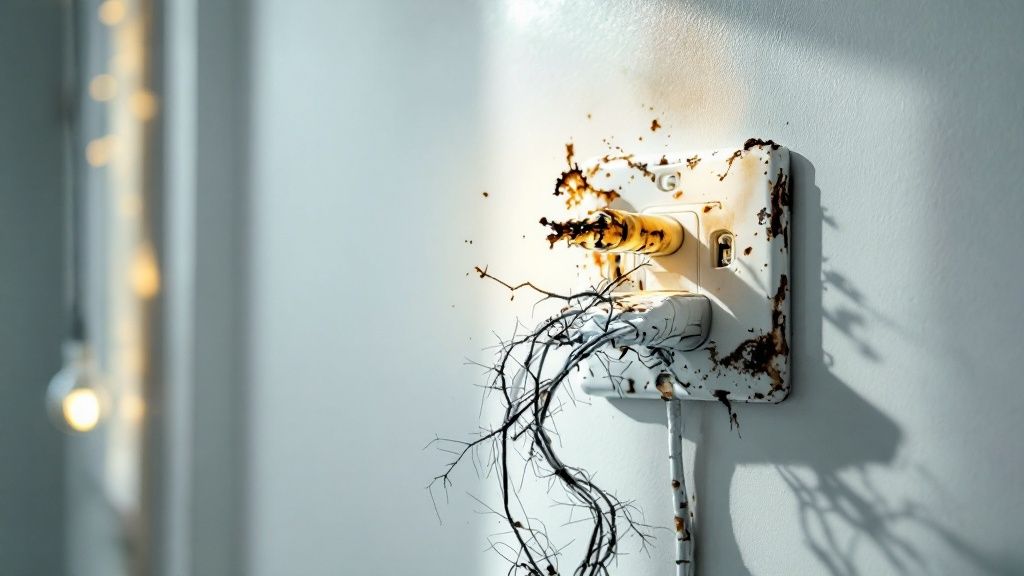
It’s easy to focus on the cost of rewiring a house, but it’s just as important to understand why it’s a non-negotiable investment. Think of your home’s electrical system like its central nervous system. When that system is old and worn out, the whole house is vulnerable to hidden dangers that go way beyond a flickering light or a dead power point.
The simple truth is, old wiring was never designed for modern life. Our homes are now packed with laptops, smart TVs, powerful kitchen appliances, and even EV chargers. These all draw far more power than the simple circuits from the 1960s or ‘70s were ever built to handle. Pushing that much electricity through an old system puts it under serious stress, which can lead to catastrophic failure.
One of the biggest risks is hidden right inside your walls, with the materials used in older homes. Decades ago, electrical cables were often insulated with rubber or cloth. After years of heating up and cooling down, these materials become incredibly brittle.
The insulation starts to crack and flake away, leaving the live copper wires dangerously exposed. This is a ticking time bomb. All it takes is for an exposed wire to touch a timber frame, a metal pipe, or another wire, and you get an electrical arc—a super-hot spark that can instantly set fire to timber, insulation, or even dust.
According to the Electrical Safety Foundation International, electrical failures are behind roughly 51,000 home fires every year. These fires lead to nearly 500 deaths and over a billion dollars in property damage, with a huge number of them tracing back to old, faulty wiring.
Your house will often give you clues that its electrical system is struggling. Ignoring these warnings is a gamble you don’t want to take. It’s crucial to spot these red flags before a minor issue becomes a major hazard.
Here are some of the most common signs that your wiring is outdated and potentially dangerous:
Beyond the cables themselves, older homes are missing the modern safety nets we now rely on. Today’s electrical standards in Australia demand the use of Residual Current Devices (RCDs), which you might know as safety switches. These brilliant devices are designed to shut off the power in a split second if they detect a leak of current—like what happens if a person accidentally touches a live wire.
Old switchboards often don’t have these life-saving RCDs. Without them, the risk of a severe electric shock is dramatically higher. Upgrading your wiring isn’t just about pulling new cables through the walls; it’s about installing a complete modern system that actively protects your family from electrocution and fire. When you think about what’s at stake, the cost of rewiring your house stops being an expense and becomes an essential investment in safety and peace of mind.
Getting a quote for a full house rewire can feel like trying to read another language. You’re often handed a long list of terms and figures that don’t make a lot of sense at first glance, but figuring out what they mean is crucial to understanding where your money is going and why the cost of rewiring a house varies so much.
Here’s an analogy I like to use: rewiring a modern, single-storey timber-frame home is like painting a smooth, freshly plastered wall. It’s pretty straightforward, the tools are standard, and the job moves along quickly.
But rewiring an older, double-brick heritage house? That’s more like painting a detailed, ornate ceiling. It takes more time, specialised techniques, and a whole lot of careful work to navigate the obstacles.
Every home has its own quirks and challenges, and your quote is really just a reflection of the specific “ornate ceiling” your electrician is dealing with. Once you break down the components, you’ll feel more confident reading any quote, asking the right questions, and understanding the real value of the work.
A few key factors will show up on your quote—either directly or indirectly—that have the biggest impact on the final price. These are the big-ticket items that define the scope of your project.
Beyond the big-picture stuff, your quote will itemise the specific parts and pieces being installed. Each one adds to both the material and labour costs, so understanding these line items is the key to comparing quotes accurately.
It’s helpful to get your head around the general principles of understanding how to get an accurate home service estimate, as many of the same ideas apply here.
The number of outlets and fixtures is a primary driver of the final price. Here’s a quick look at what’s usually involved:
The image below gives a great visual of how costs can vary dramatically from room to room based on their electrical needs.
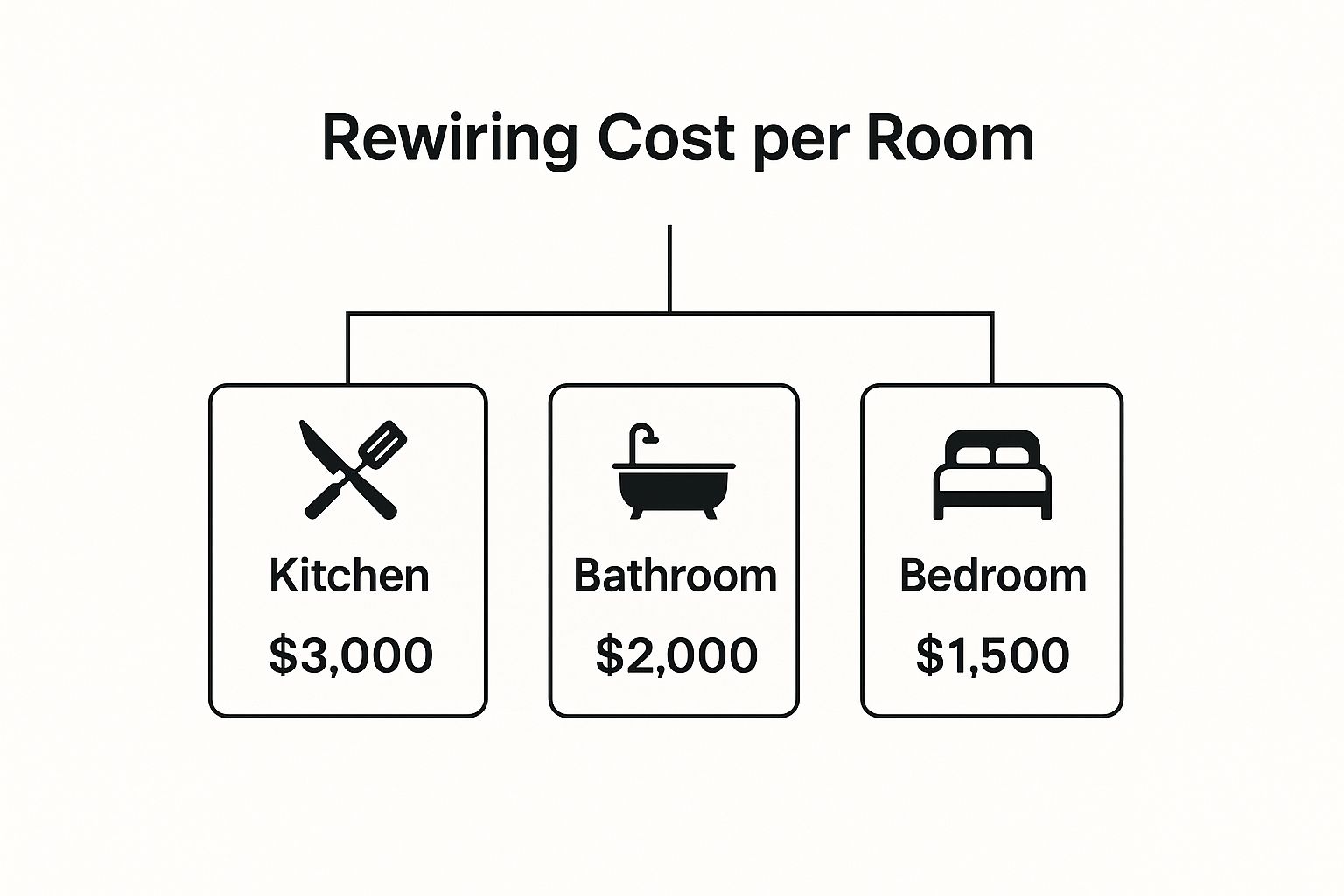
As you can see, a room like the kitchen, with all its appliances and special circuits, takes up a much bigger slice of the budget than a simple bedroom.
Ultimately, the quote boils down to three core categories. Labour is the biggest expense by far, with most electricians in Australia charging hourly rates between $75 and $125. Next up are the material costs for all the wiring and fixtures.
Finally, you have administrative fees for permits and inspections required by your local council, which can add a few hundred dollars to the final bill.
One critical component that will be listed is the switchboard. If you have an old, outdated one, it simply won’t be compatible with modern safety standards and can’t handle the load of a newly rewired home.
A switchboard upgrade isn’t just an optional extra; it’s the heart of your new electrical system. It’s where the modern circuit breakers and safety switches (RCDs) live—the devices that protect your home and family from electrical faults and fire.
This is often one of the most significant single costs on the quote, but it’s absolutely non-negotiable for safety and compliance. For a deeper dive, check out our guide on the full electrical switchboard upgrade cost.
By getting to know each of these elements, you’re no longer just looking at a price tag. You’re seeing a clear roadmap to making your home safer and more functional for years to come.

When you look at a quote for a house rewire, the total cost boils down to two main things: labour and materials. Getting your head around how these are calculated will give you the confidence to understand your quote and plan your budget properly.
It’s a bit like getting a custom piece of furniture made. The price includes the timber, screws, and paint (the materials), but it also covers the time and skill of the person building it (the labour). A rewiring project is exactly the same, and you’ll often find that labour is the single biggest line item on the invoice.
A huge slice of your budget will go towards the electrician’s time and expertise. Here in Australia, you can expect a licensed electrician to charge somewhere between $80 and $130 per hour. This rate isn’t just for their time on site; it covers years of training, insurance, and the expensive, specialised tools needed to get the job done safely.
Keep in mind that where you live matters, too. Labour costs in big cities like Sydney or Melbourne are almost always higher than in regional areas, thanks to the higher cost of running a business. For a job that takes several days, this difference can really add up.
The big takeaway here is that labour can easily make up 50% to 70% of your total project cost. Rewiring isn’t just about pulling cables through walls. It’s a careful, skill-intensive process that involves planning, problem-solving, and making sure every single connection is safe and meets Australian standards.
The other major part of your quote is, of course, the materials. This is more than just the electrical wire itself. A full rewire needs a whole ecosystem of parts working together to keep your home safe and functional.
Here are the key materials you’ll see itemised on your quote:
To give you a clearer picture of where the money goes, here’s a typical breakdown of costs for a standard home rewire project.
| Cost Component | Estimated Percentage of Total Cost |
|---|---|
| Labour | 50% – 70% |
| Materials | 25% – 40% |
| Permits & Fees | 5% – 10% |
As you can see, labour is the dominant expense, highlighting the skill and time required for a safe and compliant installation.
The specific materials you pick can make a real difference to the final bill. While essential safety gear like wiring and circuit breakers are standard, you have a lot more choice when it comes to the fittings you see and use every day.
Making smart choices here can help you manage your budget without cutting corners on safety.
For instance, opting for standard white plastic power points is far more budget-friendly than choosing high-end designer outlets with brushed metal finishes or built-in USB ports, which can cost 3 to 5 times more per unit. The same goes for light switches; a basic toggle switch is much cheaper than a smart switch or architectural dimmer. These choices, especially for lighting, can add hundreds or even thousands to the total.
By having a frank conversation with your electrician about these options, you can find the right balance between the look you want and the budget you have. It means you can invest wisely in the core safety of the system while making savvy decisions on the finishing touches.
The quality of your cables and switches means very little without the right person installing them. When it comes to a full house rewire, the single most important decision you’ll make is choosing the electrician who will do the work. This choice alone can transform a stressful, complex job into a smooth, safe investment in your home.
This isn’t a task for the first name that pops up on Google or the cheapest quote that lands in your inbox. Rewiring a house is a massive undertaking with serious safety implications. You need a licensed, insured, and experienced professional who lives and breathes Australian Standards.
First things first, you need to get a feel for the market. The best way to do this is by gathering at least three detailed, itemised quotes from reputable local electricians. This gives you a clear picture of what the job should cost and lets you compare what each sparky is bringing to the table.
A vague, one-line quote is a massive red flag. A proper, professional quote should break everything down for you, including:
When you’re comparing quotes, make sure you’re comparing apples with apples. Does one price include high-end light fittings while another uses standard ones? Does one electrician factor in plaster repair while the others don’t? These small details can explain big differences in the final price.
It’s always tempting to go for the lowest price, but in the electrical world, that’s often the most expensive mistake a homeowner can make. An unusually low quote is often a sign that corners are being cut, whether it’s through substandard materials, unlicensed work, or a lack of proper insurance.
For example, data from Western Australia shows that while the median cost to rewire a house can be around $4,000, more complex jobs can easily climb past $20,000. A cheap quote in that range might look good on paper, but it rarely guarantees quality or safety. Homeowners are always advised to prioritise an electrician’s reputation, licensing, and warranty over a rock-bottom price.
A cheap rewire that fails an inspection—or worse, causes a fire—will cost you infinitely more in the long run. Investing in a qualified professional isn’t just an expense; it’s an investment in your family’s safety and your own peace of mind.
Before you sign on the dotted line, run through this simple checklist. Think of it as non-negotiable due diligence to make sure you’re hiring a true professional.
While the cost of rewiring a house is a serious investment, it doesn’t have to blow your finances apart. With a bit of clever planning and crystal-clear communication, you can keep the budget firmly under control without ever cutting corners on safety.
Think of it like this: rewiring is a foundational project. If you can line it up with other work, you’ll unlock huge efficiencies. This is one of the single smartest ways to save money and minimise the chaos in your home.
One of the most powerful strategies is to schedule your rewire alongside other renovation projects. If you’re already planning to knock down a wall or gut the kitchen or bathroom, your electrician will have wide-open access to the wall framing and cavities.
This simple timing trick can slash your labour costs. Why? Because the sparky won’t have to spend hours meticulously cutting into pristine plasterboard only to patch it all up again later.
By bundling jobs together, you can save on:
Beyond the immediate costs, exploring smart strategies for home renovations and remodelling projects can help keep your entire timeline and budget on the straight and narrow. It’s all about working smarter, not harder.
It’s incredibly easy to get carried away with all the cool possibilities a full rewire offers. This is exactly where a frank, honest chat with your electrician becomes your best budgeting tool. Get clear on what is absolutely essential for safety versus what would be a ‘nice-to-have’ feature.
For example, upgrading your switchboard with modern safety switches is non-negotiable—that’s a need. On the other hand, installing high-end designer light fittings, a complex home automation system, or extra data points in every single room are wants.
Putting safety essentials first ensures your money is spent where it counts the most.
No matter how meticulously you plan, older homes are notorious for hiding surprises behind their walls. You might uncover old water damage, unexpected asbestos, or weird structural quirks that make the rewiring job more complicated.
To avoid the financial stress of an unexpected discovery, always set aside a contingency fund. A buffer of 10-15% of your total project cost is a wise safety net, giving you the breathing room to handle unforeseen issues without derailing the whole budget.
This isn’t money you necessarily expect to spend, but having it provides priceless peace of mind. It turns a potential crisis into nothing more than a manageable hiccup.
Even after you’ve sorted out the budget and the plan, it’s completely normal to have a few lingering questions about how the whole rewiring process actually plays out. This is a big job, and wondering about the timeline and the mess is part of it. Let’s tackle some of the most common questions we hear from homeowners around Brisbane.
A full rewire is definitely not a one-day job. The exact timeframe really hinges on the size and complexity of your home.
For a smaller, two-bedroom unit, an electrician might be in and out in 3-5 days. But for a larger, two-storey, four-bedroom home, you’re more realistically looking at 7-10 days, sometimes even longer.
What stretches out the timeline? Things like chasing wires into solid brick walls take a lot more time and effort than running cables through a modern timber frame. Any decent electrician will give you a clear, realistic schedule with their quote, so you’ll know exactly what you’re in for.
The short answer is yes, you usually can. But you absolutely need to be prepared for some serious disruption. The electricians will need access to every single room, and the work will kick up a fair bit of dust and noise.
For big chunks of the day, power will be shut off to different parts of the house. This is a crucial point to thrash out with your electrician before they start. If you work from home or have young kids, you’ll need to coordinate a plan to minimise the impact on your daily routine.
While you can technically stay put, a lot of homeowners find it far less stressful to arrange to stay somewhere else. Juggling the constant presence of tradies, the dust, and having no power can make normal life pretty tricky.
Without a doubt. While the cost of rewiring a house feels significant upfront, it’s one of the single most important safety upgrades you can make for your home. You’re effectively eliminating the very real fire risk that comes with old, crumbling wiring and bringing your home into line with modern Australian electrical standards.
A newly rewired home isn’t just safer; it’s ready for the demands of modern life. It can handle everything from air conditioners to EV chargers without skipping a beat. Plus, if you ever decide to sell, a recent, certified rewire is a massive selling point. It gives potential buyers incredible peace of mind and can genuinely boost your property’s appeal and value.
Ready to make sure your home’s electrical system is safe, modern, and up to code? The experienced team at DLG Electrical provides professional, transparent, and reliable rewiring services across Brisbane. Contact us today for a free, no-obligation quote and let our licensed electricians create a safer home for you and your family.

Master Electrician with over 30 years of experience. Founded DLG Electrical in 2005 after international project work including electrical installations at Stamford Bridge Stadium, London(Home of Chelsea FC).

Local Electricians that can fix all Electric Hot water Systems.
Motion sensor lights are a versatile addition to any home, offering nu
