83 Jean St, Grange QLD 4051
Mon-Fri 07:30 AM - 04:00 PM - Sat - 8:00 - 12 - Sunday Closed

When you’re looking into getting security cameras installed, one of the first questions is always, “How much is this going to set me back?” In Australia, a professional setup typically runs anywhere from $800 to over $2,500. That price usually covers both the gear itself and the expert labour to get everything hooked up and working perfectly.
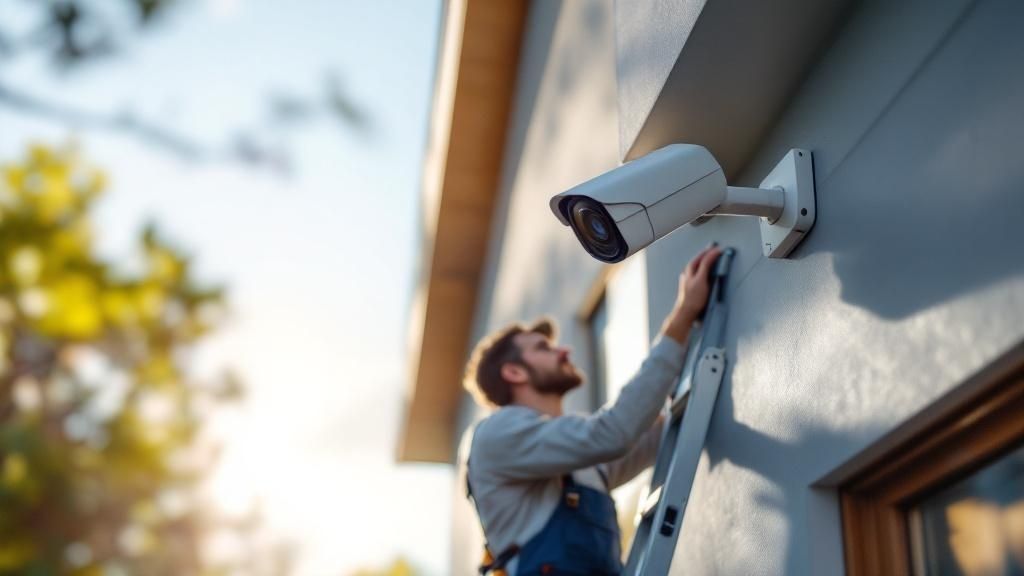
Figuring out the final cost for a security camera installation is a lot like planning a kitchen renovation—the end price really comes down to the choices you make. A straightforward two-camera wireless system is going to be a lot lighter on the wallet than a full-blown eight-camera wired system with crystal-clear recording and smart AI features.
For example, the average cost to install CCTV cameras in a city like Sydney often lands between AUD 750 and AUD 1,270. The price difference really boils down to how complex the system is and what kind of cameras you choose. A basic package will be at the lower end, while more advanced systems can easily push past the $2,500 mark.
A good way to approach your budget is to think in tiers. A basic setup might just cover your front and back doors. A mid-range system could add more cameras with better resolution and more storage. And if you go for an advanced system, you’re looking at 4K cameras, a dedicated recorder, and smart analytics. Knowing what’s a ‘must-have’ versus a ‘nice-to-have’ will help you match your security needs to your budget.
If you’re weighing up your options, our guide to the best home security systems in Australia is a great place to start comparing features and brands.
To give you a clearer picture, here’s a quick look at what you can expect to pay based on the type of system you’re after.
This table breaks down the all-in costs for security camera installation, giving you a ballpark figure based on system size and features.
| System Type | Number of Cameras | Typical Features | Estimated Total Cost (AUD) |
|---|---|---|---|
| Basic System | 2-4 | 1080p Resolution, Local Storage, Motion Alerts | $800 – $1,500 |
| Mid-Range System | 4-6 | 2K Resolution, Cloud Storage, Two-Way Audio | $1,500 – $2,500 |
| Advanced System | 6-8+ | 4K Resolution, NVR, Smart Analytics, Pan-Tilt-Zoom | $2,500+ |
As you can see, the investment climbs as you add more cameras and more sophisticated features like 4K video and intelligent alerts. Use this as a starting point to help shape your budget and your conversations with a professional installer.
Looking at an installation quote can feel a bit like reading a receipt after a big grocery shop—the final number is just the sum of many smaller parts. When it comes to the cost of security camera installation, it really boils down to two main things: the physical gear and the skilled hands needed to put it all together.
Think of the equipment like building a custom PC. You can stick with standard, reliable components for everyday use, or you can go all-in on high-performance parts for a top-of-the-line experience. Every choice you make along the way directly impacts that final price tag.
This diagram helps visualise how the total cost is structured, starting with the main components and branching out from there.
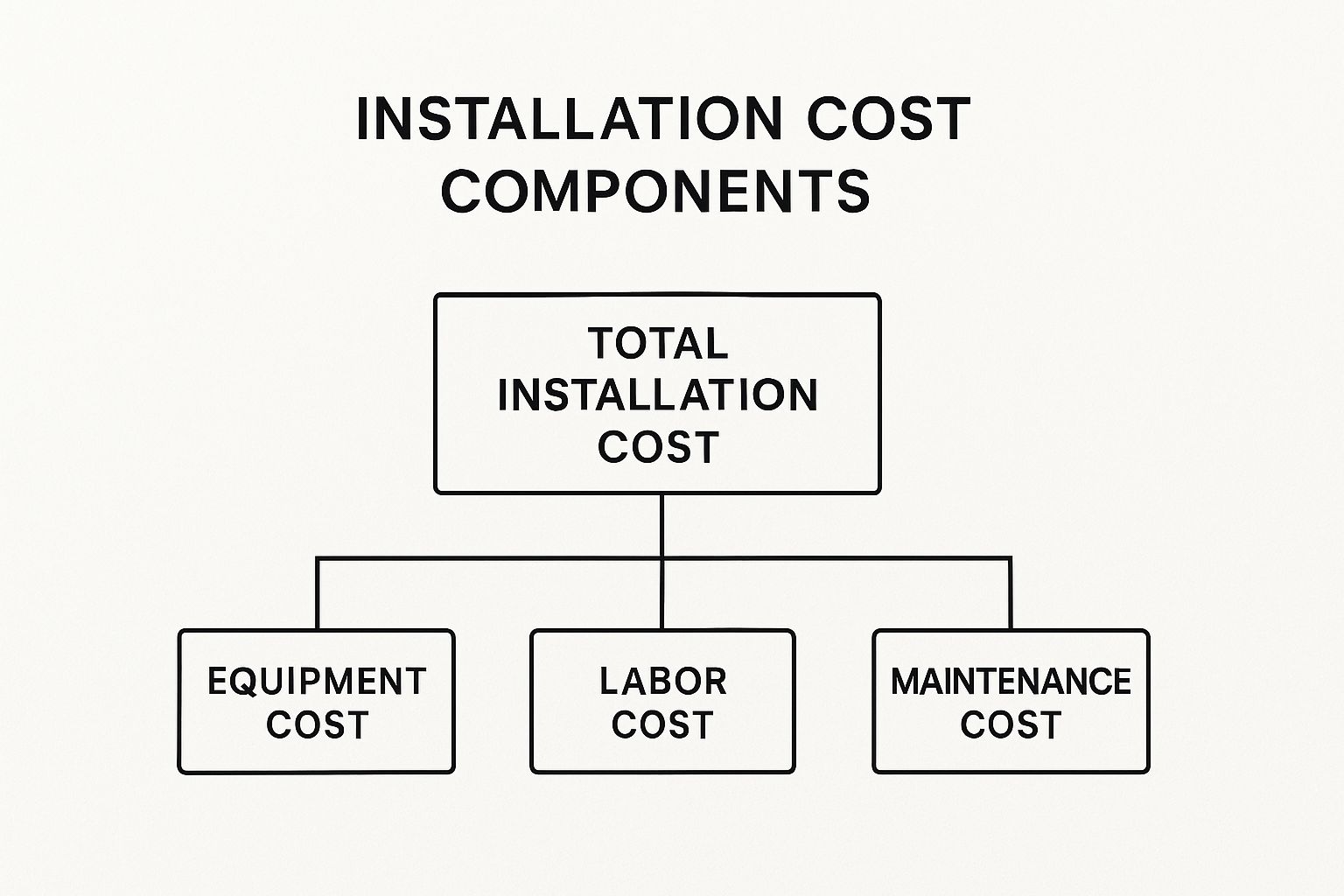
As you can see, the final figure you pay is a blend of both the hardware you choose and the service required to get it running perfectly.
The hardware is the backbone of your entire security system, and the prices can swing wildly depending on what you need. It’s not just about the cameras themselves, but the whole ecosystem working in sync.
Here are the key bits of kit you’ll be paying for:
Just to give you an idea, the cameras alone can range from AUD 50 for simple indoor models to over AUD 500 for advanced, feature-packed units. Most people end up spending somewhere between AUD 500 and AUD 2,000 for a complete home security package.
The other major piece of the puzzle is professional labour. This is much more than just screwing a camera to a wall. It’s about strategic placement, running wiring safely and neatly, and configuring the whole system to cover your property without any gaps.
An installer’s expertise ensures your cameras have the best possible viewing angles, are properly weatherproofed, and are set up to avoid blind spots. These are the small details that make the difference between a genuinely useful security system and a flawed one.
Installers usually charge for their time in one of two ways:
The cost of labour is often influenced by the unique layout of your property, which is pretty common across all trade services. If you want to see how this compares, you can check out our guide on how much it costs to install aircon, where things like property size and complexity play a very similar role in the final price.
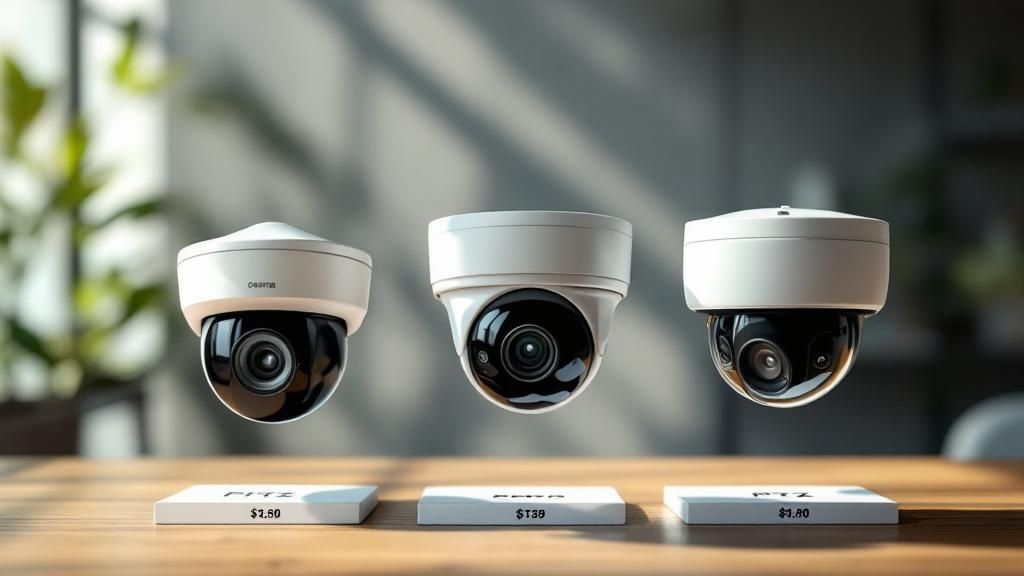
You might be surprised to learn that your postcode can have a big impact on the final cost of security camera installation. Just like the price of a coffee changes from one city to another, so does the hourly rate for a qualified technician.
This isn’t random—it’s driven by local economic factors. Major metropolitan areas almost always have a higher cost of living and greater demand for trade services, which naturally pushes labour prices up.
The quote you receive in a bustling city centre will likely differ from one in a regional town, even for the exact same security system. This is a crucial detail to factor into your budget from the very beginning.
This regional price difference is exactly why getting multiple quotes is so important. It helps you get a feel for the going rate in your specific area, ensuring you’re paying a fair price for quality work.
So, what does this look like in practice? The labour costs for installation can vary quite a bit across Australia’s major hubs. In cities like Sydney, where demand is consistently high, you can expect to pay a premium for a certified installer.
To give you a clearer picture, here’s a look at what you might expect to pay per hour in some of Australia’s capital cities.
| City | Average Hourly Rate (AUD) | Notes |
|---|---|---|
| Sydney | $120 – $150 | Generally the highest rates due to high demand and living costs. |
| Melbourne | $115 – $145 | Very competitive market, with rates close to Sydney’s. |
| Brisbane | $100 – $130 | Slightly more affordable, reflecting a different local economy. |
| Perth | $100 – $125 | Rates are often lower, but can vary based on technician availability. |
| Adelaide | $95 – $120 | Tends to be one of the more cost-effective capital cities for trades. |
As you can see, the city you’re in plays a significant role in your overall budget. For instance, in Sydney, hourly installation rates typically land somewhere between AUD 120 and AUD 150. Melbourne isn’t far behind, but cities like Brisbane and Perth often have lower hourly fees, generally closer to the AUD 100 mark. This reflects the different local economies and the number of available technicians.
If you want to dive deeper, you can explore more detailed pricing breakdowns and discover additional insights about CCTV system costs on kmelectric.com.au. These figures highlight how your geography really does matter.
Beyond your city, the specifics of your property are a massive cost driver. An installer doesn’t just charge for their time; they charge for the complexity and difficulty of the job itself.
Think of it this way: installing cameras on a single-storey brick veneer home with easy roof access is a pretty straightforward job. But things get complicated—and more expensive—when you’re dealing with:
Each of these challenges adds time to the installation, which in turn adds to your final invoice. A good installer will always conduct an on-site inspection to assess these factors and give you an accurate, detailed quote.
The initial payment for your hardware and installation is just the first chapter in the story of your security system. To get the full picture of the cost of security cameras installation, you have to look beyond that first invoice and plan for the recurring expenses that keep your system doing its job.
It’s a bit like owning a car. The purchase price is the big one-time payment, but you still need to budget for fuel, insurance, and regular maintenance to keep it on the road. Your security system is no different.
These ongoing expenses are what turn your cameras from simple recording gadgets into a proactive security solution. They ensure your footage is safely stored, ready when you need it, and that someone is on standby to respond if something happens. Budgeting for these from day one saves you from nasty financial surprises down the track.
One of the most common ongoing costs is for professional monitoring and cloud storage. While some systems can function without a subscription, most of the advanced features that deliver genuine peace of mind come with a monthly or annual fee.
After the install, services like real-time alerts and video recording can introduce ongoing costs of AUD 10 to AUD 50 a month, which works out to be AUD 120 to AUD 600 annually. The final price really hinges on your package features, especially how much video storage you need.
Here’s a quick breakdown of what you’re typically paying for:
Even though modern security systems are built to be reliable, they aren’t completely “set and forget.” Over the years, you’ll likely run into costs for maintenance, repairs, or eventual upgrades to keep everything performing at its best.
Budgeting a small amount each year for potential maintenance is a smart move. It means that if a camera fails or a cable gets damaged, you can fix it promptly without it becoming a major, unexpected expense.
Keep these potential future costs in mind:
Beyond just the cameras, a truly comprehensive security strategy often involves other systems. For a deeper dive into related technologies, it’s worth exploring resources on physical access control systems, which can seriously boost your property’s security when paired with cameras. Factoring these ongoing elements into your plan ensures your investment stays effective for years to come.

One of the biggest forks in the road when planning your security setup is deciding whether to roll up your sleeves and do it yourself or bring in a professional. The choice you make here will have a massive impact on the final cost of security cameras installation.
Think of it like this: you can cook a fancy meal at home or go out to a nice restaurant. Both can lead to a delicious result, but the money, effort, and expertise involved are worlds apart.
Going the DIY route is, without a doubt, the fastest way to save cash on labour. Those fees can really add up, so if you’re handy with a drill, understand basic networking, and have a weekend to spare, a self-install can be a great, budget-friendly project. This is particularly true for the simpler wireless camera systems designed for easy setup.
But let’s be realistic—the DIY path isn’t always a walk in the park. You need to plan your camera placement carefully to avoid blind spots, have the right tools to mount them securely, and be prepared to troubleshoot finicky software or Wi-Fi connections. A camera that’s poorly positioned or incorrectly configured can leave huge gaps in your security, completely defeating the whole point.
Bringing in a professional installer means you’re paying for expertise, efficiency, and—most importantly—peace of mind. It costs more upfront, but an experienced technician knows exactly where to place cameras for the best possible coverage and how to configure the system so it just works.
This becomes absolutely critical for larger homes or complex wired systems where you’re running cables through walls and ceilings. For a closer look at what a professional job involves, you can check out our detailed guide on home security system installation.
A professional installation is an investment in reliability. An expert ensures your system is set up correctly from the start, provides a warranty on their workmanship, and eliminates the guesswork that often comes with a DIY project.
Ultimately, the best choice comes down to your skills, your budget, and how much you value a flawless security system. For a simple setup in a small home, DIY is a totally viable option for saving money.
But for anyone who wants a robust, hassle-free system that’s guaranteed to work when you need it most, professional installation is worth every cent. If you are leaning towards a DIY job, it’s always a good idea to look at general installation advice first. Resources like these DIY installation guides can offer practical tips for different mounting situations.
Protecting your property is a top priority, but it doesn’t have to break the bank. With a bit of clever planning and strategic thinking, you can significantly lower the overall cost of security cameras installation without ever compromising on safety.
One of the biggest levers you can pull to manage costs is your choice of system. Wireless systems, for example, are almost always cheaper to install. That’s because they skip the time-consuming and expensive process of running cables through your walls and ceilings. Of course, it’s a trade-off—their reliability can sometimes be a bit patchy if you have poor Wi-Fi coverage in certain spots. You can get more insights on weighing up system costs and performance needs over at kmelectric.com.au.
Another practical tip is to time your purchase right. Keep an eye out for seasonal sales events like Black Friday or the End of Financial Year sales. Major retailers often slash prices on high-quality cameras and full security kits during these periods, letting you get much better gear for your money.
Don’t fall into the trap of thinking you need a massive, all-seeing system from day one. A much smarter approach is to start small. Focus on securing your most vulnerable points first—think the front door, back door, and any ground-floor windows. If you choose an expandable system, you can easily add more cameras down the track as your budget allows.
Securing multiple quotes is non-negotiable. Make sure you contact at least three different professional installers to compare their pricing, what they’re proposing, and how long it’ll take. This isn’t just about finding the cheapest rate; it’s about getting a feel for what a fair market price actually looks like in your area.
Finally, always ask about bundled packages. Many security companies offer deals that combine the equipment, professional installation, and sometimes even ongoing monitoring into a single, discounted rate. These bundles can offer fantastic value and simplify the whole process, often saving you hundreds of dollars compared to buying everything separately. By being a savvy, informed buyer, you can secure your property without overstretching your budget.
When you’re looking into a new security system, it’s natural to have questions pop up. Getting your head around the details of security camera installation can feel a bit overwhelming, so we’ve put together some straightforward answers to the questions we hear most often from homeowners.
This is a great question, and the honest answer is: it depends entirely on your home’s layout and its unique weak spots. For a standard three-bedroom house, 3-4 cameras are usually enough to keep an eye on the main entry points. Think front door, back door, and any ground-floor windows that look easy to access.
The best way to figure it out is to do a quick walkthrough of your property. Try to see it from an intruder’s perspective. A few high-quality cameras placed in the right spots will always be more effective than a dozen poorly positioned ones.
Upfront, a wireless system is almost always going to be the cheaper option. The big reason is that you don’t have the labour costs that come with running cables through your walls and ceilings, which can save you a fair bit of money.
But, it’s a classic trade-off. Wired systems are known for being rock-solid reliable because they aren’t at the mercy of a weak Wi-Fi signal. While wireless is cheaper to get started, you have to balance that against long-term reliability and the small hassle of dealing with batteries.
Choosing between wired and wireless really comes down to budget versus reliability. Your installer can walk you through the pros and cons for your specific home, helping you find the sweet spot between performance and price.
Not necessarily, but most of the really useful features are tucked away behind a subscription. Many systems will give you the basics, like live video streaming, for free. If you want to unlock the more advanced functions, you’ll likely need to sign up for a monthly plan.
What do you get for that fee? Usually, it includes things like:
Thinking beyond just the cameras can strengthen your overall security. It’s worth learning about what burglars hate the most to round out your home protection strategy.
For a professional eye on your security setup and a clear, honest quote on installation costs, you can trust the experts at DLG Electrical. Visit us at https://dlgelectrical.com.au to book your free consultation today.

Master Electrician with over 30 years of experience. Founded DLG Electrical in 2005 after international project work including electrical installations at Stamford Bridge Stadium, London(Home of Chelsea FC).

Local Electricians that can fix all Electric Hot water Systems.
Motion sensor lights are a versatile addition to any home, offering nu
