83 Jean St, Grange QLD 4051
Mon-Fri 07:30 AM - 04:00 PM - Sat - 8:00 - 12 - Sunday Closed
Alright, let’s talk dollars and cents. When your hot water system gives up the ghost, the first question on everyone’s mind is, “How much is this going to set me back?” Knowing what you’re in for is the first step to making a smart decision for your home.
In Australia, the average cost to replace a standard hot water system usually lands somewhere between $1,000 and $2,500. That price typically covers a standard electric or gas storage model, including the installation. But if you’re looking at more advanced, energy-efficient options like solar or a heat pump, the price tag can climb, ranging anywhere from $3,000 to over $7,000. The higher upfront cost reflects the sophisticated technology and, importantly, the long-term savings on your energy bills.
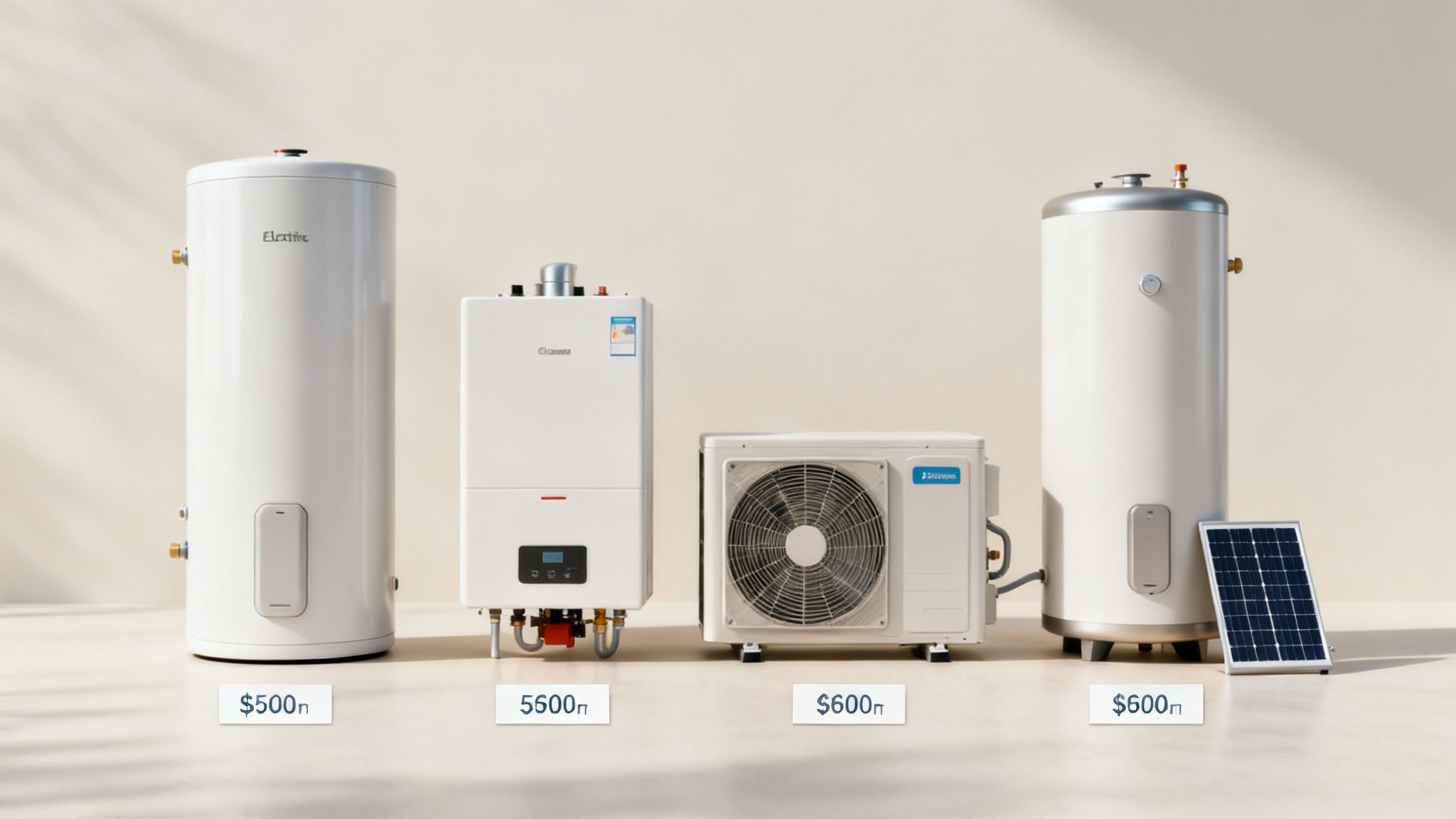
The final bill for a new hot water system is a mix of two key things: the price of the unit itself and the cost of getting a licensed professional to install it. This total figure can swing wildly depending on the type of system you choose and even where you live in Australia.
For most households, the go-to options are still the classic electric or gas systems because they’re the most budget-friendly upfront. A typical electric hot water system will cost between $450 and $1,800 for the unit alone. Gas systems are usually a little pricier, from $700 to $1,900.
If you’re playing the long game and want to slash your running costs, then solar or heat pump systems are where it’s at. A solar hot water system often sits in the $3,000 to $7,000 range once it’s fully installed, but it’s the undisputed champion of energy efficiency. You can find more detailed pricing info from Australian plumbing experts to get a clearer picture.
Think of it like this: a standard electric storage tank is like a reliable family sedan—it’s affordable and gets the job done. A high-efficiency heat pump or solar system is more like an electric vehicle—it costs more upfront but saves you a heap on “fuel” (your energy bills) over its lifetime.
To help you get a quick handle on the numbers, we’ve put together a table breaking down the typical costs. This should give you a starting point for matching a system to your budget before you get into the nitty-gritty details.
This table gives you a snapshot of what you can expect to pay for different types of systems, including both the unit and the installation.
| System Type | Average Unit Cost (AU$) | Average Total Installed Cost (AU$) | Best For |
|---|---|---|---|
| Electric Storage | $450 – $1,800 | $900 – $2,500 | Budget-conscious households, apartments |
| Gas Instantaneous | $700 – $1,900 | $1,200 – $3,000 | Homes with natural gas, endless hot water |
| Heat Pump | $2,500 – $4,500 | $3,500 – $5,500 | Energy efficiency, lower running costs |
| Solar | $3,000 – $5,000 | $4,000 – $7,000+ | Maximum energy savings, sunny climates |
As you can see, the initial investment varies quite a bit. The key is to balance the upfront cost with how much you’ll save on running costs down the track.
When you get a quote for a hot water system replacement, it can feel a bit overwhelming. But it gets a lot clearer once you realise you’re looking at two main parts: the cost of the hot water unit itself, and the cost of the professional labour to get it installed.
Think of it like buying a flat-pack wardrobe. You pay for the box of parts, but you also pay an expert to put it together so it doesn’t fall over. One is the product, the other is the service, and you need both for a safe, working result.
The biggest chunk of your bill will almost always be the hot water system itself. The price tag on the unit is driven by its type, size, brand, and how energy-efficient it is. A simple electric storage tank will be the cheapest upfront, but a high-tech heat pump or a solar system costs more initially because it’s designed to save you a fortune on running costs down the track.
The system you pick sets the foundation for the final cost. Each type uses different technology, which is reflected in its price.
So, what can you expect to pay? An electric storage system usually lands somewhere between $800 and $1,500, making it a very accessible option. Gas instantaneous units are a step up, typically costing between $1,500 and $3,500. For the top-tier solar systems, you could be looking at anywhere from $3,000 to over $6,500, which reflects the massive long-term savings they deliver.
The labour charge isn’t just for a bit of pipe-wrangling. You’re paying for a licensed professional’s expertise to ensure the installation is safe, compliant with all regulations, and done right the first time. It’s a crucial part of the job.
A standard installation quote should always cover these key tasks:
But sometimes, things aren’t so simple, and that can add to the labour bill. If you’re switching from electric to gas, for example, you’ll need significant electrical work done by a licensed electrician. It’s worth getting a handle on how much electricians charge for this kind of job.
Other curveballs like a hard-to-reach installation spot or needing to upgrade your plumbing to meet modern codes can also bump up the labour cost. Always ask your plumber for a detailed, itemised quote so you know exactly what you’re paying for. No one likes surprises on the final invoice.
When you’re budgeting for a new hot water system, it’s easy to focus on the big-ticket items: the unit price and the standard installation fee. But the final invoice can sometimes throw a few curveballs.
Think of it like booking a holiday. You’ve paid for the flights and the hotel, but you still need to account for airport transfers, food, and activities. It’s those little extras that give you the true total cost.
These “hidden” costs aren’t about dodgy installers trying to rip you off. Far from it. They’re usually essential upgrades needed to make your new system safe, efficient, and compliant with current Australian standards. Knowing what to expect helps you build a realistic budget and avoid any nasty surprises.
So, where do these extra charges usually come from? Most often, they pop up when your existing plumbing or electrical wiring needs to be brought up to code. Safety regulations are always evolving, so a setup that was perfectly fine a decade ago might not pass muster today.
Any licensed installer is legally obligated to make sure your new system meets all the latest rules. Here are a few common items that might get added to your bill:
It is absolutely critical that any work, especially electrical upgrades, is done by a licensed professional. They must provide you with a Certificate of Compliance when the job is done. This document is your official proof that the installation is safe and meets all legal standards. You can learn more about the importance of a Certificate of Compliance for electrical work to see why it’s so non-negotiable.
Finally, don’t forget that where you live and how tricky the job is will always influence the price. Labour rates in major cities are almost always higher than in regional areas, simply because the cost of doing business is higher.
The location of the unit itself also matters. If your hot water system is wedged into a tight roof space or a hard-to-reach cupboard, the extra time, effort, and sweat required will be reflected in the final cost. Always chat with your installer about any potential access issues upfront to get the most accurate quote.
Let’s be honest, staring down the quote for a new high-efficiency heat pump or solar hot water system can be a bit of a shock. The upfront cost is definitely higher than a standard electric or gas unit. But what many homeowners don’t realise is that government incentives are in place specifically to close that price gap.
Think of it as the government giving you a helping hand to make a smarter, greener choice. They want to encourage Aussies to ditch the old, energy-guzzling systems. By offering rebates, they bring the price of a premium, energy-saving unit down from a luxury to a seriously savvy financial move. These programs can take a huge chunk out of your initial payment.
There are various schemes at both the federal and state level designed to reward you for choosing a more efficient hot water solution. One of the most impactful for residents in New South Wales is the NSW Energy Savings Scheme (ESS). This program offers some hefty discounts when you swap out an old, inefficient electric or gas system for a modern heat pump or solar hot water unit.
These rebates aren’t just a few dollars, either. The savings can be substantial. For example, in NSW, homeowners who replace an old electric water heater with a new air source heat pump could see discounts ranging from $611 to $1,024. While the rebate for swapping out a gas heater is a bit smaller, it still makes a welcome dent in the final bill. You can find more details about NSW hot water rebates on SolarChoice. This financial boost makes the higher sticker price of an energy-efficient model far more palatable.
At its core, the logic behind these schemes is simple: invest a little in efficiency now to save a lot of energy (and money) down the track. By helping you with the upfront cost, the government reduces demand on the grid and lowers our collective carbon footprint—a true win-win for your bank account and the environment.
A number of states offer attractive incentives for homeowners looking to make the switch. Here’s a quick look at what you might expect when upgrading.
| Upgrade Path | System Type | Potential Rebate Range (AU$) | Primary Benefit |
|---|---|---|---|
| Old Electric to Heat Pump | Air Source Heat Pump | $611 – $1,024 | Major reduction in electricity bills |
| Old Gas to Heat Pump | Air Source Heat Pump | $285 – $343 | Lower running costs and carbon emissions |
| Old Electric to Solar | Solar Hot Water System | Up to $1,000+ | Harnessing free energy from the sun |
| Old Gas to Solar | Solar Hot Water System | Varies by state | Significant long-term energy savings |
These rebates make upgrading not just an environmental choice, but a financially sound one, dramatically shortening the payback period for a new system.
This is the best part—it’s often much easier than you’d think. In most cases, you don’t have to fill out piles of paperwork yourself. The accredited installer or supplier handles it all for you and applies the discount directly to your final invoice. It means you pay the reduced price from day one, instead of paying in full and waiting weeks for a refund.
To make sure you get every dollar you’re entitled to, just follow these simple steps:
By being proactive and asking a few simple questions, you can turn what looks like a big expense into a smart, subsidised investment in your home’s future.
Trying to pick the “best” hot water system is a bit like choosing a new car. There’s no single perfect answer—the ideal choice comes down to your family size, budget, and daily hot water habits. The real trick is to balance the upfront **cost to replace a hot water system** with its long-term running expenses. Get that right, and you’ve made a smart investment.
Think about a big, sun-drenched family home in Queensland. For them, a solar hot water system might sting a bit on the initial invoice, but the massive savings on future energy bills could deliver a huge return over the years. On the flip side, a compact city apartment with one or two people might find a sleek, instantaneous gas unit to be the more practical and cost-effective solution.
Your final decision should be a healthy mix of what you can afford now and what you’ll save later.
The Australian hot water market is dominated by four main players, and each has its own distinct advantages. Your local climate, lifestyle, and whether you have access to utilities like natural gas will heavily influence which one is the right fit for your home.
The right system is one that meets your daily hot water demand without wasting energy or money. A unit that’s too small will leave you shivering through cold showers, while one that’s too large will just heat water you never use, driving up your bills for no reason.
So, how do you actually choose? A good place to start is thinking about your household’s hot water “peak hour.” Is it the morning rush with everyone showering at once, or the evening chaos of dishes, baths, and laundry? A larger family will definitely need a system with a higher capacity or a faster recovery rate to keep up.
This decision tree infographic is a great tool for simplifying the process, especially when you’re trying to figure out what rebates you can get when switching from an old electric or gas system.
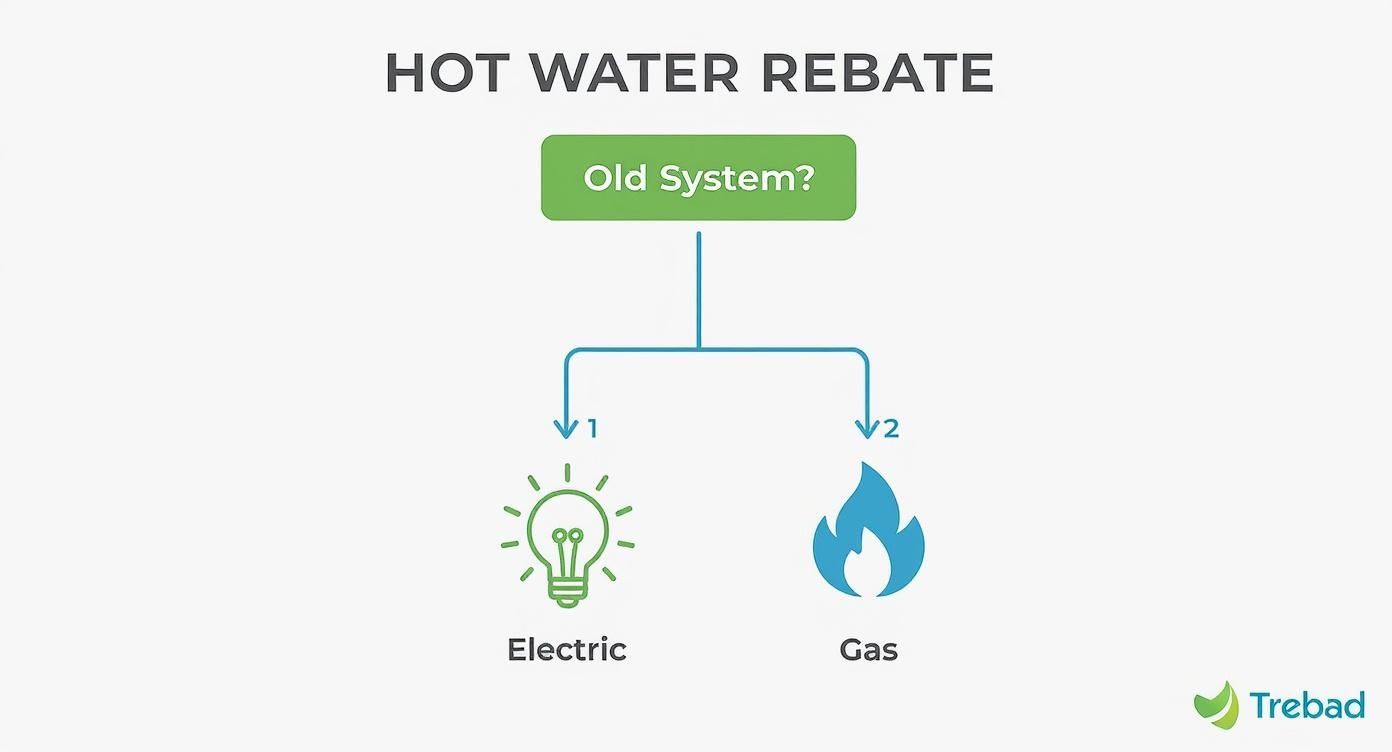
As the graphic shows, choosing an energy-efficient upgrade path can unlock some valuable government incentives. Of course, some situations are even more unique. For specific applications like marine environments, the considerations are completely different. For example, anyone looking into a system for a boat would find an ultimate calorifier guide for boats invaluable for details on selection and installation.
When in doubt, though, your best bet is always to consult a licensed professional. They can give you a tailored recommendation that’s perfect for your home.

Knowing the total cost to replace a hot water system is one thing, but actually bringing that number down is where you can take back control. With a few smart moves, you can seriously trim both the upfront bill and the long-term running costs of your new unit.
The single best tactic? Get multiple quotes. Never, ever take the first price you’re given. When you contact at least three different licensed and insured plumbers, you spark a bit of competition, which often leads to much sharper pricing. Just make sure every quote is itemised so you can compare apples with apples.
Timing can also be your secret weapon. If your current system isn’t on its last legs and you have some flexibility, ask installers if they offer better rates during their slow periods. This is usually in the milder months when emergency call-outs are less common.
Beyond just shopping around, there are a few other practical things you can do to keep your budget in check. These tips will help you save cash now and well into the future.
At the end of the day, a proactive approach saves the most money. Regular maintenance not only keeps your system running longer but helps you avoid the premium price tag that comes with an emergency replacement—which always seems to happen at the worst possible time.
Thinking beyond the immediate hot water system replacement costs can unlock even more savings. You can learn more about the importance of regular property maintenance and see how this forward-thinking approach benefits your entire home.
Thinking about a new hot water system can definitely bring up a few questions. Let’s run through some of the most common ones we hear from homeowners so you can budget and plan with confidence.
Your system will usually give you a few tell-tale signs before it packs it in completely. Keep an eye out for rusty or discoloured water from your taps, weird noises like rumbling or popping from the tank, and, of course, any visible leaks around the base of the unit.
But the most obvious sign? Inconsistent temperatures or running out of hot water way faster than you used to. If your system is already over 10-12 years old, it’s living on borrowed time. Planning for a replacement now is a much smarter (and less stressful) move than waiting for a cold shower on a winter morning.
In a word: no. Here in Australia, installing any hot water system is work that must legally be done by a licensed plumber. In many cases, you’ll need a licensed electrician involved as well, especially for electric storage or heat pump models.
Trying to DIY a hot water installation isn’t just illegal; it’s incredibly dangerous. You’ll immediately void the warranty on your brand-new system and could even find your home insurance policy is invalid if there’s a fire or major leak. Professional labour is a non-negotiable part of the cost to replace a hot water system.
The time it takes really depends on how complex the job is. A straightforward, like-for-like swap is usually pretty quick. Think replacing an old electric storage tank with a new one in the exact same spot. A professional can typically get that sorted in just 2 to 4 hours.
However, if you’re changing system types—say, moving from an indoor gas unit to an outdoor heat pump—the job gets a lot more involved. This kind of switch often means running new plumbing lines, dedicated electrical circuits, and finding a new location for the unit, which can easily turn the job into a full day’s work.
At DLG Electrical, our licensed and experienced electricians specialise in the safe installation and repair of electric hot water systems. If you’re upgrading and need expert electrical work, we ensure the job is done right the first time. Contact us for a free, competitive quote today at https://dlgelectrical.com.au.

Master Electrician with over 30 years of experience. Founded DLG Electrical in 2005 after international project work including electrical installations at Stamford Bridge Stadium, London(Home of Chelsea FC).

Local Electricians that can fix all Electric Hot water Systems.
Motion sensor lights are a versatile addition to any home, offering nu
