83 Jean St, Grange QLD 4051
Mon-Fri 07:30 AM - 04:00 PM - Sat - 8:00 - 12 - Sunday Closed

So, you’re thinking about rewiring your house and the big question on your mind is: what’s this actually going to cost?
The short answer is the average cost to rewire a house in Australia usually lands somewhere between $4,000 and $12,000+. This isn’t a one-size-fits-all figure, of course. The final price tag depends on your home’s size, its age, and even your postcode, but this range gives you a solid starting point for your budget.
Getting your head around the potential investment is the first step in planning a house rewire. It helps to think of it like buying a car; a zippy little two-door hatchback has a very different price than a big seven-seater SUV. In the same way, the electrical demands and sheer complexity of a two-bedroom unit are worlds apart from a sprawling four-bedroom family home.
The cost to rewire a house isn’t just about how much cable is needed. It’s a reflection of the skilled labour, all the materials, and the time required to make sure your home is safe and up to scratch with today’s strict electrical standards. It stands to reason that larger homes just need more of everything—more circuits, more power points, and more hours on the tools for the electrician to get the job done right.
To give you a clearer picture, the typical Aussie cost to rewire a house kicks off around $4,000 for a small two-bedroom spot and can climb above $12,000 for larger properties. What pushes that final number up or down? It’s a mix of the home’s size, how easy (or difficult) it is for the sparkie to get to the wiring, local labour rates, and the building’s age.
To break it down further, a smaller home generally sits in the $4,000 to $6,000 range and takes about 3–5 days. A medium three-bedroom house might be closer to $6,500–$9,000 over 5–7 days, while larger homes can easily be $9,000–$12,000 or more, often taking 7–14 days to complete. If you’re keen to know how these figures are calculated, it’s worth digging into some detailed Australian electrician breakdowns to see what’s included.
Here’s a quick overview to help you visualise the cost brackets for different home sizes.
This table gives you a ballpark idea of the costs and timelines you can expect for rewiring projects across Australia, broken down by house size.
| House Size | Estimated Cost Range | Typical Project Duration |
|---|---|---|
| Small (2-Bedroom) | $4,000 – $6,000 | 3 – 5 days |
| Medium (3-Bedroom) | $6,500 – $9,000 | 5 – 7 days |
| Large (4+ Bedrooms) | $9,000 – $12,000+ | 7 – 14 days |
Keep in mind these are estimates. Factors like difficult access or adding extra features will influence the final quote, but this gives you a reliable starting point.
Here’s another way to look at how costs scale up with the size of your home.
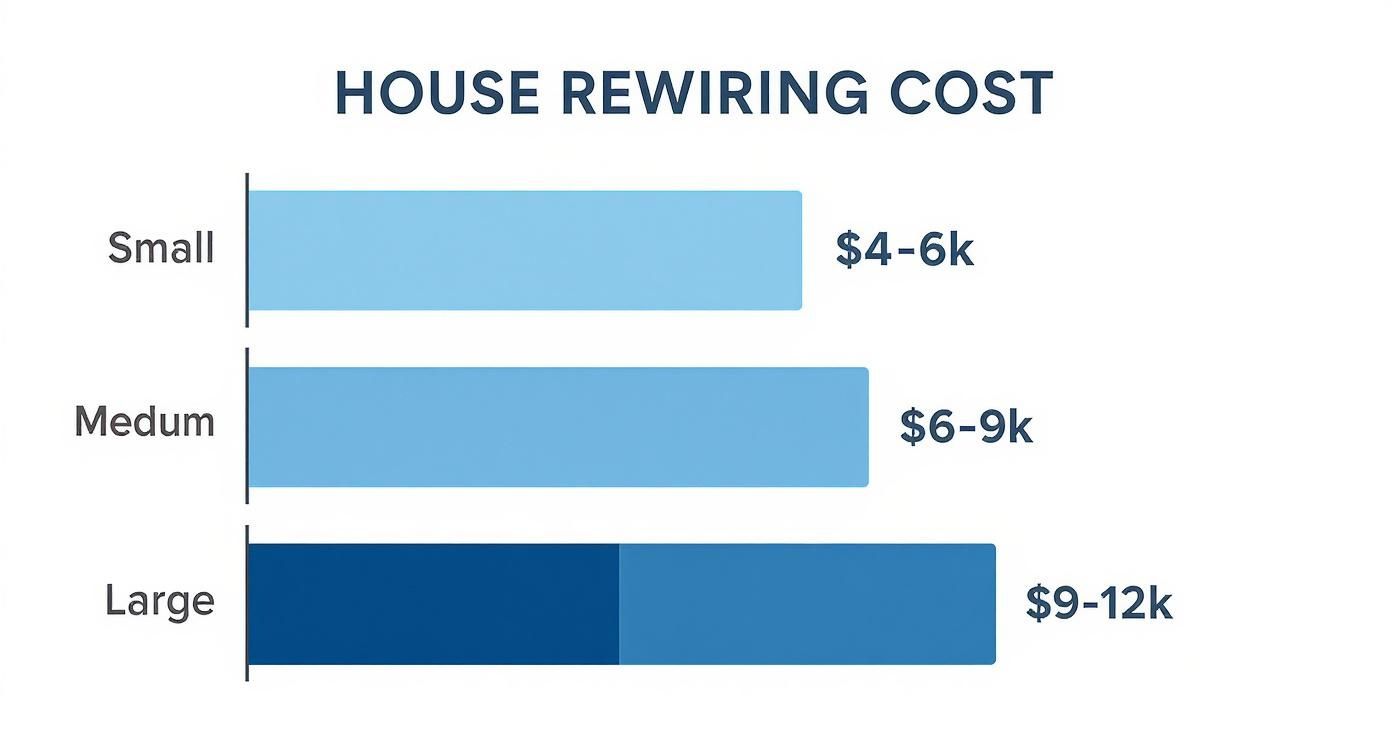
As you can see, the price climbs pretty predictably with the size of the property. It all comes down to the increased scope of work and materials needed to do the job safely and correctly.

Before we even get into the cost to rewire a house, it’s crucial to understand that this isn’t just another renovation project. It’s one of the most important safety upgrades you can make.
Think of old electrical wiring as the ageing arteries of your home. It’s completely hidden from view, but if it fails, the consequences can be catastrophic. When you frame a rewire as a critical safety investment, the expense suddenly makes a lot more sense—it’s about protecting your family and your property.
The simple truth is that outdated electrical systems were never built to handle the demands of modern living. Decades ago, no one could have imagined a household running multiple air conditioners, computers, smart TVs, and countless chargers all at once. This constant high demand puts an immense strain on old wiring, dramatically increasing the risk of a breakdown.
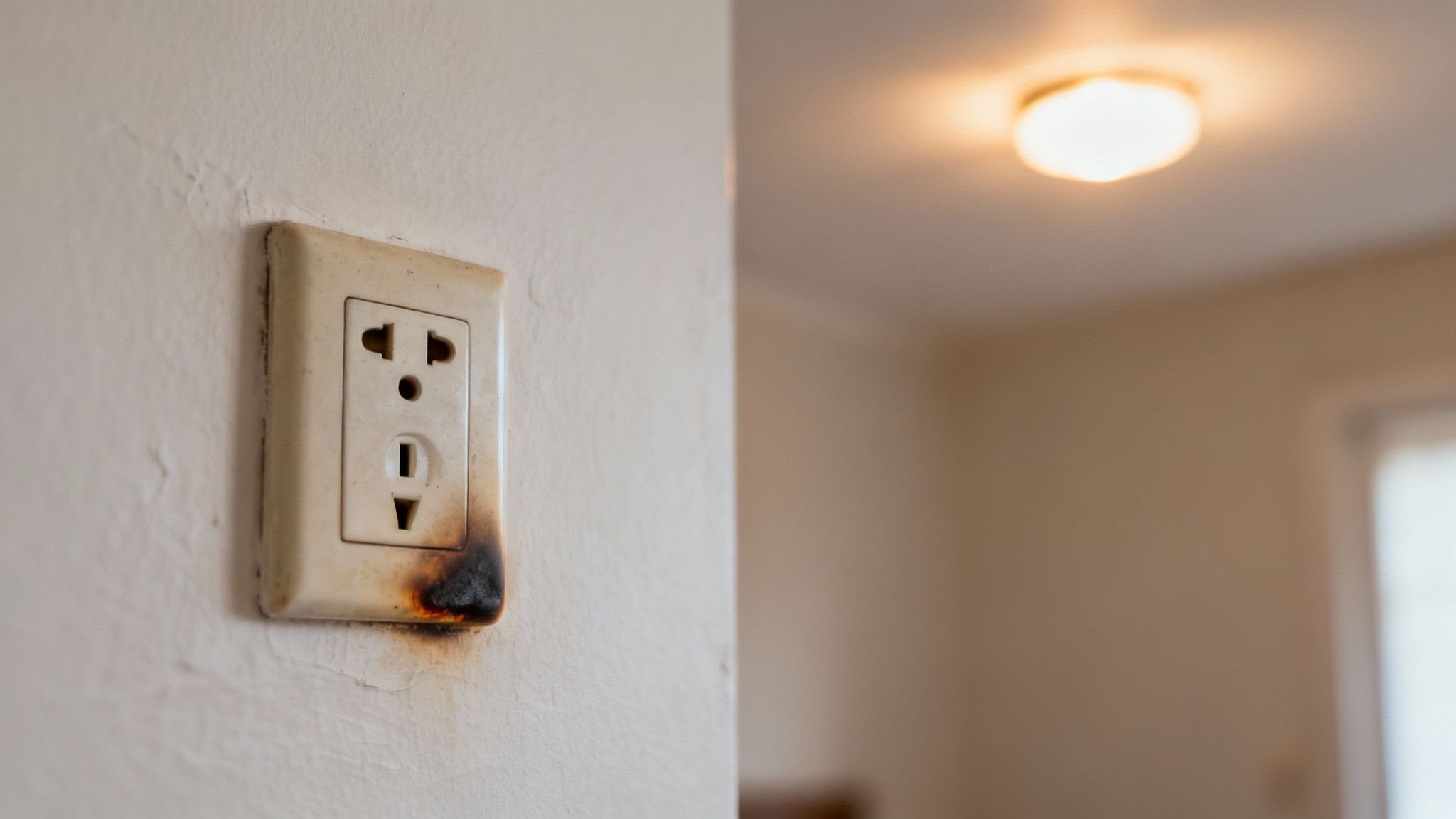
Your home will often give you clear signals that its electrical system is struggling and needs a professional eye on it. Ignoring these red flags isn’t an option, as they can quickly escalate into genuinely dangerous situations.
Keep an eye out for these common signs of trouble:
A full rewire isn’t about convenience; it’s about eliminating the very real risks of electrical fires and electrocution. Faulty electrical wiring is one of the leading causes of house fires in Australia, turning a preventable problem into a potential tragedy.
Ensuring your home’s wiring meets today’s safety standards is non-negotiable. You can learn more about the strict electrical wiring standards in Australia to see the level of protection a modern system offers. Upgrading your home’s electrical system is hands-down the most effective way to ensure it’s safe, compliant, and ready for whatever the future holds.
Getting a few quotes for a full house rewire can be a confusing experience, especially when the prices seem to be all over the place. But understanding what’s behind those numbers is the key to making a smart decision. An electrician’s quote isn’t just a figure plucked from thin air; it’s a careful calculation based on the unique character—and challenges—of your home.
It’s a bit like getting a quote from a car mechanic. A simple oil change is pretty standard, but fixing a mysterious engine knock requires more diagnostic time, specialised parts, and deeper expertise. That’s always going to cost more. In the same way, the cost to rewire a house is shaped by factors that go way beyond just the number of bedrooms.
Every home is a different puzzle for an electrician. The age of your house, what it’s built from, and how easy it is to get into the walls and ceilings are the biggest cost drivers. These things directly dictate the amount of labour needed, which typically makes up 50% to 70% of the total project cost.
Here are the main variables a good electrician will be sizing up:
The complexity of the job is the biggest variable. A straightforward rewire in a single-storey, accessible home will always cost less than the same size house that is double-storey with solid brick walls and a packed ceiling space.
Getting a handle on the split between labour and materials also helps clear things up. When you look over your quote, you might see specific line items for big-ticket components, like the cost to install an electrical panel. This is a separate but often necessary part of a complete rewire.
Labour costs are simply the electrician’s hourly rate multiplied by how long they estimate the job will take. This is where accessibility really makes a difference; a tricky job can easily double the labour hours required. If you want to get a better feel for what sparkies charge, our guide on how much electricians charge is a great place to start.
By understanding these factors, you can have a much more productive chat with your electrician and feel confident that you’re paying a fair price for a safe, professional job.

Ever noticed how the price of a coffee changes from a busy city cafe to a quiet country town? The exact same principle applies to the cost to rewire a house—it’s heavily influenced by your postcode. This is a critical factor that can easily add thousands of dollars to your final bill, and understanding why will help you set a much more realistic budget.
The biggest driver behind this difference is simple: labour costs. Electricians in major metropolitan hubs like Sydney, Melbourne, and Brisbane are dealing with much higher operating expenses, from insurance and tools to fuel and transport. It’s only natural that these costs are passed on to the customer, leading to higher hourly rates compared to sparkies in regional or rural areas.
On top of that, local council regulations can vary significantly between areas. Densely populated cities often have stricter compliance requirements and more complex, time-consuming permit processes. Navigating this red tape adds hours and complexity to a project, which is always reflected in the overall cost.
The economic differences between urban and regional Australia create a clear divide in rewiring prices. In a capital city, you’re not just paying for the electrician’s time and skill; you’re also covering the higher cost of living that directly impacts their business overheads.
In contrast, an electrician in a regional town likely has lower business expenses. This often translates to more competitive pricing for the same high-quality work. It’s not always a straightforward comparison, though, as sourcing specific or specialised materials in more remote areas can sometimes add a little extra to the material cost.
The key takeaway here is that the biggest slice of your rewiring bill—the labour—is directly tied to local market rates. An electrician in a high-demand city can simply command a higher price than one in a less populated region.
Take Sydney, for example. It’s well-known for having some of the highest trade service costs in the country. A full rewire for a standard three-bedroom home there can range from $7,000 to $12,000. If the job is more complex and includes things like a full switchboard upgrade, costs can easily push towards $22,000 or more. If you’re in Sydney, it’s worth digging into the local pricing specifics. You can discover more insights about Sydney rewiring costs on foxelectricians.com.au to get a better feel for these figures.
This is a stark contrast to what you might expect to pay in a smaller regional centre, where the exact same job could be 15-25% cheaper purely due to the difference in labour rates.
To really illustrate how your location can impact the budget, let’s break down the typical price variations for a standard three-bedroom house rewire across different parts of Australia.
| Location Type | Average Cost Range | Key Influencing Factors |
|---|---|---|
| Major Capital City | $7,000 – $12,000+ | Higher labour rates, stricter regulations, increased travel time, and higher business overheads. |
| Regional Centre | $6,000 – $9,500 | Moderate labour costs, standard regulations, and fewer logistical challenges. |
| Rural or Remote Area | $5,500 – $8,500 | Lower labour rates but potential for higher material transport costs and travel fees for the electrician. |
As you can see, where you live plays a massive role in the final cost to rewire a house. The only way to get a true picture of what you can expect to pay is to get quotes from a few local, licensed electricians in your specific area.
The first quote you get for the cost to rewire a house is a great starting point, but it’s almost never the final number. Think of it like buying a car—the quote covers the engine and body, but the modern features and essential upgrades are often extra. A smart budget plans for these from the beginning to avoid any nasty surprises down the road.
It’s easy to get caught off guard by what’s not included in a standard rewiring quote. These aren’t sneaky charges; they’re just separate, necessary jobs that often only become obvious once the walls are opened up. Planning for them upfront is the key to keeping your budget realistic and stress-free.
For older homes, the most common—and almost certain—add-on is a switchboard upgrade. A modern electrical system simply can’t run safely on an old switchboard. If your home still has those old ceramic fuses, a new board with proper safety switches (RCDs) on every circuit is non-negotiable for safety and compliance. To get a handle on what’s involved, our guide on the electrical switchboard upgrade cost is a must-read.
Beyond the switchboard, here are a few other costs you’ll want to factor in:
Planning for a major expense like a full rewire can feel a bit overwhelming. It’s always a good idea to look into all your financial options early in the process. When you’re trying to get a picture of the total financial scope, understanding how refinancing works can open up some very useful avenues for funding the entire project.
By anticipating these potential extras, you can turn a basic estimate into a proper financial plan. It’s the best way to make sure your project stays on track without any budget blowouts.
Choosing the right professional for your house rewire is just as important as the job itself. The safety of your home and family hangs on the quality of their work, so this is one step you absolutely can’t afford to rush. Your goal isn’t just to find someone with a competitive quote, but a true expert who guarantees their workmanship and full compliance with Australian standards.
The first step is always to gather multiple quotes—aim for at least three from reputable, local electricians. Laying them out side-by-side gives you a much clearer picture of the fair market rate for the cost to rewire a house in your area. Be wary of a bid that comes in suspiciously low; it’s often a red flag for cut corners or nasty hidden costs that pop up later.
Once you’ve shortlisted a few sparkies based on their quotes, it’s time to dig a little deeper. A professional and transparent electrician will have no problem providing the information you need to feel confident in your decision.
Here’s a simple checklist to run through:
A detailed, itemised quote is the hallmark of a true professional. It should clearly break down the costs for labour and materials, specify the brands of components being used (like Clipsal or Hager), and give you a realistic project timeline and warranty information. Vague, lump-sum quotes are a warning sign.
Before you make that final call, have a proper chat with your potential electricians. How they answer these questions will tell you a lot about their experience and how they operate.
Ask them about their experience with homes similar to yours, especially if it’s an older Queenslander or a specific style of construction. It’s also smart to ask how they plan to minimise disruption—rewiring can be messy, so find out how they manage dust and unavoidable power outages.
Finally, get absolute clarity on what is and isn’t included in the price. The big one here is wall repairs. Ask if patching and painting are part of the deal after they’ve run the new cables. A proactive conversation now prevents misunderstandings later and helps you lock in a genuine professional for the job.
So, we’ve walked through the ins and outs of rewiring costs. It’s a big job, and it’s perfectly normal to have a few more questions rattling around. Let’s tackle some of the most common ones we hear from Brisbane homeowners to clear up any final uncertainties.
The timeline for a full house rewire really comes down to the size and complexity of your home. For a smaller, easily accessible two-bedroom house, we can often get the job done in about 3–5 days.
However, if you’ve got a larger, double-storey home with four or more bedrooms, you’re likely looking at a timeframe of 7 to 14 days.
A few things can stretch this schedule out:
Don’t worry, though. Your electrician will always give you a clear and realistic timeline in their formal quote before any work begins.
In most cases, you won’t need to pack your bags and move out. We understand that life doesn’t stop, so our electricians work methodically, tackling one section of the house at a time to keep the disruption to a minimum.
You should expect some planned power outages in the specific areas we’re working on, along with the usual noise and dust from drilling and running new cables. The key is communication—if you chat with your electrician about their daily plan, you can work around the inconvenience and make the whole process feel much smoother.
Absolutely. A full rewire, complete with a certificate of electrical safety, is a massive plus for potential buyers. It’s one less major job for them to worry about and provides solid peace of mind that the home’s electrical system is safe, modern, and up to current Australian standards.
This kind of upgrade doesn’t just make your property more appealing on the market; it can genuinely increase its value, often giving you a return that’s more than the initial cost to rewire a house. It smooths out the building inspection process and sends a clear signal that the home has been properly cared for.
At DLG Electrical, we know that deciding to rewire your home is a significant investment. Our licensed and insured Brisbane electricians are here to give you a clear, no-obligation quote and answer every question you have. Contact us today to ensure your home’s electrical system is safe and reliable.

Master Electrician with over 30 years of experience. Founded DLG Electrical in 2005 after international project work including electrical installations at Stamford Bridge Stadium, London(Home of Chelsea FC).

Local Electricians that can fix all Electric Hot water Systems.
Motion sensor lights are a versatile addition to any home, offering nu
