83 Jean St, Grange QLD 4051
Mon-Fri 07:30 AM - 04:00 PM - Sat - 8:00 - 12 - Sunday Closed

An electrical repair is all about finding and fixing a fault in your property’s wiring, outlets, switchboard, or fixtures. The goal is simple: get everything working safely and correctly again. These jobs can range from replacing a dodgy power point to the much bigger task of rewiring a whole house.
Getting these repairs done right is critical for preventing serious safety hazards like electric shock and fire. That’s why, for almost all electrical repairs, Australian law requires a licensed professional to do the work, ensuring it meets national safety standards.
Think of your home’s electrical system as its central nervous system. It’s a complex network that usually works quietly in the background. But when something goes wrong, it starts sending out warning signals—flickering lights, buzzing sounds from an outlet, or a circuit breaker that keeps tripping.
Ignoring these signs is a bit like ignoring a persistent headache; it could be nothing serious, but it might also be a symptom of a much bigger problem brewing beneath the surface. Professional electrical repairs are about getting to the root cause of the issue, not just patching up the symptom.
In Brisbane, we see a mix of beautiful older character homes and sleek modern builds, and each comes with its own set of common electrical problems. These aren’t just minor annoyances; they’re often red flags for potential dangers that need a qualified electrician to check out, and fast.
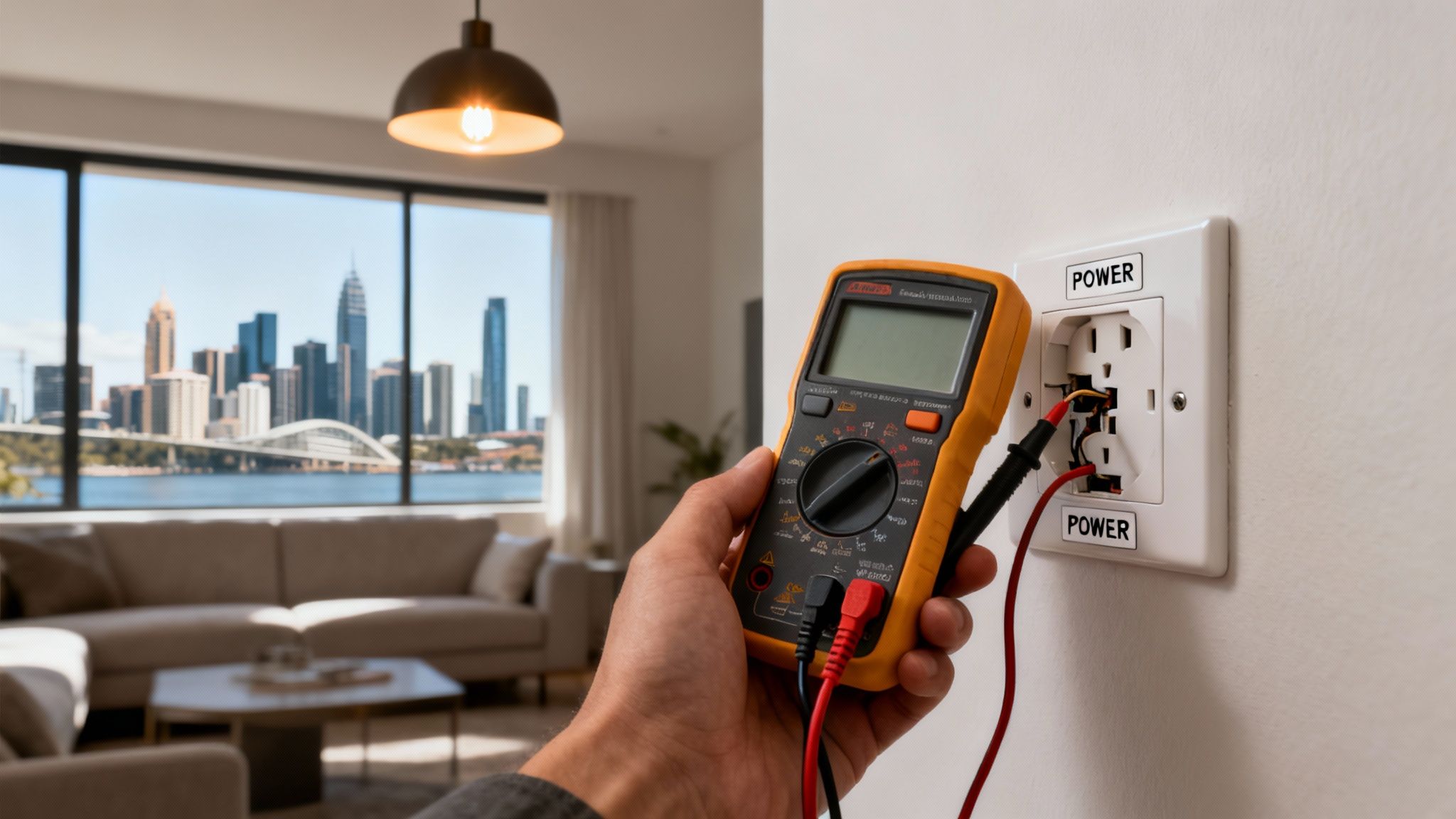
Faulty power points are one of the most common reasons we get called out. You might see obvious signs of trouble like cracks or scorch marks around the outlet. Sometimes, the outlet might even feel warm to the touch. These are urgent warning signs of a potential fire hazard.
What causes this? It could be simple wear and tear over the years, loose connections inside the wall, or—more often than you’d think—an overloaded circuit. Plugging too many high-powered appliances into a single circuit, especially with power boards, can push the wiring beyond its limits and cause it to dangerously overheat. A proper repair isn’t just about swapping the outlet; it’s about checking the circuit’s load to make sure it doesn’t happen again.
Your circuit breaker is a safety guard. Its job is to cut the power the moment it detects an overload or a short circuit, protecting your appliances and wiring. If it trips every now and then, it’s just doing its job. But when tripping becomes a daily or weekly ritual, it’s a clear sign of a persistent fault.
A circuit breaker that repeatedly trips is your electrical system’s way of crying for help. It’s a clear sign that a circuit is either consistently overloaded with too many appliances or there’s a more dangerous fault somewhere in the wiring.
While a single faulty appliance can sometimes be the culprit, it often points to deeper issues within the circuit itself. To get a better handle on this common problem, check out our detailed guide on what to do when your circuit breaker keeps tripping. An electrician can run diagnostics to find the exact cause and give you a safe, long-term fix.
Plenty of older Brisbane homes are still running on outdated wiring systems, like the old vulcanised Indian rubber (VIR) cabling. Over time, this type of wiring becomes brittle and degrades, which massively increases the risk of short circuits and electrical fires.
It’s the same story with old-fashioned fuse boxes. They just don’t have the life-saving features of a modern switchboard. Here are a few tell-tale signs your system is due for an upgrade:
Upgrading an old switchboard is one of the single most important electrical repairs you can invest in. A modern board with safety switches (RCDs) can detect even the tiniest electrical fault and shut off the power in milliseconds. This drastically reduces the risk of a severe electric shock. It’s not just an improvement; it’s a critical safety upgrade for any home.
When an electrical problem strikes, it’s tempting to jump on YouTube, find a quick tutorial, and try to sort it out yourself. We get it. But when you’re dealing with electricity, this isn’t like fixing a leaky tap—it’s more like performing surgery without a medical degree. The potential for things to go catastrophically wrong is enormous.
Here in Queensland, the law is crystal clear for a very good reason. Other than a few tiny jobs like changing a lightbulb, pretty much all electrical work must be done by a licensed professional. This isn’t just red tape; it’s a critical safety measure designed to prevent house fires, serious injury, and even death.
Trying to handle your own electrical repairs opens you up to a shocking list of severe consequences that go far beyond just not fixing the issue. The financial and personal fallout can be devastating. Before you even think about touching the wiring, you need to understand the stakes. If you want to know what separates the cowboys from the true experts, check out our detailed guide on how to select a top-tier electrician in Brisbane.
The biggest risks of going it alone include:
Hiring a licensed and insured electrician like DLG Electrical takes all these risks off the table. What you get instead is safety, compliance, and total peace of mind. A professional doesn’t just patch up the symptom; they diagnose the root cause to deliver a safe, permanent fix.
We are legally bound to perform work that meets strict Australian Standards, using the right tools, testing equipment, and high-quality materials every single time.
Choosing a professional for your electrical repairs isn’t an expense; it’s an investment in the safety of your home and the well-being of your family. It’s the only way to guarantee the job is done right, legally, and safely the first time.
To make it perfectly clear, let’s look at a side-by-side comparison of the risks involved.
The table below breaks down the stark reality of what you’re risking with a DIY attempt versus the assurance that comes with hiring a professional for your electrical repairs.
| Factor | DIY Electrical Work | Professional Electrician (DLG Electrical) |
|---|---|---|
| Safety | High risk of electrocution, fire, and injury due to lack of training and proper tools. | Work is performed to the highest safety standards, eliminating risks to people and property. |
| Legality | Illegal in Queensland, leading to significant fines and potential prosecution. | Fully licensed and compliant with all state regulations and Australian Standards. |
| Insurance | Voids home insurance policies, leaving you liable for all damages. | Fully insured, providing complete protection and liability coverage for all work performed. |
| Quality | Often results in temporary fixes or creates more complex, dangerous problems. | Guarantees a high-quality, lasting repair that addresses the root cause of the issue. |
| Certification | No formal qualifications or understanding of complex electrical systems. | Provides a Certificate of Compliance, a legal document verifying the work is safe. |
As you can see, the choice is clear. While saving a few dollars might seem appealing, the potential cost—to your safety, your finances, and your family—is far too high. Professional expertise is the only safe bet.
When you call in a professional electrician, you’re not just getting a quick fix for a flickering light. You’re kicking off a methodical process designed from the ground up for safety, compliance, and a repair that actually lasts. It’s a clear journey from that first phone call to a fully tested, safe solution, giving you complete confidence that the job is being handled properly.
It all starts the moment you get in touch. A good electrician will listen to what’s happening—whether it’s a circuit breaker that keeps tripping or a power point that’s stopped working. From that initial chat, they can often get a decent idea of the problem and book in a time to come and diagnose it properly. That first conversation is all about getting on the same page.
Once they’re at your property, the real detective work begins. Think of it like a doctor diagnosing an illness; they don’t just treat the symptom. A qualified sparky uses specialised tools like multimeters and circuit tracers to hunt down the exact source of the fault. This stops a simple issue from being misdiagnosed, saving you the headache and cost of “fixes” that don’t work.
A proper diagnosis is the bedrock of any successful electrical repair. The electrician will systematically test circuits, check wiring, and inspect connections to find the root cause. This could be something as simple as a faulty switch, or it could be a more complex problem hiding inside your walls or switchboard.
After pinpointing the problem, the next step is a clear, transparent quote. This isn’t just a number plucked out of the air. It’s a detailed breakdown so you know exactly what you’re paying for.
This way, there are no nasty surprises. You can give the green light with a full picture of the costs involved.
With your approval, the real work starts. Safety is always, without exception, the number one priority. The electrician will isolate the circuit they’re working on, shutting off the power to that area to completely remove any risk of electric shock. Only then will they fix the fault, whether that means replacing a burnt-out component, tightening loose connections, or rewiring a section of the circuit.
A crucial part of professional electrical repairs is using high-quality, compliant parts. Every single component, from a light switch to a circuit breaker, has to meet strict Australian Standards. Using cheap, non-compliant materials is a false economy that can lead to early failure and create serious safety hazards.
This need for professional oversight is becoming even more critical as our homes get smarter. Australia’s energy transition is making expert electrical work more important than ever, especially here in Brisbane. With more homes installing solar panels, batteries, and EV chargers, our electrical systems are becoming far more complex. This demands a much higher level of skill for proper inspection and repair. You can learn more about these changes from the Australian Energy Regulator.
This infographic sums up the choice homeowners have when an electrical problem pops up.

As you can see, trying to DIY just leads to a dead end. Bringing in a professional is the only path to a safe, complete fix.
The job isn’t done just because the tools are packed away. The final step is arguably the most important: testing and verification. The electrician will turn the power back on and run a series of tests to make sure the repair was successful and the circuit is operating safely. This includes checking for correct polarity, ensuring proper earthing, and testing every safety switch they’ve worked on.
After a professional electrical repair, the system shouldn’t just be working—it must be verifiably safe. This final testing phase is what provides that absolute assurance, confirming that all work meets the stringent requirements of Australian safety standards.
For any significant work, you’ll also receive a Certificate of Compliance. This is a legal document and your official guarantee that the job was done by a licensed professional and follows all safety regulations. It’s the ultimate peace of mind.
Let’s be honest, whenever an electrical problem pops up, one of the first thoughts is always, “How much is this going to set me back?” It’s a fair question. Understanding what goes into the cost of electrical repairs helps demystify the process and allows you to make a smart, informed choice for your home or business.
The final figure on a quote isn’t just pulled out of thin air. It’s a careful calculation based on a few key things: the electrician’s time on the job, how tricky the problem is, and the cost of any parts needed to fix it properly. It’s all about getting a fair price for a safe, compliant repair that will actually last.
When pricing an electrical repair in Brisbane, several variables come into play. Any good electrician will be upfront about these, so you know exactly what you’re paying for.
While it can be tempting to just go for the cheapest quote you can find, it’s so important to think about value over price. A cheap, quick fix from someone who isn’t properly qualified often leads to much bigger, more expensive headaches down the road. A quality repair by a licensed professional isn’t just a purchase; it’s an investment in your safety.
More and more people are choosing to invest in professional electrical repairs. In Australia, these services are part of a huge AU$36.2 billion industry. We’re seeing a growing demand for proper maintenance and repair work, especially for things like upgrading switchboards and rewiring older homes. This shows a clear shift towards making existing electrical systems safer.
A professional repair doesn’t just fix the immediate issue. It prevents future faults, protects your property from fire hazards, and ensures your home or business is legally compliant. That long-term peace of mind is where the true value lies.
To give you a better idea of what to expect, it helps to know the typical price ranges for common jobs. Of course, every situation is a bit different. Our detailed guide on how much electricians charge breaks this down even further. For instance, a straightforward safety switch installation will have a very different price tag compared to diagnosing an intermittent fault in your hot water system.
Ultimately, the best way forward is to get a detailed, obligation-free quote. At DLG Electrical, we believe in being completely transparent. We’ll come out, assess the job properly, walk you through the work that’s needed, and give you a clear, upfront price so there are absolutely no surprises later on.
It’s one thing to fix a problem when it pops up, but a huge part of what we do as professional electricians is making sure your whole system is safe, up-to-date, and compliant with the law. This isn’t just about ticking boxes; it’s about putting strong, reliable safeguards in place to protect your property and the people in it from genuine risks like house fires and electric shock.
Here in Queensland, the law is crystal clear on the minimum safety standards for homes and businesses. These rules are there to act as a shield, and two of the most important pieces of that shield are modern switchboards and properly installed smoke alarms. You should think of these less as optional extras and more as fundamental necessities for any safe property.
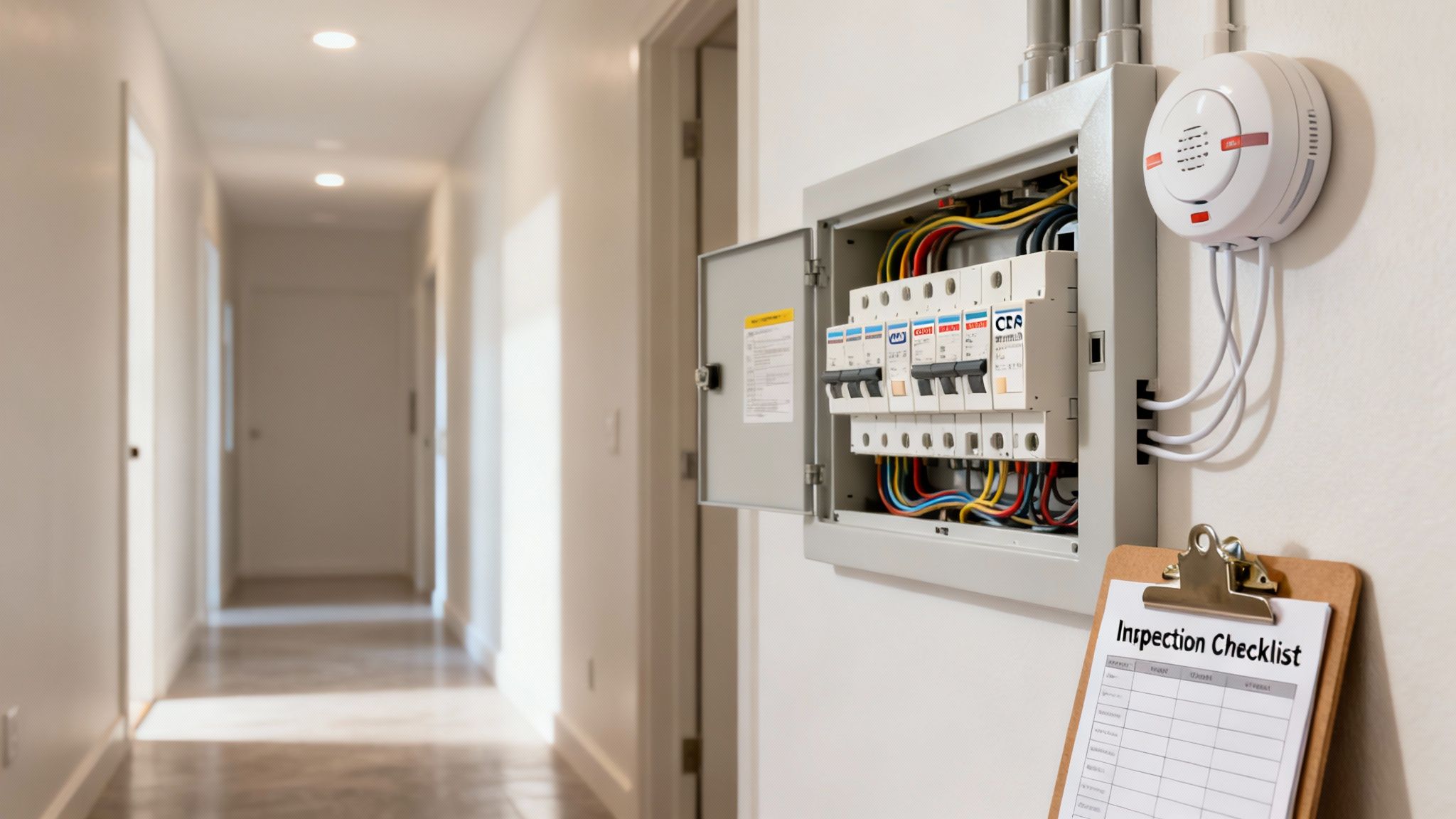
Your switchboard is the central command for your entire electrical network. If you’ve still got an old board with those ceramic pull-out fuses, it’s like having a security guard who’s fast asleep on the job—it offers next to no protection against today’s electrical dangers. Upgrading to a modern switchboard is one of the single most important safety investments you can make for your property.
The real hero in a modern board is the Residual Current Device (RCD), which you probably know as a safety switch.
In Queensland, it’s a legal requirement to have safety switches installed on all power circuits in homes. This isn’t just a suggestion; it’s a mandate that highlights just how critical these devices are in preventing serious injury and death.
Having smoke alarms that work correctly is another non-negotiable for property safety. The laws in Queensland have been updated to a much higher standard, all designed to give you the earliest possible warning if a fire breaks out.
For all properties, smoke alarms must now be:
Meeting these requirements is a legal duty for all homeowners and landlords. A licensed electrician is the only person who can make sure your setup is fully compliant and gives you the best possible protection.
Every bit of electrical work we do, from replacing a single power point to a full rewire, has to follow the Australian and New Zealand Standard AS/NZS 3000, better known as the Wiring Rules. This is the official rulebook for safe electrical installations. Only a licensed sparkie has the training to understand and apply these complex standards, guaranteeing your system isn’t just working, but is fundamentally safe.
For commercial and industrial properties, staying compliant is a core part of business strategy. Professional electrical repairs are a major piece of Australia’s maintenance, repair, and operations (MRO) sector, a market worth an estimated USD 19.6 billion in 2024. This industry is heavily shaped by strict safety regulations that push businesses to stay on top of maintenance to avoid accidents and costly downtime. It’s crucial to understand the dangers; you can learn more about the top health and safety risks, including electrocution.
It’s completely normal to have questions when you’re facing an electrical issue at home or work. Getting straight, honest answers is the first step to finding a safe and lasting solution. Here, we’ll run through some of the most common queries we get from folks around Brisbane, giving you the clear information you need to make the right call.
An electrical emergency isn’t something to ignore or “wait and see” on. It poses an immediate risk to your property and everyone in it, and it needs urgent professional attention.
You’re likely dealing with an emergency if you notice:
If you spot any of these signs, your first job is to ensure everyone is safe. If you can get to it safely, shut off the main power at your switchboard right away. Then, call a licensed 24/7 emergency electrician. Don’t ever try to investigate or fix it yourself—it’s just not worth the risk.
A safety switch, technically called a Residual Current Device (RCD), is probably the most important life-saving device in your switchboard. Its entire purpose is to protect people from a serious electric shock, which makes it very different from a standard circuit breaker.
Think of it this way: a circuit breaker protects your appliances and wiring from damage if there’s an overload. But a safety switch protects you. It constantly monitors the flow of electricity, and if it detects even a tiny imbalance—where power is leaking to the ground, possibly through a person—it cuts the circuit in a fraction of a second. This response is fast enough to prevent a fatal shock. It’s why Queensland law now mandates safety switches on power circuits; they are genuinely life-savers.
Just like a car needs a regular service, your home’s electrical system needs a professional check-up to keep it running safely. As a general rule of thumb, it’s a great idea to have a licensed electrician inspect your wiring every 5 years.
An electrical inspection is like a health screening for your home. It allows a professional to identify potential issues like degraded wiring or faulty components before they escalate into serious hazards, ensuring your system remains safe and reliable.
You might want to get an inspection done sooner if:
For simple, straightforward jobs like replacing a standard power point or installing a common light fitting, we can usually give you a very reliable price estimate right over the phone. But for many electrical repairs, a proper look is needed.
Complex issues like tracking down a mysterious fault, diagnosing an intermittent problem, or planning a full switchboard upgrade really need an on-site assessment. This lets our electrician properly diagnose what’s going on and figure out the exact parts and time required to fix it properly. We offer free, no-obligation quotes where we come to you, explain the solution in plain English, and give you a fixed price before we pick up a single tool. That way, you know exactly what to expect, with no nasty surprises down the line.
When it comes to the safety of your home or business, you need an electrician you can trust. The team at DLG Electrical is committed to providing safe, compliant, and reliable electrical repairs across Brisbane. For a free, no-obligation quote, contact us today.

Master Electrician with over 30 years of experience. Founded DLG Electrical in 2005 after international project work including electrical installations at Stamford Bridge Stadium, London(Home of Chelsea FC).

Local Electricians that can fix all Electric Hot water Systems.
Motion sensor lights are a versatile addition to any home, offering nu
