83 Jean St, Grange QLD 4051
Mon-Fri 07:30 AM - 04:00 PM - Sat - 8:00 - 12 - Sunday Closed

Hiring a reliable electrician in Brisbane isn’t just about ticking a box. It’s about making sure the person working on your property is fully licensed, insured, and experienced enough for your specific job. This is the absolute baseline for protecting your home or business and ensuring all work meets Australia’s strict safety standards.
With Brisbane booming, the demand for good electricians is higher than ever. New builds are popping up everywhere, and older homes constantly need upgrades. It’s a busy market, and unfortunately, that means there are cowboys out there.
Choosing the wrong person can lead to a world of pain—faulty wiring, work that doesn’t meet safety codes, and worst of all, genuine risks like electrical fires.
This guide is here to cut through the noise. We’ll give you a practical, no-nonsense roadmap for finding, vetting, and hiring an electrician you can trust. Think of it as your essential checklist for protecting your property, your family, and your peace of mind.
Brisbane’s constant growth has a direct impact on the electrical trade. Across Australia, the electrical services industry has swelled to an estimated $36.2 billion, and a huge chunk of that is happening right here. Brisbane’s population is growing by about 1.7% every year, fuelling a massive pipeline of construction and creating constant demand for new electrical installations.
But it’s not just about new builds. Maintenance and upgrades on existing properties make up a huge slice of the work, which means you need a sparkie who understands both modern systems and the quirks of older Brisbane homes. You can read more analysis of the growth trends for Brisbane electricians.
Your home’s electrical system is its central nervous system. A small mistake can have massive consequences, which is why hiring a professional isn’t a luxury—it’s a necessity. Every decision, from installing a new power point to a full switchboard upgrade, impacts your home’s safety.
This isn’t just a directory of names. It’s a step-by-step manual to empower you as a homeowner, landlord, or business owner. We want to give you the knowledge to hire with complete confidence.
Here’s a quick rundown of what you’ll learn:
By the end of this guide, you’ll know exactly what separates a great electrician from an average one. You’ll be able to move forward knowing your electrical work is safe, compliant, and done to the highest possible standard.
Before any work begins, the single most important check you can make is on an electrician’s credentials. This isn’t just about ticking a box; it’s your frontline defence, ensuring the person working on your home is qualified, compliant, and that you’re protected from any liability.
In Queensland, the system is set up to protect homeowners, but it pays to know exactly what you’re looking for. A lot of people don’t realise there are two different types of electrical licences, and the distinction is critical.
First up, you have the Electrical Worker Licence. This is the personal qualification issued to an individual sparky once they’ve completed their apprenticeship and proven their skills. It’s their ticket to trade, so to speak.
The one you absolutely must check, however, is the Electrical Contractor Licence. This licence is held by the business itself. It’s proof the company is a legitimate operation, carries the necessary insurance, and is legally allowed to offer its services to the public.
If you’re hiring a sole trader, they need to hold both. If it’s a larger company, the business will have the contractor licence, and each electrician they send out will have their own worker licence.
A common mistake is only checking the individual’s worker licence. If the business doesn’t hold an Electrical Contractor Licence, they may not have the mandatory insurance, leaving you financially exposed if something goes wrong.
Thankfully, checking is easy. The Queensland Electrical Safety Office (ESO) has a public register where you can search by name or licence number. It’s a five-minute job that buys you total peace of mind.
This visual shows the simple yet essential process of vetting and hiring a qualified electrician in Brisbane to ensure your home’s safety.
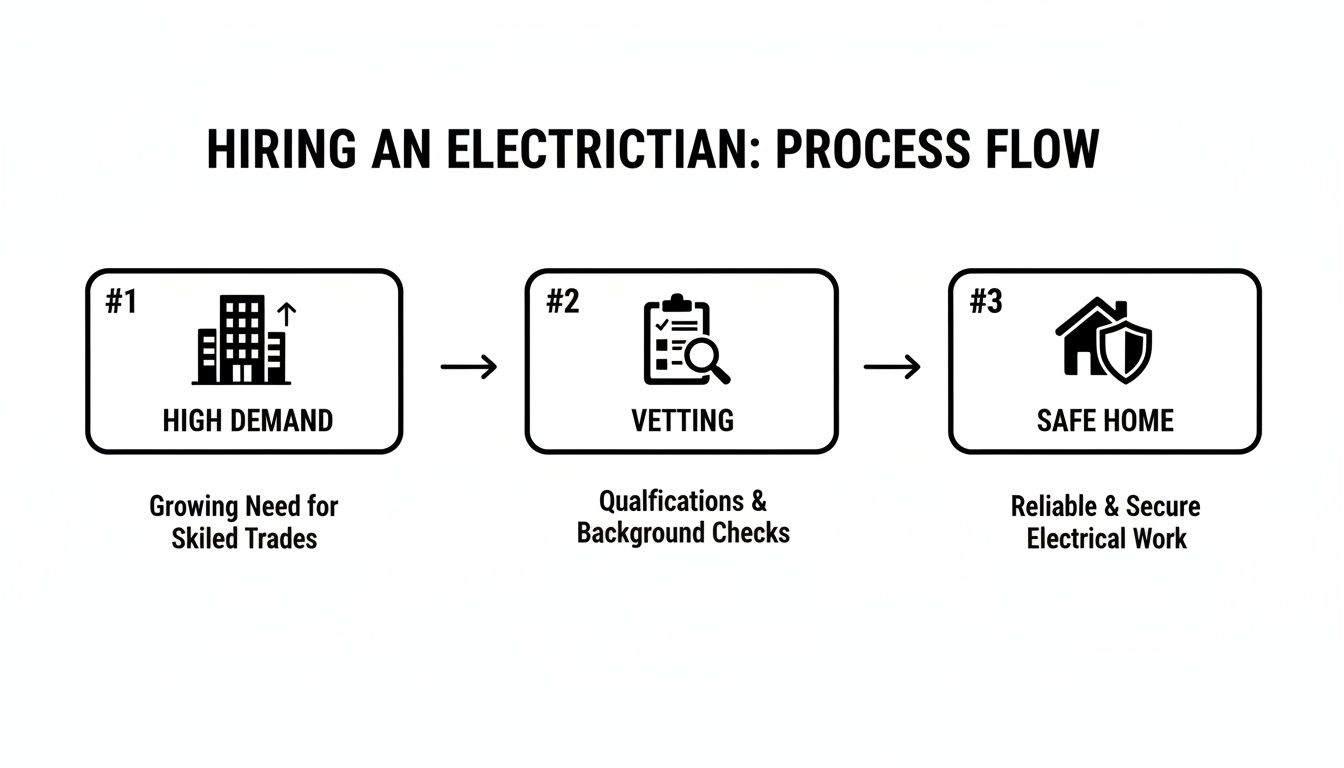
The bottom line is that a safe outcome is only possible when you do your homework, and that starts with the licences.
Proper insurance is the other half of the safety equation. Any reputable electrician in Brisbane will carry comprehensive cover, but the big one for you is Public Liability insurance. This policy is your safety net, protecting you and your property from accidental damage caused by the electrician or their work. It’s well worth understanding liability insurance for contractors, as this is what stands between you and a potential disaster.
Let’s play out a scenario. An electrician is working in your roof space and accidentally drills through a water pipe, causing a major leak.
A true professional will never have an issue showing you their insurance details. When you’re trying to find licensed electricians near you, simply asking for proof of insurance is a fantastic way to weed out the cowboys.
So, how do you know their insurance is actually valid and not an expired policy from last year?
Easy. Ask to see their Certificate of Currency.
This is a one-page document from their insurer that confirms their policies are active. It will clearly state the coverage amount—usually $5 million, $10 million, or $20 million for Public Liability—and the policy’s expiry date.
Don’t just take their word for it. Requesting this certificate is standard industry practice, and any legitimate business will provide it without hesitation. It’s a simple step that proves you’re dealing with a transparent and responsible company that takes both their obligations and your safety seriously.
A quick check of these credentials can save you a world of trouble. Here is a simple table to help you keep track.
This checklist is your quick-reference guide to make sure the electrician you’re considering meets all legal and professional requirements in Queensland.
| Credential | What It Is | How to Verify |
|---|---|---|
| Electrical Worker Licence | The individual electrician’s personal qualification to perform electrical work. | Ask the electrician for their licence number. Verify it on the QLD Electrical Safety Office (ESO) register. |
| Electrical Contractor Licence | The business’s licence to operate, contract services, and employ electricians. This is mandatory. | Search for the business name on the ESO public register. Confirm the licence is current and not expired. |
| Public Liability Insurance | Protects you from accidental property damage or injury caused by the electrician’s work. | Request a Certificate of Currency from the business. Check the coverage amount and expiry date. |
By taking a few minutes to verify these key documents, you’re not just hiring an electrician; you’re making a smart decision that protects your property, your family, and your finances.
Figuring out what a job will cost is often the most stressful part of hiring any tradesperson. When it comes to hiring an electrician in Brisbane, understanding how they price their work can help you budget properly and avoid any nasty surprises on the final bill.
Let’s be clear: prices aren’t just pulled from thin air. They’re a careful calculation of labour, materials, business overheads, and the sparky’s hard-earned expertise.
Most electricians use one of two main pricing models, and the one they choose usually depends on the type of work you need done.
For smaller repairs or troubleshooting tasks, you’ll likely see a call-out fee combined with an hourly rate. The call-out fee typically covers the electrician’s travel and the first 15-30 minutes on-site for diagnosis. After that, the hourly rate kicks in. This structure is perfect for those tricky jobs where the scope isn’t clear from the get-go, like a flickering light or a circuit breaker that keeps tripping.
For larger, more defined projects—think a full switchboard upgrade or installing a new set of downlights—you’ll almost always get a fixed-price quote. The electrician will assess the entire job, calculate the cost of all materials and labour required, and give you a single, all-inclusive price. This is great for you, as it provides cost certainty for budgeting those bigger jobs.
The most important thing you can do is clarify the pricing model upfront. If it’s hourly, ask about the rate and if there’s a minimum charge. If it’s a fixed quote, make sure it clearly spells out what is and isn’t included. No grey areas.
Several factors can move the needle on the cost of electrical work. Knowing what they are helps you understand the value you’re actually getting for your money, because it’s about much more than just the time spent at your property.
Here are the main things that drive the cost:
Beyond these job-specific factors, legitimate electrical businesses have significant overheads. These aren’t hidden fees; they’re the real-world costs of running a professional and compliant operation. According to ATO small-business benchmarks, total expenses for electrical firms can eat up anywhere from 62% to 77% of turnover. This covers everything from wages and insurance to tools, vehicle upkeep, and the cost of materials.
Getting a good price isn’t about finding the absolute cheapest option. In the world of trades, the cheapest quote can quickly become the most expensive problem if the work is shoddy or non-compliant. To compare your options fairly, you need clear, detailed quotes from a few reputable electricians.
Want to dive deeper? Check out our detailed guide on what electricians charge for different jobs.
When you reach out for a quote, be as specific as you can. Tell them exactly what you need done and send photos if possible. The more information you give them, the more accurate their initial estimate will be.
Once you have a few quotes in hand, don’t just jump to the final number at the bottom. A professional quote should always include:
By asking for this level of detail, you’re making sure you can compare apples with apples. It helps you spot any red flags and choose an electrician in Brisbane who is transparent, professional, and offers genuine value for their expertise.
From a single flickering light to a full-scale home rewire, the kind of work an electrician in Brisbane handles is incredibly diverse. Knowing the most common jobs helps you pinpoint your own needs, explain them clearly, and understand when it’s time to call a pro instead of attempting a risky DIY job.
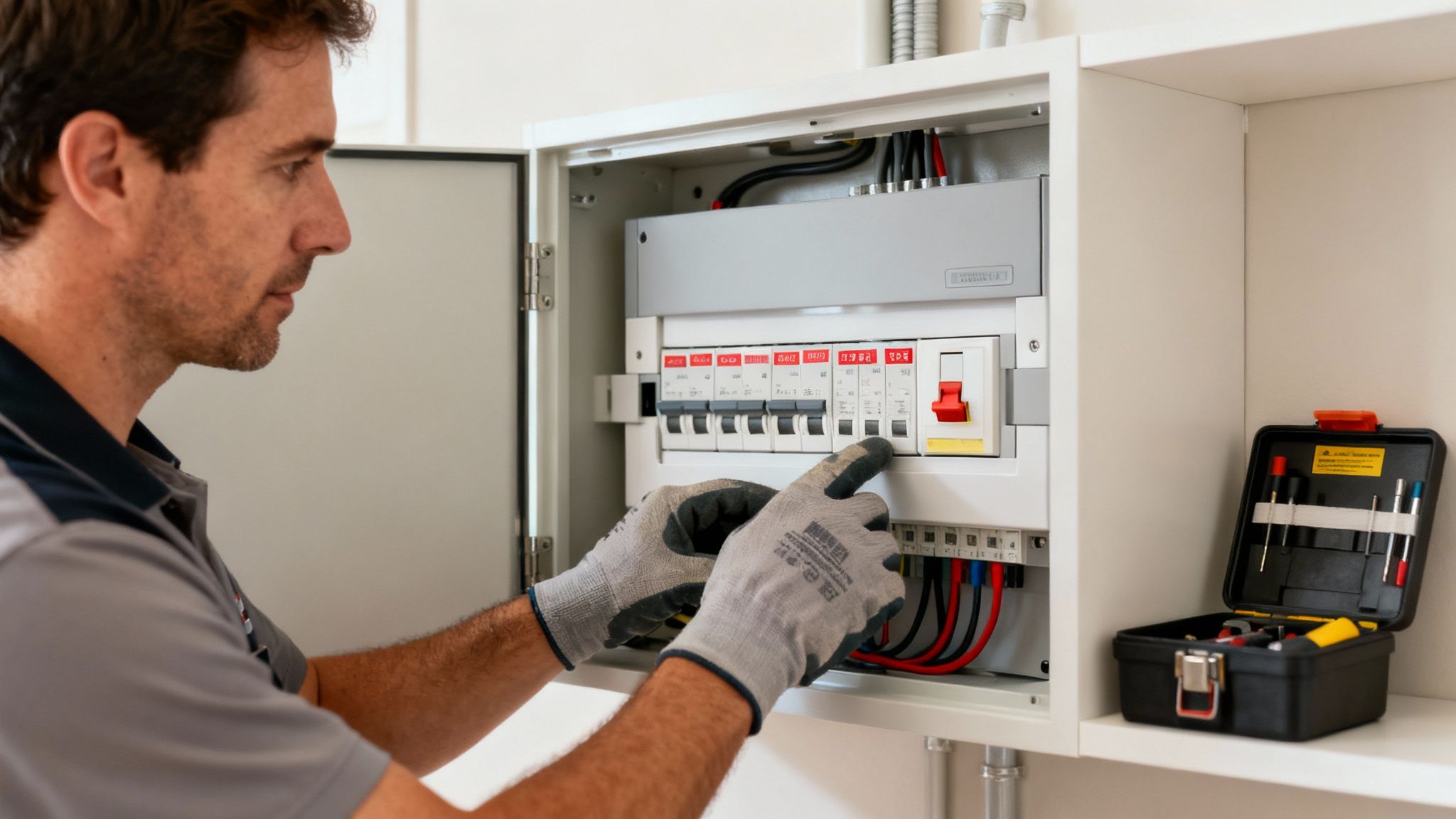
Let’s dive into the typical services Brisbane homeowners, landlords, and businesses need, so you know exactly what to expect.
Think of your switchboard as the heart of your home’s electrical system, pumping power exactly where it needs to go. Many older Brisbane homes are still running on outdated fuse boxes with old ceramic fuses. These just aren’t built for today’s power demands and are missing crucial safety features.
A switchboard upgrade is one of the single best investments you can make in your property’s safety. The game-changer in a modern board is the safety switch, also known as a Residual Current Device (RCD). These clever devices are designed to cut the power in a split second if they sense a current leak, which is often the difference between a close call and a fatal electric shock.
It might be time for an upgrade if you notice:
Upgrading your switchboard isn’t just a smart move—it’s often the law. In Queensland, safety switches are legally required on all power point circuits when a home is sold or a new tenancy agreement is signed.
Queensland has some of the toughest smoke alarm laws in the country, and for good reason—they’re all about giving you the earliest possible warning in a fire. Getting a licensed electrician involved is the only way to be sure your property is 100% compliant.
The rules are specific: all homes must have interconnected photoelectric smoke alarms. This means when one alarm senses smoke, every alarm in the house goes off. They need to be installed in every bedroom, in hallways connecting bedrooms, and on every single level of the home.
These alarms can either be hardwired with a battery backup or powered by a 10-year non-removable lithium battery. If you’re a landlord or selling your home, meeting these standards isn’t optional; it’s a legal must.
Nothing ruins a morning faster than a cold shower. In Brisbane, the problem is often an electrical fault in the hot water system. While a plumber handles the pipes, anything related to the heating element or thermostat is a job for a sparky.
Some tell-tale signs of an electrical issue are:
An electrician can diagnose the issue fast, swap out the faulty part, and get the steam flowing again. This is absolutely not a DIY job—the mix of high-voltage electricity and water is a recipe for disaster.
As our homes and habits evolve, so do our power needs. One of the most common jobs for any electrician is adding new lights and power points. This could be as simple as putting a new GPO in the kitchen or as big as a complete LED lighting upgrade for the whole house.
Switching to LED lighting is a huge win for Brisbane homeowners. It’s incredibly energy-efficient, using up to 80% less power than old halogen globes. That translates directly into savings on your electricity bill.
With more people switching to electric cars, sparkies are also getting more calls to install dedicated EV chargers. Having the right electric vehicle charging solutions at home adds real value and makes life a lot more convenient.
Feeling secure in your own home is priceless, and modern tech offers more peace of mind than ever. Electricians handle the full hardwired installation of security cameras (CCTV), intruder alarms, and video doorbells.
A professional install ensures every wire is right, cameras are perfectly positioned for maximum coverage, and the whole system is properly powered. This avoids the glitches and dead batteries that plague many DIY systems, giving you a reliable, 24/7 security setup you can count on.
The smell of burning plastic, a strange buzzing from your switchboard, or sparks flying from an outlet—these aren’t just minor glitches. They are red flags for a serious electrical emergency, and knowing what to do in those first few moments can make all the difference.
An electrical emergency is unnerving, but staying calm and taking the right steps is crucial. This isn’t like a flickering light; a true emergency poses a direct risk of fire or electric shock. Your immediate actions are vital while you wait for a professional electrician in Brisbane to arrive.
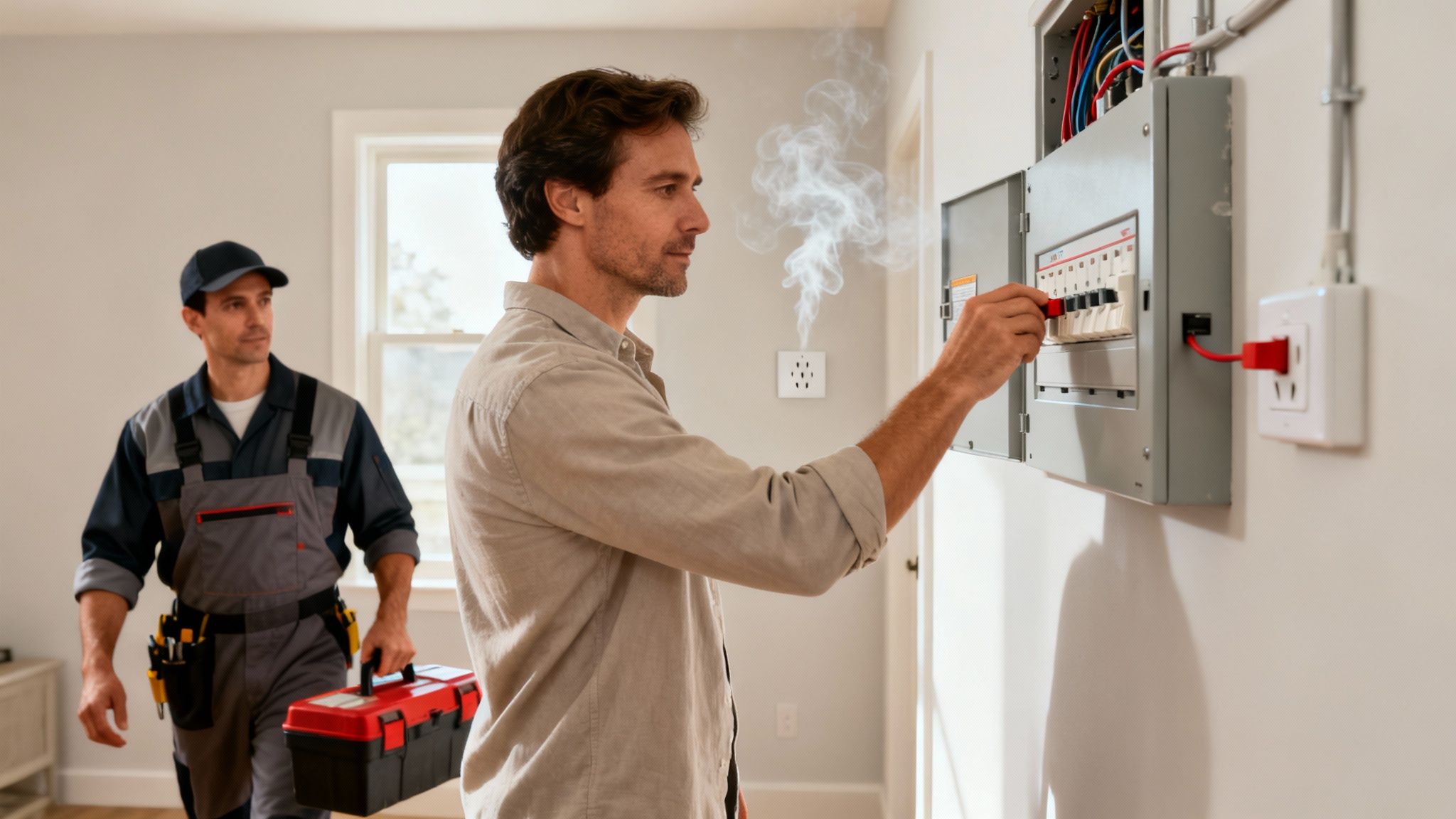
Before you even think about picking up the phone, your absolute first priority is safety. Securing the area is paramount to protect yourself, your family, or your colleagues from harm.
If you can get to it safely, the single most important thing you can do is cut the power at the source. Head to your switchboard and turn off the main power switch. This de-energises your entire property and is the fastest way to neutralise the immediate danger.
But what if the switchboard itself is the problem? If you see smoke, hear crackling, or notice sparks coming from the board, do not touch it. In this situation, your only job is to evacuate everyone from the area and call for help from a safe distance.
Here’s a quick rundown of what to do:
Once the immediate danger is contained, it’s time to call in the professionals. Not every sparky offers a 24/7 service, so your search should specifically target companies that advertise emergency call-outs.
A good emergency electrician will have a dedicated after-hours number and should be able to give you a realistic ETA. Just be aware that after-hours, weekend, and public holiday services will come at a premium rate. This is standard across the industry to cover the on-call nature of the work.
When you make the call, be ready to explain the situation clearly and calmly. For a deeper dive, our guide on what to expect when finding an emergency electrician in Brisbane offers more detailed advice for urgent situations.
Safety First While You Wait
Your job isn’t done after you hang up the phone. While you wait for the electrician, keep everyone—including pets—well clear of the affected area. Don’t be tempted to inspect the damage yourself or try to restore the power. Nothing is more important than your safety.
When you’re on the phone in a high-stress situation, a few quick questions can save you a lot of headaches later. It helps you stay in control and ensures the right person is on their way.
Asking these simple questions ensures the professional heading to your property is qualified, transparent with their pricing, and ready to tackle the specific problem you’re facing.
Even after you’ve done your research, a few specific questions always pop up right before you make the final call. It’s completely normal. Let’s tackle those common queries head-on so you can hire your Brisbane electrician with total confidence. Think of this as the final check-in to clear up any last-minute doubts.
Yes, you absolutely should. Any reputable electrical contractor will stand by their work with a warranty covering both their labour and the materials they supply. Frankly, it’s a huge green flag that shows they’re confident in the quality of their service.
The specifics can vary, so make it a point to ask about the warranty terms before any work begins. Typically, you’ll see a workmanship warranty lasting for 12 months. The products themselves, like a new safety switch or power point, will have their own separate manufacturer’s warranty.
Always, always get these details in writing. It’s your safety net, ensuring that if anything goes wrong because of the installation, the electrician will come back and sort it out at no extra cost to you.
This is the classic “how long is a piece of string?” question. The answer hinges entirely on the job’s complexity. A simple task like swapping out a light fitting might be done in under an hour, but a full switchboard upgrade is a more involved process that could take half a day or more.
A good electrician won’t just give you a price; they’ll provide a realistic timeline with their quote. They should be able to walk you through the main steps and let you know if the power needs to be shut off for any length of time. This kind of communication is key to minimising disruption to your day.
A few things can affect the timeline:
A true professional keeps you in the loop. If the scope or timeline needs to change for any reason, they’ll tell you straight away. Clear communication is the hallmark of great service—no surprises, no stress.
Choosing a sparky who is genuinely local to Brisbane gives you some practical advantages you might not think of at first. It’s not just about them being a short drive away; their experience is tailor-made for your property.
A Brisbane electrician understands our city’s unique mix of homes. They know the common electrical quirks in a pre-war Queenslander, the typical wiring setups in an 80s brick-and-tile, and the latest requirements for modern builds in the newer suburbs. This local knowledge often translates to faster troubleshooting and more efficient solutions.
They also have established relationships with local electrical suppliers, which can mean getting the right parts faster. In a competitive market like South East Queensland, that familiarity counts. In Australia, there are roughly 193,200 employed electricians, and Queensland is home to about 23.1% of them. Their high median weekly earnings of $2,204 reflect the skill involved. You can dig deeper into the data on the Jobs and Skills Australia website.
If you have any concerns about the quality of the work, the first step is always to talk directly with the electrical contractor. Calmly and clearly explain what you’re not happy with. Any business that values its reputation will want to work with you to find a solution.
If you can’t get it sorted out directly, you do have other options.
Hopefully, you’ll never need to take this step. By doing your homework upfront—checking licences, reading reviews, and getting detailed written quotes—you drastically reduce the risk of hiring someone who will let you down.
Choosing the right electrician is one of the most important decisions you’ll make for the safety and smooth running of your property. When you’re ready to work with a trusted, local team that gets it right the first time, reach out to DLG Electrical.
Get Your Free, No-Obligation Quote Today

Master Electrician with over 30 years of experience. Founded DLG Electrical in 2005 after international project work including electrical installations at Stamford Bridge Stadium, London(Home of Chelsea FC).

Local Electricians that can fix all Electric Hot water Systems.
Motion sensor lights are a versatile addition to any home, offering nu
