83 Jean St, Grange QLD 4051
Mon-Fri 07:30 AM - 04:00 PM - Sat - 8:00 - 12 - Sunday Closed

Electrician local: Knowing when to find a local electrician is the first step, but recognising why you need one is the real game-changer. It’s easy to write off small electrical quirks, but ignoring those little warnings can escalate a simple fix into a serious safety hazard. Acting fast is key.
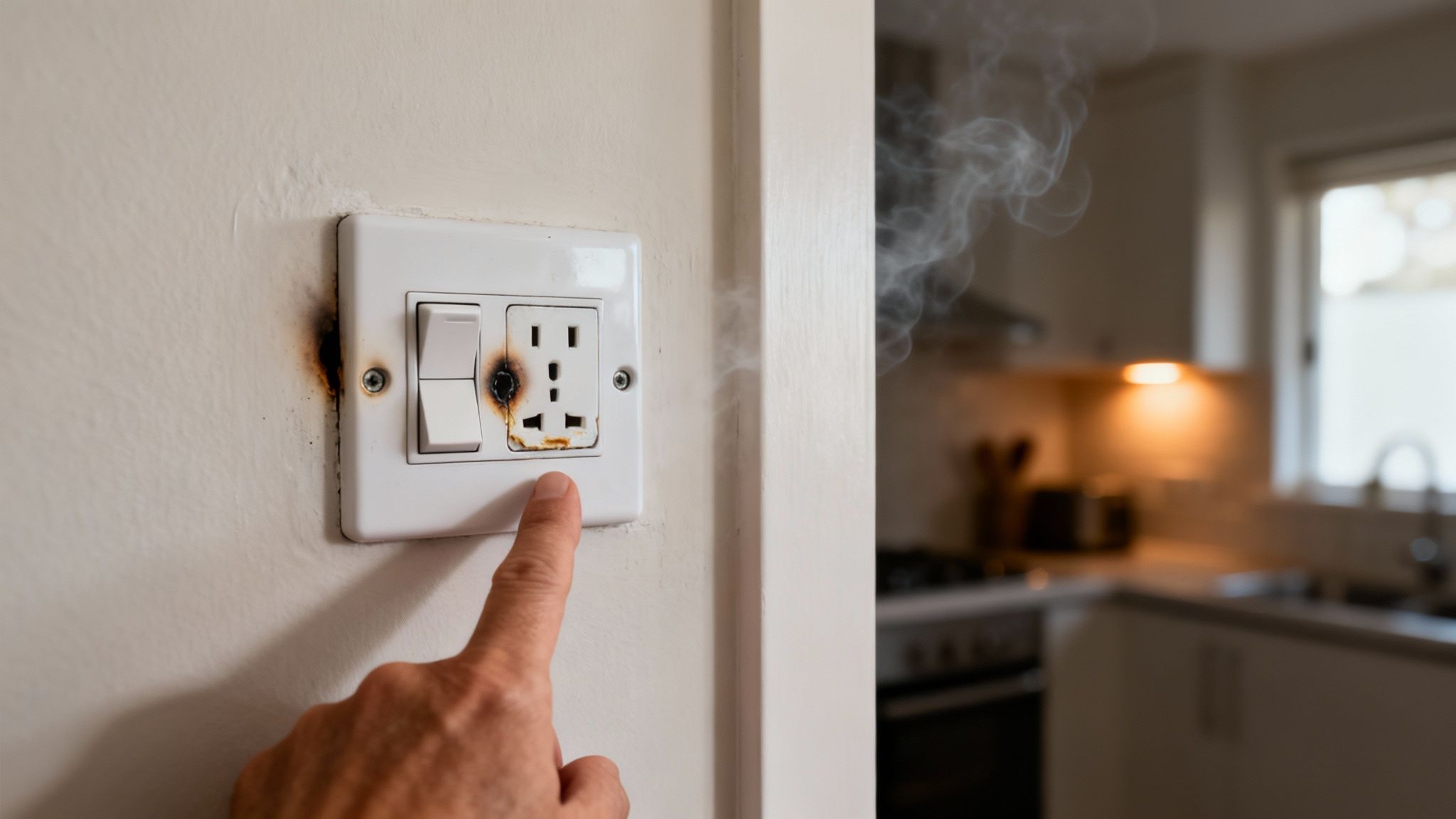
We’ve all seen it. A light that flickers now and then, or a circuit breaker that trips once in a blue moon. It’s tempting to just ignore it. But your home’s electrical system has its own way of telling you something’s wrong, and these subtle signals are worth listening to.
Overlooking them can lead to serious consequences, from damaged appliances to the unthinkable—an electrical fire. Knowing what to look for helps you decide when it’s time to put down the tools and pick up the phone.
For example, do your lights dim every time the air conditioner kicks on? That’s not just a charming quirk of an old house. It’s often a sign of an overloaded circuit that’s struggling to keep up. A qualified electrician can tell you straight away if your switchboard can handle the load or if you need a dedicated circuit to safely power your high-demand appliances.
A circuit breaker is your electrical system’s first line of defence. It’s designed to trip and cut the power to prevent wires from overheating and causing a fire. So, if a breaker keeps tripping, it’s waving a big red flag.
Ignoring a constantly tripping breaker is like hitting snooze on a smoke alarm. It’s a critical safety device telling you something needs your immediate attention.
Your electrical system should be seen, not heard—and definitely not smelt. Any strange noises or odours are a clear signal that it’s time to be concerned.
A faint burning smell, often described as fishy or like singed plastic, is a major red flag. This scent can come from overheating wires, melting plastic on outlets or switches, or a failing component inside your switchboard. Never ignore this smell; shut off the power at the main switch and call for help immediately.
Likewise, any buzzing, humming, or crackling sounds from outlets, switches, or your breaker box point to a problem. This could be anything from a loose connection to an overloaded wire or a faulty device arcing electricity. All of these are significant fire risks.
Getting a quick diagnosis from a local professional is the only safe path forward. For urgent situations, knowing when you need an emergency electrician in Brisbane can make all the difference.
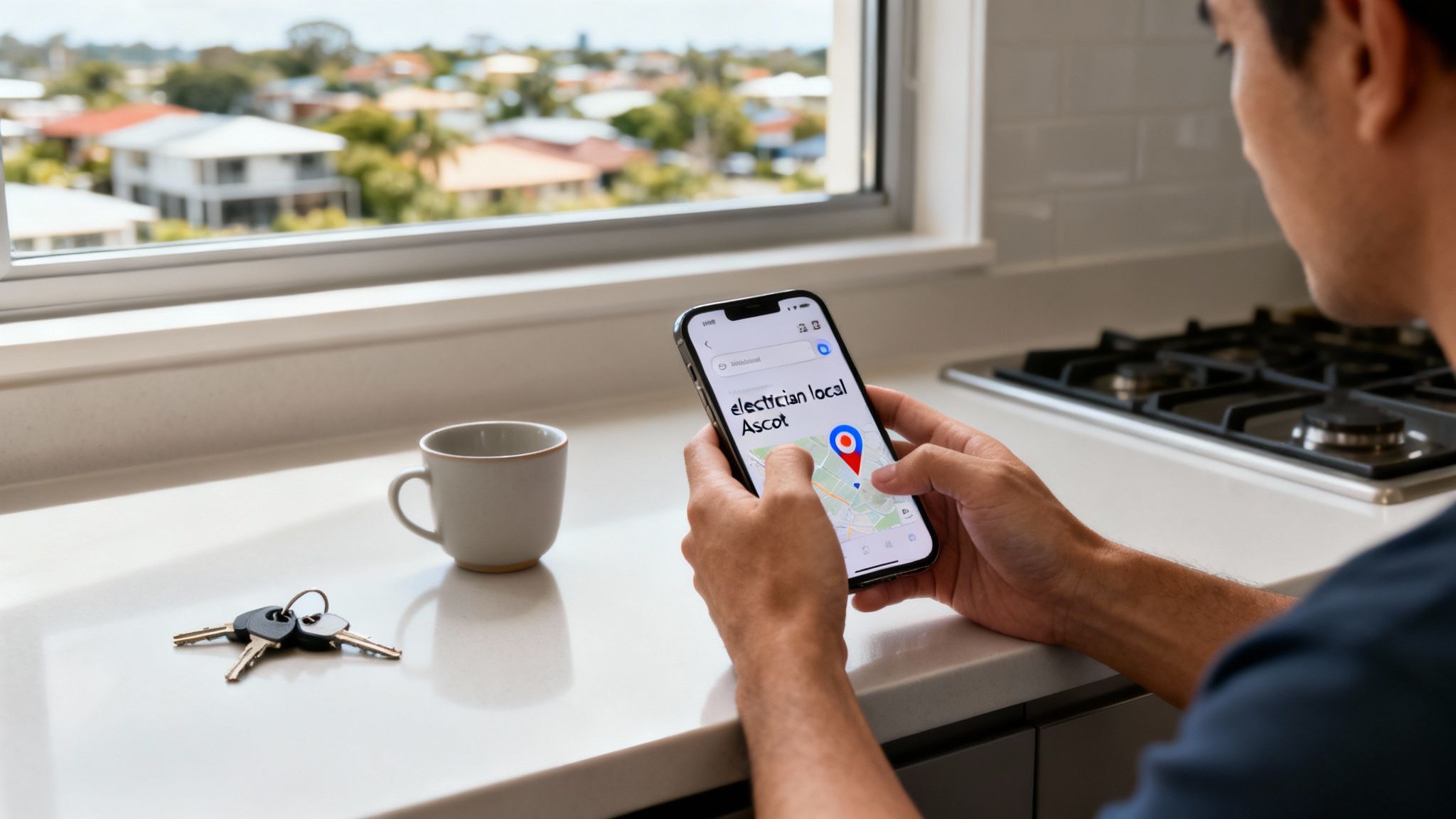
Knowing you need an electrician is the easy part. The real challenge? Finding a great one you can actually trust. With countless options popping up online, it’s easy to feel a bit lost. But a smart search strategy will help you sift through the noise and zero in on qualified, reliable pros.
Honestly, the best place to start is often a simple conversation. Word-of-mouth is still king for a reason—it comes with a built-in layer of trust. Ask your neighbours, friends, or that builder you used last year who they call for electrical work. A personal recommendation speaks volumes about an electrician’s reliability and the quality of their work.
When you do turn to Google, specificity is your secret weapon. A vague search for “electrician” will unleash a tidal wave of results, many of them irrelevant. Adding your suburb or the specific job you need done is a simple trick that filters out the noise and connects you with businesses that actually work in your area.
Try searching for terms like:
This targeted approach doesn’t just save time; it also puts you in touch with electricians who are familiar with local building styles and council requirements. Beyond a standard search, trade platforms like HiPages or ServiceSeeking can be a good resource, as they often do some of the initial legwork by vetting contractors for licences and insurance.
Online reviews are a goldmine, but you need to know how to pan for the gold. A five-star rating is a nice starting point, but the real story is always in the comments.
Look for patterns in what people are saying. Do multiple reviews mention the electrician was on time, communicated clearly, and cleaned up after themselves? These are huge indicators of true professionalism that go far beyond just technical skill.
Also, pay attention to how a business responds to feedback—both good and bad. A thoughtful reply to a negative review shows they care about customer service. Be a little wary of profiles with just a handful of generic, glowing reviews; they might not be the real deal. You want to see detailed comments about actual jobs, as they paint a much more authentic picture.
For a deeper dive, check out our guide on finding licensed electricians near you. By mixing trusted referrals with a savvy online search and a critical eye for reviews, you’ll be well on your way to building a solid shortlist of Brisbane’s best electricians.
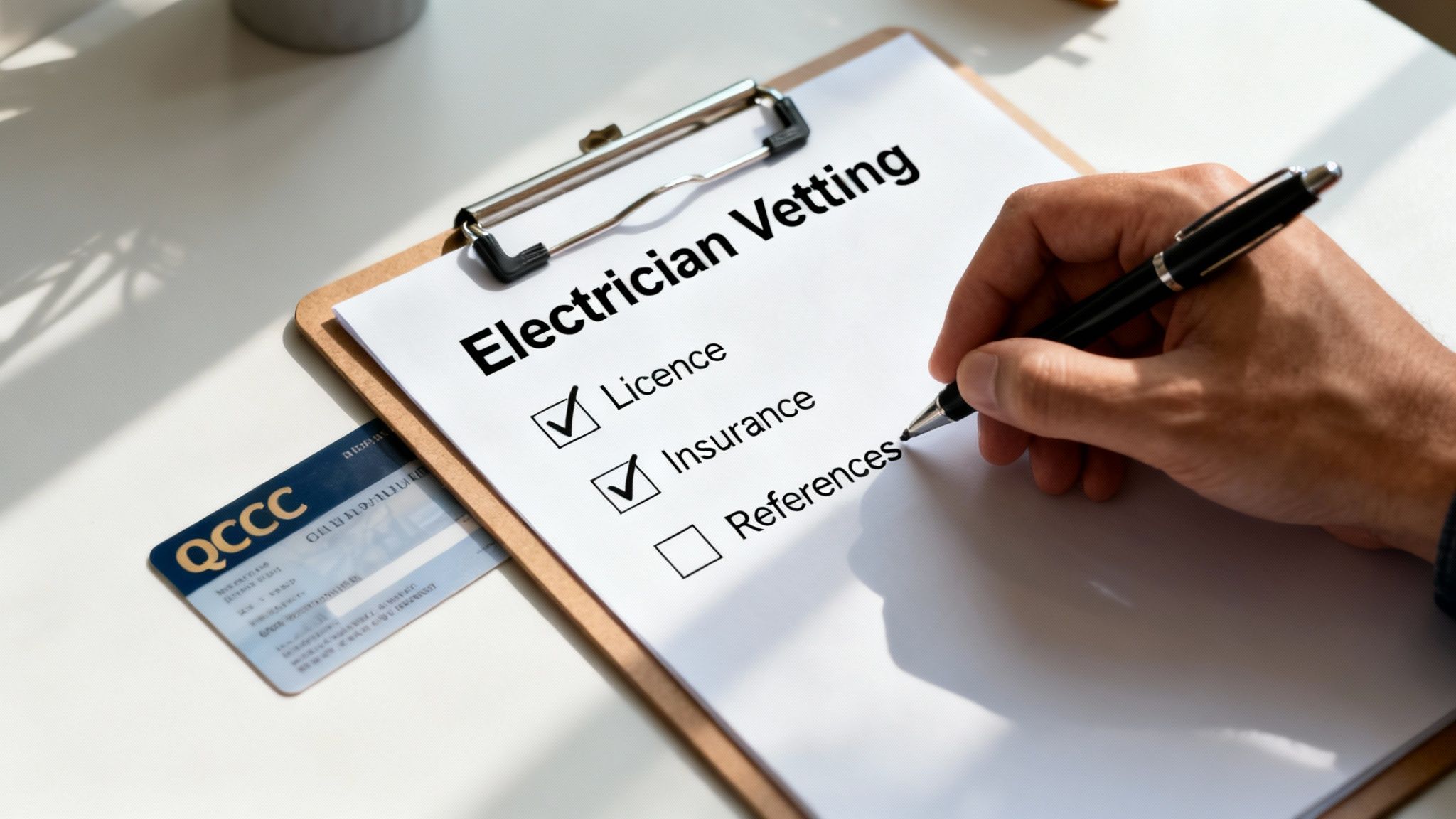
Once you’ve got a shortlist of promising sparkies, the real work begins. This is where you separate the true professionals from the rest.
Think of this vetting process as your safety net against dodgy work, unexpected bills, and serious safety risks. It’s not just about finding the cheapest quote; it’s about securing the best value and, most importantly, peace of mind.
A quick online search can tell you a lot before you even pick up the phone. Here in Queensland, every single legitimate electrician must hold a valid licence. No exceptions.
There are a few things any Brisbane electrician worth their salt must have. These aren’t optional extras—they’re the absolute baseline for operating legally and safely.
The electrical services industry is a major player in Australia’s economy, with a market size of $36.2 billion and over 45,850 businesses operating nationwide. With so many choices out there, verifying these credentials is your best first step to filter out the cowboys.
To give you a clear, actionable reference, we’ve put together a simple table.
This checklist summarises the key credentials and questions to ask to ensure you hire a qualified and reliable electrician in Queensland.
| Verification Point | What to Look For | Why It Matters |
|---|---|---|
| QBCC Licence | A valid, current licence number. | Confirms they are legally qualified to perform electrical work in Queensland. |
| Public Liability Insurance | A current Certificate of Currency. | Protects your property from accidental damage caused by the electrician. |
| Certificate of Compliance | Confirmation they issue one for all completed work. | Guarantees the work meets Australian safety standards (AS/NZS 3000). |
| Relevant Experience | Specific examples of similar projects. | Ensures they understand the nuances of your particular job (e.g., old Queenslander rewires vs. new builds). |
| Warranty/Guarantee | A clear statement on their workmanship warranty. | Shows they stand by the quality of their work and provides you with recourse if issues arise. |
| Clear Communication | Professional, timely, and clear responses. | Indicates a well-organised business and a good working relationship. |
Using this checklist will help you methodically work through your shortlist and make a confident decision.
Once you’ve ticked off the paperwork, it’s time to have a chat. How an electrician communicates can be just as revealing as their qualifications on paper.
When you’re sizing up a potential sparkie, consider how they handle their communications. A business that uses professional tools, like an efficient electrician answering service, often signals a well-organised and customer-focused operation. A quick, professional response is always a green flag.
Use that first phone call to get a feel for their expertise and their process. Here are a few key questions to get the ball rolling:
Choosing the right local electrician ultimately comes down to trust and doing your homework. By taking the time to properly vet each candidate, you ensure your project gets done safely, correctly, and to the highest standard.
Trying to make sense of an electrician’s quote can feel like you’re reading another language. Between the technical jargon, different pricing models, and confusing line items, it’s easy to get overwhelmed. But getting your head around the basics is the best way to compare offers properly and dodge those nasty hidden costs that blow the budget.
Most sparkies in Brisbane will price jobs in one of two ways: a fixed quote or an hourly rate. A fixed quote is perfect for bigger, clearly defined projects like a full switchboard upgrade or wiring a new extension. You get a clear, all-inclusive price upfront, so you know exactly what you’re in for before the tools even come out.
An hourly rate, on the other hand, makes more sense for smaller repairs or fault-finding jobs where it’s impossible to know how long it’ll take. While it gives you flexibility, you absolutely need to get a solid estimate of the hours involved to make sure the final bill doesn’t spiral out of control.
Pricing is never one-size-fits-all. It’ll shift based on how complex the job is, the quality of materials used, and the electrician’s experience. Still, it helps to have some general ballpark figures in mind for common tasks.
For a deeper dive into the numbers, check out our detailed guide on how much electricians charge. Just remember, these are guides—always get a detailed written quote for your specific job.
The strong demand for skilled tradespeople is a big factor in pricing. The electrician profession is booming in Australia, with salaries ranging from AU$79,453 to AU$110,000 and a massive 93% full-time employment rate. In fact, projections show the workforce is expected to grow by 11.4% by 2027 to keep up with construction and renewable energy projects. You can read more about these electrician salary and demand statistics in Australia on terratern.com.
It’s important to remember that not all quotes are created equal. A professional, transparent quote should leave no questions unanswered.
The cheapest quote is rarely the best quote. A suspiciously low price often indicates that corners are being cut, whether on quality materials, proper safety procedures, or by simply underquoting to win the job before adding “extras” later.
Here are a few warning signs that should make you think twice:
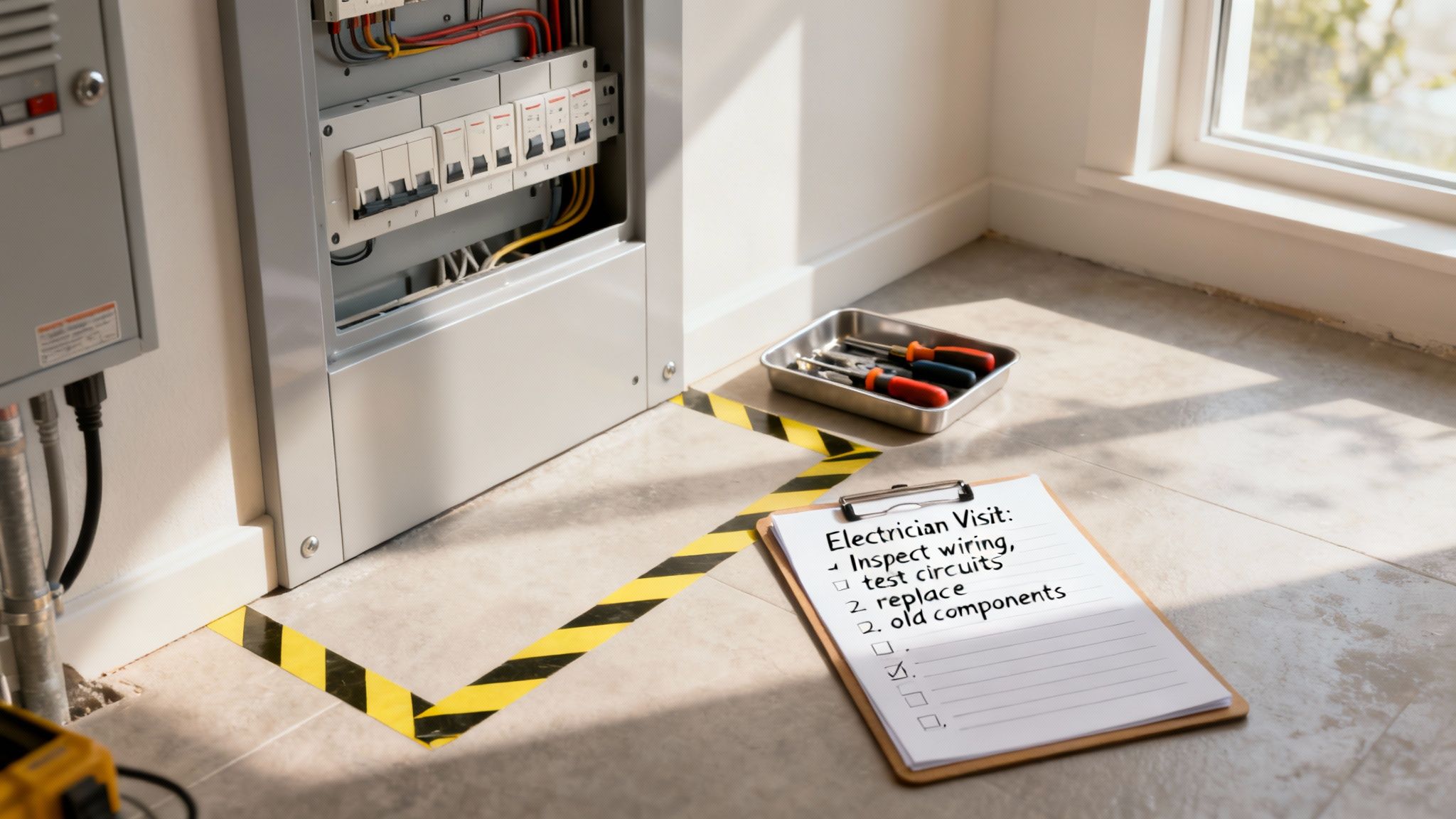
You’ve done the hard yards and booked a professional. So, what’s next? A little bit of prep work can make a massive difference to how smoothly the job goes, ultimately saving you time and money.
Taking a few minutes to get your home ready before your electrician local to you shows up helps them get straight to work. It’s the same courtesy you’d show any tradie—you wouldn’t want a plumber tripping over the kids’ toys to reach a burst pipe, and the same logic applies here.
Start by clearing the immediate area where they’ll be working. If they’re putting in a new power point behind the TV, pull the cabinet out. If they’re replacing a light fitting in the hallway, move the shoe rack. It’s not just polite; it’s a critical safety step that gives them the space they need to work without obstacles.
One of the most important things you can do is clear the path to your switchboard. It’s almost guaranteed your electrician will need to get to it to isolate circuits. The last thing they want to do is navigate an obstacle course of storage boxes and old bikes just to turn the power off.
Just as important as physical prep is a bit of mental prep. Before they arrive, jot down a quick list of every single issue you need looked at. This turns a vague chat into a clear, productive briefing.
A simple list like this shows respect for their time. And that’s becoming more important than ever. Projections show Australia could be short around 32,000 electricians by 2030, making every minute of their time incredibly valuable. You can dig into the latest workforce data over at safeworkaustralia.gov.au to see the trends for yourself.
It’s also crucial to understand what constitutes a real emergency versus something that can wait for business hours. Not every electrical hiccup needs a panicked after-hours call-out.
A true electrical emergency is any situation that poses an immediate risk to life or property. Think smoking power points, a burning smell from the switchboard, visible sparks, or getting a shock from an appliance. If this happens, your first priority is safety. Shut off the main power at the switchboard (only if it’s safe to do so) and call for emergency help immediately.
For things like a single faulty outlet or a light that’s simply stopped working, it’s far more practical and cost-effective to schedule a visit during the day. Making this distinction ensures emergency electricians are free for those who genuinely need them. By being prepared, you’re not just helping yourself—you’re helping your electrician deliver the safest, most efficient service possible.
Even after you’ve done your research and shortlisted a few names, there are always those last-minute practical questions that come to mind. Getting these sorted before work begins is the key to avoiding any surprises down the track.
Let’s run through some of the most common queries we hear from Brisbane homeowners.
A big one is about call-out fees. What are they? A call-out fee is simply a standard charge to cover the electrician’s travel time and the cost of getting their van to your doorstep. It’s separate from any labour or materials, so it’s always smart to ask what that fee is upfront. That way, you know the minimum cost before they even pick up a tool.
Another common question is, “Do I need to be home all day?” For quick, simple jobs, some clients are happy to arrange access and let us get on with it. But for bigger projects or tricky fault-finding missions, it’s usually best if you’re around. That way, you can answer questions and give the go-ahead on any decisions that need to be made on the spot.
We often get asked, “It’s just a small job, do I really need a certificate for it?” The answer in Queensland is a resounding yes. A Certificate of Compliance is legally required for almost every piece of electrical work, no matter how minor it seems. This isn’t just red tape; it’s your official proof that a licensed professional did the work and that it meets Australia’s strict safety standards.
Any good local sparkie will provide this automatically. If someone you’re considering is hesitant or vague about issuing one, that’s a massive red flag. This certificate is your protection—for insurance purposes, for your family’s safety, and for the future sale of your property.
Key Takeaway: Never, ever skip the Certificate of Compliance. It’s a non-negotiable document that guarantees the work is safe, compliant, and protects your biggest investment—your home.
Once you’re ready to lock in a time, things like rescheduling or potential delays can cause a bit of stress. Knowing some basic strategies for managing scheduling conflicts can be helpful, but honestly, it all comes down to communication. A reliable electrician will be transparent about their schedule and happy to work with you if things need to shift.
Finally, let’s clear the air about payment and workmanship guarantees. It’s perfectly normal—and smart—to ask about these things before committing.
Asking these straightforward questions sets clear expectations for everyone involved. It builds a foundation of trust and helps turn a potentially stressful situation into a smooth, successful project.
For all your electrical needs in Brisbane, from simple repairs to complex installations, you can count on the licensed and experienced team at DLG Electrical. We pride ourselves on clear communication and high-quality workmanship. Get your free, no-obligation quote today at https://dlgelectrical.com.au.

Master Electrician with over 30 years of experience. Founded DLG Electrical in 2005 after international project work including electrical installations at Stamford Bridge Stadium, London(Home of Chelsea FC).

Local Electricians that can fix all Electric Hot water Systems.
Motion sensor lights are a versatile addition to any home, offering nu
