83 Jean St, Grange QLD 4051
Mon-Fri 07:30 AM - 04:00 PM - Sat - 8:00 - 12 - Sunday Closed

That moment of shock when the shower runs ice-cold is a universal homeowner headache. We’ve all been there.
A sudden lack of hot water is usually down to a few common culprits: a tripped circuit breaker, a busted heating element, or a pilot light that’s gone out. Knowing what to check first can save you a lot of stress and help you figure out if you need professional hot water repairs.
Finding your hot water system has given up the ghost can throw your whole day out of whack, but don’t panic. Before you pick up the phone, a few simple checks can give you a much clearer idea of what you’re dealing with.
Your first port of call should always be your home’s switchboard. An electric hot water system is a high-power appliance, so it will have its own dedicated circuit. Have a look—if the switch for the hot water has flicked to the ‘off’ position, simply resetting it might be all it takes to get things working again.
However, if that breaker trips again straight away, stop right there. This is a big red flag for a more serious electrical fault, like a short-circuited heating element. Trying to reset a faulty circuit over and over again is a significant fire risk, so it’s time to call in a licensed professional.
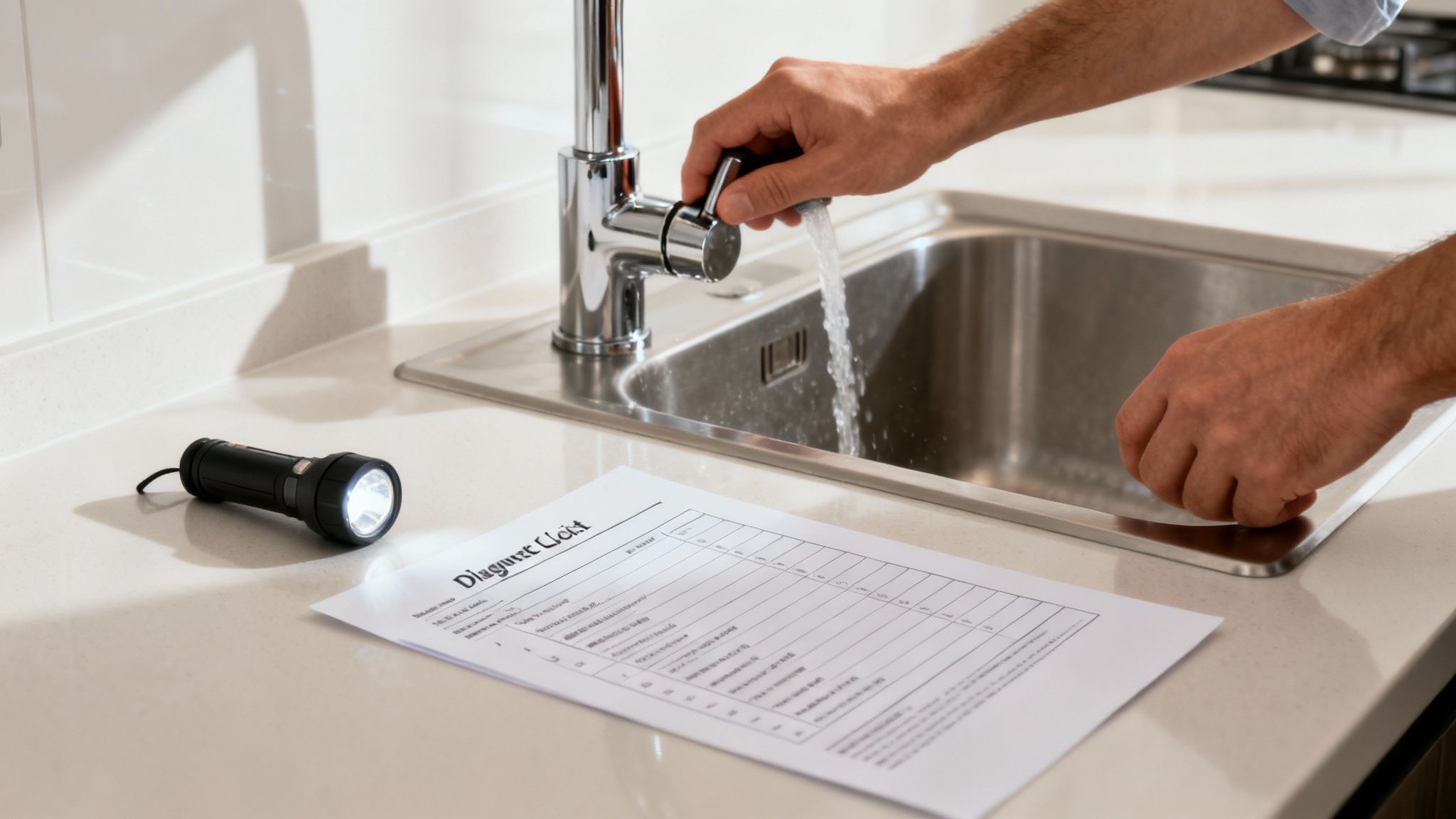
Working out whether you need an electrician or a plumber will save you a world of time and money. The difference is simpler than you might think.
As a general rule, if you have no water coming from the hot tap at all, or if you can see a physical leak from the tank or its pipes, it’s a job for a plumber.
On the other hand, if water is flowing just fine but it’s stone cold, the problem lies with the heating mechanism. This means you’ll likely need an electrician for an electric system or a gasfitter for a gas unit.
A good rule of thumb: If water isn’t flowing, call a plumber. If water flows but isn’t hot, call an electrician (for electric systems).
Before you make that call, running through a quick checklist can help you describe the problem accurately to the tradesperson. This helps us come prepared and get your hot water back on faster.
| Symptom | Potential Cause | Can I Fix It Myself? | Who to Call (Plumber vs. Electrician) |
|---|---|---|---|
| No hot water at all (water is cold) | Tripped circuit breaker, faulty thermostat, or broken heating element. | Check and reset the circuit breaker at your switchboard. | Electrician |
| No water flow from the hot tap | Leak in the pipes, faulty valve, or major tank failure. | No, this requires professional assessment. | Plumber |
| Water is lukewarm, not hot | Faulty thermostat or a failing heating element. | No, electrical components should only be handled by a licensed pro. | Electrician |
| Popping or banging noises from the tank | Sediment build-up inside the tank, causing it to overheat. | No, the tank needs to be professionally flushed or assessed. | Plumber |
| Water leaking from the tank or pipes | Corrosion, a failed valve, or a crack in the tank. | No, turn off the water supply to the tank immediately. | Plumber |
| Pilot light on gas heater keeps going out | Faulty thermocouple or gas supply issue. | No, gas appliances must be serviced by a licensed gasfitter. | Gasfitter |
This checklist is a great starting point, but remember, any issue beyond a simple tripped breaker is a clear sign to get a professional involved.
While resetting a breaker is a safe first step for any homeowner, any task that involves opening up access panels or touching wiring is strictly for a licensed expert. Your safety isn’t worth the risk.
Hot water system failures are a major headache for Australian households, especially as the units get older. Industry data shows that for systems over 10 years old, repairs often run over $500 per visit. At that point, it often makes more financial sense to replace the unit rather than risk a sudden, catastrophic failure down the line. You can learn more about the costs and lifecycle of hot water systems from this industry analysis.
A professional can quickly diagnose the issue—whether it’s a faulty thermostat, a broken heating element, or a wiring problem—and carry out the necessary hot water repairs safely and efficiently.
Not all hot water systems are created equal, and knowing what type you have in your Brisbane home is the first step to getting a fast, effective repair. The design of your unit directly impacts its common weak points, how long you can expect it to last, and the specific skills a sparkie needs to fix it. When you know what you’re dealing with, you can describe the problem clearly and get the right help, sooner.
Think of it like different car engines. You wouldn’t take your diesel ute to a mechanic who only works on electric vehicles. It’s the same with hot water repairs – fixing a classic storage tank system is a completely different job from troubleshooting a modern instantaneous unit.
Let’s break down the common models you’ll find across Brisbane and wider Queensland properties.
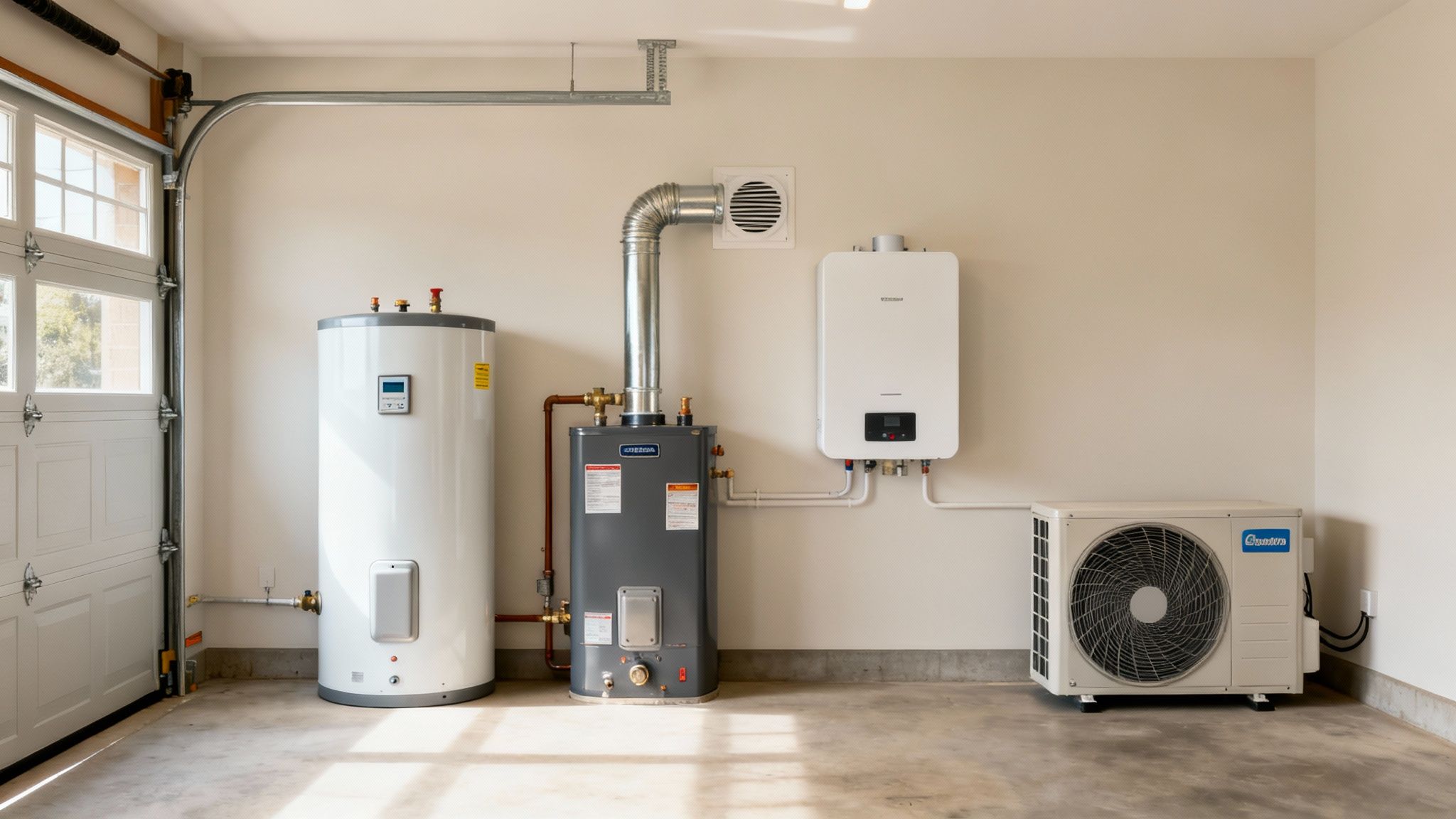
This is the old faithful, the workhorse of Australian homes for decades. An electric storage tank is basically a giant, insulated kettle that keeps a large amount of water hot and ready to go. Its beautiful simplicity is its greatest strength, but it also means it has very specific points of failure.
Gas systems typically come in two flavours: the familiar storage tanks and the more modern instantaneous models. Gas storage tanks work just like their electric cousins, but instead of an element, they use a gas burner at the base of the tank to do the heating.
Instantaneous gas systems, on the other hand, are a different beast altogether. They only heat water when you need it, firing up as it flows through the unit, which means you technically never run out. The usual suspects for problems here are issues with the gas supply or the electronic ignition system failing to spark.
Often called “on-demand” units, these are the sprinters of the hot water world. They don’t store any hot water at all. The second you turn on a hot tap, a powerful gas burner or electric element ignites and heats the water in real-time as it passes through.
You could think of a storage tank like a big thermos, always keeping water hot for you. An instantaneous system is more like a high-end espresso machine, heating water the moment you decide you want a coffee.
This on-demand design makes them incredibly energy-efficient because they aren’t burning energy all day just to keep a tank warm. But this efficiency comes with complexity; their intricate sensors and flow switches require specialist knowledge to diagnose and repair correctly.
Heat pumps are the high-tech, super-efficient choice on the market today. Instead of creating heat with an element or burner, they do something much cleverer: they pull ambient warmth from the air around the unit and transfer it into the water. In essence, they work like a refrigerator in reverse.
Because they move heat rather than create it, they use a tiny fraction of the electricity of a standard storage tank system, making them unbelievably cheap to run. The trade-off is that their repair challenges are more complex, often involving refrigeration components like compressors and fans.
While they cost more upfront, the long-term energy savings are massive. For homeowners wanting to get the most out of any system, our guide to essential hot water maintenance offers some great preventative tips.
Hot water systems rarely just give up the ghost one morning without any warning. Long before you’re left shivering in an ice-cold shower, your unit will almost always send out a few distress signals. Learning to read these clues is like being a detective in your own home, letting you catch problems early and schedule hot water repairs before a small hiccup turns into a full-blown catastrophe.
Ignoring these whispers and rumbles is a bit of a gamble. A minor thermostat fault is a pretty straightforward fix for a professional, but an ignored internal leak can lead to serious water damage, a ruined unit, and a much, much bigger bill. Simply paying attention to the subtle changes in how your system runs is the best form of proactive maintenance there is.
One of the most common early warnings is sound. Your hot water system should be a quiet achiever, humming away almost silently in the background. Any new or unusual noises are a clear sign that something’s not right.
These noises aren’t just annoying; they’re a sign your system is working harder than it should. That extra strain means more wear and tear and, you guessed it, higher energy bills.
Sometimes, the most obvious signs are the ones you can see, feel, or smell. Keep an eye out for these red flags as you go about your day.
A perfect example is fluctuating water temperature. If your shower suddenly goes from hot to lukewarm without you touching the tap, it often points to a dodgy thermostat or a failing heating element that just can’t keep up anymore.
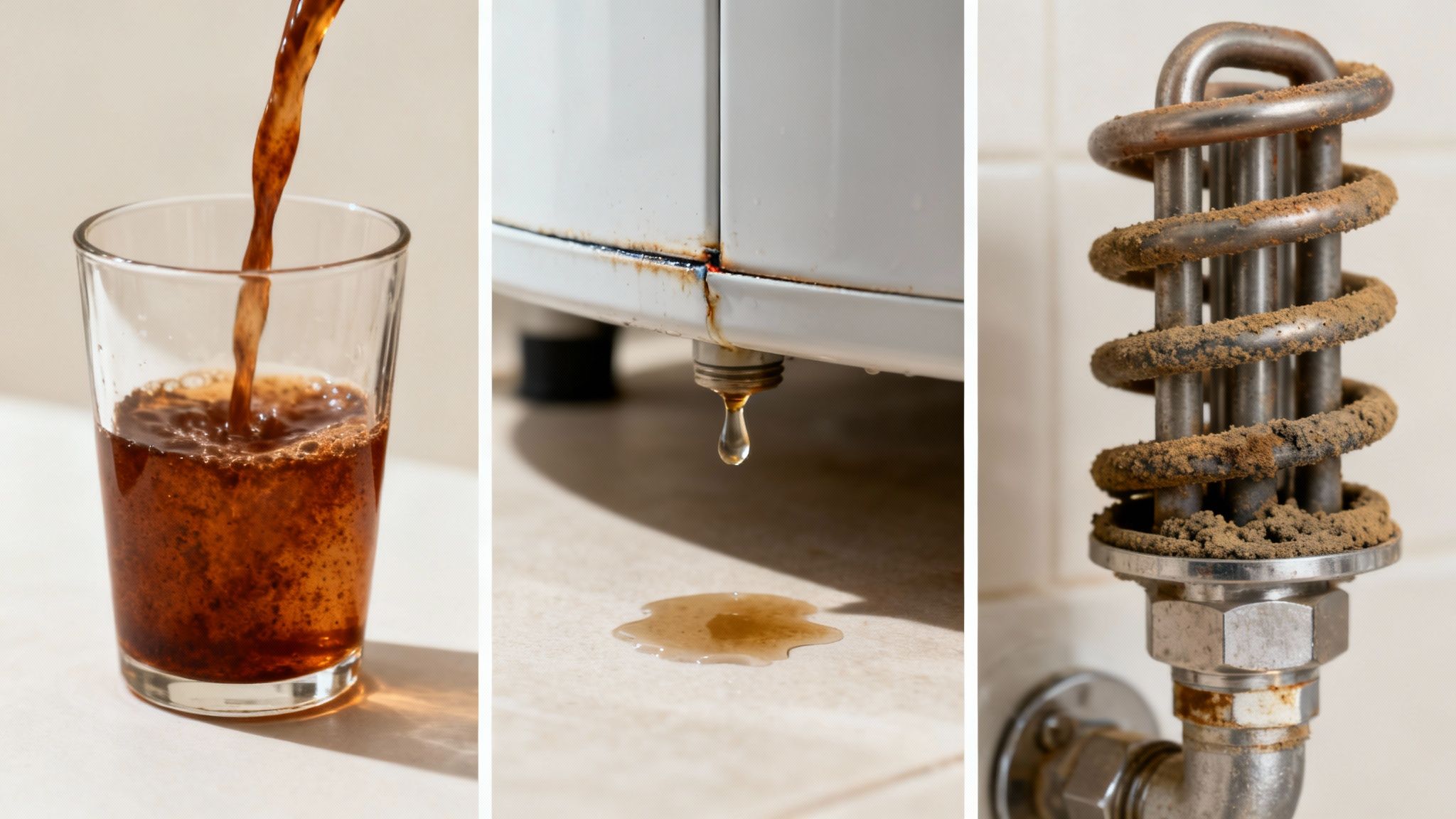
Another huge one is discoloured water. If the water from your hot tap starts coming out with a rusty, brownish tinge, it’s a strong indicator that the inside of your storage tank is corroding. The tank’s sacrificial anode is designed to prevent this, but once it’s used up, the tank itself starts rusting from the inside out.
But the most urgent visual sign is, without a doubt, a leak. Any water pooling around the base of your unit is a critical warning. While it could be a simple valve issue, it often means the tank itself has been breached and a complete failure isn’t far off.
For homes with gas hot water, an activated carbon monoxide alarm is the most serious warning of all. This isn’t just a sign of system failure; it’s a major health risk that requires urgent action. Be sure you know the immediate safety steps if carbon monoxide alarms go off to protect your family.
When your hot water system starts acting up, you’re faced with a classic Brisbane homeowner’s dilemma. Do you sink more money into hot water repairs, or is it time to bite the bullet and invest in a whole new unit? It’s a crucial decision. Get it wrong, and you could either be throwing good money after bad on a failing system or replacing a unit that only needed a simple, affordable fix.
This isn’t just about the immediate cost; it’s a long-term financial puzzle. I often tell my clients to think of it like an old car. A minor, cheap repair makes perfect sense. But if you find yourself at the mechanic every few months for major work, you’ll eventually spend more on fixing it than the car is even worth. The exact same logic applies to your water heater.
The biggest clue in solving this puzzle is the age of your system. Most of the traditional electric or gas storage tank heaters you see around Brisbane have a reliable lifespan of about 8 to 12 years. If your unit is pushing past that decade mark and starting to give you grief, replacement should be your first thought.
Why is the 10-year mark so important? Because as a system gets older, its efficiency plummets and its internal parts start to fail. The sacrificial anode—a critical component that prevents rust—corrodes away, leaving the steel tank exposed and vulnerable. This is when you start seeing more frequent breakdowns, turning what was once a dependable appliance into a constant headache and a drain on your wallet.
Here’s a practical rule of thumb I use to help homeowners make a smart financial call: the 50 percent rule. It’s straightforward: if the cost of a repair is more than half the price of a brand-new, comparable system, replacement is almost always the better long-term move.
Let’s walk through a real-world example:
In this situation, the repair cost is well over 50% of the replacement price. Pouring that kind of cash into an old unit that’s statistically on its last legs just doesn’t add up. Investing in a new system gives you a fresh start, better efficiency, and the peace of mind that comes with a full warranty.
Industry data from Australia’s plumbing and electrical services sector consistently backs this up. The consensus among professionals is that once repair costs creep over that halfway mark, replacement becomes the more sensible financial decision. You can learn more about the plumbing services market from this industry analysis by IBISWorld.
To make things even clearer, here’s a quick scoring matrix. Think about each factor and see where your current system lands. The more checks you have in the “Consider Replacement” column, the more certain you can be about your decision.
| Factor | Consider Repair If… | Consider Replacement If… |
|---|---|---|
| Age of System | It’s under 8 years old and has been well-maintained. | It’s over 10-12 years old or its history is unknown. |
| Repair Cost | The cost is less than 50% of a new unit’s price. | The repair quote is more than 50% of a new unit. |
| Frequency of Issues | This is the first or second minor issue you’ve had. | You’re calling for repairs every year or more frequently. |
| Performance | It still provides consistent hot water and pressure. | You’re getting lukewarm water, low pressure, or it runs out fast. |
| Visible Condition | There’s no visible rust or corrosion on the tank. | You see signs of rust, corrosion, or minor weeping at the seams. |
| Energy Bills | Your energy costs have remained relatively stable. | Your electricity or gas bills have been creeping up noticeably. |
Ultimately, this matrix is a guide. A system that’s only 7 years old but has had multiple expensive repairs might still be a candidate for replacement. Use it to build a complete picture of your situation.
While age and cost are great guides, some problems are so serious they take the choice right out of your hands. These are the red flags that signal your system is beyond saving and a replacement isn’t just recommended—it’s urgent.
In these scenarios, the question is no longer “should I repair or replace?” but “how fast can I get a new one installed?” To get a clearer idea of what’s involved, our comprehensive guide on hot water system replacement breaks down the entire process. Acting quickly and replacing it proactively will save you from the massive water damage and headache a burst tank can cause.
When your electric hot water system gives up the ghost, it’s tempting to hunt for the quickest, cheapest fix you can find. I get it. But let me be blunt: trying to DIY a hot water repair or hiring an unlicensed handyman is one of the riskiest gambles a Brisbane homeowner can take. This goes way beyond just getting the job done right—it’s about protecting your home, your family, and your wallet from some pretty dire consequences.
Think about it: an electric hot water system is where high-voltage electricity and mains-pressure water have a very close relationship. That’s a combination that absolutely demands an expert’s touch. A bit of faulty wiring, an incorrectly installed component, or a poor earth connection can create immediate, life-threatening hazards. The risk of electrocution is frighteningly real, potentially turning something as routine as a daily shower into a tragedy.
On top of the immediate danger of electric shock, shoddy repairs are a major cause of electrical fires. A licensed electrician knows the exact requirements for wiring gauge, circuit protection, and component compatibility. They make sure every single connection is safe, secure, and up to code.
Here in Queensland, the law doesn’t mince words: only a licensed electrical contractor can legally touch any hard-wired appliance, and that absolutely includes your electric hot water system. This isn’t just bureaucratic red tape; it’s a critical safety net designed to shield you from the very real dangers of unqualified work.
Hiring someone without a licence doesn’t just break the law; it opens you up to massive financial pain.
The need for a licensed pro is non-negotiable, especially when you’re dealing with potential hazards. This same principle applies to other critical systems in your home, a point driven home by this emergency gas line repair safety guide, where professional expertise is the only safe option.
At the end of the day, bringing in a licensed electrician for your hot water repairs buys you something invaluable: peace of mind. You aren’t just paying for a repair; you’re investing in the safety and compliance of your home. A true professional won’t just patch up the immediate problem. They’ll ensure the entire system is operating safely and will provide a Form 3 ‘Certificate of Test’ to prove the work is compliant.
This decision tree helps break down the key things to consider—age, repair cost, and leaks—when you’re weighing up whether to repair or replace your system.
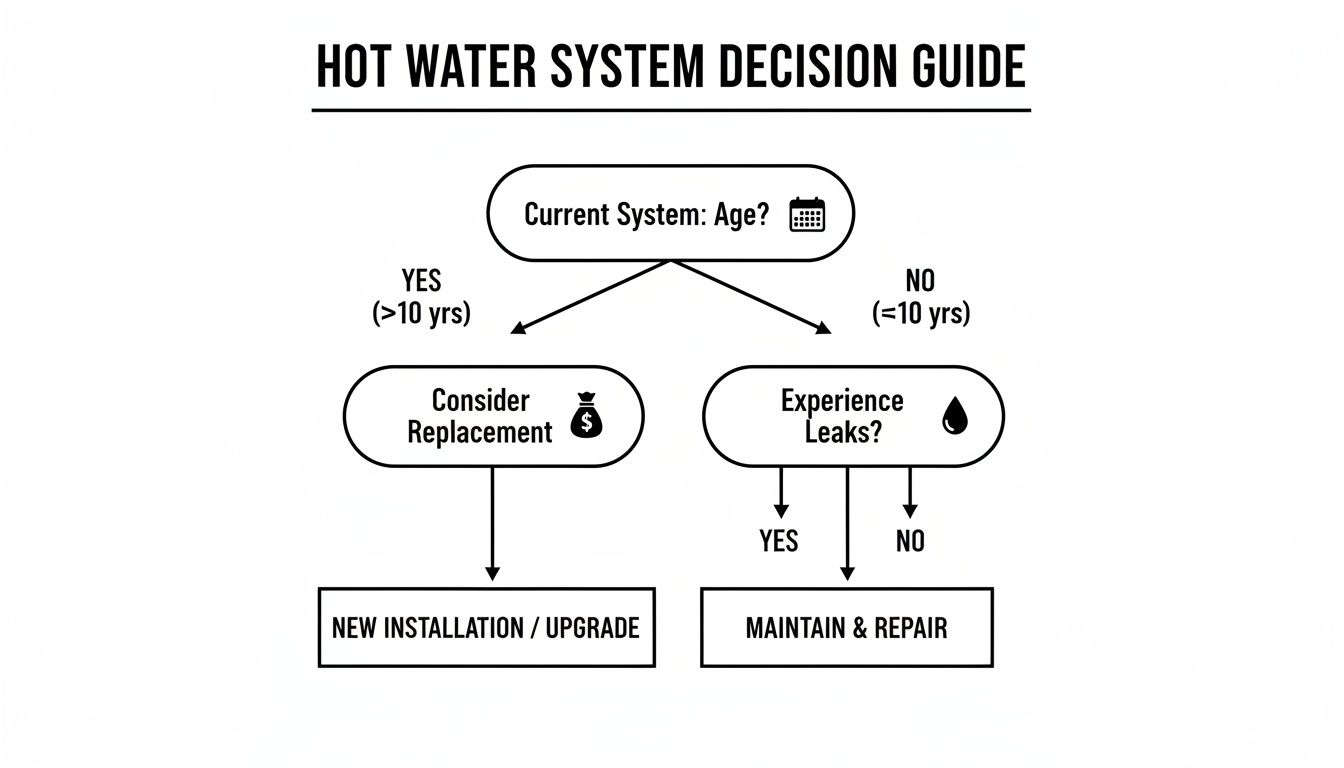
The main takeaway here is pretty clear: if your tank is leaking or the system is over 10 years old and facing a hefty repair bill, replacement is almost always the smarter move.
When you’re making a call this important, you need a team you can trust. You can get a better sense of what sets a professional apart by reading up on the qualities of a top-tier electrician in Brisbane. Hiring a licensed expert ensures the job is done right the first time, protecting everything you’ve worked so hard for.
Of course. Here is the rewritten section, crafted to sound like an experienced human expert and match the provided style examples.
Even with a good grasp of your system and the common warning signs, it’s natural to have a few more questions. When it comes to something as essential as your hot water heater, getting clear, straightforward answers is the best way to make confident decisions for your Brisbane home.
We’ve pulled together some of the most common queries we get from homeowners about hot water repairs, with direct answers to help you figure out what to do next.
The cost of a hot water repair can vary quite a bit, as it really depends on what’s gone wrong. A fairly minor and common fix, like replacing a faulty thermostat or a single heating element, might land somewhere in the $250 to $500 range. That usually covers the call-out fee, the new part, and the labour.
However, more complex issues are naturally going to cost more. If we’re talking about replacing multiple components or tracking down a tricky wiring fault, the price will go up. The best approach is always to get a detailed, itemised quote from a licensed professional before any work kicks off. This way, you know exactly what you’re paying for, with a clear breakdown of parts and labour, so there are no nasty surprises.
How long your hot water system lasts is heavily influenced by its type and how well it’s been looked after. For the traditional electric or gas storage tank systems you see all over Queensland, you can generally expect a service life of about 8 to 12 years.
On the other hand, the instantaneous or “tankless” systems are built for the long haul and can often hit up to 21 years of reliable service. The secret to getting the most out of any system is regular maintenance. Simple things, like having a professional check and replace the sacrificial anode in a storage tank every few years, can dramatically extend its life and stop it from failing prematurely.
This is a critical question, and the answer is a firm no. In Queensland, it’s not just unsafe—it’s also illegal for anyone other than a licensed electrician to work on a hard-wired electric hot water system.
These units are a dangerous mix of high-voltage electricity and mains-pressure water. Trying a DIY repair creates a serious and immediate risk of electrocution or an electrical fire.
While it’s perfectly safe for you to check your circuit breaker at the switchboard, any job that involves opening up access panels or touching wires must be left to a qualified professional. It’s the only way to ensure your safety, protect your property, and keep your home insurance policy valid.
A hot water tank rarely gives up the ghost without a few final, urgent warnings. If you spot any of these signs, it’s time to act fast to avoid a messy and expensive emergency.
The most critical warning signs include:
If your system is over 10 years old and showing any of these symptoms, we strongly recommend you start planning for a replacement before it fails suddenly and causes major water damage to your home.
When you need reliable, expert advice and safe, compliant hot water repairs in Brisbane, trust the team that gets the job done right the first time. For a free quote and the peace of mind that comes with hiring fully licensed professionals, contact DLG Electrical today at https://dlgelectrical.com.au.

Master Electrician with over 30 years of experience. Founded DLG Electrical in 2005 after international project work including electrical installations at Stamford Bridge Stadium, London(Home of Chelsea FC).

Local Electricians that can fix all Electric Hot water Systems.
Motion sensor lights are a versatile addition to any home, offering nu
