83 Jean St, Grange QLD 4051
Mon-Fri 07:30 AM - 04:00 PM - Sat - 8:00 - 12 - Sunday Closed

As a rule of thumb, you can expect a typical hot water system to last somewhere between 8 and 15 years. But that’s not a hard-and-fast expiry date. Think of it more like a “best before” date—with the right care, you can often push it further, but neglect can definitely shorten its life.
Thinking about your hot water system is a bit like the tyres on your car. You know they won’t last forever, but you want to squeeze every last bit of value out of them before having to fork out for a replacement. The real answer to “how long do hot water systems last?” isn’t a single number. It depends heavily on the type of system you have, how well you maintain it, and even the quality of the water here in Brisbane.
Getting on the front foot with maintenance is the secret to getting the most out of your investment. This is especially true for homeowners in suburbs like Grange and Windsor, where a little bit of knowledge can be the difference between a simple service call and a cold shower followed by an emergency replacement.
To give you a clearer picture, let’s break down the expected lifespan for the most common types of hot water systems found in Brisbane homes.
Here’s a quick, scannable summary of what you can generally expect.
| System Type | Typical Lifespan (Years) | Key Longevity Factor |
|---|---|---|
| Electric Storage | 10 – 15 | Sacrificial anode condition |
| Gas Storage | 8 – 12 | Regular burner & flue servicing |
| Solar | 15 – 20 (Panels) | Panel quality & cleaning |
| Heat Pump | 10 – 15 | Compressor health & filter cleaning |
| Instantaneous (Gas/Electric) | 15 – 20+ | Water hardness & descaling |
As you can see, different systems have different weak points and lifespans. It’s all about understanding what you’ve got and how to look after it.
The two most common units we see are electric and gas storage tanks, and their lifespans differ mainly because of how they’re built and how they heat water.
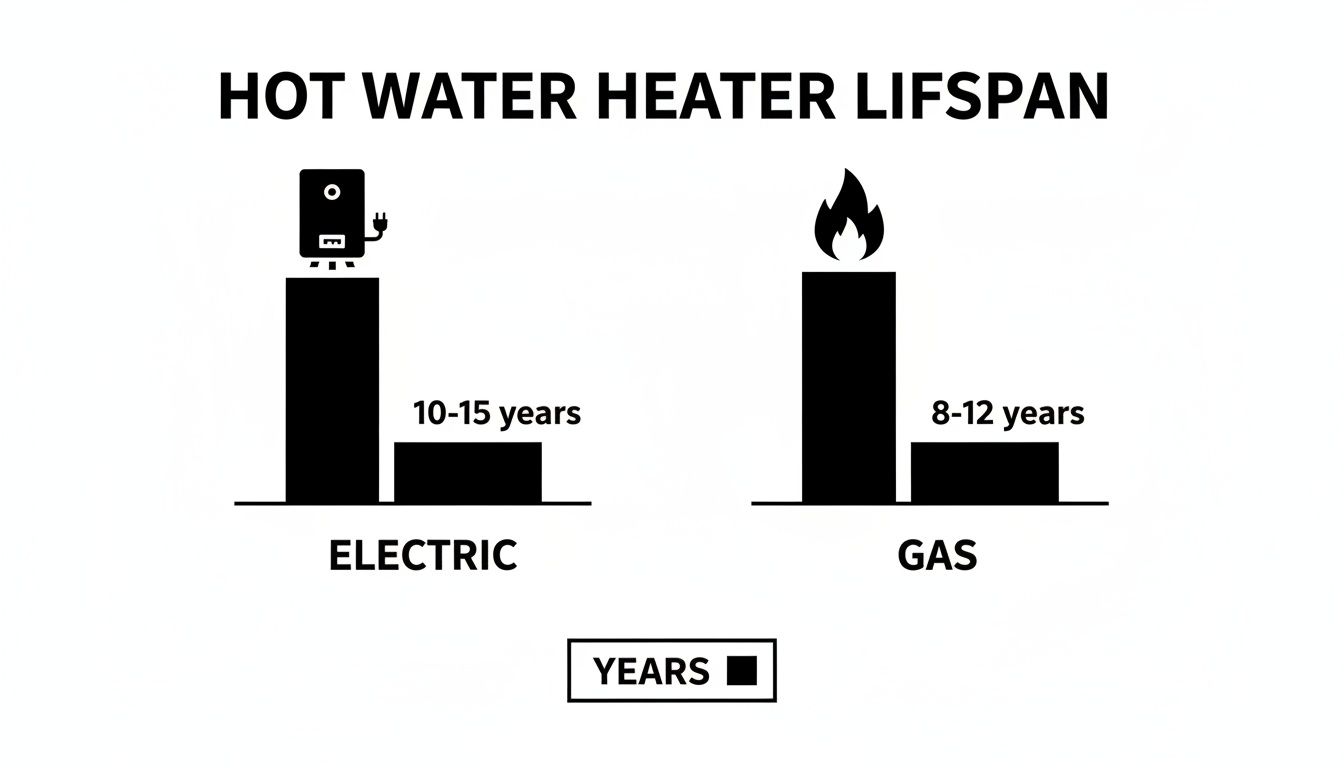
As the chart shows, electric systems often have a slight edge in longevity. As one of the most popular heating solutions in Australian homes, electric hot water systems typically last between 10 to 15 years. Of course, this can be influenced by the quality of the installation, your maintenance routine, and local water conditions.
When you get into other types like solar or heat pumps, you’re dealing with different components that have their own life expectancies. The panels on a solar system might last for ages, but the tank or pump might need attention sooner. You can learn more in our specific guide on solar hot water in Brisbane.
Ultimately, knowing these averages isn’t about setting a countdown timer. It’s about helping you budget and plan for the future, so you’re not caught by surprise when the time finally comes for an upgrade.
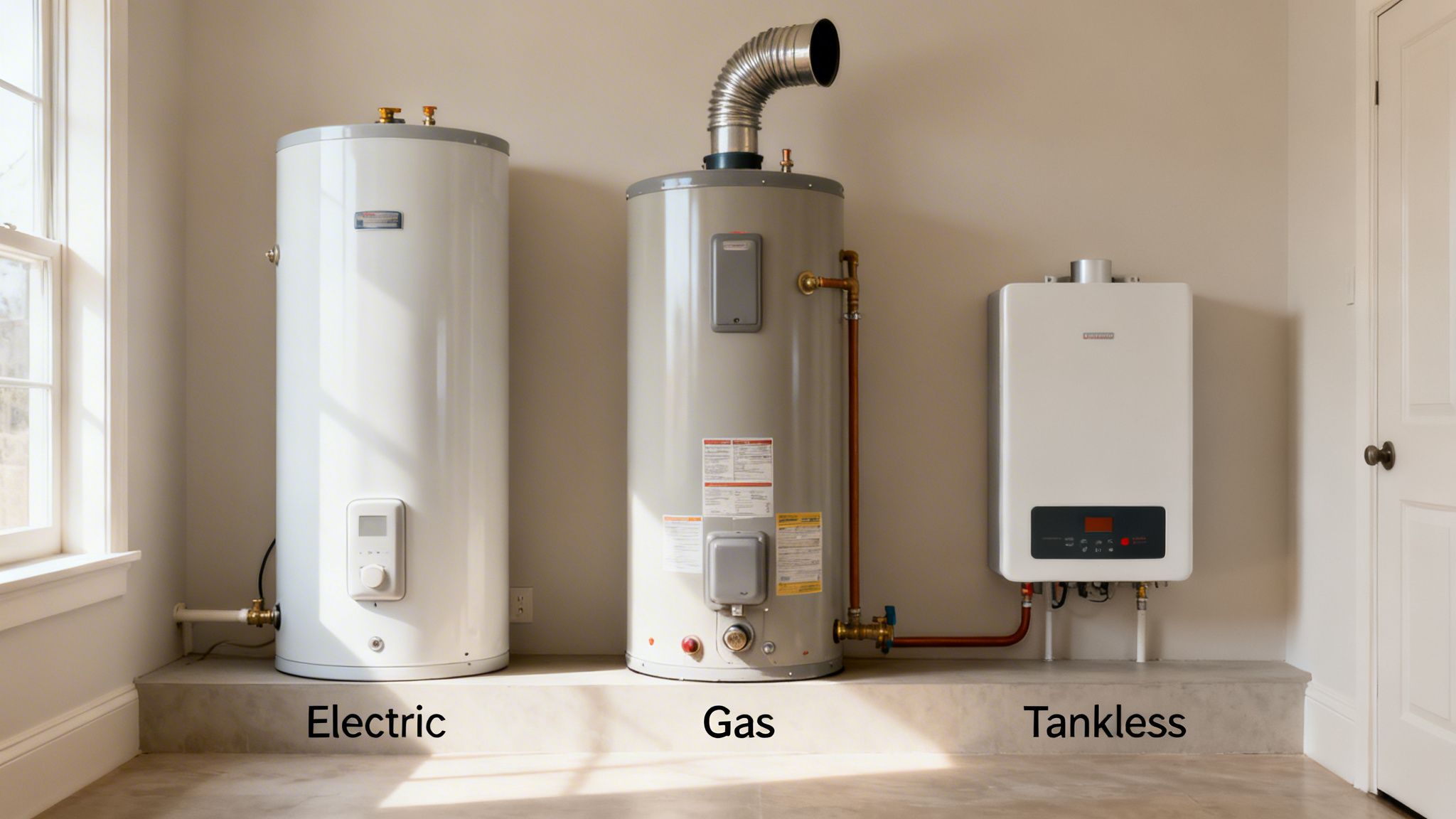
When we’re talking hot water systems, one of the first questions people ask is whether to go for electric or gas. A big part of that decision comes down to their expected lifespan. You might be surprised to learn that a gas system often has a shorter service life than its electric counterpart, and it all comes down to how they’re built and how they heat your water.
Think of it this way: an electric system is built for endurance, like a marathon runner. A gas system, on the other hand, is designed for a powerful but shorter burst of high performance—more like a sprinter.
The secret to an electric tank’s longevity is a simple component you’ve probably never seen: the sacrificial anode. This metal rod is essentially a bodyguard for your tank. It’s designed to corrode first, attracting the harsh minerals and electrochemical reactions that would otherwise eat away at the steel tank lining.
This self-sacrificing process massively extends the life of the tank itself. By simply having a plumber replace this inexpensive rod every few years, you can often add five or more years to your system’s life, protecting your bigger investment from failing before its time.
Gas hot water systems, in contrast, operate more like a high-performance engine. The open flame required to heat the water creates intense, focused heat right at the bottom of the tank. This constant cycle of rapid heating and cooling puts a huge amount of thermal stress on the metal, leading to faster wear and tear over the years.
This operational stress is the main reason why gas hot water systems, while popular in many Australian homes, typically last between 8 to 12 years. This shorter window is a critical factor for Brisbane homeowners and property managers when calculating the true cost of a system beyond just the initial purchase price.
Industry sources generally agree on this shorter replacement cycle. As a local example, insights from Paul’s Plumbing suggest a gas system installed in 2018 will likely be due for a look between 2026 and 2030, which is an important budget consideration.
This difference in longevity isn’t unique to water heaters. To get a better feel for how lifespans vary between different power sources, you can even explore guides on how long other appliances like electric and gas dryers last. The core principles of wear and tear often apply across different household machines. Understanding these design differences is key to knowing how long your hot water system will last and planning for its eventual replacement.
While your system’s type gives a rough idea of its lifespan, it’s the hidden issues that often cut it short. These problems can force your unit to work much harder than it was ever designed to, leading to serious wear and tear that you might not notice until it’s too late.
Think of it like redlining a car’s engine; you can do it for a while, but something is bound to break. For a hot water system, some of the biggest stressors are problems that start on day one or build up silently over the years. Getting a handle on these is key to keeping your system healthy.
A bad installation is one of the quickest ways to send a brand-new system to an early grave. If a unit isn’t installed by a licensed and experienced plumber, you’re opening the door to all sorts of problems, from poor venting on gas models to dodgy electrical connections. These mistakes create immediate stress that can cause a catastrophic failure in no time.
Just as critical is the size of the unit itself. A system that’s too small for your family’s needs will run constantly, desperately trying to keep up. That relentless workload chews through components at an alarming rate. On the flip side, an oversized unit can lead to wasted energy and other kinds of strain, though this is a less common issue.
A correctly sized and professionally installed system operates efficiently, right in its sweet spot. It avoids the constant on-off cycling that burns out heating elements, burners, and thermostats, which directly leads to a longer and more reliable service life.
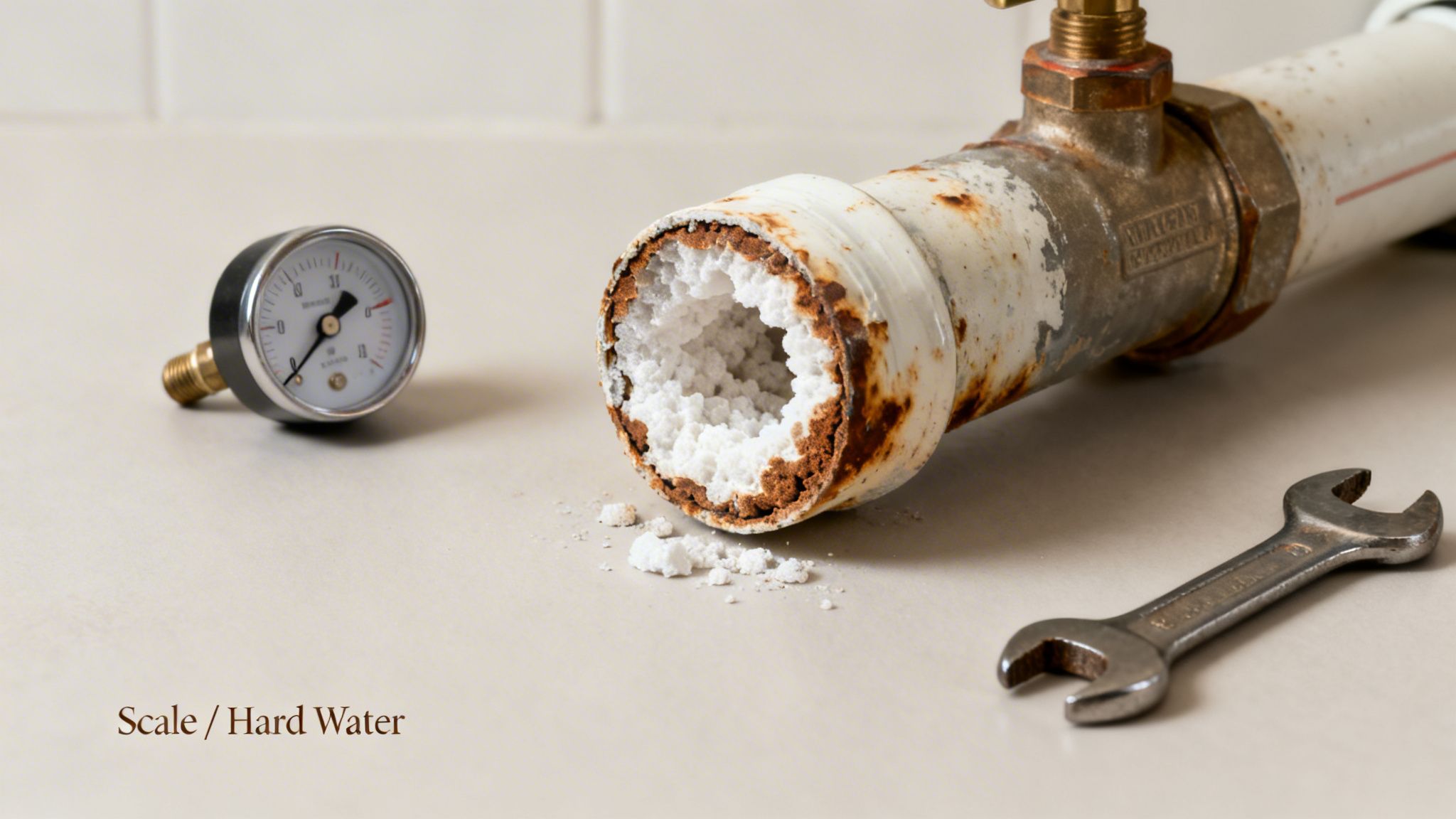
The quality of the water flowing into your home plays a huge part in how long do hot water systems last, especially in certain parts of Brisbane.
Ignoring these hidden factors is a gamble. By making sure your system was installed and sized correctly from the start, and by dealing with any local water quality problems, you can stop your unit from aging faster than it should. It’s the best way to get the most out of your investment and avoid a premature—and often expensive—replacement.
Knowing what can go wrong with a hot water system is one thing. Actually stopping those problems before they start is how you get real value out of your investment. It’s all about moving from a reactive mindset to a proactive one.
Here’s a practical checklist that breaks down what you should be doing to keep your unit running smoothly. We’ll cover the simple checks you can do yourself and the crucial jobs that are best left to a licensed professional. Knowing who should do what is key to safe and effective maintenance.
These quick jobs don’t need any special tools and are your first line of defence. Think of it as a quick health check for your system that can save you from major headaches down the track.
Your TPR valve is non-negotiable. It’s designed to automatically dump water if the pressure or temperature inside the tank gets dangerously high, preventing a catastrophic failure. Testing it is the only way to know this crucial safety feature will actually work in an emergency.
This simple test is one of the easiest bits of preventive maintenance on a hot water heater you can do to keep your system operating safely.
While your DIY checks are a great start, some jobs really do need specialised tools and expertise. These are the tasks that will have the biggest impact on extending your system’s lifespan.
1. Replace the Sacrificial Anode (Every 3-5 Years)
This is the single most important maintenance job for any storage tank system, hands down. The anode rod is a metal rod that’s designed to corrode so your steel tank doesn’t. A licensed plumber or electrician can replace this for you. It’s a small investment that can easily add five or more years to your tank’s life.
2. Flush the Tank (Annually)
Sediment and mineral scale from Brisbane’s water builds up at the bottom of the tank. This sludge forces the heating element to work much harder and makes it less efficient. A professional can safely drain and flush the tank, getting rid of all that damaging gunk and restoring performance.
3. Comprehensive System Inspection (Annually)
A qualified technician won’t just look at one thing. They’ll check the thermostats, heating elements, wiring, and all the valves to make sure everything is running safely, correctly, and as efficiently as possible.
For Brisbane homeowners, booking in these professional services isn’t just another cost—it’s a smart strategy. It ensures you squeeze every last drop of service life from your system. You can see our full approach in our detailed article on hot water maintenance.
Knowing the average lifespan of a hot water system helps you budget for the future, but how can you tell when your specific unit is about to give up the ghost? Sometimes, the system will give you clear, unmistakable signals that it’s time for a replacement, not just another repair.
Learning to spot these signs is crucial. It’s the difference between a planned upgrade and a catastrophic failure that leaves you with no hot water and a flooded laundry room on a cold Monday morning. Let’s look at the signs that your system is sending out an S.O.S.
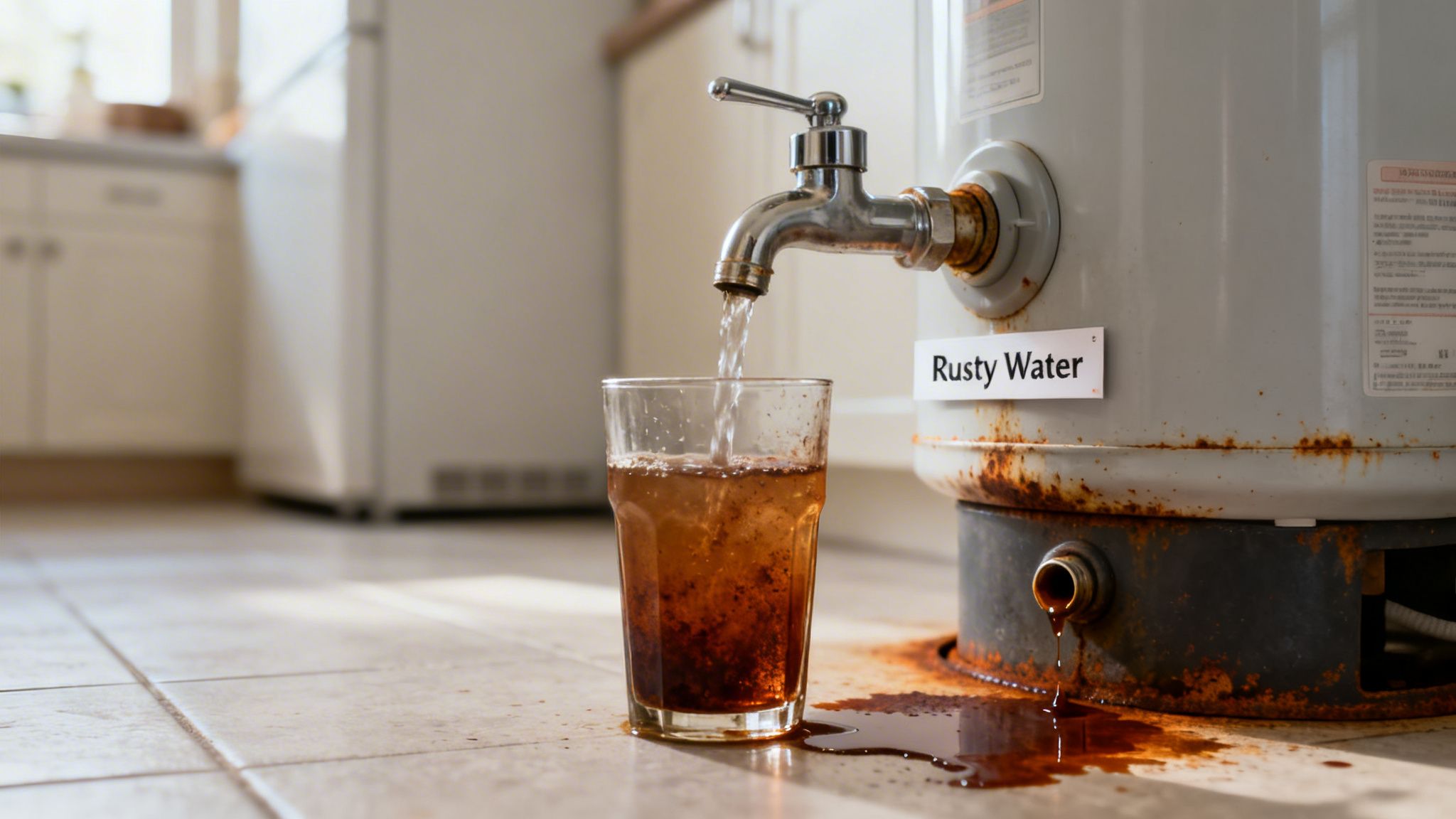
If you turn on a hot tap and out comes brown, rusty-looking water, that’s a massive red flag. This isn’t just an ugly inconvenience; it’s a symptom that the inside of your steel tank has started to corrode. That rusty colour is literally the tank dissolving into your water.
Sure, it could be old galvanised pipes, but if the discoloured water only appears when you run the hot tap, the heater is almost certainly the culprit. This is an internal breakdown that can’t be fixed. It’s a definite sign the tank’s integrity is compromised, and a major leak is just around the corner.
Your hot water system should be a quiet achiever, working away almost silently in the background. If you’ve started hearing loud bangs, rumbles, or pops coming from the tank, it’s time to pay close attention. These noises are usually caused by a thick layer of sediment and mineral scale that has built up at the bottom of the tank over many years.
What’s happening is the heating element is boiling the water trapped underneath this hardened sediment. The pressure builds up until it violently breaks the sediment loose, causing it to bang against the inside of the tank. This isn’t just noisy; it kills your system’s efficiency and puts incredible stress on the metal, speeding up its eventual failure.
This one might seem obvious, but any water—even a small puddle—pooling around the base of your unit is a serious warning sign. While a leak from a valve or fitting can often be repaired by a plumber, any water dripping from the main body of the tank itself spells doom.
Any leak from the tank itself is an emergency. It means the vessel can no longer hold pressure safely and is at a high risk of bursting. If you see this, you need to call a professional immediately to avoid a full-blown flood. Knowing these signs helps you understand how long hot water systems last in the real world and when it’s time for that inevitable upgrade.
So, you’ve spotted the warning signs and know your old system is on borrowed time. That’s the first step. Now it’s about turning that knowledge into a smart plan for when a replacement is no longer a choice, but a necessity. Getting this right means you’ll have reliable hot water for years to come, with a new system that’s a perfect fit for your home.
A smooth replacement is about more than just picking out a new tank. It’s about making sure it’s installed safely and to the highest standard. This is where professional expertise, especially with electrical models, is absolutely non-negotiable.
When it comes to replacing an electric hot water system, getting a licensed electrician is a legal requirement in Australia, not just a friendly suggestion. Their job is far more than just connecting a few wires.
An experienced electrician is responsible for ensuring:
Never, ever attempt to DIY an electric hot water system installation. It is not only extremely dangerous but also illegal. Doing so will instantly void your manufacturer’s warranty and can leave you facing serious legal and financial consequences if anything goes wrong.
Once you’ve made the call to go ahead, a professional team makes the process surprisingly straightforward. We’ll guide you through every step, from choosing the right unit to enjoying that first hot shower. You can dive deeper into the process in our guide on what to expect during a hot water system replacement.
The journey starts with selecting the right type and size for your household’s needs. From there, the old unit is safely disconnected and removed, before the new system is professionally installed and commissioned. The electrician will handle all the critical wiring to ensure it’s done right.
For homeowners in North Brisbane, our team at DLG Electrical is ready to step in with expert advice and a seamless installation. We’ll make sure your new hot water system is a solid investment that serves you well for years.
Even after running through the details, it’s normal to have a couple of questions pop up. Here are some quick, straightforward answers to the things Brisbane homeowners most often ask us about their hot water systems.
This is the big one, and it really comes down to two factors: how old the system is and how much the repair will set you back.
If your unit is still relatively young—say, under 8-10 years old—and just needs a minor fix like a new thermostat or heating element, a repair is almost always the smarter financial move. But if you’re looking at a major, costly repair on a system that’s already over 10-12 years old, you’re often better off putting that money towards a brand-new, more efficient unit. It saves you from the headache of another part failing just around the corner.
Think of it like this: spending hundreds of dollars on a 15-year-old tank is a bit like putting a brand-new engine in a car with a rusted-out frame. At some point, it’s wiser to invest in a completely new vehicle.
You can usually play detective and find the manufacturing date right on the unit itself. Have a look at the manufacturer’s sticker or data plate, which is normally on the side of the tank.
You’re looking for a “Date of Manufacture” or a serial number. Often, the serial number holds the key—the first few digits typically represent the year and month it was made. For instance, a serial number starting with “0724” would likely mean it was produced in July 2024.
This is a red flag. A brand-new hot water system should be whisper-quiet. If you’re hearing any banging, popping, or gurgling, something isn’t right.
More often than not, this points to an installation issue. It could be trapped air in the pipes, incorrect water pressure settings, or something similar. It’s absolutely crucial to call the installer back straight away to sort it out before it leads to bigger problems or damages the unit.
When you need a professional eye to diagnose a problem or a seamless replacement from a team that knows Brisbane homes, you can trust the experts at DLG Electrical. We make sure every installation is safe, compliant, and a perfect fit for your needs. Contact us today for a free quote.

Master Electrician with over 30 years of experience. Founded DLG Electrical in 2005 after international project work including electrical installations at Stamford Bridge Stadium, London(Home of Chelsea FC).

Local Electricians that can fix all Electric Hot water Systems.
Motion sensor lights are a versatile addition to any home, offering nu
