83 Jean St, Grange QLD 4051
Mon-Fri 07:30 AM - 04:00 PM - Sat - 8:00 - 12 - Sunday Closed

On a bright Brisbane afternoon, your solar panels can be doing exactly what they should, pumping out power while nobody is home. Then evening hits, the air con goes on, the lights come up, dinner starts, and you’re buying electricity back from the grid. That is the moment most homeowners start asking the central question. Not just whether a battery sounds good, but how long do solar batteries last and whether the investment will still make sense years from now.
It is a fair question because a battery is not like adding one more panel to the roof. It is a storage device, a safety item, a performance item, and in Brisbane it is also a climate-sensitive piece of equipment. Heat, humidity, where it is mounted, how hard it cycles, and how well the system is set up all matter.
For one household, a battery can be a long-term upgrade that improves self-consumption and backup capability for years. For another, a poor battery choice in the wrong location can age faster than expected. That difference is why general advice from overseas articles often misses the mark for Brisbane homes.
A common Brisbane setup looks like this. The home already has solar. The daytime generation is strong. The homeowner checks the app and sees plenty of export during the middle of the day, but the house still pulls from the grid after sunset. On paper, a battery feels like the obvious next step.
The catch is that batteries are judged over time, not on installation day. Panels are easy to appreciate because you can see generation straight away. Batteries need a longer view. You need to think about evening usage, blackout priorities, future electricity habits, and lifespan.
That is where many people get stuck. They are not just asking if a battery works. They are asking if it will still be useful and healthy well into the future.
For Brisbane homes, that question deserves a local answer. A battery sitting in a cool, sheltered, well-ventilated spot will live a very different life from one mounted where it bakes through summer. The battery chemistry matters, but installation conditions matter just as much.
A good buying decision usually starts with sizing and usage, not brand hype. If you are still working out the basics, this guide on what size solar battery do I need is a useful place to start because battery lifespan and battery size are closely connected. Oversizing, undersizing, or cycling the unit harder than necessary all affect long-term value.
Practical takeaway: The right battery is not merely the one with the biggest capacity. It is the one that suits your home, your usage pattern, and Brisbane’s climate.
Battery lifespan has two distinct measures: cycle life and calendar life.
Cycle life refers to how many charge and discharge cycles the battery can handle before its capacity drops to the manufacturer’s stated threshold.
Calendar life refers to how the battery ages over time, even with light use.
Both matter in a Brisbane home, because usage is only half the story. Heat and humidity also affect how a battery holds up over the years.
Every time the battery charges from solar and then discharges into the house, it uses part of its working life. A home that runs the battery through a full evening cycle most days will wear it differently from a home that keeps the battery mainly for blackout backup or occasional overnight support.
That does not mean daily use is bad. It means the battery should be sized and configured for the job you expect it to do.
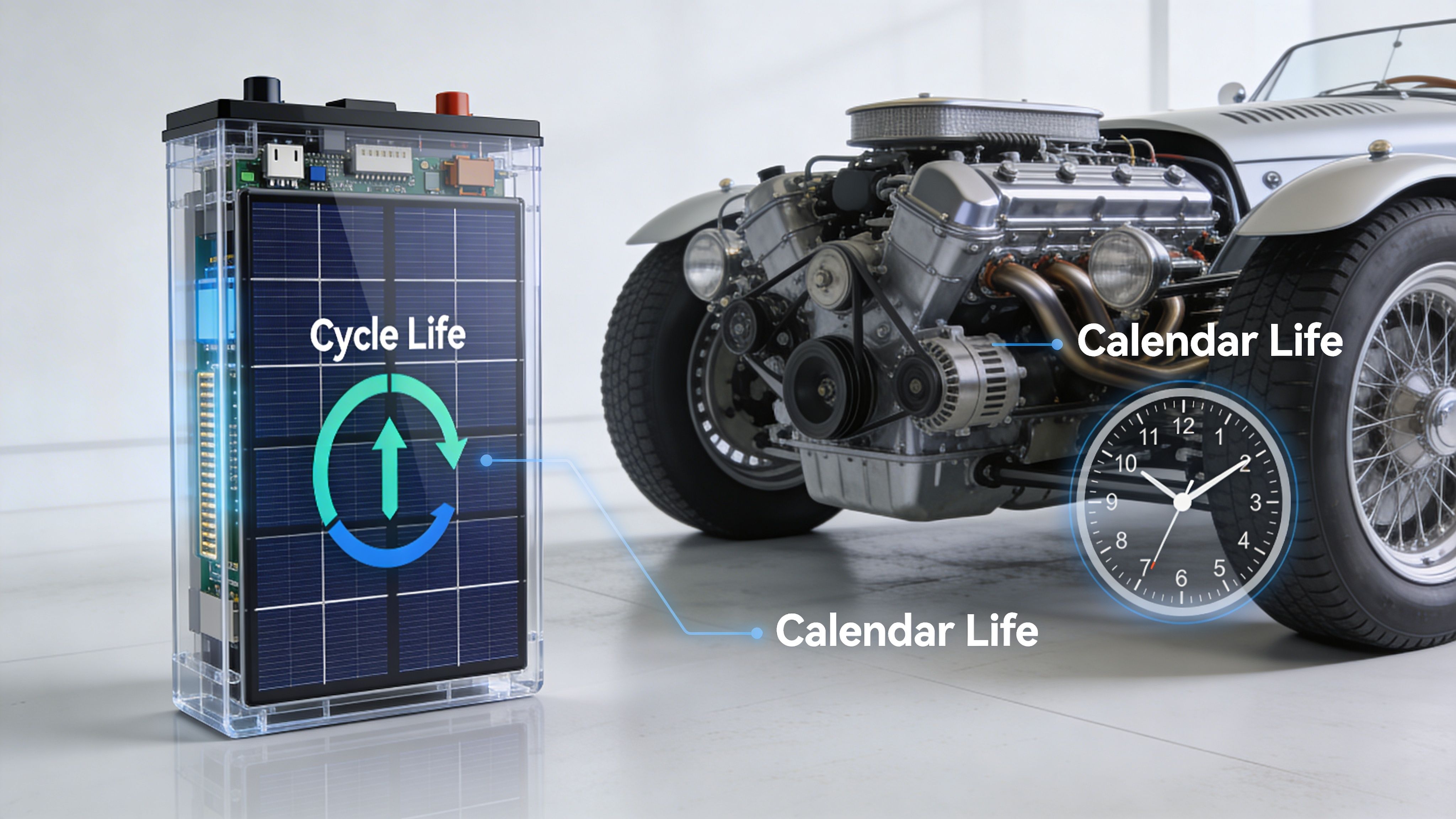
Batteries also lose performance because time passes. Internal chemical changes continue whether the system is cycled hard or not. In Brisbane, that point gets missed far too often.
A battery installed in a hot garage, western wall cavity, or poorly ventilated enclosure can age faster than the owner expects, even if the cycle count looks modest. Warm overnight temperatures and summer humidity do not help. Good placement, airflow, and protection from direct heat are practical lifespan issues, not cosmetic ones.
A battery can reach the end of its useful life in more than one way. Heavy daily cycling can wear it out through use. Light cycling in poor conditions can wear it out through age. In the field, I see both.
That is also why warranties can be harder to read than they should be. Many are written around a time limit, a cycle limit, or an energy throughput limit, whichever comes first. If a homeowner only looks at the number of years on the brochure, they can miss the conditions that control the claim.
For a plain-english explanation of charging, storage, and discharge, this guide on how solar batteries work in a home system is a useful companion. The same basic ageing principles also show up in electric vehicles, which is why articles on how long do EV batteries last can be helpful for understanding the difference between use-related wear and age-related decline.
Practical takeaway: Years tell you how old the battery is. Cycles tell you how hard it has worked. In Brisbane, installation conditions often decide which limit arrives first.
Battery chemistry has a direct effect on lifespan, safety, and summer performance in Brisbane. A battery that looks fine on a brochure can behave very differently once it is mounted in a hot garage or on a wall that holds afternoon heat.
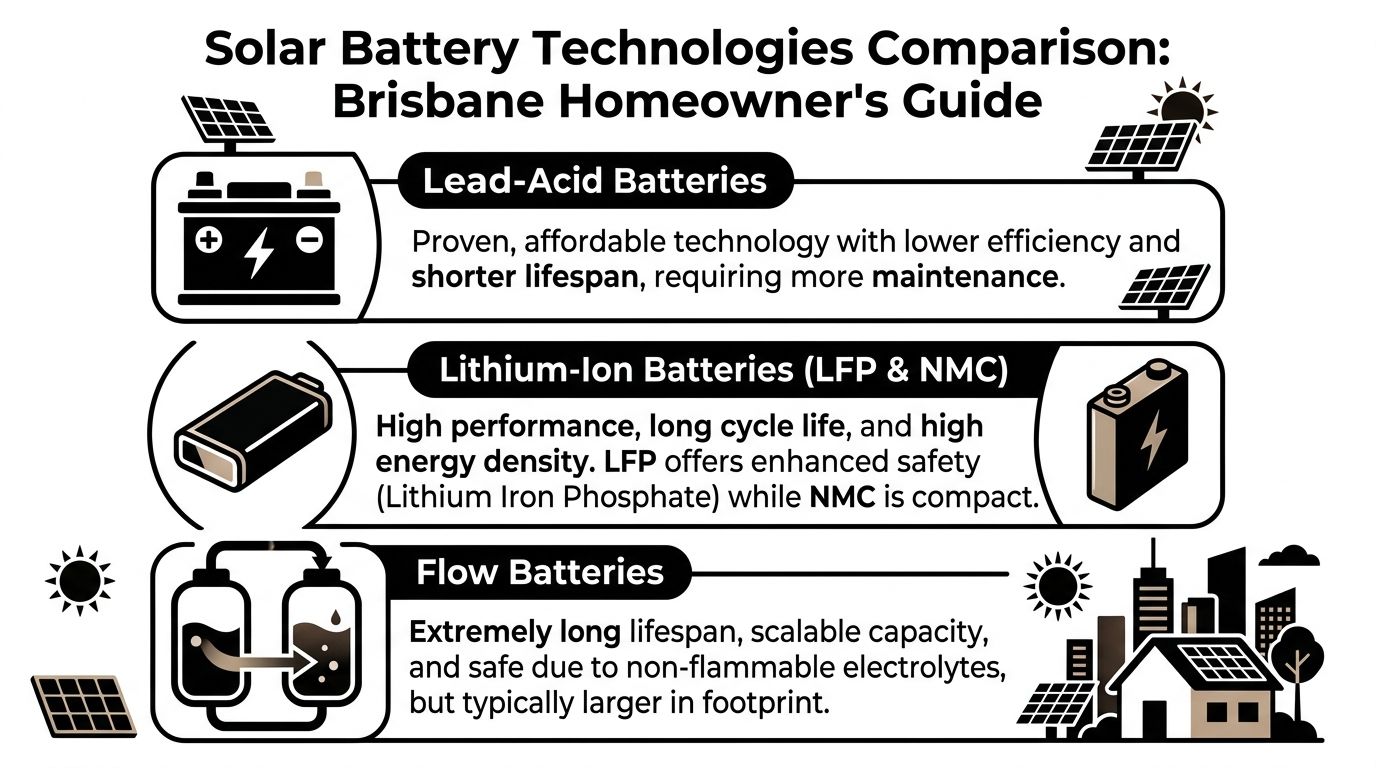
Lead-acid still turns up in off-grid systems, sheds, and lower-cost backup setups. For a typical grid-connected Brisbane home, it is usually the older option with the shortest margin for error.
SolarInsure’s battery longevity overview notes that lead-acid batteries commonly deliver a shorter service life and lower cycle count than modern lithium options.
In practical terms, that means:
I rarely recommend lead-acid for suburban homes that want to shift solar into the evening every day. The lower purchase price can disappear once shorter lifespan, usable capacity limits, and replacement timing are factored in.
Most home batteries installed now are lithium-ion, but that does not make them all equal. The chemistry inside the cabinet matters.
LFP, or lithium iron phosphate, has become the standard choice for many residential installations in Australia. The reason is practical. It handles repeated daily cycling well, it has a strong safety record, and it is generally better suited to hot conditions than other chemistries used in home storage.
That matters in Brisbane. Summer heat puts every battery under more stress, so a chemistry with better thermal stability gives homeowners a wider safety and performance buffer.
For most homes, LFP offers the best balance of:
Products from Tesla, Enphase, Sonnen, Franklin, and similar residential brands have made this chemistry familiar to homeowners for good reason.
NMC is another lithium-ion chemistry seen in some storage products and battery applications. It is compact and energy-dense, which can suit some designs, but in a warm, humid city like Brisbane I usually weigh heat behaviour more heavily than pack size on paper.
The same chemistry trade-offs show up in electric vehicles. This article on how long do EV batteries last gives a useful comparison because battery ageing always comes back to chemistry, temperature, usage pattern, and battery management quality.
Flow batteries are a different category again. They are often discussed for long life and inherent safety, but they are still uncommon in standard Brisbane homes because they tend to need more space and are not usually the easiest fit for a suburban installation.
For niche projects, they can make sense. For most households, they are not the default option.
| Battery type | Best fit | Main downside | Brisbane verdict |
|---|---|---|---|
| Lead-acid | Budget or specific backup use | Shorter life, more maintenance | Usually poor value for daily home use |
| Lithium-ion LFP | Daily home storage | Higher upfront cost than lead-acid | Best all-round option for most homes |
| Lithium-ion NMC | Space-sensitive or brand-specific setups | Less forgiving in sustained heat | Worth assessing case by case |
| Flow | Niche or larger-format systems | Size and system complexity | Rare in typical homes |
In Brisbane, the best battery is not just the one with the biggest capacity or the lowest price. It is the one whose chemistry can handle daily cycling and local heat without ageing early.
A battery’s brand matters. Its chemistry matters. In Brisbane, installation conditions can matter just as much.
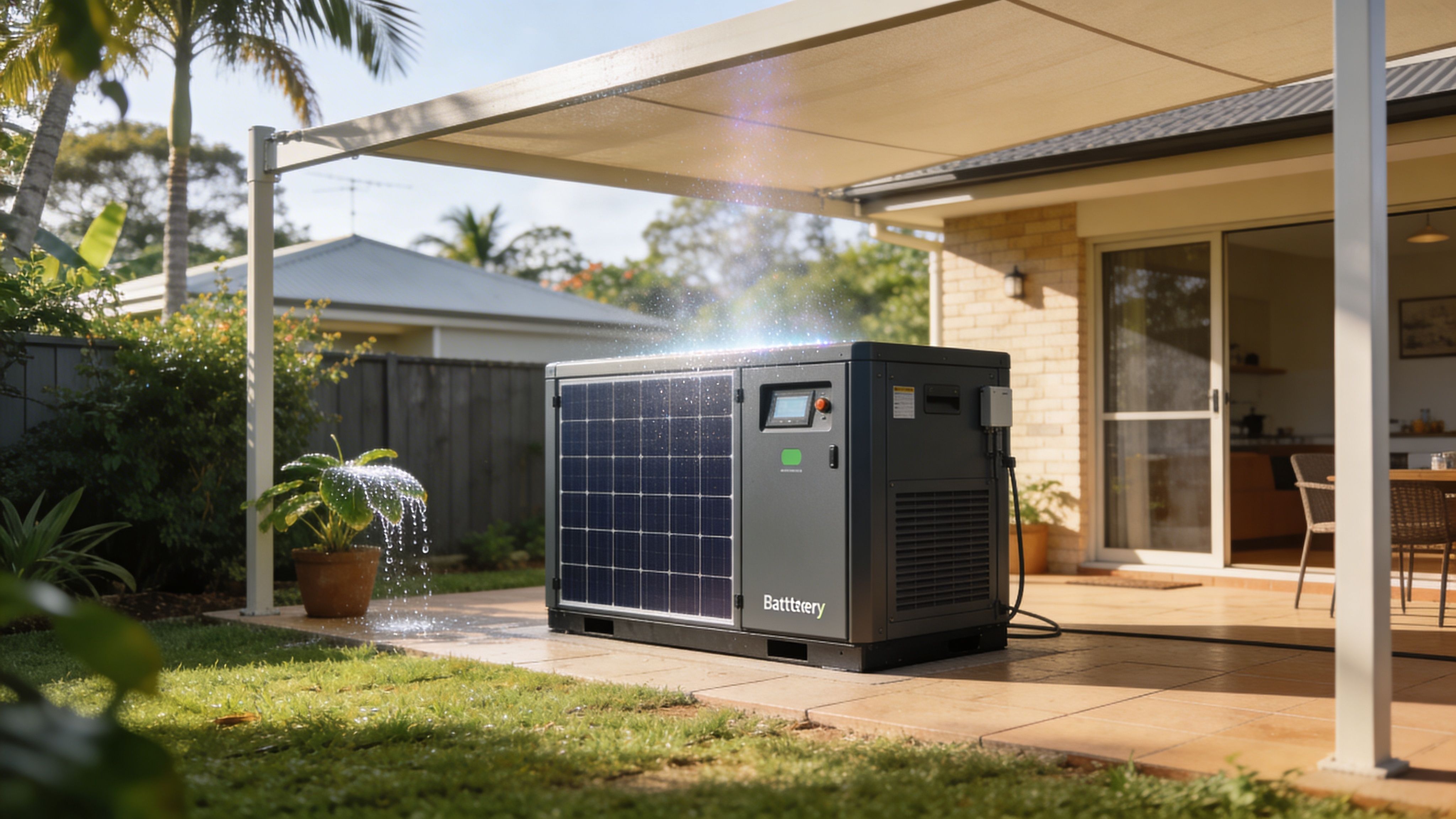
This is the factor most often underestimated.
Verified data states that temperature is the dominant factor in battery longevity. Batteries in hot regions like Brisbane can degrade 50% faster than in moderate climates, and every 10°C rise above 25°C can effectively halve cycle life if not properly managed, according to SolarTech Online’s guide to battery lifespan and degradation.
That is why battery location matters so much. A shaded garage wall is different from a west-facing exterior wall that cops afternoon heat. A ventilated utility area is different from a sealed corner with trapped hot air.
Brisbane is not only hot. It is humid.
Humidity does not usually get the attention that heat does, but it still matters because electronics and battery enclosures need stable conditions. Poorly ventilated spaces can hold heat and moisture together, which is not ideal for long-term reliability.
The next issue is how hard the battery works.
A battery that gets pushed to deep discharge every day, or repeatedly charges and discharges at aggressive rates, has a harder life than one running within sensible limits. The Battery Management System helps, but it is not magic. It can protect the unit from obvious abuse, not reverse poor design choices.
The most effective lifespan improvements are often simple:
For homeowners who want a broader maintenance mindset around their solar setup, this detailed solar panel maintenance checklist is a handy reference. It is panel-focused, but the habit of routine inspection applies to storage as well.
The best results usually come from site-specific decisions, not generic rules.
A practical setup often includes:
This explainer is worth a watch if you want a visual overview of how battery lifespan and system choices connect in the actual world.
What does not work: hiding a battery in the hottest available spot, oversimplifying the sizing, and assuming every product will perform the same in Brisbane as it does in a cooler climate.
A battery warranty is not a promise that the battery stays perfect for a decade. It is a defined performance guarantee with limits.
The wording usually revolves around three ideas: years, cycles or throughput, and retained capacity.
This tells you how much storage ability the manufacturer expects the battery to retain after a certain point. If a battery started life with a given usable capacity, retained capacity tells you how much of that should still be available at the warranty threshold.
For a homeowner, that matters more than marketing language. You do not need the battery to stay brand new forever. You need it to keep doing useful work at night and during outages.
Some brands frame the warranty around cycles. Others use throughput, which is the total amount of energy that has moved through the battery over time.
Both are trying to measure work done. Heavy daily use can bring you to that limit sooner than a lighter-use household.
Verified data from SolarQuotes found that in warmer regions like Queensland, solar batteries last around 12-14 years under heavy use, compared with 15-17 years in temperate climates, aligning with the 10-year warranties offered by major brands like Tesla and Sonnen, according to SolarQuotes.
The key point is this. A 10-year warranty is not necessarily the end of the battery’s useful life. It is the point to which the manufacturer is prepared to stand behind the product under stated conditions.
When reading a warranty, focus on these questions:
A good warranty should make practical sense, not just legal sense.
Most batteries do not fail dramatically at first. They usually start by becoming less useful.
That subtle drop is what homeowners miss. The battery still turns on. The app still shows activity. But evening performance starts to slip.
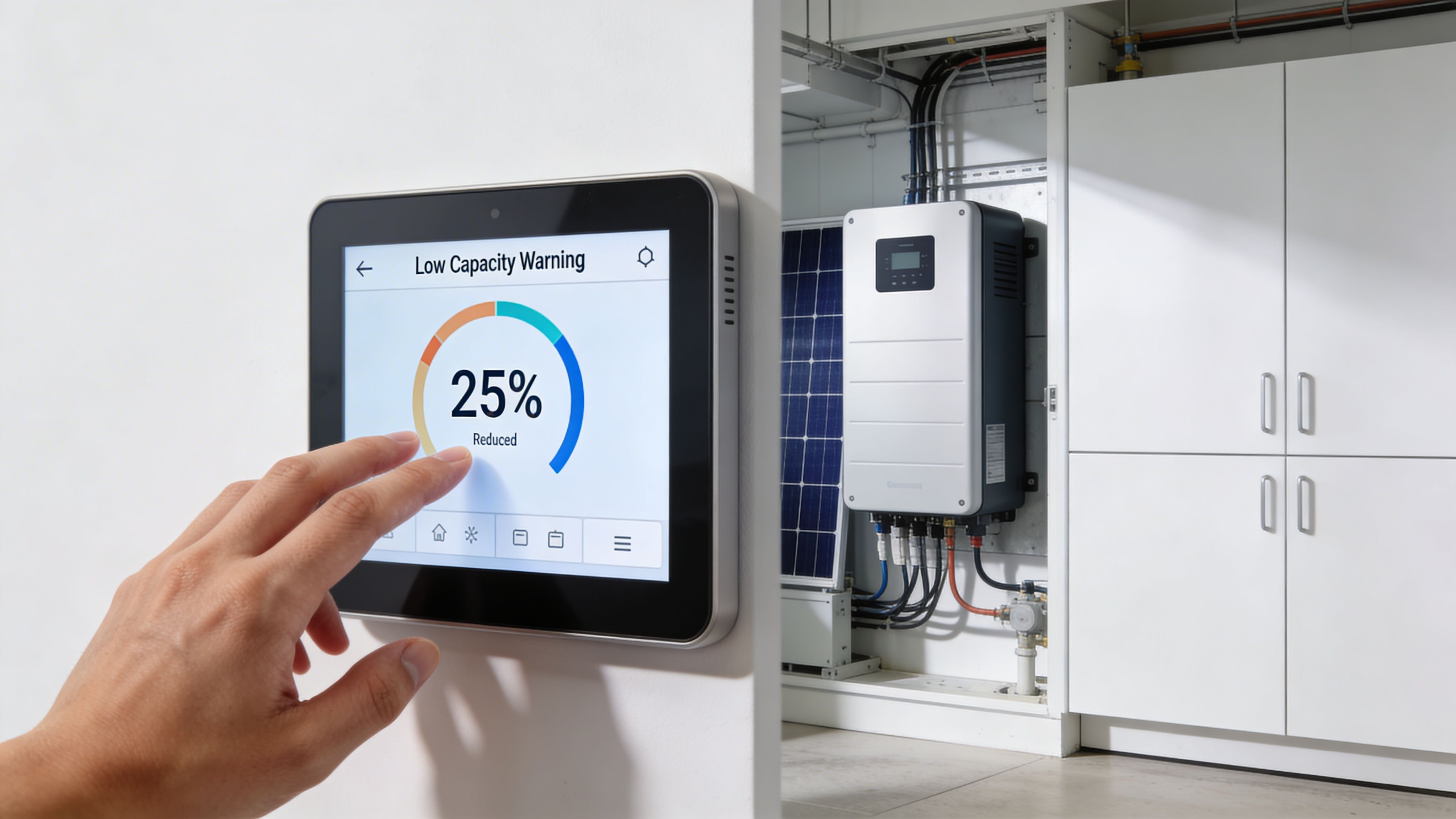
One of the first clues is shorter run time. If the battery used to carry the house well into the evening and now runs out much earlier under similar usage, that is worth checking.
Another common sign is lower reported health in the monitoring app or portal. Many systems give some visibility into battery status, charge behaviour, or fault history.
Verified data notes that in Queensland’s climate, lithium-ion batteries can see accelerated capacity fade, with annual degradation reaching 2-3% versus 1-2% in cooler regions, making proactive monitoring important for Brisbane homeowners, according to EcoFlow’s article on how long solar batteries last.
Some warning signs are more urgent than others:
You do not need test equipment to notice trends. Start with your monitoring app.
Look for:
Good monitoring catches gradual decline early. Waiting until the battery stops meeting household needs usually means you have missed months of warning signs.
If something looks off, book a proper health check. Batteries are not a DIY inspection item.
The useful life of a battery is never decided by one thing alone. Chemistry matters. Usage matters. In Brisbane, heat exposure and installation quality often decide whether the system ages well or ages early.
That is why the smartest battery investment is not always the cheapest unit or the biggest unit. It is the system designed around the home. Location, ventilation, inverter compatibility, switchboard condition, backup priorities, and future usage all need to line up.
There is also a newer financial layer to the decision. Verified data notes that emerging Energy Queensland VPP trials can allow batteries to earn $200-400/year, improving ROI, but the added cycling can affect calendar life. That trade-off needs proper planning, according to Solar.com’s discussion of battery lifespan and VPP use.
For some households, that means a battery becomes more than a backup device. It becomes an active home energy asset. For others, the better choice is a more conservative setup focused on evening self-use and resilience rather than heavy participation.
If your main goal is lowering energy costs without creating extra wear where it is not needed, this guide on how to reduce power bills how to reduce power bill with Brisbane tips is a practical companion read.
The key is getting the trade-offs right before installation. A well-planned battery system can deliver years of solid value. A rushed one can lock in avoidable stress from day one.
Usually, yes. The details depend on your current inverter, switchboard, available space, and whether the existing system is suitable for battery integration. Some homes are straightforward. Others need extra electrical work before battery storage can be added safely.
That depends on how the system is configured. Some batteries are set up for backup and can supply selected circuits during an outage. Others are installed mainly for energy shifting and may not provide blackout protection unless the right backup hardware is included.
Not automatically. A battery should suit your actual usage. Too small, and you cycle it hard. Too large, and you may pay for capacity you rarely use. The best result usually comes from matching storage to your evening loads, backup needs, and solar generation pattern.
If you want clear advice on battery lifespan, sizing, installation location, and whether a battery makes sense for your Brisbane home, contact DLG Electrical. With over 19 years of local experience, fully licensed and insured electricians, and a strong focus on safe, compliant installations, the team can provide a free, no-obligation quote and a professional site assessment adapted to Brisbane conditions.

Master Electrician with over 30 years of experience. Founded DLG Electrical in 2005 after international project work including electrical installations at Stamford Bridge Stadium, London(Home of Chelsea FC).

Local Electricians that can fix all Electric Hot water Systems.
Motion sensor lights are a versatile addition to any home, offering nu
