83 Jean St, Grange QLD 4051
Mon-Fri 07:30 AM - 04:00 PM - Sat - 8:00 - 12 - Sunday Closed
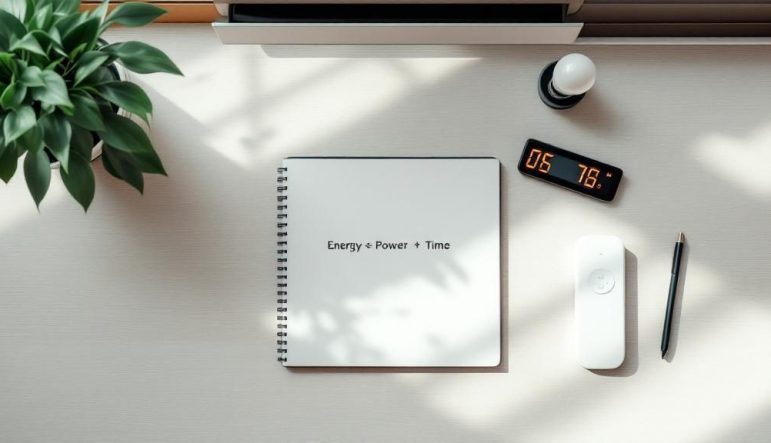
Ever feel like your electricity bill is written in a secret code? You’re not alone. The good news is that cracking that code is simpler than you think. It all boils down to one key formula: Energy (kWh) = Power (kW) × Time (hours). This single equation is the key to understanding exactly where your money is going each month.

Let’s move past the basic formula and cut through the confusion. This guide will give you real, practical control over your energy costs. We’ll break down what all the jargon means for the appliances you use every day, from your power-hungry air conditioner to the TV.
Think of this not as a physics lesson, but as a practical toolkit for every Australian homeowner. Knowing how to calculate energy consumption is fundamental, whether you’re trying to trim your household budget or manage a commercial property’s overheads. It all starts with getting familiar with the language of electricity.
Understanding a few essential terms is the foundation for accurately calculating your energy use. Don’t let the technical jargon intimidate you; it’s simpler than it looks.
Before we jump into the calculations, it’s crucial to get a handle on the main units you’ll see on your appliances and your bill. This quick-reference table breaks down the essentials.
| Term | Symbol | What It Measures |
|---|---|---|
| Watt | W | The rate of power an appliance uses at any single moment. Think of it like the speed of your car. |
| Kilowatt | kW | A more practical unit for measuring power, equal to 1,000 watts. |
| Kilowatt-hour | kWh | The total amount of energy used over a period. This is what you’re billed for. It’s like the total distance you drove. |
Grasping these three terms is the first step towards mastering your home’s energy footprint.
With these basics covered, you’re ready to move on. Learning this is the first of many practical energy efficiency tips that can genuinely help lower your bills.
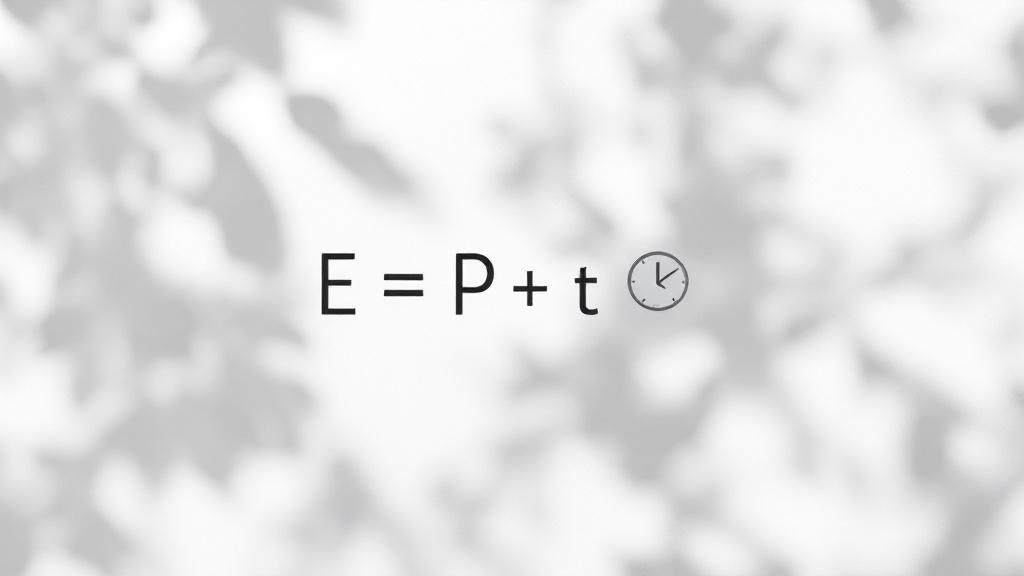
Before you can calculate your energy consumption, you first need to play detective. Every single appliance in your home, from the big-ticket items down to the humble phone charger, has a power rating measured in watts (W). This number is usually hiding in plain sight on a small compliance label or sticker, often tucked away on the back or bottom of the device.
Take a quick walk around your home and you’ll start spotting them everywhere. You might find your television is rated at 150W, your kettle at a thirsty 2200W, and a phone charger at a tiny 5W. This rating tells you the maximum power the device can draw at any single moment.
Once you’ve found the wattage, the next piece of the puzzle is converting it to the unit your energy company actually bills you in: kilowatts (kW). The good news is the conversion is simple, since “kilo” just means one thousand.
All you have to do is divide the wattage by 1,000.
Here’s a critical detail many people miss: there’s a big difference between an appliance’s maximum power rating and its average, real-world consumption. Your fridge, for example, might be rated at 200W, but it only pulls that much power when the compressor is actively running. Averaged out over an hour, its energy use is often much lower.
Going beyond these basic calculations, a deeper level of energy mastery comes from understanding appliance energy efficiency through Energy Star ratings, which is essential for comparing similar products. By building this mental inventory of your home’s devices, you’ll quickly get a clear picture of which ones are the real energy culprits.
Alright, you’ve got the key terms down. Now it’s time to roll up our sleeves and apply what we’ve learned. The core of calculating your electrical energy consumption comes down to a simple but incredibly powerful formula: Energy (kWh) = Power (kW) × Time (hours).
Let’s move beyond theory and put this into practice with some real-world Australian scenarios. We’ll skip the generic stuff and use common household items to show you exactly how small habits and big appliances contribute to your monthly bill.
The goal here isn’t just about doing maths. It’s about building an intuitive feel for your home’s energy profile. When you can connect an appliance to its real-world consumption, you gain genuine control over your electricity costs.
This simple infographic breaks down the calculation process into three clear, visual steps.

As you can see, it’s a straightforward multiplication of an appliance’s power rating by the time it’s running. Simple as that.
Let’s walk through a few scenarios you’d find in any typical Aussie home.
Scenario 1: The Air Conditioner on a Hot Afternoon
It’s a scorcher, and you run a powerful 2.4 kW reverse-cycle air conditioner for four hours to cool things down.
Scenario 2: The Family Movie Night
You’ve got the family together for a three-hour movie marathon with your 150W television. First things first, we need to convert its power from watts (W) to kilowatts (kW).
Scenario 3: The Forgotten Lights
Whoops. You’ve accidentally left two 10W LED lights on in the hallway overnight for a solid eight hours.
While working out the numbers for individual appliances gives you a great starting point, your electricity meter is the undisputed source of truth. It’s the official record of every single kilowatt-hour your property consumes. To get the most accurate data possible, you need to know how to read it correctly.
First up, you’ll need to find your meter box. It’s usually on an outside wall near the front of the house, but sometimes you’ll find it tucked away in the garage. Here in Australia, you’ll typically come across one of three types: an old-school dial (or clock face) meter, a more common digital meter, or a modern smart meter.
Each meter type needs a slightly different approach, but they’re all pretty straightforward once you know what to look for.
A fantastic way to check your own appliance calculations is to do a 24-hour meter read. Take a reading at a specific time—say, 8 AM on Tuesday—and then take another one at the exact same time the next day. The difference between those two numbers is your home’s precise energy consumption for that 24-hour period.
Smart meters, of course, give you the most granular detail, and you can usually access it all through your energy provider’s online portal or app. This is gold if you’re on a time-of-use tariff, as it breaks down your usage into peak, off-peak, and shoulder periods.
This data is invaluable for spotting patterns, like an old electric hot water system chewing through power overnight. Speaking of which, regular maintenance is crucial for these units; we’ve put together some great advice in our guide on winter maintenance tips for electric hot water systems.
By getting into the habit of cross-referencing your meter data with your own calculations, you can build a really accurate picture of your home’s energy profile and find exactly where your money is going.
Knowing your kWh usage is a great start, but the real eye-opener is seeing what that energy actually costs you in dollars and cents. This is where the numbers on your meter become real, connecting your daily habits to your bank account. To do this, you’ll need the most important piece of the puzzle: your electricity tariff rate.
This rate, usually shown in cents per kWh (c/kWh), is the price you pay for every kilowatt-hour of energy you pull from the grid. It can vary quite a bit across Australia depending on your retailer and location, so go grab your latest bill. You’re looking for a line item that breaks down your usage charges.
Your electricity plan will most likely have one of two common pricing structures:
Let’s go back to that air conditioner from our earlier example, which chewed through 9.6 kWh. If we assume you’re on a single-rate tariff of 30 cents/kWh, the calculation is pretty straightforward:
Cost = Energy Used (kWh) × Tariff Rate ($/kWh)
So, that’s 9.6 kWh × $0.30/kWh = $2.88.
Just one afternoon of cooling comfort cost almost three dollars. Once you start thinking in these terms, it becomes much easier to see the value in applying smart tips for saving electricity at home to bring those bills down.
Don’t forget to factor in the fixed daily supply charge on your bill. It’s a set amount you pay every single day just to be connected to the grid, even if you don’t use a single watt of power.
Understanding this isn’t just about saving money, though. In Australia, accurately calculating and managing our electricity consumption is vital for supporting the nationwide shift to renewable energy. As more solar and wind power come online, knowing exactly how much energy we’re using is critical for keeping the grid stable and reliable.
Once you start trying to figure out your home’s energy consumption, a few questions almost always come up. It’s completely normal to feel a bit frustrated when your careful calculations don’t quite match your power bill, or to wonder about those sneaky hidden energy costs. Let’s break down some of the most common queries we hear from clients.
This is the big one. You’ve crunched the numbers, but the total on your bill is different. What gives?
Usually, this gap comes down to a couple of key things. First off, your electricity bill isn’t just about the power you use. It also includes other charges, like the fixed daily supply fee from your retailer and GST, which your own calculations won’t account for.
The other major factor is how your appliances actually run. Your calculations use the appliance’s fixed power rating and an estimated run time. But think about your fridge or air conditioner—they don’t blast away at full power 24/7. They cycle on and off to maintain a set temperature. Your power meter, on the other hand, is built to track this fluctuating usage perfectly, so it naturally arrives at a different, more accurate figure.
Pro Tip: Don’t get discouraged by the difference. Think of your calculations as a guide to pinpoint which appliances have the biggest potential to chew through power. It’s the best way to prioritise where your energy-saving efforts will make the most impact.
Standby power, sometimes called “vampire power,” is the electricity your devices draw even when they’re turned “off” but still plugged into the wall. It might seem tiny—a single phone charger pulling just one watt isn’t going to break the bank.
But add up all the devices in a typical home—TVs, microwaves, game consoles, computers—and that collective drain can account for a surprisingly significant slice of your total energy bill.
Going beyond just the numbers, most people want to know what they can actually do to cut down their usage. You can find some excellent practical strategies for lowering your energy bills to get you started. This is where your calculations become really valuable, helping you focus on making changes that count. We’ve also answered many other common electrical questions over in our DLG Electrical frequently asked questions section.
This knowledge is more important than ever here in Australia, where boosting energy efficiency is a major focus. Official forecasts show that even small, household-level improvements can make a huge dent in our national consumption. If you’re interested in the bigger picture, you can learn more from the 2025 energy efficiency forecasts from the Australian Energy Market Operator.
At DLG Electrical, we’re experts in helping Brisbane homeowners and businesses manage their electrical systems safely and efficiently. If you need a professional assessment or assistance with an upgrade, get your free quote today by contacting us at https://dlgelectrical.com.au.

Master Electrician with over 30 years of experience. Founded DLG Electrical in 2005 after international project work including electrical installations at Stamford Bridge Stadium, London(Home of Chelsea FC).

Local Electricians that can fix all Electric Hot water Systems.
Motion sensor lights are a versatile addition to any home, offering nu

Hello Melvin Maniquis,
Excellent post on hourly electricity contracts!
The full cost control and ability to leverage market fluctuations are major economic wins.
Crucially, you highlight the link to sustainability, turning customers into grid balancers during high renewable output. This makes it the obvious choice for EV and smart home users.
Great summary!