83 Jean St, Grange QLD 4051
Mon-Fri 07:30 AM - 04:00 PM - Sat - 8:00 - 12 - Sunday Closed

The easiest way to check if your smoke alarm is working is to press and hold the ‘test’ button until you hear that ear-piercing shriek. Doing this quick check every month is non-negotiable—it confirms that both the battery and the alarm’s internal circuits are alive and kicking.
Knowing how to check a smoke alarm properly is a basic home safety skill, and it only takes a few minutes. While the button test is the first thing everyone thinks of, it’s really just the starting point for making sure your first line of defence against a fire is actually reliable.
Real peace of mind comes from a slightly more thorough routine. We’re talking about more than just a power check; this is about looking after the device itself to stop those annoying false alarms and ensuring it works perfectly when you need it most.
Beyond just pushing the button, a couple of other simple habits can make a huge difference in your alarm’s reliability.
A clean smoke alarm is a reliable one. While dead batteries are the most common reason smoke alarms fail in an emergency, you’d be surprised how often simple dust buildup is the culprit behind a malfunction.
By rolling these simple steps into your monthly cleaning schedule, you’re making sure your alarms aren’t just powered on, but are actually ready to do their job. This quick check is the foundation of a safe home, giving you the confidence that your system is ready to alert you when every second counts.
When it comes to fire safety in Australia, we’re not just talking about best practices—we’re talking about legal requirements with serious teeth. Failing to comply with national and state regulations doesn’t just put lives on the line; it can also lead you into hot water with hefty fines and even give your home insurance provider a reason to deny a claim when you need it most.
For homeowners, landlords, and tenants, getting your head around these rules is absolutely crucial. These laws aren’t just bureaucratic red tape; they’re designed to create a safer environment for everyone, based on the latest fire safety tech and a better understanding of how fires behave in modern homes.
One of the most significant changes in Australian fire safety has been the nationwide move to interconnected, photoelectric smoke alarms. What does that mean? Simple: when one alarm senses smoke, every single alarm in the house goes off at the same time. This gives everyone a much earlier, house-wide warning to get out.
Photoelectric technology is now the standard for a very good reason: it’s far better at detecting the slow, smouldering fires that are all too common in homes.
To be compliant, these alarms need to be installed in very specific spots:
This strategic placement ensures that no matter where a fire might start, the alarm is raised as quickly as possible. The legislation has been tightened over the years, cementing these requirements into law. In fact, Australian standards now mandate interconnected, photoelectric alarms in homes, and not having them can lead to fines and insurance headaches.
Depending on when your property was built and your state’s specific rules, these alarms might need to be hardwired into your home’s mains power or powered by a sealed 10-year lithium battery. It’s vital you know which type your property requires. For a detailed breakdown of the rules as they stand, it’s worth taking a look at the current smoke alarm legislation in QLD to see a real-world example of how these laws are applied.
It’s also important to know who’s responsible for what. Generally, landlords have the legal duty to make sure compliant alarms are installed correctly. Tenants are then usually responsible for the day-to-day stuff, like routine testing and changing batteries (if they aren’t the sealed 10-year type). Knowing your obligations is the key to staying both safe and on the right side of the law.
Knowing how to check your smoke alarms properly is about more than just a quick push of a button. A real test confirms the whole unit is working as it should—not just the battery and the siren.
Before you start, it’s a good idea to give everyone in the house a heads-up that you’re about to test the alarms to avoid a panic. You’ll also want a sturdy step ladder to safely reach any ceiling-mounted units.
Start with the most straightforward check: the manual test button. Press it and hold it down for a few seconds. What you’re listening for is a loud, ear-piercing alarm, not a weak or intermittent chirp. If the sound is faint, it could be a sign of dying batteries or a failing unit, even if it hasn’t started chirping yet.
This infographic shows the simple but crucial first step of any smoke alarm check.

Pushing the test button confirms the alarm has power and the siren works. It’s the absolute bare minimum for functionality, but it’s not the full story.
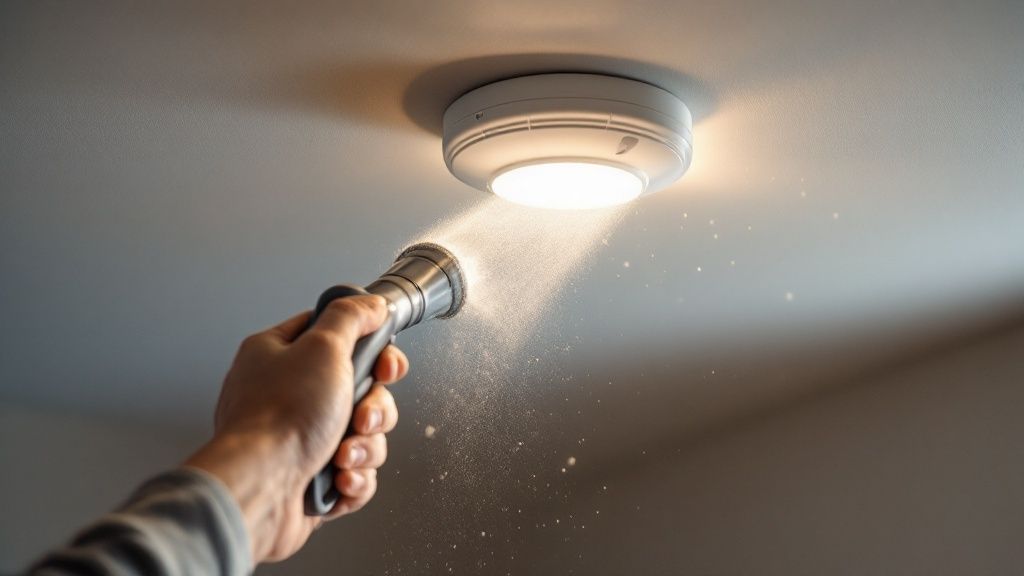
While the button test is a good start, it doesn’t actually tell you if the smoke sensor is doing its job. For a much more reliable test, you need to use a can of aerosol smoke tester, often called “canned smoke.” This is exactly what the pros use to make sure the sensor is responsive.
Using canned smoke is pretty simple, but you need to do it right:
Whatever you do, don’t spray directly into the alarm. This can leave a residue behind that might damage the sensor or attract dust over time, making it less effective. The goal is to simulate how real smoke would drift towards the detector.
A critical mistake is thinking an alarm that passes the button test is fully operational. The button only checks the power circuit. Without testing the sensor with canned smoke, you’re only confirming half the system is working.
For any home with modern, interconnected alarms (which is a legal requirement across Australia), there’s one last, vital check. When you test a single alarm—either with the button or with canned smoke—every single alarm in the house must sound at the same time.
While one alarm is blaring, do a walk-through of your home. Check every bedroom, hallway, and living space to confirm all the other units have activated. If you find one or more alarms are silent, it means you’ve got a connection fault in your system. This is something that needs immediate attention from a licensed electrician, as it defeats the primary safety benefit of having an interconnected network in the first place.
Passing the button test is a great start, but it’s the ongoing care that guarantees your smoke alarm will actually work when you need it most. The biggest enemies of a reliable detector are things you find in every home: dust, insects, and dying batteries. Regular upkeep is the only way to keep them at bay.
Think of it like servicing your car—you wouldn’t skip an oil change and just hope the engine runs smoothly forever. A simple cleaning schedule is your alarm’s equivalent of an essential tune-up, and it’s the best way to prevent the vast majority of failures and those frustrating false alarms.
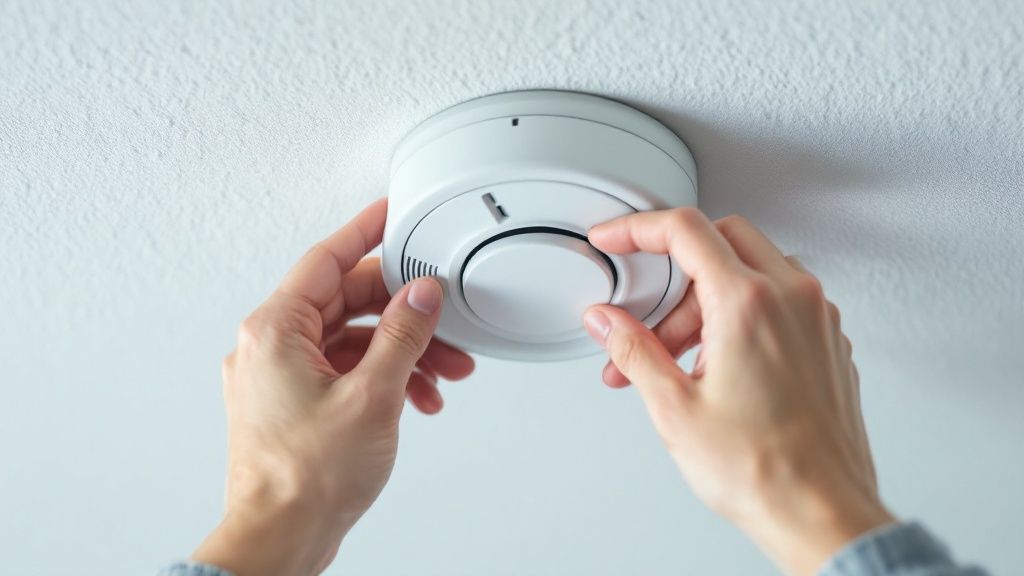
Set aside a few minutes for each alarm at least twice a year. The perfect tool for the job is the soft brush attachment on your vacuum cleaner. Gently run it over the vents and face of the unit to clear out any dust, cobwebs, or small insects that have made a home inside.
This one simple action keeps the sensor chamber clear, which is crucial for allowing smoke to enter freely during a real fire.
It’s a proven fact: a dirty or clogged sensor is one of the most common reasons an alarm fails to activate. By keeping the unit clean, you are directly improving its ability to detect a fire in its earliest, most critical stages.
When you do need to replace batteries, always stick with the type recommended by the manufacturer. This is usually a good-quality alkaline 9V battery. One crucial tip: never, ever use rechargeable batteries. They lose their charge differently and often won’t give you the low-battery warning chirp, leaving your family unprotected without you even realising it.
For those with more modern interconnected systems, it’s worth learning about the benefits of models with sealed, long-life batteries. You can explore the features of wireless linked smoke alarms to see how they make maintenance even easier.
Finally, every smoke alarm has a used-by date printed on it. Check the back of the unit for a manufacturing or expiry date. All smoke alarms, no matter the type, must be replaced every 10 years. Over time, the internal sensors lose their sensitivity and simply become unreliable. Grab a permanent marker and write the replacement date on the alarm itself—it’s the single most important maintenance reminder you can set.
Is your smoke alarm chirping away for no reason? Or worse, screaming its head off when there’s not a hint of smoke in the air? These are incredibly common headaches, but the good news is they often have surprisingly simple fixes.
Knowing what your alarm is trying to tell you is the first step. It transforms you from a frustrated homeowner into someone who can solve the problem quickly and confidently.
That relentless, high-pitched chirp you hear every 60 seconds is the number one complaint we get. In almost every case, it’s the alarm’s way of telling you its battery is getting low and needs to be replaced. Don’t put it off—swap it out straight away.
Full-blown false alarms are a different beast. They’re usually triggered by something in the air that fools the sensor. Think steam pouring out of the bathroom, smoke from a burnt piece of toast, or even a big cloud of dust you’ve kicked up while cleaning.
Figuring out the cause helps you find the right solution. Nuisance alarms are a huge reason why people end up disabling their detectors, which is an incredibly dangerous mistake.
What if your alarm makes no sound at all during a test? First, double-check the battery is installed correctly. For hardwired units, make sure the circuit breaker hasn’t tripped. If it still won’t work, it’s time for an immediate replacement.
Sometimes, the issue isn’t the alarm itself but a problem with your home’s electrical system. National research suggests that electrical faults are behind roughly 40% of house fires, highlighting just how important professional checks are.
If you suspect the issue goes beyond a simple battery change—especially with a hardwired alarm—it’s always safest to call in a licensed electrician.
Even with a solid maintenance routine, it’s normal for questions about smoke alarms to pop up. Getting clear, straightforward answers is the key to feeling confident that your home and family are properly protected.
We’ve put together some of the most common queries we hear from Australian homeowners and renters right here.
A good, simple rhythm to remember is: test monthly, clean seasonally, and replace yearly (or every decade for the unit itself). Sticking to this schedule ensures your alarms are always ready to do their job.
Understanding the tech here is crucial because it explains why Australian laws have changed so dramatically. In simple terms, ionisation alarms are good at picking up fast, open flames. But the real danger in most house fires isn’t the flame; it’s the smoke.
Photoelectric alarms are far superior at detecting the slow, smouldering fires that are much more common in homes. These types of fires produce a huge amount of toxic smoke long before any visible flames appear.
Because photoelectric technology gives you and your family a much earlier warning for these deadly fires, it is now the only type of alarm permitted by law across Australia. As a bonus, they’re also less likely to go off from a bit of burnt toast, meaning you won’t be tempted to disable them out of frustration.
The nationwide shift to photoelectric alarms isn’t just a suggestion; it’s a legal requirement backed by years of fire safety data. This technology is proven to give families precious extra time to escape during the most common and dangerous types of house fires.
In a word: no. In Australia, any electrical work that involves 240V mains power—which definitely includes installing or replacing hardwired smoke alarms—must be done by a licensed electrician. This isn’t just a safety guideline; it’s the law.
Trying to do this yourself is incredibly dangerous. On top of that, it will almost certainly void your home and contents insurance. If a fire were to happen and investigators found your DIY installation, your entire claim could be rejected. You can, of course, replace the backup batteries in your hardwired alarms or the batteries in standalone units yourself.
That annoying, high-pitched chirp you hear every 30 to 60 seconds is the smoke alarm’s way of telling you its battery is low. It’s designed to be irritating so you’ll deal with it! The first and most obvious step is to install a brand-new, high-quality alkaline battery.
If you’ve already put a fresh battery in and the chirping continues, it’s likely flagging another problem. The alarm might have hit its 10-year expiry date and is telling you it’s time for a full replacement. In some cases, it can also signal an internal fault, which also means the unit is done and needs to be replaced.
Keeping your family safe isn’t something you can compromise on, and having compliant, working smoke alarms is your first line of defence.
If you’re unsure about the state of your alarms or need a professional to install new ones, the team at DLG Electrical is here to help. Contact us for a free quote and get the peace of mind that comes with knowing your home is properly protected.

Master Electrician with over 30 years of experience. Founded DLG Electrical in 2005 after international project work including electrical installations at Stamford Bridge Stadium, London(Home of Chelsea FC).

Local Electricians that can fix all Electric Hot water Systems.
Motion sensor lights are a versatile addition to any home, offering nu
