83 Jean St, Grange QLD 4051
Mon-Fri 07:30 AM - 04:00 PM - Sat - 8:00 - 12 - Sunday Closed
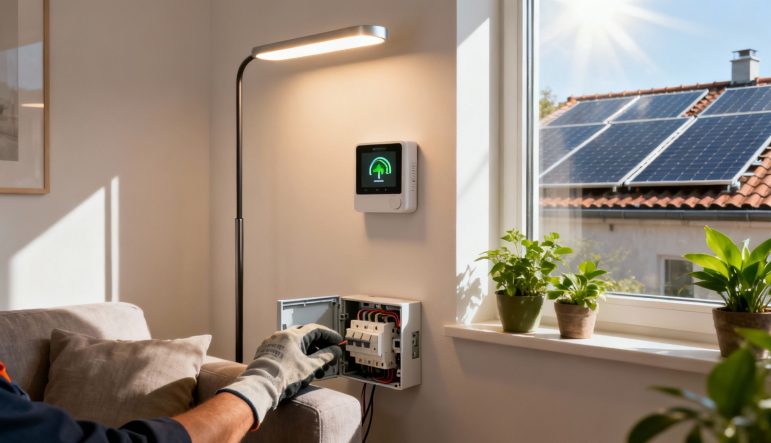
Feeling the sting of rising electricity costs in Brisbane? You’re not alone. The quickest way to reduce electricity consumption is to go straight for the biggest energy drains in your home and make a few simple, no-cost changes to your habits.
It’s all about optimising your air conditioner, unplugging devices on standby, and understanding how your daily routine stacks up against your bill. This isn’t about making huge sacrifices; it’s about making smarter choices.
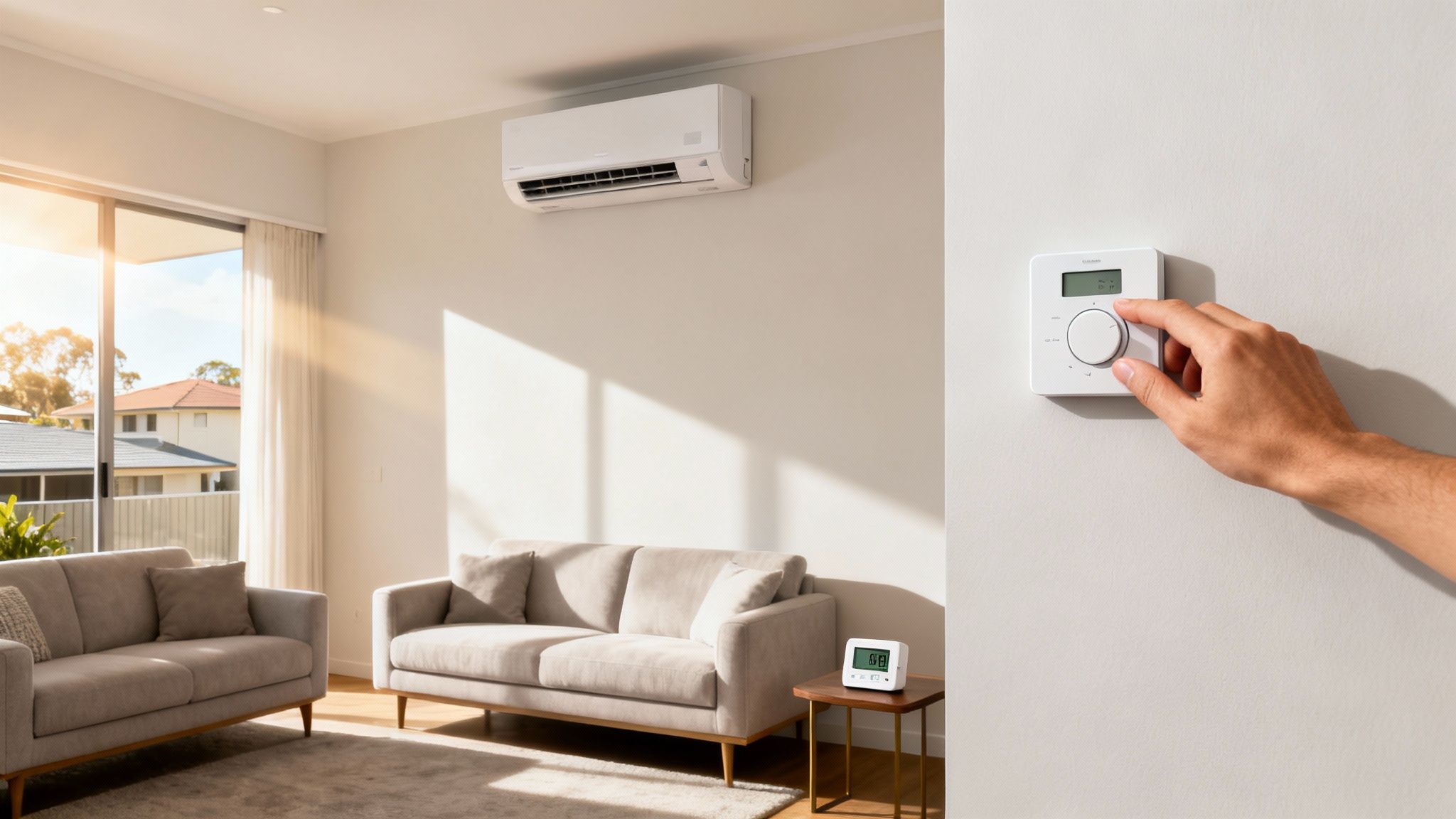
Many Brisbane residents are searching for practical ways to cut their power bills without completely overhauling their lifestyle. The good news? Significant savings are often hiding in plain sight. They’re tied to the appliances we use every day and the habits we’ve formed around them.
Think about the air conditioner working overtime during a sweltering summer or that second fridge humming away in the garage. Identifying these key energy users is the first step toward making a real difference.
It’s not just what you use, but when you use it. Here in Brisbane, most energy plans have peak and off-peak tariffs. This means power costs a lot more during high-demand periods, usually late afternoon and early evening. Simply shifting tasks like running the dishwasher or washing machine to off-peak times can make a noticeable dent in your quarterly bill.
Before you can really tackle your electricity consumption, you need to know where it’s all going. While every home is different, a few usual suspects are responsible for the lion’s share of power usage in a typical Queensland household.
We’ve put together a quick-reference table to highlight the top offenders and give you an immediate action you can take for each one.
This table pinpoints the most common high-consumption appliances in a Brisbane household and offers a simple, immediate fix to reduce their impact.
| Appliance | Typical Energy Usage | Quick Fix to Reduce Consumption |
|---|---|---|
| Air Conditioner | 25-40% of your total bill | Set it to 24°C in summer. Every degree cooler adds about 10% to its running cost. |
| Hot Water System | 20-25% of your total bill | Lower the thermostat to 60°C. This is hot enough for hygiene but stops unnecessary heating. |
| Refrigerator/Freezer | 8-12% of your total bill | Clean the coils on the back. Dusty coils make the unit work harder to stay cool. |
| Clothes Dryer | 3-5% of your total bill | Clean the lint filter after every single use to improve airflow and efficiency. |
| Standby Power | Up to 10% of your total bill | Unplug chargers and turn off TVs and game consoles at the wall. If it has a light, it’s using power. |
Focusing your efforts on these five areas will give you the most bang for your buck, helping you see a reduction in your bills much faster.
Let’s break down those energy hogs a bit further.
By pinpointing these energy guzzlers, you can create a targeted strategy for savings. It’s less about drastic changes and more about making small, consistent adjustments that really add up over time. For a deeper dive into what your neighbours are paying, you can compare your costs with the average electricity bill in Brisbane.
Let’s be honest, the most powerful tool for cutting your electricity bill is sitting right there in your daily routine. Big savings don’t always mean big spending on new gadgets. More often than not, it’s about being more mindful of how and when you’re using power.
We can go beyond the old “just turn off the lights” advice. It’s time to get into the details of household energy management that, when added up, can seriously slash your monthly bill.
You’d be surprised how many of your electronics are secretly sipping power even when they’re “off.” This is often called standby power or “phantom load,” and it can quietly account for up to 10% of your home’s total electricity use. Think about the little red light on your TV, the clock on the microwave, or your phone charger left in the wall.
The best way to fight back is to make a habit of it. Turn things off at the wall, not just with the remote. A great trick is to use power boards with individual switches for your entertainment centre or home office. One flick of a switch, and you’ve cut power to a whole group of appliances.
Key Takeaway: If a device has a clock, a little light, or a remote control sensor, it’s using power 24/7. Unplugging these “power vampires” is a simple, no-cost way to trim your bill every single day.
The kitchen and laundry are the energy-guzzling epicentres of most homes. But with a few small tweaks to your routine, you can make a massive difference. These high-draw appliances are packed with opportunities for efficiency.
Before you even think about reaching for that air conditioner remote, take a look outside. Brisbane’s climate gives us plenty of chances to cool our homes down for free if we work with it, not against it.
In the morning, open up windows and doors on opposite sides of the house to create a natural cross-breeze and flush out the hot air. As the sun gets higher and the day heats up, close your windows and, crucially, shut the blinds or curtains on the sunny side of the house. This traps the cooler morning air inside and can keep your home several degrees cooler for hours. It’s a simple strategy, but it can often delay—or even eliminate—the need to turn the air con on at all.
While your daily habits are a huge piece of the puzzle, the hardware in your home plays an equally massive role in your electricity consumption. When that old fridge finally gives up the ghost, replacing it with a modern, energy-efficient model is one of the smartest long-term financial decisions you can make. Think of it less as a purchase and more as an investment in lower power bills for years to come.
Diving into the world of energy-efficient tech can feel a bit overwhelming, but it’s simpler than you might think. Here in Australia, your best friend is the Energy Rating Label. That sticker you see on new appliances is your guide to comparing models—the more stars, the more efficient it is, and the less it will cost you to run. Simple as that.
Not all appliances chew through power equally. If you want to see the most substantial savings, you need to focus your budget on the biggest energy hogs in your home. We’re talking about the heavy hitters: refrigerators, air conditioners, and hot water systems. These should be at the very top of your upgrade list.
An old fridge from the early 2000s, for example, could easily be costing you hundreds of dollars more each year compared to a new model with a high star rating. The same goes for air conditioners. A modern inverter system uses far less power to keep your home comfortable than an older, fixed-speed unit that’s either on full blast or completely off.
Even when appliances are “off,” they’re often still drawing power. This is what we call phantom load or standby power, and it can add up surprisingly quickly.
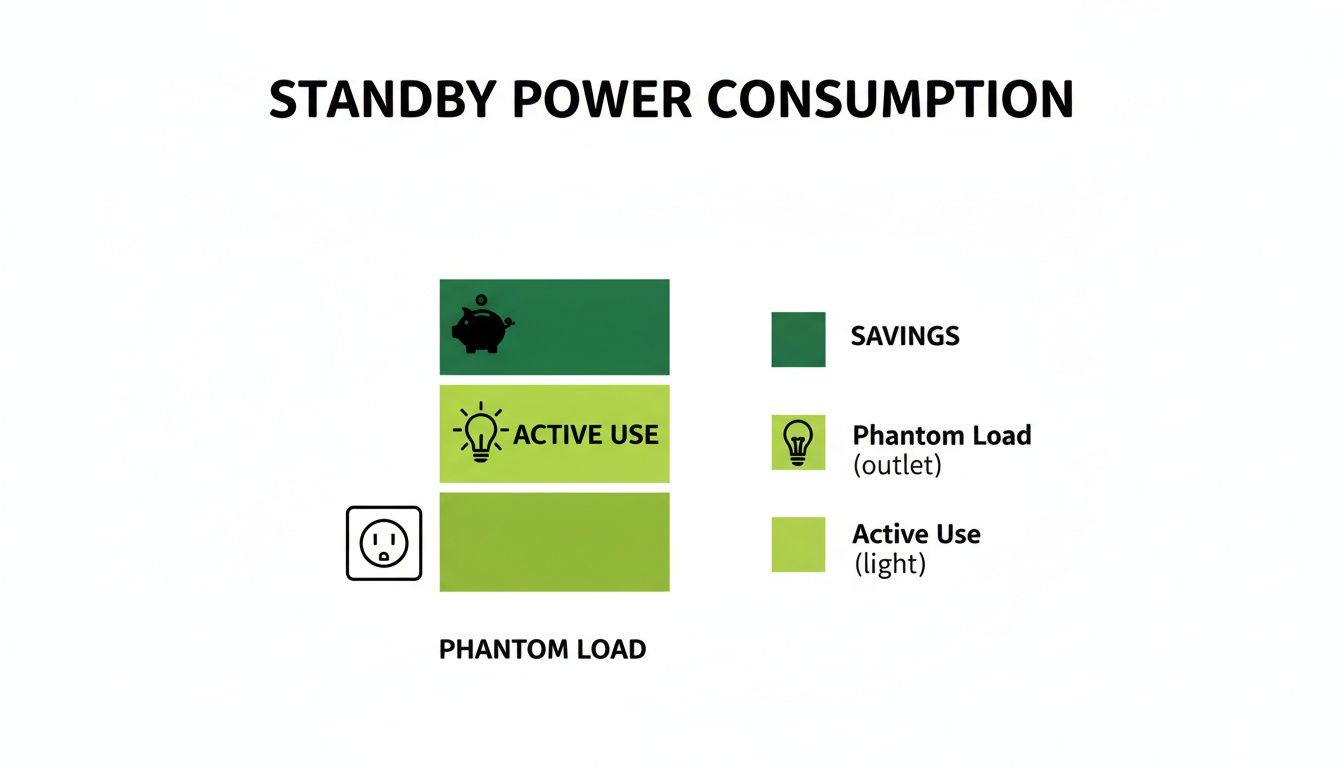
Simply getting into the habit of switching things off at the wall or using smart power boards can eliminate this phantom load and make a tangible difference to your bill.
To give you a clearer picture, here’s a breakdown of what upgrading key appliances could look like for a typical Brisbane household.
Upgrading isn’t just about getting new features; it’s about locking in long-term savings by choosing models that are engineered for efficiency. The table below shows just how significant the difference can be.
| Appliance | Old Model (Approx. Annual Cost) | Energy-Efficient Model (Approx. Annual Cost) | Potential Annual Savings |
|---|---|---|---|
| Refrigerator | $250 | $110 | $140 |
| Air Conditioner | $700 | $450 | $250 |
| Clothes Dryer | $200 | $60 | $140 |
| Hot Water System | $900 | $250 | $650 |
The potential savings speak for themselves. While there’s an upfront cost, the year-on-year reduction in your power bills means these appliances often pay for themselves over their lifespan.
One of the quickest and most effective upgrades you can make is switching to LED lighting. The difference is night and day. In fact, modern LEDs use up to 75% less power than old incandescent or halogen bulbs and can last up to 25 times longer. That means you’re not just saving on electricity every month, but you’re also saving on buying replacement bulbs.
For a deeper dive into the benefits, you can check out our guide on professional LED lighting installation.
Here’s a real-world example: We recently helped a family in Brisbane replace 15 old halogen downlights with modern LEDs. The initial cost was quickly offset by the monthly savings on their power bill, and now they won’t have to think about climbing a ladder to change a bulb for years.
Don’t overlook your hot water system—it’s the silent power guzzler in many homes. For the average household, electric hot water can account for around 25% of the total electricity bill. That’s a huge chunk.
If you’re serious about slashing your energy use, consider upgrading to modern, efficient heat pump systems. These units are incredibly effective and can cut your water heating costs by more than half.
When you’re ready to make these kinds of upgrades, especially for hardwired items like a new hot water system or air conditioner, getting it done professionally is non-negotiable. A licensed electrician from DLG Electrical will ensure the installation is safe, fully compliant with Australian standards, and optimised for maximum efficiency. It’s the only way to protect both your home and your investment.
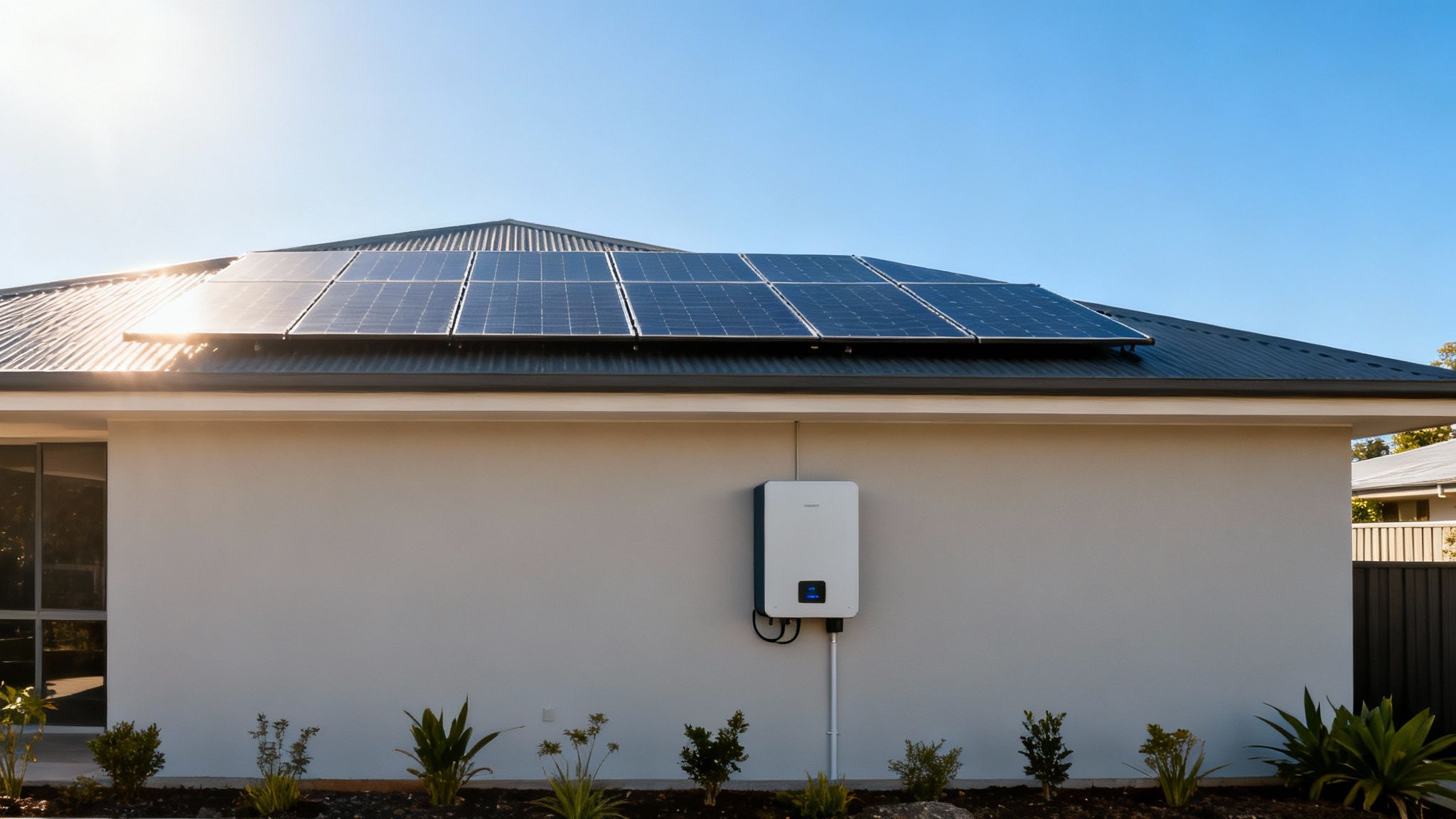
For Brisbane home and business owners serious about making a massive dent in their power bills, installing a solar photovoltaic (PV) system is the single most powerful move you can make. It’s a straightforward way to reduce electricity consumption from the grid because you’re generating your own clean power right on your rooftop.
Living in the Sunshine State gives us a huge head start. Brisbane’s climate is practically purpose-built for solar generation, delivering more than enough sunlight year-round to power your property and dramatically cut your dependence on energy retailers. A professionally installed solar system doesn’t just shrink your bills; it boosts your property’s value and helps create a more sustainable energy future.
So, how does it actually work? A solar PV system converts sunlight into usable electricity via panels on your roof. This free, clean energy powers your appliances directly throughout the day. If you generate more power than you’re using, that excess energy is sent back to the grid, usually earning you a credit on your next bill.
The impact isn’t subtle—it’s immediate and significant. We’ve seen firsthand how solar PV installations have transformed household energy costs across Australia. For many Brisbane homeowners, a well-designed system can slash grid electricity consumption by an average of 60-70%.
Think about a typical family home. A pre-solar bill for 500 kWh a month could easily drop to just 150 kWh after a professional DLG install of a 5kW system, which can produce around 7,000 kWh per year in our sunny climate.
And if your property has a metal roof, which is common throughout Queensland, it’s worth knowing the specifics. Properly mounting solar panels on a metal roof is key to ensuring a durable and efficient installation that lasts for decades.
“What size system do I need?” It’s the first question nearly everyone asks, and the answer is never one-size-fits-all. It really comes down to your unique energy habits. To figure out the perfect setup for you, we dig into a few things:
A proper assessment ensures your system is sized to meet your needs today and has the capacity for what’s coming tomorrow, giving you the best possible return on your investment.
Expert Insight: “Don’t just guess your system size. A system that’s too small won’t cover your needs, and one that’s too large might not be cost-effective. A professional analysis is the only way to get it right.”
Want to take your energy independence to the next level? A solar battery is the answer. Instead of sending all your excess solar power back to the grid for a small feed-in tariff, a battery lets you store that valuable energy for your own use later.
This is a game-changer. It means you can power your home with free, stored solar energy in the evening, long after the sun has set. It also lets you sidestep those punishing peak tariff rates that retailers charge when demand is high.
By using your own stored energy during these expensive periods, you can essentially wipe out the priciest part of your bill. A solar and battery combination is the ultimate strategy for taking back control of your electricity costs.
So you’ve swapped the old light bulbs, turned things off at the wall, and become a master of the cold wash cycle. But your power bills are still stubbornly high. What gives?
Often, the real problem is hiding in plain sight, deep within your home’s core electrical system. An inefficient, outdated, or overloaded system can silently bleed energy around the clock. Worse still, it can pose a serious safety risk.
This is exactly why a professional electrical health check is so important for any Brisbane property owner serious about learning how to reduce electricity consumption for good. It’s not just a quick glance—it’s a deep dive into the safety and efficiency of your wiring, circuits, and the all-important switchboard.
Think of your switchboard as the central nervous system for your home’s power. It’s responsible for directing electricity where it needs to go and, critically, protecting your property and family from faults, surges, and overloads.
The problem is, if your home is a bit older, you might still be running on an ancient fuse box with ceramic fuses or a first-generation circuit breaker board. These relics simply weren’t designed for the demands of a modern Brisbane household.
They buckle under the strain of air conditioners, big-screen TVs, computers, and a kitchen full of power-hungry gadgets. This constant pressure doesn’t just cause annoying circuit trips; it can lead to energy leakage and create a very real fire hazard.
An old, overloaded switchboard is one of the leading causes of electrical fires in Australian homes. It’s a risk that simply isn’t worth taking. Upgrading provides modern safety features like safety switches (RCDs) that can cut power in milliseconds to prevent electric shock.
Upgrading your switchboard is one of the smartest long-term investments you can make in your home’s safety and efficiency. A modern unit brings several key advantages that directly lower your power bills and give you peace of mind.
A new board is also essential for future-proofing your property. Thinking about installing solar panels, a home battery, or an EV charger? A switchboard upgrade is almost always the mandatory first step. These modern energy solutions demand a robust electrical backbone that older boards just can’t provide safely.
Here’s what you get with an upgrade:
For a complete rundown, you can learn more about what a professional assessment of your electric switchboard for home involves.
A proper electrical health check from the team at DLG Electrical goes much deeper than just the switchboard.
Our licensed electricians assess your entire system from top to bottom, hunting down other potential sources of energy waste and safety issues. This might involve inspecting old, deteriorating wiring, checking for faulty power points, or ensuring your whole setup is compliant with current Australian Standards.
Taking this proactive step guarantees your home isn’t just running efficiently but is as safe as it possibly can be. It’s the definitive way to get your property’s power consumption under control, right from the source.
Making changes to slash your power bill always brings up a few questions. It’s easy to read a list of tips, but it’s another thing entirely to know which ones will actually make a dent in your own quarterly bill. We get asked the same things by Brisbane homeowners all the time, so let’s tackle the big ones.
Getting clear, practical answers is the first step to creating a realistic plan that actually works for your home and your budget.
It’s fair to be skeptical, but the savings from small, consistent changes are absolutely real. Most households can easily trim their electricity bills by 10-15% without spending a cent, just by being more mindful. We’re not talking about huge sacrifices here—just smart, consistent habits.
Where do these savings come from? It’s usually a combination of a few key things:
Think about it this way: for a family with a $500 quarterly bill, these simple actions can add up to $200-$300 in savings each year. That’s money back in your pocket for zero upfront cost.
Without a doubt, yes. Viewing a switchboard upgrade as just another expense is missing the bigger picture—it’s a critical investment in your home’s safety and future efficiency. An old switchboard with ceramic fuses isn’t just a fire hazard; it struggles to manage modern electrical loads, which leads to wasted energy.
A modern switchboard, complete with circuit breakers and safety switches, is the non-negotiable foundation for a safe, energy-efficient home. If you’re even thinking about solar panels or an EV charger down the track, a switchboard upgrade is almost always a mandatory first step for safety and compliance.
For most Brisbane homes, the biggest wins come from the appliances that run 24/7 or work the hardest. The top two culprits are almost always the refrigerator and the air conditioner.
An old, power-hungry fridge can easily chew through hundreds of dollars more in electricity each year compared to a new, high-star-rated model. In the same way, modern inverter air conditioners are in a different league of efficiency compared to older units. And if you have an electric hot water system that’s over a decade old, that’s another prime candidate for an upgrade that will pay for itself in savings.
Picking the right size solar system isn’t a one-size-fits-all decision; it has to be based on your specific situation. The main things to consider are your daily electricity consumption (you can find this in kWh on your bill), how much suitable roof space you have, and your budget. This is where a professional assessment is essential.
As a general rule of thumb, a 6.6kW system is the sweet spot for many average-sized family homes in Brisbane, offering a great balance of performance and cost. A proper solar expert will analyse your power usage patterns to design a system that not only covers your current needs but is also ready for future upgrades like a battery or an EV.
Ready to take control of your electricity bills with professional, reliable solutions? The team at DLG Electrical is here to help with everything from switchboard upgrades to energy-efficient lighting and solar readiness checks. Contact us for a free quote and discover how our expert electricians can make your Brisbane home safer and more efficient. Visit us at https://dlgelectrical.com.au.

Master Electrician with over 30 years of experience. Founded DLG Electrical in 2005 after international project work including electrical installations at Stamford Bridge Stadium, London(Home of Chelsea FC).

Local Electricians that can fix all Electric Hot water Systems.
Motion sensor lights are a versatile addition to any home, offering nu
