83 Jean St, Grange QLD 4051
Mon-Fri 07:30 AM - 04:00 PM - Sat - 8:00 - 12 - Sunday Closed

So, you want to know how to test your smoke alarm? The simple answer is to press the test button and wait for the deafening beep. That tells you the battery and the speaker are working, but it doesn’t confirm the most important part is ready for action: the sensor itself.
A truly effective test goes beyond just pushing a button.
A silent smoke alarm is little more than a piece of plastic on your ceiling. It offers a false sense of security. Regular testing is what transforms it into your first and most crucial line of defence against a fire.
Think about it – different types of fires produce smoke differently. A fast-flaming electrical fire is a world away from a slow, smouldering one caused by a faulty appliance. A fully functional sensor is vital to detect these varied threats as early as possible.
When you understand the real-world stakes, testing your alarms stops being a chore and becomes an essential safety routine. It’s about more than just peace of mind; it’s about keeping your family safe and staying on the right side of the law.
Beyond your personal safety, regular testing ensures you meet legal requirements here in Australia. The Building Code of Australia (BCA) sets the minimum performance and installation standards for smoke alarms in all residential buildings.
These aren’t just suggestions; they are legally enforceable rules. Regular testing is a key part of upholding your responsibility as a homeowner or landlord.
At the end of the day, the reason we test smoke detectors is brutally simple: to give everyone in your home the earliest possible warning to get out. A working alarm can be the difference between a close call and a devastating tragedy. It buys you precious seconds when they matter most.
Remember, a smoke alarm’s job is to alert you while a fire is still small, giving you and your family time to get out safely. A non-working alarm provides a false sense of security, which is arguably more dangerous than having no alarm at all.
Here in Queensland, the rules are particularly strict, so it’s always wise to stay informed about the current smoke alarm legislation. Once you understand the ‘why,’ you can appreciate the profound importance of this simple monthly check.
Before you hit that test button, a few moments of prep work will make the whole process smoother, safer, and less frantic for everyone in the house.
First up, grab what you need. A sturdy stepladder is a must for safely reaching any ceiling-mounted alarms. If you’ve got particularly high ceilings, a broom handle can be a real lifesaver, letting you press the button without dangerously overreaching.
It’s also a great idea to give your family or housemates a quick heads-up. The sound of a smoke alarm is piercingly loud—it’s designed to be—and letting everyone know it’s just a test will prevent any unnecessary panic.
Take a quick look at the alarm itself to figure out what kind you’re dealing with. This is a crucial step because it dictates what you need to look and listen for to confirm everything is working as it should. Are you looking at a standalone, battery-only unit, or is it hardwired into your home’s electrical system?
You can usually tell if it’s hardwired by spotting a small green or red LED light that stays on. That little light is your clue that it’s getting power from the mains.
Knowing whether your alarms are standalone or interconnected is key. An interconnected system should trigger every alarm in the house when you test just one—a vital feature you’ll need to confirm.
By figuring out the type beforehand, you’ll know exactly what a successful test sounds like. This simple check makes the process of testing your smoke detectors much more effective and gives you real peace of mind that your whole safety net is functioning correctly.
Alright, let’s get hands-on. Knowing how to properly test your smoke detectors is one of the most important bits of home maintenance you can do. It’s quick, easy, and it could save lives.
The most basic check is the one you should be doing every single month: the button test.
Just press and hold the test button. You should hear that deafening, high-pitched alarm almost instantly. If the sound is weak, takes a while to kick in, or you hear nothing at all, that’s your cue. It’s a clear sign you need to either replace the batteries straight away or, if it’s an older unit, replace the whole thing. This simple push confirms the battery and the speaker are working, which is a great start.
This image shows just how straightforward this monthly check is.
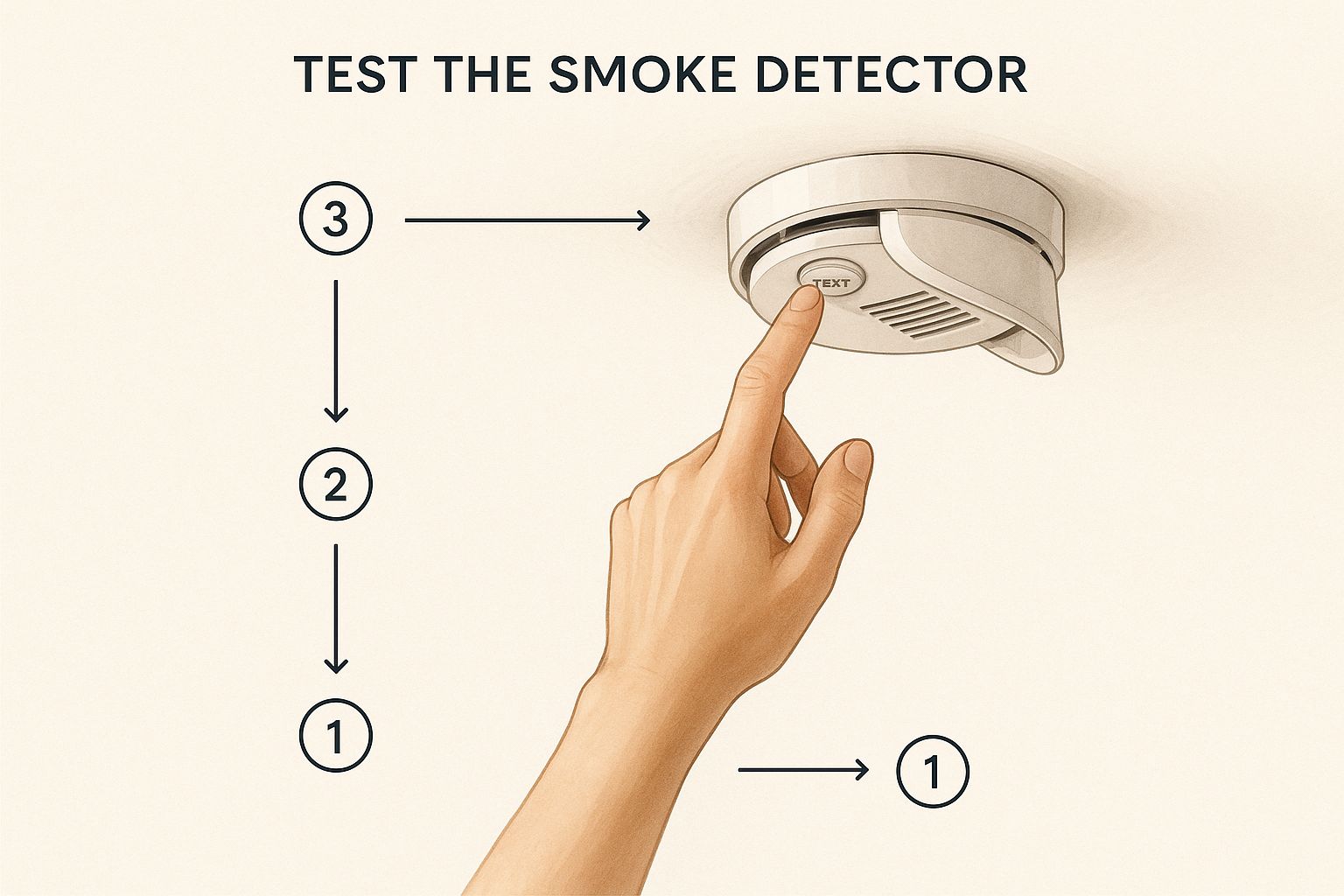
It only takes a few seconds, but it’s a critical habit to get into.
Here’s something a lot of people don’t realise: the test button doesn’t actually check the smoke sensor itself. All it does is test the power and the siren. To be 100% sure the detector can actually detect smoke, you need to simulate it.
The safest and most reliable way to do this is with a can of aerosol smoke tester, which you can pick up from any good hardware store.
Just follow the directions on the can. Usually, it’s a short spray from a specific distance towards the detector’s vents. A working alarm should go off within a few seconds. This is the only way to have complete confidence that the sensor is actively sniffing the air for signs of a fire.
And this isn’t just us being overly cautious. Research from Fire & Rescue New South Wales is pretty eye-opening. Their studies on house fires found that a staggering eight out of ten test burns were under smouldering conditions—the most common and deadly type of fire in homes. Pushing the button just doesn’t replicate that.
To make it easier to remember what to do and when, here’s a quick breakdown of the different test methods.
| Test Method | How It Works | Recommended Frequency | What It Confirms |
|---|---|---|---|
| Test Button | Press and hold the button on the alarm. | Monthly | Power source (battery/mains) and siren are operational. |
| Aerosol Smoke | Spray a smoke substitute near the alarm’s vents. | Annually | The smoke sensor is actively working and can detect particles. |
| Interconnection Test | Activate one alarm (button or spray). | Monthly | All alarms in the network sound simultaneously. |
This table gives you a clear, at-a-glance guide to keeping your system in top shape, confirming not just power, but actual smoke detection capability across your entire property.
If you have a modern interconnected smoke alarm system—and you absolutely should—there’s one more crucial step. When you test one alarm, whether with the button or the spray can, every other alarm in your house must go off at the same time. That’s the entire point of an interconnected network.
While one alarm is blaring, do a quick walk through the house. Check every single bedroom, hallway, and living area to confirm every unit has been triggered.
If you find an alarm that’s staying silent, you’ve got a communication fault in the system that needs to be fixed immediately. A silent alarm is a dangerous alarm. For a deeper dive into how these systems work, check out our guide on wireless interconnected smoke detectors.
Okay, so you’ve run a test on your smoke detector, but it didn’t go quite right. Don’t panic. Most of the time, common smoke alarm issues are surprisingly simple to sort out yourself, no electrician needed.
If the alarm stayed completely silent during the test, the first thing to check is the battery. It’s the usual suspect. Even with hardwired alarms, the battery backup can die. Just pop the cover open, take out the old battery, and slide in a fresh, good-quality one. Make sure it’s facing the right way before you close it up and test it again.
That annoying, high-pitched chirp that goes off every minute or so is probably the most common complaint we hear from homeowners. This isn’t the ear-splitting siren of a real emergency; it’s a very specific signal.
Nine times out of ten, that chirp is a low-battery warning. It’s the alarm’s way of politely nagging you to replace the battery before it gives up completely. A quick battery swap should do the trick. If it keeps chirping with a new battery, it could be a sign the alarm itself is getting old and needs replacing.
Remember, a single chirp every 30 to 60 seconds is a maintenance call, not an emergency alert. It’s designed to get your attention without causing panic, so you can fix the problem before the alarm loses power.
False alarms are another headache. They’re often triggered by things that have nothing to do with a fire. Steam from a hot shower, smoke from burnt toast, or even a build-up of dust and tiny insects inside the sensor can trick the alarm into going off.
A quick and easy fix is to give it a gentle clean. Grab a vacuum with a soft brush attachment and carefully suck any dust out of the vents and crevices on the outside of the alarm. You’d be surprised how often this solves the problem.
If you’ve cleaned it and it’s still playing up, it’s time to check its age. Every smoke alarm has a use-by date, usually 10 years from when it was made. You’ll find the manufacturing or expiry date printed on a sticker on the back of the unit. If it’s past its prime, the alarm is no longer reliable and must be replaced entirely—no amount of troubleshooting can turn back the clock.
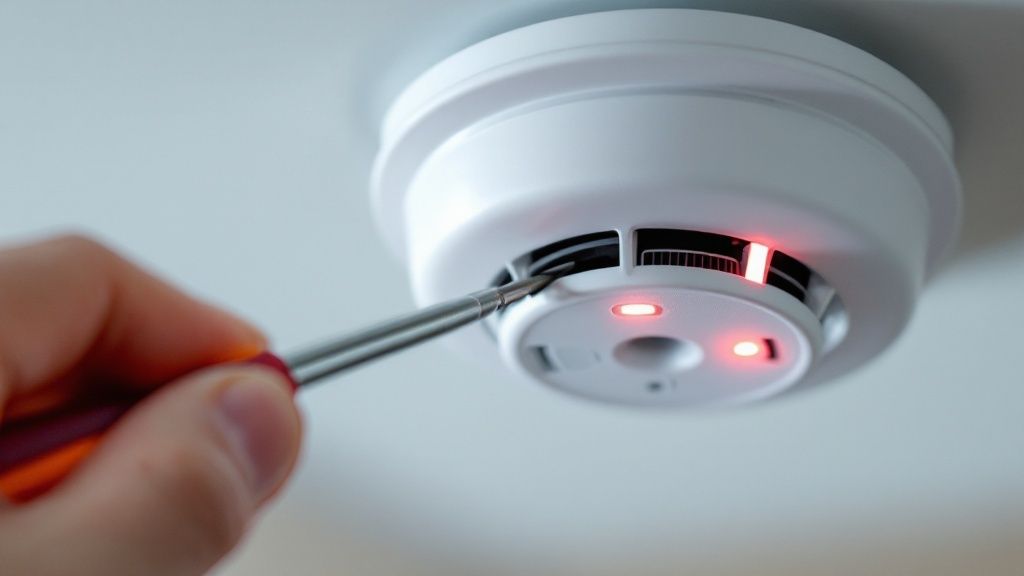
When it comes to fire safety, consistency is everything. It’s not about doing a single, one-off check; it’s about building simple, repeatable habits that turn your smoke alarms from forgotten ceiling fixtures into reliable guardians. By working a few key actions into your calendar, you can ensure they’re always ready to do their job.
A great place to start is the monthly button test. This quick check takes seconds but confirms the alarm has power and that the siren is still working. To make this an easy habit to remember, authorities like the Country Fire Authority (CFA) suggest testing your alarms once a month, often tying it to an easy reminder like when you pay a recurring bill.
Beyond a quick button press, a more structured, year-round schedule is what delivers true peace of mind and long-term reliability. Don’t worry, it’s not complicated.
This isn’t just about ticking boxes on a to-do list. It’s about creating layers of protection so you can genuinely rest easy, knowing your first line of defence against a fire is always operational.
To fold these tasks into your wider home care plan, it’s worth checking out an ultimate rental property maintenance checklist for ideas on how to create a complete safety and upkeep routine.
Even once you get the hang of testing your smoke alarms, a few common questions always seem to pop up. Getting these details right is the key to feeling genuinely confident that your home’s safety net will work when you need it most. Let’s run through some of the queries we hear all the time from homeowners.
A big one is whether it’s okay to use real smoke, like from a blown-out candle or match, to test a detector. The short answer is: please don’t. This method is surprisingly unreliable and, worse, can leave behind an oily film on the sensor that can damage it or make it less sensitive over time. Your best bet is always to use a can of aerosol smoke specifically made for testing alarms.
Another frequent question is about how loud the alarm should be. A working smoke alarm isn’t just loud; it should be uncomfortably, piercingly loud. We’re talking 85 decibels (dB) from three metres away, which is easily enough to wake even the deepest sleepers. If the sound from your test is weak, tinny, or muffled, that’s a massive red flag.
Many people are understandably confused about the two main types of smoke alarms and which one is “better.” The truth is, they work differently because they’re designed to detect different kinds of fires.
So, which one do you need? Both. Because you can never predict what type of fire might break out, safety experts strongly recommend using alarms that have both ionisation and photoelectric sensors. Alternatively, you can install a mix of both types throughout your home. For a deeper dive, you can explore the various types of smoke alarms and figure out the best setup for your property.
The most important thing to remember is that one type isn’t better than the other—they just excel in different scenarios. Having both technologies gives you the most complete and reliable protection against the widest range of fire threats.
For professional advice on smoke alarm installation, compliance, and testing, trust the experts at DLG Electrical. Ensure your home is protected by the best. Get your free quote today!

Master Electrician with over 30 years of experience. Founded DLG Electrical in 2005 after international project work including electrical installations at Stamford Bridge Stadium, London(Home of Chelsea FC).

Local Electricians that can fix all Electric Hot water Systems.
Motion sensor lights are a versatile addition to any home, offering nu
