83 Jean St, Grange QLD 4051
Mon-Fri 07:30 AM - 04:00 PM - Sat - 8:00 - 12 - Sunday Closed

When you think about bedroom design, what comes to mind? Probably the bed, the paint colour, or maybe the furniture. But the right lighting is just as crucial—it’s what turns a simple room into a personal sanctuary for rest and relaxation.
A single overhead light just doesn’t cut it anymore. To get it right, you need a layered approach that blends ambient, task, and accent lighting. This is the secret to creating a space that works for any mood or activity, from getting ready on a bright morning to winding down with a book at night.
Great lighting design does more than just illuminate a room; it crafts an experience. Think of it less like a utility and more like a core part of your home’s decor. The right lighting plan can make a small room feel bigger, a cold space feel cosy, and a functional bedroom feel like a luxurious retreat.
The goal is to build a flexible environment. You need bright, clear light for getting ready in the morning, but a soft, warm glow to help you relax before sleep. It’s all about creating a space that adapts to your daily rhythms.
Good bedroom lighting is a clever blend of art and science. It’s about understanding how different types of light affect our mood and how we see a space. This is why professional designers always start with a layered strategy, making sure the room is ready for anything.
The concept is quite similar to how we approach outdoor garden lighting, where different fixtures are used to highlight features, light up pathways for safety, and create a beautiful, inviting atmosphere after dark.
A well-lit bedroom isn’t just about being able to see—it’s about creating a personal haven. The design needs to serve both function and feeling, adapting to your needs from sunrise to sunset.
Believe it or not, the average Australian home has 37 light bulbs, which shows just how vital lighting is in our lives. With the government phasing out old, inefficient incandescent bulbs, energy-saving LEDs are now the standard. They last far longer and offer incredible control over colour temperature—a crucial factor for creating that warm, relaxing ambience every bedroom needs.
For a bit of inspiration, have a look at these 10 luxury bedroom lighting ideas that masterfully blend style with function. You can also learn more about how Australian energy efficiency guidelines are helping us reduce electricity use while improving comfort right from the source.
If you want to get your bedroom lighting right, you need to think like a designer. But don’t worry, it’s not as complicated as it sounds. The secret is a simple but powerful strategy called layered lighting.
The best way to think about it is like dressing for Brisbane’s unpredictable weather. You wouldn’t just wear a single heavy coat, would you? You’d start with a base layer, add something functional like a jacket, and finish with an accessory. Bedroom lighting works exactly the same way to create a space that’s comfortable, practical, and looks fantastic.
Each layer of light has a specific job. When you combine them correctly, you get rid of those harsh shadows and create a room that can shift its mood at the flick of a switch. It’s a huge step up from the single, glaring “big light” in the middle of the ceiling, giving you total control.
This is the foundation of any great lighting plan.
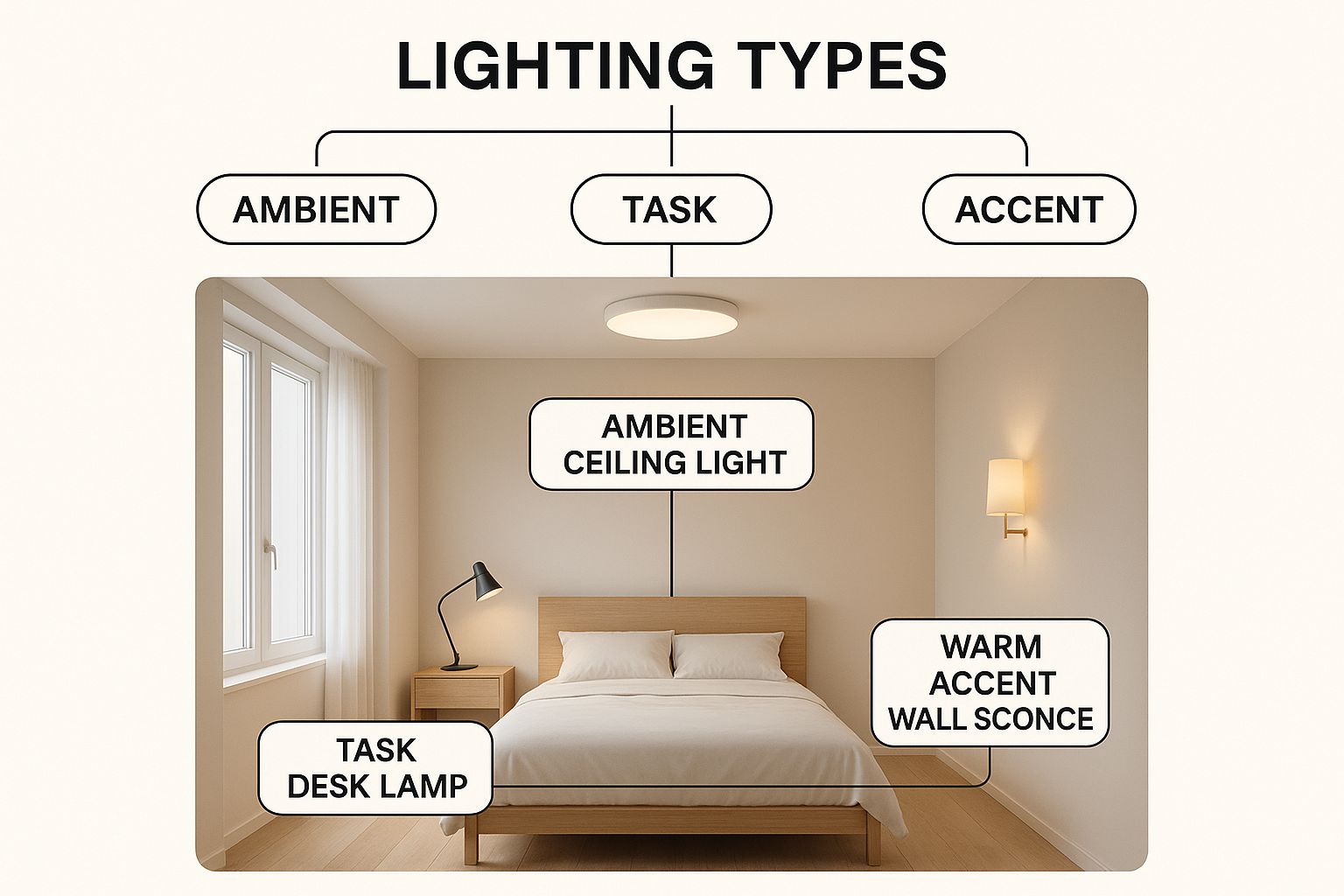
As you can see, different types of lights work together to build a complete, balanced feel, filling the room both functionally and visually.
Let’s break down these three essential layers. I’ve put together a quick table to show how each one works before we dive into the details.
| Lighting Layer | Primary Purpose | Common Fixtures | Desired Effect |
|---|---|---|---|
| Ambient | Overall illumination and safety | Ceiling lights, chandeliers, downlights | A comfortable, even glow that fills the room |
| Task | Focused light for specific activities | Bedside lamps, wall sconces, wardrobe lights | Bright, direct light to reduce eye strain |
| Accent | Highlighting features and creating mood | Picture lights, uplights, LED strips | Adds drama, depth, and personality |
With this framework in mind, it’s much easier to choose the right fixtures to create a bedroom that truly works for you.
First up is ambient lighting. This is your main source of light, the “base layer” that fills the whole room. Its job is to make the space safe to move around in and provide a general, even illumination. It’s the first light you’ll switch on when you walk into the bedroom.
For ambient light, you’ll typically use fixtures like:
The aim here isn’t to be blindingly bright. You’re after a comfortable, welcoming glow that blankets the entire space.
Next, we have task lighting. Think of this as the functional “jacket” in our clothing analogy. This layer delivers focused, direct light right where you need it for specific activities like reading in bed, doing your makeup, or finding that one shirt in your wardrobe. It’s all about cutting down on eye strain and helping you concentrate.
Task lighting is all about precision. It places strong, direct light exactly where you need it, preventing the shadows that ambient light alone can create during focused activities.
Some of the most effective task lighting options include:
Finally, we have accent lighting. This is the stylish “accessory” that injects personality and visual flair into your room. You use this layer to highlight things you want to show off, like a piece of art, a cool architectural feature, or even a houseplant. It creates depth, drama, and directs the eye.
A good rule of thumb is to make your accent lighting about three times brighter than your ambient light to ensure the feature really stands out.
Here’s how you can create it:
By using high-quality, long-lasting fixtures for all three layers, you’ll create a beautiful and low-maintenance design that you can enjoy for years. If you’re wondering about longevity, it’s worth learning about how long LED bulbs last to make the smartest choice for your bedroom.
Once you’ve got your head around the layers of light, the next step is picking the actual hardware to bring it all to life. This is about more than just finding something that looks good in a photo online; it’s about matching the right fixture to the right job and making sure it fits your bedroom’s unique size and shape.
The perfect fixture doesn’t just do its job—it becomes a key piece of your room’s decor. Whether it’s a grand chandelier providing that all-over ambient glow or a pair of discreet wall sconces for your nightly reading, every fixture has a role. Nailing this selection is what creates a truly balanced and beautiful bedroom lighting design.
Every lighting layer—ambient, task, and accent—has its own set of go-to fixtures. The best choice for your room will depend on its size, ceiling height, and the specific vibe you’re aiming for.
For your ambient layer, you need to think about the big picture. The whole point is to create broad, even illumination across the room.
When it comes to task lighting, it’s all about precision. These fixtures need to be positioned exactly where you need to see what you’re doing.
Choosing a light fixture is a bit like picking a piece of art for your wall—scale and proportion matter immensely. A fixture that’s too small will get lost and feel insignificant. On the other hand, one that’s too large can completely overwhelm the space and make it feel cluttered.
One of the most common mistakes we see is people underestimating the size needed for a central ceiling fixture. There’s a simple formula to help you get it right: add your room’s length and width together (in metres), then multiply by 10. This gives you a rough diameter for your fixture in centimetres.
For example, in a 4m x 5m bedroom, the calculation is (4 + 5) x 10 = 90. So, a chandelier or pendant around 90 cm in diameter would be a great starting point for this space.
This isn’t a hard-and-fast rule, of course, but it’s a fantastic guideline to ensure your main light fixture feels balanced and looks intentional.
While pendants and lamps often steal the show, don’t overlook other powerful options. Recessed downlights, for instance, are brilliant for providing clean, modern ambient light, especially if you want the fixture itself to be practically invisible. To learn more, you can explore the different types of downlights and see if they suit your style.
Track lighting offers incredible flexibility, letting you aim multiple light sources exactly where you need them. This makes it a fantastic solution for highlighting artwork or lighting up a dressing area, serving both accent and task lighting roles perfectly.
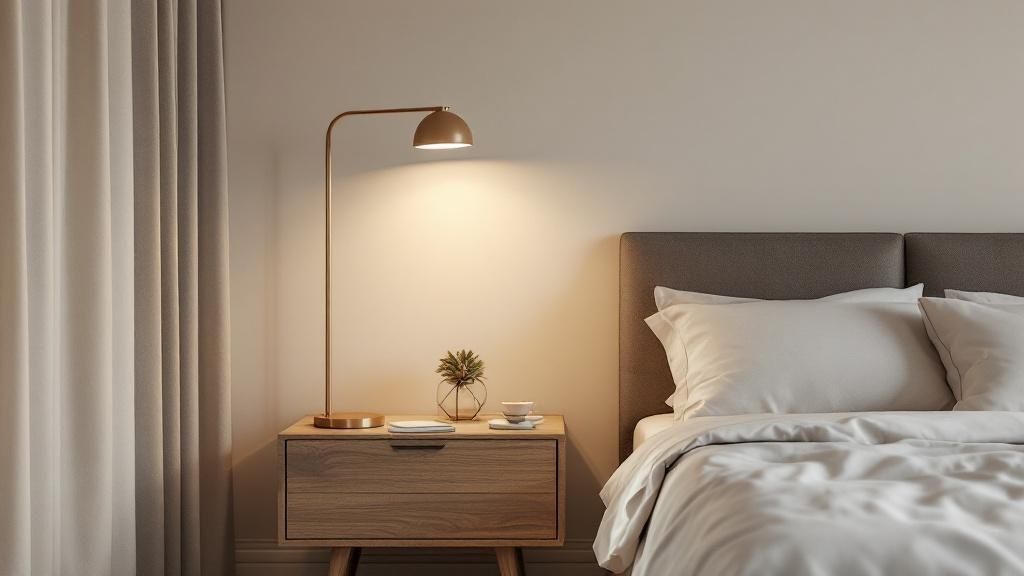
We’ve talked about what lights to use and where to put them. Now, let’s get into the how—how we can use light to actively make your bedroom a better, more restful space. This isn’t just about flicking a switch anymore. It’s about understanding two key elements: light colour and smart control.
When electricians talk about light colour, we’re not talking about paint shades. We’re talking about warmth and coolness, measured in a unit called Kelvins (K). Think of it like a flame: a low Kelvin value is like the warm, orangey glow of a campfire, while a high Kelvin value is like the crisp, blue-ish light of a bright midday sky.
For a bedroom, the goal is always relaxation. That means sticking to the warmer end of the spectrum is an absolute must for your main lighting.
The kind of light you’re surrounded by in the evening has a massive impact on your body’s internal clock, also known as your circadian rhythm. Cool, blue-toned light essentially tricks your brain into thinking it’s still daytime. This gets in the way of your body producing melatonin, the hormone that tells you it’s time to sleep.
Your bedroom lighting should be a tool for relaxation, actively signalling to your body that it’s time to wind down. Aiming for a colour temperature between 2700K and 3000K creates a soothing, candle-like ambience that supports this natural process.
Modern lighting design in Australian homes is now heavily focused on wellness. Research has shown that exposure to cool, bright light in the evening can suppress melatonin production by as much as 50%, delaying sleep and wrecking its quality. This science is exactly why Brisbane homeowners are moving towards warm, dimmable LEDs to create bedrooms that are genuine sanctuaries for rest.
Understanding how light colour affects your body can be a game-changer for your sleep. For more ideas on improving your nightly routine, check out these quick tips for falling asleep faster.
This is where technology takes your bedroom lighting from good to brilliant. Smart lighting systems let you control not just the brightness (dimming) but also the colour temperature of your lights throughout the day. And you can do it all from your phone or with a simple voice command.
Just imagine this:
Smart bulbs and integrated systems give you incredible flexibility. You can schedule lighting changes, create custom “scenes” for different activities, and make sure your lighting for bedroom spaces is always perfectly tuned to your needs and your body’s natural rhythms.
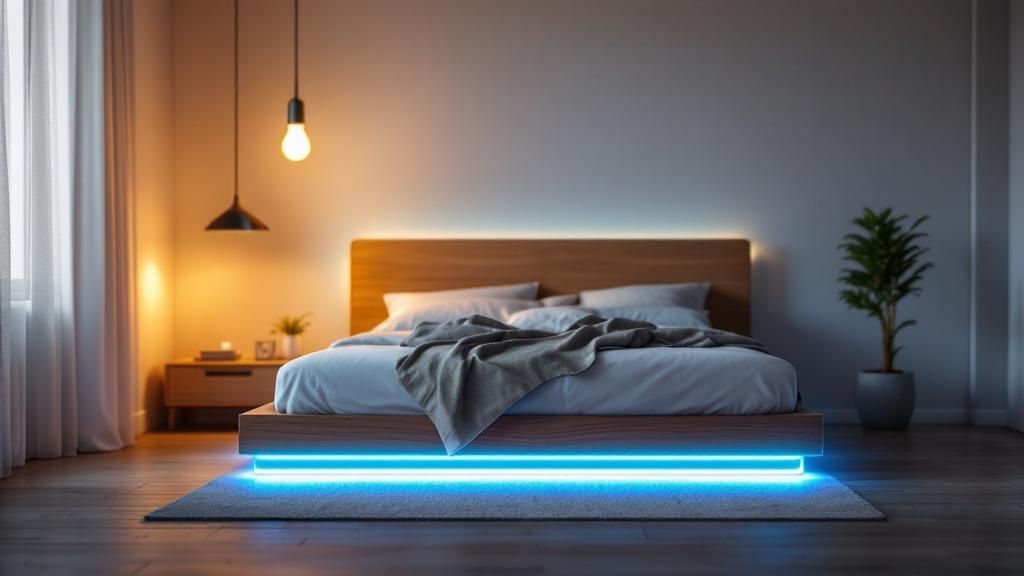
It’s exciting to see your bedroom lighting design come together, but turning that vision into a reality demands a serious focus on safety. While anyone can change a lightbulb, installing a hardwired fixture—whether it’s a pendant, downlight, or wall sconce—is strictly a job for a licensed professional.
Here in Australia, it is illegal and extremely dangerous for anyone other than a qualified electrician to carry out this kind of work. DIY electrical jobs don’t just create a massive risk of fire or electric shock; they can also completely void your home insurance policy. That leaves you financially exposed if things go wrong.
Hiring a professional ensures every wire is secure, the circuit isn’t overloaded, and the entire installation meets strict national safety standards. To ensure optimal performance and prevent overheating, it’s also crucial to follow accurate cable sizing guidelines when running new wiring for your lighting.
Beyond the critical safety side of things, a bit of practical planning will make a huge difference in how functional your new lighting for bedroom setup is. Think about how you actually move through and use the space every day. Where do you need switches to be for them to feel completely intuitive?
Consider these key placements:
No modern lighting plan is complete without dimmer switches. They are one of the most cost-effective upgrades you can make, giving you the power to instantly shift the room’s atmosphere from bright and functional to soft and relaxing with a simple adjustment.
Choosing the right light fittings also means thinking about long-term energy consumption. The shift to LED lighting across Australia has been a game-changer for household running costs.
Since incandescent bulbs were phased out back in 2009, around 59% of Australian homes have made the switch to LEDs or CFLs. This move has slashed our national residential lighting energy use by an incredible 65%.
This simple choice not only contributes to national sustainability efforts but also makes a real dent in your power bills over time, making it a smart and responsible investment for any Brisbane home.
When you’re deep into planning your bedroom renovation, a few questions always pop up. To help you lock in those final details with total confidence, we’ve tackled some of the most common queries we hear from Brisbane homeowners.
Think of this as your quick-reference guide. It’s here to clear up any lingering doubts about everything from the right light colour to who can legally install it, making sure your new setup is not just beautiful but also practical and safe.
For a bedroom, you’ll want to stick between 2700K and 3000K. This range gives off that cosy, warm, yellowish-white light that feels instantly relaxing—think of the gentle glow from an old-school incandescent bulb or a warm sunset.
This warmth is more than just about aesthetics; it actually helps your brain switch off. Cooler temperatures (anything over 4000K) are packed with blue light, which tricks your body into thinking it’s still daytime and can mess with your sleep. A warmer tone sets a soothing mood, perfect for winding down.
Getting the height of bedside pendants right is a balancing act between style and function. A good rule of thumb is to hang the bottom of the light about 50 to 65 cm above your nightstand.
This height puts the light right where you need it for reading, throwing a focused beam on your book without blinding you when you’re lying down. Before your electrician makes any permanent holes, it’s a great idea to hold the light in place to see how it feels with your specific bed and table setup.
It also keeps the pendant out of the way, so you’re not bumping into it every time you reach for your glass of water.
While you see it all the time in older homes, a single overhead light just doesn’t cut it for a modern bedroom. It tends to cast harsh shadows and gives you no options—it’s either full-on brightness or complete darkness.
A layered lighting plan is always the way to go. Combining three different types of light gives you the flexibility to create a space that works for any situation:
With this approach, you can easily adapt the room’s feel, whether you’re getting ready for work in the morning or settling in for the night.
Yes, 100%. In Australia, any work on hardwired fixtures—and that includes pendants, downlights, wall sconces, and ceiling fans—must be done by a licensed electrician. It is illegal and incredibly dangerous to attempt this kind of work yourself.
Hiring a professional ensures the job is done safely and meets all national electrical standards. Trying to DIY it not only creates a serious risk of electric shock and fire but can also void your home insurance. When it comes to electricity, always leave it to the pros.
Ready to bring your bedroom lighting plan to life with a safe, professional installation? The team at DLG Electrical has been helping Brisbane homeowners create beautiful, functional spaces for over 19 years. Contact us today for a free, no-obligation quote.

Master Electrician with over 30 years of experience. Founded DLG Electrical in 2005 after international project work including electrical installations at Stamford Bridge Stadium, London(Home of Chelsea FC).

Local Electricians that can fix all Electric Hot water Systems.
Motion sensor lights are a versatile addition to any home, offering nu
