83 Jean St, Grange QLD 4051
Mon-Fri 07:30 AM - 04:00 PM - Sat - 8:00 - 12 - Sunday Closed

You're probably here because the front of the house disappears after dark, the side path feels awkward to walk, or you've added a deck or garden and realised the space stops being useful once the sun goes down. That's common in Brisbane homes. We see plenty of properties with a single bright floodlight at the garage and not much else, which usually creates more glare than comfort.
A good outdoor lighting installation does more than make a place look nicer at night. It helps people move safely, makes entry points easier to use, and gives the home a more finished feel without turning the yard into a stadium. In Brisbane, it also has to cope with rain, heat, insects, garden growth, and the quirks of local housing styles, from raised Queenslanders to tight suburban blocks with two-storey facades and very visible front setbacks.
Most homeowners start with one reason. Security, better street appeal, a dark side path, or a patio that's wasted after sunset. The best result comes when those reasons are treated as part of one plan instead of a collection of random fittings.
Professionally planned lighting makes a Brisbane home easier to live in. You can open the front door without fumbling in shadow, use stairs and paths more safely, and enjoy outdoor areas well into the evening. It also helps the property present better from the street, especially when the light is controlled and directed instead of blasted across the whole frontage.
If you want a broad visual overview before locking in fixture choices, this guide to home outdoor lighting is a useful reference for thinking through layers and use cases.
A residential outdoor lighting installation usually falls into four practical categories.
| Lighting Type | Primary Function | Best For |
|---|---|---|
| Landscape lighting | Highlight planting, trees, garden edges, textures | Front gardens, feature trees, retaining walls |
| Security lighting | Improve visibility at entries and vulnerable areas | Garages, side access, rear doors, gates |
| Pathway lighting | Guide movement safely | Walkways, driveways, steps, side paths |
| Deck and patio lighting | Make outdoor living areas usable and comfortable | Alfresco areas, stairs, decks, seating zones |
Outdoor lighting is about emphasis, not blanket brightness. Spotlights, uplights and small wash fittings can pick out a tree canopy, timber battens, stonework, or a garden bed. On Brisbane properties with tropical planting, this can look excellent when the beam is tight and controlled. It looks poor when fittings are too close together or aimed straight into windows.
Security lighting needs discipline. A giant floodlight over the garage often creates harsh contrast, which can make the surrounding area harder to see. A better setup is usually a combination of targeted fittings at access points and smart controls. Motion-based setups are often useful around entries, side passages and rear boundaries. If you're comparing options, our article on motion sensor lights goes deeper into where they work well and where constant lighting makes more sense.
Practical rule: If a light makes you squint when you walk toward the house, it's probably solving the wrong problem.
Pathway lighting is one of the most underrated upgrades. It's not dramatic, but it changes how the property feels every day. A low, even spread along a front path or side access is usually better than a few bright fittings with dark gaps between them.
Deck and patio lighting suits Brisbane's lifestyle. Step lights, under-bench lighting, subtle wall lights and downlights around entertaining zones can extend the use of the space without attracting attention to the fittings themselves.
For most homes, the sweet spot is a mix of these categories. A few path lights, some targeted entry lighting, and one or two feature lights often outperform a bigger system installed without a clear purpose. That's where outdoor lighting installation becomes less about buying fittings and more about solving how the home is used at night.
The homes that look best at night aren't the brightest. They're the ones where the light has been placed with intent. In Brisbane, that means designing for open verandahs, front stairs, narrow side setbacks, mature planting, and neighbours who are often closer than you think.
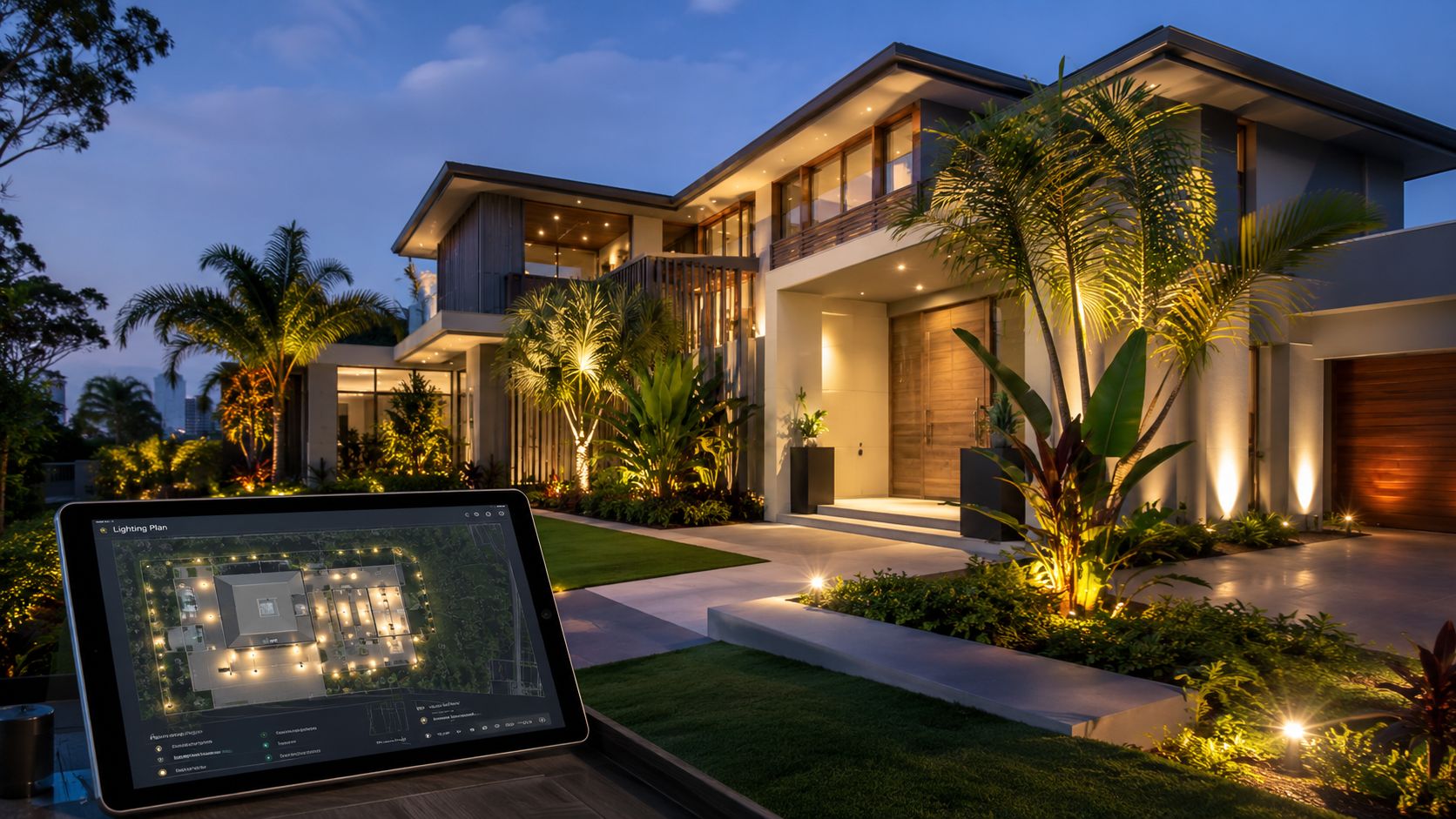
Good design usually combines three jobs.
When homeowners skip this and rely on one fitting type, the result is usually clumsy. One bright wall light can flatten the whole front elevation. A few well-chosen fittings at different levels usually create a much calmer result.
For people sketching ideas before speaking to an electrician or outdoor designer, a planning tool like ai landscape design can be useful for testing visual concepts and placement before committing to hardware.
To reduce wasted light and improve neighbourhood appeal, modern design standards prioritise purpose-built lighting. DarkSky International notes that up to 50% of residential outdoor light is wasted pointing at the sky, and recommends shielded fixtures, warmer light temperatures below 3000K, and smart controls like timers or sensors in its guidance on responsible home outdoor lighting.
That advice fits Brisbane particularly well. Warm light generally feels better on weatherboard, brick, rendered facades and planting. It also reduces the harsh blue-white look that many homeowners regret once the system is switched on at night.
Shielding does two jobs at once. It cuts glare for your family and it stops your house becoming the one everyone else notices for the wrong reason.
Generic internet advice usually falls short because beam angle choice depends on wall height, setback, planting depth, and whether the home is raised.
Available install guides show broad rules such as 35 to 40° beam angles for single-storey facades, 15 to 25° for taller facades, and uplighting from 1 to 2 feet from the wall at 45 to 60° in this beam angle guide for low-voltage outdoor spotlights. Those are useful starting points, but Brisbane homes often need adjustment.
A few practical examples:
If you're looking at planting and softscape as part of the same project, our article on garden lighting is a helpful companion to the electrical side.
The first quote question is usually about price. The better question is what's driving the cost. Outdoor lighting installation can be simple or fiddly depending on layout, access, fixture choice and what the existing electrical setup will safely support.
The main price drivers are usually practical, not cosmetic.
That last point matters in Brisbane, where many homes are renovated in stages. A neat new lighting plan can become complicated if the property has mixed old and new wiring or limited space for additional protection at the switchboard.
Exterior lighting sits in a harsher environment than indoor work. Rain, condensation, irrigation and corrosion all find weak points fast. That's why weatherproofing details matter.
For Australian outdoor installations, reliable, weatherproof practices are a primary safety control. Circuits must be protected and tested before commissioning, as moisture ingress is a leading cause of failure in exterior lighting. This focus on sealed junctions, ground-fault protection, and local code compliance drastically reduces shock risk and weather-related faults, as explained in this overview of technical aspects of outdoor light fixtures.
What we look for on site: suitable enclosure protection, sound cable entry points, corrosion-resistant fixings, correct circuit protection, and fittings that make sense for the exact location instead of a generic “outdoor rated” label.
The tricky jobs are often retrofits. Homeowners want extra lighting added to an existing house without tearing the place apart. Sometimes that's straightforward. Sometimes it raises bigger questions about circuit loading, RCD protection, switchboard condition, and whether previous work was done well.
If you're also planning a driveway, path or courtyard upgrade, material choice can affect trenching and access. This comparison on choosing between concrete and pavers is useful because the paving decision often changes how electrical work is staged.
The best budgeting approach is simple. Decide what areas matter most, prioritise safe infrastructure first, then choose fittings that will survive Brisbane conditions. A cheap install that needs rework after the first wet season isn't cheap at all.
Most professional jobs follow the same broad path, but the quality shows up in the details. Outdoor lighting installation isn't just placing a few fittings and burying cable. A proper job starts with how the home is used and ends with testing, adjustment and safe handover.
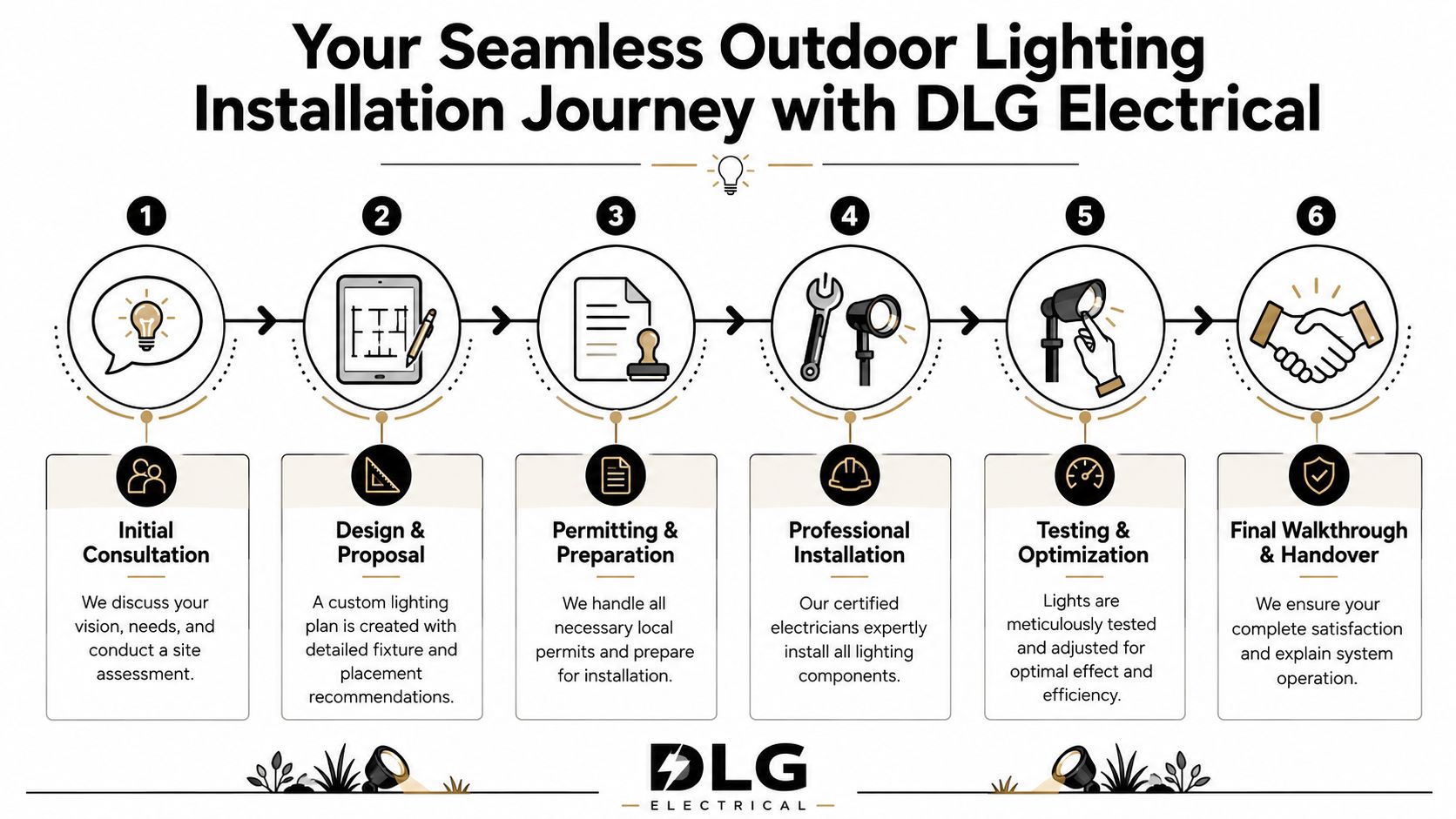
A site visit comes first. That's where the practical issues show up, such as where people walk, which walls or trees deserve light, where cables can run cleanly, and whether existing circuits are suitable. Daylight tells part of the story. An experienced installer also thinks about how the site will behave after dark.
The next step is layout. Fittings are selected, cable routes are planned, switching and control options are decided, and mounting points are checked. On garden jobs, that may include shallow trenching and transformer placement. On wall-lighting jobs, it may involve replacing existing fittings, sealing penetrations properly, and making sure junctions are protected from moisture.
A short video can help visualise the broader process and fixture setup choices before installation day.
One of the biggest technical issues on low-voltage systems is voltage drop. On long runs, that's what causes far-end fittings to look weaker or inconsistent. Effective voltage-drop management is central to a professional installation. On long low-voltage runs, an electrician must use heavier conductors and verify voltage at the furthest fixture with a multimeter before burial. This prevents dimming, ensures uniform brightness, and avoids premature stress on transformers, as noted in these outdoor lighting installation tips.
That check matters a lot in larger Brisbane blocks, long side access runs, and homes where front garden lighting is fed from a garage or rear service point.
Before a job is signed off, the system should be tested and adjusted at night if needed. That includes:
A homeowner should finish with a system that looks intentional, operates with ease, and doesn't leave hidden problems in the ground or walls.
Once the system is in, a bit of routine care keeps it looking sharp and prevents small faults from turning into bigger ones. Outdoor fittings live a harder life than indoor ones. Dirt builds up on lenses, plants grow into beam paths, screws loosen, and water finds weak seals.
You don't need to fuss over the system every week. A sensible check now and then is enough.
A light that still turns on isn't always working properly. If output looks uneven or the fitting is holding moisture, it's worth getting it checked before the damage spreads.
The market has shifted hard toward LED for good reason. Independent market research reports the global outdoor lighting market at USD 39.4 billion in 2024, with the LED segment alone valued at USD 12.3 billion in 2024 and projected to reach USD 20.7 billion by 2034 in this outdoor lighting market analysis. For homeowners, that aligns with what we see on site. People want lower running costs, longer service life and less maintenance than older halogen-style systems typically deliver.
If you want a deeper look at upgrade options, this guide to LED lighting installation covers where LEDs make the most practical sense.
The biggest savings usually come from control, not just the lamp type.
A well-planned LED system should feel calm, useful and efficient. If it's bright everywhere all the time, it probably hasn't been designed properly.
Hiring the right electrician matters more than the brand of fitting on the brochure. Outdoor lighting sits at the intersection of design, weather exposure and electrical safety. You want someone who can handle all three, not someone who only knows how to swap a light fitting.
A good contractor should be comfortable answering direct questions in plain language.
The best electricians don't just talk. They ask smart questions back. They'll want to know how you use the space, what time areas need to be lit, whether neighbours are close, and if there are future landscaping or paving plans.
If the conversation jumps straight to fixture counts without discussing access points, glare, control zones or exposure to weather, that's a warning sign. Outdoor lighting installation is never just about putting lights where there's a gap.
This is especially important on older homes. A lot of generic DIY material doesn't deal with real Australian retrofit issues. Homeowners often need to know whether an older switchboard can safely take added load, whether a dedicated RCD-protected circuit is required, and how mixed existing wiring should be handled. Those are the kinds of compliance and safety questions that justify using a licensed electrician rather than guessing your way through the job.
A contractor who explains limitations clearly is usually the safer choice than one who promises an easy install before looking properly.
Brisbane homeowners usually want the same thing from an outdoor lighting contractor. A safe result, a neat finish, honest advice, and no nasty surprises once the weather turns. That's exactly where we focus.
With more than 19 years serving Brisbane, DLG Electrical understands the difference between a lighting plan that looks good on paper and one that works on a Queensland property. We know how local homes are built, where retrofits become tricky, and which installation details matter most when fittings are exposed to heat, rain and garden moisture year after year.
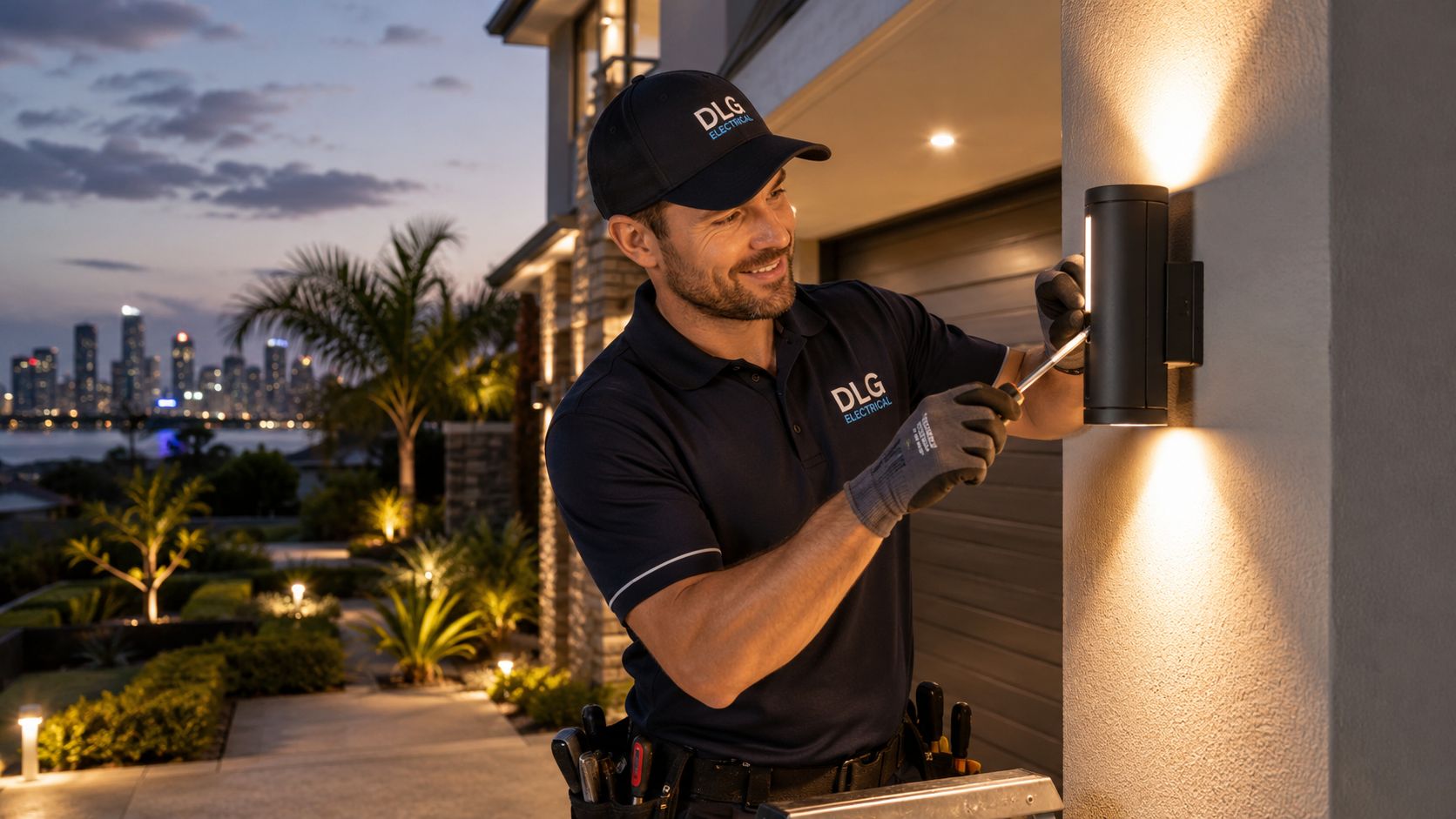
We're fully licensed and insured, and we approach outdoor work with a compliance-first mindset. That matters most on older homes and renovations. A key concern for homeowners is retrofitting lighting onto older properties without overloading circuits. Generic DIY advice often omits Australian compliance realities, such as whether a dedicated RCD-protected circuit is needed or how to handle mixed wiring safely. A licensed electrician is essential to address these complexities and ensure a safe, legal installation, as reflected in this discussion of landscape lighting installation basics.
What homeowners also value is clear communication. We provide free quotes, competitive rates, and practical recommendations based on how you use the space, not on overselling hardware you don't need. As a family-owned Brisbane business with a 5-star Google rating, we take the long view. The job should be right the first time, and the system should still make sense years from now when the garden has grown and the seasons have changed.
If you want outdoor lighting installation that balances appearance, safety, and long-term reliability, we're built for exactly that kind of work.
If you'd like advice specific to your home, contact DLG Electrical for a free, no-obligation quote. We design and install outdoor lighting for Brisbane homes with a strong focus on safety, compliance, weatherproof durability, and clean, practical results that suit the way you live.

Master Electrician with over 30 years of experience. Founded DLG Electrical in 2005 after international project work including electrical installations at Stamford Bridge Stadium, London(Home of Chelsea FC).

Local Electricians that can fix all Electric Hot water Systems.
Motion sensor lights are a versatile addition to any home, offering nu
