83 Jean St, Grange QLD 4051
Mon-Fri 07:30 AM - 04:00 PM - Sat - 8:00 - 12 - Sunday Closed

You've found the house. The street feels right, the layout works, and you're already thinking about where the couch will go. For a first-home buyer in Brisbane, that moment is exciting, but it's also where people start focusing on kitchens, paint, and settlement dates while ignoring the one system that can undetectably turn into a safety problem and a serious bill after handover.
Electrical faults don't announce themselves during an open home. Lights can switch on, power points can look tidy, and the switchboard can sit there giving you no clue about what's happening behind plaster, in the roof, or inside old cable insulation. That's why a pre purchase electrical inspection matters. It's not just another box to tick. It's a risk-management step that tells you whether you're buying a safe, compliant home or inheriting someone else's neglected electrical history.
For Brisbane buyers, that distinction matters even more in established suburbs filled with older housing stock, renovations of mixed quality, and additions that may or may not have been done properly. Skipping the inspection can leave you with two problems at once. A safety issue for your family, and a financial problem that only becomes yours once the keys are in your hand.
You can buy a house in Brisbane that looks beautifully maintained and still inherit an electrical system with hidden defects from decades of patching, additions, and ageing components.
A polished renovation does not tell you whether the switchboard has proper protection, whether old wiring is still in service, or whether past work was carried out by a licensed electrician. In older Queenslanders, post-war homes, and houses that have been extended over time, those are the problems that turn up after settlement, when the cost and risk sit with you.

For a first-home buyer, a pre purchase electrical inspection is not an optional extra. It is a practical way to reduce risk before you commit to one of the biggest financial decisions you will make. It helps identify safety issues, signs of non-compliant work, and upgrade costs that can affect whether the property is still a good buy at the agreed price.
In Brisbane, the local housing mix makes this more important. Many suburbs have homes old enough to contain outdated wiring, undersized circuits, old switchboards, or renovation work completed in stages over many years. Some defects are straightforward to fix. Others point to broader remedial work that can quickly change your budget.
The main problem with skipping an electrical inspection is simple. You lose the chance to make the risk someone else's problem before settlement.
A standard building inspection can pick up visible concerns, but it usually does not assess the installation with the depth, testing, and trade judgment a licensed electrician brings. If the property has no effective safety switch protection, signs of overheating, damaged fittings, or unapproved alterations, you want to know that before you sign off, not after you move in.
That matters in two ways:
I have seen buyers budget for paint and furniture, then get hit with electrical rectification they never expected. A switchboard upgrade, replacement of damaged wiring, or fixing unlicensed alterations is rarely cheap, and in Queensland some items need prompt attention to bring the property into a safer condition.
A pre purchase inspection gives you a clearer picture of what you are buying. If you want a better sense of what electricians look for during an electrical safety inspection before purchase, the key point is this: visible presentation and electrical safety are not the same thing.
The right inspection does not promise a perfect home. It gives you facts you can use, whether that means renegotiating, planning repairs properly, or deciding the risk is too high.
A pre purchase electrical inspection should show you where risk sits before settlement. In Brisbane, that often means looking past fresh paint, new lights, and a tidy renovation to check whether the underlying installation is safe, properly protected, and likely to trigger immediate repair costs.
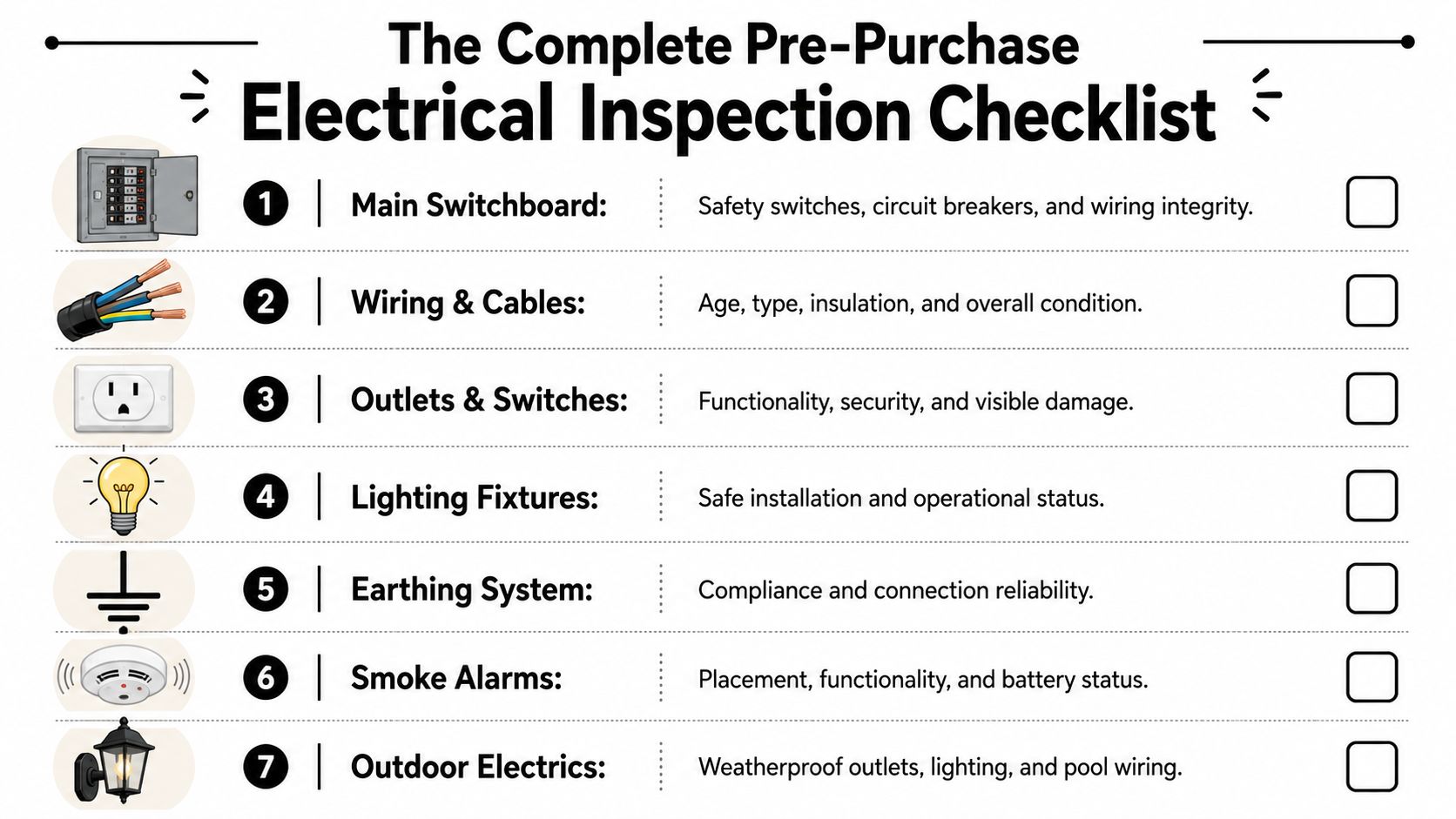
The switchboard usually tells the story fastest. An inspector checks the condition of the board, the type and rating of circuit protection, whether safety switches are installed where they should be, and whether there are signs of heat damage, corrosion, overcrowding, or old gear left in service longer than it should have been.
Visible wiring comes next. The job is not just to confirm that power is on. It is to look for deteriorated cable insulation, exposed conductors, unsupported wiring, poor joins, and alterations that suggest past work was done without proper electrical oversight.
Testing also matters. Equipment can appear fine during a quick walkthrough and still fail under normal use, which is why a proper electrical safety inspection for residential properties includes more than a visual glance.
Once the main supply and protection are assessed, the inspection moves through the house to find defects that can turn into safety issues or post-settlement expense.
Older homes deserve extra attention. Properties in Brisbane suburbs with pre-1990 construction often carry a mix of original wiring and later additions, which is exactly where hidden costs start to build. This essential guide for homebuyers on electrical issues gives a useful overview of the kinds of age-related problems buyers commonly face.
A useful inspection gives you a buyer's risk picture. It identifies whether the installation has adequate protection, whether visible defects suggest more invasive rectification, and whether the home appears to have been altered in a way that may need further investigation.
The difference is practical:
| Inspection style | What it tells you |
|---|---|
| Basic visual glance | Obvious damage and little else |
| Pre purchase electrical inspection | Whether protection, visible wiring, fittings, and common defect areas present safety or cost concerns |
| More detailed fault investigation | Whether specific circuits or equipment need further testing, repair scope, or quoting before or after settlement |
For a first-home buyer, that difference matters. A quick check may confirm that lights and power points work on the day. A proper pre purchase inspection helps you judge whether the property comes with a manageable list of minor defects or a switchboard upgrade, smoke alarm rectification, circuit repairs, or older wiring work that needs attention soon after handover.
Older Brisbane homes tend to produce the same patterns. Some are age-related. Some come from renovations where the visible finish was updated but the electrical system wasn't brought along properly. Others come from DIY work that looked convenient at the time and expensive later.
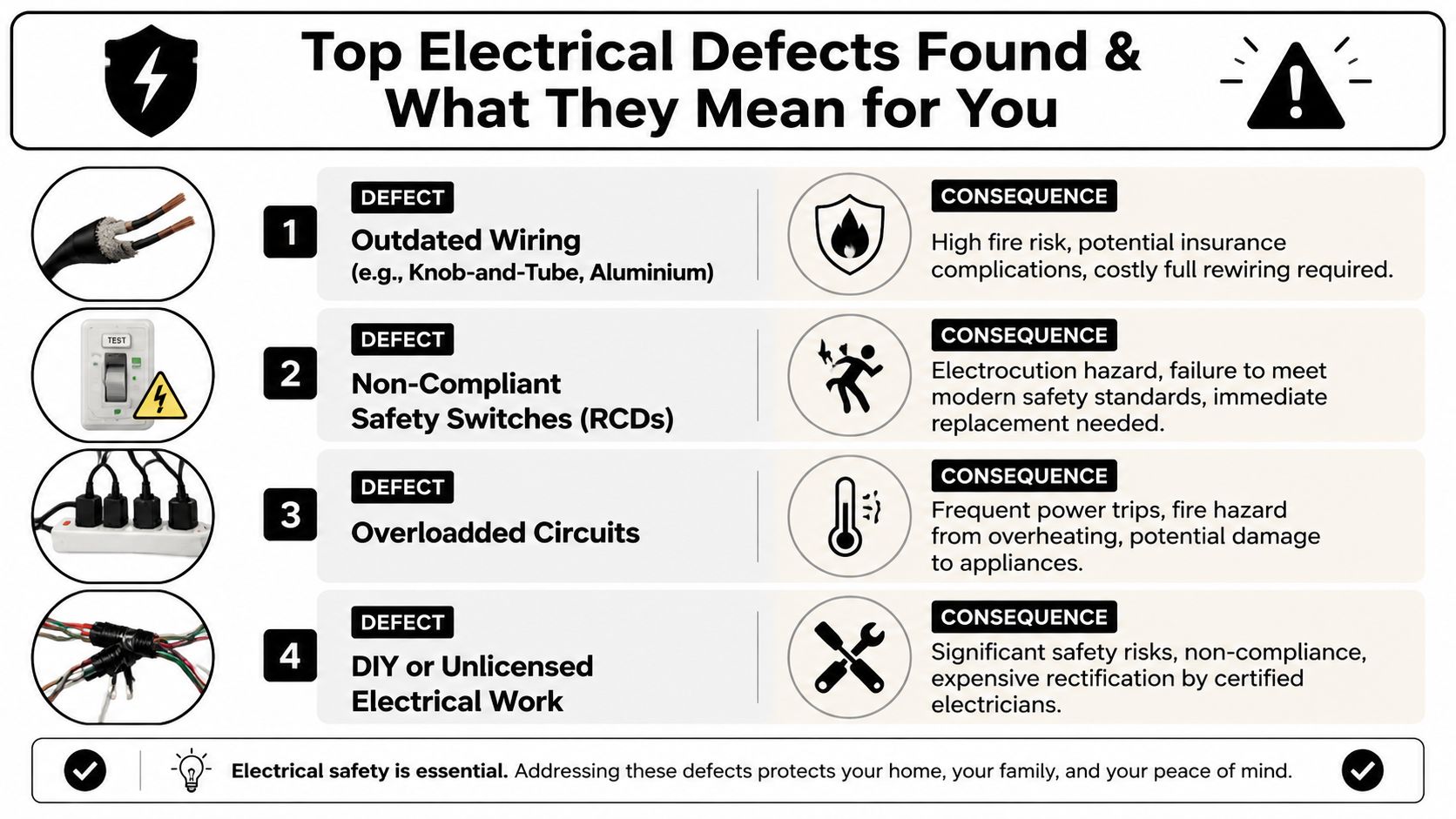
A defect only matters to a buyer if you understand what it changes.
Outdated wiring often means the installation may no longer be well suited to modern household demand or current safety expectations. If cable insulation is deteriorating or the system has never been properly upgraded, the consequence is straightforward. Higher risk, more invasive repair work, and a stronger chance that one defect leads to several more once testing starts.
Missing or inadequate safety switch protection matters because safety switches are one of the key protective controls between a fault and a serious shock event. If coverage is poor, the risk isn't abstract. It affects the way the system responds when something goes wrong.
Overloaded or poorly altered circuits usually show up in houses that have had extra power points, new appliances, or extensions added over time. The consequence can be nuisance tripping, heat damage, unreliable performance, and the need to rework parts of the circuit properly rather than keep patching around the edges.
DIY or unlicensed electrical work is one of the biggest red flags in any inspection. It often creates a chain reaction. Non-compliant joints, incorrect cable selection, poor terminations, and unsafe modifications rarely stay isolated.
Practical rule: If an installation looks like it has been “made to work” rather than properly designed and protected, budget for rectification, not minor tinkering.
For buyers wanting a broader plain-English overview, this essential guide for homebuyers on electrical issues gives a useful rundown of common warning signs in older homes.
A short video can also help you recognise the kinds of issues that often stay hidden until a professional opens things up.
There's an important trade-off every buyer needs to understand. Even a good pre purchase electrical inspection has limits.
A key limitation is hidden defects behind walls or in inaccessible areas. Buyers often overestimate what a report can prove, but a standard inspection is a condition snapshot, not a full forensic teardown. That matters particularly in Australian older homes, where legacy wiring and unrecorded DIY work may not be fully detectable during a standard visual assessment (limits of pre-purchase electrical inspections).
That doesn't reduce the value of the inspection. It changes how you use it. A clean report on accessible areas is reassuring, but it shouldn't be read as a promise that every hidden cable in the house is perfect. Smart buyers treat the findings as evidence, not magic.
Brisbane buyers need more than a generic home-inspection mindset. Electrical safety in Queensland sits inside a compliance framework. If a property falls short in important areas, the issue doesn't stay with the seller forever. Once you own the place, the practical responsibility to deal with it lands with you.
A technically rigorous inspection checks the installation against AS/NZS 3000 and applicable state-based rules. In Brisbane homes, that means looking at whether fault current protection, earth continuity, and residual-current device (RCD) coverage meet the standard expected locally, because those are the controls that interrupt shock and fire pathways when insulation fails or a circuit is overloaded (inspection checks tied to standards and local rules).
That point is often missed by buyers who think “working” means “compliant”. It doesn't. A power point can still energise a lamp while the protective side of the installation is below the mark.
If the inspection identifies non-compliance or outdated protection, you have options before settlement that disappear later. You can request further information, negotiate for repair or price movement, or reassess whether the purchase still stacks up.
This is the same logic that applies in other parts of the building process. If you're trying to understand where compliance responsibilities sit more broadly, especially in new work and approvals, this explanation of a certifier for custom home builds helps clarify how different professionals fit into the picture.
For electrical work specifically, buyers should also understand the role of documentation once repairs or upgrades are carried out. This overview of an electrical certificate of compliance is worth reading so you know what evidence of completed work should look like.
The best time to discover an electrical compliance issue is before you own it.
A pre purchase electrical inspection gives you that chance. It turns vague concern into a concrete discussion about protection, standards, and what the property may require next.
Choosing the right electrician matters almost as much as choosing to have the inspection at all. A weak inspection can create false confidence, which is worse than useful caution because it pushes a buyer toward a major commitment with the wrong information.
When you call an electrician about a pre purchase electrical inspection, don't settle for “yes, we do those.” Ask direct questions.
A good electrician answers clearly and specifically. They don't dodge scope questions. They don't pretend an inspection can see through walls. They explain what they can access, what they test, and where limitations sit.
A poor operator usually relies on loose promises. “We'll have a look around” is not enough when you're making one of the biggest purchases of your life.
Here's a simple comparison:
| Response | What it suggests |
|---|---|
| “We check the board, protection, visible wiring, outlets, fittings, and accessible fixed equipment, then provide a written report” | Structured, professional process |
| “We can pop by and tell you if anything looks wrong” | Informal check, limited value |
| “Everything will be fine if the lights work” | Not a serious inspection approach |
Try to organise the inspection early enough that you still have room to act on the findings. A report that arrives after your decision point is far less useful.
If you're comparing local contractors, this guide on choosing an electrician in Brisbane is a helpful starting point for evaluating credentials, communication, and workmanship standards.
Ask one more question than feels necessary. The right contractor won't mind. The wrong one usually will.
That single phone call often tells you a lot. You're listening for clarity, limits, and professionalism, not a sales pitch.
A report only helps if you know how to read it. Most buyers don't need every technical detail explained from first principles, but they do need to know which findings affect safety, which ones affect compliance, and which ones are more about planning ahead.
Start with the high-level findings. If the report flags urgent hazards or serious concerns, those should shape your decision first. Don't get distracted by minor notes if the main issue is unsafe protection, suspect wiring condition, or signs of poor previous work.
Then move to the detailed observations. Here, the report usually spells out what was found, where it was found, and why it matters. Look for plain descriptions tied to specific locations or components.
Use this framework when reading the report:
A good report doesn't just list defects. It helps you decide what must be fixed now, what should be costed, and what needs closer investigation.
If the report is clean, that's useful confidence. If it identifies problems, don't panic. Translate each item into one of three buckets: safety, compliance, or future cost. Once you do that, the report becomes a decision tool rather than a technical document.
The strongest reports are the ones that make that translation easy. They tell you what was observed, why it matters, and what action is sensible next.
The inspection report gives you bargaining power, but only if you act on it properly.
A clean result means you can proceed with more confidence. It doesn't mean the house will never develop an electrical fault, but it does mean there were no significant visible red flags in the accessible areas checked at the time of inspection.
If the report shows minor or moderate issues, use it as a negotiation tool. You may decide to request repairs, seek a price adjustment, or accept the property with a clear plan for staged upgrades after settlement. That's often the most practical path when the defects are manageable and the house still represents good value.
If the report reveals dangerous defects, widespread concerns, or strong signs of deeper electrical problems, walking away can be the smartest financial decision available to you. Buyers sometimes focus too much on the money already spent on reports and forget what the inspection is saving them from. A bad property is always cheaper to avoid than to inherit.
The main value of a pre purchase electrical inspection is simple. It helps you make a calm decision before safety risks and rectification costs become your responsibility. For a first-home buyer in Brisbane, that isn't an optional extra. It's part of buying well.
If you're buying in Brisbane and want clear, practical advice before you commit, DLG Electrical can help with a professional pre purchase electrical inspection, straightforward reporting, and follow-up support if repairs or upgrades are needed. It's the simplest way to understand the electrical risk in a property before it becomes your problem.

Master Electrician with over 30 years of experience. Founded DLG Electrical in 2005 after international project work including electrical installations at Stamford Bridge Stadium, London(Home of Chelsea FC).

Local Electricians that can fix all Electric Hot water Systems.
Motion sensor lights are a versatile addition to any home, offering nu
