83 Jean St, Grange QLD 4051
Mon-Fri 07:30 AM - 04:00 PM - Sat - 8:00 - 12 - Sunday Closed

When your power suddenly cuts out, it’s easy to blame the grid. But more often than not, the problem is inside your own home. If your safety switch keeps tripping, it’s not failing—it’s actually doing its job perfectly. Think of it as a critical alarm bell, warning you of a potentially dangerous electrical fault.
That annoying trip is more than just a power outage; it’s your home’s most important electrical safety feature in action. It means electricity is “leaking” from its intended path, maybe through a dodgy appliance or damaged wiring. By cutting the power, it’s preventing a situation that could lead to a severe electric shock.
Safety switches, or Residual Current Devices (RCDs) as we call them in the trade, have been a non-negotiable part of Australian homes for decades. They are incredibly sensitive, designed to detect even the tiniest leakage of current and shut off the power in as little as 0.03 seconds. That speed is literally the difference between a small zap and a fatal injury. You can learn more about the proven effectiveness of RCDs in Australian homes from official government reports.
Key Takeaway: A tripping safety switch isn’t a malfunction. It’s a successful operation designed to protect you and your family. The goal isn’t just to flick it back on, but to figure out why it tripped in the first place.
This is exactly what’s happening behind the scenes when a fault is detected.
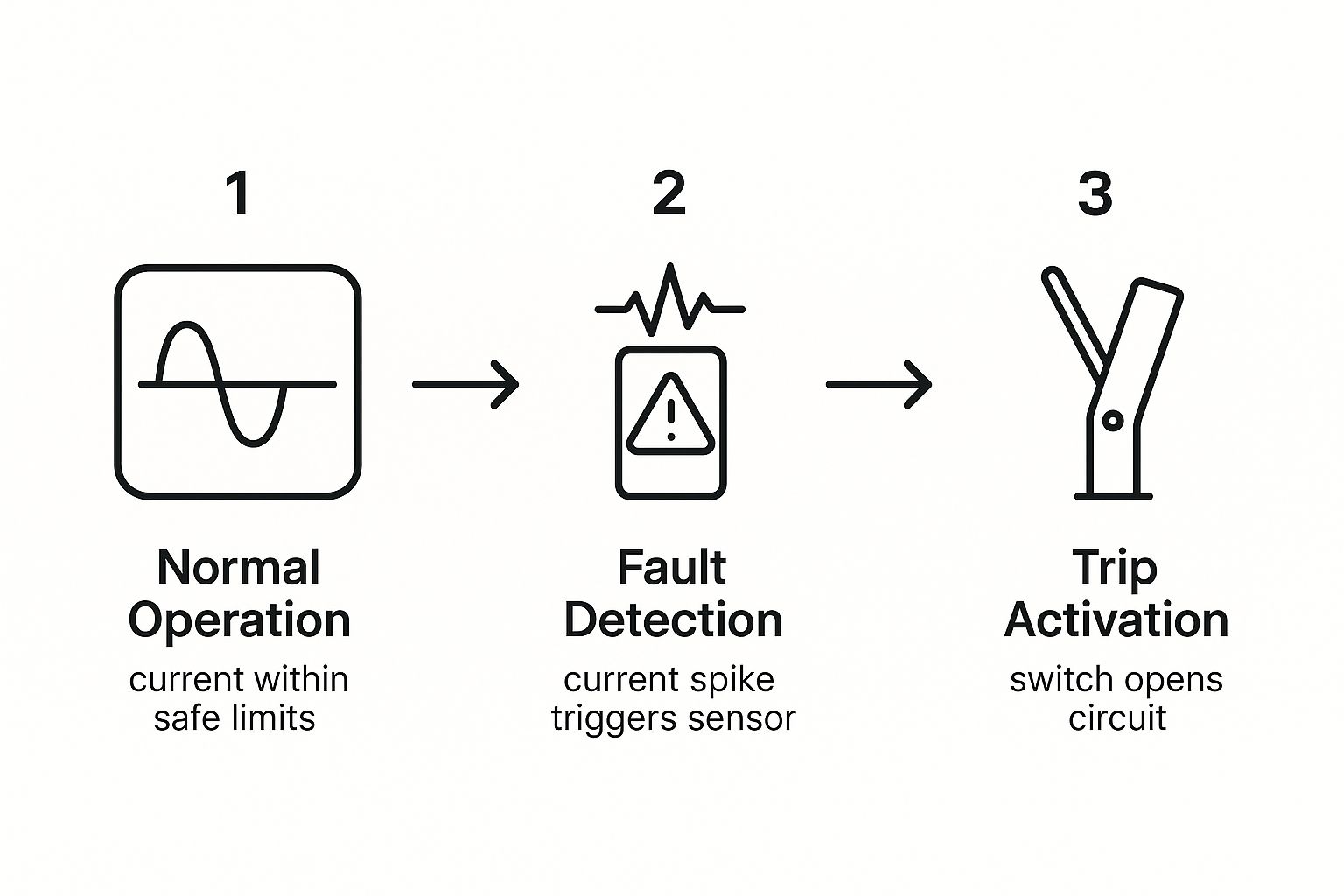
As you can see, the device constantly monitors the electrical current. The moment it senses an imbalance—that dangerous leak—it instantly breaks the circuit.
Before you pick up the phone to call a sparky, there’s a simple diagnostic you can run yourself. It’s called an “isolation test,” and it’s a straightforward process of elimination to find out if a faulty appliance is the culprit. I’ve walked countless homeowners through this over the phone.
The table below breaks down the exact steps to follow. By systematically checking your appliances, you can often find the source of the trip yourself.
Follow this process of elimination to systematically check your appliances and identify what’s causing your safety switch to trip.
| Action to Take | Why You Are Doing This | What to Do Next |
|---|---|---|
| Unplug Everything. | Go to the circuit that’s off and unplug every single appliance. Don’t just turn them off at the wall; physically pull the plugs out. | This removes all potential sources of the fault from the circuit, giving you a clean slate to test. |
| Reset the Safety Switch. | Head back to your switchboard and try to flick the switch back to the ‘ON’ position. | If it stays on, you’ve confirmed the fault is with one of the appliances you just unplugged. If it trips again immediately, the fault is likely in the wiring itself, and you need to call an electrician. |
| Plug In One by One. | Go back to the room and plug in just one appliance. Turn it on. Then, plug in the next one, and so on. | This methodical approach ensures you can pinpoint exactly which device is causing the problem. |
| Identify the Culprit. | The appliance that makes the safety switch trip again is the faulty one. | Leave that device unplugged. You can now reset the switch and get power back to everything else. |
Once you’ve found the faulty appliance, make sure it stays unplugged. It will need to be repaired by a professional or replaced. Don’t risk plugging it back in somewhere else
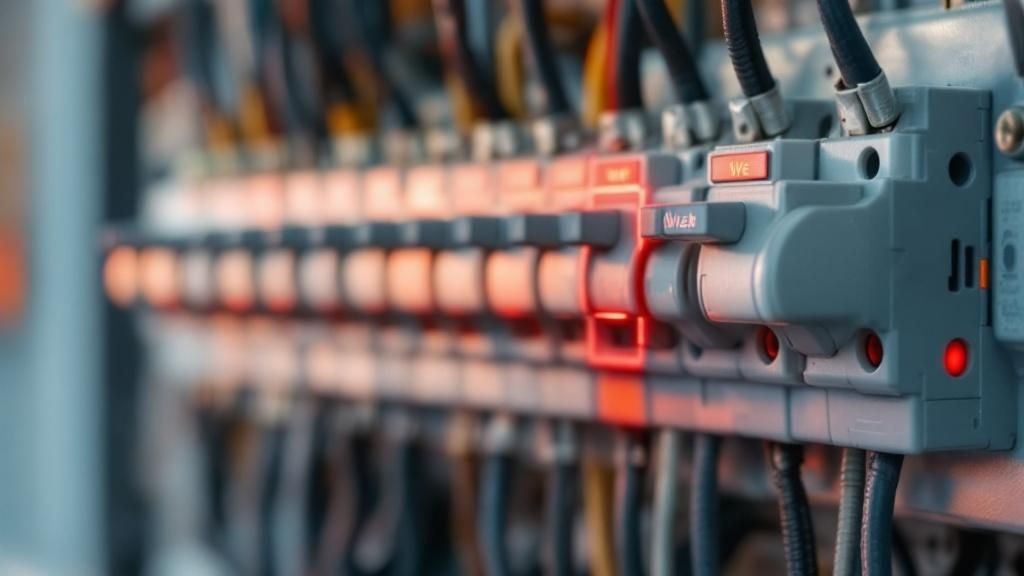
Alright, so you’ve done the isolation test and ruled out a simple overload. Now it’s time to put on your detective hat. More often than not, the culprit is a single appliance that’s developed an electrical fault.
Think back to the moment the power cut out. What was running? Some appliances are notorious for causing a safety switch to keep tripping, and a little bit of observation goes a long way.
The simple truth is that appliances don’t last forever. Over time, their internal wiring and components wear down, creating tiny electrical leaks. You can’t see these leaks, but your safety switch (RCD) is designed to spot them instantly.
A classic example I see all the time is the old beer fridge in the garage that’s been chugging along for 15 years. It might seem fine, but the compressor motor could be developing an intermittent fault, causing a trip that feels completely random because it only happens when the motor kicks in.
It’s a similar story with dishwashers. If your switch trips mid-cycle, it often points to a failing heating element. As it heats the water, a tiny crack in the element’s casing can let moisture in, creating a perfect path for electricity to leak to earth and—click—the power’s off.
Pro Tip: Pay close attention to when the trip occurs. If it’s always in the morning while you’re making breakfast, or every time you do a load of laundry, you’ve just found a massive clue pointing straight to the guilty appliance.
While any device with a plug can develop a fault, some are definitely more frequent offenders. These items typically involve a combination of heat, moisture, or powerful motors—all things that increase the chances of an electrical issue over the years.
Here are some of the usual suspects I find on jobs:
If you suspect it’s more than just one appliance or that the fault is somewhere in your home’s wiring, it might be time for a closer look at the switchboard itself. An ageing board can become unreliable. To get an idea of what’s involved, you can learn about the switchboard upgrade cost in our detailed guide.
Ultimately, finding and replacing a single faulty appliance is the best-case scenario. It’s a straightforward fix that gets your power back on and, most importantly, keeps your home electrically safe.
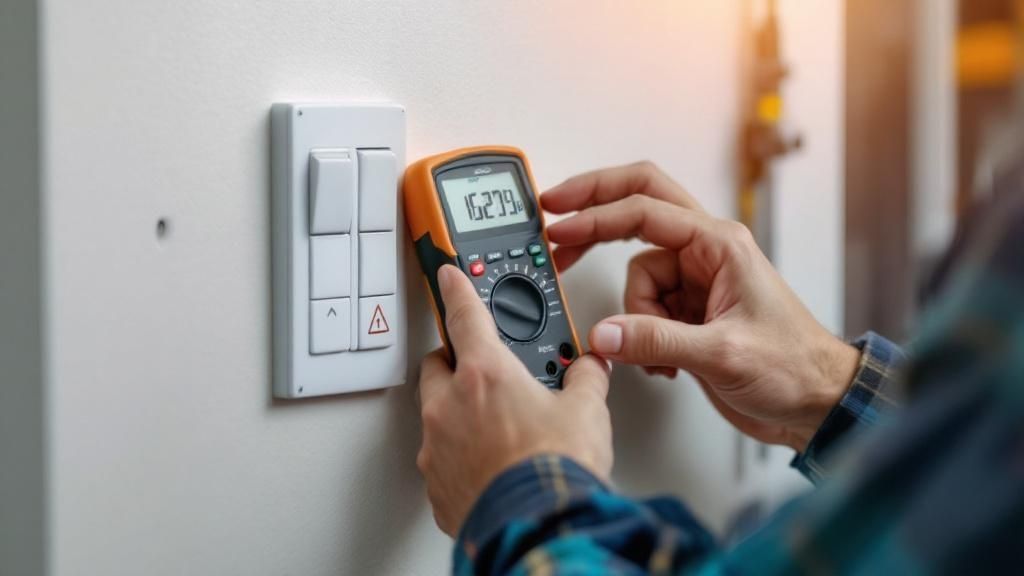
It’s one of the most baffling situations for any homeowner. You’ve done the rounds, unplugged every single thing from the wall, but the safety switch still flicks off the second you try to reset it. It’s a frustrating scenario that leaves most people scratching their heads.
If your safety switch keeps tripping with nothing plugged in, the fault is almost certainly with an appliance you can’t just pull from a socket. We’re talking about your “hardwired” appliances, the ones connected directly into your home’s electrical circuits, hidden behind the walls.
This problem is more common than you might think. Many homeowners find their safety switch trips at random, even when no obvious appliance is running. This usually points to a fault that has developed in one of these hardwired systems. For a deeper dive into this common headache, you can explore why hardwired appliances cause trips on insight-electrical.com.au.
The good news is you can continue your process of elimination using the individual circuit breakers in your switchboard. This lets you methodically test each hardwired system without ever touching a live wire. It’s the next logical—and safe—step.
First, head to your switchboard. Make sure the main safety switch (the one that keeps tripping) is in the OFF position. Next, turn off every individual circuit breaker for your hardwired appliances. These should be labelled.
Look for circuits like:
Important Safety Note: This entire process only involves flicking the switches on your switchboard. At no point should you ever try to open electrical panels or disconnect wiring yourself. That is strictly a job for a licensed electrician.
With all those hardwired circuits OFF, try resetting the main safety switch. If it stays on this time, you’ve confirmed the fault is hiding in one of those circuits.
Now, simply turn each hardwired circuit breaker back ON, one by one. Pause for a few seconds between each switch.
The circuit that makes the main safety switch trip again is your culprit. Leave that specific breaker in the OFF position to keep the power on elsewhere, and call a licensed electrician to come and fix the faulty appliance.
Right, so you’ve unplugged everything and the safety switch is still tripping. Now we’re moving beyond a simple faulty kettle and into more serious territory. This is the crucial point where we need to figure out if we’re dealing with a dodgy appliance or a much more dangerous problem hiding inside your walls.
A faulty toaster is an annoyance. Faulty wiring is a genuine hazard that can’t be ignored. If the same safety switch trips no matter what’s plugged into that circuit—or even when there’s nothing plugged in at all—that’s a massive red flag. It’s a clear sign the problem isn’t with your devices, but with the electrical circuit itself.
From my experience, certain symptoms are dead giveaways that the fault lies deep within your home’s electrical installation. You need to pay very close attention to these warning signs, as they often require immediate professional help.
These signs should never, ever be ignored. Electrical faults are a leading cause of house fires. In fact, data from some Australian regions shows they account for up to 40% of all residential fires. It’s a sobering statistic.
If you’ve managed to isolate the problem to a single faulty appliance, the solution is straightforward: get it repaired or, more often than not, just replace it. If you’re not 100% sure but have a strong suspect, you could consult professional appliance repair services to get a final verdict.
However, if any of the signs point towards a wiring issue, this is where you stop. This is absolutely not a DIY job. When you see these red flags, it’s time to pick up the phone and call a licensed electrician. For urgent situations that just can’t wait, our guide on when you need an emergency electrician in Brisbane can help you understand what to do next.
While running through the basics can often pinpoint a dodgy appliance, some situations are non-negotiable red flags. Your safety is always the number one priority, and certain signs mean you need to stop what you’re doing and get a licensed professional on the phone immediately.
There’s a definite limit to what you can safely diagnose yourself. When the problem seems to go deeper than a simple appliance fault, it’s crucial to recognise it’s time to call in the people who specialise in expert electrical services. Pushing your luck and experimenting further isn’t just a bad idea—it can be incredibly dangerous.
If you come across any of the following, take it as a clear signal that the issue is out of your hands. These symptoms point towards a serious fault in your home’s fixed wiring or switchboard that you cannot and should not attempt to fix.
Never, ever underestimate these signs. A persistent trip that you can’t solve is much more than an inconvenience; it’s a potential fire or shock hazard just waiting for the right moment. For a more detailed breakdown, our guide on a tripped safety switch offers additional insights.
When you do call an electrician, be sure to clearly explain the symptoms and the steps you’ve already taken. A simple statement like, “I’ve unplugged everything, and the safety switch still trips when I turn on the kitchen circuit breaker,” gives them a massive head start. It helps them arrive prepared for a faster, more efficient repair, which ultimately saves you time and money.
Once you’ve got the power back on, it’s normal to have a few questions lingering. After all, understanding how your home’s electrical safety system works is the best way to prevent a repeat performance. Let’s tackle some of the most common things homeowners ask us when a safety switch keeps tripping.
Think of your safety switch like you do your smoke alarm—it’s a life-saving device that needs a quick check-up to make sure it’s ready to do its job. Australian standards recommend testing your safety switches every six months.
It’s dead simple to do. Just walk up to your switchboard and press the small button marked ‘T’ or ‘Test’. The switch should immediately flick off, cutting power to that circuit. This quick test confirms the mechanical parts are moving freely. If it doesn’t trip, that switch is faulty and needs to be replaced by a licensed electrician as soon as possible.
Absolutely. It’s incredibly common for a safety switch to trip during or right after a bout of heavy rain. The culprit is almost always moisture finding its way into your electrical system.
We often see this happen with:
That moisture creates a small current leakage to the earth, which is precisely the fault a safety switch is designed to detect and protect you from.
It’s not an everyday thing, but it definitely happens. Even a brand-new appliance straight out of the box can have a manufacturing defect causing an earth fault. If you plug in a new toaster or kettle and the power cuts out instantly, you’ve probably found your problem.
Your Next Step: Don’t automatically blame your home’s wiring. Unplug the new appliance, reset the switch, and see if the power holds. If it does, the appliance is faulty. You should contact the retailer for a replacement under warranty. For more general safety queries, these general safety FAQs offer some great insights.
If you’ve run through these checks and your power is still tripping, don’t take any chances with your family’s safety. For professional diagnostics and repairs in Brisbane, trust the experienced team at DLG Electrical. Visit us at https://dlgelectrical.com.au for a free quote and reliable service you can count on.

Master Electrician with over 30 years of experience. Founded DLG Electrical in 2005 after international project work including electrical installations at Stamford Bridge Stadium, London(Home of Chelsea FC).

Local Electricians that can fix all Electric Hot water Systems.
Motion sensor lights are a versatile addition to any home, offering nu

Excellent advice
A very clear and practical read. Most appliance issues don’t happen suddenly; they build up over time due to worn or aging components. Understanding when parts need replacement can greatly improve appliance efficiency and reduce unexpected failures. Having access to a reliable appliance parts provider in Australia makes routine maintenance much more manageable. This content is genuinely helpful for everyday users.