83 Jean St, Grange QLD 4051
Mon-Fri 07:30 AM - 04:00 PM - Sat - 8:00 - 12 - Sunday Closed
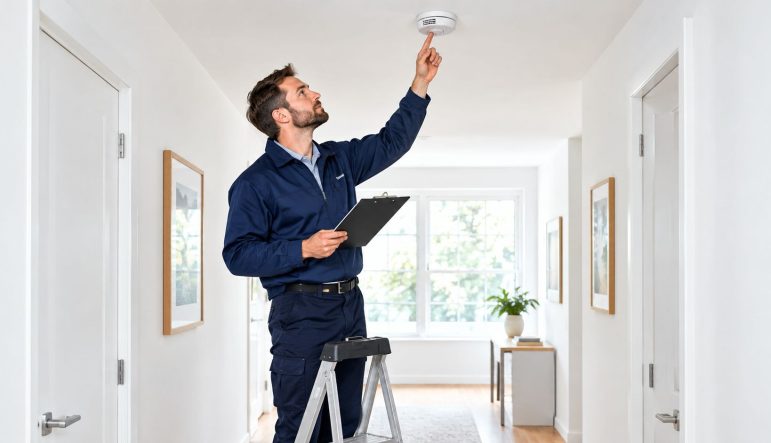
A tenant calls on Sunday night because the smoke alarm is chirping. The property manager assumes it needs a battery, but the unit is hardwired, the backup battery is flat and the interconnected alarms haven't been checked since the last tenancy changed hands. By Monday morning, a simple maintenance request has become a compliance problem, with no clear record of who tested what or when.
That situation is common because smoke alarm testing in rental properties isn't one task. Queensland landlords have a pre-tenancy obligation, while tenants have an annual testing and cleaning obligation during the lease. Treating the whole subject as an installation checkbox leaves a gap exactly where disputes and insurance questions tend to begin.
Queensland's rental rules place two separate duties around working smoke alarms. Before a tenancy starts or renews, the lessor must test and clean every alarm within the required pre-tenancy window. During the tenancy, the renter must test and clean each alarm at least once every 12 months. The Queensland Government smoke alarm guidance explains the practical test as pressing the alarm's test button or following the manufacturer's instructions, with cleaning generally done by vacuuming.
Those responsibilities aren't interchangeable. A tenant's annual test doesn't remove the landlord's duty before a new agreement or renewal, and a landlord's move-in check doesn't mean the tenant can ignore a fault for the rest of the lease.
Practical rule: Treat the tenancy change and the annual tenancy cycle as two separate triggers in your property management calendar.
The rules became mandatory for Queensland residential rentals from 1 January 2022, following a staged rollout that began in 2017. At the start of a tenancy, the required alarms must be present, compliant and working. That gives a Brisbane landlord, a regional property manager and a tenant the same basic question to answer: was each alarm tested, cleaned and recorded at the correct point in the tenancy?
A useful record doesn't need to be complicated. A property manager can keep the alarm entry alongside the condition report, maintenance invoices and tenant correspondence. A free rental property tracking spreadsheet can help organise dates and property records, provided the smoke alarm details are specific enough to identify each unit.
For landlords who need evidence of the electrical compliance side, a separate smoke alarm compliance certificate can sit with the tenancy file. The important point is consistency. If the record only says “smoke alarms checked”, it won't show which alarms were inspected, what test was performed or whether a fault was found.
Queensland's rental standard is prescriptive. From 1 January 2022, residential rental properties had to have interconnected, photoelectric smoke alarms in every bedroom, in hallways and on every level before a tenancy starts or renews, as set out by the Queensland Building and Construction Commission. The alarms must comply with AS 3786-2014.
“Interconnected” means the alarms communicate with one another. If one unit detects smoke, the other connected units should sound as part of the system. “Photoelectric” identifies the detection technology, so a landlord replacing an old unit shouldn't just buy the first battery alarm on a hardware shelf.
Start with the property layout. Check every bedroom, each hallway serving the bedrooms and every level, then compare what you find with the actual dwelling rather than relying on an old floor plan. Look for the photoelectric marking and the relevant compliance information on the alarm or packaging when buying replacements.
Next, press the test button on one alarm and listen throughout the property. The interconnected units should respond together. Repeat the test from another location if the system behaves inconsistently, because a single alarm sounding doesn't prove that the network is communicating properly.
The Queensland Fire Department also identifies 1 January 2027 as the deadline for all Queensland dwellings to have compliant smoke alarms. That future milestone matters to landlords who own mixed-use, owner-occupied or recently renovated properties as well as rentals.
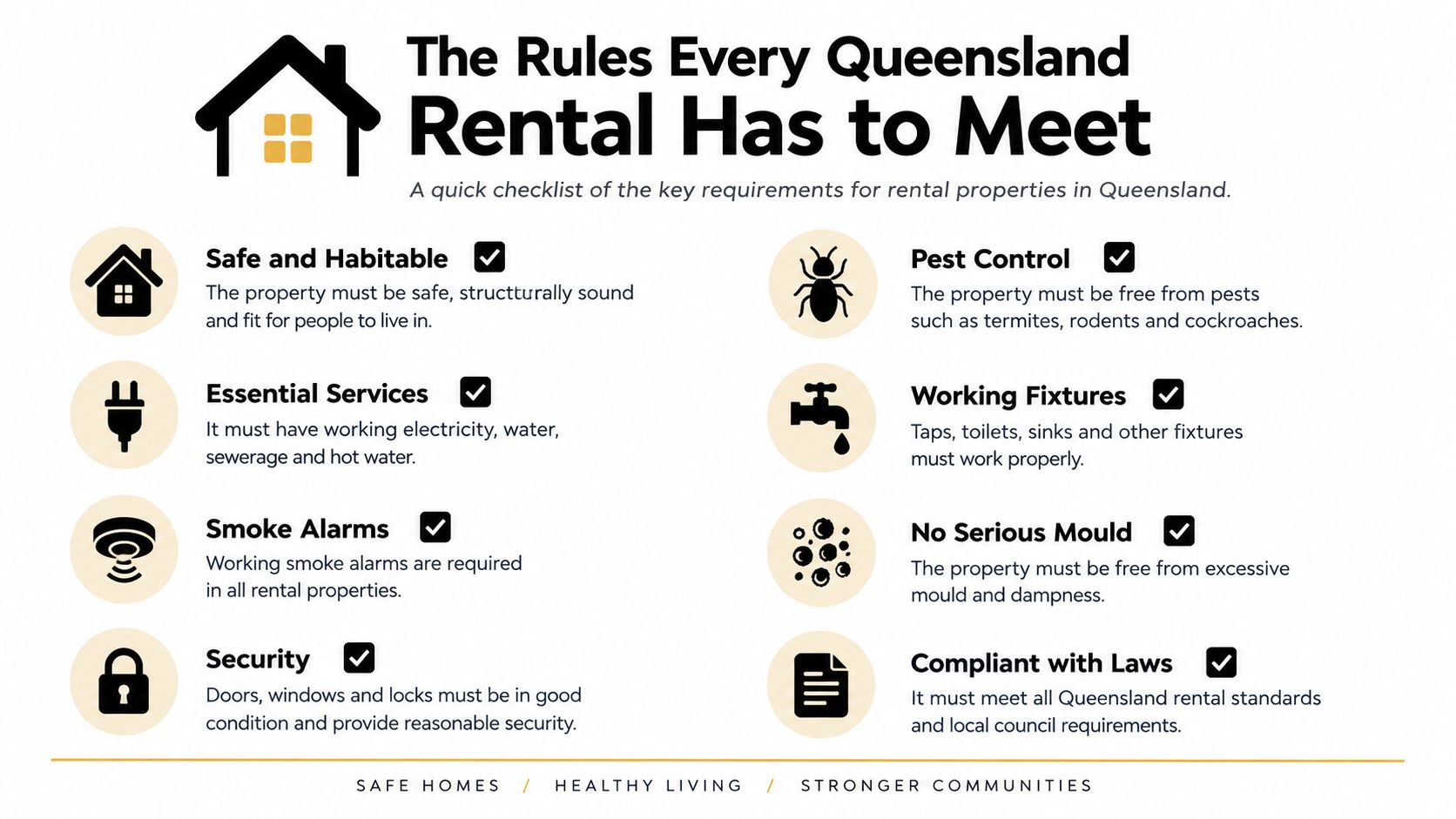
A visual checklist is useful, but it doesn't replace a physical test. Confirm the power source, inspect for damage and record the outcome before a tenant receives the keys.
The pre-tenancy check should happen within 30 days before the start of the tenancy, as required by Queensland guidance. Schedule it as soon as the outgoing tenant returns the keys, then complete the check before cleaners, trades and final repairs make the property harder to access.

Walk the entire property and match every alarm against the required locations. Confirm that each unit is photoelectric, identify whether it is mains-powered or battery-powered, and look for a manufacture or replacement date. An alarm can look clean and still be unsuitable because it's expired, disconnected or not part of the interconnected system.
Press the test button on every alarm. Don't stop when the first unit sounds. Check that all interconnected units respond, and listen for a weak, delayed or absent alarm. If a unit has a power indicator, note whether it shows normal mains operation and whether the backup battery appears serviceable.
Dust can affect an alarm's operation and cause nuisance chirping. Vacuum around the vents carefully, without dismantling the unit or spraying cleaning products into it. Inspect the cover and base for cracks, paint, loose fittings or visible wiring damage.
A practical record should include:
A broader rental inspection checklist can help keep the smoke alarm work alongside the rest of the move-in inspection. It shouldn't replace a dedicated alarm record, because a general condition report may confirm presence without proving that the system was tested.
A properly organised check is quick to repeat, but don't rush the listening stage. Most avoidable failures are found when someone tests every unit rather than pressing one button and assuming the rest are fine. If a hardwired unit fails, stop at the basic test and arrange qualified electrical work.
The tenant's responsibility begins after the handover. During the tenancy, the renter must test and clean each smoke alarm at least once every 12 months. The basic routine is straightforward: press the test button, confirm the alarm sounds, vacuum dust from the vents and report any chirping, fault light or failed response to the property manager.
A tenant shouldn't remove an alarm because it is annoying, paint over it during redecorating or disconnect it to stop a nuisance alarm. Those actions hide the original fault and leave the next person with an unsafe system.
Landlords can reduce confusion by putting the tenant's annual duty in writing. Include it in the tenancy information, note the alarm locations in the property condition report and send a short reminder around the relevant annual point. The message should explain how to press the test button and who to contact if the alarm doesn't operate normally.
Keep the instruction practical rather than legalistic. A tenant needs to know what a successful test sounds like, how to vacuum the unit safely and what information to provide when reporting a problem. A photograph showing the test button can be useful where the alarm design isn't obvious.
The tenant's annual test is not permission for the landlord to stop monitoring the property. If a renter reports a recurring chirp or a failed alarm, the landlord or manager should treat it as a maintenance issue and investigate. A battery change might solve a low-battery warning, but a hardwired fault, failed interconnection or damaged base can require a qualified repair.
The cleanest arrangement is shared awareness with clear ownership. The tenant performs the routine annual test and reports faults. The lessor maintains the compliant system, completes the pre-tenancy test and keeps the evidence.
A smoke alarm record works best when it assigns responsibility rather than just listing equipment. The table below separates the handoff points so a manager can see what must happen before a tenancy and what the tenant handles while living at the property.
| Task | Responsible Party | When |
|---|---|---|
| Test every alarm before a tenancy starts or renews | Landlord or lessor | Within 30 days before the tenancy starts |
| Clean each alarm before a tenancy starts or renews | Landlord or lessor | Within 30 days before the tenancy starts |
| Test every alarm during the tenancy | Tenant | At least once every 12 months |
| Clean each alarm during the tenancy | Tenant | At least once every 12 months |
| Report chirping, fault indicators or a failed test | Tenant | As soon as the issue is noticed |
| Investigate and resolve a reported fault | Landlord or lessor | After receiving the report |
| Replace a failed or expired alarm | Landlord or qualified electrical contractor, depending on the work | When inspection or testing identifies the need |
| Repair hardwired or interconnected faults | Licensed electrician where electrical work is required | When the basic test identifies an electrical or system fault |
The exact timing matters because a missing pre-tenancy record creates a different problem from a missed tenant reminder. One concerns the condition of the property at handover. The other concerns the tenant's ongoing maintenance obligation.
For each property, keep a one-page smoke alarm record with:
A dated PDF stored with the tenancy file is usually easier to retrieve than loose paper, screenshots in a phone gallery or a string of maintenance emails. Save the completed record with the condition report, tenancy agreement and any electrician's invoice, using a consistent property naming convention.
The record should let another person understand the inspection without calling the original inspector.
Avoid vague entries such as “alarms okay”. They don't identify locations, don't show the test method and don't explain whether the interconnected system responded. Also avoid filing a replacement invoice without the pre-tenancy test record. A new alarm proves that work occurred, but it doesn't prove that every alarm was checked before the tenant moved in.
Good documentation doesn't make a faulty alarm safe. It does show that the landlord had a repeatable process, responded to faults and understood the difference between installation, testing, cleaning and repair. That distinction can matter when a loss adjuster, the RTA or a future owner asks what happened at a particular tenancy change.
A landlord or tenant can usually press the test button and vacuum an alarm without special qualification. That boundary changes as soon as the problem involves mains wiring, a fixed base, damaged conductors or an interconnected system that doesn't behave correctly.
Call a licensed electrician when an alarm doesn't sound after the manufacturer's test procedure, when interconnected units fail to trigger together or when a hardwired alarm shows no reliable power or backup operation. Recurring chirping after a battery change also deserves investigation, because the sound may indicate a fault rather than a depleted battery.
Don't keep swapping batteries into a unit that continues to chirp. Don't remove a hardwired alarm from its base to see whether the noise stops. A visible crack, loose fitting, damaged cable or scorched component is a repair issue, not a cleaning task.
An alarm that has reached the end of its service life should be replaced with a compliant unit, and the new device must work with the property's interconnection arrangement. Mixing incompatible alarms can leave individual units sounding while the rest of the system stays silent.
The same caution applies when related building work is underway. If a contractor is altering ceilings, electrical wiring or gas appliances, coordinate the relevant licensed trade rather than treating the alarm as an isolated battery device. For gas appliance or pipework concerns, a specialist provider handling gas fitting lines is the appropriate trade contact, not an electrician improvising outside their scope.
An electrician can test the system more thoroughly, identify faults that a tenant can't safely access and document repairs or replacements in a compliance record. That report is stronger than a handwritten “passed” note when the work involved mains-powered or interconnected alarms.

For many landlords, arranging one visit at a tenancy change is more efficient than sending separate trades after each failed test. The electrician can identify expired units, check interconnection, resolve electrical faults and provide the paperwork needed for the property file.
Smoke alarm compliance works better as a rolling routine than as an annual scramble. Put the next pre-tenancy check in the calendar when the current tenant gives notice, keep the annual tenant reminder attached to the lease dates and review older properties before the 1 January 2027 whole-dwelling milestone identified by the Queensland Fire Department.
Properties already meeting the rental standard introduced for mandatory rental compliance in 2022 are better positioned for that future requirement, but a past installation doesn't prove present operation. Alarms deteriorate, batteries fail, tenants report faults and renovations can disturb a previously working system.
Treat the record like insurance paperwork. It should be dated, complete and retrievable in minutes, not reconstructed after a fire, complaint or dispute. A practical rental property maintenance schedule can give smoke alarms a fixed place beside other recurring property tasks.
This week, choose one property and create its alarm register. List every unit, record the last known test, identify missing information and book a qualified inspection where the system's condition is uncertain. That small action turns smoke alarm testing rental properties from a checkbox into a process that survives staff changes, tenant turnover and difficult questions.
DLG Electrical provides smoke alarm installation, testing, maintenance, battery replacement and Queensland compliance support for Brisbane landlords and property managers. Visit DLG Electrical to arrange an assessment, request a quote and build a reliable testing record for your rental property.

Master Electrician with over 30 years of experience. Founded DLG Electrical in 2005 after international project work including electrical installations at Stamford Bridge Stadium, London(Home of Chelsea FC).

Local Electricians that can fix all Electric Hot water Systems.
Motion sensor lights are a versatile addition to any home, offering nu
