83 Jean St, Grange QLD 4051
Mon-Fri 07:30 AM - 04:00 PM - Sat - 8:00 - 12 - Sunday Closed
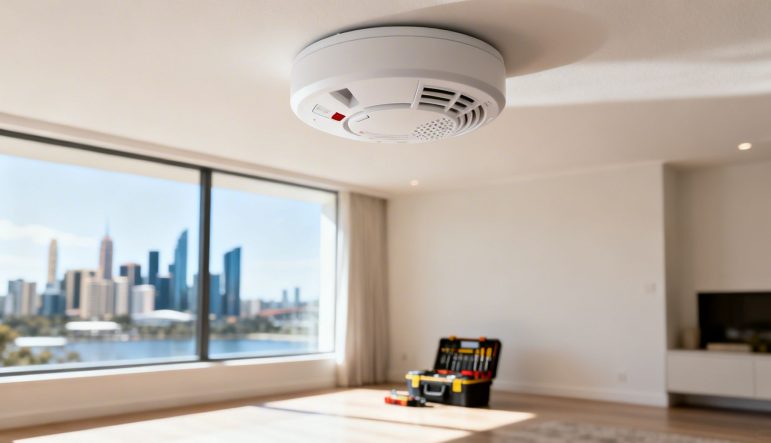
Smoke Alarms Brisbane: When it comes to smoke alarms in Brisbane, we’re no longer talking about a simple recommendation. This is a legal requirement with a hard deadline of 2027 for every single home. Getting your property compliant with Queensland’s tough legislation means fitting specific, interconnected photoelectric alarms in all the right places to give you and your family the best possible protection.
Facing a compliance deadline can feel like just another chore on an endless to-do list. But for homeowners and landlords in Brisbane, this is one of the most important safety upgrades you can make. The legislation wasn’t created for the sake of red tape; it’s a direct response to the very real risk of house fires in our communities.
When you understand the why behind these rules, the job stops being a hassle and becomes what it truly is: a crucial step in protecting your property and the people inside it. This guide will walk you through everything, cutting through the legal jargon to explain not just how to be compliant, but how to be properly protected.
The reason for all this urgency comes down to some confronting numbers. Queensland has one of the highest rates of house fires in Australia, with a fire breaking out approximately once every 4.7 hours on average.
That statistic is pretty sobering. It highlights exactly why smoke alarm compliance is now so critical for every Brisbane resident. It’s not about ticking a box; it’s a life-saving measure. You can dig deeper into the Queensland fire statistics to see just how common these incidents are.
The entire point of the legislation is to give everyone in the house the earliest possible warning, no matter where a fire might start. An interconnected system means a smouldering fire in the living room will instantly set off the alarm in a bedroom—even with the door closed—giving you those vital extra seconds to get out safely.
We’ll cover everything you need to feel confident and clear on your obligations. We’ll be looking at:
Getting your head around Queensland’s smoke alarm laws can feel like a lot, but it all boils down to one simple goal: saving lives. It’s best to think of it not as a complex set of rules, but as a crucial safety upgrade for every home in Brisbane, ensuring we all have the best possible protection from fire.
The legislation has been rolled out in stages to make the transition manageable. We’ve already passed the deadlines for new builds, major renovations, and rental properties. Now, all eyes are on the final and most important deadline affecting every remaining home.
The final piece of this safety puzzle is set for 1 January 2027. By this date, every single owner-occupied home in Queensland must be fully compliant with the new laws. This isn’t just a friendly suggestion—it’s a legal requirement that covers all houses, townhouses, and units, regardless of their age.
This timeline was deliberately spaced out to give homeowners plenty of time to get ready. The government kicked off this 10-year phased rollout back on 1 January 2017, creating one of the most thorough fire safety frameworks in Australia. By staggering the compliance dates, the plan was to ensure every home in Brisbane and across the state could meet the standard by the final 2027 deadline.
To help you keep track, here’s a simple breakdown of the key dates.
| Property Type | Compliance Deadline | What This Means for You |
|---|---|---|
| New Builds & Major Renovations | 1 January 2017 | If you’ve built or significantly renovated, your property should already be compliant. |
| Rental Properties | 1 January 2022 | All rental properties were required to be upgraded to the new standard by this date. |
| All Owner-Occupied Homes | 1 January 2027 | This is the final deadline for every other home in Queensland to meet the new laws. |
This final 2027 deadline is now firmly on the horizon for all Brisbane homeowners.
The visual below puts the urgency into perspective, showing just how frequently house fires occur right here in Queensland.
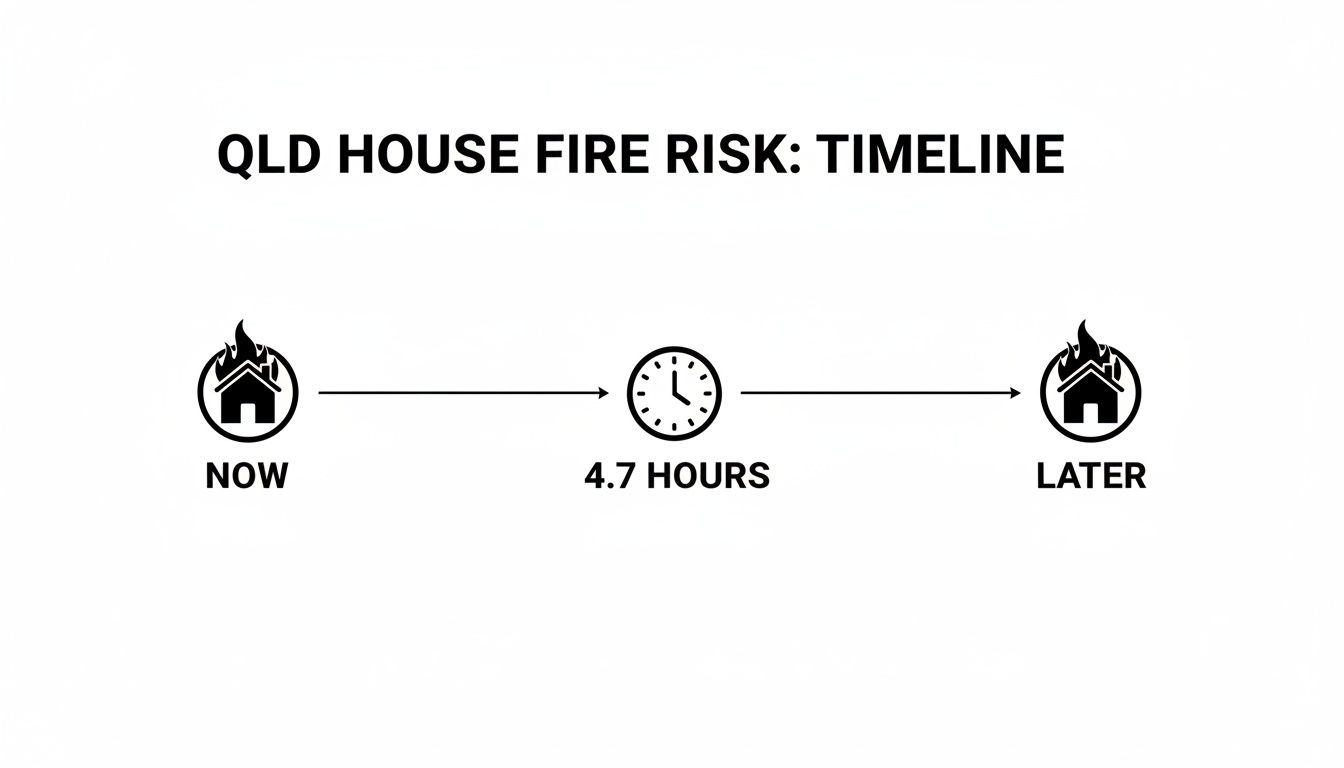
As the infographic highlights, a house fire happens roughly every 4.7 hours in our state. That stat alone shows why having an early warning system isn’t just a good idea—it’s absolutely critical.
To be fully compliant, your smoke alarm system needs to tick three non-negotiable boxes. These three pillars work together to create a robust safety net, giving you and your family the maximum possible time to get out safely.
“A compliant, interconnected system transforms your smoke alarms from individual sentinels into a coordinated team. A fire detected in one part of the house immediately alerts the entire home, buying precious seconds that can make all the difference.”
As a Brisbane property owner, meeting these rules is your responsibility. You can find out more about what’s required in our detailed guide to smoke alarm compliance in QLD.
Ignoring these laws comes with some serious consequences. Both local councils and the Queensland Fire and Emergency Services (QFES) have the power to issue on-the-spot fines for non-compliance, which can run into several hundred dollars for each offence.
But the fines are the least of your worries. The real risk is the catastrophic loss that can happen in a fire. On top of that, insurers are becoming much stricter. If a fire occurs and your property is found to have non-compliant alarms, they could reduce your payout or even deny your claim altogether. It’s a good idea to factor this in when you compare landlord insurance quotes to ensure you’re fully protected.
Ultimately, getting your smoke alarms in Brisbane up to the legal standard is one of the most important investments you can make in your family’s safety.
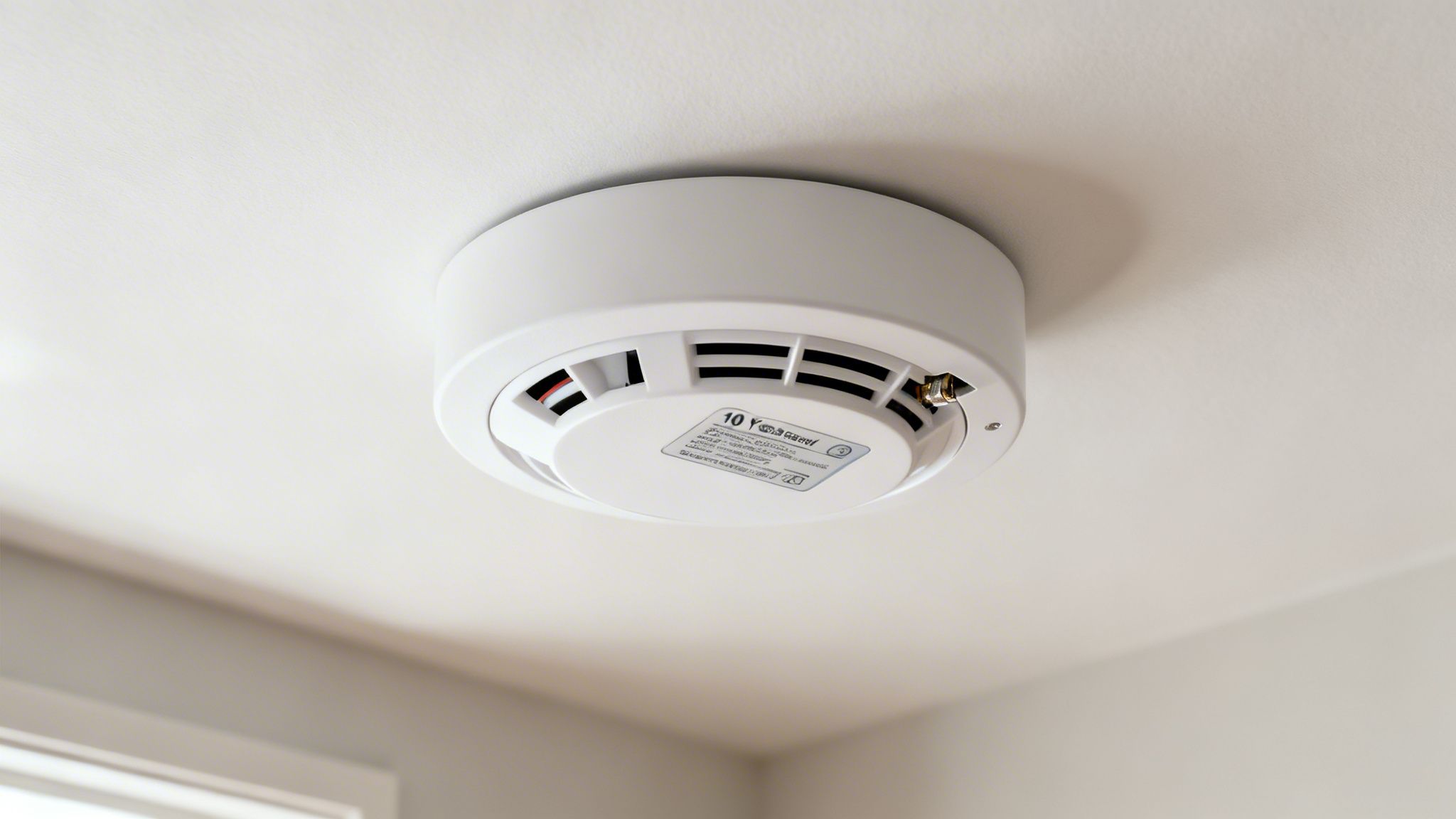
When you’re choosing smoke alarms in Brisbane, it’s easy to think any device will do the job. But Queensland’s legislation is incredibly specific about the technology you need, and for good reason. Not all alarms are created equal, and picking the right type is the absolute foundation of keeping your family and property safe.
The law makes it crystal clear: you must install photoelectric smoke alarms. It’s vital to understand why this technology isn’t just a recommendation—it’s a lifesaver. These modern alarms are designed to literally “see” smoke particles, which makes them far better at detecting the slow, smouldering fires that pose the biggest threat in our homes.
Think of it this way: an old ionisation alarm is like a guard dog that barks at everything—the postie, a leaf blowing past, and maybe a real intruder. A photoelectric alarm is more like a high-tech security camera; it can tell the difference between a genuine threat (dangerous smoke) and a nuisance (burnt toast), giving you an earlier, more reliable warning with fewer false alarms.
The science behind photoelectric alarms is what makes them the undisputed champion for home safety. Inside, a small chamber contains a beam of light. When smoke particles drift into this chamber, they scatter the light onto a sensor, which instantly triggers the alarm.
This method is extremely sensitive to the large smoke particles produced by smouldering fires—the kind that come from burning furniture, upholstery, or overheating electrical wiring. These are exactly the types of fires that can silently fill a home with toxic smoke long before any flames appear, often while everyone is asleep.
In contrast, the older ionisation alarms are better at picking up fast, flaming fires, which are far less common in a residential setting. That’s precisely why Queensland law has phased them out in favour of the much safer and more effective photoelectric technology.
The second non-negotiable part of a compliant system is interconnection. This is a simple but brilliant concept that turns your alarms from a collection of individual devices into a synchronised, home-wide safety network.
“When one alarm sounds, they all sound.” This simple principle of interconnection ensures a fire detected in a remote part of the house instantly alerts everyone, providing crucial seconds to escape, no matter where they are.
Imagine a fire starts smouldering in the downstairs living room in the middle of the night. Without interconnection, the smoke might not reach your bedroom alarm until it’s far too late. With an interconnected system, the moment the downstairs unit detects smoke, the alarm right outside your bedroom will sound, waking you and your family instantly.
This immediate, house-wide alert is one of the single biggest improvements in home fire safety. For those looking to integrate cutting-edge fire safety, understanding the benefits of smart apartment technology can guide your smoke alarm selection.
Once you know you need interconnected, photoelectric alarms, the final decision is how they’re powered. Queensland legislation gives you two fully compliant options, each with its own pros and cons.
Here’s how they stack up.
| Feature | Hardwired Alarms (with battery backup) | 10-Year Sealed Battery Alarms |
|---|---|---|
| Power Source | Mains power (240V) with battery backup | Sealed 10-year lithium battery |
| Reliability | Extremely high, as it’s connected to mains | Very reliable; no need for annual battery changes |
| Installation | Requires a licensed electrician | Professional installation still recommended for interconnection |
| Best For | New builds, major renovations, or homes where wiring is accessible | Older homes or properties where running new wires is difficult or costly |
While the 10-year battery alarms seem easier to install, getting them all wirelessly interconnected correctly is a critical task that’s definitely a job for a professional. You can dive deeper into the pros and cons in our guide to wireless smoke alarms. Ultimately, both options are fully compliant, so you can choose the best solution for your property and budget.
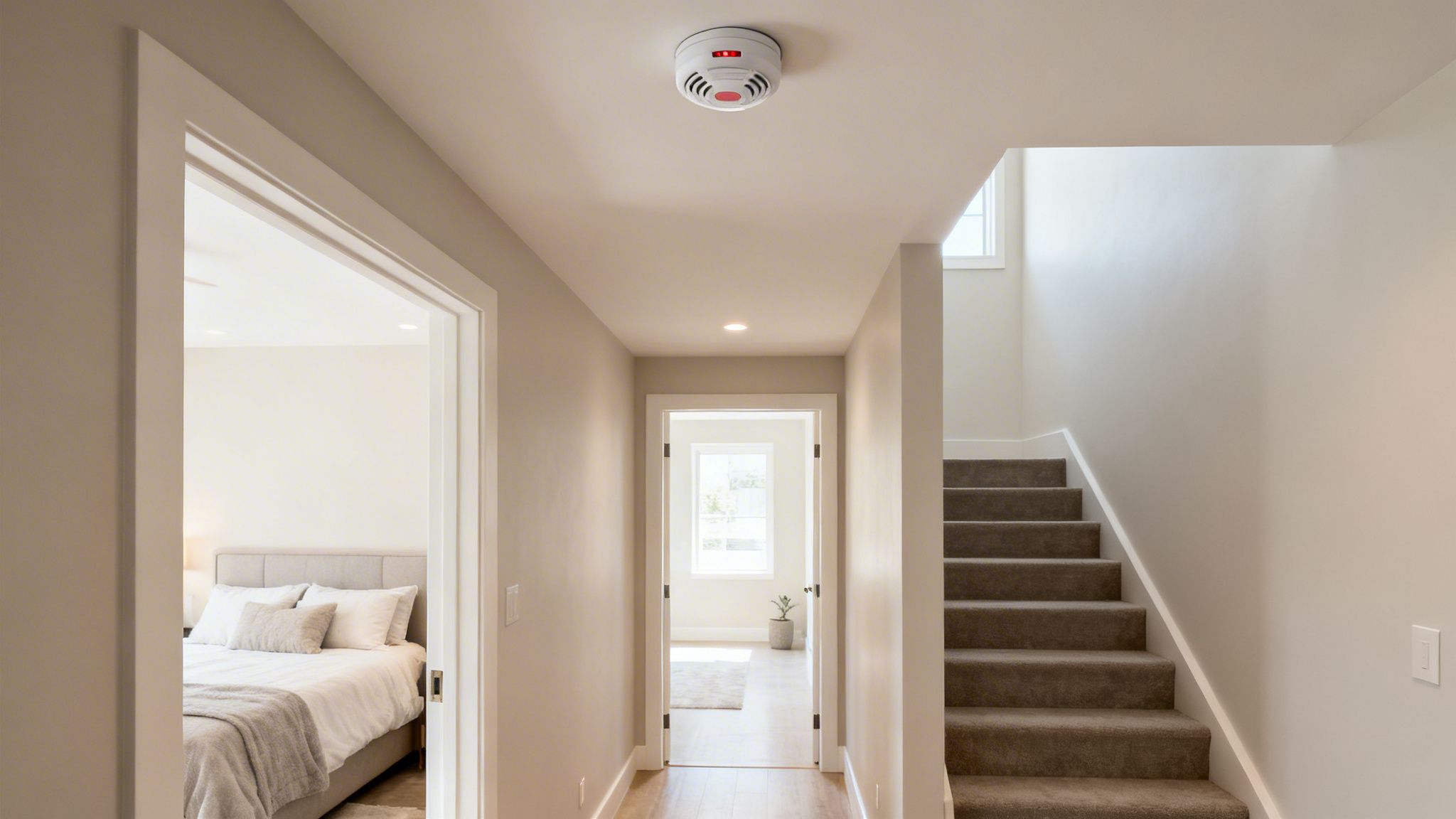
Having the latest interconnected photoelectric smoke alarms is a fantastic start, but it’s only half the job. Where you place them is just as critical. Think of it like a security system—you wouldn’t just put a camera by the back door and hope for the best. You need to cover all the key areas.
Queensland’s laws on smoke alarm placement are incredibly specific for one simple reason: to give you the earliest possible warning of a fire, especially when you’re asleep and most vulnerable. This isn’t about ticking boxes for compliance; it’s a life-saving strategy built from decades of fire safety data.
To make your home fully compliant, there are a few mandatory spots where smoke alarms must be installed. These locations create a fundamental safety net, ensuring a fire can’t spread undetected while your family sleeps.
The core requirements are straightforward and based on pure logic. You need an alarm:
If your home’s layout doesn’t have a hallway connecting the bedrooms, an alarm must be installed in the area most likely to be part of the escape path.
The thinking here is simple: putting alarms inside bedrooms and in the hallways right outside them means a fire is detected dangerously close to where people are sleeping. This dramatically cuts down the time it takes for an alarm to go off, wake everyone up, and get them out safely.
Knowing where to put alarms is just as important as knowing where not to put them. Nuisance alarms are the number one reason people get frustrated and disable their smoke alarms, which defeats the entire purpose.
To help you get it right, this simple checklist breaks down the required locations and the common trouble spots to avoid.
| Location | Required by Law? | Key Installation Tip |
|---|---|---|
| Inside Every Bedroom | Yes | Place it on the ceiling, in the centre of the room if possible. |
| Connecting Hallways | Yes | This alarm acts as an early warning for smoke coming from other areas. |
| Every Storey | Yes | On multi-level homes, place it at the top of the stairs to catch rising smoke. |
| Kitchens | No | Keep alarms at least 4 metres away from cooktops to avoid false alarms from steam or cooking fumes. |
| Bathrooms | No | Steam is a major cause of false alarms. Install at least 1.5 metres away from the bathroom door. |
| Garages/Workshops | No | Exhaust fumes, dust, and other airborne particles will cause constant, frustrating false alarms. |
| Near Fans/Vents | No | Drafts can blow smoke away from the sensor, delaying its activation. |
Getting this right ensures your system works exactly as intended—protecting your family without becoming a nuisance.
Let’s be honest, nothing is more annoying than a smoke alarm screaming at you because of burnt toast or a steamy shower. Placing an alarm in the wrong spot is a guaranteed way to make this happen.
Here’s a quick rundown of the main “no-go zones”:
By strategically placing your smoke alarms in the right locations and avoiding these common trouble spots, you create a reliable, compliant safety system. The best way to guarantee every alarm is positioned perfectly according to Australian Standards is to have them installed by a licensed electrician, who can ensure maximum protection with minimum fuss.
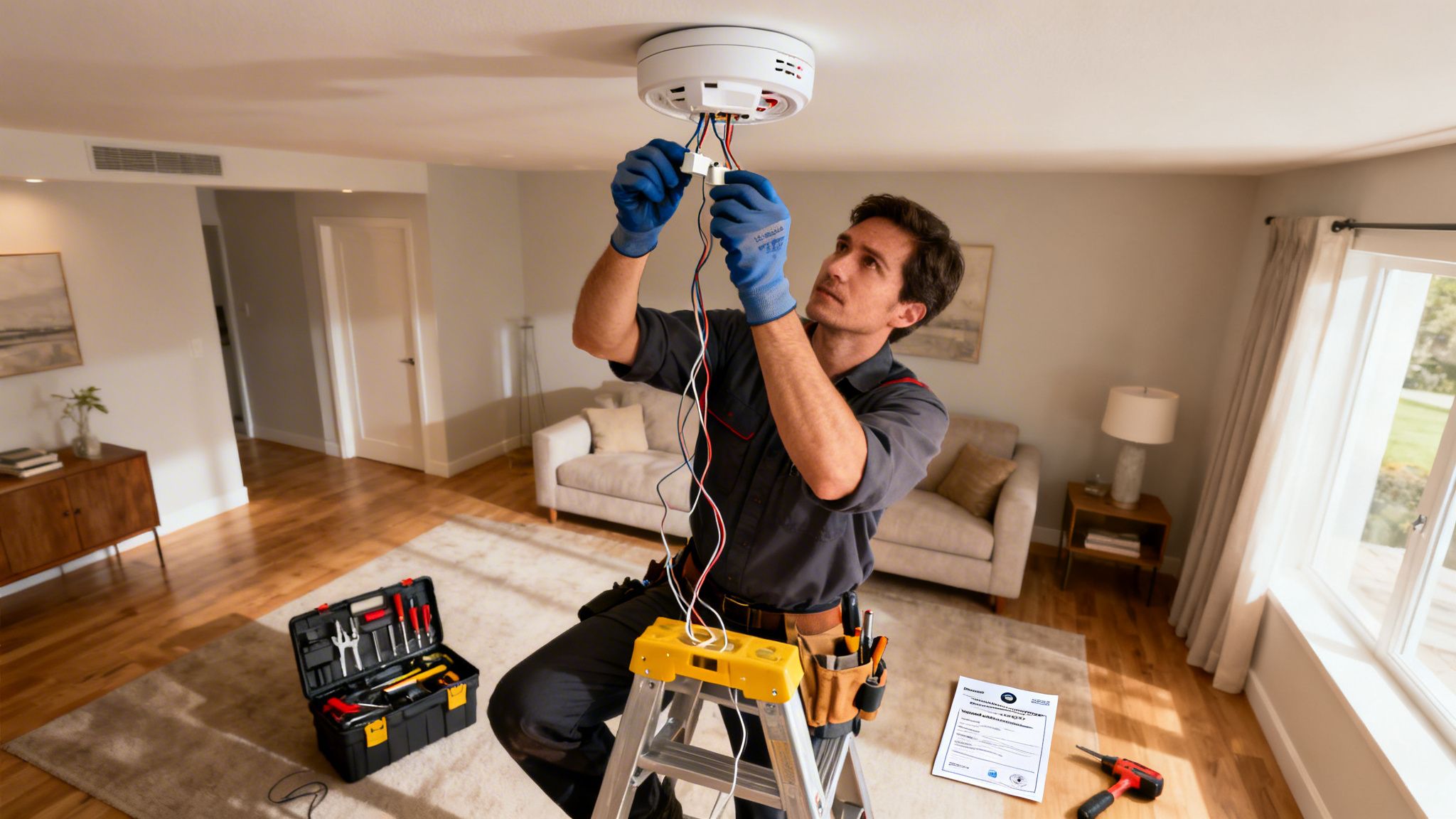
While the appeal of a weekend DIY project is strong, smoke alarm installation is one job you really want to leave to the experts. This isn’t just about screwing a device to the ceiling; it’s about installing a life-saving system that has to work perfectly, every single time.
Hiring a licensed electrician isn’t just a good idea—it’s a critical investment in your family’s safety and your legal compliance.
The hidden complexities can catch even a seasoned DIYer off guard. With hardwired systems, you’re dealing with 240V mains power. It’s incredibly dangerous, and it’s illegal for anyone but a licensed sparkie to touch. Even with the 10-year battery alarms, the real skill is in getting the wireless interconnection flawless so that when one alarm sounds, they all scream.
A qualified electrician brings a level of hands-on experience that you just can’t get from an instruction manual. They don’t just follow a diagram; they look at the unique layout of your home to create the most effective safety net possible.
This professional assessment includes:
“A professional doesn’t just install a product; they install a system. They ensure every component, from wiring to placement, adheres to Australian Standards, transforming a box of alarms into a life-saving network.”
Maybe the biggest benefit of getting a pro is the rock-solid guarantee of compliance. A licensed electrician lives and breathes the Queensland legislation and Australian Standards. They make sure every single detail—from the type of alarm to its exact placement—is completely by the book.
Once the job is done, you’ll get a compliance certificate. This is your official proof that the work was done by a qualified professional and your property meets all its legal obligations. It’s vital for insurance and gives you total confidence that the job was done right.
Of course, installation is just the first step. Regular checks are vital, and understanding what’s involved in professional smoke alarm testing services helps maintain that safety net long-term.
Ultimately, investing in a professional to install your smoke alarms in Brisbane takes all the guesswork and risk out of the equation. You get a correctly installed, fully compliant system you can trust to protect your family, backed by the assurance of expert workmanship.
Here is the rewritten section, following the specified human-written style, tone, and formatting requirements.
Getting a compliant, interconnected system installed is a huge win for home safety, but the job isn’t quite finished. Think of your smoke alarms as a critical piece of safety equipment that needs a quick check-up now and then to make sure they’ll actually work when it counts. A simple, consistent maintenance routine is the key to keeping your system reliable and ready to go.
This isn’t a massive chore. We’re talking about a few minutes of your time each month to prevent the vast majority of those frustrating false alarms and ensure your first line of defence against a fire is always active. If you ignore them, you’re not just risking annoying chirps; you could be leaving your entire system useless in a real emergency.
Keeping your smoke alarms in Brisbane in top condition is all about a simple, repeatable schedule. Sticking to these core tasks will ensure your alarms are sensitive to real threats while cutting down on false alarms caused by dust or pesky insects.
Monthly Button Test: This is the easiest check you can do. Once a month, grab a broom handle, press the ‘Test’ button on one of the alarms, and hold it. You should hear a loud siren from that unit, but more importantly, every other interconnected alarm in your home must also sound off. This single test confirms the battery, the sensor, and the interconnectivity are all working together perfectly.
Six-Monthly Cleaning: Twice a year, it’s time for a gentle clean. Use the soft brush attachment on your vacuum cleaner and carefully go over the vents and the outside of the alarm. This simple step removes any build-up of dust, cobwebs, or small insects that can get inside and fool the sensor into thinking there’s smoke.
Just remember, a dusty sensor is one of the most common culprits behind false alarms. A quick vacuum every six months is the best thing you can do to prevent those shocking middle-of-the-night wake-up calls.
Every single smoke alarm has a non-negotiable expiry date. Under Australian law, all units must be replaced 10 years from their date of manufacture, which you’ll find printed directly on the alarm itself. This isn’t a sales gimmick; it’s a critical safety mandate.
Over a decade, the internal electronic sensors naturally degrade and become less reliable. Their ability to detect real smoke particles diminishes, and they can become more prone to nuisance alarms. Using an alarm past its tenth birthday puts your family’s safety at significant risk. Once your alarms hit that 10-year mark, the only safe and compliant move is to have a licensed electrician replace the entire system.
If you’re a landlord or property manager in Brisbane, your legal duties for smoke alarm maintenance are crystal clear and can’t be ignored. The law requires you to:
Keeping detailed records of all your testing, cleaning, and replacement activities is also a crucial part of meeting your obligations. This proactive approach not only ensures you’re providing a safe home for your tenants but keeps you fully compliant with Queensland law.
Of course. Here is the rewritten section, crafted to sound like a human expert, following all your specified requirements.
Even with the new laws in place, it’s completely normal to have a few lingering questions about your smoke alarms. Sorting through costs, strange beeping sounds, and legal duties can feel like a bit of a minefield.
We get asked these questions every day by Brisbane homeowners and landlords. To cut through the noise, we’ve put together clear, straightforward answers to the most common queries we hear.
The honest answer is: it depends. The final cost for a smoke alarm upgrade in Brisbane is tied to a few key things – the size and layout of your house, how many alarms you actually need to be compliant, and whether you go for hardwired alarms or the 10-year sealed battery type.
For a standard three-bedroom home, you might be looking at anywhere from a few hundred to over a thousand dollars. While it’s definitely an upfront cost, it’s a non-negotiable one for legal compliance and, more importantly, for the safety of your family. The only way to get a firm price is to have a licensed electrician pop out, take a look at your property, and give you a proper quote.
That single, annoying chirp that repeats every minute or so isn’t a fire alarm – it’s the smoke alarm trying to tell you something. Think of it as a maintenance alert. The most common culprit used to be a low battery, but with the modern 10-year sealed units, that chirp now almost always means the alarm has hit its use-by date.
A persistent chirp is a sign that the unit needs to be replaced entirely, as its internal sensor has degraded after a decade of service. Never ignore it.
First, give it a quick, gentle clean with the soft brush attachment on your vacuum cleaner to rule out any dust interference. If that pesky beeping continues, the alarm is almost certainly expired or faulty. At that point, it’s time to call in a licensed electrician to diagnose the problem and get a new unit installed.
If you’re a landlord in Brisbane, your responsibilities for smoke alarms are crystal clear and not open to interpretation. You are legally required to make sure your rental property has a compliant system of interconnected, photoelectric smoke alarms, all installed in the right places.
Your ongoing duties are pretty specific:
Failing to tick these boxes can lead to some hefty fines, and more seriously, it puts your tenants at risk.
This is a common point of confusion. While it’s true that 10-year sealed battery alarms don’t need to be wired into your home’s main power, Queensland law still demands that they be interconnected. This is the critical part – when one alarm detects smoke, they all have to go off.
Getting that wireless interconnection set up perfectly so that every alarm communicates without fail can be surprisingly tricky. It’s not just about sticking them to the ceiling.
To be certain the system works as it should in a fire and meets every legal requirement, getting them installed by a licensed electrician is always the safest and smartest path. A professional will guarantee they’re placed correctly, interconnected properly, and will give you a compliance certificate for total peace of mind.
For expert advice and professional installation of smoke alarms in Brisbane, trust the experienced team at DLG Electrical. We ensure your home is safe, compliant, and protected. Contact us today for a free quote at https://dlgelectrical.com.au.

Master Electrician with over 30 years of experience. Founded DLG Electrical in 2005 after international project work including electrical installations at Stamford Bridge Stadium, London(Home of Chelsea FC).

Local Electricians that can fix all Electric Hot water Systems.
Motion sensor lights are a versatile addition to any home, offering nu
