83 Jean St, Grange QLD 4051
Mon-Fri 07:30 AM - 04:00 PM - Sat - 8:00 - 12 - Sunday Closed

When we talk about a smoke alarm solution, we’re not just talking about a single plastic disc on the ceiling. A true solution is a complete, interconnected system, designed from the ground up to give you the earliest possible warning in a fire.
For Brisbane homeowners, this means having a network of photoelectric alarms that all talk to each other. When one detects smoke, they all scream. This moves beyond a simple beep to create a genuine safety net for your property and your family.
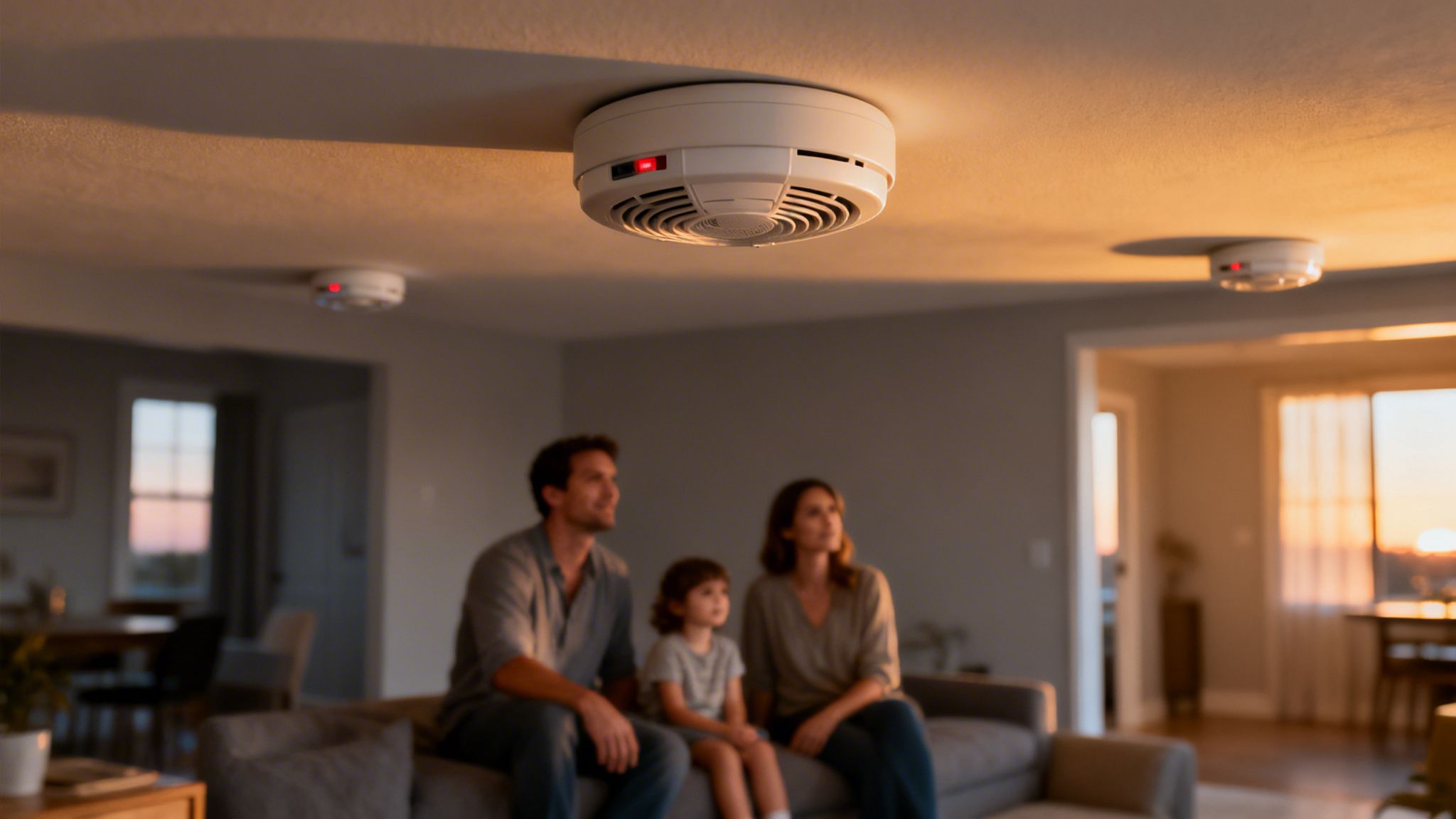
It’s all too easy to dismiss that faint chirping from the hallway as just another low battery. But when it comes to fire safety, that kind of complacency can be devastating. A single, standalone alarm is a start, but it’s far from a complete solution.
Imagine a fire sparking in your downstairs living room while everyone is fast asleep upstairs. One lonely alarm might go unheard through closed doors, but an interconnected system ensures every single alarm in the house sounds off at the same time. This is the core principle behind modern smoke alarm solutions and the very foundation of Queensland’s strict new safety legislation.
It’s about creating a unified network where one alarm’s detection triggers a house-wide alert. This buys you precious, life-saving seconds, and the difference between escaping a fire and being trapped is often measured in those critical moments.
The statistics around residential fires paint a grim picture of what happens when smoke alarms are missing or simply don’t work. Between July 2003 and June 2017, at least 900 people in Australia tragically lost their lives in preventable house fires.
Even more shocking is that in nearly 66% of these cases, there was no information recorded about smoke alarms at all, highlighting just how often these vital devices are absent when they’re needed most. You can explore the full government findings on preventable residential fire fatalities to understand the data for yourself.
This data drives home a crucial point: having a working, compliant smoke alarm system isn’t just about ticking a box. It’s one of the most effective things you can do to protect your family.
Think of a complete smoke alarm solution like a digital nervous system for your home. It senses danger in one area and immediately sends a warning signal everywhere else, ensuring no one is left uninformed.
To help you get your head around the key requirements, here’s a quick summary of what a compliant system involves.
| Component | Description | Why It Matters |
|---|---|---|
| Photoelectric Alarms | These alarms “see” smoke, making them better at detecting smouldering fires, which are the most common type in homes. | They provide an earlier warning than older ionisation alarms, giving you more time to escape. |
| Interconnection | All alarms must be connected, either by wires (hardwired) or wirelessly (e.g., radio frequency). | If one alarm detects smoke, all alarms sound simultaneously, alerting everyone in the property regardless of where they are. |
| Correct Placement | Alarms must be installed in every bedroom, in hallways connecting bedrooms, and on each level of the home. | This ensures there are no “dead zones” where a fire could go undetected while people are sleeping. |
| Compliant Power Source | Alarms must be either hardwired to the home’s mains power with a battery backup, or powered by a 10-year non-removable lithium battery. | This prevents alarms from failing due to dead or removed batteries, ensuring they are always ready to work. |
| AS 3786:2014 Compliance | All smoke alarms must meet the current Australian Standard. | This guarantees the alarm has passed rigorous testing for performance, reliability, and safety. |
For Brisbane homeowners in suburbs from Grange to Windsor, understanding these new laws is non-negotiable. The legislation mandates specific technology and placement to absolutely maximise safety.
A proper solution isn’t just about avoiding fines; it’s about genuine peace of mind. It’s knowing that your home is equipped with a system designed not just to meet the legal minimum, but to offer the highest level of protection for the people you care about most.
There’s a major deadline on the horizon for every single homeowner in Queensland: 1 January 2027. This is the date when the state’s new smoke alarm legislation, which has been rolled out in phases, becomes mandatory for all residential properties—including the one you live in.
So, what does this change actually mean for you?
This isn’t just a minor update to the rulebook. It’s a complete overhaul of how we approach fire safety at home. The new laws demand a specific, much smarter type of smoke alarm solution designed to give you the earliest possible warning. We’re talking about precious extra seconds that can make all the difference for you and your family in an emergency.
Getting your head around these laws isn’t just about ticking a box to avoid a fine. It’s about installing a system that meets the highest modern safety standards, protecting both your property and, more importantly, the people inside.
At the heart of this legislation is the requirement for interconnected photoelectric smoke alarms. That might sound technical, but the concept is straightforward. Let’s break it down.
Photoelectric Alarms: Think of this technology as an alarm that can “see” smoke. It’s incredibly good at detecting the slow, smouldering fires that are common in homes—the kind that often start from things like faulty wiring or a couch cushion that’s been smouldering for hours.
Interconnected Alarms: This is the real game-changer. It creates a wireless communication network between all the alarms in your house. When one alarm detects smoke, it doesn’t just sound off on its own; it instantly triggers every other alarm in the home.
An alarm going off in the garage will immediately set off the alarm in the bedroom at the opposite end of the house. This ensures everyone is alerted at the same time, no matter where they are or where the fire started.
To be fully compliant by the 2027 deadline, your home’s smoke alarm system needs to meet several key criteria. These rules apply to all owner-occupied homes, rental properties, and any home being sold.
By 2027, your smoke alarm setup must be less of a collection of individual devices and more of a single, unified safety system. Every alarm must work together as a team to protect the entire home.
Here’s exactly what the law requires for all Queensland homes:
The push for interconnected alarms with reliable power sources comes from a tragic reality. Data from Victorian fire services showed that over a decade, 26 out of 53 preventable fire deaths occurred in homes with no alarms or with alarms that had been disabled. By making robust systems mandatory, the law aims to ensure alarms are always ready when you need them most. You can learn more about the importance of functional smoke alarms from the CFA.
If you’re a landlord or planning to sell your property, these rules might already apply to you. For a full rundown of your specific obligations, take a look at our detailed guide to Queensland’s smoke alarm legislation. Upgrading your system isn’t just a compliance task—it’s a critical investment in safety.
Picking the right hardware is the absolute foundation of a compliant and effective smoke alarm system. It’s easy to assume all smoke alarms do the same job, but they don’t—and Queensland’s legislation is very specific about the technology required to keep your family safe. Let’s cut through the technical jargon and get straight to what you need.
When you start looking at smoke alarms, you’ll find two main types on the market: ionisation and photoelectric. They both detect smoke, but how they detect it is worlds apart, and that difference is critical for home safety. It’s also worth understanding how these individual alarms fit into broader fire detection systems for total property protection.
The two main types of smoke alarm technology work very differently, which is why Queensland law mandates one over the other. For Brisbane homeowners, understanding this distinction is the first step toward compliance and genuine safety.
Here’s a direct comparison of the two technologies:
| Feature | Photoelectric Alarms (Mandated in QLD) | Ionisation Alarms |
|---|---|---|
| Detection Method | Uses a light beam to “see” smoke particles. | Uses a small amount of radioactive material to detect tiny, invisible combustion particles. |
| Best For | Slow, smouldering fires that produce a lot of smoke before flames appear (e.g., electrical faults, smouldering furniture). | Fast, flaming fires that produce little visible smoke (e.g., grease fires, flammable liquid fires). |
| Common False Alarms | Less prone to nuisance alarms from cooking or steam. | Highly prone to false alarms from burnt toast, steam from bathrooms, or cooking fumes. |
| QLD Legislation | Mandatory for all new and upgraded installations. | Not compliant for new installations in Queensland homes and rental properties. |
As you can see, photoelectric alarms are far better suited for the types of fires that most commonly and tragically occur in homes.
Think of an ionisation alarm as being good at detecting fast, open flames—like a chip pan fire. The problem is, they are notoriously sensitive and often trigger false alarms from something as simple as burnt toast or steam from the shower.
A photoelectric alarm, on the other hand, acts like an electronic eye. It uses a beam of light inside its chamber to physically “see” the larger particles of smoke produced by smouldering fires. These are the most dangerous fires in a residential setting, often starting silently from a faulty appliance or a dropped cigarette, and they can fill a home with toxic smoke long before any flames are visible.
Because photoelectric alarms are proven to be much more effective at detecting these deadly smouldering fires, Queensland law is unequivocal: all smoke alarms installed in homes must be of the photoelectric type. This single rule has been a massive step forward for fire safety in our state.
Once you’ve settled on photoelectric technology, the next decision is how your alarms will be powered. The legislation gives you two compliant pathways for your interconnected system.
Hard-wired Alarms: These are the gold standard. A licensed electrician connects them directly to your home’s 240V mains power, and they have a battery backup in case of a blackout. You simply can’t beat them for reliability.
10-Year Lithium Battery Alarms: In situations where hard-wiring isn’t practical (like in homes with concrete ceilings or difficult access), you can use alarms powered by a sealed, non-removable 10-year lithium battery. The entire unit is designed to last a decade and must be replaced after that.
The new legislation isn’t just about the type of alarm; it’s about creating a complete safety net. This is where interconnection comes in.

This interconnectedness is the final, crucial piece of the puzzle. It means that when one alarm detects smoke, every other alarm in the house sounds at the same time. If a fire starts in the living room, the alarm in a bedroom at the other end of the house will activate instantly, waking someone sleeping behind a closed door. It creates a unified shield of protection that gives everyone the earliest possible warning.
Many modern systems achieve this wirelessly, making installation much cleaner. If you’re interested in how this works, you can learn more about the benefits of WiFi smoke detectors in our detailed guide.
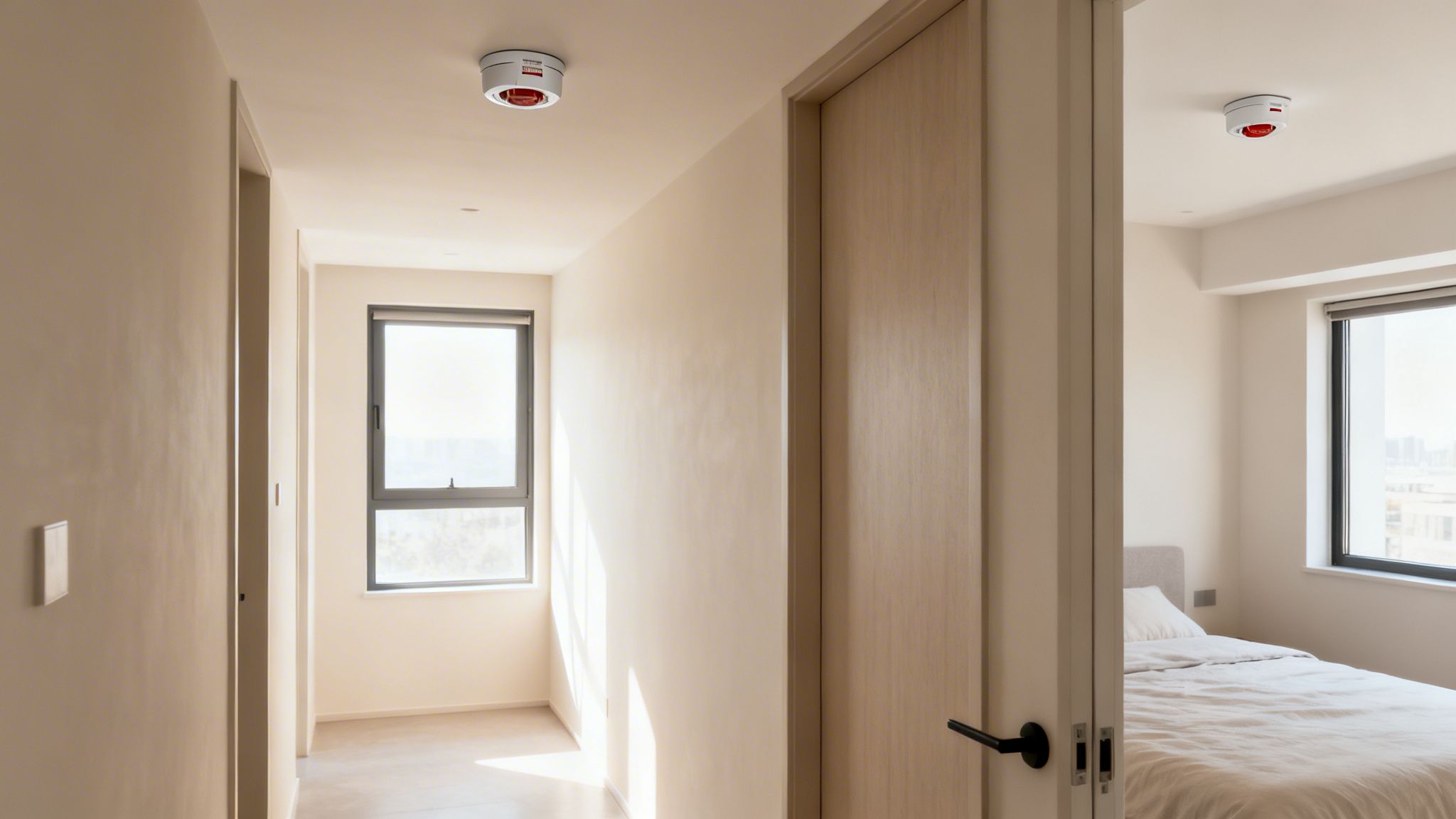
Choosing a compliant photoelectric alarm is a great start, but its effectiveness completely hinges on where you put it. Think of it like a security guard—if they’re stationed in the wrong spot, they simply can’t see the danger coming. The exact same logic applies to your smoke alarms.
Proper placement is all about ensuring smoke reaches the sensor as quickly as humanly possible, which is why Queensland’s legislation is so specific about location. A shocking report from Western Australia’s DFES revealed that in over 1100 house fires since July 2024, smoke alarms were only present in less than 43% of them. This proves that just having an alarm isn’t enough—it has to be installed correctly to do its job in an emergency. You can read more on these fire safety findings from DFES.
For a smoke alarm system that actually works and keeps you safe, you need to follow the official blueprint mandated by law. This isn’t just a “best practice” recommendation; it’s a non-negotiable legal requirement for achieving compliance in Queensland.
Here’s the essential room-by-room guide for where your alarms must be installed:
Following this layout ensures there are no dangerous blind spots where a fire could develop undetected, especially at night when you’re most at risk.
Think of your home as a map. Queensland’s placement rules are designed to create overlapping zones of protection, ensuring an alarm is always close enough to sense smoke quickly, no matter where a fire starts.
Just as important as knowing where to install alarms is knowing where not to. Certain spots can either prevent smoke from ever reaching the sensor or, just as frustratingly, trigger endless false alarms.
To make sure your alarms work when you need them and stay quiet when you don’t, avoid these locations:
Understanding the line between what you can do yourself and when you absolutely must call a professional is vital for both safety and compliance. The type of alarm you have dictates who can legally install it.
If you’re simply replacing an existing, standalone battery-powered alarm with a new 10-year sealed lithium battery model, this is generally a straightforward DIY job you can tackle yourself.
However, any hard-wired smoke alarm solutions that connect directly to your home’s mains power must be installed by a licensed electrician. This isn’t optional—it’s the law here in Queensland. A qualified electrician from a team like ours at DLG Electrical will ensure all wiring is safe, the interconnection works flawlessly, and the entire system is fully compliant. We provide you with certification for your records, giving you absolute peace of mind.
Getting a compliant smoke alarm system installed is a huge first step, but it’s the ongoing checks that ensure it actually works when a fire starts. A smoke alarm isn’t a “set and forget” appliance.
Think of it like servicing your car—you wouldn’t drive for years without checking the oil or tyres. Your smoke alarms need that same simple, proactive care to keep your family safe. This checklist breaks it down into easy, manageable steps, so you know exactly what to do and when.
The single most important habit you can get into is the monthly test. It’s a quick check that confirms the alarm has power and its internal siren is ready to go.
Over time, dust, cobwebs, and even small insects can get inside your smoke alarm’s sensing chamber. This build-up can either block the sensor from detecting smoke or, just as bad, cause frustrating false alarms in the middle of the night.
A false alarm isn’t just an annoyance; it erodes trust in the system. If your alarm cries wolf too often, you might be tempted to ignore it or disable it—a dangerous mistake.
Twice a year, give each alarm a proper clean:
This is the one rule you can’t ignore: every smoke alarm has a mandatory expiry date. All smoke alarms, regardless of brand or type, must be replaced every 10 years from their date of manufacture. You’ll find this date printed on a sticker on the alarm itself.
After a decade, the electronic sensors inside start to lose sensitivity and become unreliable. This isn’t just a recommendation from us—it’s a legal requirement under Queensland law. If your alarms are over 10 years old, your home is no longer compliant, and more importantly, you’re not properly protected.
While monthly tests and six-monthly cleans are well within any homeowner’s ability, some situations absolutely demand a professional’s touch. Knowing when to put the tools down and call a licensed electrician is vital for your family’s safety and for keeping your home legally compliant.
Trying to tackle complex electrical work yourself isn’t just dangerous—it can also void your home insurance policy. Things like navigating compliance upgrades, diagnosing tricky faults, or installing a new interconnected system are all jobs best left to the experts.
For any hard-wired smoke alarms, getting a professional isn’t just a good idea; it’s a legal requirement here in Queensland. This ensures the entire system is wired correctly, works as a single unit, and meets all current Australian Standards.
If your home was built before the latest smoke alarm regulations came into effect, getting it ready for the 2027 deadline is a major reason to call us. An electrician will come out, assess your current setup, and install a fully compliant, interconnected photoelectric system.
This is especially critical for landlords, who are legally required to ensure their rental properties meet these new standards at the beginning of every new lease.
A professional installation doesn’t just end with the alarms on the ceiling. You’ll also receive a compliance certificate, which is official proof that your property is safe and up to code. This document is invaluable for insurance purposes and can be a huge asset if you ever decide to sell your home.
Is one of your alarms constantly chirping, even with a fresh battery? Or do all your alarms go off randomly for no apparent reason? These annoying issues often point to a deeper problem that dust or a low battery can’t explain.
A hard-wired alarm that won’t stop chirping or an interconnected system with frequent false alarms often signals an underlying electrical issue or a faulty unit that needs professional diagnosis. Ignoring these signs can leave your family unprotected.
A licensed electrician has the right diagnostic tools to find the root cause, whether it’s a wiring fault, a power supply issue, or a malfunctioning sensor. You can find out more about how our experts tackle these problems in our guide to professional smoke alarm testing services.
In rare cases where a system has to be taken offline for repairs, it’s also good to know what is a fire watch is and when these temporary safety measures might be needed. When it comes to something as important as your family’s safety, calling DLG Electrical for a professional smoke alarm solution ensures the job is done right, the first time.
Even after getting up to speed on the new smoke alarm laws and technology, it’s normal to have a few practical questions. As electricians working in Brisbane homes every day, we hear the same queries from homeowners and landlords time and again.
Here are some clear, no-nonsense answers to the most common questions we get asked in the field.
The short answer is no. In Queensland, any hard-wired smoke alarm—and that includes virtually all modern interconnected systems—must be installed by a licensed electrician. This is a strict legal requirement, not just a friendly suggestion.
While you might be able to replace a standalone, 10-year battery-only alarm yourself, the moment you’re dealing with wiring that connects to your home’s mains power, it’s a job for a professional. It’s the only way to guarantee the system is wired safely, works as it should, and keeps you on the right side of the law.
That consistent, annoying chirp is a universal signal: the battery is low. If you have hard-wired alarms, it’s the backup battery that needs replacing. If you have a sealed unit with a 10-year lithium battery, the chirp means the entire alarm has reached its end of life and the whole unit needs to be replaced.
Sometimes, dust or small insects can interfere with the sensor, causing false chirps. A quick clean with a vacuum cleaner brush attachment can often solve the problem.
If a fresh battery or a good clean doesn’t stop the chirping, you’re likely dealing with an electrical fault or a failing sensor. Don’t ignore it. It’s time to call an electrician to find the root cause and make sure your system is reliable.
For landlords, the duty of care is non-negotiable. You are legally responsible for making sure your rental property is 100% compliant with Queensland’s current smoke alarm legislation. That means having interconnected, photoelectric alarms installed in every bedroom, hallway, and on every level.
On top of the installation, you must also:
Failing to meet these obligations isn’t worth the risk. It can lead to heavy fines and serious liability issues if something goes wrong.
Ready to ensure your Brisbane property is safe, compliant, and protected by a professional? The team at DLG Electrical is here to help with all your smoke alarm solutions, from compliance upgrades to fault diagnosis. Get in touch with us for a free quote.

Master Electrician with over 30 years of experience. Founded DLG Electrical in 2005 after international project work including electrical installations at Stamford Bridge Stadium, London(Home of Chelsea FC).

Local Electricians that can fix all Electric Hot water Systems.
Motion sensor lights are a versatile addition to any home, offering nu
