83 Jean St, Grange QLD 4051
Mon-Fri 07:30 AM - 04:00 PM - Sat - 8:00 - 12 - Sunday Closed
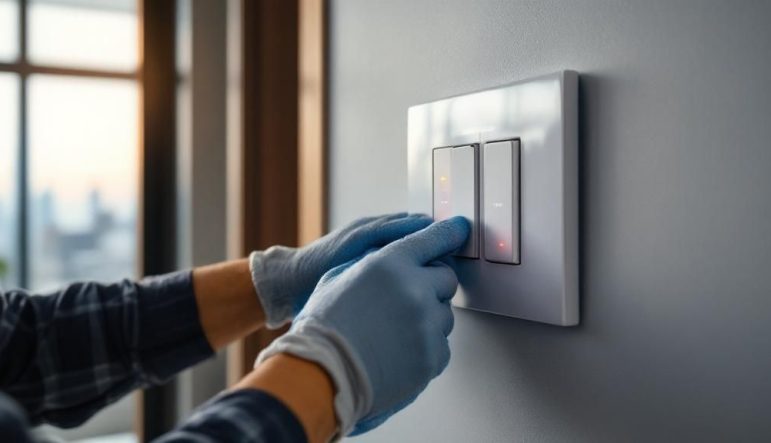
For many homeowners, a professional switchboard upgrade in Brisbane is one of the most critical steps you can take to guarantee the electrical safety of your property. It’s all about swapping out those old, hazardous fuse boxes for modern units that meet today’s stringent safety standards. This protects your family from fire risks and electric shocks, all while easily supporting the power-hungry appliances we all rely on.
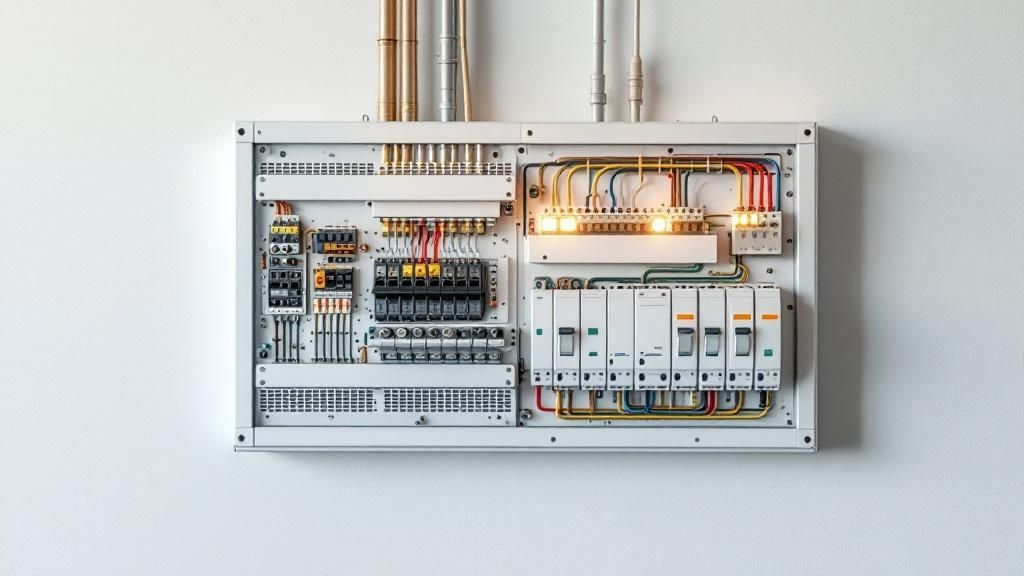
Think of your home’s switchboard as its electrical heart, pumping power safely to every room. But what happens when that heart is from a completely different era? If your home still has an old switchboard with ceramic or porcelain fuses, it was designed for a time with far simpler electrical needs—long before air conditioners, multiple TVs, and countless smart devices became the norm.
This isn’t just about convenience; it’s a serious safety issue. These older systems are dangerously unprepared for the electrical loads of a modern Brisbane household. They completely lack the life-saving technology of modern circuit breakers and safety switches, leaving your home and family vulnerable.
To put it simply, the technology has come a long way. An outdated fuse box is worlds apart from a modern switchboard in terms of safety and functionality. Here’s a quick comparison to show you what a massive difference an upgrade makes.
| Feature | Outdated Fuse Box (Pre-Upgrade) | Modern Switchboard (Post-Upgrade) |
|---|---|---|
| Overload Protection | Relies on a slow-to-burn-out wire. | Instant-trip circuit breakers cut power in milliseconds. |
| Electric Shock Shield | No protection against electric shock. | Safety switches (RCDs) shut off power to prevent electrocution. |
| Fire Risk | High. Prone to overheating and improper fuse replacement. | Low. Designed to handle modern loads and prevent overheating. |
| Appliance Compatibility | Struggles with modern appliances, causing frequent blowouts. | Easily handles multiple high-powered appliances at once. |
| Compliance | Fails to meet current Australian Standard AS3000. | Fully compliant with all mandatory national safety standards. |
As you can see, a modern switchboard isn’t just a minor improvement—it’s an essential defence mechanism for any contemporary home.
A significant safety problem across Brisbane is that many older homes still rely on these old-school porcelain fuses. Not only do these antiquated systems fail to comply with the current Australian Standard AS3000, but they also create a serious fire hazard if a fuse malfunctions or is replaced with the wrong type.
As any experienced Brisbane electrician will tell you, if your fuses blow every time you run a few appliances at once, that’s a clear warning sign your switchboard just can’t handle modern electrical demands. You can explore more about how outdated systems impact Brisbane homes from local expert reports.
The core danger lies in how old fuses work. They are designed to burn out to stop a power surge, but they can be slow to react. A modern circuit breaker, by contrast, trips a switch in milliseconds, providing a far faster and more reliable defence against electrical faults.
Imagine trying to direct peak-hour Brisbane traffic through a quiet, single-lane country road. The system would be instantly overwhelmed, leading to chaos and breakdowns. This is exactly what happens when you run modern appliances through an old fuse box.
The system gets overloaded, which can cause:
Ultimately, a modern switchboard isn’t a luxury—it’s the essential line of defence for your family and property.
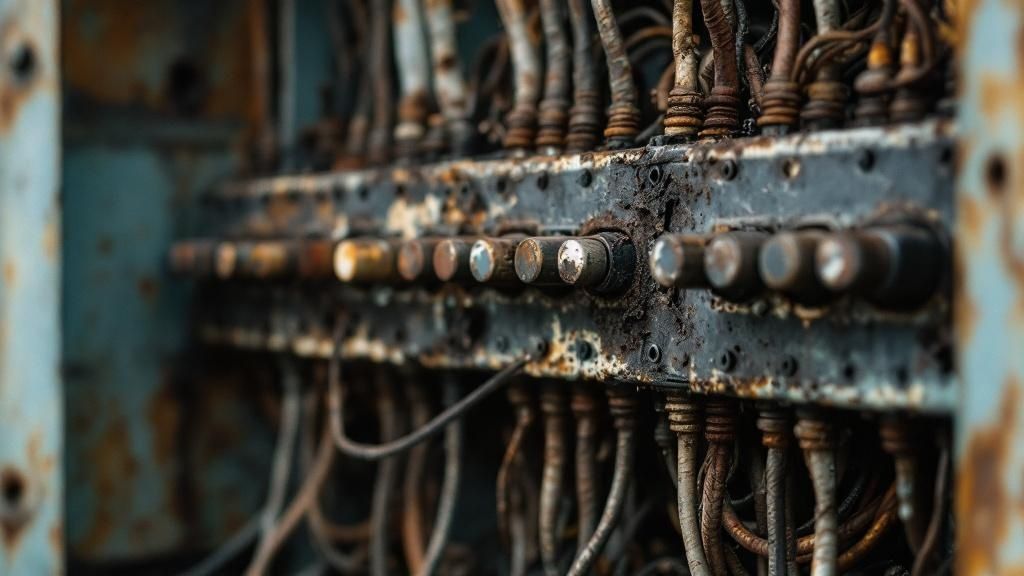
When you look at an old fuse box, the age is obvious. But a modern switchboard upgrade in Brisbane is about more than just looks. It’s a smart move that improves your home across three crucial areas: safety, legal compliance, and future-readiness. Think of it as transforming your home’s electrical system from a ticking clock into a reliable, modern asset.
The most important reason is, without a doubt, safety. Old switchboards are missing two pieces of technology that are now standard, and for good reason.
Here in Queensland, the rules around electrical safety aren’t just suggestions—they’re the law. An outdated switchboard simply won’t pass a modern electrical inspection. This can become a massive headache, especially if you’re planning to sell your home or undertake renovations.
The reality is, Australian homes are using more power than ever before, and the safety standards have evolved to match. Homes still running on old switchboards have a significantly higher risk of electrical fires and shocks. You can learn more by checking out the comprehensive electrical safety guidelines that detail these requirements.
A modern switchboard upgrade isn’t just about convenience. It’s about aligning your entire home with the current AS/NZS 3000 wiring rules—the gold standard for electrical safety in Australia. Crucially, this compliance is essential for keeping your home insurance policy valid if you ever need to make a claim for an electrical fire or incident.
Finally, a switchboard upgrade is an investment in your home’s future. Our daily lives are built on technology, and an old system just wasn’t designed to handle the load of a modern Brisbane household.
A new switchboard gets your home ready for:
By upgrading, you ensure your home’s electrical heart is strong enough for today’s demands and ready for whatever new technologies come along next.
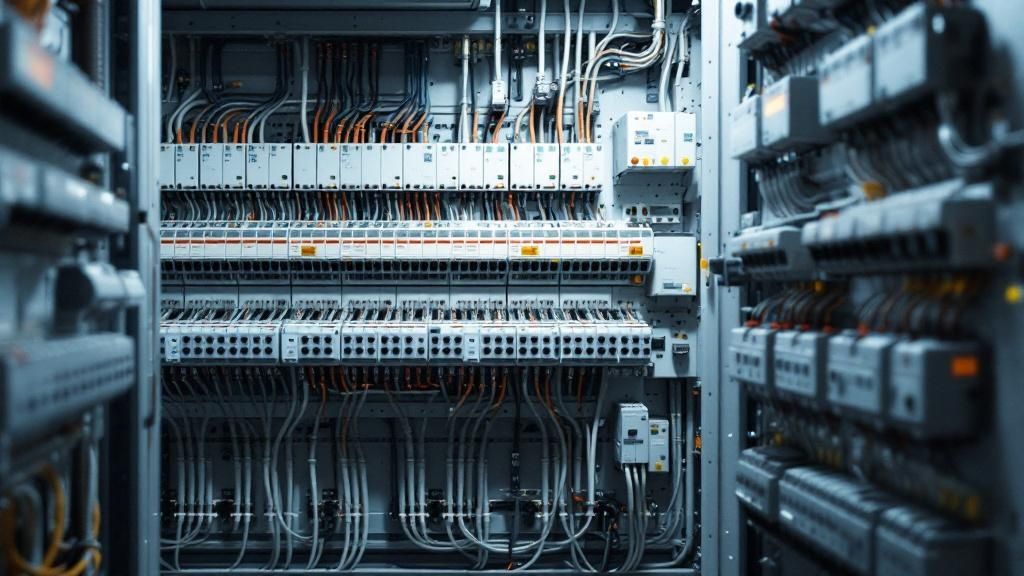
Most of the time, your switchboard will give you a heads-up that it’s struggling to cope. Sometimes the clues are subtle, but other times they’re impossible to ignore. Learning to spot these red flags is the key to stopping a small electrical niggle from escalating into a serious safety hazard.
Think of it this way: if your lights flicker or dim every time you switch on the air conditioner or microwave, it’s not just a weird quirk. It’s a classic sign of an unstable electrical load, meaning your switchboard can’t distribute power evenly across your home. It’s buckling under the pressure.
Are you constantly heading to the switchboard because a circuit breaker has tripped again? Maybe it happens every time you dare to use the toaster and the kettle simultaneously. This is a dead giveaway that your system is overloaded.
Older boards were never designed for the sheer number of appliances we use today. A modern switchboard can handle that load, but a vintage one simply can’t keep up.
A circuit breaker that trips all the time is your switchboard’s way of screaming for help. That safety mechanism is working overtime to prevent the wiring from overheating and causing a fire. It’s telling you the demand on the circuit is way beyond what it was built for.
If resetting a circuit has become part of your daily routine, it’s a sure sign an upgrade is long overdue. You can learn more about what a fix involves by reading up on professional switchboard repairs and upgrades.
Sometimes, the warnings are much more direct—things you can actually see, smell, or hear. You should never, ever ignore these signs, as they often point to an immediate danger.
Keep an eye (and an ear, and a nose) out for these critical red flags:
If you spot any of these signs, don’t wait. It’s time to call a licensed Brisbane electrician for a professional inspection immediately.
Thinking about getting your switchboard upgraded can feel like a big job, but knowing what’s involved makes the whole process feel much more straightforward. When you understand the steps a professional electrician takes, you can feel confident and know exactly what’s happening on the day.
The entire process kicks off with a detailed on-site assessment and quote. A licensed sparky will come out to your property, have a good look at your current switchboard, check the condition of the wiring, and chat with you about your family’s power usage. This first step is crucial because it ensures the quote is accurate and tailored specifically for your home, so there are no nasty surprises down the track.
Once you’ve given the quote the green light and booked in the work, the process is surprisingly efficient. Your electrician will let you know about a planned power outage, which is a non-negotiable safety step. For a standard Aussie home, this usually lasts between three and six hours.
On the day, the workflow is pretty methodical:
The following infographic gives you a clear visual of this simple three-stage process.
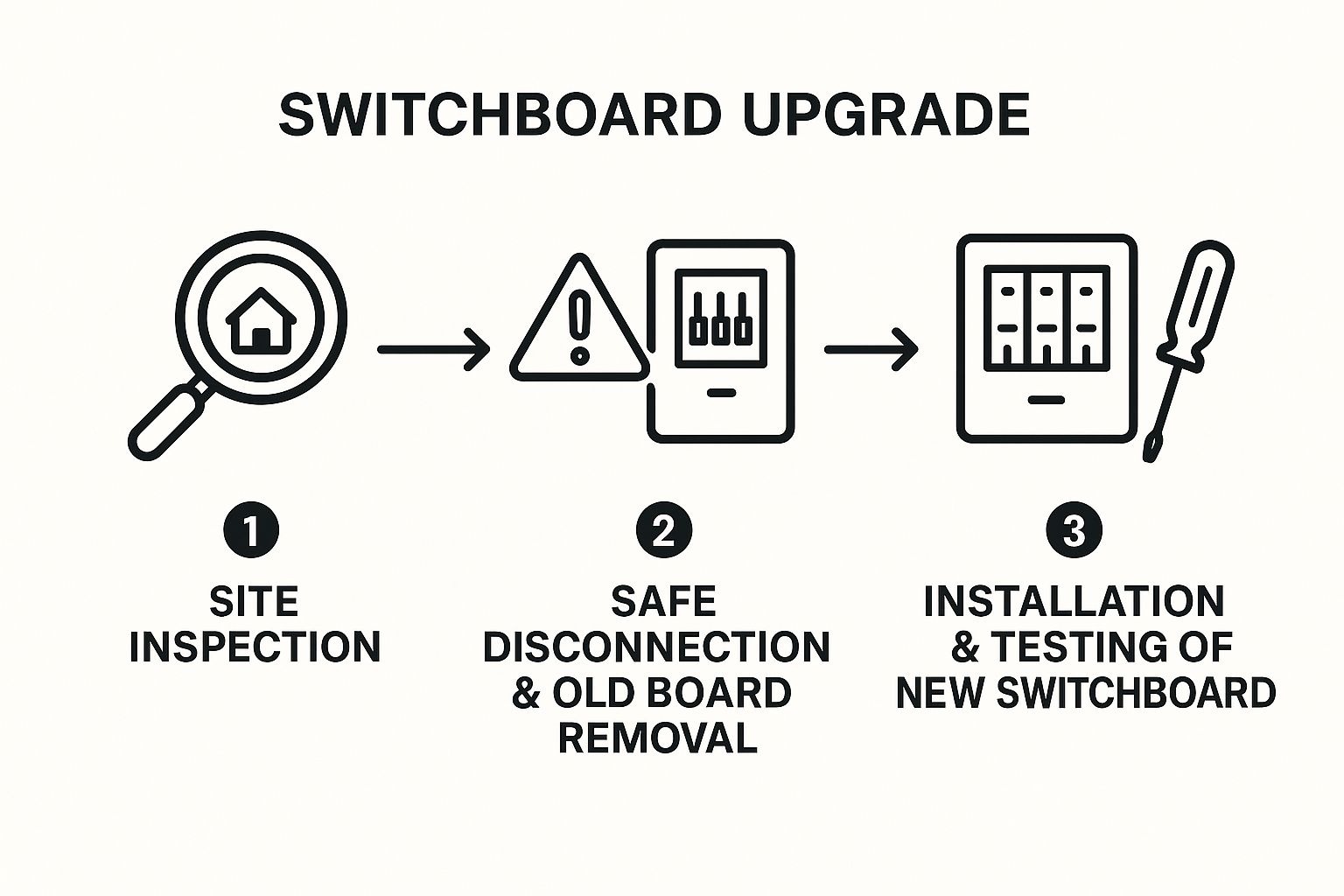
It really shows how a professional upgrade is a well-organised project, moving systematically from the initial inspection right through to installation and final testing.
The final step is arguably the most important one for your own assurance and for legal compliance. After successfully running all the tests, your electrician will hand you a Certificate of Compliance.
This official document is your guarantee that all the electrical work has been performed to the highest safety standards required by the Australian Wiring Rules (AS/NZS 3000) and Queensland law. It’s a vital piece of paper for your home insurance and property records.
Receiving this certificate confirms your switchboard upgrade was done by a qualified professional, giving you complete confidence in the safety and reliability of your home’s electrical system. From the first chat to the final sign-off, a professional upgrade is a transparent process designed to protect what matters most: your home and your family.
Let’s get straight to the question every homeowner asks: what’s the real price for a professional switchboard upgrade in Brisbane? The honest answer is, there’s no one-size-fits-all price tag. The final cost depends entirely on the unique circumstances of your property.
It’s a bit like getting a quote to paint your house. The price will naturally change based on the home’s size, the prep work needed for the walls, and the quality of paint you choose. A switchboard upgrade is exactly the same—a small, modern unit will have a very different price from a large, older home needing extensive wiring work.
When a licensed electrician puts together your quote, they’re carefully calculating the specific materials and labour your job requires. It all comes down to the size and complexity of the work ahead.
There are three main drivers that will shape the final price:
Getting your head around these factors is the key to understanding what you’re paying for. For a more detailed look at what goes into the final figure, we’ve put together a full guide on the switchboard upgrade cost over on our blog.
A good, professional quote is all about transparency. It should clearly break down what’s included in the base price versus what could pop up as an additional charge. This is how you avoid nasty surprises on the final bill and compare different quotes on a level playing field.
Here’s a breakdown of what you should expect to see covered.
This table shows what’s typically part of a standard upgrade quote and what might come up as an additional—but necessary—cost.
| Cost Factor | Typically Included | Potential Additional Cost |
|---|---|---|
| Labour | The time for a licensed electrician to complete the standard installation. | Extra time needed for unexpected wiring repairs or asbestos panel removal. |
| Materials | New switchboard enclosure, circuit breakers, and mandatory RCD safety switches. | The cost of new, larger consumer mains cables if an upgrade is required. |
| Compliance | All necessary safety testing and issuing the Certificate of Compliance. | Fees for coordinating with Energex if a mains upgrade or meter relocation is necessary. |
| Disposal | Removal and responsible disposal of the old switchboard and components. | Specialised disposal fees if hazardous materials like asbestos are present. |
It’s tempting to jump at the lowest price, but this is one area where you absolutely shouldn’t. A cheap quote might mean corners are being cut, whether by skipping essential safety devices or ignoring compliance work that will cause you headaches later on.
Always insist on a detailed quote that puts safety and compliance first. It might not be the cheapest on paper, but it will protect your home and family, which is a far greater return on investment.
Picking the right professional for your switchboard upgrade is single-handedly the most important decision you’ll make in this whole process. An electrical system is only as safe as the person who wired it up, so this isn’t the time for shortcuts.
For a job as critical as a switchboard upgrade, you should only ever consider a licensed Master Electrician. This isn’t just a fancy title; it’s a marker of a higher level of experience, a serious commitment to safety, and a properly run business. Before you even think about hiring someone, you need to see their credentials. Ask for their Queensland Electrical Contractor Licence and proof of current public liability insurance. This is your safety net, protecting you and your property if anything goes wrong.
Once you’ve confirmed they’re qualified, it’s time to dig a little deeper. A few key questions will quickly show you if they’re the right fit for the job. Don’t be shy about having a proper chat; a true professional will be happy to answer your questions.
A detailed written quote is non-negotiable. It should break down every cost—materials, labour, everything. This is what prevents nasty surprises on the final bill. For more tips on this, check out our guide on how to find licensed electricians near you.
Hiring a local expert who knows Brisbane’s older homes and specific wiring quirks is a huge advantage. They’ve seen it all before—the good, the bad, and the ugly—and know exactly what challenges to expect.
Local knowledge is invaluable. Many of Brisbane’s established electricians will tell you that outdated switchboards are a common risk they find in Queensland homes, often discovering non-compliant parts during routine inspections. This kind of firsthand experience is exactly what you want.
Finally, do your homework online. Check out their reviews and don’t hesitate to ask for references from past clients. Hearing directly from other homeowners gives you real insight into their workmanship and how they treat their customers, giving you the confidence to hire someone you can truly trust with your home’s safety.
Even after you’ve decided an upgrade is the right move, it’s completely normal to have a few questions floating around. We get asked these all the time by Brisbane homeowners, so let’s clear up some of the most common ones.
For a standard house in Brisbane, a full switchboard upgrade will usually take between 3 to 6 hours from start to finish. The most important thing to know is that your power will be switched off for the entire time—this is non-negotiable for the electrician’s safety.
Of course, that timeframe can stretch a little. If we get in there and find some old, dodgy wiring or other issues that don’t meet today’s safety standards, we’ll need to fix those up as well.
Yes, almost without exception. When you install solar panels, you’re not just drawing power from the grid anymore; you’re sending it back. An old switchboard with those classic ceramic fuses was never built to handle a two-way flow of energy. It’s simply not safe.
A modern switchboard with the correct circuit breakers and isolation switches isn’t just a good idea for solar—it’s a mandatory safety requirement for any compliant solar installation in Queensland. It gives you and any future electrician a safe way to manage and isolate the system when work needs to be done.
Think of it as the official seal of approval for your electrical work. Once the upgrade is done, your licensed electrician will issue a Safety Certificate of Compliance. It’s your formal proof that every part of the job has been done by the book, meeting the strict Australian Wiring Rules (AS/NZS 3000) and Queensland’s specific electrical safety laws.
This certificate is more than just a piece of paper; it’s vital for your home insurance, your property records, and ultimately, your peace of mind.
Ready to ensure your home’s electrical system is safe, compliant, and ready for the future? For expert advice and a transparent quote on your switchboard upgrade, trust the experienced team at DLG Electrical. Contact us today for your free quote!

Master Electrician with over 30 years of experience. Founded DLG Electrical in 2005 after international project work including electrical installations at Stamford Bridge Stadium, London(Home of Chelsea FC).

Local Electricians that can fix all Electric Hot water Systems.
Motion sensor lights are a versatile addition to any home, offering nu
