83 Jean St, Grange QLD 4051
Mon-Fri 07:30 AM - 04:00 PM - Sat - 8:00 - 12 - Sunday Closed

If you’re looking into a three phase power installation, you’re likely upgrading your property to handle some serious electrical muscle. It’s a major step up from the standard single phase supply found in most Aussie homes, essentially creating an electrical superhighway for properties with big energy demands. Think large workshops, power-hungry ducted air conditioning, or super-fast electric vehicle chargers.
Let’s use an analogy. Imagine your home’s electricity is like water flowing through a pipe. Single phase power is one pipe, giving you a steady but limited flow that’s perfectly fine for your everyday kettle, TV, and lights.
Now, picture three pipes working together in perfect rhythm. That’s three phase power. It delivers a much stronger, smoother, and more consistent stream of energy.
This system relies on three active wires and one neutral wire to create a beautifully balanced and continuous power delivery. While most homes get by just fine on a single phase supply, certain lifestyle upgrades can quickly max out that system. When that happens, you start seeing annoying issues like flickering lights every time the air con kicks on, or constantly tripped circuits.
To give you a clearer picture, here’s a quick rundown of how the two systems stack up.
This table breaks down the fundamental differences between the standard single phase power found in most homes and the more powerful three phase system.
| Feature | Single Phase Power | Three Phase Power |
|---|---|---|
| Wiring | Two wires (one active, one neutral) | Four wires (three active, one neutral) |
| Voltage | Typically 230V in Australia | Typically 400V between active wires |
| Power Delivery | Power dips slightly during cycles | Delivers smooth, constant power |
| Best For | Standard residential use, lighting, small appliances | High-demand machinery, large homes, EV chargers |
| Efficiency | Good for low-power needs | More efficient for running large motors |
As you can see, a three phase system is built for heavier loads, delivering more power more efficiently.
So, when does a three phase power installation go from a “nice-to-have” to a “must-have”? The tipping point usually arrives when you bring high-demand equipment onto your property.
Here are the most common triggers we see:
A three phase setup doesn’t just provide more power; it provides smoother power. This consistency is crucial for the longevity and efficient operation of high-performance motors and sensitive electronic equipment.
Ultimately, this kind of upgrade is about future-proofing your property. As our homes become more electrified, the demand for robust power will only grow. Three-phase power is already essential for industrial applications and the development of advanced energy infrastructure like sustainable community microgrids. By investing in a more capable system now, you’re ensuring your home or business can handle whatever you throw at it, both today and tomorrow.
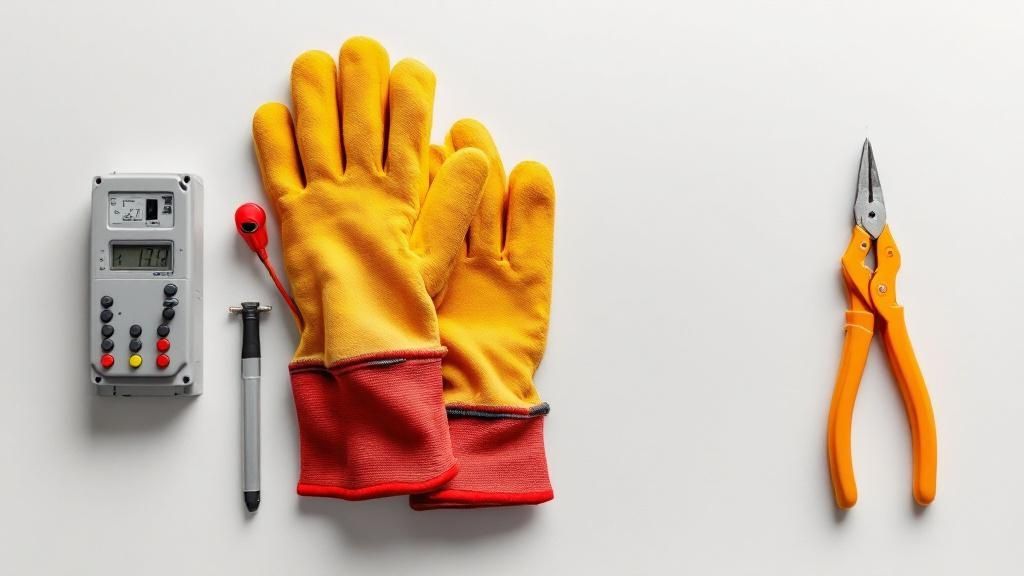
Most Australian homes get by just fine on single phase power. It’s the standard for a reason, easily handling the demands of day-to-day life. But as we plug more into our homes, the subtle signs of an overloaded system can start to creep in.
Learning to spot these signals is the first step in figuring out if a three phase power installation is what your property really needs.
One of the classic tell-tale signs is flickering or dimming lights. If the lights in your living room dip every time the ducted air con fires up or the pool pump kicks in, that’s your electrical system screaming for a bit of help. It’s struggling to meet that sudden surge in demand.
Another dead giveaway is constantly tripping circuit breakers. This isn’t just a minor inconvenience; it’s a safety feature kicking in, telling you loud and clear that your circuits are overloaded. If you can’t boil the kettle and use the microwave at the same time without a trip to the switchboard, you’re definitely pushing the limits of your single phase supply.
For many homeowners, the real tipping point arrives with new, power-hungry equipment. The electrical appetite of a modern household can easily overwhelm a standard single phase connection, which is typically capped at a maximum service line of 80 amps.
You might be outgrowing your current system if you’ve recently added or are planning to install:
Perhaps the single biggest reason for residential upgrades today is the electric vehicle (EV). While a standard “trickle” charger might be okay for an overnight top-up, a proper fast charger designed to get you back on the road in a few hours puts a huge, continuous load on your system.
Upgrading to three phase power isn’t just about handling today’s demand. It’s about getting your home ready for a future where our energy needs are only going to get bigger. Think of it as an investment in capacity, safety, and reliability.
A three phase upgrade, for instance, can slash EV charging times. We’re seeing a huge uptick in these installations as people realise it triples the available power, comfortably handling modern demands and future-proofing their homes for things like virtual power plants.
You can learn more about this trend in Australian homes from this detailed guide on dawsonelectric.com.au. If any of these issues sound familiar, it’s probably time to ask whether your single phase system is still the right fit for your home’s future.
Upgrading to three phase power is about so much more than just stopping your circuits from tripping. It’s a strategic investment that fundamentally elevates your property’s electrical performance, reliability, and future potential. The biggest difference you’ll notice is the sheer quality of the power it delivers.
Think of single phase power like a garden hose that pulses slightly as it sprays. Three phase, on the other hand, is like three hoses perfectly timed to create a smooth, continuous, and completely balanced stream of energy.
This unwavering consistency is a game-changer for any equipment with a powerful electric motor—think ducted air conditioners, big pool pumps, or heavy-duty workshop machinery.
A three phase supply allows these motors to run more efficiently and with far less strain. This not only cuts down on operational noise but also minimises wear and tear, which can seriously extend the lifespan of your expensive appliances.
That smoother, more efficient operation often translates into better performance and even long-term energy savings, making the initial three phase power installation a very savvy investment.
A common myth is that getting three times the power means you need massive, impractical wiring. Thankfully, that’s not how it works. A three phase system is ingeniously efficient by design.
It delivers a huge jump in power compared to a single phase connection, but it does so without needing proportionally thicker, more expensive copper cables. This is exactly why it’s the standard for commercial and industrial sites across Australia.
To put it in perspective, a typical 32-amp single phase circuit gives you about 7.36kW of power. That same 32-amp circuit in a three phase setup can deliver up to 22kW—that’s nearly triple the capacity! This capability is essential for everything from manufacturing plants to high-speed EV charging stations, a point covered in detail in this 2025 Australian power guide on tkelectric.com.au.
Perhaps the most compelling reason to upgrade is how it prepares your property for what’s coming next. Our home energy landscape is changing fast, and our power demands are only going to grow.
Investing in a three phase system now gets you ready for the technology of tomorrow:
Ultimately, this upgrade buys you peace of mind. It’s the confidence of knowing your electrical system can handle anything you throw at it, today and in the future. It all starts with having the right foundation, and you can learn more about this crucial hub in our guide to switchboard upgrades in Brisbane.
Getting your head around the steps involved in a three phase power installation can make the whole project feel a lot less daunting. It gives you a clear roadmap from the first quote to the final flick of the switch.
While every property is a bit different, the process follows a pretty standard path. It’s a coordinated effort between you, your electrician, and your local electricity provider. Knowing what to expect helps manage timelines and gives you a clear picture of where your investment is going.
First things first, you need to get a qualified and licenced electrician on board. Crucially, they need to be a Level 2 Accredited Service Provider (ASP) or your state’s equivalent, as only they are authorised to work on the network grid.
During this initial chat, your electrician will:
Once you give the green light, your electrician takes care of the most important bit of paperwork: submitting an application to your local electricity distributor (the company that owns the poles and wires, like Energex or Ausgrid). This is the formal request that officially gets the ball rolling.
This infographic gives you a glimpse into the technical steps an electrician takes to wire up the system.
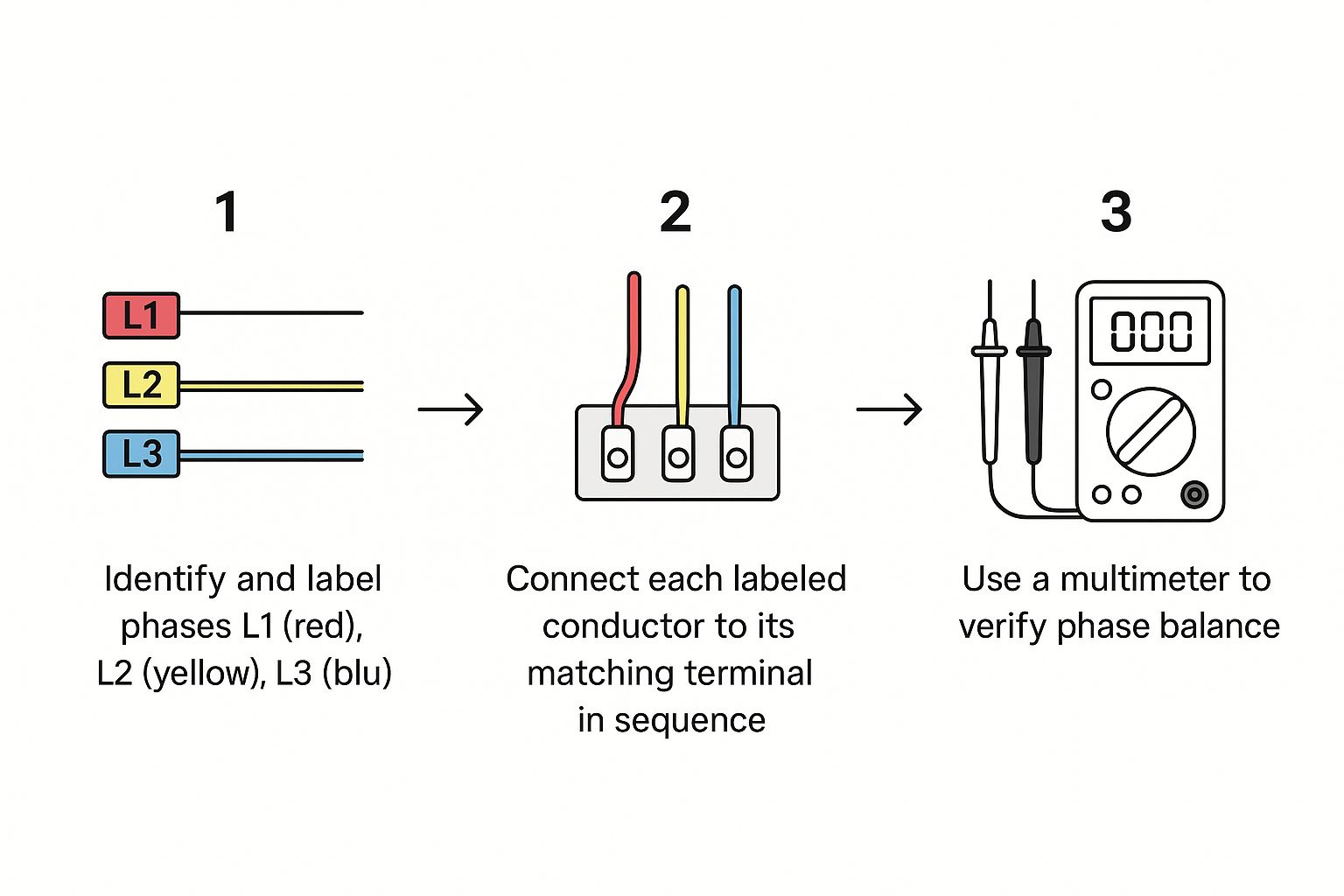
As you can see, it’s a methodical process of identifying, connecting, and testing each phase to make sure the power supply is balanced, safe, and ready to go.
After the utility provider gives their approval (which can sometimes take a few weeks), the real work can kick off. This is where your property is physically transformed to handle the bigger, better power connection. Your electrical contractor manages this entire stage.
Here’s what’s typically involved:
Who does what? It’s a team effort. Your electrician handles all the work on your property (the trenching, cabling, and switchboard). The utility company is responsible for the final connection at the street and putting in the new meter.
With all the heavy lifting done, the final steps are all about safety and compliance before officially powering up your new system. Your electrician will run a series of tests to double-check that everything has been installed correctly and meets strict Australian Standards.
Once everything passes muster, they’ll issue a Certificate of Compliance for Electrical Work (CCEW). This official document is your proof that the three phase power installation is safe, compliant, and has been done professionally.
With that final bit of paperwork sorted, your powerful and reliable new system is officially ready for action.
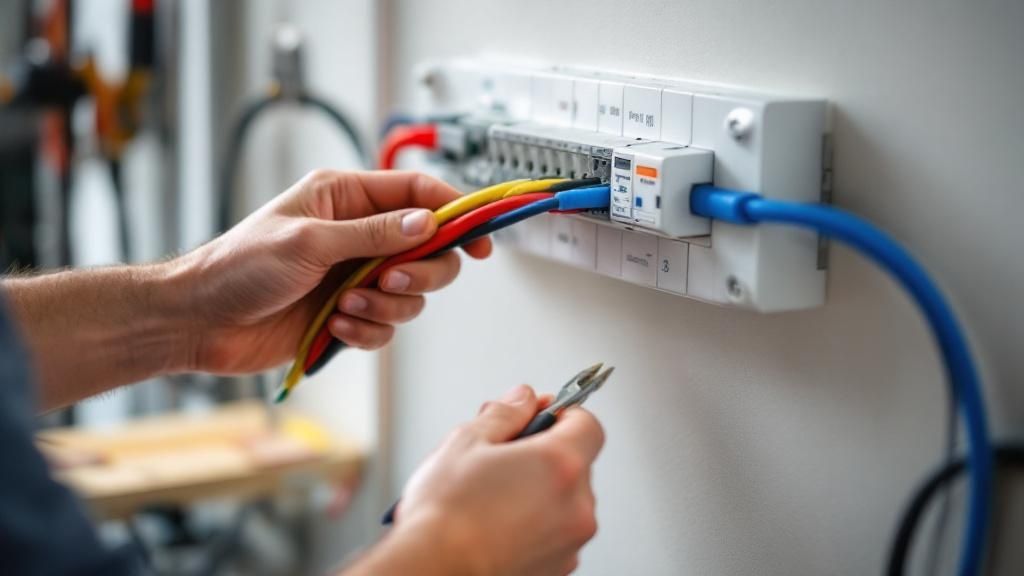
Let’s talk numbers. Planning for a three phase power installation means getting your head around the costs. While every job is different, understanding the budget and the variables at play is the first step toward making a smart decision. The final price tag isn’t just one number; it’s a mix of a few key factors.
For an existing Aussie home, you can typically expect the cost to upgrade from single phase to a powerful 415-volt three phase system to land somewhere between $4,500 and $6,500. This is the kind of upgrade you need to reliably run heavy machinery or multiple power-hungry appliances. If you’re building from scratch, the costs are usually lower because there’s no old wiring to rip out.
So, what exactly drives that price up or down? When an electrician comes out to quote, they’ll be looking at a few specific things that directly impact the final cost.
Here are the main variables:
It’s best to think of this as a long-term investment in your property’s capability and safety. A proper installation doesn’t just meet your needs today—it future-proofs your home or business for whatever comes next.
As we mentioned, installing three phase power during a new build is generally more straightforward. Your sparkie is working with a clean slate, so there’s no need to decommission and remove old, outdated infrastructure first.
For existing homes, it’s a bit more involved. The process includes safely disconnecting the old single phase supply and replacing the entire switchboard. To get a better handle on that part of the budget, our article on the electrical switchboard upgrade cost breaks down exactly what’s involved.
If you’re looking at a major commercial upgrade, it might also be useful to explore the advantages of unsecured business loans for financing. The best thing you can do is ask your electrician for a detailed, itemised quote. That way, you’ll see exactly where every dollar is going, with no surprises.
When you’re talking about a three phase power installation, this is one job you absolutely cannot DIY. It involves connecting directly to the main electricity grid, and the risks are simply too high. Safety and legal compliance are non-negotiable here, with all work needing to meet strict Australian Standards, especially AS/NZS 3000.
Getting the right professional is the single most important decision you’ll make. You need to hire a licensed electrician who holds a specific accreditation, usually known as a Level 2 Accredited Service Provider (ASP) or your state’s equivalent. These are the only specialists legally allowed to work on the service lines connecting your property to the power network in the street.
To make sure you’re hiring a genuine professional who will get the job done safely and to code, you need to ask the right questions. Before you sign off on anything, get clear answers on these key points.
Your checklist for hiring should include:
Choosing the cheapest quote without doing your homework can lead to unsafe work, compliance failures, and seriously expensive repairs down the track. A qualified professional ensures the installation is safe, legal, and built to last.
Beyond the technical side of things, finding the right professional is paramount. While not specific to electrical work, a good guide to hiring contractors for things like air conditioning offers some great transferable advice on how to vet and choose qualified tradespeople. For more specific tips, you can also check out our guide on how to find licensed electricians near me. Taking that extra bit of time to properly check out your electrician gives you total peace of mind.
Stepping up to a three phase power installation is a big decision, and it’s natural to have a few questions. Getting the right answers can make all the difference in feeling confident about the upgrade. We’ve rounded up some of the most common queries we hear from homeowners to clear the air.
The quickest way to know for sure is to take a look at your main switchboard. A standard single phase supply usually has one main switch, which is a single-pole unit. A three phase supply, on the other hand, will have a much wider main switch that’s three poles wide—it often looks like three individual switches fused together.
You might also spot a ‘3 Phase’ label on your electricity meter. If you’re still unsure, a quick phone call to your electricity retailer or a licenced electrician will sort it out for you in minutes.
In short, no—not on its own. The upgrade itself doesn’t change the rate you pay per kilowatt-hour (kWh). Your bill is calculated based on how much power you consume, not the total capacity you have available.
Where things can change is with the new, power-hungry appliances you can now run. While the efficiency of a three phase system can offer slight savings on certain motors, the real impact on your bill comes down to how you use that extra capacity. You only pay for the power you actually use.
An upgrade to three phase gives you a much bigger pipeline for electricity, but your consumption habits are what really drive your bill. Think of it like a bigger water pipe—your bill only goes up if you start turning on the taps more often.
For most residential solar setups, especially systems up to 6.6kW, single phase power is perfectly adequate. An upgrade only really comes into play when you’re thinking bigger—like installing a very large solar array (often over 10kW) or a high-capacity battery storage system.
Many of the larger, more powerful solar inverters are specifically designed for three phase connections. This helps them balance the load they export back to the grid, making the upgrade a crucial part of a more ambitious home energy strategy.
Ready to talk through your power needs or get a professional opinion on a three phase power installation? The experienced team at DLG Electrical is here to help. Contact us for a free, no-obligation quote, and let our licenced Brisbane electricians design a safe and reliable solution for your property.

Master Electrician with over 30 years of experience. Founded DLG Electrical in 2005 after international project work including electrical installations at Stamford Bridge Stadium, London(Home of Chelsea FC).

Local Electricians that can fix all Electric Hot water Systems.
Motion sensor lights are a versatile addition to any home, offering nu
