83 Jean St, Grange QLD 4051
Mon-Fri 07:30 AM - 04:00 PM - Sat - 8:00 - 12 - Sunday Closed

When people think of power surges, their minds usually jump to dramatic events like a lightning strike or a major utility grid failure. While these are definitely culprits, the surprising truth is that the vast majority of surges actually start inside your own home, often from everyday appliances switching on and off.
So, what exactly is a power surge?
The easiest way to picture it is to think of your home’s wiring like a plumbing system. Normally, electricity flows through the wires at a steady, consistent pressure, much like water in pipes. A power surge is like a sudden, violent blast of water pressure—a massive jolt that slams through the entire network, putting immense stress on every tap, fixture, and appliance connected to it.
This abrupt spike in electrical pressure, or voltage, is a serious threat to your expensive electronics. Modern devices, from smart TVs and laptops to sophisticated kitchen appliances, are packed with delicate microprocessors and circuit boards. These components are designed to operate within a very narrow, stable voltage range. When a surge hits and sends the voltage skyrocketing past that limit, it can instantly overwhelm and fry these fragile parts.
This infographic gives a great visual of how that sudden burst of electrical energy travels through your wiring and wreaks havoc on sensitive electronics.
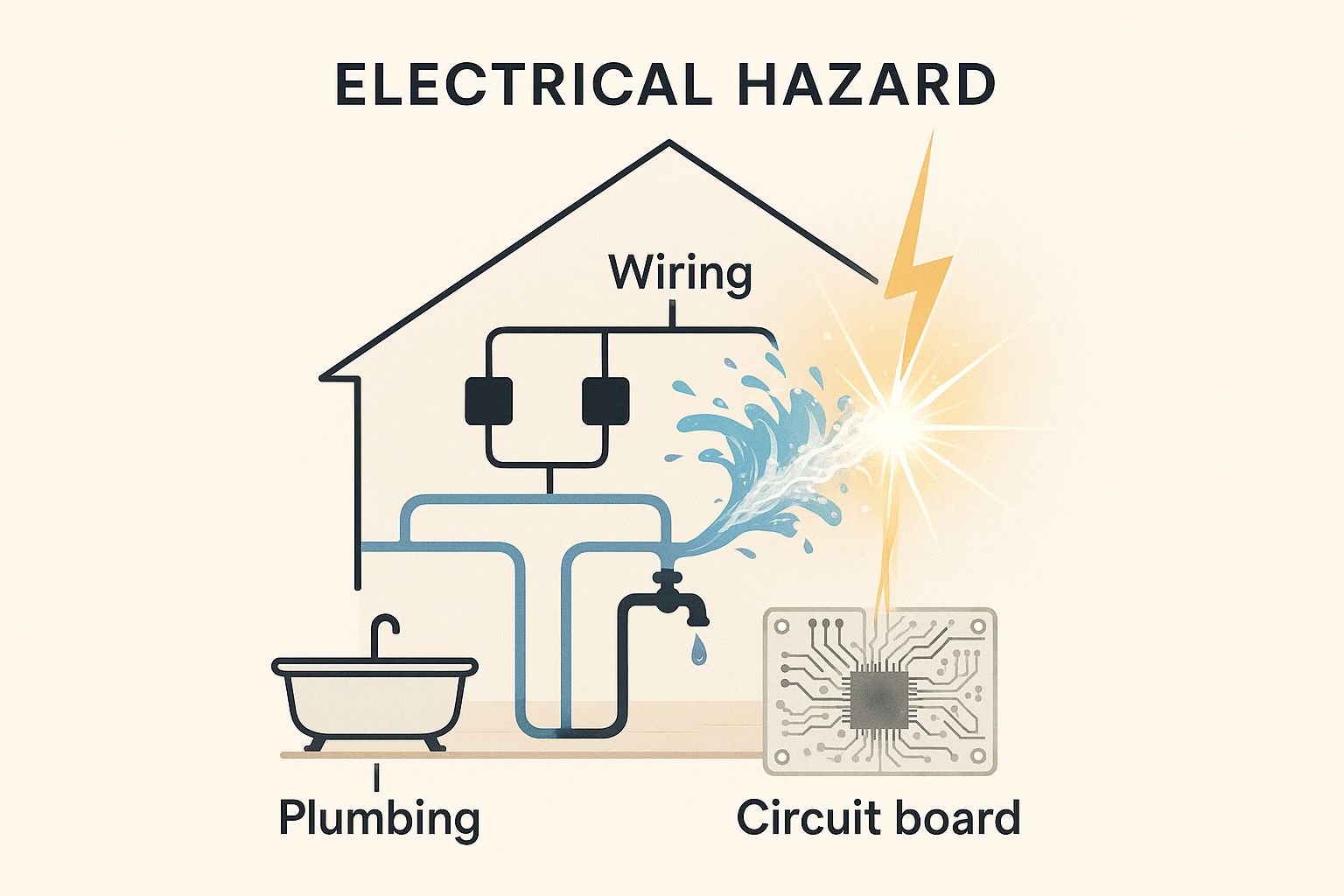
As you can see, a surge is a seriously disruptive force. It shatters the stable flow of power that all our modern gear relies on to operate safely.
While the damage happens inside your home, the causes of power surges fall into two main categories. Getting your head around them is the first step toward protecting your property.
While one of these small internal surges probably won’t cause a catastrophic failure right away, their cumulative effect is like “electronic rust.” They slowly degrade sensitive components over time, leading to mysterious glitches and, eventually, premature device failure.
This guide will walk you through everything you need to know about where these surges come from and what you can do about them.
To make things clearer, here’s a quick breakdown of the primary sources of power surges we’ll be covering.
| Surge Category | Common Causes | Frequency |
|---|---|---|
| External | Lightning strikes, utility grid switching, downed power lines, accidents involving utility poles. | Less frequent, but extremely high-energy and destructive. |
| Internal | Air conditioners, refrigerators, washing machines, dryers, power tools, and other large motor-driven appliances cycling on/off. | Very frequent; responsible for up to 80% of all surge events. |
This table neatly summarises the distinction between the dramatic, less common external events and the constant, low-level internal surges that quietly wear down your electronics every single day.

While the majority of power surges start inside your four walls, the ones with the real knockout power come from the outside world. These external events are the heavy hitters, capable of causing immediate and severe damage to your sensitive electronics.
These are forces that are almost entirely out of your hands, coming from two main sources: mother nature and the very power grid that supplies your home. Think of them like an electrical tsunami—they don’t happen every day, but when they do, the impact is massive.
Lightning is easily the most notorious cause of power surges, and for very good reason. A single bolt can unleash millions of volts of electricity. To put that in perspective, it completely dwarfs the standard 230 volts your home is designed to run on.
A direct hit on your home is, of course, catastrophic. But you don’t need that level of bad luck for things to go wrong. Even a strike kilometres away can send a devastating pulse of energy your way. When lightning hits the ground or a nearby power pole, it shoots an incredible amount of voltage into the earth and the surrounding utility network. This energy travels down the wires, hitting your home in a split second and frying any unprotected device in its path.
Your electricity provider is constantly juggling the complex network that is the power grid. They redirect electricity, carry out maintenance, and restore power after an outage. This process is known as grid switching.
While it’s all necessary work, it can inadvertently create powerful surges. When power is switched back on in a neighbourhood after a blackout, that sudden rush of energy causes a huge voltage spike that travels down the line and straight into every connected home.
Think of it like this:
Imagine turning a fire hose on at full blast. That first explosion of water is wild and powerful before it settles into a steady flow. Restoring power sends a similar jolt through the lines, one that can far exceed normal operating levels.
Beyond lightning and planned grid management, a few other external factors can trigger dangerous power surges. These incidents really highlight just how vulnerable our overhead power infrastructure can be.
Here are a few common culprits:
These external events, particularly those whipped up by bad weather, can leave homeowners with a serious electrical headache. Knowing what to do is half the battle, and our guide on a quick emergency response for storm damage walks you through the practical steps to take.
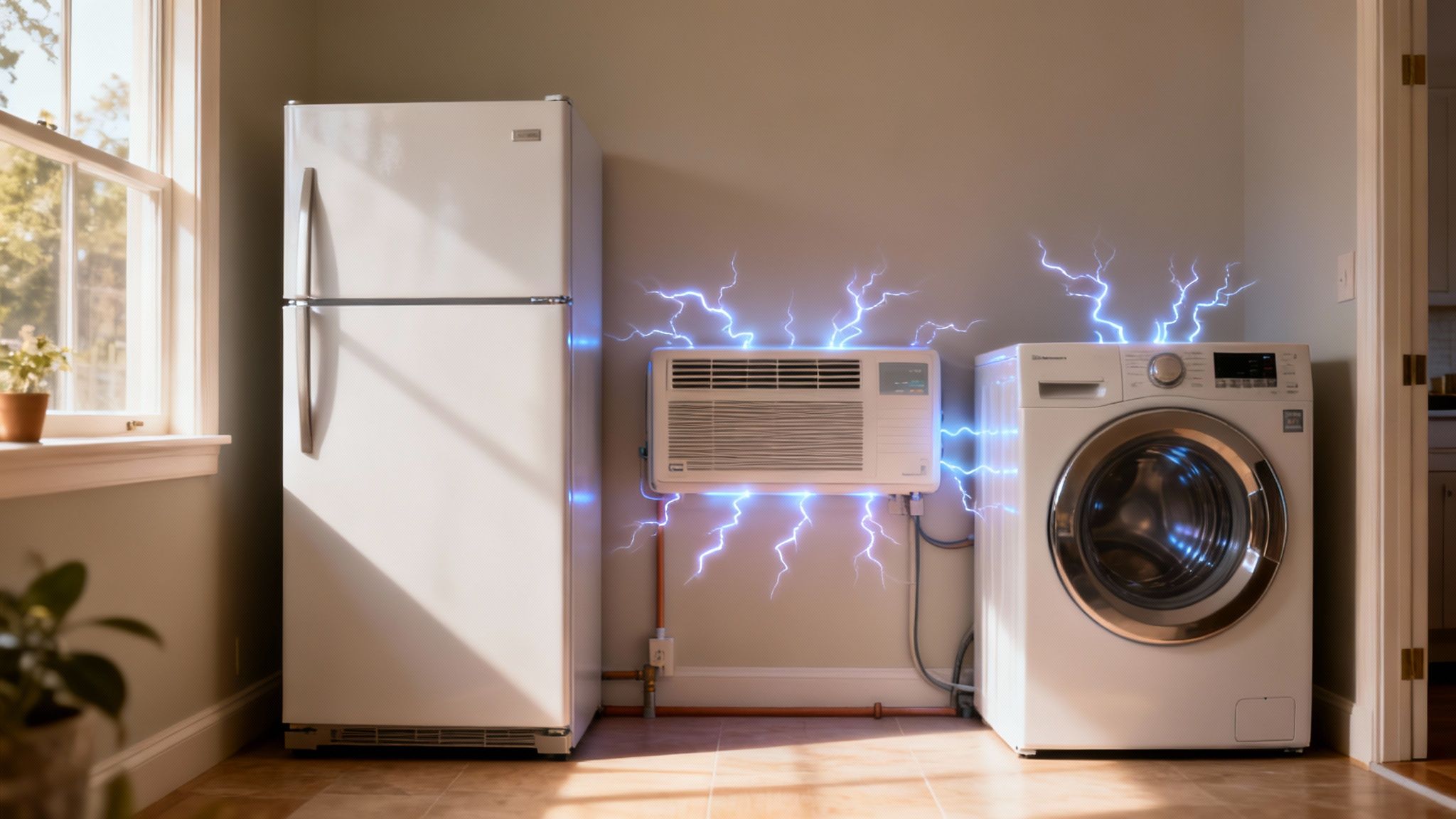
While we often blame dramatic thunderstorms and grid failures for power surges, the real culprit is usually much closer. In fact, research suggests up to 80% of all power surges are generated right inside our own homes.
These internal surges are small, frequent, and often fly completely under the radar. They can happen dozens, sometimes hundreds, of times every single day. One of these tiny jolts won’t fry your new TV instantly, but their combined effect acts as a slow, silent killer for your sensitive electronics.
So where are these spikes coming from? The primary source is powerful, motor-driven appliances. Every time one of these devices cycles on or off, it creates a brief but potent disruption in your home’s electrical flow.
Imagine your home’s wiring is like a calm pond. When a big appliance like an air conditioner suddenly demands a massive gulp of power to kickstart its compressor, it’s like dropping a heavy rock into the water. The action sends ripples—or in this case, a small voltage surge—across the entire electrical circuit.
The most common offenders are usually the biggest energy consumers:
This constant barrage of small surges is sometimes called “electronic rust.” It slowly eats away at the delicate internal components of your other devices, leading to mysterious glitches, poor performance, and a much shorter lifespan.
Beyond your appliances, the very wiring in your walls can be a source of internal power surges. Faulty or old electrical wiring is a major risk, particularly in older homes that haven’t been updated to handle modern power demands.
An electrical system that isn’t up to code will struggle to manage the flow of power safely. Things like loose connections, corroded wires, or overloaded circuits all create instability, which can lead to unpredictable voltage spikes and fluctuations. This is why getting a professional to inspect your wiring is so important.
Let’s face it, today’s homes are packed with more power-hungry gear than ever before. From multiple computers and home entertainment systems to smart kitchen gadgets, we place a heavy load on our electrical systems.
The growing popularity of electric vehicles adds a whole new dimension to this. If you’re thinking of making the switch, understanding what’s involved in a professional EV charger installation is vital to ensure it’s done safely and doesn’t overwhelm your existing setup.
When you run too many devices on a single circuit, it becomes overloaded. This doesn’t just trip the circuit breaker; it also creates small but constant surges as the system struggles to cope, posing a low-level threat to everything plugged into that line.
The causes of power surges aren’t just limited to lightning strikes or your air conditioner kicking on. There are much bigger, nationwide trends at play, especially here in Australia, that have a real impact on the power flowing into your home. Our national energy grid is in the middle of a massive transformation, shifting away from old-school coal-fired power plants and towards a future powered by renewables.
This transition is a fantastic leap forward for the environment, but it does introduce new complexities for grid stability. Think of the old grid like a single, huge tap controlling water flow—it was powerful and consistent, but slow to react. The new grid is more like a network of hundreds of smaller, variable taps (like solar panels and wind turbines) that all need to be perfectly coordinated.
Renewable sources like solar and wind are, by their very nature, variable. The sun doesn’t always shine, and the wind doesn’t always blow at the same speed. This intermittency means that managing a smooth, steady supply of electricity becomes a much more delicate balancing act for the grid operators.
As a result, minor voltage fluctuations can become more common as the grid scrambles to match supply with demand in real-time. We’re not talking about the massive, destructive surges from a lightning strike, but rather subtle dips and spikes. Over time, these little fluctuations act like “electronic rust,” slowly degrading your sensitive devices.
This shift doesn’t mean the grid is unreliable; it simply means the nature of power delivery is changing. Understanding this helps explain why your home’s electrical supply might seem less predictable than it used to be.
This change is happening fast. For instance, during the first quarter of 2024, renewable energy powered a record 43% of Australia’s national grid. That includes huge jumps in large-scale solar, rooftop solar, and wind energy, which really highlights how quickly our power sources are evolving.
To cope with this new energy mix, the grid itself needs constant upgrades and maintenance. Old infrastructure has to be modernised to handle the two-way flow of electricity from rooftop solar systems and to manage the variable input from renewable farms. To keep the grid stable and mitigate risks, advanced tech is being used, such as efforts in drone power line inspections for grid safety.
These essential maintenance activities can sometimes lead to temporary instability. When sections of the grid are taken offline for upgrades or repairs, rerouting power can cause transient voltage spikes—very similar to those seen during routine utility switching. While necessary for the grid’s long-term health, these short-term disruptions are another source of what causes power surges in your home.
Making sure your home is ready for this modern energy landscape is key. One of the most critical pieces of the puzzle is your switchboard. If you’re concerned about how your home is handling these grid-level changes, learning about the benefits of a modern switchboard upgrade in Brisbane is a smart, proactive step towards better protection.
Knowing what causes power surges is one thing, but actually putting the right defences in place is what shields your valuable electronics from damage. Instead of leaving your home exposed, the best approach is a robust, two-layered strategy. This will protect everything from your big-screen TV right down to your coffee maker.
Think of it as a comprehensive defence plan. One layer stops the big, external threats at the door, while the other manages the smaller, everyday surges that happen inside your home. Using both together gives you the most complete safeguard for your home’s entire electrical ecosystem.
This is the type of protection most of us are familiar with—the power boards we plug our computers and home entertainment systems into. But here’s something crucial to realise: not all power boards are surge protectors. A basic power strip is really just an extension cord with a few extra outlets. A true surge protector, on the other hand, has specific components inside designed to absorb and divert any excess voltage.
When you’re out shopping for one, there are two key terms you absolutely need to look for on the packaging:
These devices are your frontline defence for individual, high-value electronics, especially against those smaller, internal surges created by your own appliances flicking on and off.
While individual power boards are essential, they can be completely overwhelmed by a major external surge, like one from a lightning strike or a fault on the power grid. That’s where a whole-house surge protector comes into the picture. This is a heavy-duty device that a qualified electrician installs directly at your main electrical panel or switchboard.
Think of it as a security guard for your entire home’s electrical supply. It stands at the entry point, constantly monitoring the incoming power from the grid. If it detects a massive, dangerous voltage spike, it instantly diverts it safely into your home’s grounding system before it even gets a chance to enter your circuits.
A whole-house protector is your primary shield against those catastrophic external events. Meanwhile, your point-of-use protectors clean up any leftover voltage and defend against the constant internal surges. Together, they create a complete safety net.
This dual-layer system is becoming more and more important, especially in the context of Australia’s changing energy grid. The country’s net energy consumption rose by 2% in 2022-23, and at the same time, renewable energy generation grew by 12%. This big shift can impact grid stability, which really highlights the need for homes to have their own robust protection. For more detail on this, you can check out this report from the Australian Bureau of Statistics about Australia’s evolving energy profile.
Understanding the theory behind power surges is one thing, but you probably have some practical questions about what it all means for your home. This section cuts through the noise with clear, straightforward answers to help you make smart decisions about protecting your valuable electronics.
These insights will solidify what we’ve already covered and give you that extra bit of knowledge to properly secure your home against threats, both inside and out.
Yes, they absolutely can. While a massive lightning strike causes obvious, immediate destruction, the far more common threat comes from the dozens of small, daily surges happening inside your home.
Think of it like this: a single huge wave can smash a beach house to pieces in an instant. But the constant, tiny waves lapping at the foundations day in and day out will also cause serious erosion and structural damage over time. These small, frequent surges do the same thing, slowly degrading the sensitive internal parts of your electronics.
This cumulative damage is often called ‘electronic rust.’ It’s why a device can work perfectly one day and mysteriously fail the next, leading to a much shorter lifespan than you’d expect.
This slow, creeping wear-and-tear is precisely why a complete protection strategy is so essential.
No, and this is one of the most critical things to get right when buying protection for your gear. Most basic power boards are just glorified extension cords with a few extra outlets and an on/off switch. They offer convenience but provide zero protection against voltage spikes.
A proper surge protector has specialised internal components, like Metal Oxide Varistors (MOVs), that are designed to absorb and divert excess voltage away from your devices. In a major surge event, they essentially sacrifice themselves to save your electronics.
To make sure you’re buying real protection, you need to check the packaging for two key things:
Without these, you’re just plugging your expensive equipment into a simple power splitter, leaving it completely exposed.
A whole-house surge protector is your single best line of defence against big, high-energy surges coming from the grid or a nearby lightning strike. What it doesn’t stop, however, are the smaller surges generated inside your home by your own appliances switching on and off.
For this reason, electricians and industry experts strongly recommend a two-layered strategy to get complete coverage. This approach combines the strengths of both types of protection to create a comprehensive safety net for your home.
This combination ensures you’re covered from threats originating both outside and inside your home, giving you the most robust protection possible for all your electrical gear.
Protecting your home from the full spectrum of power surges requires professional expertise. The team at DLG Electrical specialises in installing comprehensive surge protection solutions, including whole-house units and switchboard upgrades, to safeguard your property. To secure your electronics and ensure your home’s electrical system is safe and reliable, visit https://dlgelectrical.com.au to get a free quote today.

Master Electrician with over 30 years of experience. Founded DLG Electrical in 2005 after international project work including electrical installations at Stamford Bridge Stadium, London(Home of Chelsea FC).

Local Electricians that can fix all Electric Hot water Systems.
Motion sensor lights are a versatile addition to any home, offering nu
