83 Jean St, Grange QLD 4051
Mon-Fri 07:30 AM - 04:00 PM - Sat - 8:00 - 12 - Sunday Closed
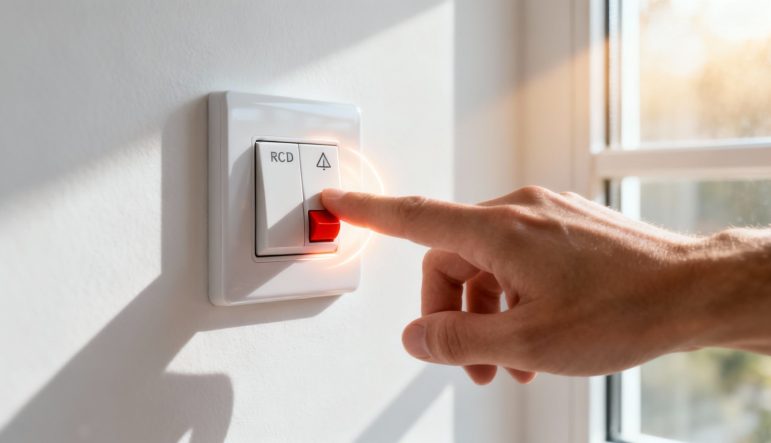
A safety switch is a life-saving device that quickly shuts off electricity when it detects a fault, preventing serious electric shock. It acts as a lightning-fast lifeguard for your home’s electrical system, constantly monitoring for dangerous current leaks and disconnecting the power in milliseconds to protect you and your family.
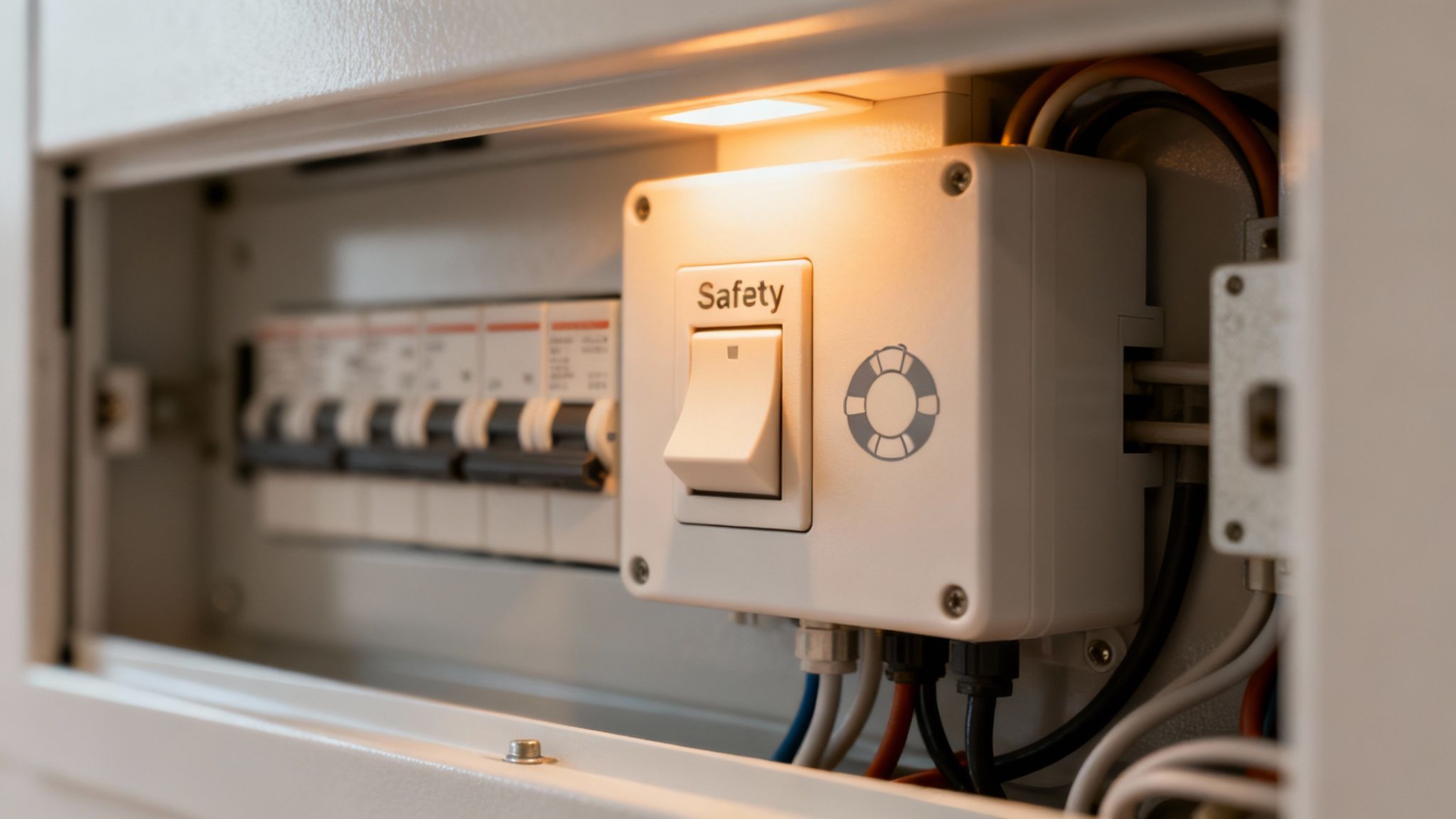
It’s a common mix-up, but a safety switch is not the same as a circuit breaker or a fuse. Their jobs are entirely different, and the safety switch’s role is far more personal. While circuit breakers are there to protect your appliances from overloads and power surges, a safety switch has one critical mission: to protect human life. Its sole purpose is to stop you or a family member from being severely injured or killed by an electric shock.
Think of your home’s wiring like a closed-loop plumbing system. Electricity flows from the switchboard, out through the circuit to power an appliance, and then returns. A safety switch, also known by its technical name, a Residual Current Device (RCD), meticulously measures the current flowing out and coming back.
Normally, the amount of electricity leaving should be exactly the same as the amount returning. But what happens if that current finds a faster, easier path to the ground? This often happens when it passes through a person who has touched a faulty appliance or a damaged cord.
When this happens, an imbalance is created, signalling a dangerous electrical leak. The safety switch detects this tiny discrepancy and, in as little as 30 milliseconds—literally faster than a single heartbeat—it cuts the power to that entire circuit. This lightning-fast response is what prevents a potentially fatal electric shock.
Let’s quickly break that down.
This table summarises exactly what a safety switch does and why it’s so important for your home.
| Feature | Description |
|---|---|
| Primary Function | To protect people from electric shock by detecting small electrical leaks to earth. |
| Response Time | Trips in under 30 milliseconds (0.03 seconds) once a fault is detected. |
| Trigger Mechanism | Monitors the balance of electrical current flowing in and out of a circuit. An imbalance triggers the switch. |
| What It Protects | Human life. It is not designed to protect appliances from overloads or short circuits (that’s a circuit breaker’s job). |
| Common Name | Also widely known as an RCD (Residual Current Device). |
Ultimately, having a working safety switch is the difference between a minor jolt and a life-threatening accident. Because of its life-saving potential, understanding what it is and ensuring your Brisbane home is fully protected isn’t just a good idea—it’s a fundamental part of modern electrical safety. Without one, you’re missing your most effective defence against electrical accidents.
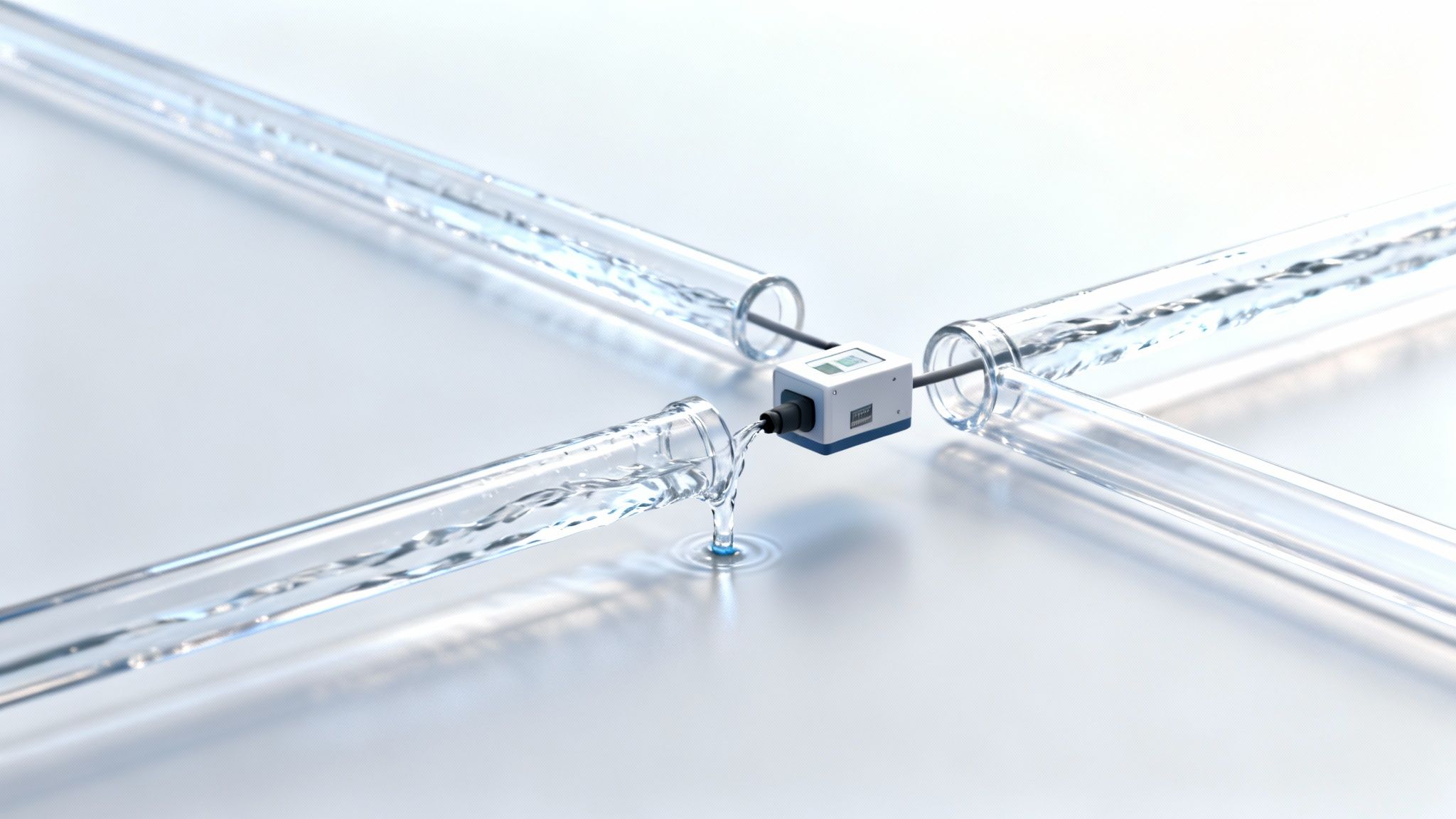
To really get your head around what a safety switch does, you need to understand its one core job. Forget complex electronics for a moment; the principle is beautifully simple: it’s all about perfect balance.
Think of your home’s wiring like a closed-loop plumbing system. When everything’s running smoothly, the amount of water (or electricity) flowing out from the source is exactly the same as the amount flowing back. It’s a perfect, balanced circuit.
A safety switch is like a highly sensitive flow meter in that system. It’s constantly measuring the electrical current going out on the active wire and comparing it to the current coming back on the neutral wire. As long as those two values are identical, the switch stays quiet and the power flows.
Now, let’s say a tiny leak develops somewhere in that plumbing system. In electrical terms, this “leak” is current finding a shortcut to the ground—often through a person who has touched a faulty appliance or a damaged cable. When this happens, not all the electricity that went out makes it back to the switchboard.
The safety switch detects this imbalance instantly. It can sense when as little as 30 milliamps (that’s just 0.03 amps) of current has gone missing. This tiny discrepancy is its trigger.
This is where a safety switch earns its keep. The moment it detects that leakage—that imbalance between the outgoing and returning current—it slams the power off in under 30 milliseconds. That’s faster than a single heartbeat, and quick enough to stop a fatal electric shock.
It’s so important not to confuse a safety switch with a circuit breaker. So many people think they’re the same thing, but they protect you from completely different dangers. Think of them as two separate emergency services for your home.
A circuit breaker is like a security guard for your appliances.
A safety switch, on the other hand, is like a paramedic for people.
To put it simply, a circuit breaker protects your property, while a safety switch protects your life. A modern, safe home in Brisbane absolutely needs both, working together, to give you complete protection from all types of electrical faults.
It’s one thing to understand how a safety switch works, but it’s another thing entirely to grasp the real-world consequences of not having one. This isn’t just about ticking a box or following the rules; it’s a stark matter of life and death, backed by some pretty sobering national statistics.
In homes without this simple device, a frayed appliance cord or a small fault can become a lethal hazard in a split second. These risks aren’t just theoretical. Every year, Australian families are shattered by electrical accidents that were completely preventable.
The official data paints a grim picture of the dangers lurking in unprotected homes. On average, around 15 people across Australia are killed annually in electrical incidents that a safety switch would have stopped cold. Beyond these tragic fatalities, another 300 people are hospitalised each year with serious injuries from electric shocks.
This highlights a huge, dangerous gap in home safety. Despite their proven life-saving function, an alarming 40 per cent of Australian homes still don’t have proper safety switch protection. That leaves millions of people needlessly exposed to the risk of severe injury or death every single day.
These aren’t just numbers; they are preventable tragedies. Each incident represents a loved one who could have been saved by a device that costs less than a new television but offers infinitely more value—peace of mind and protection for your family.
The fact that so many homes are unprotected points to a massive national safety blind spot, often in older houses with wiring that predates modern standards. A lot of homeowners mistakenly think their circuit breakers are enough, not realising their switchboard is missing its most important life-saving component. If you’re interested in broader safety frameworks beyond just residential wiring, you can find useful information on international electrical safety standards like NFPA 70E.
Bringing an older home up to today’s safety standards is absolutely critical. Fixing these vulnerabilities usually means getting a professional to work on the central hub of your home’s electrical system. For a deeper dive into what that involves, check out our guide on the importance of switchboard upgrades in Brisbane. It’s a proactive step that turns the abstract idea of ‘electrical risk’ into a tangible, reliable shield for everyone under your roof.
Not all electrical protection is created equal, and picking the right safety switch is vital for securing your home against different kinds of electrical risks. It’s a bit like home security—you might have a great lock on your front door, but you still need locks on the windows. A layered approach is always best for robust protection.
Understanding the different types will help you have a much clearer conversation with your electrician about what your property actually needs. They generally fall into three main categories, each with a distinct job to do.
The most common and effective type is the switchboard-mounted safety switch. As the name suggests, it’s installed right in your home’s main electrical switchboard, where it can protect entire circuits at once. This means a single device can safeguard all the power points in your living areas or all the lights on another circuit, offering really broad protection.
Because they’re installed at the central hub of your electrical system, they provide the foundational layer of safety for your home. It’s no surprise that Queensland law mandates these for power point circuits in most properties.
Next up are power point safety switches, which are built directly into the wall socket itself. This type offers localised protection, meaning it only safeguards the specific outlet it’s installed in and whatever is plugged into it.
You might see these in older homes where only certain high-risk areas, like a workshop or bathroom, have been upgraded. While they’re certainly better than having no protection at all, they only protect the appliance plugged into that one socket and do nothing for the rest of the circuit’s wiring.
Finally, we have portable safety switches. These are simple plug-in adapters you can move around, offering protection on the go. They’re perfect for using power tools outdoors—think lawnmowers, pressure cleaners, or electric trimmers—especially when you’re using an extension cord or working in an area that might not have built-in protection.
A portable switch is designed to protect the person using the tool, but it only works while it’s plugged in and in use.
To really drive home why having the right coverage is so critical, the chart below illustrates the serious risks that come with unprotected homes.
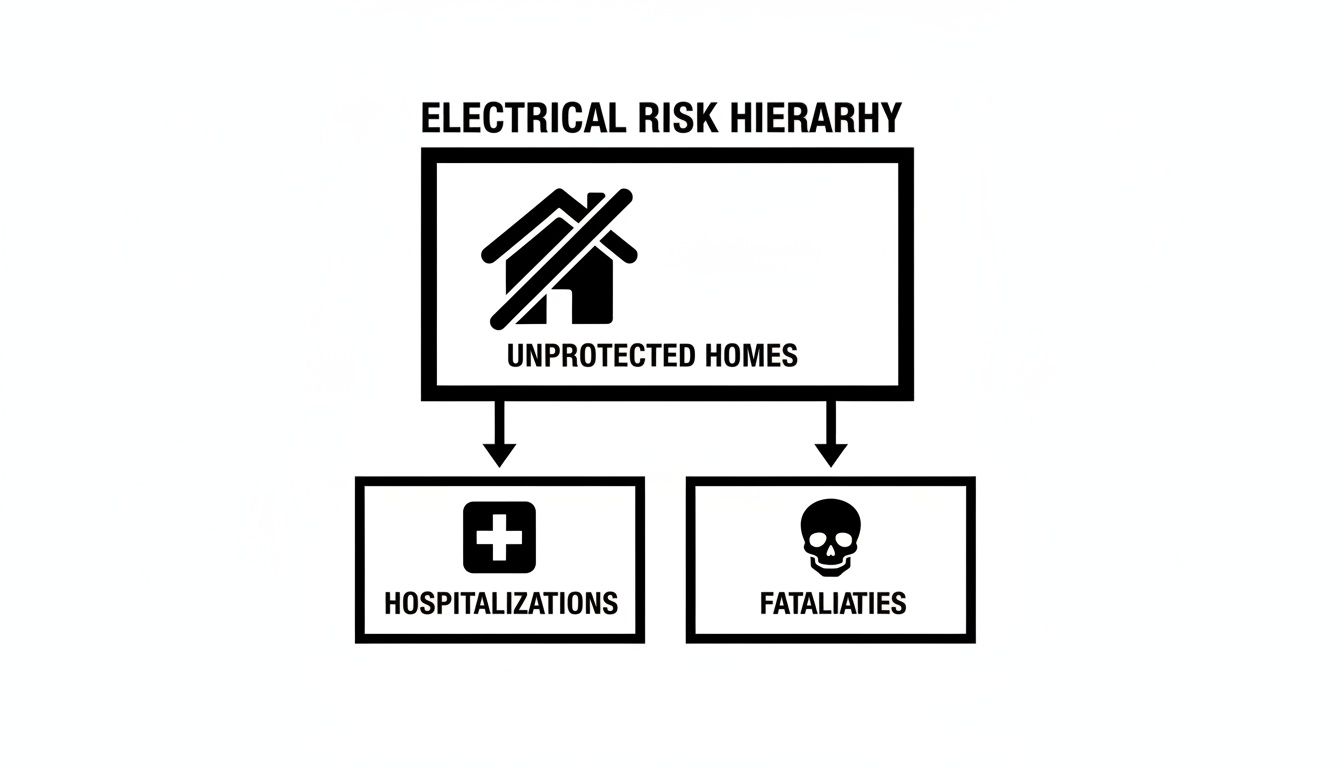
This hierarchy clearly shows how the absence of safety switches directly contributes to preventable hospitalisations and, tragically, even fatalities from electric shock every year. For a truly safe home, relying on just one type of switch often isn’t enough; a smart combination of switchboard, power point, and portable units creates the most comprehensive safety net possible.
In Queensland, electrical safety isn’t just a good idea—it’s the law. The state has very specific rules that spell out exactly when and where safety switches must be installed, making them a legal necessity for many property owners, not just a smart upgrade. These regulations are all about protecting people and setting a minimum safety standard for every home.
Knowing your obligations is especially critical if you’re selling a property or renting one out.
Queensland law is black and white on this: when a home is sold, a safety switch must be installed for all power point circuits within three months of the property transfer. For landlords, the rules are even stricter—a safety switch must be fitted to the power point circuits before a new tenancy agreement even begins.
These laws didn’t just appear overnight; they’re a direct response to decades of improving safety standards and understanding the real-world risks of older electrical systems.
It’s a simple fact: many homes built before modern regulations came into effect are dangerously under-protected. The rules have changed dramatically over the years. Since 2000, it’s been mandatory for all new homes to have safety switches installed from day one. But for properties built before then, the requirements were far less stringent, leaving a massive safety gap.
This has created a two-tiered system where countless older properties are missing the basic electrical protection that we now consider absolutely essential.
It’s a common mistake for owners of older homes to think, “Nothing’s gone wrong so far, so it must be fine.” But the law puts the responsibility squarely on the owner to upgrade their property to meet current safety standards, particularly during a sale or when a new tenant moves in.
When you’re looking at getting any electrical work done to meet these standards, it’s also a good idea to get a handle on the bigger picture. For instance, understanding local building permit requirements can provide helpful context.
While Queensland’s laws focus heavily on protecting the circuits that pose the biggest risk—the power points—modern best practice goes a step further. For genuine peace of mind, we strongly recommend installing safety switches on all circuits, including your lights, air conditioning, and hot water system. This ensures your home and everyone in it is comprehensively protected from all types of electrical faults.
Your safety switch is your silent guardian, but like any protective gear, it needs a regular check-up to make sure it’s ready to jump into action when you need it most. Thankfully, this is a simple bit of maintenance every homeowner can—and should—do. It only takes a few seconds.
Regular testing confirms that the internal trip mechanism is working freely and hasn’t become stiff or stuck over time. It’s a tiny effort that plays a massive role in your family’s ongoing electrical safety.
Testing your safety switch is incredibly straightforward. You don’t need any special tools, and it’s a quick, proactive way to ensure your first line of defence against electric shock is fully operational.
Here’s the simple process:
You should aim to do this test at least once every three months. An easy way to remember is to do it each time your quarterly electricity bill arrives in the mail.
If you press the test button and nothing happens—the switch doesn’t trip to the ‘OFF’ position—it means your device is faulty and will not protect you in an emergency. You must contact a licensed electrician immediately to have it inspected and replaced.
If your switch trips but you can’t get it to flick back on, it might be detecting a genuine fault in your wiring or an appliance. Our guide on what to do when your safety switch has tripped can help you work through the issue. For any persistent problems, getting professional help from an electrician is essential.
Pushing the test button on your safety switch is something every homeowner can, and should, do regularly. But knowing when to step back and call in a licensed professional is just as important for your safety. Your home’s wiring is a complex system, and some jobs are definitely not for the DIY-inclined.
You should always get a professional electrician on the phone for these situations:
Even homes that feel relatively modern can have dangerous gaps in their electrical safety net. The rules governing safety switches have tightened considerably over the years, which means millions of Australian properties have a serious safety shortfall.
The statistics are quite revealing. Research from Master Electricians Australia found a massive gap, estimating that 30 million additional safety switches are needed to bring all Australian homes up to standard. It’s a problem that dates back decades; homes built before 1991 often need around four extra switches, while those built between 1992 and 2001 typically require three more. You can dive into the numbers in the full analysis of national safety switch needs.
This isn’t just an issue for vintage properties, either. Many homes built as recently as 2016 still need at least two more safety switches to cover circuits for lighting, air conditioning, and ovens, which weren’t always included in earlier regulations.
The only way to know for sure if your home is fully shielded is to get a professional assessment. A qualified sparkie can spot these common protection gaps in minutes, recommend the right fix, and make sure your switchboard is fully compliant. If you need help finding the right person, check out our guide on what to look for when choosing a local electrician in Brisbane.
Don’t leave your family’s safety to guesswork. A proper switchboard audit gives you complete peace of mind, confirming that your home’s most critical life-saving device is installed, working correctly, and protecting every circuit it should be.
Are you unsure if your Brisbane home is fully protected? The expert team at DLG Electrical can provide a complete safety assessment and ensure your switchboard is up to standard. Contact us for a free quote at https://dlgelectrical.com.au.

Master Electrician with over 30 years of experience. Founded DLG Electrical in 2005 after international project work including electrical installations at Stamford Bridge Stadium, London(Home of Chelsea FC).

Local Electricians that can fix all Electric Hot water Systems.
Motion sensor lights are a versatile addition to any home, offering nu
