83 Jean St, Grange QLD 4051
Mon-Fri 07:30 AM - 04:00 PM - Sat - 8:00 - 12 - Sunday Closed

That sinking feeling when you open your power bill and the number is way higher than you expected? It’s a frustratingly common experience for many Brisbane households. The first step to getting those costs under control is figuring out why they’re so high in the first place.
It’s almost never one single culprit. Instead, a high bill is usually the result of a perfect storm of factors—some you can control, others that are part of the bigger energy picture.
Think of your home’s power usage like a running tap. A few small, unnoticed drips might not seem like much, but over a month, they can add up to a flood. In the same way, hidden energy drains, subtle shifts in your daily habits, and even the season can quietly inflate your electricity bill.
Most of the time, the reasons for a spike in your power bill fall into three main buckets: your household habits, the specifics of your energy plan, and how energy-efficient (or inefficient) your home is. Each one plays a big part in the final figure you see on your bill.
For a really deep dive into the nitty-gritty, you can check out our detailed breakdown on why your electricity bill is so high, which offers specific solutions tailored to your situation.
But to get a clearer picture right now, let’s look at how these causes connect.
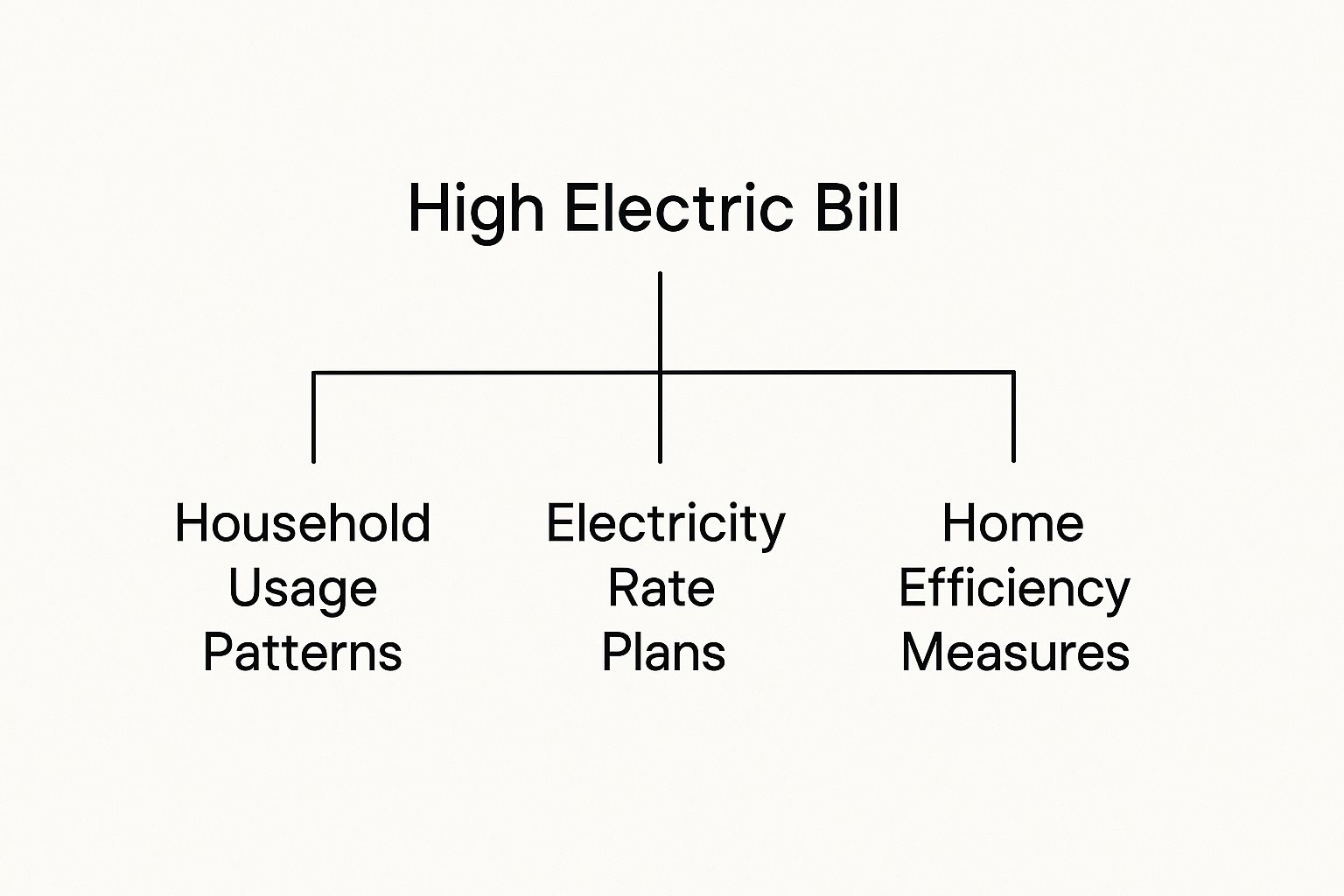
As you can see, it’s not just about one power-hungry appliance. Your final bill is the outcome of a whole ecosystem of interconnected factors, from personal behaviour right through to your home’s overall efficiency.
Let’s break down the most common culprits we see in Brisbane homes.
Here’s a quick summary of the usual suspects behind those bill shocks. We see these time and time again in homes across the city.
| Factor | Brief Explanation |
|---|---|
| 1. Seasonal Appliance Use | Cranking the air con in summer or heaters in winter are the biggest energy hogs. Just a few degrees can make a huge difference to your bill. |
| 2. Older, Inefficient Appliances | That old fridge in the garage or a dated air conditioner can chew through 2-3 times more power than a modern, energy-efficient model. |
| 3. “Phantom Power” or Standby Mode | Devices left on standby—like TVs, game consoles, and chargers—are constantly drawing a small amount of power, which adds up significantly. |
| 4. Changing Household Habits | More people working from home, a new family member, or even just spending more time indoors means more lights, computers, and appliances are running. |
| 5. Rising Electricity Rates | Sometimes the issue isn’t your usage but the price you’re paying per kilowatt-hour, which can change based on your plan or market-wide increases. |
While some of these, like market rates, are out of your hands, you have more control over the others than you might think.
The most effective way to lower your bill is by tackling all three areas at once: adjust your daily usage, make sure you’re on the right energy plan, and improve your home’s overall efficiency.
Throughout this guide, we’ll walk you through each of these elements, giving you a clear roadmap to lower bills. We’ll start by helping you identify the biggest energy drains in your home before looking at the external factors at play.
When an unexpectedly high power bill lands in your inbox, it’s easy to point the finger at the obvious culprits. That air conditioner running overtime during a classic Brisbane heatwave is a likely suspect, of course. But while big appliances are definitely major players, the real shock often comes from the combined-yet-silent drain of smaller devices scattered throughout your home.
These are the hidden energy hogs, the ones working quietly behind the scenes, steadily pushing your costs up without you even noticing.
Think of it like a slow leak in a tyre. One tiny puncture doesn’t seem like a big deal at the time, but leave it overnight, and you’ll be greeted by a flat in the morning. It’s the same with your power bill—dozens of small energy drains can collectively deflate your budget month after month.
Here’s a frustrating fact: many of your modern electronics never actually switch off. When you hit the power button, they just enter a standby mode, waiting patiently for the next command. This state of readiness constantly sips a small amount of electricity, a phenomenon known as phantom power or standby power.
On its own, the power draw from a single device is minuscule. But add them all up, and the effect is anything but. It’s estimated that a staggering 5-10% of your total household electricity usage can be chalked up to these “energy vampires.”
You’ve likely got them all over your house without realising it:
Another huge, often-overlooked cost is running older, inefficient appliances. That fridge or freezer from 15 years ago might still keep your food cold, but it could be chewing through double or even triple the electricity of a new, energy-efficient model. Appliance technology has come a long way, and modern units are designed to do the exact same job with far less power.
Your old beer fridge humming away in the garage could easily be adding over $200 a year to your power bills. In many cases, upgrading to an energy-efficient model pays for itself in just a few years through savings alone.
Even newer appliances can turn into energy hogs if they aren’t looked after properly. Simple maintenance, like cleaning dusty air conditioner filters or the coils on your refrigerator, can make a huge difference. When these parts are dirty, the appliance has to work much harder—and use more electricity—to get the same result.
It’s also worth acknowledging that the way we use energy at home is changing. The Clean Energy Australia Report 2025 highlights a big jump in the use of air conditioners and electric heating, particularly as our weather patterns become more extreme.
This trend, combined with new demands like charging electric vehicles, fundamentally alters how and when our homes consume the most power. This creates new pressures on your bill that might not have existed a decade ago.
Ultimately, figuring out why your electricity bill is so high means looking beyond the usual suspects. By identifying and tackling these hidden energy hogs—from phantom power drains to inefficient appliances—you can start to reclaim control over your monthly costs and make your home a much more efficient place.
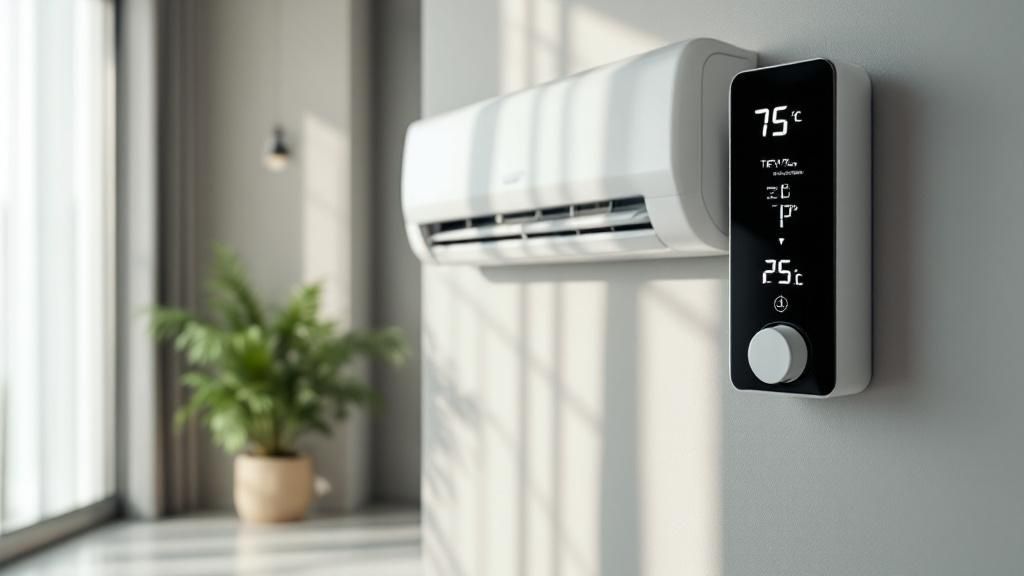
Sometimes you can do everything right—turn off lights, run efficient appliances, and be smart with the air con—and still see your power bill creep up. It’s a frustrating feeling, and it often happens because your bill is a story with two authors. While your personal consumption writes one half, the other is written by much larger forces in the Queensland energy market.
Understanding these factors is key to figuring out why your bill is so high, even when your habits haven’t changed. It’s not just about what happens inside your four walls; it’s also about what’s happening across the entire state and national grid.
Your final bill is made up of several moving parts, and only one of them is the raw cost of the electricity you actually used. The other components cover the vast, complex infrastructure needed to get that power to your home or business.
Think of electricity like water from a tap. The water itself (the power) has a cost, but you also have to pay for the dams, treatment plants, and the massive network of pipes (the grid) that deliver it safely to you.
Your bill reflects this entire journey, and it’s broken down into a few distinct charges:
A huge chunk of what you pay is dedicated to maintaining and upgrading the grid. If the cost of keeping that network reliable goes up, so does your bill, regardless of how much power you personally use.
Maintaining thousands of kilometres of power lines, substations, and transformers is a massive, ongoing expense. These infrastructure costs are a major driver of rising electricity prices right across Australia’s National Electricity Market (NEM).
In fact, recent energy forecasts show that investments needed to keep the grid stable—like upgrading old transmission lines and installing smart meters—account for a large slice of any price increases. You can see more on this in the Australian Energy Market Operator’s 2025 forecasts about how grid investments affect energy efficiency.
What this means is that even if the raw cost of generating power stays flat, your bill can still go up simply because the cost of delivering it has increased. It’s a crucial piece of the puzzle when you’re staring at a high bill and know your own usage hasn’t changed. Once you grasp these market dynamics, you get a much clearer picture of what you’re really paying for.
Here in Brisbane, the weather isn’t just small talk—it’s one of the biggest reasons your power bill skyrockets at certain times of the year. The swing from our notoriously hot and sticky summers to those surprisingly crisp winters creates a predictable, yet often painful, seesaw effect on our electricity use.
Getting your head around this seasonal rhythm is the first real step toward managing your energy costs. When the mercury climbs or drops, your appliances have to work overtime to keep you comfortable, and that extra effort shows up directly on your bill.
For most Brisbane homes, summer energy use can be summed up in two words: air conditioning. As soon as the humidity cranks up and the temperature pushes past 30°C, the air con becomes the single biggest power-guzzler in the house. It’s not uncommon for an AC unit to be responsible for up to 40% of your entire electricity bill during the hottest months.
This massive spike in usage introduces another expensive problem: peak demand. This is usually in the late afternoon, right when everyone arrives home from work or school and flips on their appliances. The whole electricity grid comes under immense strain. To cope, energy retailers often charge higher rates during these peak hours, making that after-work blast of cold air even more costly.
Think of the electricity grid as a motorway. Peak demand is rush hour. The road is congested, and it takes a lot more ‘fuel’ (and money) to get power where it needs to go. Firing up your air con and other big appliances at this time is like paying a premium toll just to get home.
While our winters are nothing like those down south, they bring their own energy headaches. The big surprise for many Brisbanites is just how much it costs to heat their homes. We tend to underestimate how much power those little portable heaters or reverse-cycle air conditioners chew through just to take the edge off a chilly morning.
A small, innocent-looking fan heater, for example, can use a shocking amount of electricity if you leave it running for a few hours every day. Unlike summer, when we’re braced for a high bill, the winter increase often catches people completely off-guard, leaving them wondering why their costs have suddenly jumped.
Here’s a quick breakdown of how the seasons change what you use:
By recognising these patterns, you can stop getting blindsided by bill shock and start making a plan to manage it.
Alright, so you know why your electricity bill is climbing. Now for the important part: what can you actually do about it? Bringing your power costs back down to earth doesn’t mean you have to completely overhaul your lifestyle overnight. It’s all about making a few smart, deliberate changes that really add up.
This is your playbook. We’re going to walk through the practical steps you can take right now, focusing on the three biggest power guzzlers in any Brisbane home: cooling, hot water, and lighting. Get these right, and you’ll see a real difference in your next bill.
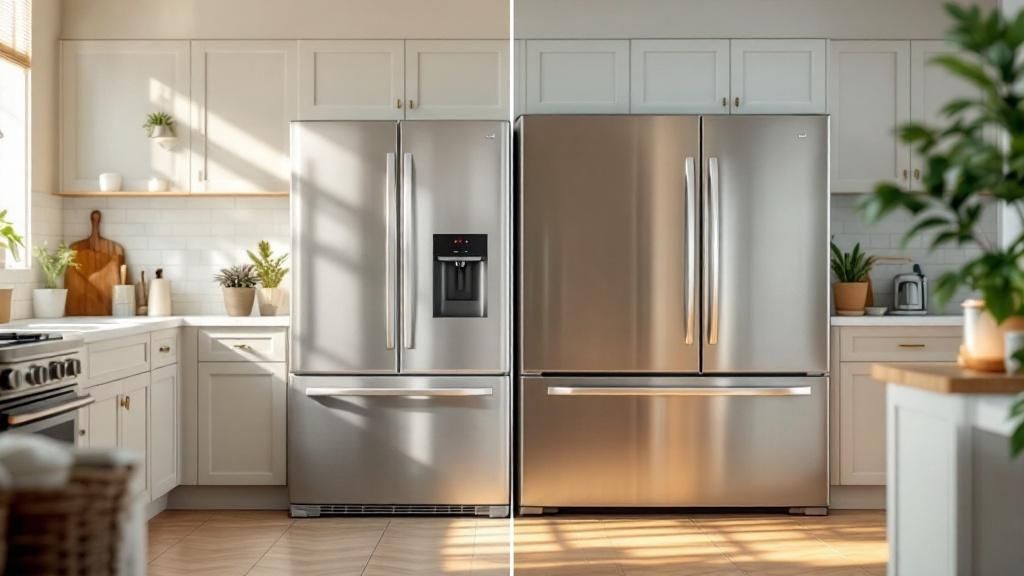
In a Brisbane summer, air conditioning feels less like a luxury and more like a survival tool. But that doesn’t mean it has to cost a fortune to run. Your most powerful weapon here is simply using it smarter.
Try setting your thermostat to 24°C or 25°C. It’s the sweet spot that keeps you comfortable without making your meter spin wildly. Every single degree cooler can drive up your running costs by a whopping 10%, so that small adjustment makes a huge impact.
Beyond just the temperature setting, you want to make your air con’s job as easy as possible:
Want to dive deeper into how your air con is hitting your wallet? We break it all down in our guide on the https://dlgelectrical.com.au/dlg-blog/cost-of-running-aircon/.
For an even bigger win, look into installing some energy-efficient window treatments. They act as another layer of insulation, stopping the Queensland heat before it even gets inside.
Your hot water system is another one of those silent energy vampires, often responsible for a huge chunk of your bill. The good news is that small habits here lead to big savings. Cutting down shower times and washing your clothes in cold water whenever you can will slash the amount of energy your system needs to heat water.
Lighting is another area full of quick, easy wins. If you’re still running old-school incandescent or halogen bulbs, you’re basically paying to heat your room, not light it.
Switching to modern LED bulbs is one of the fastest and most effective energy-saving upgrades you can make. An ENERGY STAR certified LED uses around 75% less energy and can last up to 25 times longer than a traditional incandescent bulb.
Finally, start hunting down those “energy vampires.” We’re talking about devices left on standby—gaming consoles, TVs, phone chargers—that are always drawing a little bit of power. Plug them into a smart power board and switch it off at the wall when you’re not using them. It’s a simple habit that can trim a surprising amount off your bill each year.
Deciding where to start can be tricky. Some changes are quick and cost nothing, while others require an upfront investment for a bigger long-term payoff. This table breaks down your options to help you choose the best path forward.
| Strategy | Estimated Cost | Potential Savings | Effort Level |
|---|---|---|---|
| Set thermostat to 24°C | $0 | High | Low |
| Shorter showers | $0 | Medium | Medium |
| Unplug standby devices | $0 – $20 (for a power board) | Low-Medium | Low |
| Switch to LED bulbs | $50 – $200 | High | Low |
| Install weather stripping | $30 – $100 | Medium | Medium |
| Upgrade to a heat pump hot water system | $3,000 – $5,000 | Very High | High |
| Install solar panels | $4,000 – $10,000+ | Very High | High |
| Add ceiling insulation | $1,500 – $3,000 | High | High |
Whether you start with the free, easy wins or are ready to invest in a major upgrade, every step you take makes a difference. By methodically tackling these key areas, you’re not just crossing your fingers for a lower bill—you’re actively building a more energy-efficient home.
To really get to the bottom of why your power bill is so high, it helps to zoom out from your own home and look at the bigger picture. Your personal energy costs are tangled up in the massive transition happening right across Australia’s power grid. It’s a complex situation, and sometimes the national trends can seem to completely contradict what you’re seeing on your bill.
For instance, you might feel like we’re all using more power than ever before, but on a per-person basis, the opposite is true. This little paradox is a huge part of the puzzle, showing how forces in the wider market can easily cancel out your best efforts to save power at home.
Australia is at a massive fork in the road when it comes to generating power. We’re all hearing about the big push towards renewables, and it’s definitely gaining steam, but our grid is still incredibly reliant on old-school, and often volatile, fuel sources. This creates a tricky balancing act that has a direct impact on the price every single Brisbane resident pays for their electricity.
The average Aussie now uses around 10,194 kWh of electricity a year. That might sound like a lot, but it’s actually a massive drop of over 1,400 kWh per person compared to what we were using back in 2007. Despite this nationwide drop in personal consumption, bills are still painfully high. Why? Because the underlying cost of making that power is tied to our energy mix. Right now, fossil fuels are still king, with coal providing 43% and gas 16% of our total electricity. You can find more insights into Australia’s energy profile on lowcarbonpower.org.
This heavy reliance has some serious consequences for your wallet.
The price of coal and gas on the global market can swing wildly. When the cost of these fuels spikes, generating power gets more expensive, and those higher costs get passed straight through to you on your electricity bill.
At the end of the day, your household is essentially riding the waves of a national energy transition. The high fixed costs of keeping an old grid running—a grid designed for fossil fuels—combined with the unpredictable prices of those very fuels, creates a perfect storm for high electricity rates.
So, even if you’re personally using less power than a family did a decade ago, you might be paying more for every single kilowatt-hour. This is the core reason your bill can feel so high, no matter what you do. Understanding this backdrop is the first step, as it shows that tackling high bills is about both managing your own usage and being aware of the larger economic forces at play across the country.
Even after you’ve checked the obvious culprits, it’s completely normal to have a few lingering questions about why your power bill is so high. Here are some quick answers to the most common concerns we hear from Brisbane locals, which should help you narrow down the problem.
It’s possible, but a genuinely faulty electricity meter is pretty rare. Before jumping to that conclusion, it’s always best to rule out simpler causes first, like a clapped-out appliance or even just a change in your daily routine.
There’s a simple test you can do for peace of mind, though. Head to your switchboard and turn off all the circuit breakers. Now, go and check your meter. If the numbers are still ticking over, that’s a red flag. It’s time to call your electricity retailer and ask for a formal meter test.
Individually, a single device left on standby doesn’t seem like much. But when you add up all the electronics plugged in 24/7—think TVs, gaming consoles, microwaves, and phone chargers—the cost really starts to accumulate.
For a typical Brisbane household, this “phantom power” can easily tack on an extra $100 to $200 to your annual electricity bill. A smart power strip that lets you kill the power to these devices at the wall is a simple and surprisingly effective fix.
Getting a high bill when you have solar panels can be frustrating, but it usually comes down to a few key things. Your household might simply be using more power than your system can generate, especially at night or on those grey, overcast days when you’re forced to draw from the grid.
Other potential factors include:
Regular maintenance is absolutely key to getting the most out of your solar investment. For more ways to make your home energy smart, check out these practical energy efficiency tips from a Northside electrician.
If you’re still scratching your head over a high bill, the expert team at DLG Electrical is here to help. We can carry out a professional energy audit to uncover any hidden issues and give you practical solutions to get your costs back under control. Visit us at https://dlgelectrical.com.au to book a consultation.

Master Electrician with over 30 years of experience. Founded DLG Electrical in 2005 after international project work including electrical installations at Stamford Bridge Stadium, London(Home of Chelsea FC).

Local Electricians that can fix all Electric Hot water Systems.
Motion sensor lights are a versatile addition to any home, offering nu
