83 Jean St, Grange QLD 4051
Mon-Fri 07:30 AM - 04:00 PM - Sat - 8:00 - 12 - Sunday Closed

Wireless interconnected smoke detectors are a massive leap forward in home safety.Wireless interconnected smoke detectors are a massive leap forward in home safety. The concept is simple but incredibly effective: when one alarm detects smoke, every single alarm in your house goes off at the same time.
This synchronised blast provides the earliest possible warning, giving your family precious extra seconds to get out, no matter where a fire starts.
Picture this: a fire starts smouldering in the garage while everyone is asleep upstairs. A single, standalone smoke alarm in the garage might beep away, but through closed doors and over the hum of an air conditioner, it could be minutes before anyone hears it. By then, it might be too late.
That dangerous delay is the fatal flaw of old-school, standalone alarms.
Wireless interconnected smoke detectors completely eliminate this risk. Don’t think of them as individual guards posted at different doors; think of them as a highly coordinated team that communicates instantly.
When one member of the team smells smoke, it doesn’t just shout on its own—it triggers an immediate, house-wide siren. Every alarm, in every room and on every floor, screams a warning.
This isn’t just a minor tweak. It’s a fundamental change in how home fire safety operates. The warning is no longer trapped at the source of the fire; it’s delivered right where it’s needed most—to every bedroom and living space in your home.
What this system really gives you is time. A house fire can double in size every 60 seconds, so every moment is critical. An interconnected system buys you the maximum possible time to react, grab the kids, and escape safely. This is especially vital in multi-storey homes or houses with tricky layouts where sound just doesn’t travel well.
Here’s what this instant, house-wide alert overcomes:
This network transforms your smoke alarms from passive little plastic discs on the ceiling into an active, life-saving system. While these alarms are a huge step up in prevention, it’s always smart to be prepared for any scenario. Being informed about crucial next steps, like understanding the aftermath of a house fire and insurance claims, is part of a complete safety plan.
And for those wanting to take it even further, you can explore how Wi-Fi enabled smoke alarms can offer even greater peace of mind with smart home integration.
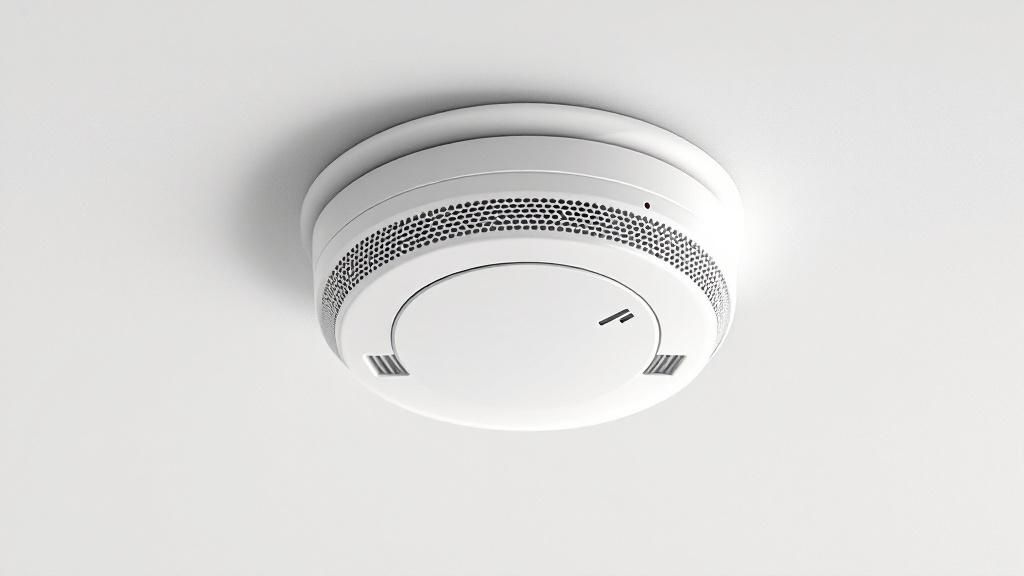
To really get why these alarms are such a massive safety upgrade, it helps to understand the clever tech working behind the scenes. Forget complicated diagrams and jargon; the idea is actually pretty simple and incredibly reliable.
Think of each smoke alarm in your house as part of a highly trained team. They don’t rely on your home Wi-Fi, which can easily drop out during a power cut. Instead, they communicate with each other on their own private radio frequency—like a dedicated, secure walkie-talkie channel just for them.
This independent network is what makes them so dependable. When one alarm senses the first hint of smoke, it doesn’t just blare on its own. It instantly sends out an emergency broadcast on that private channel to every other alarm in the house. In a split second, the whole team roars to life, making sure a loud, impossible-to-miss siren sounds everywhere at once.
This immediate, house-wide alert is a game-changer. Fire safety authorities have been pushing for interconnected systems for exactly this reason. Research from Fire and Rescue NSW highlights that modern homes, full of synthetic furnishings, can burn much faster than older houses, slashing precious escape time. This makes the early, widespread warning from interconnected alarms more critical than ever. You can read the full fire safety findings from NSW authorities to learn more about the risks.
Beyond how they talk to each other, what’s inside the alarm is hugely important. The sensor is the “nose” of the alarm, and you’ll generally find two main types. Each is a specialist at sniffing out a different kind of fire.
Because you can never predict what kind of fire might start, relying on just one type of sensor leaves a dangerous gap in your family’s protection. This is why fire safety experts almost universally recommend a better solution.
For the most comprehensive protection, many modern wireless interconnected smoke detectors are dual-sensor units. As the name suggests, these alarms combine both photoelectric and ionization sensors into a single device.
This combination ensures your home is covered across the full spectrum of fire risks. The alarm can detect the first whispers of a smouldering fire in the living room just as effectively as it can sense a sudden, flaming fire in the garage. By covering all the bases, a dual-sensor interconnected system provides the highest level of safety and genuine peace of mind. When choosing your system, opting for dual-sensor technology is one of the most important decisions you can make.

Moving to a network of wireless interconnected smoke detectors isn’t just about making a louder noise. It’s a fundamental shift in how your home’s safety net works, offering tangible benefits that old-school, standalone alarms just can’t deliver. The biggest advantage? Total, instantaneous home coverage.
Imagine a fire breaking out in the garage while everyone’s asleep upstairs. In a multi-storey house, a single alarm down there might beep away unheard until smoke has already crept into the hallways. That delay is exactly the dangerous gap an interconnected system is built to close.
When one detector senses trouble, it doesn’t just sound its own siren—it triggers every other alarm in the house. This creates an impossible-to-ignore, house-wide alert, giving everyone the earliest possible warning, no matter where they are or where the fire started.
One of the main reasons homeowners are switching to wireless systems is just how easy they are to install. Let’s be honest, traditional hardwired alarms are great, but they often mean calling in a sparkie for a complex and sometimes expensive job that can involve cutting into walls and ceilings.
In contrast, setting up a wireless interconnected system is a straightforward DIY project most people can knock over in less than an hour. There are no wires to run between the units; they talk to each other using their own secure radio frequency.
This simple setup makes them a perfect safety upgrade for almost any home, including:
By removing the barriers of cost and complexity, wireless technology puts superior fire protection within reach for every household. It democratises safety, ensuring that a robust, networked alarm system isn’t a luxury but an achievable standard.
Of course, true home safety goes beyond just the alarms. It involves thinking ahead and preparing for every possibility. Part of this is understanding what a fire watch is and when it is required, which adds another layer to your overall fire protection strategy.
Today’s wireless interconnected smoke detectors do more than just shriek. Many are packed with smart features that bring home safety firmly into the 21st century, designed to get rid of old frustrations and give you more control.
Gone are the days of being shocked awake by that dreaded low-battery chirp at 3 AM. Smart systems send a polite notification straight to your phone, giving you plenty of warning that a battery needs changing. It turns a middle-of-the-night headache into a simple daytime task.
We’ve all been there—burning the toast and setting off the alarm. Instead of frantically waving a tea towel at the ceiling, smart alarms let you silence a false alarm with a quick tap on your phone’s app. This level of convenience means you’re far less likely to disable your alarms out of sheer frustration, keeping your home protected. To learn more about these practical advantages, check out our guide on the benefits of wireless interconnected smoke alarms.
Choosing the right wireless interconnected smoke detectors can feel like wading through a sea of options, but it doesn’t have to be complicated. The goal is simple: find a system that fits your home, your budget, and gives you complete peace of mind that your family is protected. If you focus on a few key things—compliance, features, and your home’s layout—you’ll be able to pick the perfect setup with confidence.
First things first, and this is non-negotiable: any alarm you even consider must be fully compliant with Australian safety standards. This isn’t just a recommendation; it’s a critical safety and legal requirement.
Before you even think about bells and whistles or compare prices, your first check should be for Australian Standard AS 3786 compliance. This certification is your guarantee that the smoke alarm has been put through its paces and meets the strict safety and performance benchmarks required for Australian homes. An AS 3786-compliant alarm is one you can count on when it matters most.
This focus on higher standards is part of a much bigger picture. The Australian smoke detector market has boomed as regulations increasingly push for wireless interconnected models. With national legislation mandating alarms in specific locations and better enforcement of these rules, there’s been a massive shift towards safer, more effective systems—especially those with wireless links and long-life batteries. You can dig deeper into the Australian smoke detector market trends to see how this technology is reshaping home safety.
With compliance sorted, it’s time to get into the features that really set different models apart.
Here’s a quick rundown of what to look for:
This image really drives home just how much safer an interconnected system is compared to old-school standalone alarms.

The data is clear: interconnected alarms give you a whole-home alert much faster, buying you critical extra time to get out safely in an emergency.
To make the choice even clearer, let’s break down how different types of wireless interconnected smoke detectors stack up against each other. From basic, no-frills models to fully-featured smart systems, there’s an option for every home and budget. This table compares the key features you’ll want to consider.
| Feature | Basic Models | Smart Models | Premium Smart Models |
|---|---|---|---|
| Interconnectivity | Wireless RF (Radio Frequency) | Wireless RF & Wi-Fi | Wireless RF, Wi-Fi & Cellular Backup |
| Power Source | 10-Year Sealed Lithium Battery | 10-Year Sealed Lithium Battery | 10-Year Sealed Lithium Battery or Hardwired with Battery Backup |
| Notifications | Audible Alarm Only | Audible Alarm & Smartphone App Alerts | App Alerts, Voice Notifications & Integration with Home Automation |
| Remote Silencing | No | Yes, via Smartphone App | Yes, via App & Voice Command |
| Self-Testing | Manual Test Button | Automated Self-Checks & App Reports | Advanced Diagnostics & Predictive Maintenance Alerts |
| Typical Cost | $ | $$ | $$$ |
| Best For | Budget-conscious homeowners needing basic compliance | Families wanting remote alerts and convenience | Tech-savvy homeowners wanting full integration & top-tier safety |
Ultimately, the “best” model depends entirely on your needs. A basic system offers compliant protection, while a premium smart model provides a comprehensive safety ecosystem with unparalleled convenience and control.
Finally, you need to figure out exactly how many alarms you need for total coverage, and that all comes down to the layout of your home. A one-bedroom unit has completely different requirements than a sprawling two-storey house.
The best way to do this is to walk through your home and map it out. You need an alarm in:
As a simple rule of thumb, plan for at least one alarm on each level, one in every bedroom, and one in the main hallway that connects them. For a typical three-bedroom, single-level house, you’re usually looking at a set of four to five interconnected alarms for proper protection.
By working through these three steps—compliance, features, and layout—you can cut through the noise and move past the overwhelming options. This methodical approach helps you zero in on a wireless interconnected smoke detector system that delivers genuine peace of mind, knowing your home is protected by the best technology available.
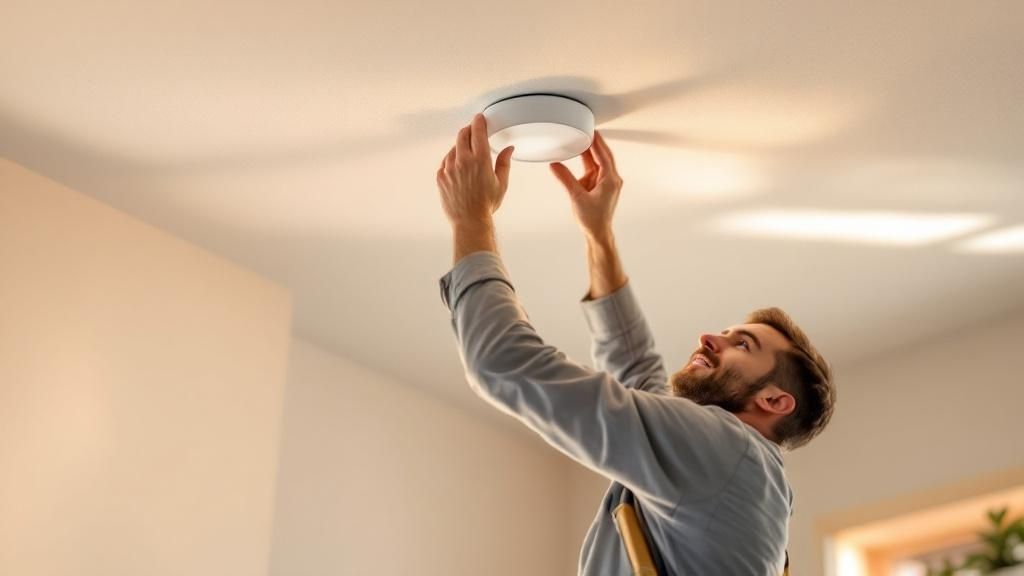
Choosing the right wireless interconnected smoke detectors is only half the battle. To get the life-saving protection they’re designed for, proper installation and strategic placement are absolutely essential. Get this part right, and your system will be ready to respond instantly, without the headache of constant false alarms.
One of the biggest wins with a wireless system is just how straightforward the setup is. There’s no need to call an electrician or start running messy wires through your walls and ceiling. The whole process, from syncing the units to mounting them, is designed to be DIY-friendly.
This ease of installation is a huge reason they’re becoming so popular across Australia. The global smoke detector market is already valued at around USD 2.01 billion and is tipped to grow even more, thanks largely to interconnected and smart devices. This trend is especially strong in Australia, where lower installation costs and greater flexibility make wireless systems the go-to choice for modern homes. You can discover more insights about the global smoke detector market on Grandview Research.
Before a single screw goes into the ceiling, you need to pair your alarms. Think of it like introducing your new safety team to each other so they know exactly who to talk to in an emergency.
Just lay all your new alarms out on a table and follow the manufacturer’s instructions to link them up. This usually just involves pressing a button on each unit in a specific order. Once paired, they create their own private, secure radio frequency network just for your home.
Testing this connection is critical. Press the ‘Test’ button on one alarm. If you’ve paired them correctly, every single alarm on the table should sound off within seconds. This confirms your network is active and ready before you mount them.
Where you put your alarms is just as important as having them in the first place. Fire safety guidelines are very specific about placement to ensure the earliest possible detection of smoke. The whole idea is to create a protective web that covers your entire home.
Here are the non-negotiable spots where you must install a detector:
For a deeper dive into specific local rules, particularly for Queensland homeowners, our detailed guide on interconnected smoke alarm legislation in QLD offers some really valuable insights.
Knowing where not to put your alarms can save you from the frustration of nuisance alarms and make sure your system actually works when you need it most. Avoid installing them in these spots:
By following these simple installation and placement guidelines, you can set up your wireless interconnected smoke detectors with confidence, knowing they’ll provide the reliable, house-wide protection your family deserves.
Even after getting your head around the benefits, you probably still have a few practical questions about how wireless interconnected smoke detectors actually work day-to-day. That’s completely normal. Let’s run through some of the most common queries we hear from homeowners to give you total confidence in your decision.
This section is all about straightforward answers. We’ll cover everything from how many alarms you really need to whether your neighbour’s system could accidentally set yours off.
Figuring out the right number of alarms for your home is simpler than you might think. Australian fire services have laid out clear, common-sense recommendations designed to create a solid safety net, making sure a fire is detected fast, no matter where it starts.
The rule of thumb is to place an alarm in every key location. You should plan for one:
To get your number, just walk through your house and count these spots. For example, a standard three-bedroom, single-storey home would typically need four or five alarms to be fully compliant and properly protected—one for each bedroom, plus one or two in the connecting hallways. The crucial part is that all these alarms must be interconnected to sound that house-wide alert.
This is a really common and understandable concern, but thankfully, it’s one you can tick off your list. It is extremely unlikely that a neighbour’s system could ever trigger your alarms.
Wireless interconnected smoke detectors are designed to create a private, closed-loop network just for your home. During setup, you “pair” your alarms together. Think of it like introducing them to each other and telling them to only listen to signals from within their own trusted group.
This pairing process sets up a unique communication code for your system. It effectively builds a digital fence around your network, ensuring it ignores any signals from your neighbour’s alarms, their garage door opener, or any other wireless noise in the area.
This secure connection means your system will only go off when one of your alarms detects smoke. It gives you complete peace of mind that there won’t be any false alarms from next door.
Yes, absolutely. Modern wireless alarms are engineered to be exceptionally reliable and are considered just as safe as their hardwired cousins. While hardwired systems get their power from your home’s electrical wiring, wireless models have their own independent power and communication channels.
They typically run on long-life, 10-year sealed lithium batteries, which means no more annoying chirps or annual battery changes. More importantly, they communicate using a dedicated radio frequency (RF), not your home Wi-Fi.
This is a critical point. It means that if a storm knocks out your power or your internet goes down, your interconnected smoke alarm network stays fully operational. The alarms will still talk to each other and sound a house-wide warning without a hitch. As long as you give them the recommended monthly test and keep them clean, they provide robust, dependable protection you can count on.
Regular testing is the single most important thing you can do to make sure your system is ready to go in an emergency. All fire safety authorities strongly recommend testing the entire system at least once a month.
The process is quick and easy:
This simple monthly habit is the only way to be completely sure that if one alarm detects a fire, the whole system will light up as designed. It’s a small task that makes a massive difference to your family’s safety.
For professional advice on ensuring your home meets all current safety standards, trust the experts at DLG Electrical. Our licensed electricians can help you select and install the perfect wireless interconnected smoke detector system for your Brisbane home. Visit us at https://dlgelectrical.com.au to get a free quote and secure your family’s safety today.

Master Electrician with over 30 years of experience. Founded DLG Electrical in 2005 after international project work including electrical installations at Stamford Bridge Stadium, London(Home of Chelsea FC).

Local Electricians that can fix all Electric Hot water Systems.
Motion sensor lights are a versatile addition to any home, offering nu
