83 Jean St, Grange QLD 4051
Mon-Fri 07:30 AM - 04:00 PM - Sat - 8:00 - 12 - Sunday Closed
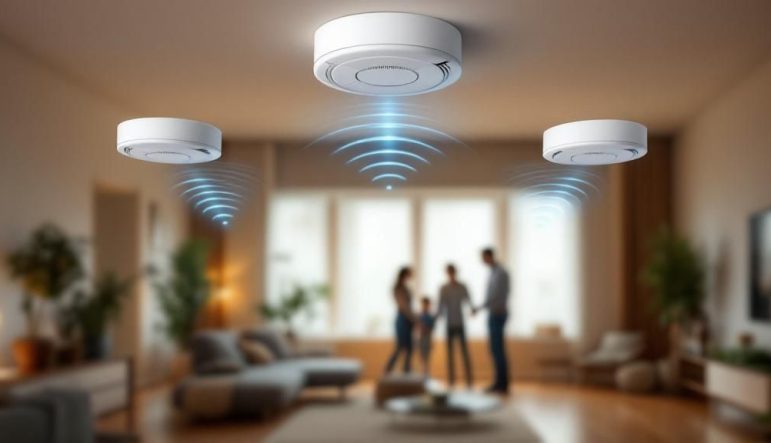
Picture this: a fire breaks out in the garage while everyone is sound asleep upstairs. With a standard, old-fashioned smoke alarm, that single, isolated beep might go completely unheard until the situation becomes critical. This is exactly where wireless linked smoke alarms completely change the game. They don’t act as lone sentinels; they work together as a coordinated safety team for your entire home.
When one wirelessly linked alarm senses smoke, it doesn’t just sound off on its own. It instantly sends a signal to every other alarm in the network, triggering them all to go off at once. This creates a powerful, house-wide alert that’s impossible to ignore. It’s like an emergency broadcast system designed specifically for your property, making sure everyone is warned at the same time, no matter where the fire started.
In today’s homes, fires can spread alarmingly fast due to modern building materials and furnishings. This synchronized alert is more than just a convenience—it’s a critical feature that buys you precious, life-saving seconds to get your family out safely.
The real magic behind this system is its robust, independent communication. These alarms create their own secure radio frequency network, meaning they don’t rely on your home’s Wi-Fi. Even if your internet goes down, your smoke alarm network remains fully operational.
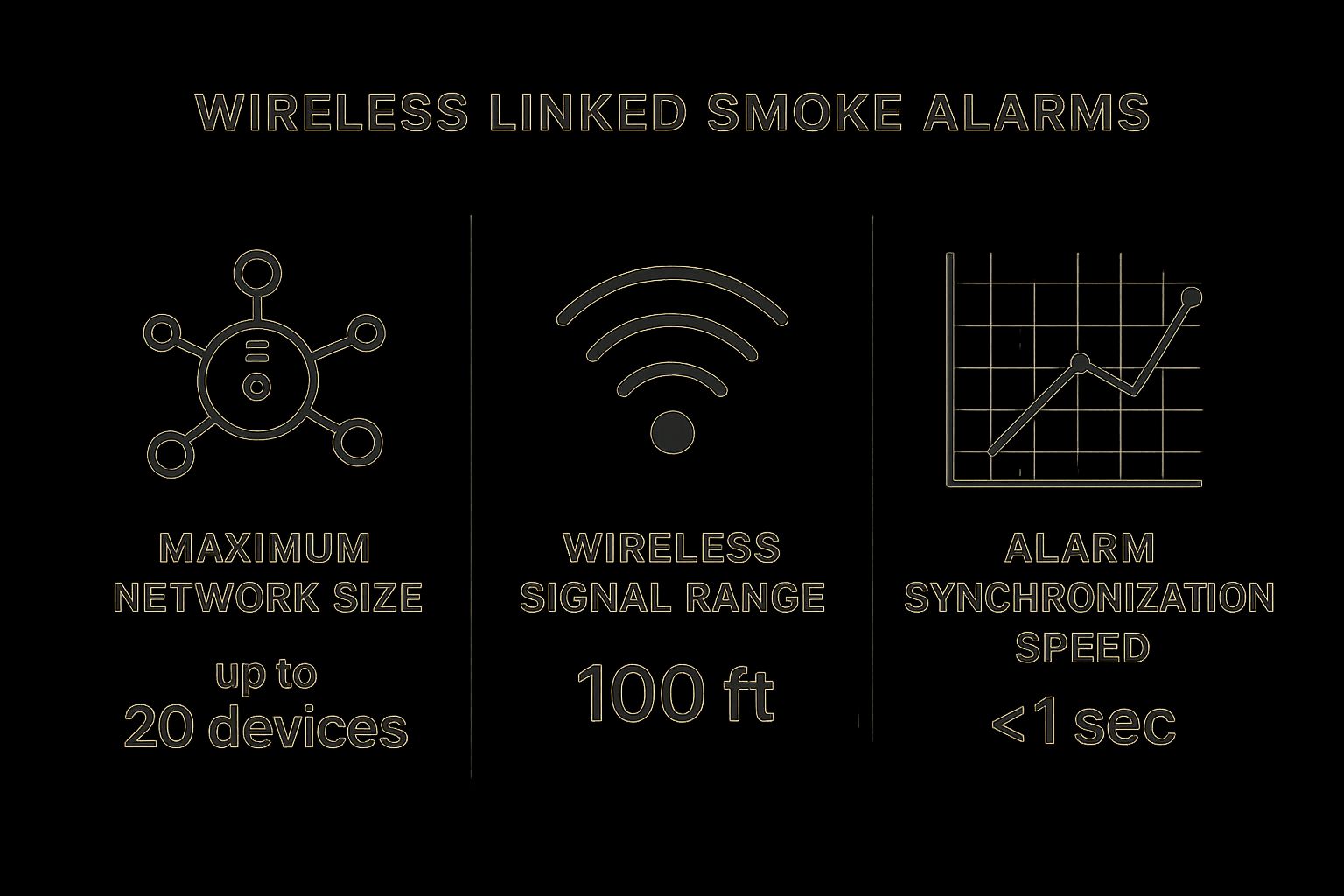
As you can see, this technology is built for performance, ensuring signals can cover large homes with almost no delay between the first alarm and the rest of the network. This isn’t just a manufacturer’s claim; expert bodies like Fire and Rescue NSW have done extensive research confirming that interconnected alarms are a vital component of early warning systems. They strongly recommend placing alarms in all bedrooms, connecting hallways, and main living areas for this very reason.
Interconnected technology isn’t just another gadget. It represents a fundamental shift in how we protect our homes and families from fire. It moves past simple, localised detection to create a comprehensive, immediate alert system that can truly be the difference between a close call and a tragedy.
To see how standalone and interconnected alarms stack up, here’s a quick comparison.
| Feature | Standalone Smoke Alarm | Wireless Linked Smoke Alarm |
|---|---|---|
| Alert Coverage | Localised (only the detecting unit sounds) | House-wide (all units sound simultaneously) |
| Response Time | Delayed warning if you’re far from the fire | Instant warning, regardless of your location |
| Overall Safety | Basic protection, reliant on hearing a single alarm | Comprehensive protection, maximises escape time |
The difference is clear. While a standalone alarm is better than nothing, a wireless linked system offers a far superior level of safety by ensuring an emergency is heard loud and clear, by everyone, right away.
While these alarms are a crucial first line of defence, it’s also wise to understand your overall property protection. This essential guide to homeowners insurance is a great resource for securing your biggest investment. To learn even more about the different alarm options available, feel free to explore our other articles at https://dlgelectrical.com.au/dlg-blog/smoke-alarms/.
So, how does this life-saving team of wireless linked smoke alarms actually communicate? It’s a common question, and the answer is both simpler and more reliable than most people think. They don’t rely on your home’s Wi-Fi network, which we all know can be temperamental with dropouts and password issues.
Instead, these alarms operate on their very own dedicated, low-frequency radio signal. Think of it like a private set of walkie-talkies installed throughout your house, reserved just for emergency fire alerts. This independent network is precisely what makes them so dependable.
It all starts when a single smoke alarm detects the first signs of a potential fire. Most modern wireless linked smoke alarms use what’s called a photoelectric sensor. These are exceptionally good at sniffing out the slow, smouldering fires most common in homes, the kind that might start from faulty wiring or a dropped cigarette.
Once that sensor detects smoke particles, it doesn’t just sound its own local alarm. It instantly broadcasts a distress signal across that private radio frequency.
This signal is picked up by every other alarm on the network in a fraction of a second. The result? Every single unit in your home, from the garage to the upstairs bedrooms, will sound its powerful 85-decibel alarm at the same time. This immediate, house-wide alert is the system’s biggest advantage.
Building this self-contained communication web is a straightforward process, and it’s a key part of any professional installation. An electrician will put the alarms into a special ‘learn’ mode. This allows them to listen for and ‘pair’ with each other, forming a secure, closed loop. Once they’re paired, they will only respond to signals from within their own network.
This setup completely eliminates the risk of your neighbour’s system accidentally setting off your alarms. The specific radio frequency used is also chosen to avoid interference from other common household electronics, such as:
This dedicated signal means that when you hear those alarms, you know it’s a genuine alert for your property. It’s worth noting that these radio-frequency alarms are different from models that do use Wi-Fi for other functions, like sending phone notifications. You can get a much clearer picture of the two technologies in our guide on Wi-Fi smoke detectors. This ensures the communication channel remains clear and dependable, ready to work perfectly when you need it most.
Trying to get your head around your legal duties for smoke alarms can feel a bit like wading through mud. The rules aren’t the same everywhere in Australia, which adds to the confusion. What is clear, though, is the nationwide trend: a major shift away from old, standalone alarms towards fully interconnected systems. This isn’t just change for change’s sake; it’s driven by one powerful fact—interconnected alarms give everyone in the house the quickest possible warning when there’s a fire.
Queensland, for instance, has really set the benchmark with some of the strictest fire safety laws in the country. The focus now isn’t just on having a single alarm beep in a hallway. It’s about building a complete safety net that covers your entire home, meaning you can’t just grab any old alarm from the hardware store and call it a day.
So, what does it actually take to be fully compliant with these new laws? It really comes down to a few key elements that, when combined, create a warning system you can genuinely rely on. This is more than just a box-ticking exercise; it’s about making your home as safe as it can possibly be.
Here are the non-negotiables:
Just as crucial as the type of alarm you choose is where you put them. The legislation is crystal clear on placement to make sure there are no dangerous blind spots in your home’s detection network.
Think of it this way: compliance is the minimum standard required by law, but effective safety is the real goal. The legislation provides a strong framework, but a professional assessment ensures your system is optimised for your home’s unique layout, providing maximum protection.
Queensland’s updated laws, for example, require alarms on each storey, inside every bedroom, and in any hallway that connects bedrooms to the rest of the house. To see exactly what this looks like, check out our complete guide on interconnected smoke alarms in Queensland. Getting the placement right ensures that no matter where a fire starts, an alarm is near enough to catch it early and sound the alert for everyone inside, instantly.
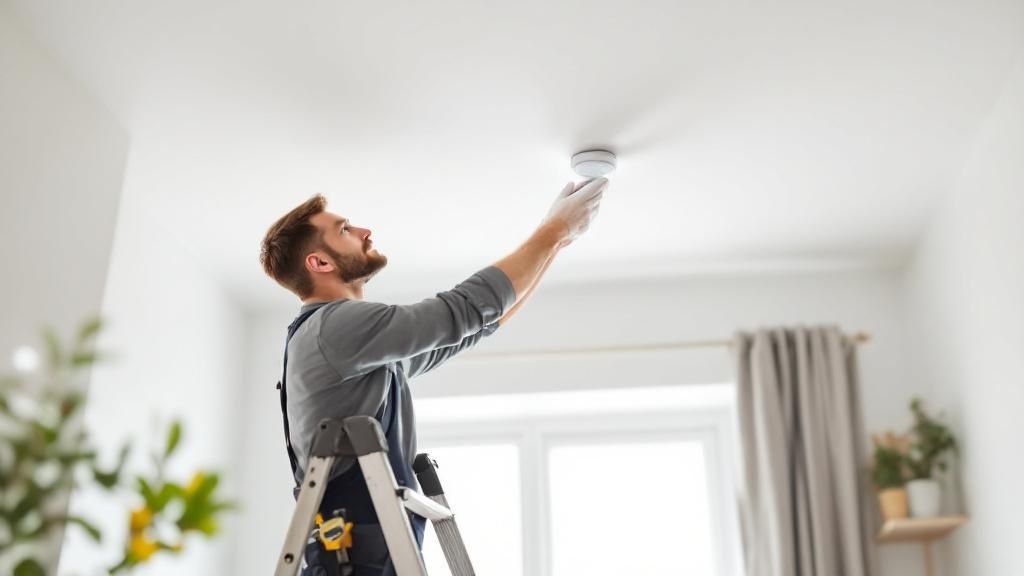
The word ‘wireless’ can be a bit misleading. It might tempt you to think that setting up a network of linked smoke alarms is a quick weekend DIY project. While it’s true you won’t need new electrical cables run through your walls, getting a qualified electrician to handle the installation is non-negotiable. This isn’t just another gadget; it’s a life-saving system where there’s simply no margin for error.
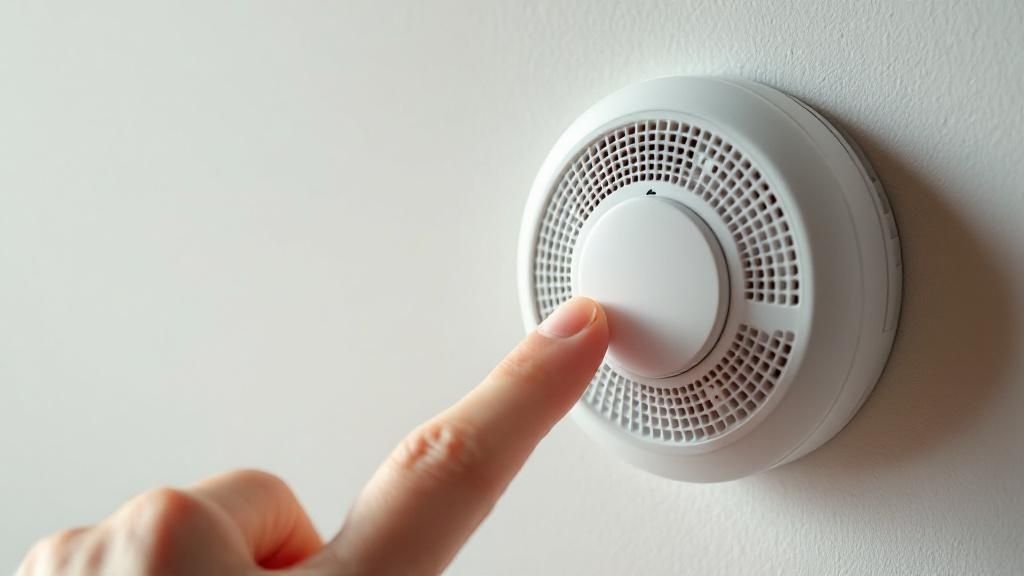
A professional installation is so much more than just sticking a few alarms on the ceiling. It’s about methodically building a safety net that’s specifically designed for your home’s unique layout and potential fire risks.
A licensed electrician won’t just guess where the alarms should go. They follow a precise, well-honed process to make sure your wireless linked smoke alarms give you maximum coverage and unwavering reliability. This procedure is built on a deep understanding of airflow patterns, electrical codes, and Australian fire safety standards.
Here’s what that looks like in practice:
Professional installation isn’t about convenience; it’s about certainty. It means every alarm is correctly placed, properly configured, and rigorously tested. That final verification step removes any doubt and gives you true peace of mind that your system will perform exactly as it should in an emergency.
Here is the rewritten section, crafted to sound human-written and natural.
Your interconnected smoke alarm system is a fantastic piece of safety tech, but like any life-saving equipment, it needs a bit of regular attention to do its job properly. Think of it as a quick health check for your home’s first line of defence against fire. A few minutes of simple maintenance now and then is all it takes to guarantee the entire network is primed and ready.
The single most important habit you can get into is testing the system monthly. This isn’t just about checking a battery; it’s a full-system check. When you press and hold the ‘test’ button on one alarm, you’re verifying two crucial things: first, that its own siren is loud and clear, and second, that it’s successfully triggering every other alarm in the house. It’s the only real way to know that all-important link between them is working.
Besides the monthly test, a little bit of housekeeping goes a long way. Dust, cobwebs, and even tiny insects can work their way into an alarm’s sensing chamber. This can lead to those incredibly annoying false alarms or, far more dangerously, could slow its response time in a real fire.
Here’s a straightforward maintenance plan to follow:
One of the best things about modern alarms is the sealed 10-year lithium battery. This design completely gets rid of those infuriating 3 am low-battery chirps. More importantly, it removes the temptation to “just borrow” a battery from the alarm, which tragically leaves a home unprotected.
That 10-year battery life isn’t just a random number; it’s directly linked to the lifespan of the alarm itself. The sensitive components that detect smoke degrade over time. After about a decade, their reliability just isn’t what it used to be. That’s why the entire unit—not just the battery—must be replaced every 10 years. You’ll find the manufacturing date printed right on the alarm.
Sticking to quality, approved alarms and batteries is also non-negotiable. We’ve all seen the news reports about lithium-ion battery incidents. In fact, since 2021, over 450 fires across Australia have been linked to them, which really drives home why using the correct, quality components is so critical. To learn more about this, you can read up on smoke alarm battery fire risks and see why it matters.
Picking the right alarms for your home is only half the battle. The other, arguably more critical half, is choosing the right person to install them. Even with wireless technology that avoids messy new wiring, having a licensed electrician handle the setup of your wireless linked smoke alarms is non-negotiable for your family’s safety. This is where an experienced professional, like the team here at DLG Electrical, really proves their worth.
A true expert doesn’t just tick the boxes for Australian fire safety standards; they aim to go well beyond them. The job should always start with a proper look at your home’s unique layout. This isn’t just a quick glance—it’s about strategically placing each alarm to ensure the fastest possible detection time, while also cleverly avoiding those annoying false alarms from kitchen smoke or bathroom steam. It’s this careful planning that ensures your system is perfectly tuned for your specific property.
A professional installation is about so much more than just the physical work. It’s a complete process that covers everything from that initial assessment of your home, to digitally pairing every single unit, and finishing with a full, system-wide test to make sure it all works together seamlessly.
True peace of mind doesn’t just come from a correct installation. It comes from understanding how your own safety system works. A great installer will take the time to show you how to test and maintain your alarms, leaving you confident in the protection you’ve invested in.
This focus on homeowner education is what separates a good installer from a great one. You should feel completely comfortable asking questions and get clear, simple instructions on how to keep your system in perfect working order for years to come.
Ultimately, choosing a partner like DLG Electrical means you’re putting professionalism and quality first. It’s a decision to use top-tier, compliant products and work with a team that is genuinely committed to your safety. This turns a simple installation job into a lasting investment in your family’s security and wellbeing.
Making the switch to a wireless linked smoke alarm system is one of the smartest moves you can make for your family’s safety. But like any new technology, it’s completely normal to have questions. Let’s walk through some of the most common queries we hear from homeowners, so you can feel confident you’re making the right choice.
People often first ask about how many alarms they actually need. The rules here are designed for maximum protection. Australian standards require interconnected photoelectric alarms in every bedroom, in the hallways that connect those bedrooms, and on each level of your home. A qualified electrician can look at your specific layout to figure out the perfect placement for full compliance and, more importantly, total peace of mind.
This is a big one. Can you connect your new wireless alarms to your old ones? The short answer is no. For the interconnected system to function correctly, all the alarms need to “speak” the same language. That means they must use the same radio frequency technology from the same manufacturer. You can’t just add a new wireless unit into a network of older, standalone alarms; the whole system needs to be compatible.
Another common worry is interference from other devices in your home, like your Wi-Fi router. Thankfully, this is something you don’t need to stress about. Wireless linked smoke alarms operate on their own dedicated radio frequency, completely separate from your home Wi-Fi, cordless phones, or garage door remote. This design ensures that nothing gets in the way of those critical, life-saving signals.
It’s this dedicated, closed-loop communication that makes these systems so incredibly reliable. In fact, studies consistently show that having interconnected alarms can slash the risk of dying in a house fire by over 60%. This is why we’re seeing a huge shift across Australia towards smart, linked safety devices with long-life batteries. You can learn more about the growing market for advanced smoke alarms to see how this technology is making homes safer.
And what about those annoying low-battery chirps in the middle of the night? That’s a thing of the past. Most modern wireless alarms are fitted with a sealed 10-year lithium battery. This single battery powers the alarm for its entire decade-long lifespan, meaning no more climbing on chairs for yearly replacements. After 10 years, you simply replace the entire unit to ensure the smoke sensor is still working at its best.
We’ve put together a quick FAQ table to cover a few more common questions at a glance.
| Question | Answer |
|---|---|
| How do they connect without wires? | They use a dedicated Radio Frequency (RF) signal to communicate with each other. When one alarm detects smoke, it sends a signal to all other alarms in the network to sound the alert. |
| What is the range of the wireless signal? | The range is typically around 30 metres in an open area, which is more than enough for most homes. Walls and floors can reduce this, but a professional installer will test the signal strength to ensure full coverage. |
| Is professional installation required? | Yes. For mains-powered wireless interconnected alarms, installation must be done by a licensed electrician to ensure they meet Australian Standards (AS 3786:2014) and local building codes. |
| Can I install them myself? | Only battery-powered wireless alarms (not connected to mains power) can be DIY-installed, but you must still follow the manufacturer’s instructions and state legislation for placement. For guaranteed compliance and safety, professional installation is always recommended. |
Hopefully, these answers clear things up and show just how effective and user-friendly modern smoke alarm systems are. The goal is simple: earlier warnings and a safer home.
Ready to bring this level of safety to your home with a fully compliant, professionally installed system? The experienced team at DLG Electrical is here to help. Contact us today for a free quote and get the ultimate peace of mind.

Master Electrician with over 30 years of experience. Founded DLG Electrical in 2005 after international project work including electrical installations at Stamford Bridge Stadium, London(Home of Chelsea FC).

Local Electricians that can fix all Electric Hot water Systems.
Motion sensor lights are a versatile addition to any home, offering nu
