83 Jean St, Grange QLD 4051
Mon-Fri 07:30 AM - 04:00 PM - Sat - 8:00 - 12 - Sunday Closed
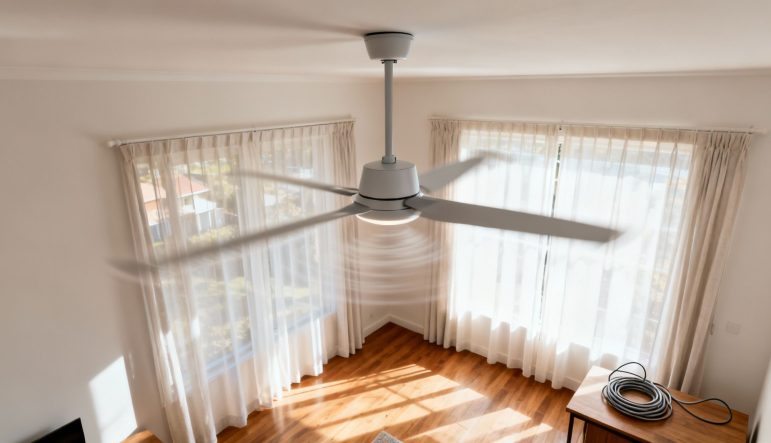
Choosing the right ceiling fan for your home is about more than just picking a good-looking fixture. It’s a key decision that balances style, performance, and energy efficiency to keep your space comfortable, especially during those long, warm Brisbane seasons.
With so many styles, sizes, and technical specs out there, picking a ceiling fan can feel a bit overwhelming. It’s easy to get bogged down in the details, but the whole process becomes much simpler when you break it down piece by piece. Think of this guide as your roadmap to confidently selecting the perfect model for your needs.
We’ll start with the fundamentals every homeowner should know, walking you through everything from matching the fan’s size to your room’s dimensions to understanding the real-world differences between AC and DC motor technologies.
Before you dive deep into the technical side of things, it’s a good idea to ask yourself a few simple questions. This initial check will help you narrow down the options and focus on what really matters for your space.
Use this table as a quick starting point to guide your thinking.
| Consideration | Key Question to Ask Yourself | Find Answers in This Section |
|---|---|---|
| Room Size & Fan Diameter | How large is the room where the fan will be installed? | Sizing and Placing Your Fan |
| Motor Type & Efficiency | Is my priority lower running costs and quiet operation? | Decoding Fan Performance |
| Ceiling Height & Mounting | Do I have standard, low, or high vaulted ceilings? | Navigating Installation Requirements |
| Controls & Features | Do I prefer a simple wall control, a remote, or smart features? | Exploring Smart Features |
Taking a structured approach like this ensures you cover all the critical bases, from how the fan will physically fit in the room to how efficiently it will run. By thinking about these elements upfront, you’re not just buying a product—you’re making a smart investment in your home’s comfort.
It’s no surprise that energy-efficient solutions are becoming more popular. In 2024, the Australian ceiling fan market was valued at around USD 224 million and is expected to grow to over USD 292 million by 2033. This jump is largely driven by rising energy costs and a greater focus on sustainable living.
Of course, a good ceiling fan works brilliantly on its own, but it can also be part of a bigger picture. Many homeowners find it useful to research broader home cooling solutions to see how a fan can perfectly complement other systems for year-round comfort.
https://www.youtube.com/embed/omJ6mok42is
When you’re standing in the aisle looking at a new ceiling fan, the technical jargon on the box can feel a bit overwhelming. Terms like CFM and motor type might not mean much at first, but they are the absolute key to understanding how that fan will actually perform in your home—and what it will cost you to run.
Think of it this way: choosing a fan based on looks alone is like buying a car without checking what’s under the bonnet. To make a smart investment for your home, you need to get your head around these performance numbers. They’re what separates a fan that creates a blissful breeze from one that just whirs uselessly, and they directly link to your future electricity bills.
The single most important number you’ll see is CFM, which stands for Cubic Feet per Minute. Forget the technical definition for a moment. It’s much easier to think of CFM as the fan’s ‘breathing power’—it’s a straight-up measure of how much air it can move every minute.
A higher CFM number means a more powerful fan that circulates more air, creating that strong, cooling effect we all crave. This is especially crucial for larger living areas or rooms with high ceilings here in Brisbane, where simply moving the air effectively is what beats the heat. A fan with a low CFM rating in a big space will just struggle to make a difference, leaving you feeling hot and bothered.
This little diagram breaks down the key factors—size, motor, and comfort—that all play into your final choice.
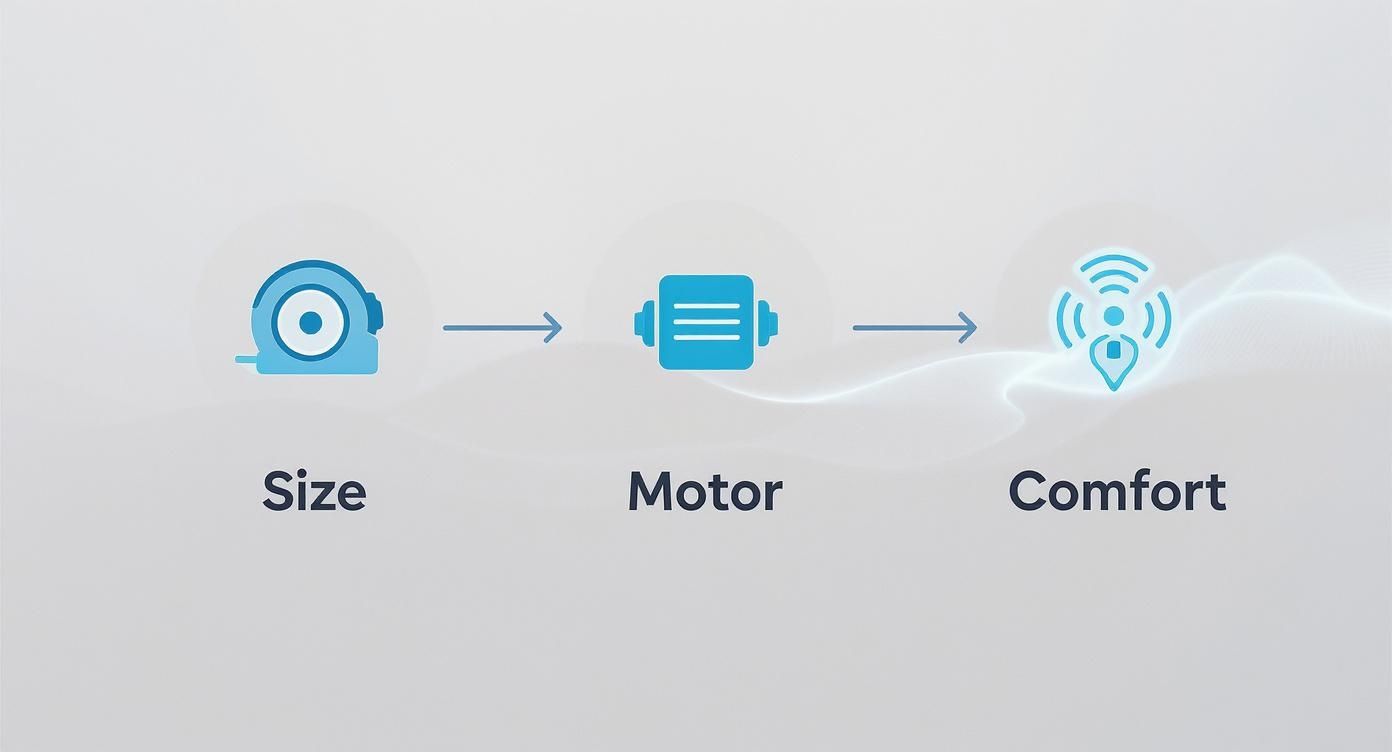
You can see how each piece of the puzzle connects to help you find a fan that delivers both great performance and energy efficiency.
While a high CFM tells you a fan is powerful, it doesn’t tell the whole story. The other critical piece of the puzzle is efficiency, which is measured in CFM per Watt. This metric reveals exactly how much air the fan moves for every single watt of electricity it uses. It’s the true measure of a fan working smarter, not harder.
A fan with high efficiency (a high CFM per Watt rating) delivers a powerful breeze without sending your energy bills through the roof. It’s the sweet spot where performance meets running costs, giving you maximum comfort for minimal expense.
This is where your choice of motor technology really comes into play. You could have two fans with the exact same CFM, but one might be vastly more efficient, saving you money every single time you flick the switch.
The motor is the heart of any ceiling fan. The technology it uses has a direct impact on its performance, how quiet it is, and its long-term running costs. Most fans on the market use one of two types of motors: Alternating Current (AC) or Direct Current (DC).
While DC fans often have a higher price tag initially, their incredible efficiency and whisper-quiet operation make them a much better long-term investment. They genuinely pay for themselves over time through lower power bills. To really get into the nitty-gritty, check out our detailed comparison of DC fans vs AC fans.
This focus on efficiency is a big deal in Australia, where energy costs are a major household concern. The good news is that ceiling fans are prized for their incredibly low running costs, which can be as little as 0.17 to 1.9 cents per hour, depending on the speed and motor. Over a long, hot Brisbane summer, that adds up to massive savings compared to running an air conditioner. It’s what makes choosing a modern, energy-efficient DC ceiling fan such a financially smart move for any homeowner.
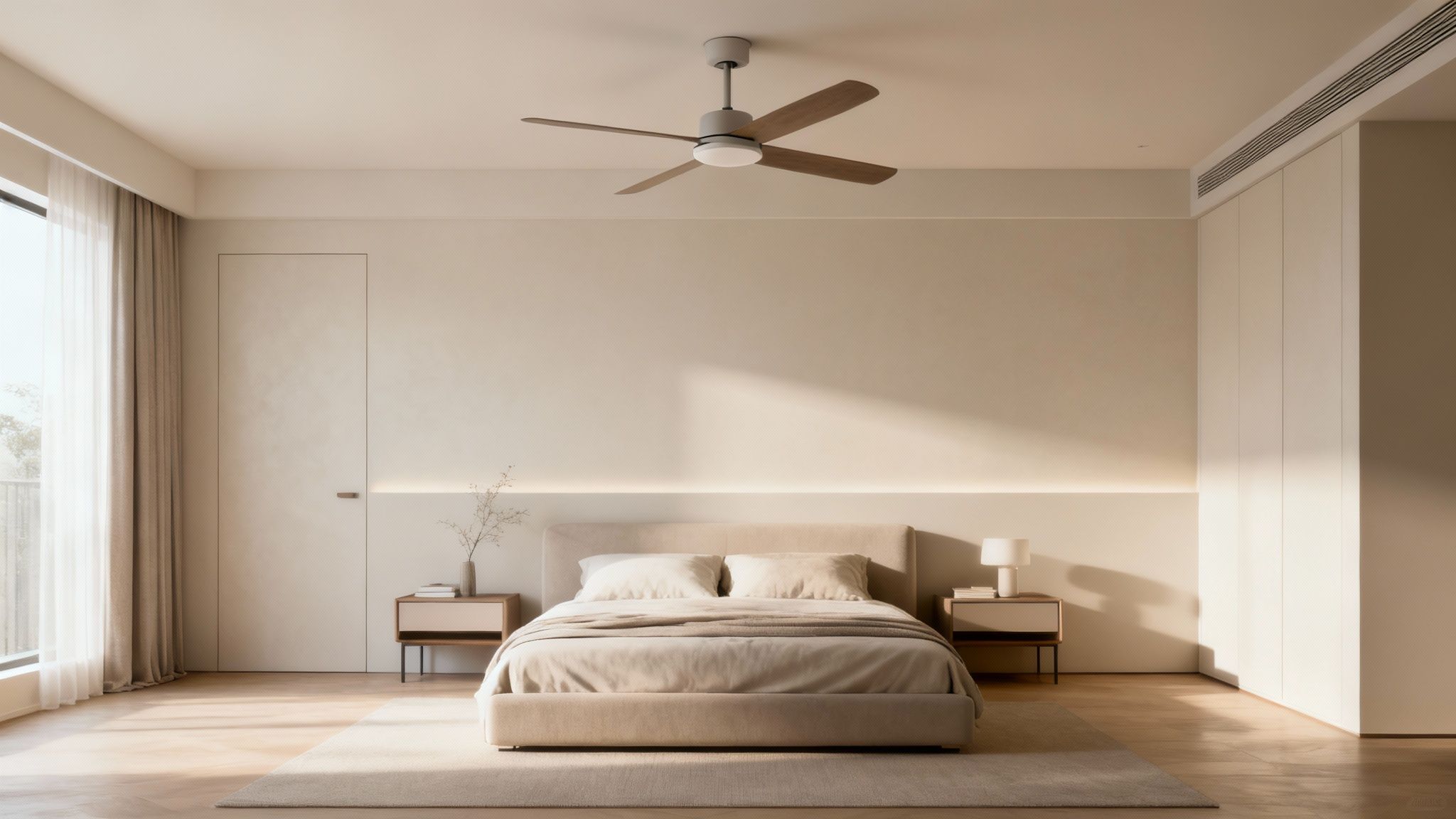
Even the most powerful, energy-efficient ceiling fan will feel like a waste of money if it’s the wrong size for your room or installed in the wrong spot. Sizing and placement aren’t just minor details; they’re the absolute foundation of effective air circulation.
Getting this right is the difference between a gentle, room-wide breeze and a fan that just stirs the air in a tiny circle directly beneath it.
Think of it like choosing speakers. A small Bluetooth speaker is perfect for a study but would be completely lost in a large, open-plan living area. A ceiling fan works the same way—its size, or blade span, has to be properly matched to the room’s dimensions to move air effectively from corner to corner.
Picking the right fan diameter is a pretty straightforward process based on your room’s square meterage. A fan that’s too small will have to run on its highest setting constantly just to make a difference, creating more noise than comfort. On the flip side, a massive fan in a tiny room can create an overpowering downdraft that feels more like a wind tunnel.
To make things easy, here’s a quick guide to help you find that perfect fit for your space.
This simple chart takes the guesswork out of the equation, helping you match the fan’s diameter to your room’s size for the best possible airflow.
| Room Size (Square Metres) | Recommended Fan Diameter (cm) | Common Room Type |
|---|---|---|
| Up to 10 m² | 91 – 107 cm | Small Bedroom, Study, Laundry |
| 10 m² – 20 m² | 122 – 132 cm | Master Bedroom, Dining Room |
| 20 m² – 35 m² | 132 – 142 cm | Living Room, Open-Plan Area |
| Over 35 m² | 142 cm or larger | Large Great Room, Alfresco Area |
Using this as a starting point ensures your fan is perfectly proportioned to deliver optimal performance. If you want a more detailed breakdown of measurements and other considerations, you can explore our complete guide to choosing the right ceiling fan size.
Once you’ve got the right size picked out, the next critical step is deciding exactly where to install it. Proper placement is all about safety, maximising airflow, and preventing annoying issues like wobbling or humming. The goal is always to centre the fan in the main living or sleeping area for balanced air distribution.
Here are the key rules our electricians follow for a safe and effective installation:
Proper fan placement is non-negotiable for performance. A fan installed too close to a wall or too low from the ceiling will struggle to circulate air efficiently, drastically reducing its cooling effectiveness regardless of its power or size.
Standard placement works a treat for typical flat ceilings (around 2.4m high). But many Brisbane homes feature beautiful high, vaulted, or sloped ceilings that need a slightly different approach.
For these unique spaces, a downrod is essential. It’s simply an extension pipe that lowers the fan from its ceiling mount, bringing it down to that ideal height of 2.1m to 2.7m from the floor. This makes sure the breeze is moved where you can actually feel it, rather than getting lost in the empty space above.
A professional electrician can help you select the right downrod length and ensure the mounting bracket is suitable for a sloped ceiling, guaranteeing a secure, balanced, and wobble-free installation.
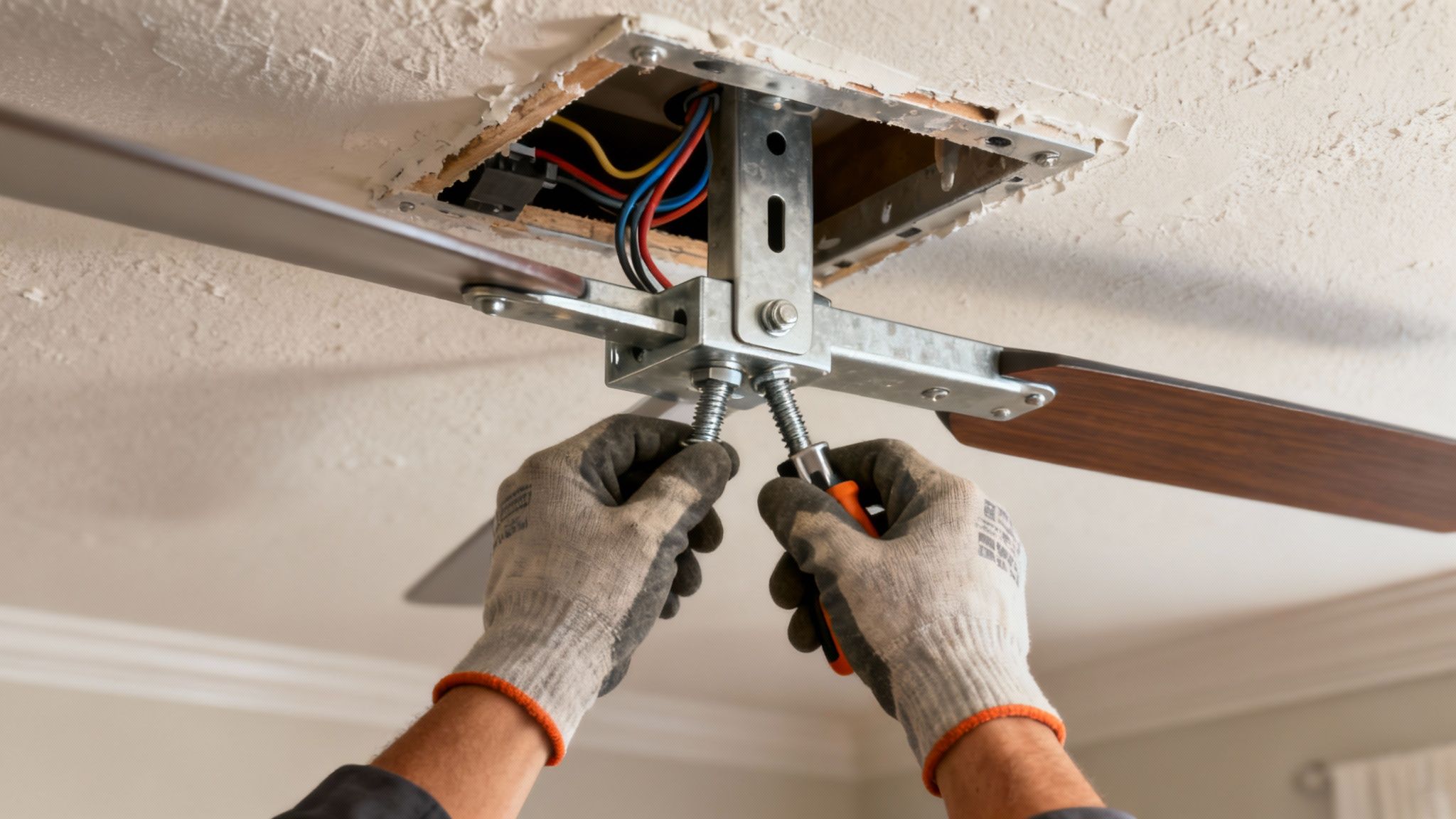
That slight wobble or faint hum from a new ceiling fan isn’t just a minor annoyance; it’s a massive red flag. These are classic signs of an improper installation, a shortcut that not only kills performance but creates a genuine safety hazard. In Australia, installing a ceiling fan is a job strictly for licensed electricians, and for very good reason.
Trying to DIY a fan install might seem like a clever way to save a few dollars, but the risks just aren’t worth it. From incorrect wiring that can cause a fire to an unsecured fan that could come crashing down, the potential for disaster is real. A professional installation isn’t just about hooking up wires; it’s about making sure that fan runs safely, silently, and efficiently for its entire lifespan.
A ceiling fan is a heavy, constantly moving object. As it spins, it exerts a surprising amount of force and vibration on its mounting point. Simply screwing it into a standard plasterboard ceiling or an old light fixture box is asking for trouble.
The most critical part of the job happens inside your ceiling cavity. A qualified electrician will install a dedicated support brace that’s anchored securely to the timber ceiling joists. This heavy-duty brace is specifically engineered to handle the fan’s weight and constant motion, preventing any wobbling and ensuring it stays put for good.
Not all ceilings are the same, which is why there are different mounting options to suit your home’s layout. Getting this right is crucial for maximising airflow and keeping everything safe.
The decision to DIY a ceiling fan installation overlooks the critical structural and electrical expertise required. A professional electrician doesn’t just hang a fan; they install a complete, secure system that guarantees safety, stability, and optimal performance.
When you bring a professional into your home, it’s good to understand the OHS/WHS framework in Australian worksites. It helps you appreciate the high safety standards and procedures that professionals like us at DLG Electrical follow on every single job.
With the Australian ceiling fan market projected to hit USD 508.7 million by 2030, getting the installation right has never been more important. National standards are in place for a reason—they mandate professional installation to ensure every fan operates safely and performs as designed, especially for ceilings 2.4 metres or higher. At the end of the day, investing in a professional installation is the only way to protect your home, your family, and your new fan.

The days of fumbling for a pull-chain in the dark are well and truly behind us. Ceiling fans have come a long way from being simple, manually operated appliances. They’ve evolved into smart, integrated comfort systems that fit perfectly into a modern, connected Brisbane home.
It all started with the humble handheld remote, which was a huge leap forward in itself. Being able to change the fan speed or flick on the light from anywhere in the room was a welcome convenience, but it was just the beginning. The real game-changer has been the arrival of smart technology.
Smart ceiling fans take that convenience to a whole new level. By connecting to your home’s Wi-Fi network, they open up a world of features you can control right from an app on your smartphone.
Imagine scheduling your bedroom fan to switch on 30 minutes before you head to bed, creating the perfect cool, quiet atmosphere for a good night’s sleep. Or, you could set the living room fan to start circulating air just before you get home from work, so you walk into a comfortable space without wasting a cent on energy all day.
This is what true climate control looks like.
A smart ceiling fan isn’t just a gadget; it’s a tool for proactive energy management. By automating its operation based on your daily routines, you can significantly reduce wasted electricity while maximising comfort, ensuring the fan only runs when it’s truly needed.
For the ultimate hands-free experience, you can integrate your smart fan with voice assistants like Amazon Alexa or Google Home. A simple command like, “Hey Google, set the living room fan to medium speed,” is all it takes. No more searching for the remote or even your phone.
This isn’t just a novelty; it makes your home’s various systems feel like they’re working together as one.
These modern controls also unlock another brilliant feature that makes your ceiling fan a year-round asset: the reverse function. Most high-quality remote and smart-controlled fans let you easily switch the direction the blades spin.
During Brisbane’s hot summers, the blades spin counter-clockwise, pushing cool air down to create that much-needed breeze. But in winter, a quick switch reverses the direction. The blades then spin clockwise, gently drawing cool air up while pushing the warm air—which naturally rises and gets trapped near the ceiling—back down into the room.
It’s a simple change that helps your heating system work more efficiently, keeping you warmer and potentially trimming down your heating bills.
You’ve done the research and picked out the perfect ceiling fan—the right size, style, and efficiency for your space. But the final step, the installation, is arguably the most critical. While the appeal of a weekend DIY project is strong, ceiling fan installation is one job that should always be left to a licensed professional. It’s a matter of safety, compliance, and ultimately, protecting your investment.
Trying to install a fan yourself can spiral into a heap of problems that go way beyond simple frustration. Incorrect wiring is a serious fire hazard. An improperly secured fan can lead to annoying wobbles and noises, or in a worst-case scenario, it could become a dangerous falling object. A professional electrician has seen it all and has the right tools and expertise to make sure none of this happens.
Getting a professional involved from the get-go pays dividends beyond just the final install. An experienced electrician can offer invaluable advice during a consultation, confirming whether the fan you’ve chosen is genuinely the best fit for your room’s specific electrical setup and ceiling structure.
They’ll assess your existing wiring to see if it can handle the new load or if it needs an upgrade. This pre-installation check is a crucial step that DIYers often miss, and it saves you from nasty, expensive surprises down the track.
Peace of mind is the ultimate benefit of professional installation. Knowing your fan is securely mounted, correctly wired, and compliant with all Australian safety standards lets you enjoy the comfort it provides without a second thought.
The need for a professional becomes even more obvious in complex situations. Upgrading an old fan often involves more than just swapping one unit for another. A licensed electrician will ensure the new fan, which is often heavier, is supported by a modern, purpose-built ceiling brace that’s anchored directly to the ceiling joists—not just the plasterboard.
For brand new installations where there was only a light fixture before, a professional handles the whole process. That includes running new wiring, installing the necessary bracing, and fitting a wall controller or remote receiver. This comprehensive approach guarantees a safe, stable setup built to last for years. To get a better idea of what’s involved, you can learn more about our professional ceiling fan installation services and how we ensure every job is done right.
Ultimately, hiring a professional like DLG Electrical isn’t an extra cost—it’s an essential investment in the safety, performance, and longevity of your ceiling fan.
Even after covering all the details, it’s completely normal to have a few questions rattling around. Picking the right ceiling fan is a big deal for your home’s comfort and style, so let’s clear up some of the common queries we hear from Brisbane homeowners.
We’ve pulled together the essential info you need to make a confident choice, covering everything from how fans actually work to the nitty-gritty of different fan types.
This is probably the biggest misconception out there. A ceiling fan doesn’t lower the room’s temperature like an air conditioner. Instead, it creates a wind-chill effect that makes you feel cooler.
By moving air across your skin, the fan accelerates the natural evaporation of moisture—your body’s built-in cooling system. It’s a simple but powerful effect, often making a room feel several degrees cooler. This lets you ease up on the air con, potentially saving a decent amount on your power bills.
Believe it or not, the number of blades is more about aesthetics and noise than pure performance. Many people assume more blades mean more airflow, but the real power comes from the motor, the angle of the blades (blade pitch), and the overall aerodynamic design.
At the end of the day, a well-designed three-blade fan can easily outperform a poorly designed five-blade model. The choice usually boils down to the visual style you prefer and how quiet you need it to be.
Putting an indoor fan outside isn’t just a bad idea—it’s a serious safety risk and a surefire way to destroy it. Outdoor fans are built differently from the ground up to withstand the elements, and they come with specific ratings for a reason.
An outdoor-rated ceiling fan isn’t just a recommendation; it’s a safety requirement. These fans are built with moisture-resistant motors and all-weather blades designed to stop rust, warping, and electrical faults caused by humidity and rain.
You’ll generally come across two main types:
The cost for a professional to install a ceiling fan here in Brisbane can vary quite a bit. A few key things influence the final price, like the complexity of the installation and what your home’s wiring looks like.
A simple swap-out of an old fan is usually the quickest and most affordable job. But installing a fan where there wasn’t one before is more involved. This requires running new wires, fitting a proper support brace in the ceiling, and installing new wall controls. High or sloped ceilings can also add to the time and equipment needed. The only way to know for sure is to get a detailed quote from a licensed electrician.
Ready to find the perfect fan and get it installed safely by a team you can trust? The crew at DLG Electrical is here to help with expert advice and flawless installation. Contact us today for a free, no-obligation quote by visiting https://dlgelectrical.com.au.

Master Electrician with over 30 years of experience. Founded DLG Electrical in 2005 after international project work including electrical installations at Stamford Bridge Stadium, London(Home of Chelsea FC).

Local Electricians that can fix all Electric Hot water Systems.
Motion sensor lights are a versatile addition to any home, offering nu
