83 Jean St, Grange QLD 4051
Mon-Fri 07:30 AM - 04:00 PM - Sat - 8:00 - 12 - Sunday Closed
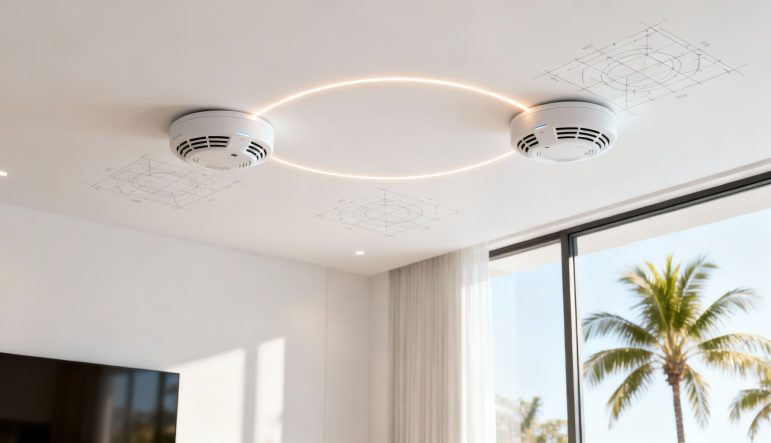
Wireless smoke detectors are a complete game-changer for home safety. Unlike old-school standalone alarms that only sound off in one room, a modern wireless system is interconnected. When one detector senses smoke, they all go off at once, creating a property-wide alert that you simply can’t miss.
This shift from isolated alarms to a synchronised network is one of the most significant upgrades you can make to protect your home and family.
Picture this: a fire starts in the garage late at night while everyone is asleep. An old, isolated alarm down there might beep away, but its sound is easily muffled by doors and distance. By the time anyone upstairs hears it, it could be far too late. This is the fundamental weakness of standalone alarms—they’re like a lone guard shouting for help, hoping someone is close enough to hear.
An interconnected system of wireless smoke alarms operates like a highly coordinated team. The second one alarm detects smoke, it broadcasts a radio signal to every other detector in the house. The result? An immediate, house-wide siren that blares from the basement to the bedrooms simultaneously.
This simple technological leap buys you and your family precious, life-saving seconds to escape. Those seconds are often the difference between a close call and a tragedy. A fire in the kitchen is no longer a distant problem; it’s an unavoidable alert ringing in every single room.
This isn’t just about adopting better technology—it’s about meeting Queensland’s strict safety standards. The law now mandates interconnected alarms in all homes to ensure everyone gets the warning, regardless of where a fire starts. For homeowners and landlords across Brisbane, this means getting the right system installed is a non-negotiable priority. Understanding the devastating aftermath of a fire, which can require extensive fire restoration services, really drives home why these advanced detection systems are so critical.
This guide is here to cut through the confusion. We’ll walk you through the technology behind wireless smoke alarms, their biggest benefits, and exactly what you need to know to comply with Brisbane’s regulations. Our goal at DLG Electrical is to help you make smart, confident decisions that will protect your property and, most importantly, the people inside it.
To really get your head around the safety upgrade that wireless smoke detectors bring to the table, it helps to peek under the hood. The real magic isn’t in one single alarm; it’s in how they all work together as a synchronised, intelligent team to protect your entire home. The whole system is built on two key things: advanced sensor technology and rock-solid wireless communication.
At the core of every modern alarm is a sensor designed to pick up the very first signs of a fire. The two main types you’ll find are ionisation and photoelectric.
Older ionisation alarms are pretty good at detecting the tiny particles that come from fast, open-flame fires. They use a minuscule amount of radioactive material to create a steady electrical current. When smoke particles get in the way, they disrupt this current and—BEEP!—the alarm goes off.
Photoelectric alarms, on the other hand, work a bit like a tiny laser tripwire. An infrared light beam shoots across a chamber inside the alarm. When larger smoke particles from a slow, smouldering fire drift in, they scatter that light, causing it to hit a sensor and trigger the alarm.
Because smouldering fires can pump out a heap of toxic smoke long before you see any flames, photoelectric technology is now the standard for Aussie homes. It gives you the earliest possible warning for the most common types of house fires, buying you and your family precious time to get out safely.
This diagram shows the fundamental difference between a single, standalone alarm and a modern interconnected system.
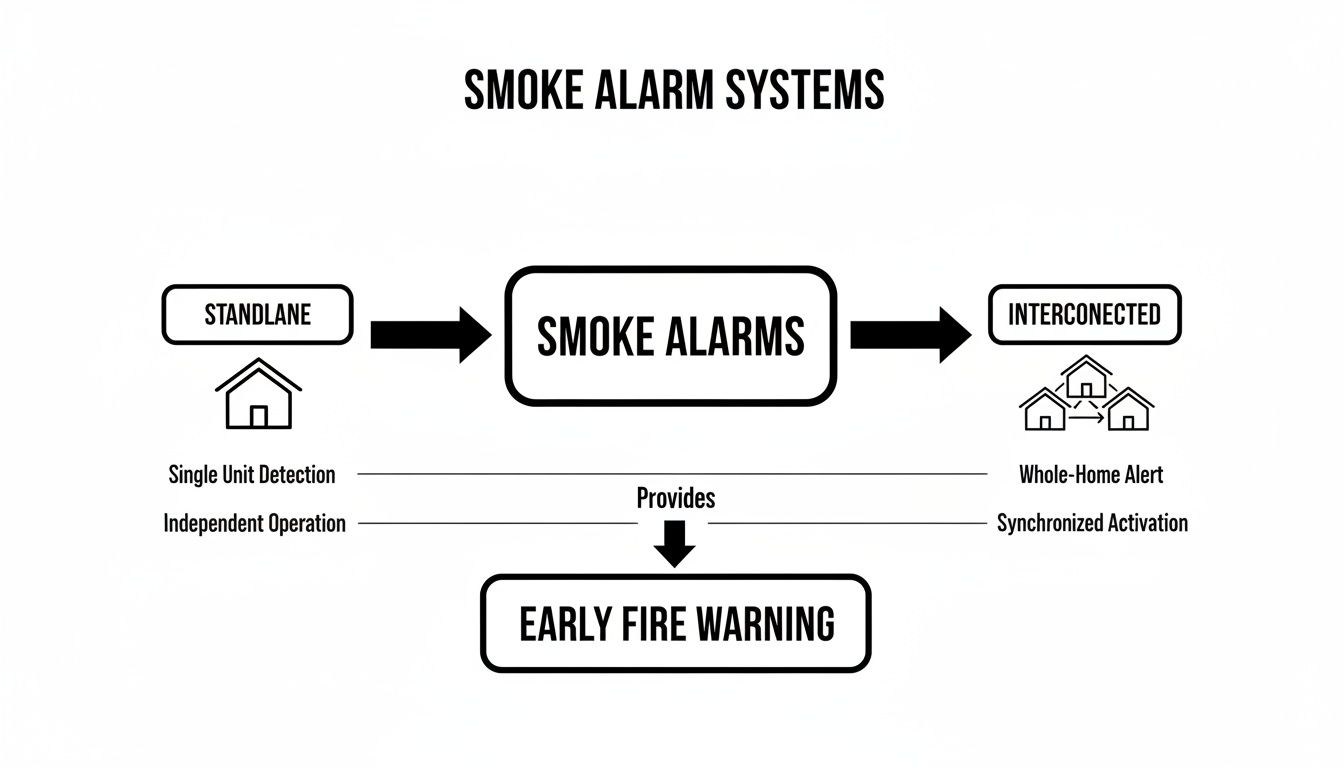
As you can see, a standalone unit only offers isolated protection. An interconnected system, however, creates a comprehensive safety net across your entire property.
The real game-changer with wireless smoke detectors is how they talk to each other. They don’t use your home Wi-Fi, which can be flaky or drop out during a power cut. Instead, they communicate using a dedicated radio frequency (RF) signal.
Think of it as a private, super-secure radio station just for your alarms.
This instant, property-wide alert is what it’s all about. A fire starting in the garage is announced in the upstairs bedrooms at the exact same moment, getting rid of the dangerous possibility that a single alarm goes unheard. To get a better sense of the tech involved, it’s worth looking at the principles of remote monitoring and real-time updates used in other modern security devices.
This RF interconnection ensures that even if a fire kicks off in an empty room, everyone in the house is alerted with maximum urgency, giving you crucial extra seconds to escape.
The switch to these systems is definitely being noticed. The residential market is expected to make up 65.4% of the total smoke detector market by 2035, a trend driven by strict government rules like those here in Queensland and a growing focus on home fire safety. As the technology becomes more accessible, Brisbane homeowners are increasingly choosing these wireless, smart-enabled devices over old-school standalone units for better protection and genuine peace of mind.
Upgrading your smoke alarms is more than just a box-ticking exercise for compliance; it’s a fundamental improvement to your home’s safety and your peace of mind. For Brisbane property owners, moving to a wireless system offers tangible, real-world advantages that go far beyond basic legal requirements. The technology behind modern wireless smoke detectors delivers superior protection in ways older, isolated alarms simply cannot match.
The single biggest win is interconnected safety. Imagine a fire starting in a downstairs room. With a wireless system, the alarm in your bedroom sounds at the exact same moment as the one closest to the smoke. This immediate, property-wide alert eliminates the dangerous delay of waiting for a distant alarm to be heard through closed doors, giving everyone crucial extra time to escape.
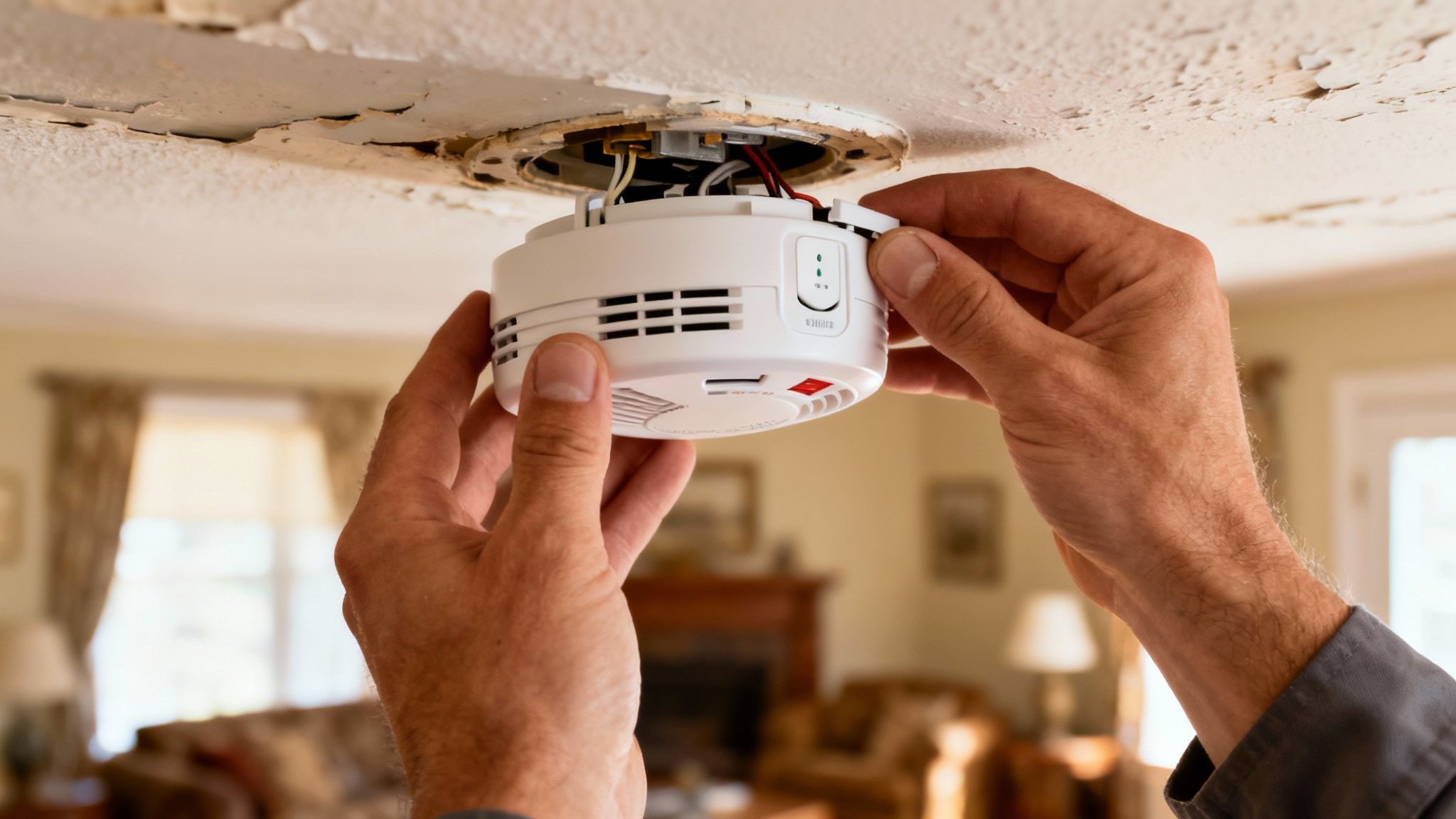
One of the most compelling benefits of a wireless system is the incredible ease of installation, especially in existing homes. Traditional hardwired systems require an electrician to run cables through walls, ceilings, and floors—a process that can be costly, disruptive, and sometimes impossible without significant renovations. This is a major hurdle for older character homes or properties with complex architectural designs.
Wireless smoke detectors completely bypass this problem.
This installation advantage is a key reason for the rapid adoption of this technology. Driven by strict regulations, Australia’s fire detection market is seeing major growth. The wireless fire detection market in the Asia-Pacific region, valued at USD 5.49 billion in 2024, is projected to more than double by 2032. Smoke detectors are the largest part of this market, and wireless models are especially popular in Australian projects where preserving a building’s structure is a priority. You can learn more about the trends in the Asia-Pacific fire detection market.
Beyond core safety, modern wireless systems offer ‘smart’ features that provide an extra layer of convenience and control. These alarms aren’t just passive devices waiting for an emergency; they are active components of your home’s safety network, keeping you informed and in control whether you are home or away.
Smart wireless systems bridge the gap between detection and notification. They don’t just sound an alarm—they communicate directly with you, turning your smartphone into a remote safety monitor.
This connectivity introduces a new level of assurance:
The integration of these smart features and the underlying communication technology, such as the RF signal, creates a highly reliable network. For a deeper dive into how this works, you can read about the advantages of Brooks mesh technology, which uses a similar principle to ensure robust device-to-device communication. This combination of interconnected safety, easy installation, and smart functionality makes wireless smoke detectors a powerful and practical upgrade for any Brisbane home.
Trying to make sense of home safety laws can feel like you’re wading through mud, but getting your head around your obligations is non-negotiable. Queensland has, without a doubt, some of the toughest smoke alarm legislation in Australia—and for good reason. It’s all designed to give you the absolute earliest warning possible if a fire breaks out. This isn’t just about ticking a box to avoid a fine; it’s about making your property as safe as it can be.
These laws are highly specific and don’t leave any room for interpretation. They were phased in to lift the standard of safety for every home in the state. As of 2022, any home being sold, leased, or having its lease renewed must meet the new, strict criteria. The final deadline is fast approaching: by 2027, every single home in Queensland must be fully compliant.
So, what does being “fully compliant” actually mean on the ground? The rules are built on three key pillars: having the right type of alarm, putting them in the right locations, and making sure they are all interconnected. This is where wireless smoke detectors really shine, especially in older homes where running new cables through walls and ceilings is a massive headache.
Here’s a simple rundown of what your home needs to have:
The goal of this legislation is simple but incredibly powerful: make sure that no matter where a fire starts, everyone in the home gets alerted instantly. An interconnected system of wireless smoke detectors is the perfect way to achieve this, creating a house-wide siren that’s impossible to ignore.
The legislation is also very clear about how your alarms need to be powered. This is to ensure they’re always ready to work, even during a power cut. There are two compliant options, both designed to eliminate the risk of an alarm failing because of a dead battery.
Your interconnected alarms must be either:
For most homeowners looking to upgrade, the 10-year battery option is the most practical path forward. It delivers the same rock-solid reliability as a hardwired system but skips the cost and mess of running new wiring. This makes getting your home up to code a much simpler and more affordable job. For a deeper dive into the specifics, you can check out this guide to smoke alarm requirements in QLD for homeowners.
While it might seem tempting to grab some battery-powered alarms from the hardware store and stick them up yourself, Queensland law is crystal clear: any installation or replacement of smoke alarms must be done by a licensed electrician. This isn’t just bureaucratic red tape; it’s a critical safety measure.
Getting a professional electrician from a trusted team like DLG Electrical on the job ensures your system is not only compliant but perfectly set up for your home’s unique layout. They will guarantee the placement is correct, the interconnection works flawlessly, and will provide you with a compliance certificate for your records. That professional sign-off gives you absolute peace of mind that your system will do its job in an emergency, protecting your family while keeping you on the right side of the law.
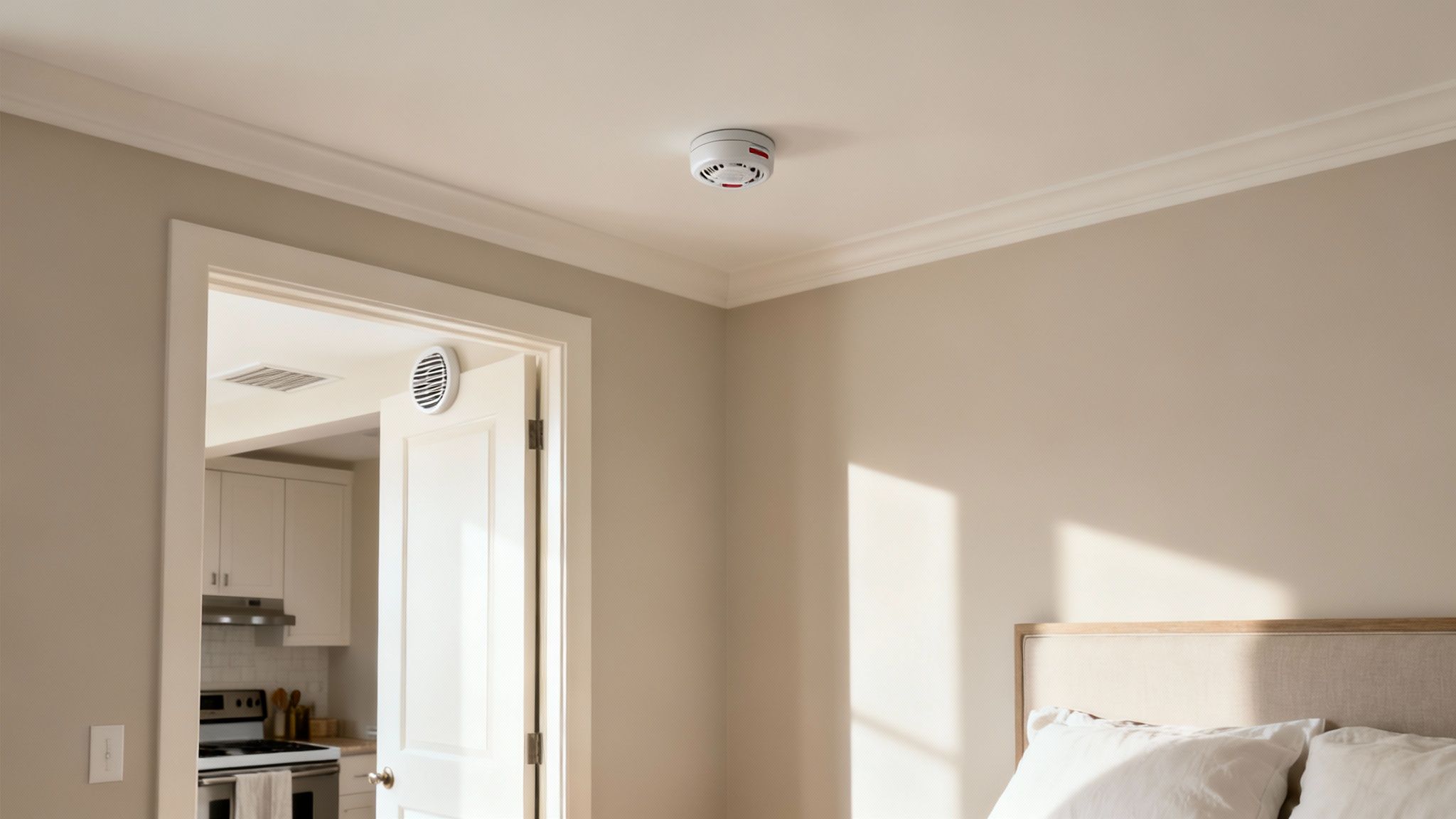
Meeting Queensland’s legal requirements is just the starting line. True, life-saving protection comes from thinking strategically about where your wireless smoke detectors are actually placed.
Proper placement means your alarms can detect smoke as early as possible, buying you precious seconds to escape. It’s the difference between a system that’s merely compliant and one that’s genuinely effective when it matters most.
Think about how smoke behaves in a fire—it rises, spreads, and fills a room from the top down. That’s why we install detectors on the ceiling, right in the path of that rising smoke. But here’s the thing: not all ceiling spots are created equal. Some areas can actually block smoke from reaching the sensor, creating dangerous blind spots in your home.
One of the most common mistakes we see is alarms installed too close to where a wall meets the ceiling. This corner area is known as a ‘dead air’ zone. Air circulation patterns in a room can push smoke away from these corners, which can delay or, in the worst-case scenario, even prevent the alarm from going off.
To get it right, just follow these simple rules:
Think of a dead air zone like an eddy in a river. The main current flows right past it. By placing your alarm in the centre of the room’s ‘current’ of air, you guarantee it will catch the first signs of trouble.
This principle is even more critical in homes with unique architectural features. A professional electrician knows exactly how to read your home’s layout to guarantee every alarm is perfectly positioned, turning your compliant system into a highly effective safety net.
Certain parts of your home need special consideration to prevent those frustrating false alarms while still ensuring functionality. Placing an alarm in the wrong spot can be so annoying that you might be tempted to disable it—completely defeating its purpose.
Kitchens and Bathrooms
You should never install a smoke detector inside a kitchen or bathroom. Steam from a hot shower or the fumes from a sizzling frypan will easily trigger a photoelectric alarm, leading to constant false alarms.
Instead, the detector should be placed just outside these areas, like in a connecting hallway. A good rule of thumb is to keep it at least 3 metres away from cooking appliances or the bathroom door.
Homes with Sloped Ceilings
If you have pitched or cathedral ceilings, smoke will naturally gather at the highest point. For these rooms, the alarm must be placed right at the peak of the ceiling.
By understanding the ‘why’ behind these placement rules, you start to see the real value of professional installation. An expert makes sure every alarm is perfectly positioned to do its job, giving your family the highest level of protection possible.
Think of your interconnected wireless smoke alarms like a team of dedicated sentinels. They offer incredible protection, but they need a little bit of attention to stay sharp. Just like a car needs a regular check-up to run smoothly, your alarms need a consistent maintenance routine to ensure they’re ready to act in an emergency.
The easiest and most important habit you can build is the monthly push-button test. All you need to do is press and hold the ‘test’ button on one of your alarms until the siren blares. Because they’re all connected, every other alarm in your home should spring to life within a few seconds. This quick check confirms three vital things: the alarms have power, their sensors are working, and their wireless connection is strong.
Over time, dust, cobwebs, and even tiny insects can find their way onto and inside your smoke alarms. This buildup can clog up the sensor chamber, which either stops smoke from getting in or, just as frustratingly, can trigger false alarms. A quick, gentle clean is all it takes to keep them in top shape.
For a more detailed walkthrough, have a look at our guide on how to properly check a smoke detector. These simple actions only take a few minutes but make a massive difference to their reliability.
A chirping alarm is your system’s way of asking for help. A single, intermittent chirp usually signals a low battery, while other patterns might indicate a fault or that the unit is nearing the end of its life.
This is a big one. Even if an alarm seems to be working perfectly, every single smoke detector sold in Australia comes with a hard expiry date. All alarms must be replaced every 10 years. Over a decade, the electronic sensors that detect smoke naturally degrade and become less sensitive. This isn’t a friendly suggestion; it’s a non-negotiable safety requirement.
The switch to wireless solutions is becoming more and more common, with the Asia-Pacific wireless fire detection market expected to grow at a CAGR of 9.3% through 2035. This trend highlights just how much homeowners value safety systems that are both effective and easy to install. You can read more about the trends in the wireless fire detection system market. For Brisbane property owners, working with a professional like DLG Electrical for scheduled inspections and replacements is the best way to ensure your system stays compliant and your family remains protected.
Switching to a modern, wireless smoke alarm system is a smart move, but it’s natural to have a few questions before you commit. For property owners here in Brisbane, we’ve put together answers to the most common queries we hear. This way, you can feel confident you’re making the right choice to protect your property and the people in it.
Let’s dive into the specifics of compliance, cost, and reliability to clear up any uncertainties.
Yes, absolutely. Alarms powered by a 10-year, non-removable lithium battery are a fully compliant and popular choice, provided they meet all the other legal requirements.
The biggest rule in Queensland is that all your smoke alarms must be interconnected. A single, standalone battery alarm won’t cut it. However, a system of interconnected 10-year battery alarms is a fantastic solution, especially for existing homes where running new cables would be a major hassle. Just be sure to use a licensed electrician to ensure the model you choose complies with Australian Standards.
The final price tag really depends on a few things: the size of your home, the number of alarms needed to be compliant, and the brand you go with. As a guide, a standard three-bedroom house typically needs between four and six alarms.
While the wireless units themselves cost a bit more than basic hardwired alarms, you make up for it in savings on labour. With no need to run wires through walls and ceilings, the installation is much quicker and less invasive. Here at DLG Electrical, we offer free, no-obligation quotes so you get a crystal-clear price for your property.
It might seem like a straightforward DIY job, but Queensland’s safety regulations are very clear: any smoke alarm installation or replacement must be done by a licensed electrician. This isn’t just red tape; it’s about making sure the system that’s meant to save lives is installed perfectly.
A professional electrician will guarantee the alarms are placed in the most effective locations, that the interconnection works flawlessly, and that the whole setup meets strict legal standards. You get certified proof of compliance and, more importantly, genuine peace of mind.
That’s a common worry, but thankfully, it’s not an issue. Your interconnected smoke detectors don’t use your home’s Wi-Fi network at all. Instead, they communicate with each other on their own dedicated radio frequency (RF) signal, much like a garage door opener does.
This creates a closed, private network designed to be incredibly reliable and free from any interference from your router, smart speakers, or other gadgets. Your life-saving alarm system will work exactly as it should, even if your internet goes down.
Ready to secure your Brisbane home with a compliant, professionally installed wireless smoke detector system? The expert team at DLG Electrical is here to provide a seamless and stress-free upgrade. Visit us at https://dlgelectrical.com.au to request your free, no-obligation quote today and ensure your property meets the highest safety standards.

Master Electrician with over 30 years of experience. Founded DLG Electrical in 2005 after international project work including electrical installations at Stamford Bridge Stadium, London(Home of Chelsea FC).

Local Electricians that can fix all Electric Hot water Systems.
Motion sensor lights are a versatile addition to any home, offering nu
