83 Jean St, Grange QLD 4051
Mon-Fri 07:30 AM - 04:00 PM - Sat - 8:00 - 12 - Sunday Closed
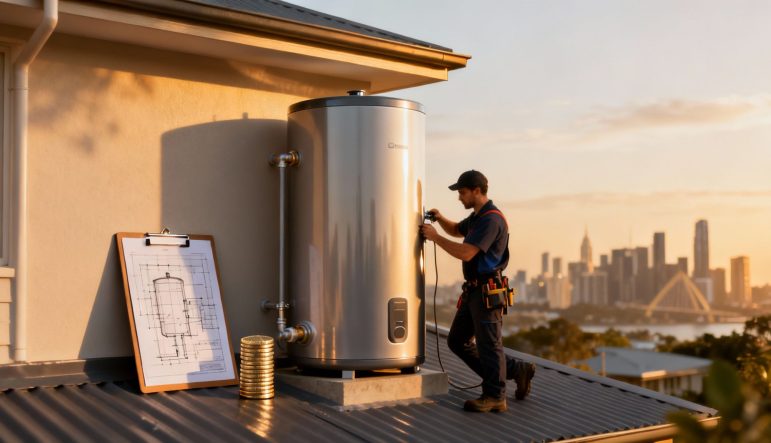
Right, let’s get straight to the point. The total cost to install a new hot water system in Brisbane can range anywhere from around $600 for a basic electric replacement to over $7,000 for a top-of-the-line solar setup. Where you land in that spectrum really boils down to the type of system you choose and how complex the installation is.
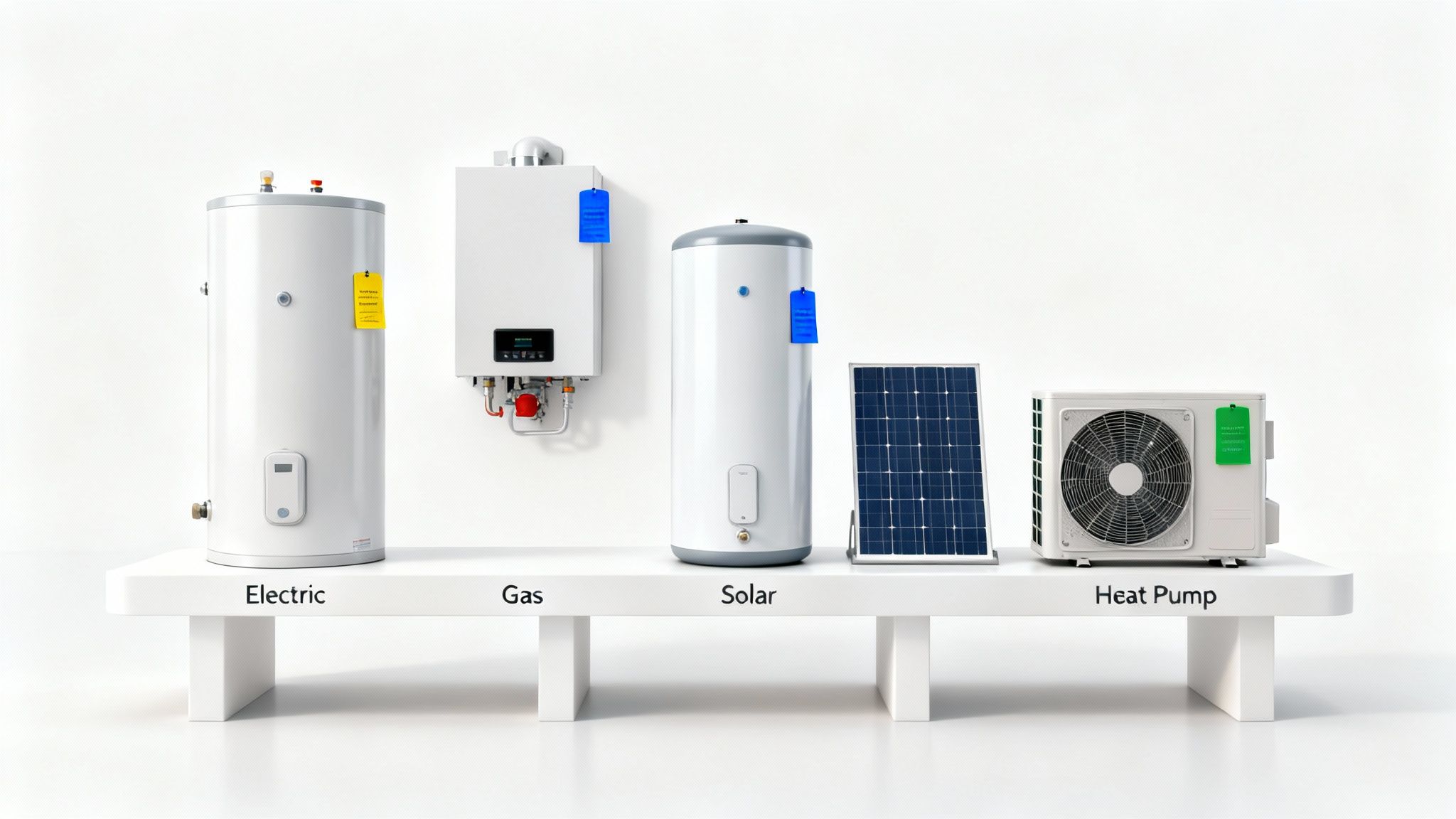
When the hot water suddenly dies, the last thing you want is a surprise bill. It’s crucial to understand that the final price isn’t just for the hot water unit itself; it includes the whole service—the heater, the professional labour, and a few other bits and pieces.
Think of it like buying a car. The sticker price is just the start. You’ve still got to factor in registration, insurance, and on-road costs to know the real cost. Your hot water installation quote works the same way, covering much more than just the tank.
This guide is designed to give you a clear, upfront idea of what to budget for. It’s your starting point for understanding the investment needed for the four main types of hot water systems we see in Brisbane homes every day.
To give you a quick comparison, we’ve put together a simple table outlining the estimated total installed costs. This way, you can see the upfront investment for each technology at a glance.
| System Type | Average Unit Cost | Average Installation Cost | Estimated Total Installed Price |
|---|---|---|---|
| Electric Storage | $450 – $2,000 | $250 – $600 | $700 – $2,600 |
| Gas (Instantaneous) | $700 – $2,200 | $300 – $750 | $1,000 – $2,950 |
| Heat Pump | $2,500 – $5,000 | $500 – $1,200 | $3,000 – $6,200 |
| Solar Hot Water | $3,500 – $7,000+ | $800 – $1,800 | $4,300 – $8,800+ |
As you can see, the options vary significantly. The best choice depends on your budget, your home’s setup, and your long-term energy goals.
A hot water system’s lifespan is typically 8 to 12 years. If your unit is getting on in age, planning for a replacement now can save you the stress—and extra cost—of a frantic emergency call-out down the track.
The rest of this guide will unpack what goes into these numbers, from labour charges to disposal fees. For more detailed discussions on hot water system costs and other heating solutions, industry blogs are a great resource. Understanding how professionals calculate their charges is also key; you can learn more about this in our detailed article on how much electricians charge.
When you get a quote for a new hot water system, it’s easy to get sticker shock and just focus on that final number. But that figure is a lot more than just the price of the heater itself. It’s a complete package of products and professional services designed to get the job done safely and correctly.
Think of it like getting a meal kit delivered. You’re not just buying a bag of groceries; you’re paying for the recipe, the perfectly portioned ingredients, the delivery, and the sheer convenience of it all showing up at your door. A hot water installation quote works the same way, bundling several key costs into one price.
Let’s pull back the curtain and look at the four main things that make up your total installation bill. Understanding this helps you see the real value you’re getting and compare different quotes on an even playing field.
This is the big one—the physical hot water unit. It’s the most obvious part of the cost and easily the largest variable. Depending on the type of system you choose, the unit alone can make up anywhere from 50% to 75% of your total budget.
A simple 50L electric storage tank might only set you back a few hundred dollars, which is great for a small apartment or if you’re on a tight budget. But if you’re looking at a high-efficiency heat pump or a full solar hot water setup with panels and a tank, you’re making a much bigger upfront investment that can run into thousands of dollars.
The brand you choose, the tank’s capacity, and its energy efficiency rating all have a major say in the final price tag.
Next up is the labour. You’re not just paying for a pair of hands to connect some pipes; you’re investing in the skills, insurance, and compliance knowledge of a fully licensed plumber and electrician. In Queensland, installing a hot water system is regulated work for a reason—it has to be done by qualified pros to be safe.
When you pay a professional’s hourly rate, you’re covering more than just their time on-site. It includes their public liability insurance, business overheads, specialised tools, and ongoing training. Most importantly, it’s your guarantee that the work meets all Australian Standards, like AS/NZS 3500.
This expertise is what prevents disasters like leaks, incorrect pressure settings, or dodgy electrical work. A straightforward, like-for-like swap might only take 2-3 hours. But a more complex job, like switching from an old electric unit to a new gas instantaneous system, could easily take a full day and will cost more in labour.
That old, busted hot water system won’t just walk itself to the tip. These things are incredibly heavy, bulky, and contain materials that need to be recycled or disposed of properly. A professional quote will almost always include the cost of decommissioning, draining, and hauling your old tank away.
This service means a tradie will safely disconnect the old unit and transport it to a proper waste management facility. It’s a small but crucial part of the process that keeps the job clean, compliant, and completely hassle-free for you.
Finally, some jobs require official permits and certificates. For most standard replacements, this is a simple process. However, if you’re making a big change like moving your system to a new spot or installing a brand-new gas line, council permits might be needed.
After the work is finished, your installer is legally required to give you a compliance certificate. This document is your official proof that the job was done by a licensed professional and meets all Queensland plumbing and safety regulations. It’s absolutely vital for your home insurance and for when you eventually sell your property.
Choosing the right hot water system is a lot like picking a car. You’ve got your budget-friendly runabouts that are cheap to buy but a bit thirsty on fuel, and then you have the premium hybrid or electric models that cost more upfront but save you a fortune on running costs over the years. The best decision always comes down to balancing that initial price tag against the long-term cost of ownership.
In Brisbane, your choice really boils down to four main players: traditional electric, natural gas, modern heat pumps, and solar. Each one has its own unique profile of upfront costs, ongoing expenses, and practical benefits. Think of this as your buyer’s guide—we’re breaking down each option to help you figure out which “engine” is the best fit for your home and your wallet.
This graphic gives you a quick snapshot of the key costs you’ll come across during the installation process.
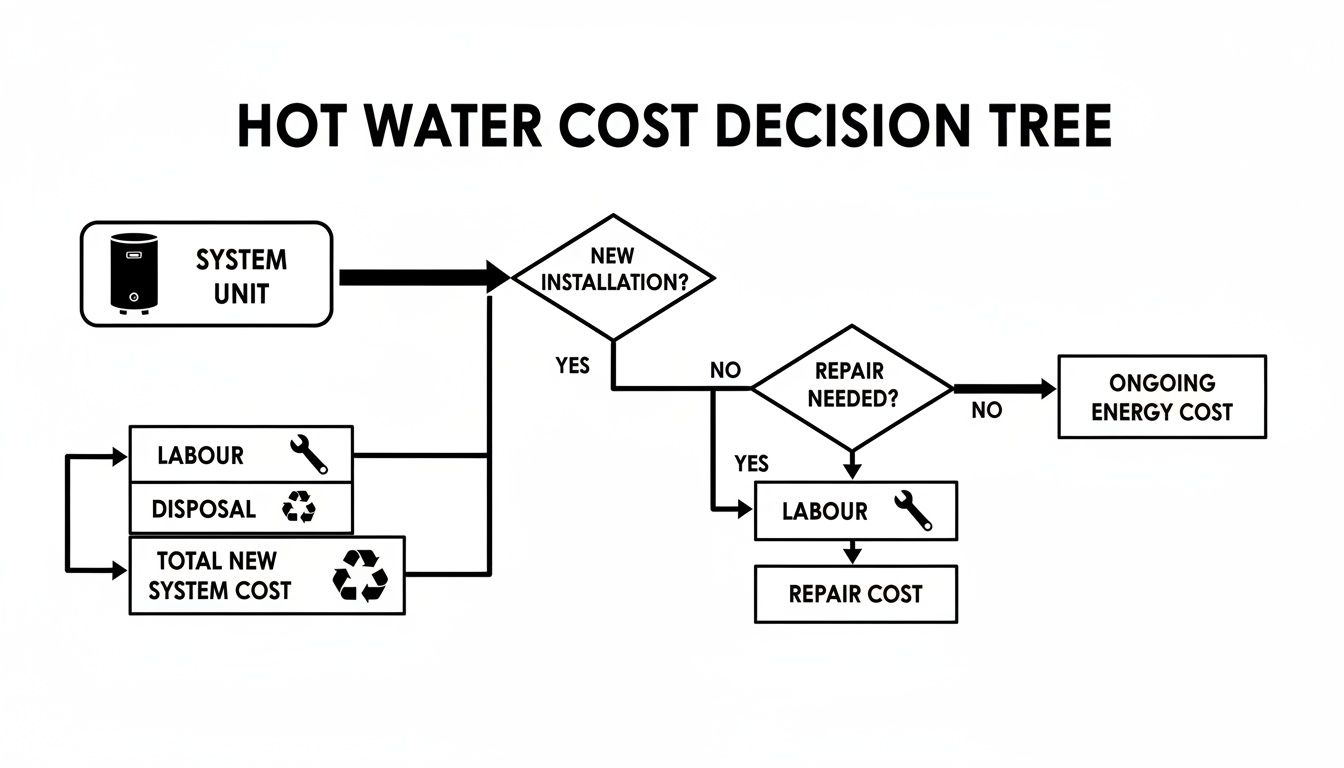
As you can see, the final price is a blend of the unit itself, the professional labour to get it installed, and the responsible disposal of your old heater.
The electric storage system is the tried-and-true workhorse of the Aussie hot water world. It’s basically a big, insulated tank that heats water with an electric element, keeping it hot and ready for when you need it. It’s the most straightforward, no-frills option out there.
Their biggest drawcard is the low upfront cost to install a hot water system. Electric units are still the most affordable entry point for homeowners, with installed prices ranging from $600 to $2,200. In fact, around 50% of Australian homes still rely on them. For Brisbane homeowners, a typical installation will land somewhere between $1,000 and $2,500, making it a very attractive option if you need a quick fix without a massive initial outlay. You can dig into more detailed replacement costs in this helpful guide on hot water systems.
But that low buy-in price comes with a catch. Standard electric systems are the least energy-efficient of the bunch, which means they have the highest running costs. They’re a good fit for smaller households, rental properties, or situations where the upfront budget is the number one priority.
Gas hot water systems, especially the instantaneous or “tankless” models, are hugely popular in Brisbane homes connected to the natural gas network. Instead of storing a tank of hot water, these clever units heat it on demand as it flows through the pipes. The result? Endless hot water, and you only pay to heat what you actually use.
The key benefits here are efficiency and pure convenience.
All in all, gas systems are a fantastic middle-ground option for families who want reliable, endless hot water and are keen to keep their ongoing energy bills in check.
A heat pump is the clever, high-tech cousin of the standard electric system. Rather than using a brute-force heating element, it works like a fridge in reverse. It cleverly pulls ambient heat from the surrounding air and transfers it into the water in the storage tank.
Think of a heat pump as an “energy multiplier.” For every one unit of electricity it pulls from the grid, it generates three to five units of heat. This makes them up to 75% more efficient than a conventional electric storage heater.
This incredible efficiency is their standout feature. While the initial cost to install a hot water system of this type is higher—often $3,000 to $6,000—the long-term savings are massive. They are a brilliant choice for environmentally conscious households or anyone looking to slash their electricity bills over the life of the system. Government rebates are often available too, which can help take the sting out of that higher purchase price.
Solar hot water systems are the undisputed champions of energy efficiency and long-term savings. These systems use solar collector panels on your roof to soak up the sun’s energy, which then heats the water stored in a tank. They are the ultimate “invest now, save later” choice.
Here’s how the finances stack up:
A solar system is a major investment in your property’s future. It’s the perfect match for larger families in sunny Brisbane who use a lot of hot water and plan on staying in their home for many years to come. The return on investment is excellent, and you’ll be drastically cutting your home’s carbon footprint at the same time.
Ever wondered why your neighbour’s hot water installation cost was different from the quote you received? It’s a common question, and the answer is simple: no two installation jobs are ever the same. While the system itself and standard labour form the base of the cost, a handful of on-site variables can significantly shift the final price tag.
These “hidden” factors are exactly what our licensed electricians and plumbers are looking for when they visit your Brisbane home. Understanding them will give you a much clearer picture of what your project involves and why your quote is tailored to your unique situation. Let’s break down the key variables that influence the total cost to install a hot water system.
This one is pretty straightforward: a bigger tank generally costs more, both to buy and to install. A large 315-litre electric storage unit for a family of five is physically heavier and more awkward to move into place than a compact 50-litre system for a small apartment.
But it’s not just about the unit’s purchase price. Larger systems might need more robust mounting, extra pipework, and more labour time to manoeuvre and secure, especially if we’re working in a tight space. Choosing the right size is all about balance—you need enough capacity for your household without overspending on a unit that’s too big for your needs.
The complexity of the job is one of the biggest price drivers out there. A simple “like-for-like” replacement—where we swap an old electric unit for a new one in the same spot—is the most direct and affordable scenario. All the plumbing and electrical connections are already in place, making it a relatively quick process.
Things get more involved, however, when you’re converting from one system type to another.
A system conversion is less of a simple replacement and more of a mini-renovation project. It often involves multiple trades, new infrastructure, and more planning, which is always reflected in the quote.
Where your hot water system lives has a direct impact on labour time. An easily accessible unit sitting on a ground-floor external wall is the dream scenario for a quick, efficient, and cost-effective installation.
On the other hand, difficult locations add time and complexity, which pushes up labour costs.
Simply put, the easier it is for our technicians to get to the unit, the more efficient the job will be, which helps keep your installation costs down.
Finally, your home’s existing infrastructure might need some attention to safely support a modern hot water system. During our on-site assessment, we check if your current setup is up to code and capable of handling the new unit.
For instance, older homes might have galvanised steel pipes that are corroded and need replacing with modern copper or polymer piping. Similarly, the old electrical circuit that powered your 2.4kW system might not be adequate for a new, more powerful unit, meaning a new circuit needs to be installed. A very common requirement is a switchboard upgrade to accommodate the new dedicated circuit, which is a separate but essential cost. You can learn more about what that involves by checking out our guide on the cost of a switchboard upgrade.
These upgrades aren’t optional extras—they’re non-negotiable for safety and compliance, ensuring your new system runs reliably and safely for years to come.
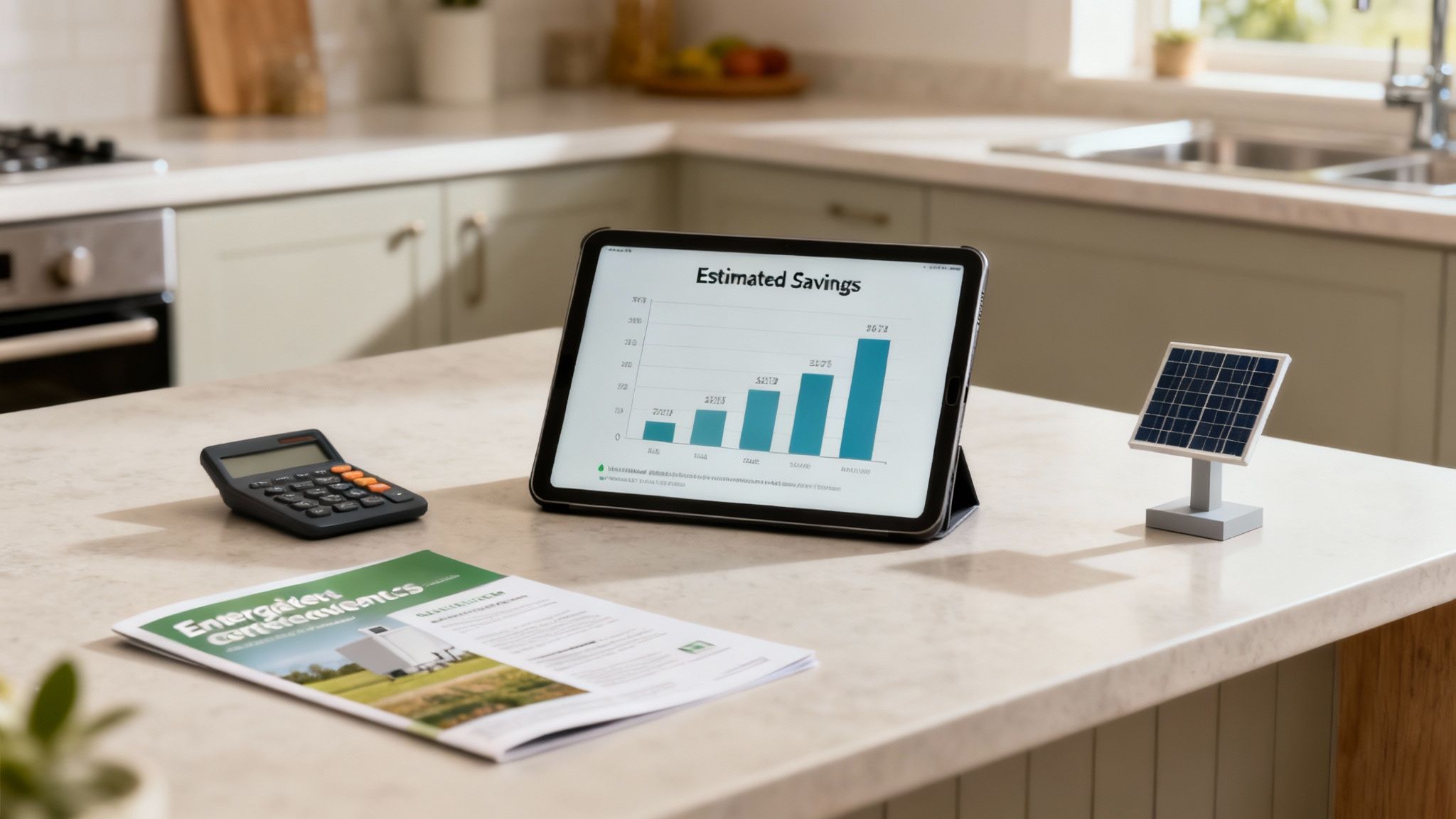
A new hot water system is a big-ticket item, no doubt about it. But there are plenty of clever ways to keep the costs down without ever compromising on quality or safety. It’s all about looking past the initial price tag and thinking about the total value you’ll get over the life of the system.
Making a few smart decisions upfront can seriously lower the overall cost to install a hot water system and translate into real savings on your power bills for years to come. The goal is to find that perfect sweet spot between what you pay today and how efficient the system will be long-term.
One of the quickest ways to waste money is by installing a system that’s way too big for your family’s needs. Putting a massive tank in a two-person home just means you’re constantly paying to heat and store water you never actually use. It’s a classic case of inefficiency draining your wallet.
On the flip side, a system that’s too small will be constantly working overtime, struggling to keep up and leaving you with lukewarm showers. A professional installer can help you figure out your peak hot water demand, ensuring you get a unit that’s perfectly sized—no more, no less.
It’s true that high-efficiency models like heat pumps or solar hot water systems have a higher upfront cost. But here’s the thing: their incredibly low running costs can deliver massive savings over their lifespan. These systems can slash your water heating energy use by up to 75% or more, which means the unit eventually pays for itself.
Think of it as an investment, not just an expense. That higher initial cost is wiped out by years of dramatically lower electricity bills, giving you a fantastic return.
Both the Queensland and Australian governments are keen to help homeowners switch to greener technology. They often offer rebates and Small-scale Technology Certificates (STCs) for installing energy-efficient hot water systems. These incentives can knock hundreds, sometimes even thousands, of dollars off your installation cost.
These programs are specifically designed to make it easier to upgrade to eco-friendly options like heat pumps and solar. Any good installer will be on top of the latest offers and can help you navigate the paperwork to make sure you get every dollar you’re entitled to. It’s always a good idea to check the government websites for the latest info.
Finally, and this is a big one, never just accept the first quote you get. We always tell our clients to get at least three detailed, written quotes from licensed and reputable local companies. This lets you compare everything—not just the bottom-line price, but the exact system they’re proposing, the cost breakdown, and the warranties included.
A professional quote should clearly spell out the cost of the unit itself, labour, materials, and any fees for disposing of your old system. Here at DLG Electrical, we provide free, transparent quotes so you can make a decision with all the facts and no nasty surprises. This simple step ensures you get a fair and competitive price for your project.
When you’re weighing up the cost of a new hot water system, it’s tempting to focus on the ticket price of the unit itself. But the real conversation, and the one that matters most for your home’s long-term safety and value, is about the quality of the installation.
Trying to save a few dollars with a DIY job or by hiring an unlicensed handyman is a huge gamble. Think of a professional installation not as an extra cost, but as an insurance policy. In Queensland, the rules around installing hot water systems are strict for a very good reason—you’re dealing with a potent mix of high-pressure water, high-voltage electricity, and sometimes gas. One wrong move can lead to catastrophic water damage, serious electrical risks, or instantly voiding the warranty on your brand-new system.
Choosing an unqualified installer isn’t just cutting a corner; it’s inviting serious trouble. The dangers far outweigh any small, initial savings.
A licensed installation gives you complete peace of mind. You know the job is done right, it’s safe, and it’s backed by compliance certificates and a proper workmanship guarantee. It’s simply non-negotiable.
When you’re looking for an expert, it is crucial to seek out specialised water heater services to ensure the work is done to the highest standard, protecting your home and your investment for years to come.
Ultimately, the small amount you might save on dodgy labour is nothing compared to the potential cost of repairs, property damage, or having to replace a new unit because the warranty was voided on day one. To learn more about the standards licensed tradespeople adhere to, check out our guide on what makes a great Brisbane electrician.
For a safe, compliant, and guaranteed installation, trust the local experts at DLG Electrical. Contact us for a free, no-obligation quote to discuss your project.
Even after you’ve weighed up the costs and picked a system, a few practical questions always seem to pop up. It’s a big decision, so getting clear answers is the final step to feeling confident you’re making the right choice. Let’s tackle the top three questions we hear from Brisbane homeowners every day.
We’ll run through how long the job actually takes, the warning signs your old system is about to give up, and what’s involved if you’re thinking about switching from electric to gas. These are the details that help you plan ahead and avoid any last-minute surprises.
This is usually the first thing people ask: “How long will I be without hot water?” It’s a fair question—you’ve got to plan your day around it. The good news is, for most jobs, the disruption is pretty minimal.
A straightforward, like-for-like replacement is the quickest job. That’s where we swap out your old system for a new one of the same type in the exact same spot. We can usually get that done and dusted within 2 to 4 hours. Often, we can have your new system installed and heating water before lunchtime.
Of course, more complex jobs will naturally take a bit longer.
No matter the job, our team will always give you a clear time estimate upfront. You’ll know exactly what to expect on the day, with no guesswork involved.
Hot water systems rarely just die without giving you a few hints first. If you know what to look for, you can plan a replacement before it turns into a watery emergency in your laundry or backyard.
Most systems have a lifespan of about 8 to 12 years. If yours is getting on in years, it’s time to start paying closer attention.
Key warning signs to watch for are rusty or discoloured water coming from your hot taps, strange rumbling or popping noises from the tank, or small, persistent leaks dripping from the base of the unit. Ignoring these red flags is just asking for a sudden, messy failure.
Catching these issues early means you can schedule a replacement on your own terms. It saves you the stress (and potential extra cost) of an after-hours emergency call-out when the tank finally lets go.
Absolutely! Making the switch from an old electric storage tank to a new instantaneous gas model is one of the most popular upgrades we do here in Brisbane. People love the idea of getting endless hot water while also cutting down their energy bills.
It’s important to know this kind of conversion is more involved than a simple swap. It requires a licensed gas fitter to run a new gas line from your meter to where the new unit will be. You’ll also need a licensed electrician to safely disconnect and make the old electrical circuit safe.
While the upfront cost to install a hot water system like this is higher because it involves multiple trades, the long-term perks of better efficiency and on-demand hot water often make it a fantastic investment.
Ready to get a clear, upfront quote for your hot water system installation? The expert team at DLG Electrical is here to help. Contact us today for a free, no-obligation estimate and enjoy the peace of mind that comes with a professional, guaranteed installation.

Master Electrician with over 30 years of experience. Founded DLG Electrical in 2005 after international project work including electrical installations at Stamford Bridge Stadium, London(Home of Chelsea FC).

Local Electricians that can fix all Electric Hot water Systems.
Motion sensor lights are a versatile addition to any home, offering nu
