83 Jean St, Grange QLD 4051
Mon-Fri 07:30 AM - 04:00 PM - Sat - 8:00 - 12 - Sunday Closed
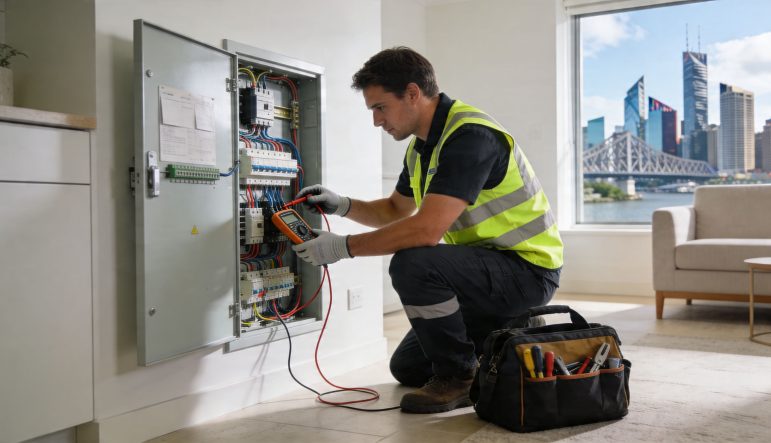
You notice it at the wrong time. A kitchen light starts flickering during dinner. One power point in the lounge stops working. The safety switch trips when the kettle and toaster run together. Nothing looks dramatic, but it doesn’t feel right either.
That’s how many electrical problems start in Brisbane homes. Not with sparks flying out of the wall, but with small faults that homeowners try to work around for weeks or months. A lamp gets moved to a different outlet. A power board gets added. Someone resets the breaker and hopes it was a one-off.
That instinct is understandable. It’s common to want to rule out the obvious before calling an electrician. The problem is that electrical home repairs sit in a category where confidence and safety don’t always line up. A simple symptom can point to a loose connection, overloaded circuit, deteriorated wiring, or a fault that’s affecting multiple parts of the installation.
Older homes in places like Grange and Windsor make this more complicated. Many were built for a different era of appliance use. The home might still function, but that doesn’t mean the wiring layout, outlet spacing, switchboard, or smoke alarm setup still suits the way people live now.
A lot of electrical faults look smaller than they are. A light flickers. One power point stops working. A breaker trips once, then behaves for a few days. From a homeowner’s point of view, that can feel like an annoyance you monitor. From an electrician’s point of view, it is a symptom that needs context.
The job is rarely just replacing the part that seems faulty. The actual work involves finding out why it failed, whether the fault sits elsewhere on the circuit, and whether the rest of the installation is still safe under current use. In Brisbane homes, that matters more than many DIY articles admit. Older properties in suburbs like Grange, Windsor, Ashgrove, and Camp Hill often still carry wiring layouts and switchboards that were adequate decades ago but struggle with modern appliance loads, air conditioning, induction cooking, and home office demand.
The first signs are often ordinary day-to-day problems:
Practical rule: If you’ve changed how you use a room to avoid stressing the electrical system, the fault already deserves attention.
What makes home electrical repairs tricky is that the symptom and the cause often do not match. A dead power point may trace back to a failed connection at another outlet. Repeated tripping may be overload, but it can also point to insulation breakdown, appliance leakage, or a fault that only shows under test conditions. In older Brisbane homes, I also see issues tied to outdated switchboards, aging cable insulation, and circuits that have been added to in stages over many years.
There is also a compliance and insurance side that gets missed. In Queensland, electrical repair work is not just about getting power back on. It has to be carried out by a licensed electrician where the law requires it, and the repair needs to leave the installation safe and testable. If the fault involves the point of supply, service equipment, or network issues, Energex may also become part of the process.
What works is identifying the fault properly, testing the circuit, and repairing the actual cause.
What does not work is resetting the breaker every few days, replacing random switches or outlets, or assuming an older house is safe because it has “always been like that”.
Electrical home repairs are not about panic. They are about recognising that small warning signs can sit on top of loose connections, overloaded circuits, deteriorated wiring, or switchboard problems that become more expensive and more dangerous if they are left alone.
The safest homeowners aren’t the ones who know how to repair wiring. They’re the ones who notice trouble early.
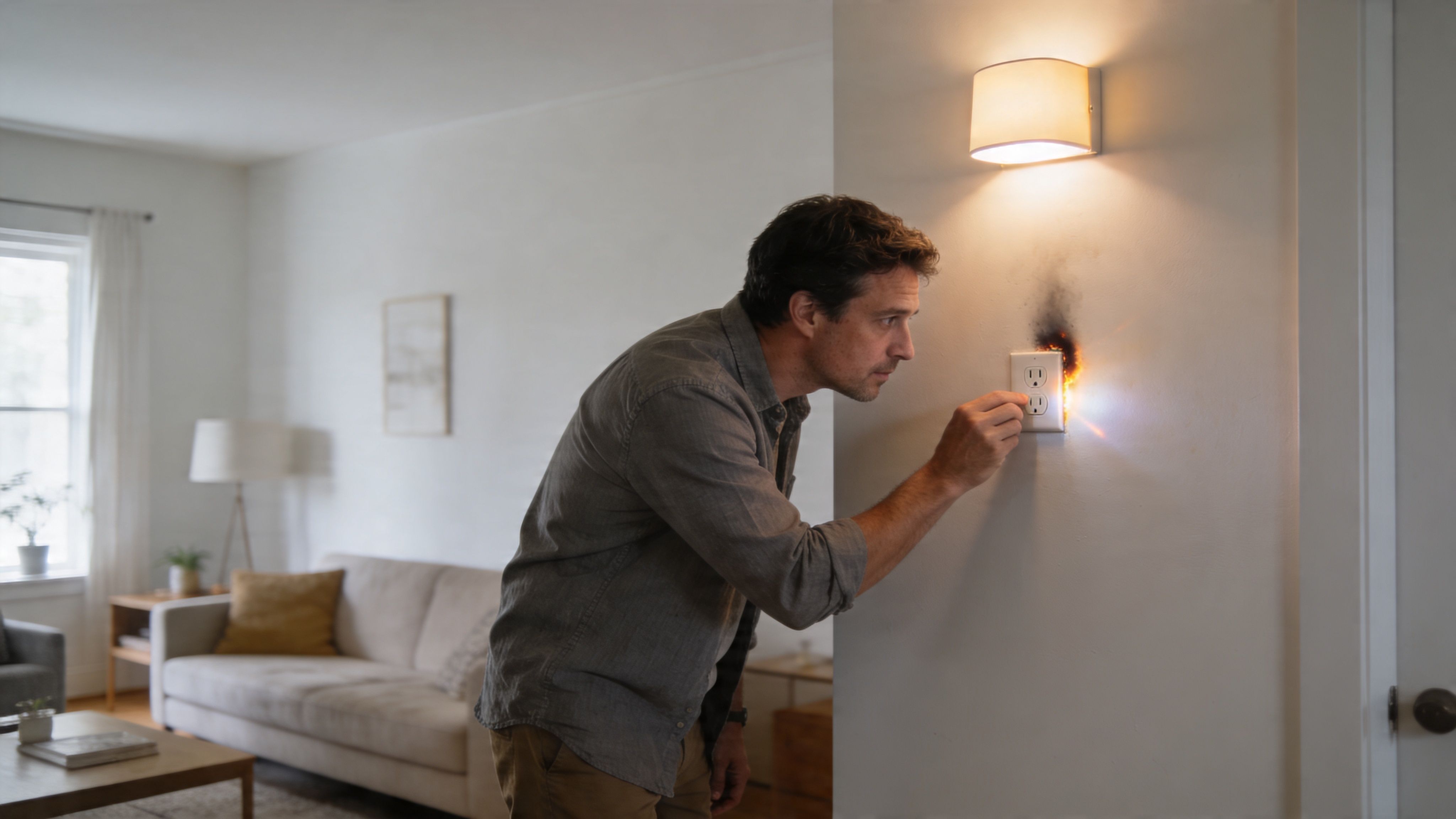
A house usually gives you clues before a fault becomes urgent. Pay attention to what you can see, hear, and smell. Small signs often appear well before a component fails completely.
Buzzing, crackling, or a faint sizzling sound near an outlet, light fitting, or switchboard isn’t normal. Electricity should be silent in day-to-day use. Noise usually means arcing, a loose connection, or a component under stress.
A faint burnt plastic smell near a power point, switch, appliance plug, or board needs immediate caution. That smell can come and go, which is one reason people put it off. It still needs inspection.
One warning sign Brisbane electricians see often in older homes is simple outlet shortage. Australian standards specify a maximum distance between power outlets to reduce reliance on extension cords. If you’re constantly using power boards, it’s a strong sign your home’s circuits no longer suit modern use, especially in older properties, as discussed in this outlet spacing explanation.
Some faults don’t show up as damage first. They show up as patterns.
If you want a quick visual refresher on household warning signs, this short video covers the common red flags clearly.
Strange smells, warmth, and repeated tripping are not “watch and wait” symptoms. They’re “book it in” symptoms.
There are a few checks homeowners can do safely. The key word is checks. Not repairs.
The safest approach is to rule out the simple causes without opening fittings, removing outlet covers, or touching wiring. If the problem remains after those basic steps, stop there and book a licensed electrician.
Check the switchboard once
If part of the home has lost power, look for a tripped breaker or safety switch. Reset it once. If it trips again straight away, leave it off. Repeated resetting doesn’t fix the issue and can make a fault more dangerous.
Test the appliance somewhere else
If one outlet appears dead, plug the appliance into another known working outlet. That helps you work out whether the problem is the appliance or the circuit point.
Test a different appliance in the suspect outlet
Use something simple and known to work, such as a lamp. Don’t use damaged cords or high-load equipment for this check.
Replace the globe properly
If a light fitting isn’t working, switch power off at the wall, allow the globe to cool, and try a new globe of the correct type. A surprising number of “electrical faults” still turn out to be a failed globe.
Check for overload habits
Think about what was running when the issue happened. Kettle, toaster, portable heater, microwave, and older circuits often make a poor combination.
Do not remove a switch, power point, light fitting, or switchboard cover. Don’t tighten terminals. Don’t replace hardwired fittings. Don’t assume watching a video means the job is now safe.
A useful background read on common electrical issues in older homes can help you understand why ageing wiring, old switchboards, and poor outlet distribution create recurring problems. That context matters in Brisbane homes where renovations have often been layered over older installations.
| Situation | Safe homeowner action | Next step |
|---|---|---|
| Single tripped breaker | Reset once | If it trips again, call an electrician |
| Light not working | Replace globe | If still faulty, book testing |
| One outlet not working | Test appliance and outlet safely | If dead, arrange repair |
| Burning smell or heat | Turn off power if safe | Call immediately |
| Water near electrical equipment | Keep clear | Call immediately |
If the fault is limited to one power point, this guide on a power outlet not working gives a practical next-step overview without encouraging risky DIY.
Your job is to observe, isolate simple causes, and stop before the work becomes electrical.
Homeowners usually want two things before booking a job. They want to know what the repair involves, and they want a realistic sense of cost. Fair enough.
The difficulty is that electrical pricing depends on access, fault complexity, age of the installation, and whether the visible problem is the actual problem. A flickering light can be a quick fix. It can also lead to tracing a fault through a switch, fitting, or junction.
Some repairs are direct replacement work. Others are mostly diagnosis.
| Repair type | What’s usually involved | Typical issue behind it |
|---|---|---|
| Flickering lights | Test fitting, switch, and supply path | Loose connection, failed fitting, worn switch |
| Faulty outlets | Test socket, wiring continuity, and load | Burnt outlet, failed terminal, circuit fault |
| Tripping breaker | Isolate circuit and test connected points | Overload, appliance fault, insulation issue |
| Switch replacement | Remove and replace failed mechanism | Mechanical wear or heat damage |
| Smoke alarm work | Verify device type, location, and operation | Non-compliance, fault, battery or interconnection issue |
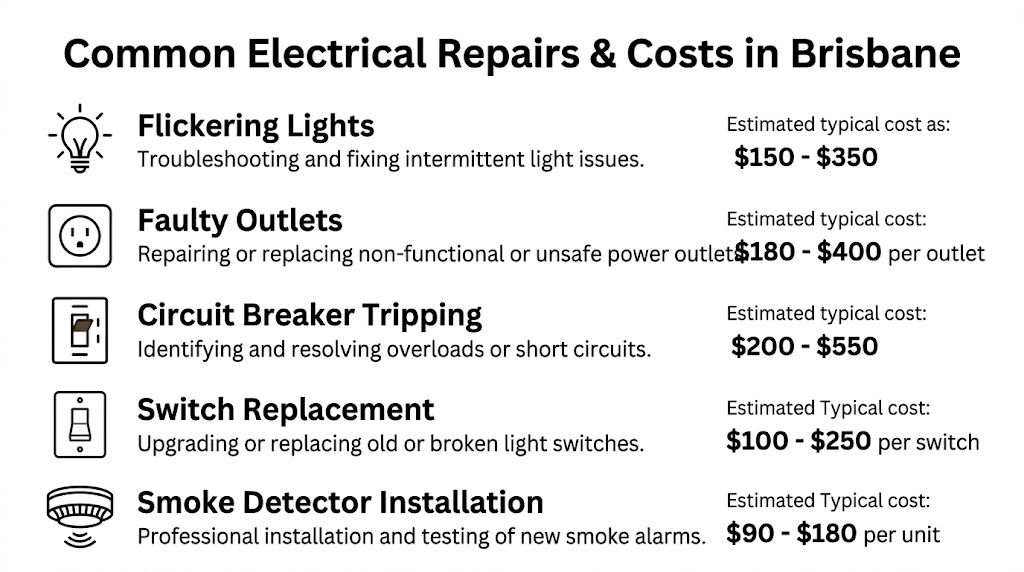
The infographic above gives a useful visual price guide for common electrical home repairs in Brisbane. It includes ranges such as $150 to $350 for flickering lights, $180 to $400 per outlet for faulty outlets, and $200 to $550 for circuit breaker tripping. Those figures are part of the visual brief in this article and should be treated as typical market guidance rather than a fixed quote.
A non-working switch may be a short visit if access is straightforward and the fault is localised. A breaker that trips intermittently often takes longer because the electrician has to identify whether the trigger is load-related, appliance-related, or inside the fixed wiring.
Older Brisbane homes tend to add time in three ways:
A cheap quote for electrical fault finding can become expensive if it only treats the symptom.
For homeowners trying to budget properly, this breakdown of how much electricians charge is worth reading. It helps explain call-out structure, labour variables, and why quoting a fault over the phone is rarely precise.
Good value isn’t the lowest invoice. It’s a repair that solves the problem, meets compliance requirements, and doesn’t create another service call two weeks later.
That’s especially true with switchboards, power points, and smoke alarms. If a repair is done without checking the wider circuit or confirming correct operation afterwards, the “cheaper” option can cost more once the fault returns.
A lot of Brisbane owners only look at compliance when a property manager asks for paperwork, a buyer’s inspector raises a defect, or an insurer starts asking questions after a claim. By that stage, choices shrink. Booking windows get tighter, and work that could have been planned turns into urgent remedial work.
Brisbane homes usually need attention in two areas. Smoke alarm compliance is one. The other is older electrical infrastructure, especially in established suburbs where switchboards, wiring additions, and past renovations have built up over decades.

Queensland’s May 2027 smoke alarm deadline is close enough now that delaying rarely saves money. In practice, it often does the opposite. Once landlords and sellers all start booking at the same time, availability tightens and the job becomes more rushed than it needs to be.
For many Brisbane properties, compliance is not just a matter of replacing a few alarm heads. The installation has to suit the dwelling, the alarms have to be correctly located and interconnected, and the system has to work reliably once installed. In older homes, that can expose issues with power supply, access, or previous alterations.
In areas with older housing stock, including many parts of Northside and inner Brisbane, the bigger compliance issue is often the board rather than the fitting the owner first called about. I see plenty of homes with ceramic fuses, limited circuit protection, or switchboards that were acceptable years ago but don’t match current expectations for safety and testing.
Common problems include:
Energex handles the network side. The homeowner is still responsible for the installation inside the property boundary. That distinction matters when a defect notice, upgrade, or metering change brings old electrical work into focus.
Some owners also ask about cabling for data, alarms, cameras, and home audio at the same time as compliance upgrades. If that is part of the project, this guide to finding low voltage wiring contractors gives a useful overview of that specialist work.
Compliance is not only about what was fitted. It is also about proving who did the work, what was done, and whether it was tested properly. If you are arranging upgrades, alarm installations, or rectification work, a certificate of compliance for electrical work should be part of the job from the start.
That record matters later. It helps during tenancy changes, sale preparation, insurance queries, and any dispute about whether the electrical work was carried out by a licensed electrician.
For Brisbane homeowners, the practical approach is simple. Deal with compliance before a deadline, inspection, or fault forces the issue. Planned upgrades are usually easier to scope, easier to schedule, and more likely to fix the underlying problem properly.
It is 8:30 at night in Brisbane, a storm has just rolled through, and a power point starts crackling when you plug something in. That is not a wait-until-Monday job. Turn the appliance off, keep clear of the outlet, and call a licensed electrician.
Some faults give you a clear warning before they turn into fire, electric shock, or major equipment damage. Once those signs show up, the right move is to stop testing and stop resetting breakers. If it can be isolated safely at the switchboard, do that. If not, leave it alone and get professional help.
Call straight away if you notice any of the following:
Older homes in suburbs like Ashgrove, Camp Hill, Nundah, or Moorooka can be less forgiving here. A fault at one outlet may be tied to aged cable insulation, a deteriorated switchboard connection, or previous repair work that was never tested properly after installation.
A proper emergency response starts with making the installation safe. Then the electrician identifies the fault, checks whether it has affected other circuits, carries out the repair, and tests the work before re-energising the system.
That last part is where many DIY attempts fall short. Getting the power back on is not the same as proving the circuit is safe. A licensed electrician tests the fault path, insulation condition, polarity, earthing, and protective devices, then confirms the repair meets current requirements for the work performed.
In Brisbane, this also matters for insurance, rental obligations, and future compliance work. If a serious fault exposes problems in the switchboard or smoke alarm setup, it can push a small repair into a larger safety upgrade.
Homeowners often lump all cabling into one category. It is not the same work.
Mains electrical faults must be handled by a licensed electrician. Data cabling, CCTV, home audio, and similar systems sit in a different category, even if they are being installed during the same project. If you are sorting both at once, this guide to finding low voltage wiring contractors explains where that line sits.
If the symptom involves heat, smell, smoke, water, tingling, or immediate tripping, treat it as urgent. Observation is the homeowner’s role. Fault-finding and repair inside the installation is professional work.
Good electrical work is rarely about dramatic fixes. It’s about catching faults early, diagnosing them properly, and leaving the home safer than it was before the job started.
That’s what Brisbane homeowners need, especially in older suburbs where wiring layouts, switchboards, outlet coverage, and smoke alarm systems often need more than a quick patch. The small issues matter. The compliance items matter. The quality of testing after the repair matters just as much.
DLG Electrical is a local, family-owned Brisbane contractor with over 19 years of experience, fully licensed and insured, and backed by a five-star Google rating. The team handles the work homeowners need help with, including switchboard upgrades, smoke detector compliance, fault finding, general repairs, and practical installation work that suits the property instead of forcing a one-size-fits-all answer.
Brisbane homes have their own patterns. Flood exposure, storm damage, older housing stock, renovation layering, and rental compliance pressure all change how repairs should be approached. A contractor who works in these conditions regularly will recognise common fault patterns faster and recommend solutions that are practical, compliant, and built to last.
Plenty of electrical faults can be made to disappear for a day. That isn’t the same as solving them. Reliable workmanship comes from proper diagnosis, suitable materials, compliant installation, and final verification that the system is operating safely.
If your home has a recurring fault, an ageing switchboard, dead outlets, nuisance tripping, or smoke alarm compliance concerns, the smartest move is to get a licensed electrician involved before the issue grows into something more expensive or more dangerous.
If you need reliable help with DLG Electrical, book a free quote and get clear advice from a licensed Brisbane team that knows local homes, local compliance requirements, and how to fix electrical problems properly the first time.

Master Electrician with over 30 years of experience. Founded DLG Electrical in 2005 after international project work including electrical installations at Stamford Bridge Stadium, London(Home of Chelsea FC).

Local Electricians that can fix all Electric Hot water Systems.
Motion sensor lights are a versatile addition to any home, offering nu
