83 Jean St, Grange QLD 4051
Mon-Fri 07:30 AM - 04:00 PM - Sat - 8:00 - 12 - Sunday Closed
You’re usually not searching near me electrician because everything is going smoothly. It’s more often after the lights flicker twice, the safety switch trips and won’t stay on, the oven dies before dinner, or the hot water system gives up overnight.
That’s the problem with electrical faults. They mix inconvenience with risk. You want someone local, qualified, and available, but when you’re under pressure it’s easy to call the first number that answers and hope for the best. In Brisbane, that can be a costly mistake.
A good electrician should make the problem safer, clearer, and easier to solve. A bad one can leave you with hidden faults, non-compliant work, and no paperwork when you need it later for insurance, sale, or tenancy issues.
A common Brisbane scenario goes like this. One power point stops working, then half a room goes out, then someone notices a burnt smell near the switchboard. Another version is less dramatic but just as stressful. You wake up to a cold shower, try the hot water circuit, and realise you need help today, not next week.
That’s why the search for a near me electrician feels urgent. You’re not browsing. You’re trying to get your home back to normal without letting the wrong person into the job.
Brisbane has been busy for electricians. The QBCC issued over 45,000 residential permits from 2020 to 2025, and 72% of Queensland homeowners prioritise licensing for safety reasons according to Master Electricians Australia, as noted in this Brisbane electrician demand snapshot. More building work usually means more contractors, more ads, and more noise for homeowners trying to compare them quickly.
When people are rushed, they tend to choose based on one of three things:
Fastest answer on the phone
That helps, but it doesn’t tell you whether the business is properly licensed, insured, or organised.
Cheapest sounding call-out
Cheap up front can become expensive once vague pricing, repeat visits, or poor-quality parts enter the picture.
Best-looking search result
Good online visibility isn’t the same as good electrical work, even though strong local online presence often helps legitimate businesses get found. If you’re curious how trades businesses appear in local search in the first place, this expert local SEO guide for electricians gives useful background.
The best hire usually isn’t the one who talks fastest. It’s the one who answers clearly, explains the risk properly, and doesn’t dodge licence or quote questions.
A calm process beats a rushed one. If the issue is dangerous, make it safe first. If it’s urgent but stable, gather the right information before you ring. That alone filters out a lot of bad outcomes.
Some faults need an electrician immediately. Others need attention soon, but not blind panic. Knowing the difference helps you stay safe and helps the electrician arrive prepared.
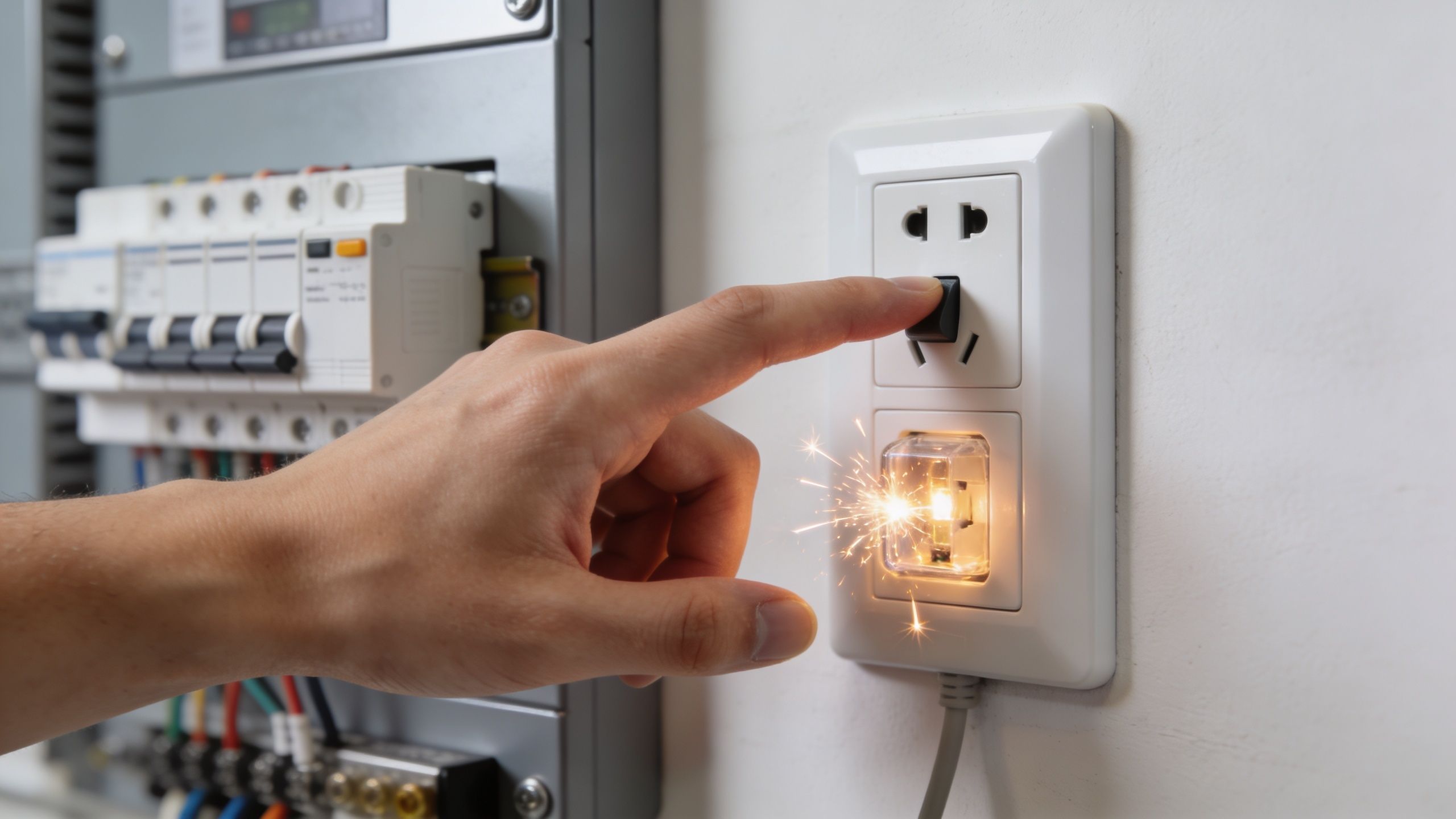
If you have sparks, smoke, visible scorching, buzzing from the switchboard, electric shock, or a strong burning smell from a fitting or outlet, stop using that circuit straight away.
Do this first if it’s safe to do so:
Turn off power at the main switch
Only if you can reach the switchboard safely and there’s no fire or exposed live parts in your path.
Keep people away
Don’t let kids, tenants, or anyone else touch the outlet, appliance, switchboard, or affected area.
Don’t test it again
Don’t plug the appliance back in. Don’t keep resetting the breaker to “see if it holds”.
Use a torch, not candles
If the power is out, avoid adding another hazard.
Call an emergency electrician
If you need immediate help, use a dedicated emergency electrician in Brisbane service rather than a general enquiry line.
Some issues can wait long enough for a sensible phone call and a proper booking:
Before calling, check a few basics.
Check the switchboard
See whether a breaker or safety switch has tripped. Note which one.
Unplug recent appliances
Kettles, heaters, toasters, air fryers, washing machines, and chargers are frequent offenders.
Work out the pattern
Is it one room, one appliance, or the whole house?
Take a photo
A quick photo of the switchboard can help the electrician understand the layout before arriving.
Practical rule: If you smell burning, hear crackling, or see damage, stop troubleshooting and isolate power if safe. If it’s merely inconvenient, gather details first.
That difference matters. Good electricians don’t want you poking around live gear. They do want accurate symptoms so they can bring the right parts and test equipment.
A polished website and a friendly phone manner aren’t enough. For electrical work in Queensland, proper verification is not optional. You’re hiring someone to work on a system that can injure people, start fires, and create legal trouble if the work isn’t compliant.
Queensland’s Electrical Safety Office reported 255 electrical incidents in the state during 2024. Fines for non-compliant work can reach up to $9,000, and audits showed licensed contractor work passed safety checks at 92% compared with 65% for unlicensed individuals, according to this Queensland electrical safety summary.
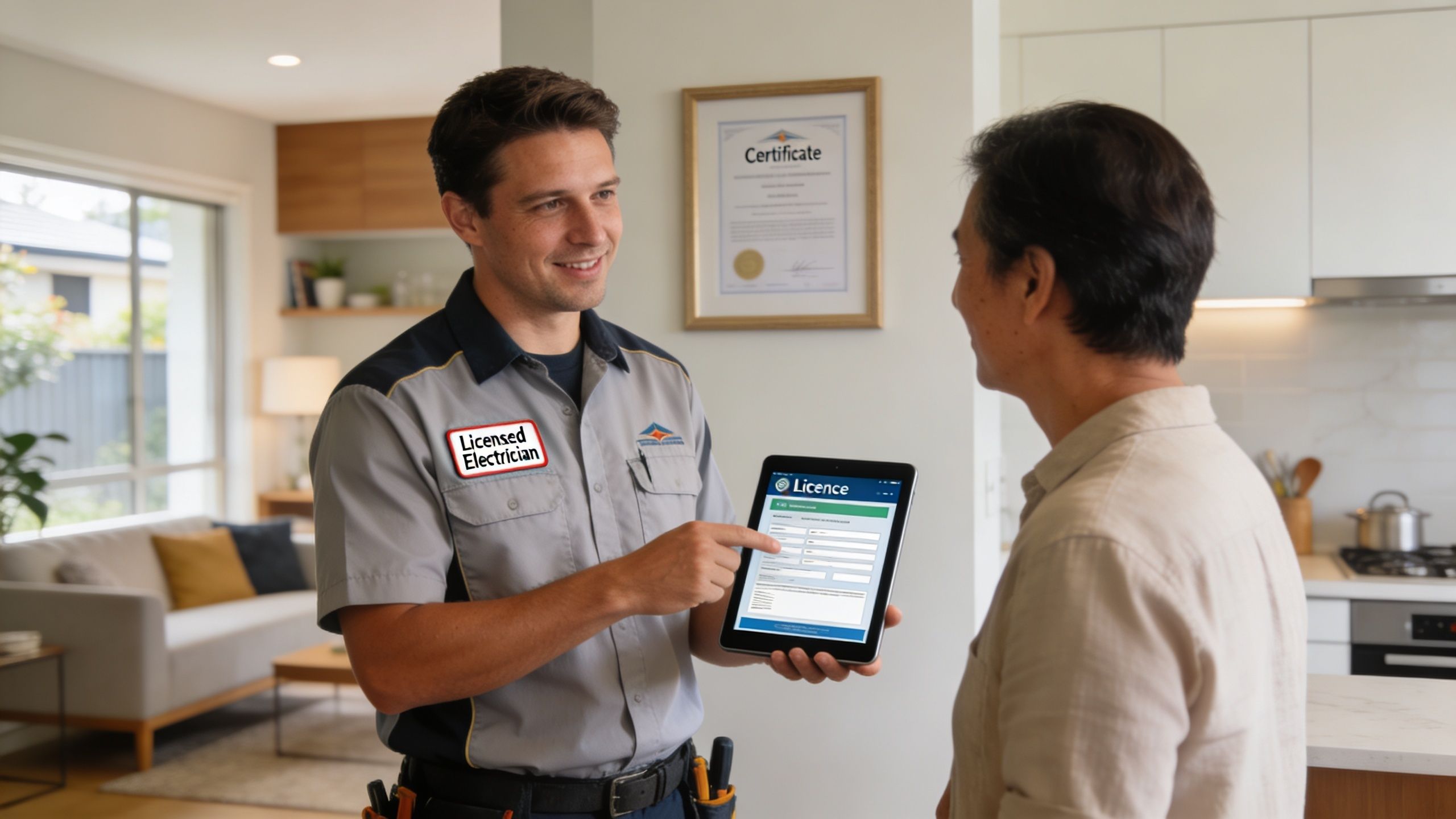
Ask for the business licence details and the electrician’s licence details. Then verify them through the relevant Queensland licence search tools, rather than taking a screenshot or verbal claim at face value.
What you’re looking for is simple:
A real contractor won’t get defensive about this. They’ll expect it.
“Fully insured” gets thrown around loosely. Ask what that means in practice.
At minimum, you want confirmation that the business carries Public Liability Insurance and can provide evidence if needed. For larger jobs, renovations, switchboard upgrades, or developer work, ask whether there are any exclusions that affect your site conditions or scope.
If the answer is vague, keep looking.
For many homeowners, the job feels finished when the lights come back on. It isn’t really finished until the paperwork side is clear.
That means asking whether the contractor will issue the relevant documentation for completed work. If you’re not sure what that involves, this guide on the electrical certificate of compliance explains why it matters for proof of lawful, completed electrical work.
If an electrician says paperwork isn’t necessary for a substantial job, treat that as a warning sign.
| Check | Good sign | Red flag |
|---|---|---|
| Licence | Provides details promptly | Dodges the question |
| Insurance | Confirms cover clearly | Says “don’t worry about it” |
| Scope | Explains what they can and can’t do | Promises everything instantly |
| Compliance | Mentions certificates and testing | Says paperwork is optional |
| Communication | Gives clear arrival window and process | Stays vague on next steps |
The safest hire is usually the contractor who’s easy to verify, clear about limits, and comfortable putting details in writing.
Phone calls tell you a lot. Not just from the answers, but from how the answers are given. A professional electrician should be able to explain the process in plain English without sounding irritated or slippery.
What’s your call-out structure?
Ask whether there’s a call-out fee, minimum charge, hourly rate, or a fixed price for diagnostics. A solid answer is specific and easy to follow. A poor answer sounds like “we’ll sort it out when we get there”.
Can you give a written quote for bigger work?
For switchboard upgrades, smoke alarm upgrades, renovations, security installations, or hot water replacement work, get it in writing. Verbal estimates are too easy to dispute later.
How do you charge for parts?
You don’t need every fitting priced line by line over the phone, but you do want transparency. Good operators explain whether parts are quoted upfront, charged as used, or approved during the job.
Do you guarantee your workmanship?
A professional should stand behind the installation, not just the manufacturer’s warranty on the product itself.
Some tradespeople sound convincing because they speak quickly and confidently. That’s not the same as being organised.
A good answer usually includes:
“We’ll inspect it first, test the affected circuit, then let you know the fault and cost before proceeding” is the sort of answer that saves arguments later.
If someone pushes hard for a booking before answering basic questions, be careful. Urgency is one thing. Pressure is another.
That doesn’t automatically mean the work will be bad, but it often goes hand in hand with poor records and poor accountability.
A decent electrician will ask what’s happening. Tripping breaker, dead circuit, burnt smell, failed hot water, faulty smoke alarm, recent storm issue, appliance-related fault. If they don’t care about the symptoms, they’re not planning well.
A realistic arrival window is better than a false promise. Honest scheduling is a sign of a business that has systems.
If you’re comparing two or three local options, these questions usually make the difference obvious very quickly.
Generic “near me electrician” advice usually falls apart. Brisbane homeowners, landlords, and renovators aren’t just hiring for convenience. In many cases, they’re hiring because Queensland smoke alarm rules have become a compliance issue that can’t be kicked down the road.
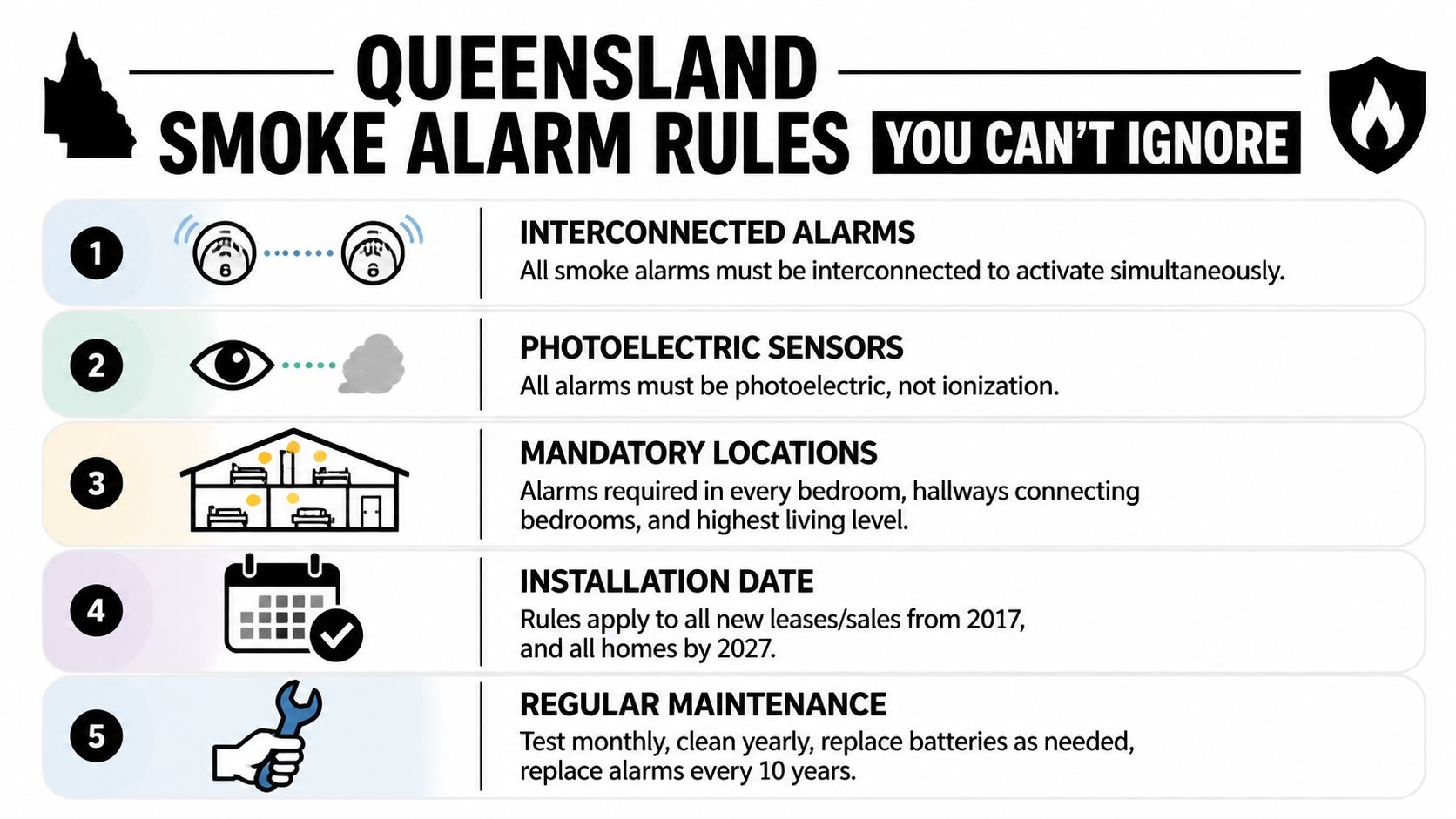
In 2023-2024, the QBCC issued over 15,000 non-compliance notices for Queensland smoke alarm laws, with potential fines reaching $15,426. The same verified data notes that 40% of Brisbane’s housing stock is older homes, which is a major reason compliance upgrades keep catching owners out, as outlined in this Queensland smoke alarm compliance summary.
For many Brisbane properties, especially older homes and rentals, the issue isn’t just whether a smoke alarm exists. It’s whether the alarms are the right type, in the right places, and working together properly.
The common points owners need to check are:
Interconnection
Alarms should activate together, not act as isolated units.
Photoelectric type
This is the required technology, not old ionisation-style units.
Correct placement
Bedrooms, hallways that connect bedrooms, and the required living level matter.
Power source and age
The rules around mains power and 10-year sealed battery alarms matter, especially in upgrade work.
If you need the legal detail laid out more fully, this guide to Queensland smoke alarm laws is worth reviewing before you approve any work.
Older Brisbane homes often create the most confusion. Timber houses, past renovations, patched ceilings, and older cabling can turn a simple-sounding alarm upgrade into a more careful installation.
Landlords also get tripped up by assumptions such as:
Smoke alarm compliance isn’t a box-ticking exercise. The placement, type, and interconnection all matter.
| Approach | Usually works | Usually causes trouble |
|---|---|---|
| Site-specific assessment | Yes | |
| Replacing one alarm without checking the full layout | Yes | |
| Confirming compliance requirements before lease or sale | Yes | |
| Buying mixed alarm types and hoping they integrate | Yes |
The safe approach is simple. Treat smoke alarm work as compliance work, not just product replacement. That mindset saves time, callbacks, and nasty surprises during tenancy changes or sale preparation.
The smart way to handle a near me electrician search in Brisbane is straightforward. Make the site safe first. Check whether the issue is a true emergency or an urgent fault. Verify the licence. Ask direct pricing and paperwork questions. If smoke alarms are involved, treat the job as a Queensland compliance issue, not a quick hardware swap.
That process turns a rushed search into a controlled decision. It also helps you compare electricians on the things that matter most. Safety, legality, communication, and follow-through.
If you’re interested in how local service businesses build trust online before you ever make the call, this practical guide on local SEO for tradespeople gives useful context on why some contractors are easier to find and evaluate than others.
For the actual job, choose a Brisbane electrician who’s easy to verify, comfortable giving written details, and clear about what compliant work involves. That’s usually the difference between a repair that stays fixed and one that keeps returning as a bigger problem.
If the tripping is linked to burning smells, visible damage, buzzing, or signs of heat, treat it as urgent and isolate power if safe. If it only happens when one appliance is used, unplug that appliance and report the pattern clearly when you call.
For Queensland compliance work, be careful. Smoke alarm upgrades often involve specific legal requirements around alarm type, layout, interconnection, and installation. If the work falls within licensed electrical work, use a properly licensed electrician.
Not often. A low quote can be fine, but only if the scope is clear, the parts are suitable, and the contractor has allowed for testing, compliance, and proper finish. Cheap quotes become expensive when they leave out important work.
For larger or non-urgent work, yes. It protects both sides. Written quotes reduce misunderstandings about labour, parts, exclusions, and variations.
Move on. There’s no good reason to be vague about licensing on residential electrical work in Brisbane.
Sometimes it reflects service quality and organisation. Sometimes it reflects marketing effort. If you want a plain-English look at that side of visibility, this article on how to grow with local SEO explains the basics well. Just don’t confuse ranking well with being automatically right for your job.
If you want a qualified Brisbane team to handle repairs, upgrades, smoke alarm compliance, hot water issues, or security installations properly, contact DLG Electrical. They’re a family-owned local contractor with 19+ years of experience, a five-star Google rating, fully licensed and insured electricians, and free quotes.

Master Electrician with over 30 years of experience. Founded DLG Electrical in 2005 after international project work including electrical installations at Stamford Bridge Stadium, London(Home of Chelsea FC).

Local Electricians that can fix all Electric Hot water Systems.
Motion sensor lights are a versatile addition to any home, offering nu
