83 Jean St, Grange QLD 4051
Mon-Fri 07:30 AM - 04:00 PM - Sat - 8:00 - 12 - Sunday Closed
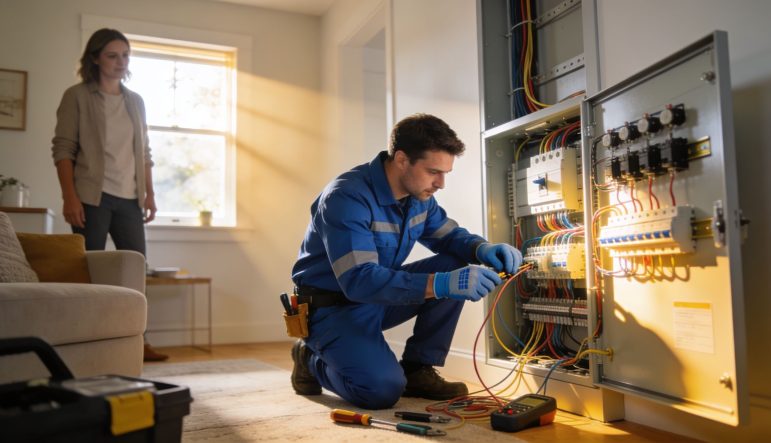
You usually start looking for an electrician in Stafford when something has already gone wrong. The safety switch won't stay on. Lights flicker in one room and not the next. The hot water has stopped. A smoke alarm won't behave. You're standing at the switchboard, wondering whether this is a quick fix, a serious fault, or the start of a larger problem.
That's when generic listings stop being useful.
A reliable electrician in Stafford should do more than answer the phone. They should explain what's urgent, what can wait, what needs to be made compliant, and what should be upgraded now so you don't pay twice later. In older North Brisbane homes especially, small symptoms often point to bigger issues such as ageing switchboards, overloaded circuits, deteriorated fittings, or previous work that was never planned properly.
Good electrical work is rarely about the cheapest quote. It's about safe diagnosis, clean workmanship, clear communication, and a result that holds up under day-to-day use. If you're choosing someone for your home, rental, renovation, or emergency repair, it helps to know what actually matters before anyone picks up a screwdriver.
When power drops out unexpectedly, people often make the same mistake. They ring the first name they find, ask only about price, and hope the problem is simple. Sometimes it is. Often it isn't.
The smarter move is to slow the process down for a few minutes and check three things first. Is the issue a safety risk, does the electrician handle your type of work, and can they explain their process in plain English. If the answer to any of those is unclear, keep looking.
A tripping circuit can come from a faulty appliance, water ingress, damaged cabling, or an overloaded board. Flickering lights might be a loose connection, a failing fitting, or a broader supply issue inside the home. No honest electrician should lock in a final answer before testing.
Practical rule: If someone gives you a confident diagnosis over the phone without asking sensible questions, treat that as a warning sign.
For homeowners in Stafford, urgency also matters. If the issue affects smoke alarms, hot water, cooking, refrigeration, or a tenancy requirement, you need someone who understands what must be made safe immediately and what can be booked properly.
A trustworthy electrician usually does a few things consistently:
If you want a broader framework for weighing up local trades properly, this guide on finding a trusted electrician in Brisbane QLD is a useful place to start.
The homes around Stafford aren't all the same, which is exactly why electrical work shouldn't be treated as a one-size-fits-all service. A post-war house, a renovated Queenslander, a brick unit, and a newer townhouse all place different demands on the electrical system. Still, a handful of services keep coming up because they affect safety, comfort, and future capacity.
If your board is old, cramped, poorly labelled, or constantly tripping, it deserves attention before you add anything new. Air conditioning, induction cooking, modern kitchen loads, home offices, solar systems, and EV charging all place extra demand on circuits that older boards weren't designed to handle.

This matters even more now because North Brisbane has seen a 42% surge in residential solar installations from 2024 to 2026, while QBCC audits found only 15% of these projects included the necessary compliant switchboard upgrades, which leaves many homes exposed to overload risk, according to the Clean Energy Council.
Signs you may need a switchboard upgrade include:
When there's no hot water, many people assume the tank itself has failed. Sometimes the fault is electrical. A failed element, thermostat issue, supply fault, isolation problem, or off-peak control issue can stop a system without any plumbing defect at all.
That's why electrical and plumbing diagnosis often need to work together. If you're trying to understand the non-electrical side of the problem as well, this piece on solving hot water issues gives a practical breakdown of what to check before replacing the whole system.
Smoke alarms cause confusion because the symptoms can sound minor while the legal and safety consequences are not. A chirping alarm might be a maintenance issue, an end-of-life unit, a wiring fault, or a non-compliant setup that should be upgraded rather than patched.
For landlords and sellers especially, this isn't an area to guess your way through. You need alarms placed correctly, interconnected where required, and installed in a way that satisfies current obligations.
A smoke alarm problem is never just a noise problem. It's a life-safety issue until proven otherwise.
A lot of Stafford homeowners ask for security after a break-in scare, a renovation, or a tenancy turnover. The best results usually come from planning the system as a whole. Cameras, sensor lighting, hardwired devices, gate circuits, and access points all need to work together.
Poor security installs often fail for simple reasons. Blind spots, badly placed lighting, weak cabling routes, or equipment chosen without considering how people move around the property.
Renovations are where cheap electrical planning causes the most frustration. Power points end up behind furniture, feature lighting doesn't align with cabinetry, circuits aren't separated properly, and future loads get ignored. The fix later is messy and expensive.
A proper design phase should account for layout, appliance load, switching, data, ventilation, external areas, and likely upgrades down the track. Homeowners comparing service types can get a clearer overview from these residential electrical services in Brisbane, especially if they're planning more than a simple repair.
Price matters. So does speed. But both can be misleading if you don't know what you're paying for.
A low quote can mean a narrow scope, rushed fault-finding, lower grade fittings, or extra charges later. A fast response promise can mean little if the electrician arrives without the parts, licensing, or time needed to finish the job safely.

Most domestic electrical jobs fall into one of three pricing models.
| Pricing model | Best for | What to watch |
|---|---|---|
| Call-out plus labour | Fault-finding and unknown issues | Make sure diagnosis time is explained clearly |
| Fixed quote | Defined installs such as fans, lights, alarms, or board upgrades | Check what's excluded |
| Staged quote | Renovations or larger works | Ask when variations are discussed and approved |
The key question isn't “What's your hourly rate?” It's “What exactly does this price include, and what could change it?” A useful benchmark for understanding quote structure is this guide on how much electricians charge.
Not every electrical issue is an emergency. A dead garden light can wait. A fault affecting smoke alarms, hot water in a rental, or a circuit that won't stay safe cannot.
In postcode 4053, homeowners can experience average wait times of 4 to 6 hours for urgent call-outs, and 28% of complaints in North Brisbane related to delays in after-hours hot water and smoke alarm repairs, based on QBCC complaint data.
That local pattern matters because the after-hours market often separates into two groups:
If an electrician can't tell you whether the job will be made safe on the first visit, you still don't know what you're buying.
This short video gives a helpful overview of how homeowners can think about electrician pricing and job scope before they commit.
The cheapest job can become the most expensive if the fault returns, the compliance issue remains, or another electrician has to undo poor work. Good electricians document what they found, explain why the fix suits the fault, and note any limits if a temporary repair is all that's possible that day.
That's especially important with switchboards, smoke alarms, and renovation wiring. In those jobs, “good enough” usually isn't good enough for long.
Most hiring mistakes happen before any work begins. The homeowner assumes the licence is current, the insurance is valid, the reviews are genuine, and the quote covers more than it ultimately provides. A short verification process reduces that risk sharply.

Start with the items that protect you if something goes wrong.
Licence status
Ask for the contractor licence details and verify them through the appropriate Queensland channels before approving work.
Insurance currency
Ask for evidence of current public liability cover. Don't just ask whether they're insured. Ask to see it.
Named business identity
Make sure the trading name, ABN, and invoice details line up with the person doing the work.
Online reviews are useful, but only if you read them critically. Ignore vague praise and look for patterns that tell you how the electrician operates on real jobs.
Focus on whether past customers mention:
A quote should tell you enough that another adult in the home could read it and understand what is being installed, repaired, replaced, or excluded. If it doesn't, ask for clarification before work starts.
Use this quick screen:
| Quote item | What you want to see |
|---|---|
| Scope | Specific rooms, fittings, circuits, or devices |
| Materials | Brand or quality level where relevant |
| Labour | Whether installation, testing, and clean-up are included |
| Exclusions | Access issues, patching, specialist parts, or rectification outside scope |
| Compliance | Whether certificates or required testing are part of the job |
Homeowner check: If the quote is only a total figure with one short description, it's too thin for anything beyond the smallest task.
Not every electrician does every residential task equally well. Someone who mainly handles new-build rough-ins may not be the right fit for a fault in an older home. Someone who installs lights all day may not be the best person for smoke alarm compliance, switchboard modernisation, or complex renovation staging.
Ask what kinds of homes they work on most often and whether they regularly handle your exact issue. That answer should sound practical, not rehearsed.
A licence and a quote get an electrician onto the shortlist. Your questions decide whether they should get the job.
The right questions reveal how the person thinks under pressure, how they communicate, and whether they plan work properly. You're not looking for slick sales talk. You're looking for calm, direct answers that make technical work easier to trust.
Start with the job itself.
What do you think are the most likely causes of this fault?
A good answer gives possibilities, not false certainty.
What will you test before replacing anything?
This separates fault-finding from guesswork.
If you find a larger issue, how will you handle approval for extra work?
You want a clear variation process, not surprise invoicing.
Will this repair fully fix the issue, or is it a safe interim measure?
Temporary repairs have their place, but they should be identified clearly.
Materials matter more than many homeowners realise. Switchgear, smoke alarms, exterior fittings, sensors, and protection devices vary in durability and suitability. Cheap hardware often looks acceptable on day one and causes grief later.
Ask these directly:
If the answers are vague, dismissive, or purely price-driven, that tells you plenty.
“The best tradies don't get defensive when you ask detailed questions. They usually welcome them.”
Stafford has a mix of older homes, updated family homes, investment properties, and units. The right electrician should understand the practical differences. Access constraints, roof space, old cabling routes, board capacity, and compliance obligations can all change the way the job should be planned.
A useful question is: Have you worked on homes with similar age, layout, or renovation history to this one? Another is: What usually catches owners out on properties like mine?
Those questions often produce the most honest answers of the whole conversation. They also show whether the electrician is thinking beyond the immediate task to the long-term reliability of the property.
Homeowners usually remember the same parts of an electrical job. Did the electrician arrive when promised. Did they explain the problem clearly. Did the repair hold. Was the house left in good order.
One Stafford family called after their safety switch began tripping every evening when the oven, air conditioning, and hot water system overlapped. The issue wasn't any single appliance. The underlying problem was circuit loading and an ageing board that no longer suited how the house was being used. Once the board and circuit arrangement were corrected, the nuisance trips stopped and the owners had room for planned upgrades later.
In Grange, a landlord needed smoke alarm issues sorted before a tenancy changeover. What mattered wasn't flashy extras. It was clear advice on what had to be compliant, which alarms were at end of life, and what needed replacement rather than another short-term patch. The job went smoothly because the scope was explained upfront and there was no confusion about what standard had to be met.
A Windsor homeowner renovating a kitchen had another common problem. The cabinetry plan was finalised before the electrical layout was thought through properly. Instead of placing power where it was easiest, the work had to be coordinated around appliance load, lighting, switching, and where people would use the benchtops day to day.
These aren't dramatic stories. That's the point.
Most good electrical work feels uneventful once it's done properly. The lights work, the circuits hold, the alarms comply, and the homeowner stops thinking about the fault because it has been solved.
When people hire a family-owned electrician, they usually want the same things. A licensed professional who turns up, speaks plainly, works safely, and doesn't disappear when the job gets more technical than expected.
DLG Electrical fits that model in a straightforward way. The business is family-owned and operated, has over 19 years of experience, maintains a 5-star Google rating, and provides fully licensed and insured electrical services across Brisbane. The work includes switchboard upgrades, electric hot water system repairs, security system installations, smoke detector compliance, and custom electrical design. Those are the areas that matter most when a homeowner needs practical help rather than generic advice.
This is also why local knowledge matters. A contractor working regularly in North Brisbane is more likely to understand the mix of housing stock, the common upgrade paths, and the compliance issues that affect owners and landlords in suburbs such as Stafford, Grange, and Windsor. That doesn't replace licensing or good process, but it does make diagnosis and planning more grounded in the realities of the area.
If you've read this far, the main takeaway is simple. Don't choose an electrician in Stafford based on price alone. Choose based on verified credentials, relevant experience, transparent quoting, and the ability to explain what your home needs now and what it may need next.
If you need a clear diagnosis, compliant electrical work, or a transparent quote for your home in North Brisbane, contact DLG Electrical. They offer free quotes and handle residential electrical repairs, upgrades, and installations with licensed, insured workmanship.

Master Electrician with over 30 years of experience. Founded DLG Electrical in 2005 after international project work including electrical installations at Stamford Bridge Stadium, London(Home of Chelsea FC).

Local Electricians that can fix all Electric Hot water Systems.
Motion sensor lights are a versatile addition to any home, offering nu
