83 Jean St, Grange QLD 4051
Mon-Fri 07:30 AM - 04:00 PM - Sat - 8:00 - 12 - Sunday Closed
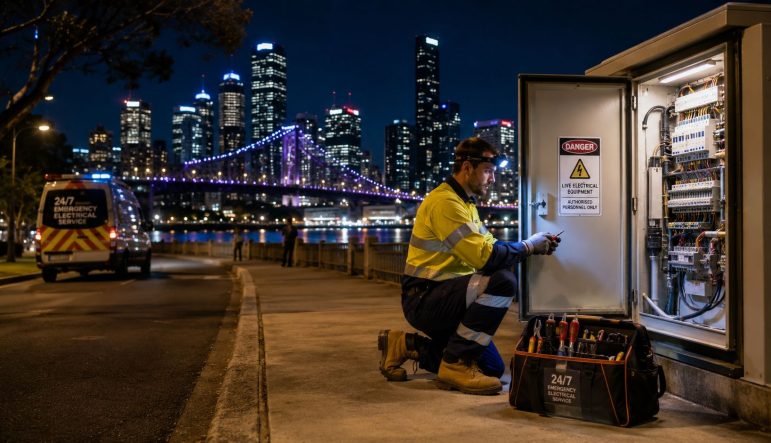
It's 10:40 at night, the kitchen has gone dark, and the switchboard won't stay on. Or you've caught that sharp burnt-plastic smell near a powerpoint and you're not sure whether to stay put, shut power off, or get everyone outside.
That's the moment a 24 hour electrical service matters.
Not every after-hours fault is life-threatening, and not every power loss means you need to pay emergency rates. But some faults need immediate action because the risk isn't inconvenience. It's fire, electric shock, unsafe wiring, or a home that can't be made safe until a licensed electrician isolates the fault.
A 24 hour electrical service is an after-hours response for faults that create a safety risk or leave a home in a condition that should not be left until morning. In practice, that usually means nights, weekends, and public holidays, when you need a licensed electrician to isolate danger, test the fault, and decide whether power can be restored safely.
The job is to make the property safe first.
That can mean shutting down a damaged circuit, tracing a fault at the switchboard, checking whether an appliance has caused the trip, or restoring part of the supply while leaving the unsafe section isolated. Some repairs can be completed on the spot. Others need a temporary safe solution overnight, followed by proper repair in daylight with the right parts.
A lot of homeowners assume a 24/7 electrician is there to handle every electrical issue after hours. That is not how a good emergency service works. Urgent work gets priority because the primary concern is fire risk, electric shock, heat damage, or loss of power to parts of the home that cannot be left unsafe.
Most genuine after-hours callouts involve faults such as:
The service should also include clear triage over the phone. A competent after-hours provider asks what happened, what is still live, whether there is smoke or water involved, and whether the property can be made safe before anyone attends. If you need a clearer picture of how a local emergency electrician in Brisbane responds to urgent faults, start with the process, not the sales pitch.
Phone coverage matters too. A 24 hour service is only real if someone can answer, assess urgency, and give safe first steps while you wait. For businesses trying to never miss client calls, that call handling is part of delivering a genuine after-hours service, not just advertising one.
Practical rule: If you are relying on hope to get through the night, the fault probably needs proper assessment now.
The most useful thing you can do in a stressful electrical situation is separate danger from disruption. People often call too late for the dangerous jobs and too early for the inconvenient ones.
Energex guidance is the right line to remember here. If there is immediate danger, call 000. Sparks, smoke, exposed live wiring, and downed powerlines should be treated as urgent hazards, not as ordinary after-hours service jobs (reference).
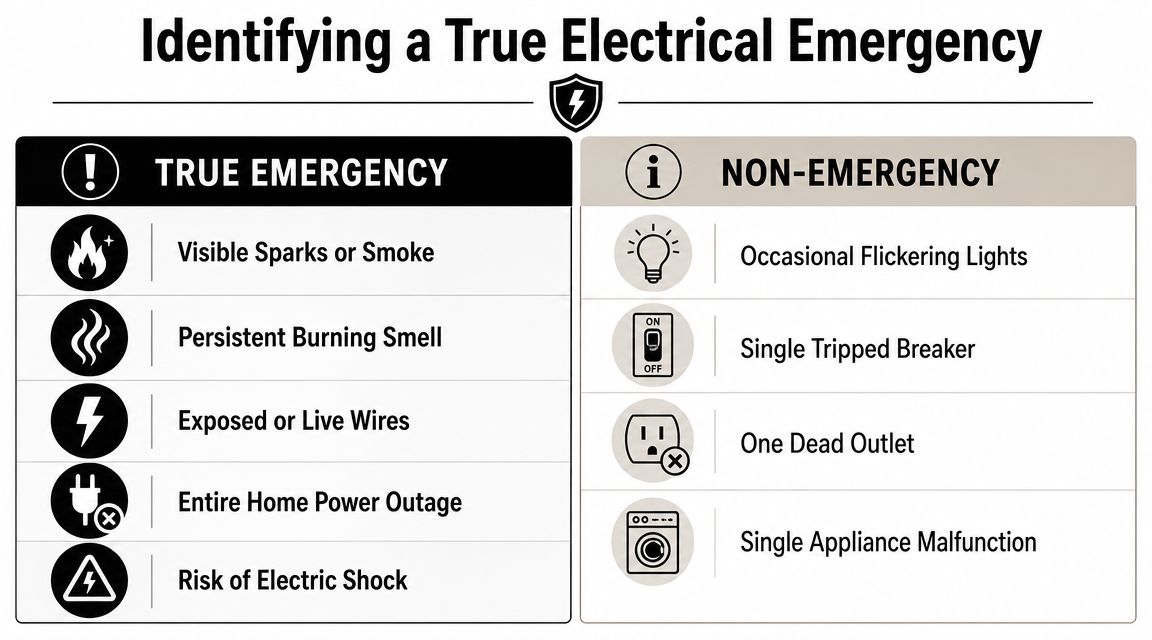
Treat the situation as urgent if you have any of the following:
If you're facing one of those situations and need a local overview of after-hours fault response, this guide to an emergency electrician in Brisbane is a useful starting point.
Call 000 first if:
An electrician can help after emergency services make the scene safe, but 000 comes first when life safety is involved.
If you can smell burning and can't identify the source quickly, assume the risk is real.
These faults still need attention, but they often don't justify an overnight callout if they can be isolated safely:
| Can often wait | Why it may not need an emergency call |
|---|---|
| One dead outlet | The circuit may still be otherwise safe if unused |
| A single faulty light fitting | Annoying, but not always dangerous if switched off |
| Occasional flickering lights | Worth investigating, but not automatically an emergency |
| One appliance not working | The fault may be in the appliance, not the installation |
| A single breaker trip that resets normally | If it stays on and there are no other warning signs, it may be scheduled |
The key test is simple. If you can isolate the issue, keep people away from it, and the rest of the home remains safe, it may be a next-day job. If you can't make it safe, treat it as urgent.
Before any electrician arrives, there are a few things that reduce risk straight away. These are the same calm instructions a competent tradesperson would usually give over the phone.
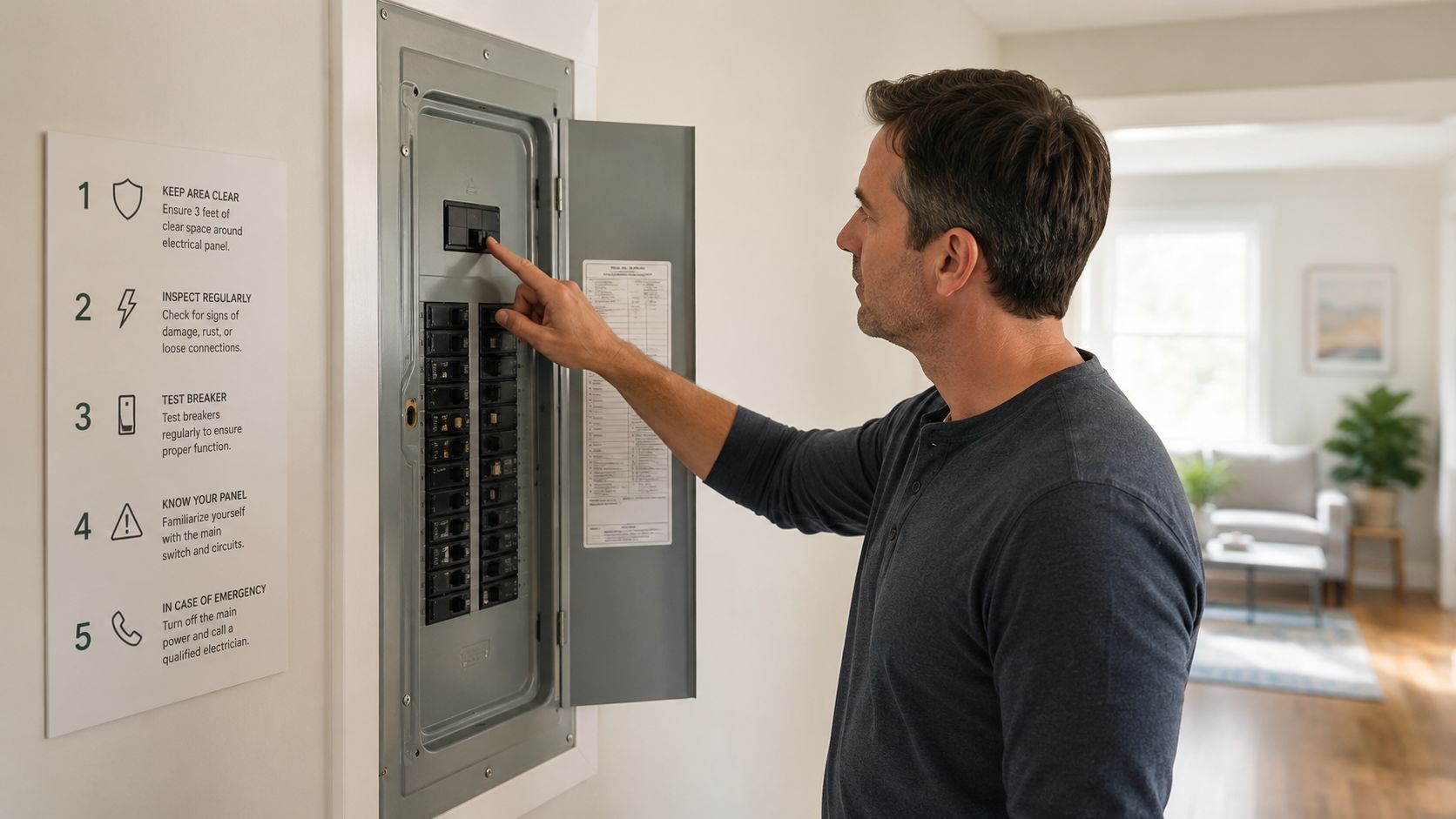
Keep people clear of the area
If there's smoke, sparks, heat, or exposed wiring, get children and pets away first. Curiosity causes bad decisions around damaged electrical gear.
Don't touch anything that may be live
Don't test a faulty outlet with your hand. Don't move a damaged lead. Don't stand in water near electrical equipment.
If it's safe, turn off power at the main switch
This can stop further heating or arcing. If the board is wet, damaged, or giving off heat, leave it alone and wait for professional help.
Unplug the appliance only if the plug is safely accessible
If an appliance appears to be the cause and you can reach the plug without crossing water or touching damaged parts, disconnect it. If not, leave it.
A dark house makes people rush. Slow down.
If you're unsure what to do in a fire situation, this guide on how to put out an electrical fire covers the basics clearly.
Have these ready when you call:
This video is worth watching if you want a visual refresher on switchboard safety and household electrical response.
Phone advice to trust: If you're not sure whether it's safe to touch, don't touch it.
After-hours electrical work costs more than standard daytime work. That doesn't mean you're being taken for a ride. It means you're paying for immediate availability, triage, travel, and the ability to make a dangerous situation safe outside normal hours.
A good emergency electrician should explain the charging structure before attending. If the person on the phone won't explain how they bill, that's a warning sign.
Most after-hours callouts are built around two parts:
You don't need a perfect quote over the phone for every fault. Sometimes the underlying issue only becomes clear at the switchboard or the first failed connection point. But you should get a clear explanation of how charges will be applied, what happens if extra work is needed, and whether a make-safe visit may be followed by scheduled repair work later.
Fast response matters, but false promises don't help anyone. Industry operations guidance for 24/7 electrical businesses recommends a live or in-house call system, a 10-minute dispatch window, and 30–90 minute on-site arrival targets, with trucks carrying roughly 80% of common parts such as breakers, outlets, wire, tools, and safety equipment to reduce return visits (reference).
That's the benchmark I'd pay attention to. Not “we'll definitely be there in fifteen minutes no matter what”, especially during storms, widespread outages, or heavy overnight demand.
The first visit should achieve at least one of these outcomes:
| Good first-visit outcome | What it means for you |
|---|---|
| Safe isolation | The dangerous part of the installation is shut down and secured |
| Fault location | The electrician identifies whether the issue is likely appliance, circuit, switchboard, or supply related |
| Temporary make-safe | Essential risk is removed so the property can be occupied safely |
| Permanent repair if possible | Common faults may be fixed immediately if parts are on hand |
| Clear next-step advice | You know what still needs to be repaired, replaced, or upgraded |
What doesn't work is vague reassurance, repeated breaker resets, or guesswork. If a fault can't be safely cleared, the correct outcome may be partial isolation until proper repairs are completed.
It's 11:40 PM, the power has dropped on one side of the house, and you can smell something hot near the switchboard. That is the moment many homeowners stop comparing properly and book the first number that answers. A better approach is to slow the decision down for two minutes and ask a few direct questions. Good operators will handle that well. Poor ones usually expose themselves quickly.
Emergency callouts can leave people open to inflated pricing, vague promises, and work that goes well beyond the actual fault. The goal is simple. Get someone who can make the property safe, explain what they've found, and charge in a way you can understand before they start.
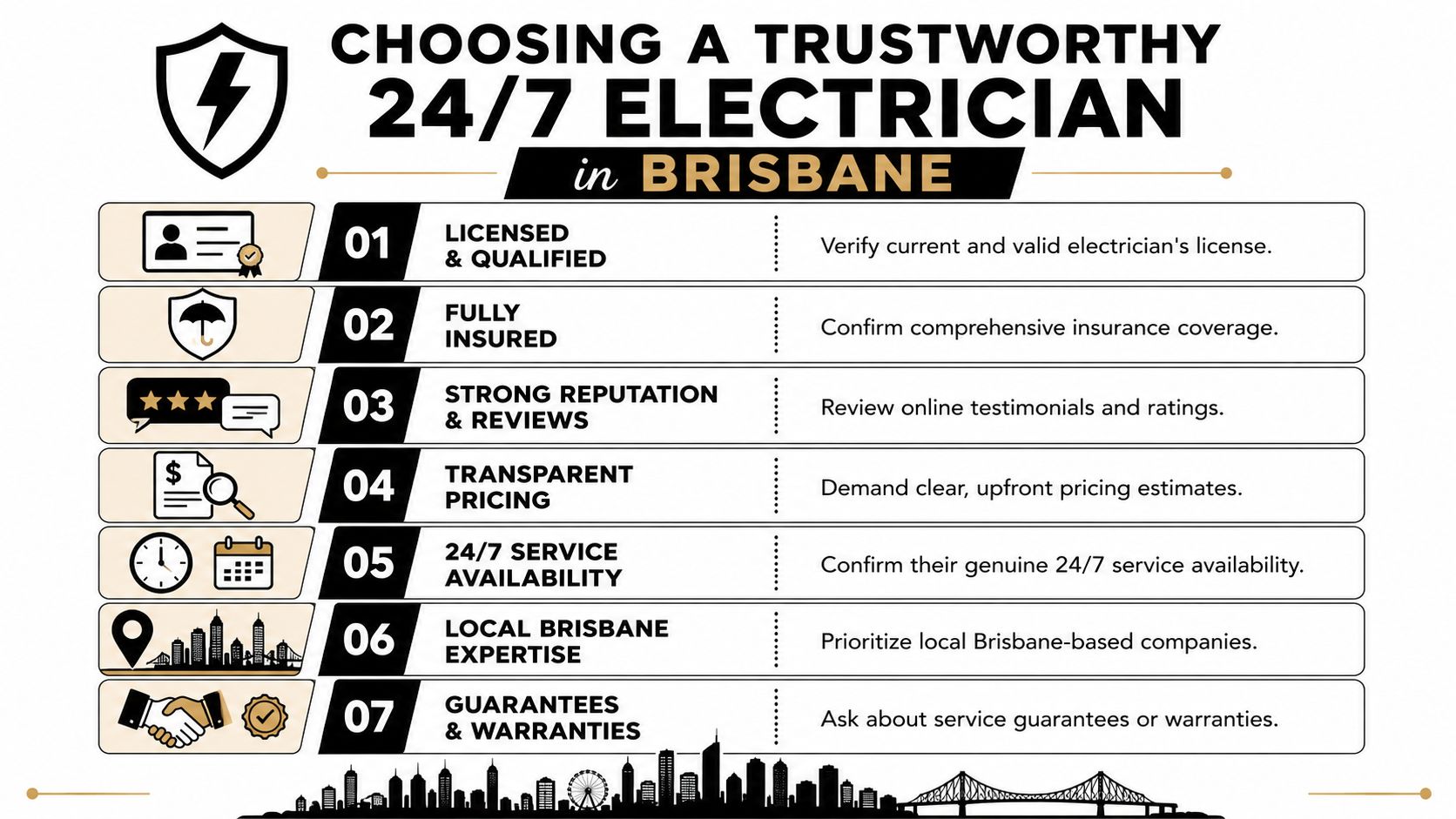
A trustworthy after-hours electrician should be easy to identify, even on a quick phone call.
Licence details
Ask for the electrical contractor licence details. A legitimate business should provide them without hesitation.
Insurance cover
Confirm they hold current insurance for the work they perform. If there is damage, injury, or a dispute about workmanship, that matters.
Clear pricing structure
Ask how the after-hours fee works, what gets charged as labour, and how materials are billed. You are not asking for a fixed quote over the phone. You are checking whether they can explain their charges plainly.
Recent review quality
Read the wording, not just the star rating. Look for comments about emergency attendance, communication, and whether the invoice matched what was discussed.
A real process for urgent calls
Some businesses advertise 24/7 service but rely on missed calls, voicemail, or slow callbacks. Reliable phone handling is part of reliable emergency service. This overview of expert support for electrician calls explains why that part of the process affects the customer experience.
The best screening questions are practical:
A reliable electrician will answer those questions without pushing you into a rushed approval.
One more point matters here. Be cautious if the person on the phone jumps straight to recommending a switchboard replacement, full rewiring, or major upgrade work before anyone has tested the fault on site. Sometimes those repairs are justified. At the emergency stage, though, diagnosis comes first.
If you want to compare local contractors before anything goes wrong, keep this guide to finding a trusted electrician in Brisbane handy.
Treat these as warning signs:
In an electrical emergency, the right contractor lowers risk and lowers uncertainty. That matters just as much as speed.
If you have had an overnight electrical fault made safe, the next job is making sure it does not return a week later under load, in wet weather, or in the middle of dinner. That is where planned repair work matters most.
DLG Electrical works during standard weekday hours, Monday to Friday from 7:30 AM to 4:00 PM. That matters because homeowners should know exactly what a contractor can and cannot provide before they book. Clear expectations reduce stress and help you line up the right support, whether you need urgent after-hours attendance from another provider or proper follow-up once the immediate risk has been controlled.
Our role is usually in the second part of that process. We handle the fault-finding, repairs, and upgrade work that turns a temporary make-safe into a lasting solution. That can include switchboard repairs and upgrades, smoke alarm work, hot water electrical repairs, and corrective work after an emergency callout has isolated the danger but not fully resolved the cause.
After-hours electricians often have to make decisions based on safety first and time second. If a circuit is damaged, water has affected fittings, or a breaker will not hold, the right first move may be isolation rather than a full repair on the spot. That is normal trade practice. A safe temporary outcome at night still needs proper testing and repair in daylight conditions.
This is also where homeowners can protect themselves from rushed decisions.
A recurring trip, a warm switchboard, or a failed hot water circuit does not always mean a full replacement is needed. Sometimes it does. Sometimes the fault is isolated to one device, one circuit, or one damaged termination. A careful follow-up inspection gives you a clearer basis for spending money, instead of approving major work while stressed and short on options.
Smoke alarm work is another area where emergency concerns and compliance work can overlap. The Queensland Government's deadline for existing homes to reach final compliance with interconnected photoelectric alarms is currently set for 1 January 2027. For homeowners, landlords, and property managers, that means it makes sense to deal with known electrical safety issues before they become urgent.
DLG Electrical is a good fit for Brisbane homeowners who need practical follow-up after the immediate emergency stage, including:
That is usually the better long-term outcome. Getting through the night is one job. Stopping the same fault from putting your household back under pressure is the next one.
You can reset it once if there are no signs of burning, heat, water, or damage, and if you've unplugged likely faulty appliances first. If it trips again straight away, stop. Repeated resetting doesn't solve the fault and can make a dangerous condition harder to read when the electrician arrives.
A 24/7 contractor should be able to work out whether the issue is on the installation side or the supply side. That matters because the response changes. Consumer installation faults can be isolated by the electrician, while network-side outages or damaged service lines need to be escalated to the distributor (reference).
No. First check whether neighbouring homes are also out and whether there's a wider outage in your area. If the issue appears broader than your property, the network may be the cause. If your home alone is affected, or the switchboard is tripping or damaged, an electrician is more likely to be needed.
No. Household electrical repair work in Australia should be left to licensed electricians. Tape, replacement plugs fitted badly, improvised joins, and “quick fixes” around switchboards create the sort of hazards that turn a manageable fault into a fire or shock risk.
Not always. If it's only one outlet, there's no smell, no heat, no sparking, and you can leave it unused safely, it may be a standard service call. If the outlet is scorched, loose, warm, wet, or affecting other parts of the circuit, treat it more seriously.
Because that can be the correct professional decision. Some faults need more time, replacement parts, broader testing, or work in daylight conditions. A make-safe visit is not a half-job if it removes the immediate hazard and protects the home until full repair can be completed properly.
Keep it short and factual:
That information helps the electrician decide whether to attend urgently, what gear to bring, and whether emergency services or the distributor may need to be involved.
If you need a reliable Brisbane electrician for fault-finding, switchboard upgrades, smoke alarm compliance, hot water repairs, or scheduled follow-up after an electrical emergency, DLG Electrical is a practical local choice. They won't pretend every issue needs a midnight callout. They'll help you fix the underlying problem properly, safely, and to a standard you can trust.

Master Electrician with over 30 years of experience. Founded DLG Electrical in 2005 after international project work including electrical installations at Stamford Bridge Stadium, London(Home of Chelsea FC).

Local Electricians that can fix all Electric Hot water Systems.
Motion sensor lights are a versatile addition to any home, offering nu
