83 Jean St, Grange QLD 4051
Mon-Fri 07:30 AM - 04:00 PM - Sat - 8:00 - 12 - Sunday Closed
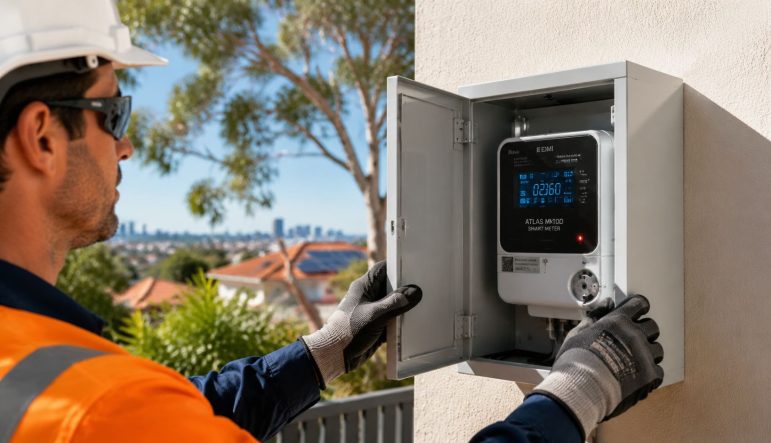
If you live in Brisbane and your power bills still rely on readings that feel a step behind your actual usage, you're not alone. Many homes still have an older meter sitting in the box outside, counting total consumption but telling you almost nothing useful day to day.
That gap matters more now than it used to. Homes are adding solar, batteries, EV chargers, induction cooking, air conditioning zones, and connected devices. But a lot of Queensland properties are still working with metering that was designed for a much simpler electrical setup.
A Brisbane homeowner rings after getting solar quotes, and the same question comes up fast. “Do I need a smart meter first, and who organises it?” In Queensland, that confusion is common because the rollout has not followed the same path as places like South Australia or Victoria.
According to the Australian Energy Market Commission's 2024 review of competition in metering, smart meter uptake in Queensland remained well below the leading states, with deployment still limited compared with jurisdictions that had already reached mass rollout levels in the AEMC's metering market assessment. That gap matters at street level in Brisbane. Two homes in the same suburb can have very different metering setups, different upgrade paths, and different wait times.
That is why smart meter installation keeps coming up now. The issue is not hype. It is the practical gap between what many Queensland homes have in the meter box and what newer tariffs, solar systems, and connected appliances are built around.
Queensland homeowners are dealing with a fragmented process. A retailer may start the meter exchange. A solar upgrade may trigger it. An old meter failure may force it. Sometimes the first sign is a billing or tariff question, not a planned electrical upgrade.
From the homeowner's side, the main variables are usually these:
I see this on older Brisbane homes a lot. The homeowner expects a simple meter swap, but the main issue is the board behind it. That does not mean the job is difficult. It means the right sequence matters.
Power use has changed. Homes that once ran a hot water system, a cooktop, and a few lights now add ducted air, pool gear, solar export, and EV charging. Older meters can still record usage, but they do not always fit the billing and control options people want today.
There is also a broader smart-home angle. Households upgrading internet, automation, and energy monitoring often look at the advantages of fiber for smart homes at the same time as electrical upgrades, because both affect how well the home handles newer technology.
For Brisbane homeowners, the hot topic is not whether smart meters exist. It is who can get one, what has to be fixed first, how much retailer involvement is needed, and how long the process will take in Queensland's patchier rollout. That is where good local advice saves time, avoids failed appointments, and keeps the installation safe and compliant.
A smart meter records electricity use like any meter does, but it also communicates with the wider metering system. That communication is the part that changes how the meter can be read, configured, and managed after installation.
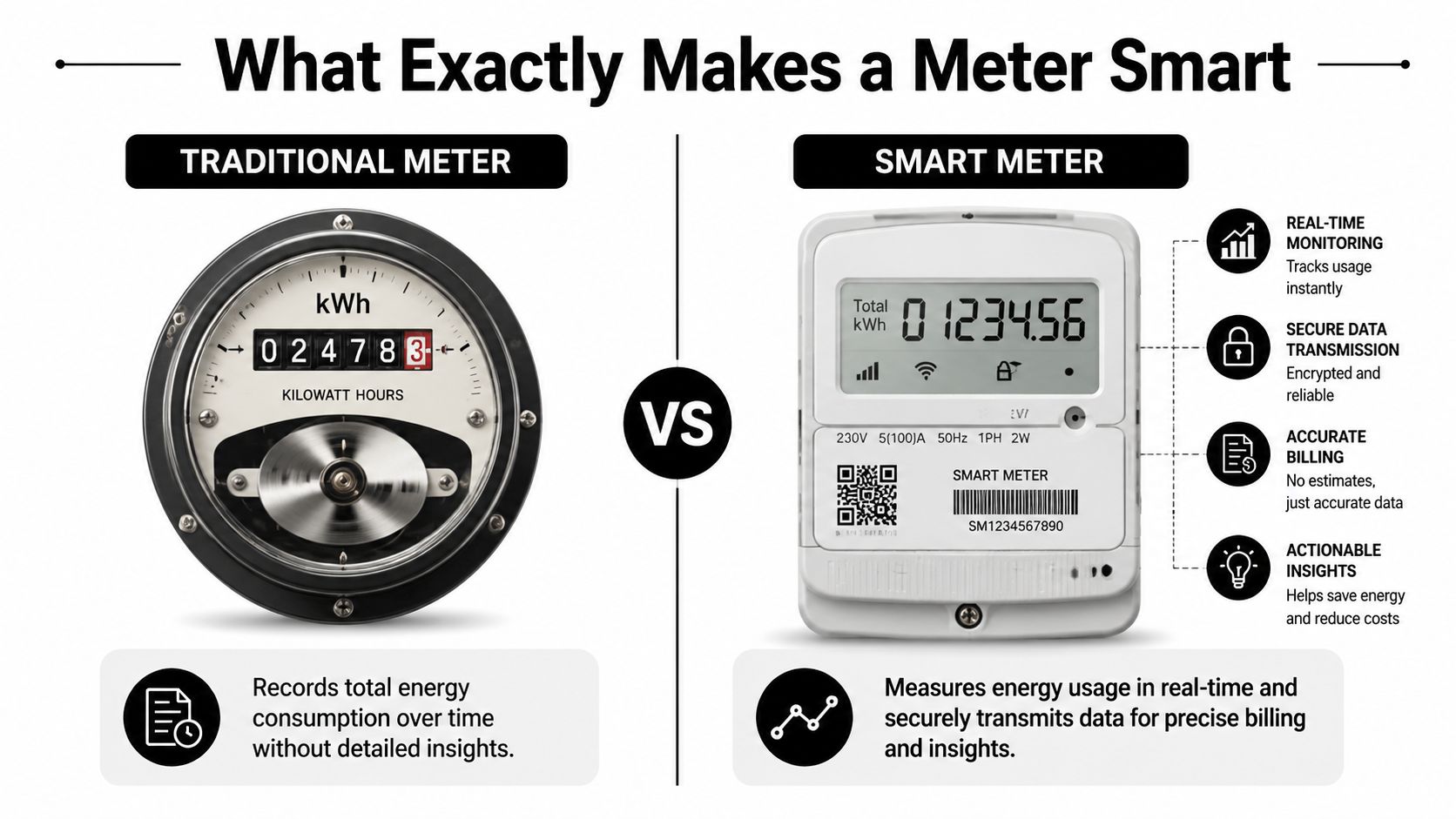
For Brisbane homeowners, that matters because Queensland is not a simple one-path rollout. Your retailer, the meter provider they use, the condition of your switchboard, and the type of tariff or upgrade you want can all affect what the smart meter is set up to do and how quickly it happens.
A traditional meter mainly accumulates usage. A smart meter measures usage in more detail and sends that information remotely, so the industry does not have to rely on someone attending the property for every read.
In practical terms, a smart meter can usually:
That does not mean every homeowner gets every function on day one. In Brisbane, the meter may be technically capable, but the tariff offer, communications performance, and retailer process still shape what you get.
If you are not sure what is on your board now, start with this guide on how to read an electricity meter. It helps you tell the difference between an older accumulation meter and a newer digital setup before you book work.
A smart meter installation is partly an electrical job and partly a communications job. The wiring must be safe and compliant, but the meter also needs a reliable way to pass data back through the metering network.
That point gets missed a lot.
Homeowners often expect a straight swap. Then the meter goes in, but extra checks are needed because signal quality, configuration, or retailer commissioning still have to be completed before the full smart functions are active. That is one reason timelines in Queensland can feel inconsistent from one suburb or property to the next.
Security matters too. These meters are part of billing and network operations, so the communications side has to be protected and properly configured. Good installation work is not just about fitting the device neatly on the board. It is about making sure the whole setup is suitable for the service it is meant to deliver.
There is a similar lesson in other connected home upgrades. If you're looking at broader home connectivity as well, Premier Broadband's breakdown of the advantages of fiber for smart homes is a practical read because it shows how much smart-home performance depends on reliable data paths, not just the device itself.
The biggest benefit of smart meter installation isn't that the meter looks newer. It's that your home starts operating with better information.
For most homeowners, the practical value shows up in everyday issues. Billing becomes clearer. Usage patterns are easier to understand. Future upgrades like solar and storage fit more naturally into the metering setup. You're not guessing as much.
Older meters are blunt instruments. They record total consumption over time, but they don't give the same level of operational visibility a modern setup can support. That can leave homeowners reacting after a high bill arrives instead of understanding usage as it happens.
A smart meter can improve the experience in several ways:
If reducing household running costs is part of your goal, DLG's article on how to reduce power bills with Brisbane tips is a helpful companion to metering upgrades because the biggest savings usually come from pairing better data with better habits.
| Feature | Traditional Meter | Smart Meter |
|---|---|---|
| Meter reading | Usually relies on basic periodic reads | Supports remote data collection |
| Usage detail | Limited | Far more detailed |
| Tariff flexibility | More limited | Better suited to advanced tariff structures |
| Outage and event visibility | Less responsive | Better integrated with networked monitoring |
| Fit for modern home tech | Basic | Better suited to solar, batteries, and connected systems |
Not every household gets the same benefit first. A family with pool equipment and ducted air conditioning may value usage visibility. A solar household may care more about metering compatibility. A landlord may care most about smoother access and cleaner account management when a meter change is scheduled.
The best result comes when the smart meter matches the way the property actually uses electricity. A meter upgrade on its own helps, but it works better when the home's broader electrical setup is also in good order.
For homeowners who want practical ways to trim utility waste beyond metering alone, these actionable tips for Upstate SC homes are worth reading. The location is different, but the household logic is familiar. Better insulation, better awareness, and better systems usually work together.
A Brisbane homeowner books a smart meter change, takes time off work, and expects a quick swap. Then the installer opens the meter panel and finds damaged gear, poor labelling, or no clear access. In Queensland, that is where timelines can shift.
The process here is shaped by a fragmented rollout. Your retailer, meter provider, distributor, and the condition of your existing switchboard all affect how quickly the job happens and whether it can be completed in one visit. For Brisbane homes, that matters more than the generic national advice, because two houses on the same street can have very different install paths depending on who supplies the property and what sits behind the meter box.
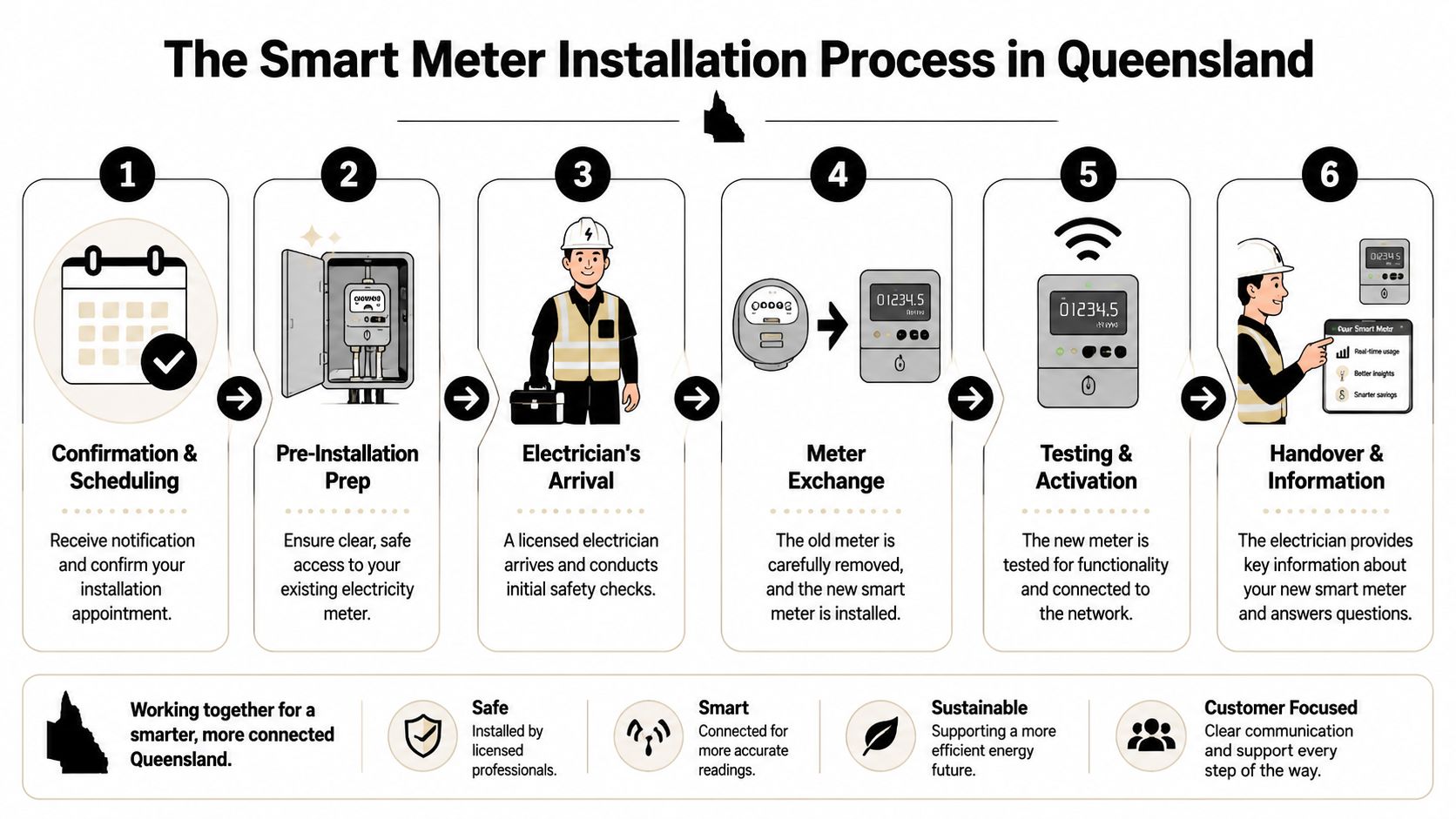
From the homeowner's side, the job is usually straightforward. From the trade side, there are a few checkpoints that have to go right.
Booking and access confirmation
You'll be given a date or time window. If the meter is behind a locked gate, inside a tenancy, or along a narrow side path, that access needs to be sorted before anyone arrives.
Site inspection and safety check
The technician checks the meter position, enclosure, main switch area, and general switchboard condition. If the board is damaged, exposed, or unsafe to isolate, the meter exchange may have to stop there.
Power isolation and meter replacement
The power is turned off so the old meter can be removed and the new one fitted safely. A short outage is normal. Sensitive equipment should be shut down properly beforehand.
Testing and setup
The new meter is tested electrically, then configured for the property's account and tariff setup. Communication also needs to be confirmed so the meter can report correctly once it is live.
Commissioning and return to service
Once checks are complete, power is restored and the meter is placed into service. In some cases, account updates and tariff changes continue in the background after the physical install is finished.
This is the part many homeowners are not told clearly enough. In Queensland, the meter change itself may be quick, but the overall process is not always quick.
Some properties move through without trouble. Others get delayed because the retailer, metering coordinator, and site conditions are not lined up properly. Brisbane homeowners often assume the installer can solve everything on the day. In practice, an electrician can only work with the access, equipment condition, and approvals already in place.
Older homes are where this shows up most. A house might have had air conditioning added, solar installed later, and a few switchboard alterations over the years. The smart meter appointment then becomes the first time anyone has looked closely at the full setup in a while.
Delays usually come back to a small group of issues:
The meter swap is often the easy part. The existing switchboard condition is what decides whether the visit stays simple.
Expect a planned power interruption, clear access requirements, and a proper check of the equipment around the meter, not just the meter itself.
For many Brisbane properties, the trade-off is simple. If the board and meter panel are in good condition, the installation is usually smooth and costs stay more predictable. If the surrounding gear is tired or non-compliant, the smart meter can expose work that already needed attention. That is not a problem caused by the new meter. It is an existing safety or compliance issue finally being seen.
That is why local experience matters. In Brisbane, a good installer does more than change the device. They spot the issues that can hold up commissioning, explain what has to be fixed under Queensland rules, and give you a realistic view of cost, timing, and next steps.
A little preparation makes a big difference. Most problems on installation day are avoidable, and they usually have nothing to do with the smart meter itself.
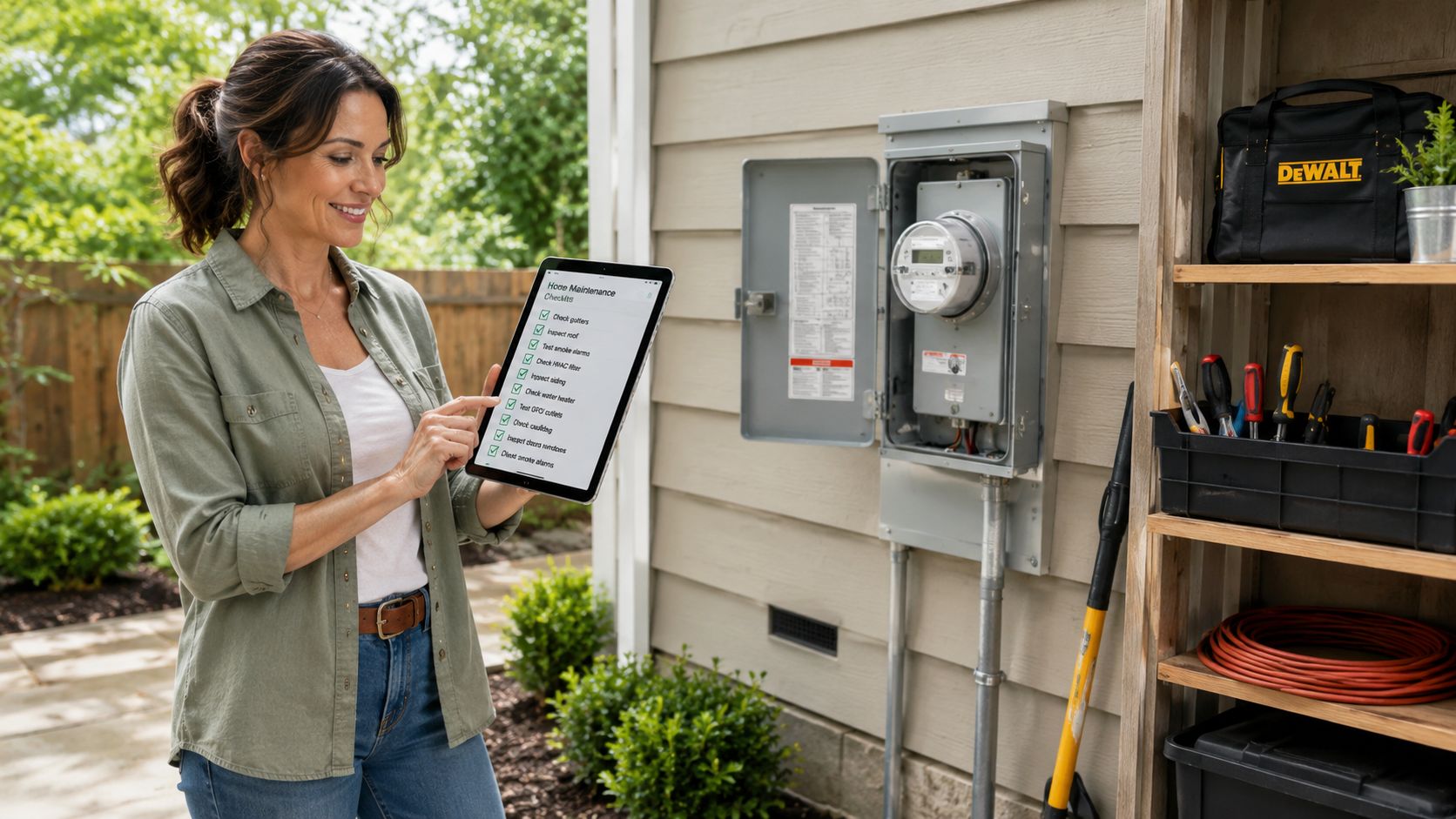
Before the installer arrives, work through the basics:
Many Brisbane homes have had bits added over time. A new oven here, air conditioning there, solar later on. The meter might be changing now, but the switchboard around it may be carrying the property's full history.
If the board looks crowded, poorly labelled, or older than the rest of the home's electrical setup, it's sensible to have it checked. Smart meter installation is often the moment when existing issues become visible because someone is finally working directly at the supply end of the system.
This short video gives a helpful visual sense of what homeowners should think about around meter access and electrical presentation before work starts.
A prepared site saves time, reduces the chance of a failed visit, and gives the installer a safer workspace from the start.
Smart meter installation isn't the job for a handyman or the cheapest name you can find online. The work sits at the point where supply, metering, safety, and commissioning meet. That means credentials matter.
The benchmark is simple. You want a properly licensed electrical contractor, full insurance, local experience, and someone who understands that a modern meter has to be commissioned as part of a wider networked system, not just bolted into place.
Start with the essentials:
The importance of qualified technicians is clear from large-scale rollout experience. The South Australian mandated program installed over 1.1 million smart meters by 2023, and that kind of rollout success depended on technicians who could handle both the electrical work and the network commissioning requirements of modern metering infrastructure.
A contractor who works regularly in Brisbane understands the patterns that show up in local housing stock. Queenslanders, post-war homes, renovations with mixed-era wiring, meter boxes exposed to weather, and older switchboards with multiple rounds of additions all create practical issues that don't show up in a brochure.
A good electrician also knows when not to rush. If the board condition isn't right, the safest path is to say so and fix it properly.
For a broader guide on what separates a qualified contractor from a risky hire, this article on licensed electricians near me is worth reading before you book any electrical work.
If you're comparing providers, be cautious when you hear any of the following:
The right electrician treats the job as safety-critical from the first conversation.
Homeowners usually ask the same practical questions. Can I refuse it? What about privacy? Who pays for what? Those are the right questions to ask.
Generic online advice often fails, as the process isn't identical across Australia. A common but often overlooked point is that while rules vary, in many parts of Australia, including Victoria, advanced meters are the default, and homeowners need clear guidance on scheduling, access, and dispute handling with their retailer rather than blanket claims that the answer is always yes or always no as noted in this smart meter deployment guidance.
In Queensland, the practical answer is this: don't assume, and don't ignore the notice. Check who is requesting the installation, what triggered it, whether access is required, and what your retailer or metering coordinator says happens if an appointment is missed or delayed.
Homeowners often bundle these into one concern, but they're slightly different.
From a safety point of view, the issue is installation quality and compliance. A smart meter is part of the electrical supply system, so it needs proper isolation, fitting, testing, and commissioning.
From a privacy and security point of view, smart meters are designed as communications devices as well as meters. That's why published specifications for mature programs put such weight on communication standards and security controls. The practical takeaway is simple. Security isn't an optional extra in smart metering. It's part of the design brief.
There isn't one universal answer because the cost position depends on why the meter is being changed, who is arranging it, and whether the existing board or meter enclosure needs additional work.
A homeowner should ask three direct questions before the appointment:
That last point matters. The meter replacement itself may be one part of the process, but any rectification needed around the board, enclosure, or access conditions can sit outside the simple changeover.
That's one of the strongest reasons to think about metering early. If your home already has solar, or you're planning it, the meter setup should be looked at as part of the broader system, not as an afterthought. Metering, tariffs, and switchboard presentation all need to work together.
Ask for the process in writing. Not a sales pitch. Not a rough verbal promise. A clear explanation of who does what, when access is needed, and what happens if the existing setup needs extra work.
If you want clear advice on smart meter installation, switchboard condition, or preparing your Brisbane property for a meter upgrade, contact DLG Electrical. As a family-owned Brisbane electrical contractor with over 19 years of experience, fully licensed and insured electricians, competitive rates, and a strong local reputation, DLG can help you understand your options and get the work done safely, properly, and without the run-around.

Master Electrician with over 30 years of experience. Founded DLG Electrical in 2005 after international project work including electrical installations at Stamford Bridge Stadium, London(Home of Chelsea FC).

Local Electricians that can fix all Electric Hot water Systems.
Motion sensor lights are a versatile addition to any home, offering nu
