83 Jean St, Grange QLD 4051
Mon-Fri 07:30 AM - 04:00 PM - Sat - 8:00 - 12 - Sunday Closed
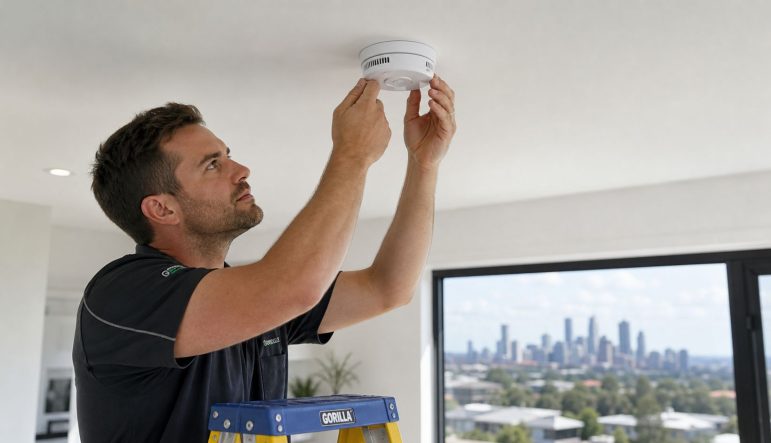
You're probably looking at the ceiling of a hallway, wondering whether the alarms you already have will get you through 1 January 2027 without a last-minute scramble. That's a common Brisbane position right now, especially for homeowners, landlords, and renovators who know the rules have changed but aren't sure what a compliant install looks like in practice.
For smoke alarm installation QLD, the biggest mistake is treating it like a quick hardware swap. Queensland's rules are specific, and a professional install has to solve both the legal side and the practical side, placement, interconnection, power source, and testing. Done properly, it gives you a safer home and a system you can rely on when it matters.
A lot of homeowners leave this job until they're forced into it by a sale, a lease, or the 2027 deadline. By then, the pressure is higher, the choices are rushed, and the first installer with availability often gets the job, whether the plan suits the house or not.
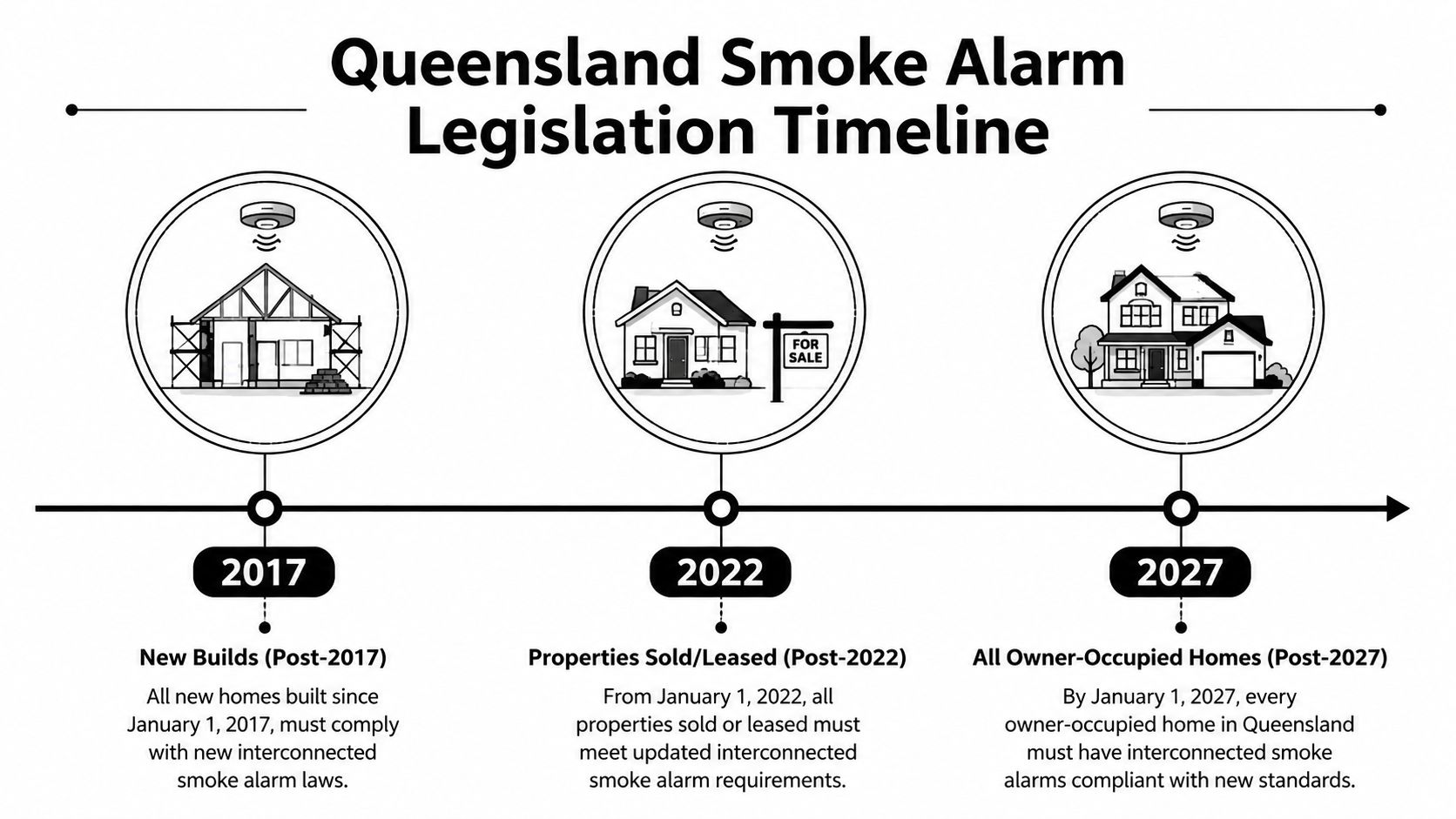
Compliance matters because Queensland has tied smoke alarm rules to the property itself, not just to new construction. The staged rollout means new homes and substantially renovated homes have been under the interconnected photoelectric standard since 1 January 2017, homes sold or leased have had to meet that standard since 1 January 2022, and the final stage applies to all remaining dwellings from 1 January 2027 (Queensland smoke alarm legislation timeline).
That staging is why Brisbane owners can't treat this as a future problem. If a property is going to be sold or rented, the compliance bar is already in place. If it's owner-occupied, the deadline is still coming, and the work still needs to be done correctly.
Practical rule: the right time to upgrade is before you're under pressure, not after a buyer, tenant, or insurer starts asking questions.
For families, the law is also a safety upgrade. A compliant system does more than tick a box. It gives the occupants of the home earlier warning and a clearer escape path, which is the whole point of the standard.
Queensland's law is easier to follow once you strip it back to the three dates that matter. The state required interconnected photoelectric smoke alarms in all new homes and substantially renovated homes from 1 January 2017, extended that requirement to homes sold or leased from 1 January 2022, and then made it apply to all remaining dwellings, including owner-occupied homes, from 1 January 2027 (WorkSafe Queensland).
The reason the state settled on photoelectric alarms is practical. These alarms are designed for the kind of smoke pattern that gives people a chance to get out, and they're the mandated standard in Queensland. The interconnected part matters just as much, because when one alarm detects smoke, the others sound too. That's what turns a local warning into a whole-house warning.
In a typical Brisbane home, a fire doesn't always start where people are sleeping. An interconnected system helps bridge that gap. If smoke starts in the kitchen or garage, the alarms in bedrooms and hallways join in, so someone asleep at the other end of the house doesn't rely on a single device close to the fire.
That's why Queensland's standard is stricter than a basic stand-alone alarm setup. It's not enough to install a few detectors and hope they cover the house. The system has to be configured so the alarms work together.
Bottom line: a compliant alarm head in the wrong setup is still not a compliant system.
If you're checking your own home, look for the basics first. The alarm should be photoelectric, interconnected, and marked to AS 3786-2014. If those details aren't present, the alarm may not meet the Queensland standard, even if it looks modern.
For readers keeping a simple reference guide, the current Queensland rules are also summarised in DLG Electrical's smoke alarm legislation overview.
A compliant install starts with location, then moves to spacing. Queensland requires alarms on each storey, in each bedroom, in hallways connecting bedrooms to the rest of the dwelling, and, where there's no hallway, between the bedroom area and the rest of the storey. If a storey has no bedrooms, at least one alarm needs to sit on the most likely path to an exit (Queensland Fire and Emergency Services).
That layout sounds technical, but in practice it follows the path people use at night. Bedrooms, hallways, and exits are the places that matter most when smoke starts spreading. A compliant electrician plans around those routes first, not around whatever surface happens to be easiest to reach.
Queensland Fire and Emergency Services says alarms should be mounted on the ceiling where practicable. They should sit at least 300 mm away from corners and light fittings, and at least 400 mm away from air-conditioning vents and ceiling fan blades (QFES installation sheet). That spacing isn't cosmetic. It reduces the chance that the alarm lands in a pocket of dead air space where smoke doesn't move properly.
A ceiling corner might look harmless, but it can trap air and delay smoke reaching the sensor.
That's why a professional install checks more than the number of alarms. It checks the ceiling shape, fan position, ducting, recessed lights, and the best route for the alarm signal if the system is interconnected. On a simple home, those decisions are straightforward. On a home with cathedral ceilings, awkward hallways, or retrofitted lighting, they take more planning.
For a room-by-room reference, DLG Electrical's installation guide is useful if you're comparing your existing layout with the Queensland standard.
A proper install doesn't leave the owner guessing. The electrician should be able to explain why each unit sits where it does, and why one spot was rejected in favour of another. If a proposed location is too close to a fan, too near a corner, or too far from the hallway route, it's not the right spot, no matter how neat it looks.
That's the practical difference between compliance and convenience. Compliance follows the fire path through the home, not just the easiest cable run.
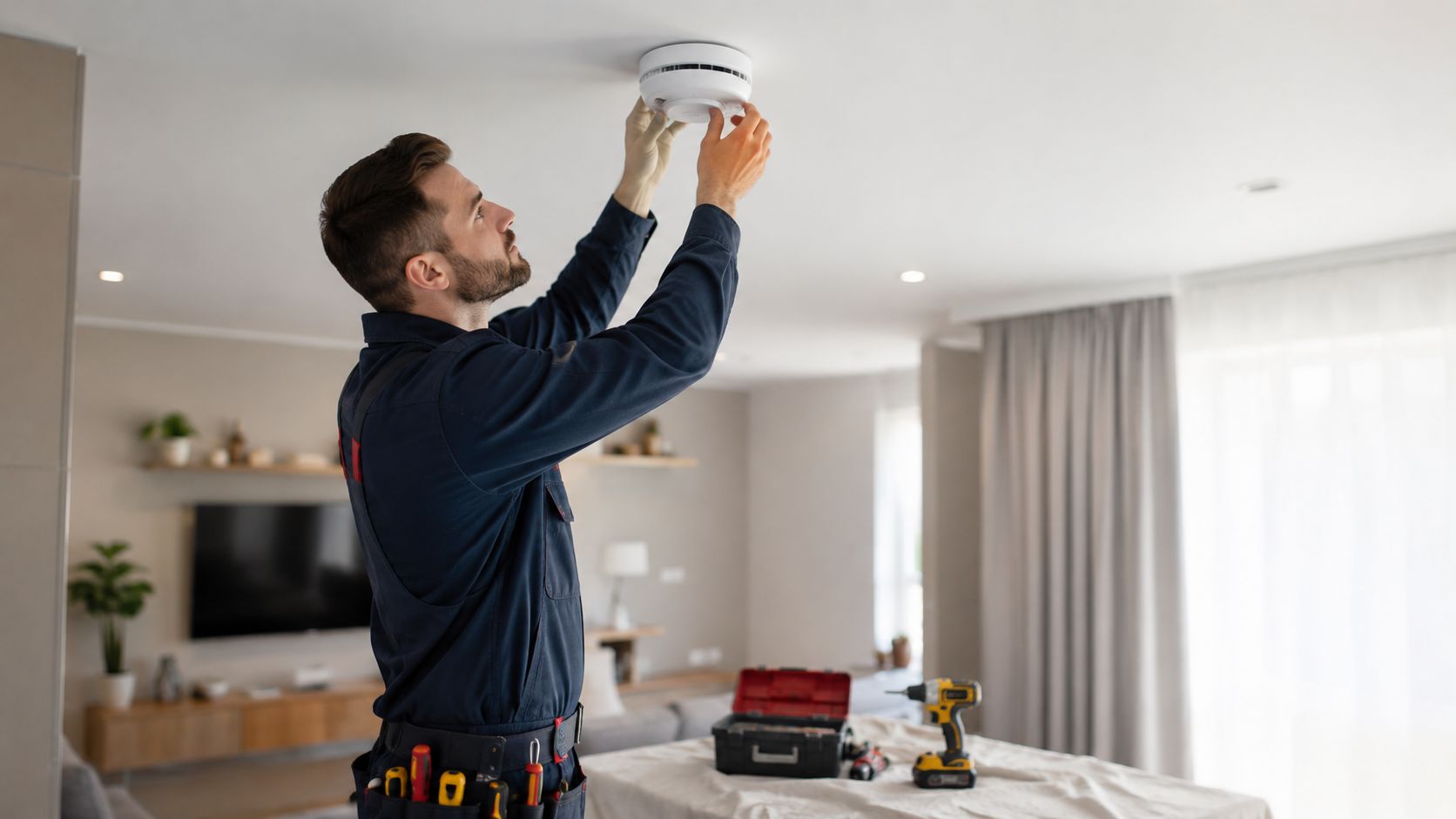
A proper smoke alarm job in Brisbane usually starts before anyone turns up on the ladder. The first conversation is about the house itself, how many storeys it has, whether it's owner-occupied or tenanted, and whether the current alarms are hard-wired, battery-only, or a mix of both. That early picture matters, because the right approach for a renovated timber home is often different from the right approach for a newer brick property.
The on-site assessment is where the main work starts. A licensed electrician walks the home, checks the bedroom layout, looks at hallways and stairwells, and maps the most sensible compliant locations. If the house already has cabling in place, that can shape the install. If it doesn't, the electrician may need to decide whether a hard-wired upgrade or a compliant 10-year non-removable battery approach is the better fit for the property.
Queensland's installation standard is location-specific, and the alarms must sit on each storey, in every bedroom, in connecting hallways, or between the bedroom area and the rest of the storey where no hallway exists. If a storey has no bedrooms, at least one alarm has to sit on the most likely escape path to an exit (Queensland Fire and Emergency Services). That's the framework a professional install is built around.
Good installers don't just fit alarms, they map the escape route first.
Once the layout is agreed, the installer prepares the property, isolates power where needed, and fits the alarms in the planned positions. After that comes the most important step, the system test. Every alarm has to respond correctly, because the whole point of interconnection is that when one sounds, they all sound.
That final check is where shortcuts show up fast. A home can have the right number of alarms in the right rooms and still fail if the interconnection doesn't work. A professional handover should leave you with a tested system and the paperwork you need for your records.
For homeowners comparing service options, DLG Electrical's Brisbane installation cost guide is a useful starting point for understanding what a compliant upgrade typically involves.
The cost of smoke alarm work in Brisbane depends on the property, not just the product. A small home with straightforward access is different from a two-storey house with awkward ceiling spaces, existing wiring issues, or a layout that needs more alarm points. Hard-wired and battery-based solutions also come with different labour demands, especially in older homes where the cable run is the deciding factor.
The timeline varies for the same reason. A neat, straightforward compliance job can move quickly. A home that needs multiple alarm positions, wiring changes, or replacement of old units takes longer because the installer has to check every placement, every connection, and every test result before the job is finished.
The biggest price drivers are usually the size of the home, the number of alarms required, and the amount of existing infrastructure that can be reused. If the current alarms are in the wrong locations, the job may need more labour than a simple swap. If the home is a retrofit, the installer may need to balance neat cable management with the need to keep the system compliant.
The key thing to understand is that cheap alarm work often leaves out the parts that matter most, like correct placement or proper interconnection. A compliance-grade install should be priced around the full outcome, not just the cost of a box on the ceiling.
For a more detailed breakdown of what homeowners typically ask about, DLG Electrical's Brisbane smoke alarm cost page is worth a look.
Once the alarms are in, the maintenance needs are simple but required.
A lot of homeowners forget that installation is only the start. The alarms still have to work months and years later, and a professional maintenance visit is often the easiest way to stay ahead of a problem before it becomes a compliance issue.
A compliant smoke alarm system is one of those jobs that feels simple until you start measuring ceilings, checking hallways, and tracing how a sound moves through a Brisbane home. That's why the safest path is to have a licensed electrician plan the layout, install the right units, and test the whole system properly the first time.
For homeowners in North Brisbane, Grange, and Windsor, a local team that understands Queensland's staged deadlines can save a lot of second-guessing. DLG Electrical is a family-owned Brisbane electrical contractor with over 19 years in the trade, and it handles smoke detector compliance and installation alongside other residential electrical work. If you want one clear answer on whether your house is ready for the 2027 requirement, a site check is the fastest way to find out.
The value here is peace of mind. You know the alarms are in the right rooms, on the right storeys, spaced correctly, interconnected properly, and tested before anyone leaves the property. That matters whether you're living in the home, preparing to rent it, or getting it ready for sale.
If you're still unsure where your current alarms stand, or you want a compliant upgrade done without the guesswork, book a licensed assessment and get the house checked properly. A professional install now is a lot easier than trying to fix a rushed one later.
A CTA for DLG Electrical.

Master Electrician with over 30 years of experience. Founded DLG Electrical in 2005 after international project work including electrical installations at Stamford Bridge Stadium, London(Home of Chelsea FC).

Local Electricians that can fix all Electric Hot water Systems.
Motion sensor lights are a versatile addition to any home, offering nu
