83 Jean St, Grange QLD 4051
Mon-Fri 07:30 AM - 04:00 PM - Sat - 8:00 - 12 - Sunday Closed

A simple like-for-like range hood replacement in Brisbane typically costs between $300 and $850, while a new ducted installation requiring fresh ductwork and electrical modifications usually lands between $650 and $2,500. The hood box sitting on the bench is rarely the expensive part, the money usually goes into the work hidden behind the cabinets, ceiling, and walls.
A lot of Brisbane homeowners find that out after they've already bought the appliance. The quote looks manageable at first, then the installer inspects the kitchen and the core question becomes whether this is a replacement or a new vented system.
A homeowner can buy a new hood and still be surprised by the final invoice. The appliance is usually the cheapest part. The cost rises when the job turns into a replacement that is like-for-like, or when it becomes a fresh ducted install that needs new routing, wiring changes, and finishing work behind the cabinets or above the ceiling.
That difference catches a lot of Brisbane renovators off guard. A swap over existing connections is one type of job, while opening up the kitchen for a new exhaust path is another. In practical terms, replacement-style installs often sit in a much lower bracket than projects that need new ductwork and electrical modifications, because the labour and access work expand quickly once the installer has to cut, run, seal, and test new services (HomeGuide, Angi).
The sharp jump usually comes down to what the tradie can reuse. If the existing duct path is sound and the power point is already where it needs to be, the job stays relatively contained. If the project needs a new exhaust route through a wall, ceiling, or roof space, the installer is doing more than mounting a hood. They are creating, sealing, and testing a ventilation path that has to work properly and meet local requirements (Gerhard's Appliance).
That is why Brisbane homeowners should budget by job type, not by the size of the appliance box. A compact hood can still cost more to install than a larger one if the old kitchen layout forces new routing or awkward access. The hood is often the small line item. The hidden work is where the money goes.
For anyone lining up a wider renovation budget, a renovation cost guide can help keep the ventilation allowance in context.
Practical rule: if the installer can reuse the existing duct path cleanly, the quote usually stays lower. If they have to create a new exhaust route, the price moves up fast.
Labour also matters, and local trade rates play into that. A useful reference point is the electrician hourly rate in Brisbane, because range hood work often involves electrical access, isolation, and testing as well as the physical install.
Older homes and renovation-heavy suburbs tend to produce more variation because ceiling cavities, wall framing, and previous kitchen work are not always standardised. A straightforward replacement in a newer townhouse is one thing. A first-time vent in an older kitchen is something else entirely.
That is the question that matters most before you buy the hood. Is it a swap, or is it a new exhaust and electrical job? Once you know that, the quote starts to make sense.
A kitchen swap can look simple on paper, then the quote changes once the installer opens the ceiling or checks the wall path. The hood unit is only one part of the job. The cost shift usually comes from whether the kitchen can vent outside or has to stay with internal filtration.
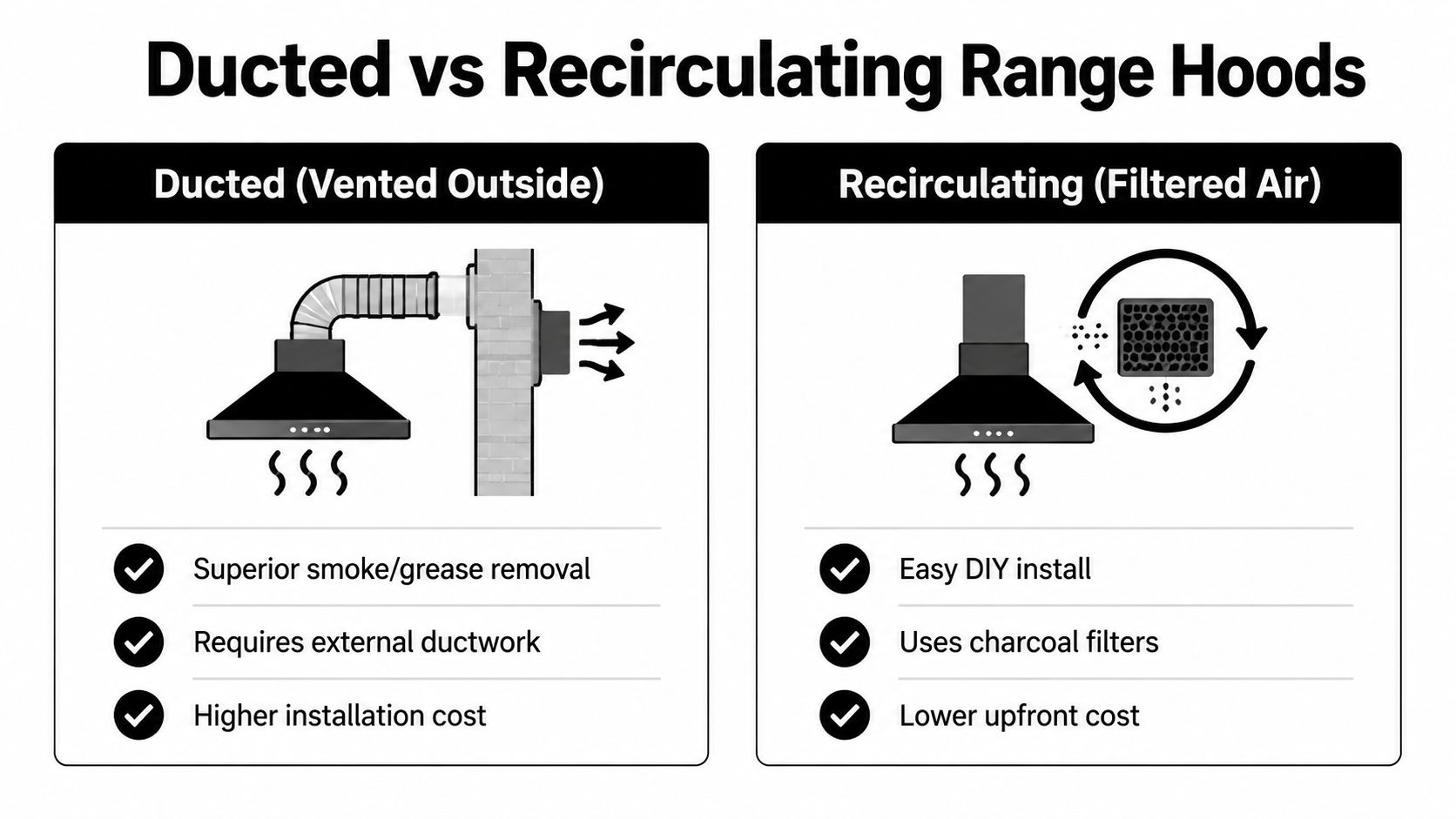
| Feature | Ducted Range Hood | Recirculating Range Hood |
|---|---|---|
| Air movement | Exhausts air outside | Filters and returns air inside |
| Installation complexity | Higher, because ductwork is required | Lower, because no external ducting is needed |
| Upfront cost | Usually higher | Usually lower |
| Maintenance | Grease filters still need cleaning | Charcoal filters need regular replacement |
| Best fit | Kitchens that can vent outside | Units where exterior ducting is difficult |
A ducted hood removes smoke, grease, heat, and moisture by sending the air outside. That suits cooking-heavy households, island benches, and homes where condensation already causes trouble. It also suits a replacement vs. new ducted install decision that catches many Brisbane renovators off guard, because the old hood may be cheap to replace while a new exhaust path is not.
If the kitchen already has a clean route to an outside termination, the job is usually more straightforward. In Brisbane that route might run through the ceiling, wall, or roof space, depending on the house and the existing build. Once the installer has to create that path from scratch, the labour and materials start to drive the price, not the appliance itself.
Practical insight: ducted installs usually cost more up front, but they remove the air instead of trying to clean and recirculate it inside the room.
Recirculating hoods are easier to fit because they do not need external ducting. That makes them a practical option for apartments, tight townhouse layouts, or kitchens where running ductwork outside would mean extra disruption or building work. The trade-off is filter upkeep, and they do not clear moisture or heat as completely as a ducted system.
For homeowners dealing with smoke in a kitchen where ducting is limited, a dedicated best smoke air purifier can sometimes sit alongside the ventilation setup. It is not a replacement for proper range hood ventilation, but it can help where odour control matters and structural changes are not realistic.
| Home type | Often suits ducted | Often suits recirculating |
|---|---|---|
| Queenslander | Yes, if routing is practical | Sometimes, if access is limited |
| Modern apartment | Rarely, unless the building allows it | Often, because exterior work can be restricted |
| Townhouse | Yes, if existing pathways are available | Often, when routing is difficult |
The choice comes down to how much the building can take without turning the job into a larger renovation. If the kitchen already has a workable exhaust route, ducted is usually the cleaner long-term solution. If the home cannot reasonably support new ducting, recirculating keeps the project simpler and cheaper.
A range hood quote makes more sense once you split it into the parts that cost money. The hood unit, the ducting, the electrical work, and any compliance-related labour all affect the final figure in different ways.
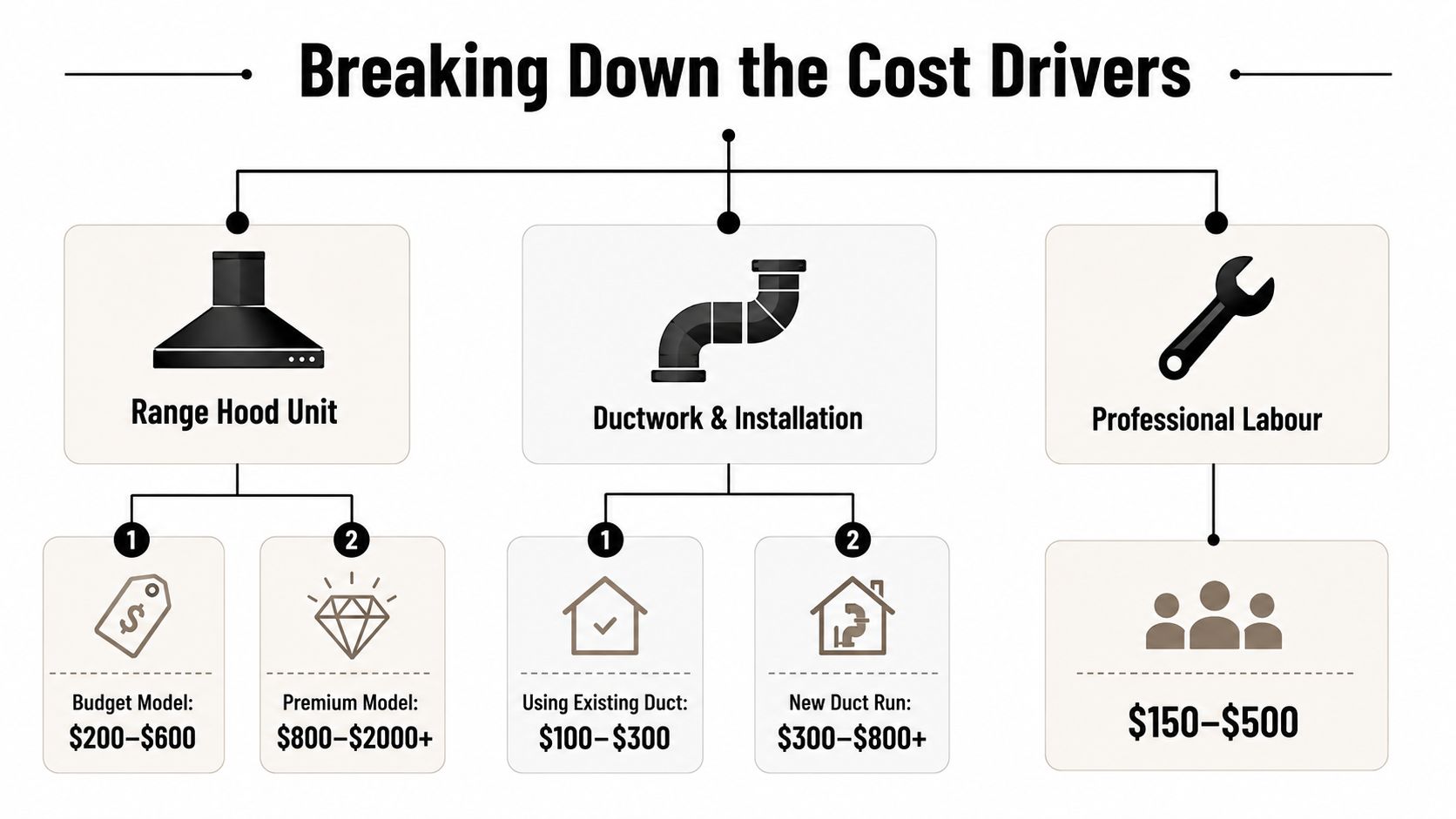
The appliance price is usually the easiest line to understand, but it is only one part of the job. Budget models cost less to buy, while premium designs, island units, and built-in inserts push the upfront price higher. The hood still has to suit the kitchen layout, because a cheaper unit can become costly if it needs custom framing or awkward positioning.
Ducting is where quotes often jump. If the installer can use an existing run, the scope stays lighter. If new ducting has to be added through roof space or a wall cavity, the price rises because the job needs more material, more time, and careful sealing so airflow stays efficient.
Older Brisbane homes can catch people out here. A kitchen may look ready for a simple replacement, but the existing exhaust path may be wrong, damaged, or missing altogether. At that point, the job stops being a basic install and turns into a small ventilation project.
Any install that needs hardwiring, a new circuit, or a revised power point should be treated as electrical work first and appliance fitting second. A licensed electrician checks the circuit, confirms the mounting and wiring are safe, and makes sure the job lines up with Queensland requirements for domestic electrical work. For homeowners planning broader kitchen changes, a power point installation guide gives useful context on why outlet placement and load capacity matter.
The quote usually reflects time, not just materials. Straightforward work moves quickly. Jobs with long duct runs, awkward roof access, island mounting, or hidden repairs take longer and cost more.
That same pattern shows up in broader renovation pricing too, including the Southwest Michigan kitchen upgrade estimates. The visible fixture is rarely the whole story. The hidden work shapes the bill.
Practical rule: once the install needs new holes, new routing, or new power work, you are no longer comparing appliance prices. You are comparing trade hours.
A quote makes more sense when it is attached to the kitchen in front of you. In Brisbane, the biggest price jump usually appears when a simple replacement turns into a new ducted install. The hood itself is rarely the expensive part. The labour, access, and compliance work are where the bill climbs.
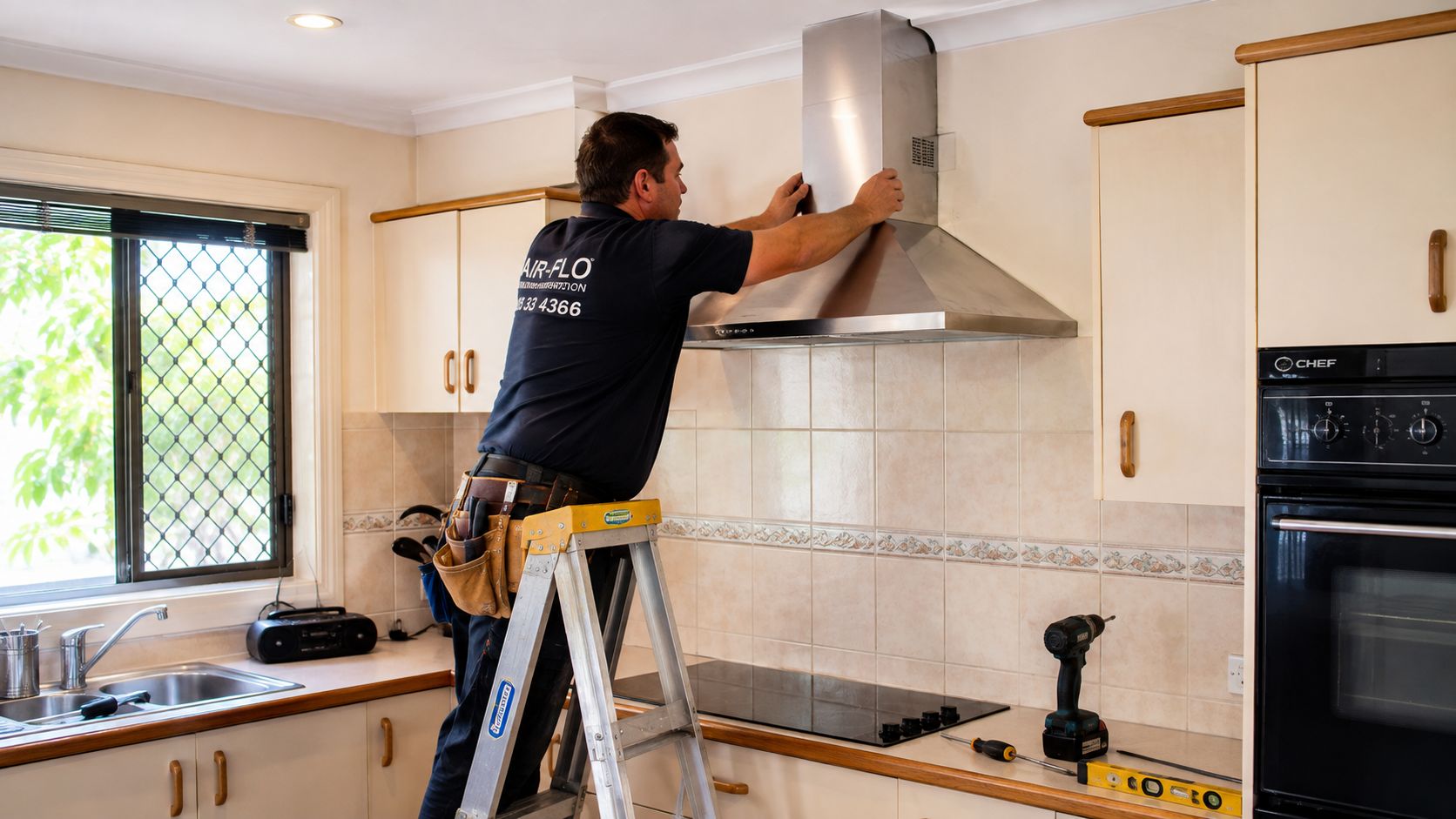
A 1990s townhouse with an existing duct path and sound wiring is the easiest job. The old hood comes out, the new unit goes back into the same space, and the electrician checks that the connection is safe. A project like that usually sits near the lower replacement band, often around $400 to $600 as a practical estimate.
The reason the price stays down is straightforward. The vent path is already in place, the cabinetry is standard, and there is no need to cut through roof space or rethink the electrical layout just to get the hood operating.
A 1970s Queenslander is a different job altogether. Once the kitchen is opened up, older wiring may no longer suit the new hood, the exhaust may need a fresh path through the ceiling and roof, and the layout can force a new power point. That kind of project commonly lands around $1,200 to $1,800, depending on routing and finishing work.
The extra cost is not about the appliance looking more impressive. It comes from access, duct routing, and making the system work neatly without leaving patched ceilings, exposed fittings, or awkward cabinet changes behind.
An island hood in a newer Grange home can sit at the top end of the range. Ceiling-mounted ducting, structural support, and electrical changes all stack together, and the work can move toward $2,000 to $2,500+ depending on design and access.
The gap between the box price and the installed cost becomes obvious. The hood is the visible part. The ceiling work, support, and routing are where most of the labour sits.
A recirculating hood still needs hardwired connections, or a dedicated circuit where the setup calls for it, plus structural mounting that sits within Queensland wiring rules. The visible part looks straightforward from the kitchen bench. The part that costs money, and causes trouble when it is rushed, sits behind the cabinet and inside the wall.
A licensed Brisbane electrician checks the circuit, mounting points, and connection details before the hood is switched on. That matters because range hood work can involve hardwiring, switchboard capacity questions, and safety switch requirements, all of which need to be handled correctly in a Queensland home. If the install is wrong, the call-back often costs more than doing it properly the first time.
DIY also brings hidden risk around warranty, insurance, and compliance. If the hood is damaged during installation, the manufacturer may refuse the claim. If a fire or electrical fault follows a poor connection, the homeowner is left dealing with the fallout, not the person who watched a video and gave it a go.
Practical insight: a “cheap” DIY install only stays cheap if nothing has to be fixed afterwards.
Even recirculating units are not plug-and-play in many Brisbane kitchens. They still need proper mounting, compliant power, and precise cabinetry cutouts so the hood sits cleanly against the wall or overhead cabinetry. The job might look minor, but loose brackets, poor cable routing, and undersized access openings usually show up later as rattles, gaps, or service issues.
Professional installation also protects the finish of the kitchen. The hood sits level, the wiring is hidden properly, and the installer checks the fit instead of guessing it. That is the difference between a hood that works on day one and a job that keeps working without call-backs.
The easiest way to control range hood installation cost is to match the hood to the kitchen, not the other way around. If the new unit fits the existing duct position and electrical location, the labour stays far simpler. If it needs new routing, the bill climbs quickly.

Ask whether the quote includes removal of the old hood, disposal, duct sealing, and any compliance-related electrical work. If the installer needs access to the roof or ceiling cavity, confirm that upfront. Surprises almost always come from missing information, not from the actual installation itself.
If you're comparing local tradies, a resource like the electrician Brisbane tips guide is useful for understanding how to judge quotes, communication, and scope. The cheapest number on the page isn't automatically the best value if it leaves out the parts that make the job safe.
A solid quote should make it obvious whether you're dealing with a replacement or a new install. Once that's clear, the rest of the pricing starts to look a lot more honest.
If you're pricing a replacement hood or planning a new ducted install in Brisbane, DLG Electrical can inspect the kitchen, check the wiring and ventilation path, and give you a clear quote based on the actual job. Visit DLG Electrical to book a free, no-obligation quote and get the installation sorted properly the first time.

Master Electrician with over 30 years of experience. Founded DLG Electrical in 2005 after international project work including electrical installations at Stamford Bridge Stadium, London(Home of Chelsea FC).

Local Electricians that can fix all Electric Hot water Systems.
Motion sensor lights are a versatile addition to any home, offering nu
