83 Jean St, Grange QLD 4051
Mon-Fri 07:30 AM - 04:00 PM - Sat - 8:00 - 12 - Sunday Closed
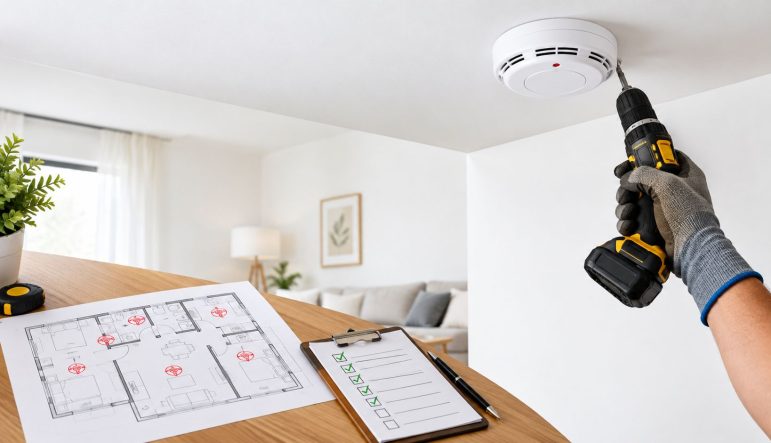
You've just taken over a Brisbane rental, started a renovation, or noticed that one of the alarms is chirping. The obvious fix seems simple: remove the old unit, screw on a replacement, and move on. That approach can leave a property non-compliant, particularly if the original alarm was hardwired or the replacement isn't interconnected with the rest of the system.
Queensland's smoke detector installation requirements are more specific than a basic battery replacement. The alarm type, age, location, power supply, interconnection, testing, and responsibility for ongoing maintenance all matter. The practical question isn't only whether an alarm makes a noise when you press the test button. It's whether the complete system meets the rules that apply to your property.
A Brisbane landlord can easily end up with three people involved in one smoke alarm problem. The owner pays for the installation, the property manager coordinates access, and the tenant notices that an alarm is beeping or has been removed. Unless responsibilities are agreed clearly, each person may assume somebody else is dealing with it.
Queensland law doesn't leave the installation question to that assumption. New dwellings and substantially renovated homes needed to comply from 1 January 2017, rental properties from 1 January 2022, and all remaining homes must comply by 1 January 2027, as set out in the Queensland smoke alarm reform timeline. That staged approach has moved smoke alarms from a general household safety measure to a dated legal obligation affecting the state's housing stock.
For a rental home, the owner's duty doesn't disappear when a tenant receives the keys. The owner must arrange compliant alarms and ensure the system is suitable for the dwelling. The tenant has a role in routine care, but that role isn't a substitute for proper installation or an owner-funded upgrade.
That distinction matters in older Brisbane homes, where an alarm may still operate but no longer match the required technology, age, positioning, or interconnection standard. A tenant might report a fault, but the owner or property manager needs to decide whether the problem calls for a battery, a complete unit, rewiring, or a system-wide replacement.
Practical rule: Treat smoke alarms as one connected compliance system, not as isolated devices scattered around the house.
A homeowner faces the same technical issue without a tenancy handoff. If a single alarm fails, replacing only that unit may produce a mismatch between old and new devices. Before buying anything, identify whether the existing alarms are photoelectric, interconnected, less than 10 years old, and hardwired or battery-powered. Those details determine what replacement work will be acceptable.
Queensland didn't introduce the current standard in one step. The state used a staged rollout beginning in 2017, changing the focus from minimum alarm coverage to a broader system based on photoelectric technology and interconnection across dwellings. The Queensland Parliament research brief on smoke alarm legislation changes describes that shift and the earlier standards that preceded it.
Before the modern reforms, hardwired alarms were already compulsory in Queensland homes built or substantially renovated after 1 July 1997, while a later requirement introduced at least one 9-volt battery alarm in all homes from 1 July 2007. By 2013-14, 96.6% of Queensland households had an installed smoke alarm or detector, compared with a recorded range of 70% to 82% in 2004-05, according to the same parliamentary material. Those figures show that basic alarm ownership was already widespread before the state increased the technical standard.
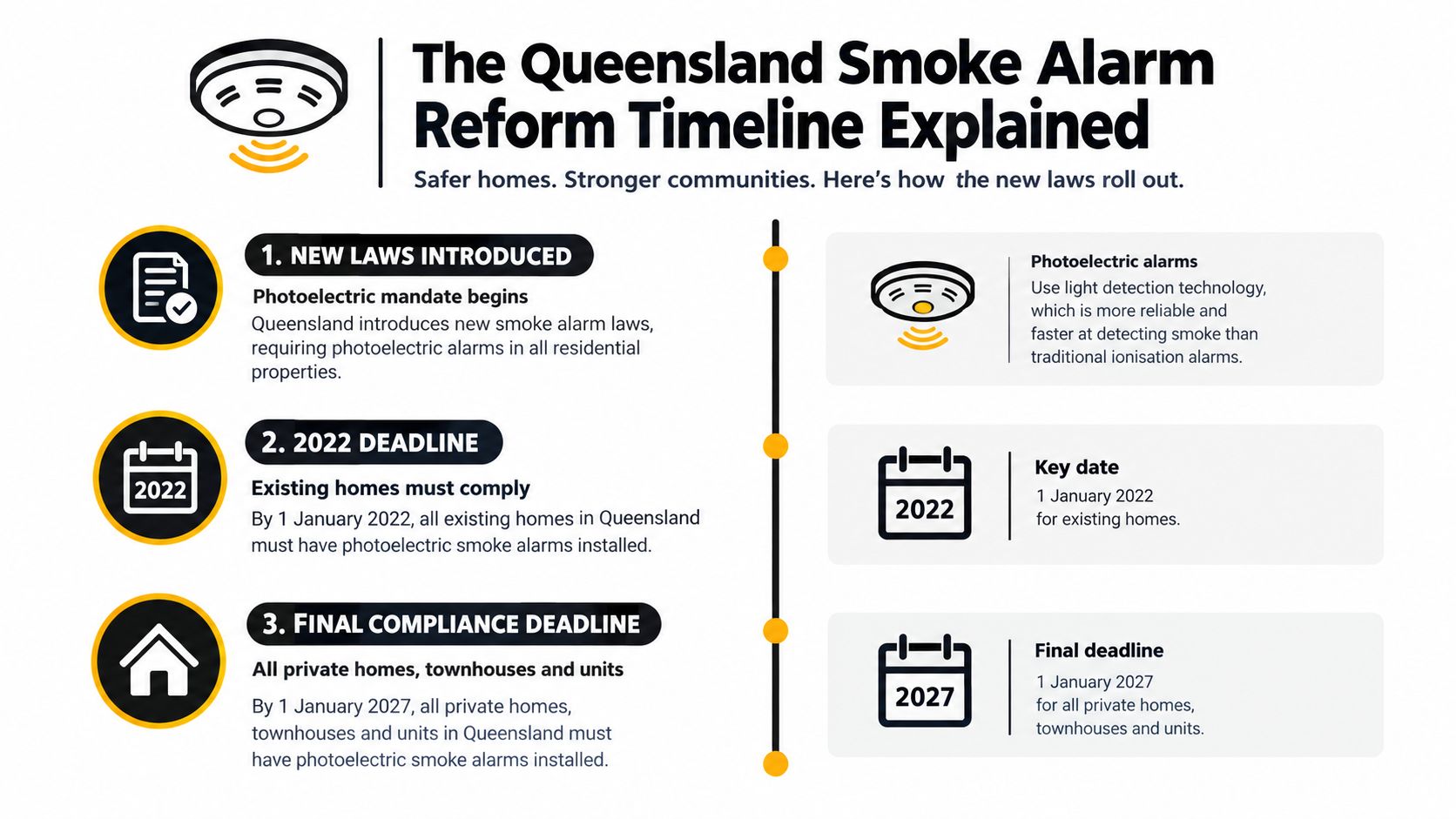
The important milestones are practical, not historical trivia:
The final date creates a decision point for owners who have postponed upgrades. A property that has avoided a renovation-triggered upgrade or a tenancy-related compliance check may still need a full assessment before the statewide deadline. Checking one alarm in isolation won't reveal whether the layout, technology, age, and interconnection all meet the current standard.
Installing an alarm wherever there's an empty patch of ceiling isn't enough. Queensland's required layout is designed around sleeping areas, routes through the home, and the need for an alarm on each level.
The required positions are:
A two-storey townhouse, for example, can't rely on a single device near the front door. An alarm upstairs and another downstairs need to form part of the same interconnected system where the rules require them to operate together. The same principle applies to split-level homes and units with bedrooms separated from the living area.
Walk through the property at night and mark each bedroom, connecting hallway, stair route, and storey on a simple floor plan. Then compare that plan with the installed alarms. This catches omissions that aren't obvious when you're standing beneath one device with a ladder.
Placement also affects reliability. Avoid treating a manufacturer's installation instructions as optional, particularly around kitchens, bathrooms, ceiling fans, lights, beams, and corners. A poor position can create nuisance alarms, delayed detection, or difficult access for testing. The legal placement rules establish where coverage is required, while the product instructions help determine the precise location that will work properly.
Queensland has made the technology decision for you. Required alarms must be photoelectric, interconnected, less than 10 years old, operational when tested, and compliant with AS 3786:2014. For rented domestic dwellings, the Residential Tenancies Authority guidance on smoke alarms also identifies interconnected photoelectric alarms and AS 3786-2014 compliance as part of the required system.
Photoelectric and ionisation alarms use different sensing methods. Ionisation units were common in older installations, so an existing alarm may look perfectly serviceable while failing the current technology requirement. Its age doesn't change that outcome. If it's ionisation, replacing the battery or cleaning the casing won't turn it into a compliant photoelectric alarm.
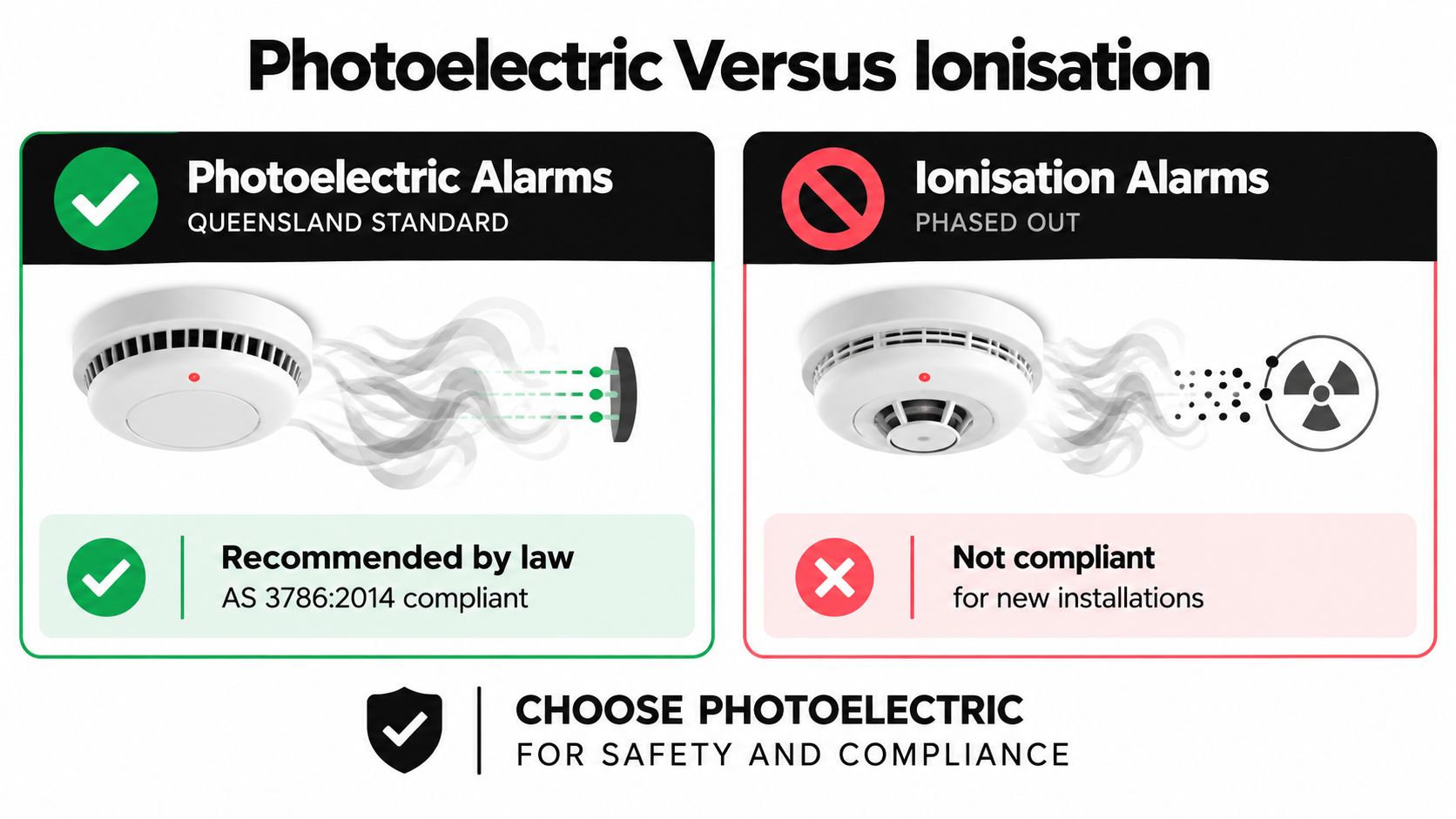
AS 3786:2014 is not just a label to look for on a product listing. The alarm must be a compliant product, installed in the correct locations, connected as required, and maintained so it operates when needed. A box that says “photoelectric” doesn't compensate for missing alarms in bedrooms or a failed interconnection test.
Photoelectric models can be more suitable for the type of early warning expected in a home, but the legal decision is simpler than a technology debate: choose a compliant photoelectric alarm, not an ionisation replacement. For a practical breakdown of the technology differences, see this guide to photoelectric versus ionisation smoke alarms.
Interconnection is the feature many quick replacements miss. When one alarm detects smoke, the other alarms in the dwelling must sound together. That matters in a large or multi-level home where a person in a bedroom may not hear an alarm that activates elsewhere.
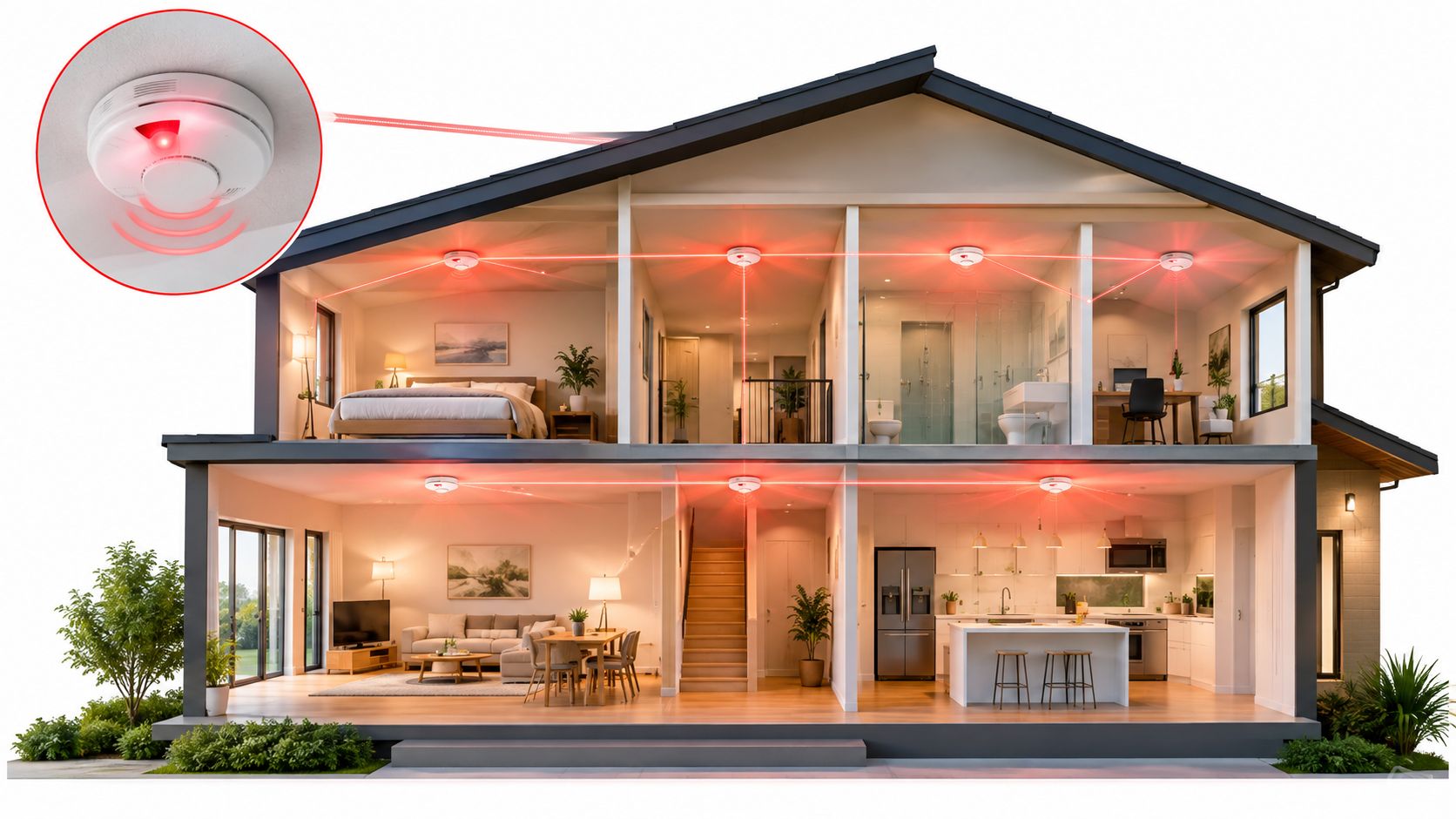
Battery-powered systems can use wireless interconnection, provided the alarms are designed and installed to communicate as one system. Hardwired systems have a different installation pathway. Queensland guidance requires hardwired alarms to be installed by a licensed electrician, with mains power and a secondary power source such as a non-removable 10-year battery.
If the existing legally required alarm is hardwired at 240V, replacing it with a battery-only alarm isn't a harmless simplification. Queensland guidance says the replacement must also be hardwired at 240V. You may be able to replace a hardwired device with a compatible hardwired photoelectric model, but you can't downgrade the power arrangement just to avoid electrical work.
That rule affects the scope of a renovation. A professional needs to check the wiring, compatibility between units, backup power, mounting position, and whether every alarm communicates correctly. A wireless battery system may suit a new arrangement where permitted, but it isn't automatically an acceptable substitute for an existing hardwired installation.
For contractors preparing a wider electrical scope, Exayard electrical estimating software can help organise labour and material allowances for work that includes cabling, device replacement, and testing. The estimate still needs to reflect the actual property and the licensed electrician's assessment.
The Queensland guide to interconnected smoke alarms explains why the alarm network matters. Before signing off a job, activate the test function according to the manufacturer's instructions and confirm that the rest of the system responds as intended.
A compliant installation can become unreliable through neglect. Queensland requires alarms to be less than 10 years old and to operate when tested, so a device's manufacture date matters even if it still produces a test sound.
Rental properties need a clear division of work. The landlord must ensure compliant alarms are installed. The tenant must test and clean them at least once every 12 months, while the landlord must test them within 30 days before a tenancy starts or is renewed, according to the Queensland Government smoke alarm FAQ.
Use a written record rather than relying on memory:
A tenant who finds a failed alarm should report it promptly rather than removing it and leaving the ceiling point empty. An owner or property manager should treat that report as a compliance issue, not merely a maintenance ticket.
For owners who need written evidence of the work, a smoke alarm compliance certificate can form part of the property records. It doesn't replace correct installation, but it gives the owner a clearer history of testing and upgrades.
The most expensive mistakes often begin with a reasonable assumption. Someone hears a low-battery chirp, buys a modern-looking alarm, and discovers later that the old unit was hardwired or that the replacement won't interconnect with the remaining alarms.
A single-for-single swap only works when the new alarm matches the technical requirements and the existing system. Queensland guidance requires alarms to be photoelectric, interconnected, less than 10 years old, correctly positioned, and operational. Where a legally required hardwired 240V alarm is replaced before the statewide deadline, the replacement must also be hardwired 240V, as explained in the Queensland smoke alarm installation guidance.
Other common errors include:
Renovators should audit the alarms before closing ceilings or finishing rooms. Substantial renovation work can trigger the modern requirements, and concealed wiring becomes harder and more costly to correct once the building work is complete.
The sensible DIY boundary is narrow. A homeowner can inspect labels, note locations, and report a fault. Electrical work involving mains-powered alarms should be assessed and completed by a licensed electrician, particularly when the replacement must remain hardwired.
The 1 January 2027 deadline applies to remaining private homes, townhouses, and units, so owners shouldn't wait until a sale, lease, or renovation creates pressure. Begin with an audit of the property as it exists today, then decide whether the job is a device replacement, a wireless interconnected upgrade, or a hardwired installation.
Walk through every level and record:
For a rental, write down who does what. The owner or property manager should arrange installation, replacement, and the landlord's required tenancy checks. The tenant should have clear instructions for annual testing and cleaning, plus a direct process for reporting faults.
For a renovation, have the electrical contractor assess the alarm system before the design is finalised. This avoids building a beautiful finished ceiling around an outdated device or an unsuitable cable arrangement. A licensed electrician should complete hardwired work and verify the completed system rather than relying on a product receipt.
Keep the records together, including installation details, test dates, replacement dates, product information, and any compliance documentation. Records won't correct a defective system, but they make responsibilities clearer and help identify what must be checked before a lease starts, renews, or a property changes hands.
DLG Electrical can assess Brisbane homes and rental properties, install photoelectric, hardwired, and interconnected alarms, and test existing systems against Queensland requirements. Arrange a property assessment or request a quote through DLG Electrical before the 1 January 2027 deadline creates unnecessary pressure.

Master Electrician with over 30 years of experience. Founded DLG Electrical in 2005 after international project work including electrical installations at Stamford Bridge Stadium, London(Home of Chelsea FC).

Local Electricians that can fix all Electric Hot water Systems.
Motion sensor lights are a versatile addition to any home, offering nu
