83 Jean St, Grange QLD 4051
Mon-Fri 07:30 AM - 04:00 PM - Sat - 8:00 - 12 - Sunday Closed
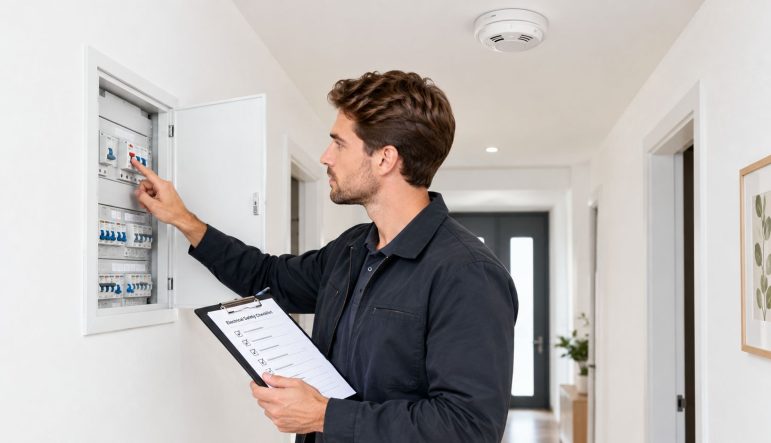
A tenant is due to collect the keys, the agent has a handover deadline, and the property appears perfectly sound. The switchboard is modern, the power points look intact, and the smoke alarms were working when someone last checked them. That visual confidence can be misleading. A safety switch may not protect the circuits you assume it does, an alarm may not communicate with the others, and a tenant may not know who to contact when a circuit keeps tripping.
A proper electrical safety check for a rental property must therefore do more than confirm that equipment is present. It should connect legal compliance with the practical handover process, giving landlords, property managers and tenants a clear record of what was tested, who acts on defects, and what happens during an emergency.
Queensland rental-property electrical safety starts with a specific statutory requirement. Owners of domestic rental accommodation must install a safety switch on all general-purpose socket-outlet circuits. If the required protection isn't in place when a tenancy begins, the owner must arrange installation by a licensed electrician and complete the work within 90 days after the start date of the tenancy agreement, as stated by the Queensland Electrical Safety Office. Non-compliance can attract a fine of up to AUD 1,500, so this is not merely a maintenance preference.
The practical implication is important for Brisbane property managers. A handover inspection should establish whether the safety switch exists, identify the circuits it protects, and confirm that it trips and resets correctly. A switchboard can look recently installed while still containing an absent, incorrectly connected or defective device.
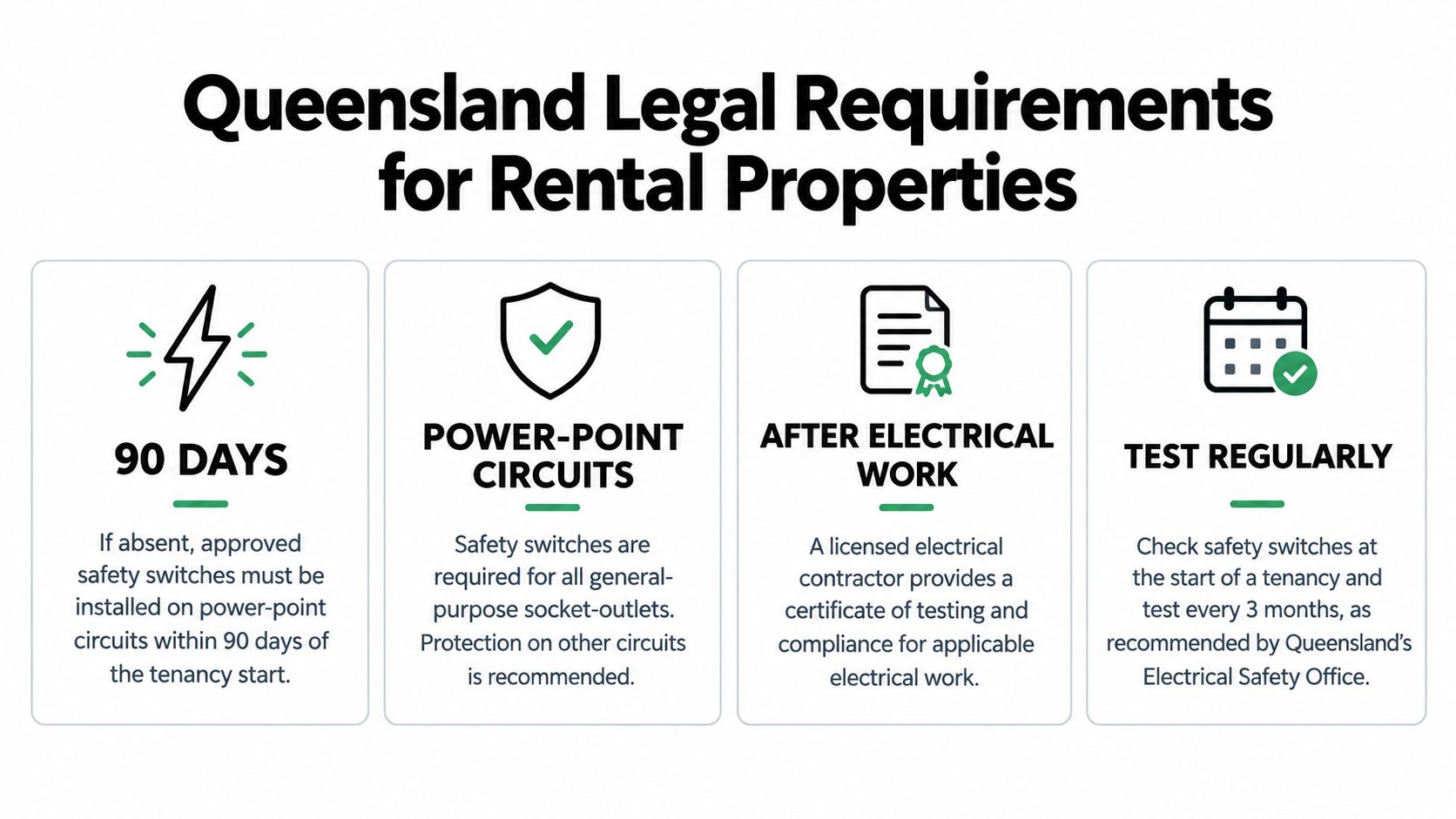
The owner remains responsible for arranging electrical work through a licensed contractor. An agent may coordinate access, retain documents and communicate with the tenant, but administration doesn't replace the owner's obligation to provide safe premises.
A useful handover record should identify:
For a broader document trail, landlords can also review this guide to an electrical safety certificate for landlords. The point isn't to collect paperwork for its own sake. The record should allow another person to understand what was checked and what still needs action.
Practical rule: A modern-looking switchboard is evidence of appearance, not proof of protection.
Property managers should also consider how electrical access fits with wider building operations. In a managed commercial or mixed-use setting, a resource on commercial property access control can help teams coordinate authorised entry, contractor access and handover security. For residential rentals, the same operational principle applies: the right person must be able to reach the electrical equipment safely and at the agreed time.
A reliable inspection follows the property record before it reaches the switchboard. Review previous electrical reports, repair invoices, renovation details and any tenant reports of flickering lights, burning smells, damaged outlets or repeated trips. This history helps the electrician look for recurring faults instead of treating the visit as an isolated visual check.
The physical process should then move from accessible equipment to functional testing:
A visual inspection has value, but it can't prove that protective equipment operates. Queensland guidance recommends safety-switch testing every three months, and government inspection procedures include RCD function testing because the process briefly interrupts supply. The tenant may be shown how to use a test button, but periodic professional verification gives the property manager a more dependable record.
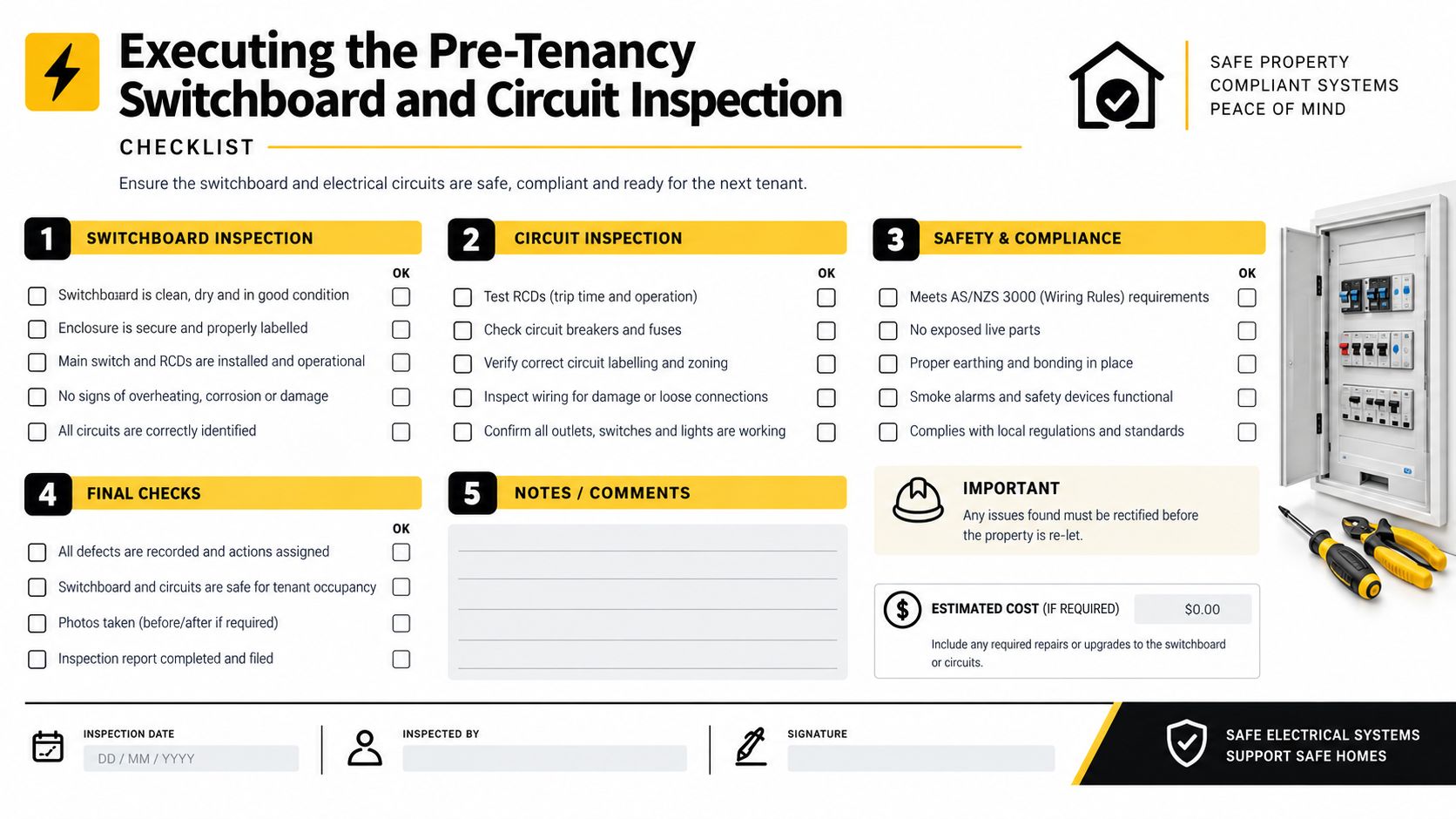
The inspection sheet should include the date, circuit identification, trip response, reset result, observed defects, corrective action and retest outcome. If a circuit can't be identified confidently, note that limitation and arrange clarification rather than assuming the device covers everything.
This approach works better than attaching a generic invoice to the tenancy file. A property manager needs to know whether the safety control operated, not merely that an electrician attended. General property condition records can sit alongside the electrical record, and an Edinhart Realty inspection checklist provides useful context for organising broader rental inspections.
The video below offers another visual reference for switchboard inspection work:
Access matters. Clear stored items away from the switchboard and make sure the electrician can reach outlets and fixed equipment without moving tenant belongings. If a defect creates immediate danger, isolate the affected equipment or circuit where appropriate and escalate licensed repair work rather than waiting for the next routine visit.
Smoke alarms belong in the same tenancy-entry workflow as electrical safety devices because both systems protect occupants from hazards that may not be obvious during a routine inspection. Queensland legislation commenced on 1 January 2017 for new and substantially renovated homes, requiring interconnected photoelectric smoke alarms that comply with AS 3786-2014. The upgraded requirements applied to leased and sold homes by 1 January 2022, while the final statewide deadline for other dwellings is 1 January 2027, according to Queensland Fire and Emergency Services guidance.
For a leased Brisbane property, check the alarm arrangement rather than assuming that one working unit is enough. Alarms generally need to be located in every bedroom, in connecting hallways and on every level of the residence. Where a storey has no bedroom, inspect the most likely exit path.
Interconnection creates a common testing trap. Pressing the test button on one unit may confirm that unit's local operation, but it doesn't prove that activation propagates through the dwelling. Test each alarm individually and confirm the interconnected response across the network.
The owner or manager must test each alarm within 30 days before a tenancy starts, and the alarms must be cleaned during that process. Flat or nearly flat batteries must be replaced before the tenancy or renewal. During the tenancy, the tenant must test and clean the alarms at least every 12 months.
Record the following for each alarm:
A 240-volt alarm must be connected by a licensed electrician. Failed alarms should be replaced immediately with photoelectric units that comply with the Queensland requirements. For more detail on system design and testing, property managers can refer to this guide to interconnected smoke alarms in Queensland.
The access process also needs organisation. Owners or managers must provide 48 hours' entry notice for smoke-alarm work in a general tenancy, so an alarm fault discovered during a routine visit may require both an urgent safety decision and a properly managed access arrangement.
Electrical safety becomes harder to manage after handover because several people control different parts of the process. The landlord provides the safe premises and arranges licensed electrical work. The property manager coordinates access, records and communication. The tenant uses the property, reports problems and may carry out agreed routine testing, but that doesn't transfer responsibility for unsafe fixtures or electrical repairs.
The distinction is easiest to apply when written into the handover conversation.
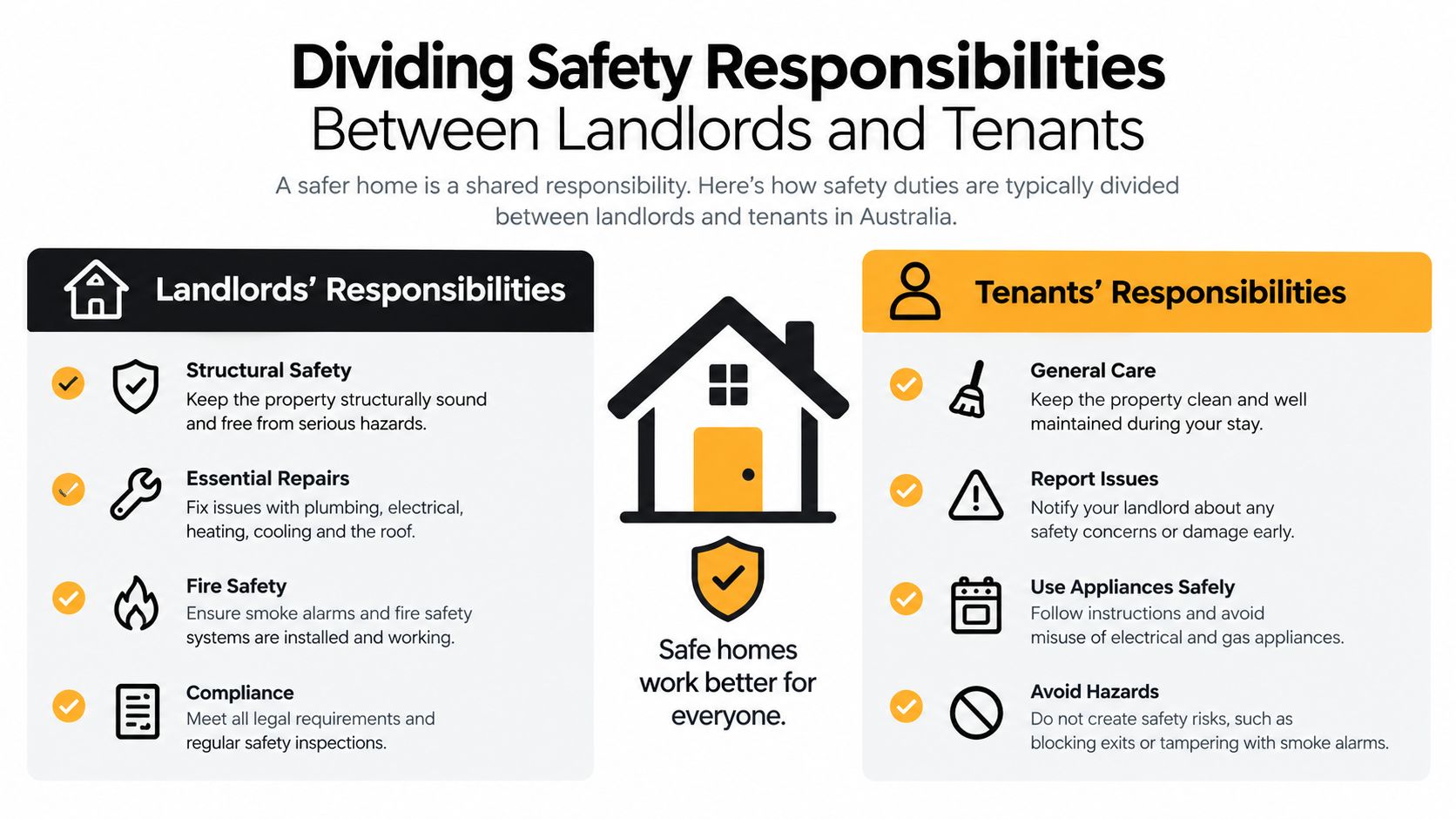
The owner or manager should ensure electrical fixtures and inclusions are in good repair at the start of the agreement and throughout the tenancy. That includes responding to reported faults, arranging qualified investigation and keeping evidence that repairs were completed.
The manager's operational duties commonly include:
Tenants should report electrical problems promptly and must test and clean smoke alarms at least every 12 months during the tenancy. They shouldn't attempt electrical repairs, remove protective devices or keep resetting a safety switch that repeatedly trips without reporting the cause.
If a tenant receives an electric shock or feels tingling from a tap or other metal fitting, Queensland guidance says they should immediately contact the electricity distributor and the tenancy's emergency contact. The area should be treated as unsafe until a licensed electrical contractor investigates it.
A tenant's routine testing role supports safe occupancy. It doesn't make the tenant responsible for repairing an unsafe installation.
The practical solution is a short written escalation flow included with the keys. It should state who to call for a shock, burning smell, damaged outlet or repeated trip, what equipment should be left untouched, and how access will be arranged for the electrician.
An inspection is only useful to the property manager if someone can act on its result. A clear compliance record should combine the electrical inspection, smoke-alarm verification, defect decisions, access communications and completed repair evidence in one tenancy-entry file.
For RCDs, record the date, circuit identification, test-button response, reset result and any corrective action. For smoke alarms, record each location, alarm type, power source, manufacture age, cleaning, battery condition, test response, interconnection result and replacement details. This level of detail distinguishes an operational check from a note that says “safety devices checked”.
Coordinating RCD testing with smoke-alarm checks reduces duplicated access requests and gives the agent one clear handover milestone. It also helps the property manager spot dependencies. For example, an alarm may require licensed electrical work, while a tripping RCD may require circuit investigation before the tenant moves in.
A practical record can use these fields:
| Record area | What to capture |
|---|---|
| Property details | Address, tenancy stage and inspection date |
| RCD checks | Device, protected circuit, trip result and reset result |
| Smoke alarms | Location, type, power source, age and interconnection |
| Defects | Description, risk decision, isolation and contractor booking |
| Completion | Repair evidence, retest outcome and responsible person |
Not every defect has the same urgency. A damaged fitting, exposed component, persistent burning smell, electric shock or failed protective device demands immediate escalation and may require isolation. A minor improvement recommendation can be scheduled, but it still belongs in the record so it isn't forgotten during the next changeover.
Smoke-alarm work requires its own access planning. Owners or managers must provide 48 hours' entry notice for this work in a general tenancy, as outlined by the Residential Tenancies Authority. Emergency electrical hazards should be communicated through the tenancy's emergency process, with a licensed contractor engaged for investigation and repair.
Property teams that manage several homes may use real estate compliance software to track due dates, documents, access notices and outstanding defects. The software doesn't replace technical judgement. It helps prevent a completed inspection from disappearing in an inbox while an urgent repair remains open.
Minimum compliance isn't always a sensible maintenance strategy. An older switchboard may rely on ceramic fuses, have limited space for additional protection or provide poor visibility of which circuits serve which parts of the home. Those limitations become more significant when a rental property gains high-demand appliances, air-conditioning, electric hot water equipment, solar or battery plans.
A proactive upgrade lets the owner address capacity, circuit identification and protection in a planned visit rather than during a tenant emergency. It can also make future fault-finding more straightforward for the next electrician.
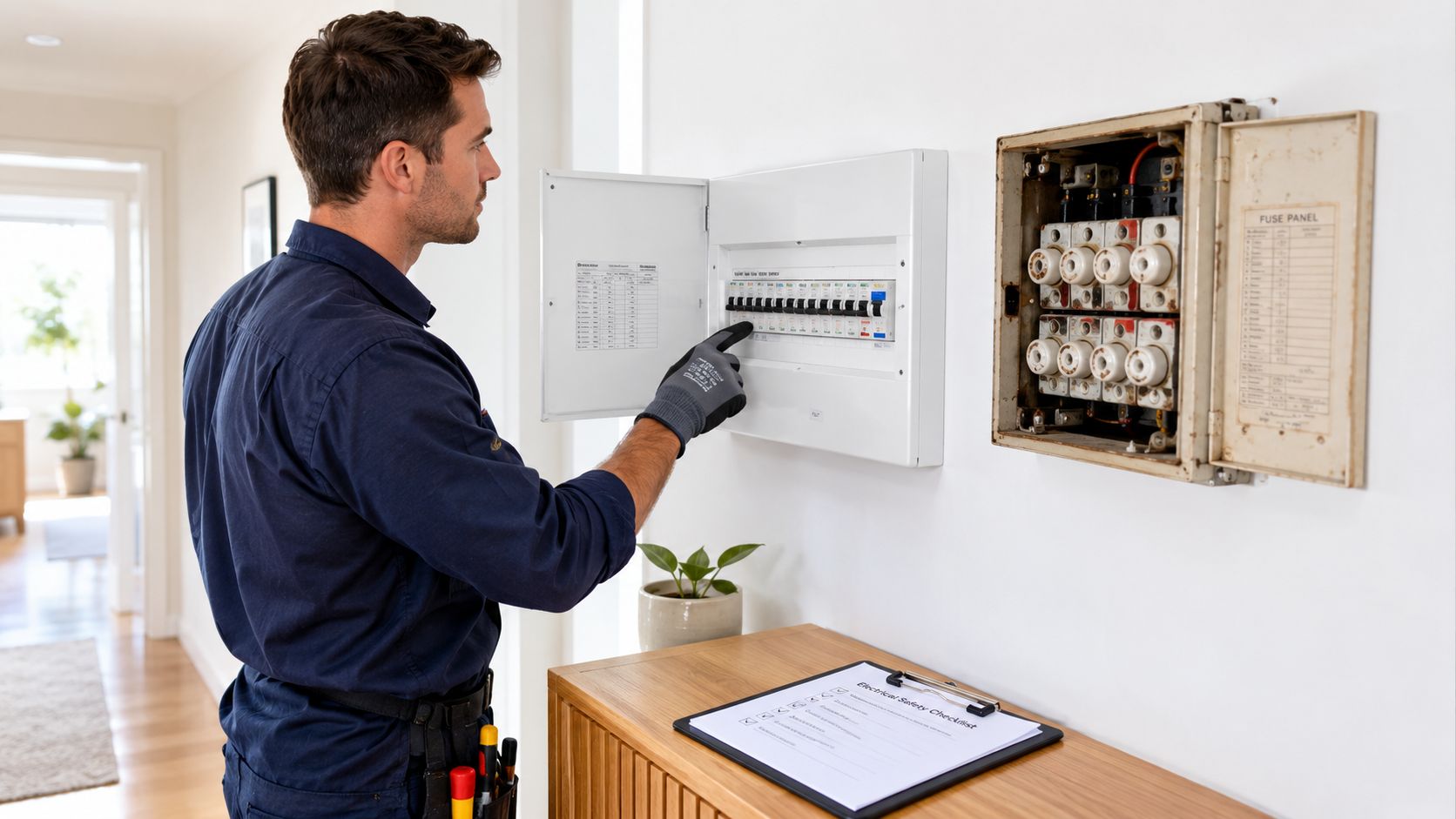
Reactive maintenance usually starts with a tenant complaint. The property manager then needs to diagnose the fault, arrange urgent access, find a contractor and manage the tenant's loss of use. That sequence is expensive in attention even when the physical repair is straightforward.
Planned maintenance gives the owner more control over:
The correct upgrade depends on the installation, not on a generic package. An electrician should assess the existing board, circuit arrangement, earthing and bonding, protective devices and anticipated loads. A new enclosure alone isn't a complete solution if circuit protection remains unclear or defects elsewhere in the installation are left unresolved.
Use lease changes, renovations and recurring safety checks as practical points for review. Before a new tenant arrives, confirm that the switchboard remains accessible, labels are legible, safety switches operate and smoke alarms meet the required arrangement. After electrical renovation work, update the property file so the next inspection starts with accurate information.
A landlord considering a switchboard project can review switchboard upgrade regulations and then obtain advice specific to the property. DLG Electrical is one Brisbane contractor that provides electrical safety inspections, switchboard upgrades and smoke-detector services for residential and rental properties. The important decision is to use a licensed contractor who can test the installation, explain defects clearly and provide records that the property manager can rely on.
A well-run electrical safety check for a rental property connects the technical result to the tenancy process. It identifies who acts, records what happened and leaves no uncertainty about whether a safety device was merely visible or actually tested.
DLG Electrical can inspect Brisbane rental properties, test safety switches and smoke alarms, investigate defects and plan switchboard upgrades around tenancy handovers. Contact the team to arrange a practical inspection and visit DLG Electrical for service information or a quote.

Master Electrician with over 30 years of experience. Founded DLG Electrical in 2005 after international project work including electrical installations at Stamford Bridge Stadium, London(Home of Chelsea FC).

Local Electricians that can fix all Electric Hot water Systems.
Motion sensor lights are a versatile addition to any home, offering nu
