83 Jean St, Grange QLD 4051
Mon-Fri 07:30 AM - 04:00 PM - Sat - 8:00 - 12 - Sunday Closed
When the lights flicker or a switch feels unusually warm, it’s tough to know whether you should be calling an emergency electrician in Brisbane right away or if the problem can wait.
That moment of uncertainty is something every homeowner dreads. A strange buzzing from the switchboard late at night, or a power point that suddenly goes dead, can be incredibly stressful. The key is learning to tell the difference between a minor inconvenience and a genuine crisis that puts your home and family at risk.
Not every electrical hiccup warrants a panicked, after-hours call. But some symptoms are non-negotiable red flags—signs that your electrical system is actively failing and needs immediate, professional help.
Some issues are just too dangerous to ignore, even for an hour. If you notice any of the following, it’s time to act fast:
To make things even clearer, sometimes a simple visual guide can help you decide when to call for immediate help.
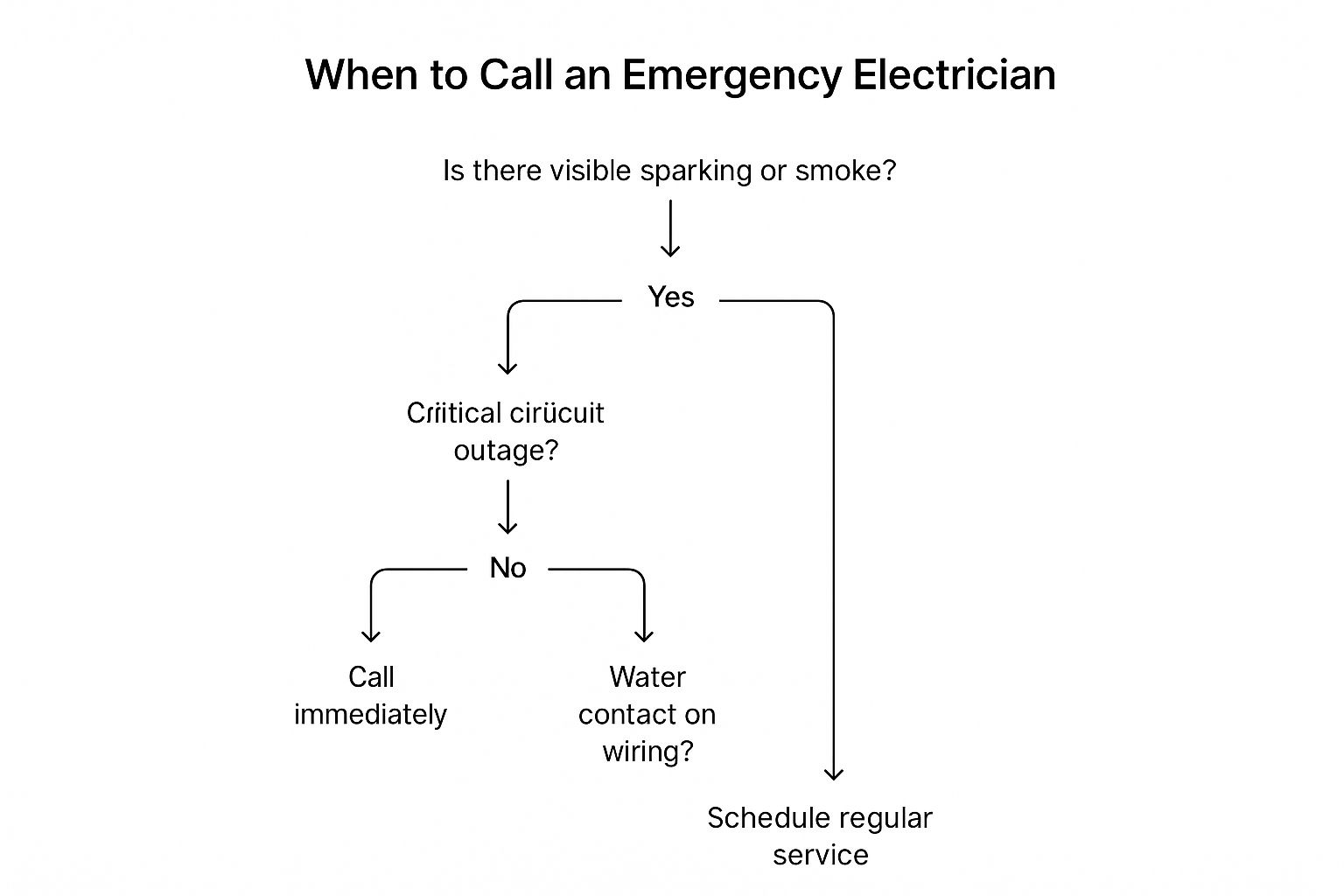
As you can see, visible hazards like sparks, smoke, or any electrical component coming into contact with water are undeniable triggers for an emergency call.
In Brisbane, this becomes even more critical during our wild weather seasons. Our electricians are often on the front line during flood events, which historically cause widespread and dangerous electrical hazards. Their first job is always to safely restore power and repair flood-damaged systems to protect homes and families.
It helps to have a quick reference for those “is this serious?” moments. I’ve put together this table to help you assess common electrical problems and decide on the right course of action.
| Symptom | Potential Risk | Action Required |
|---|---|---|
| Sparks, smoke, or burning smell | High – Immediate fire and shock hazard. | Call an emergency electrician immediately. Turn off power at the mains if safe to do so. |
| Safety switch won’t reset | High – Indicates a serious fault or current leak. | Call an emergency electrician. Do not force the switch to stay on. |
| Loud buzzing from switchboard | High – Risk of arcing, fire, or component failure. | Call an emergency electrician for urgent inspection. |
| A single light or outlet not working | Low – Often an isolated issue like a blown bulb or faulty connection. | Not an emergency. Troubleshoot by checking the bulb and circuit breaker. Schedule a standard electrician visit if needed. |
| Flickering or dimming lights | Medium – Could be a loose connection or overloaded circuit. | Monitor the issue. If it gets worse or affects the whole house, schedule an electrician. If it’s accompanied by other signs, treat it as urgent. |
| A power point feels warm | Medium to High – Could indicate faulty wiring and a fire risk. | Stop using the outlet immediately. Schedule a prompt visit from an electrician. |
This table should give you more confidence in making the right call, ensuring you get help when you truly need it without paying for an emergency call-out for a minor issue.
While this guide focuses on electrical safety, being prepared for other household crises is just as important. For example, knowing the difference between a leaky tap and a burst pipe can save you a world of trouble. You can learn more about common home plumbing emergencies and how to handle them. Recognising the signs of any home emergency is a vital skill for every homeowner.
You’ve made the call, and an emergency electrician is racing to your Brisbane home. That window of time before they arrive is absolutely critical. This isn’t a moment to just stand by and wait; it’s your chance to take smart, decisive actions that secure your property and keep your family safe from any further danger.
Your first job—and the most important one—is to shut off the power at the main switchboard. If you can get to it safely without trekking through water or getting near visible sparks, do it immediately. This one action cuts the electricity at the source, drastically reducing the risk of electric shock and stopping a potential fire in its tracks.
With the main power off, take a second to unplug your big-ticket electronics and appliances. I’m talking about your expensive TV, computers, and anything in the kitchen. An electrical fault can send unpredictable power surges through your wiring, and disconnecting these items is the only surefire way to shield them from catastrophic damage. It’s a simple step that could save you thousands.
Now, it’s time to enforce the golden rule of any electrical emergency: do not touch anything. Keep a wide berth from all power points, switches, and wiring, especially if there’s any water around. Water and electricity are a disastrous combination. Make sure kids and pets are kept well clear of the affected area until the electrician gives the all-clear.
Your job is to create a safe holding pattern. By cutting the power and keeping everyone away from potential hazards, you hand over a controlled situation to the electrician, allowing them to start diagnostic work immediately and safely upon arrival.
To help your electrician get to work faster, try to clear a path to your switchboard and the spot where you think the fault happened. If it’s dark, have a torch handy.
Thinking beyond the immediate crisis, being prepared is always a smart move. Having a general emergency preparedness checklist helps you stay on top of all sorts of unexpected situations, from storms to blackouts.
If your problem started with a safety switch that kept tripping, resist the urge to keep flicking it back on. As we explain in our guide on what to do when your safety switch has tripped, a switch that refuses to stay on is your home’s way of screaming that there’s a serious, persistent fault that needs an expert eye.
By taking these steps, you’ve done everything you can to manage the risk while you wait for your trusted emergency electrician in Brisbane to arrive and take over.
When you’re in the middle of a stressful electrical emergency, your first instinct is usually to hire the first person who answers the phone. I’ve seen it time and time again. It’s a common reaction, but it can quickly become a costly mistake.
Taking just a few extra minutes to properly vet the professional you invite into your home can save you from shoddy work, exorbitant fees, and ongoing safety risks. The key is knowing what to look for and what to ask, even when you’re feeling the pressure.
Your absolute first check should always be their credentials. In Queensland, it’s illegal for anyone without a valid electrical contractor licence to perform paid electrical work. This isn’t just bureaucratic red tape; it’s a fundamental safety standard that ensures the person working on your home has the proper training and qualifications.
You can quickly verify a licence online through the Queensland Building and Construction Commission (QBCC) or Electrical Safety Office (ESO) public registers. When you call, just ask for the electrician’s licence number and check it yourself. It’s a two-minute task that provides immense peace of mind.
Once that checks out, the next critical item is insurance. You must confirm they hold current public liability insurance. This protects you and your property in the unlikely event that something goes wrong during the repair. Any reputable emergency electrician in Brisbane will have this and be happy to provide proof.
A licensed and insured professional isn’t a “nice to have”—it’s a non-negotiable requirement for anyone touching your home’s wiring. Hiring an unlicensed individual not only puts your safety at risk but can also void your home insurance policy if a fire or further damage occurs.
With the essential checks covered, a few targeted questions can tell you a lot about the company’s professionalism and how they handle their pricing.
Here are a few key things to ask before you agree to a call-out:
These questions help set clear expectations and filter out any operators who are vague about costs or their capabilities.
Choosing an electrician who is local to your area can also be a significant advantage, often leading to faster response times and a better understanding of neighbourhood-specific issues. For those on the northside, understanding the benefits of hiring a local Brisbane Northside electrician can be particularly helpful.
With a growing demand for skilled tradespeople, it’s good to know there’s a strong pool of talent available. This means that even in a crisis, you have options to find a qualified and reliable professional right here in Brisbane.
Let’s get straight to it: the bill. Nobody likes a surprise when it comes to costs, especially during a stressful electrical emergency. When you call an emergency electrician in Brisbane, the final invoice will naturally be different from a standard, scheduled visit. Understanding why is key to feeling confident you’re paying a fair price for urgent, professional help.
The biggest factor is the immediacy of the service. You’re paying for a skilled professional to drop everything—often in the middle of the night or on a public holiday—and head straight to your door. This premium for rapid, after-hours service is a standard part of any emergency trade.
When you get the final bill, it’s usually broken down into a few key parts. Knowing what they are helps you see exactly what you’re paying for.
A trustworthy electrician will always be upfront about these costs over the phone before they even set out. Transparency is non-negotiable, and it ensures you’re not left with any nasty surprises.
Here are the primary charges you can expect:
It really comes down to supply and demand. Not many electricians are on standby for a 2 AM call on a Sunday. Their expertise is in high demand during a crisis, and the pricing reflects this immediate availability and the skill needed to work safely under pressure.
Knowing the typical market rates helps you sense whether a quote is fair or if someone’s trying to pull a fast one. As a general guide, you can expect an emergency call-out fee in Brisbane to be between AUD 100 to AUD 200. This is just to get the professional to your property.
On top of that, hourly rates for emergency jobs can range from AUD 150 to AUD 300 per hour, sometimes more depending on the time and day. This reflects the premium for an immediate, skilled response when you need it most.
Beyond the call-out fee and labour, a couple of other things can influence the final cost.
The first is how complex the repair is. A straightforward fix, like a faulty power point, will be much quicker and cheaper than a major diagnostic job on a failing switchboard. If the issue points to a bigger problem, the final cost will naturally be higher.
For example, if your switchboard is the culprit, understanding the potential switchboard upgrade cost can give you valuable context when you receive the quote.
The second factor is the cost of parts and materials. If your repair needs new circuit breakers, safety switches, wiring, or other components, these will be itemised and added to your invoice. A professional electrician will always discuss any significant material costs with you and get your approval before going ahead with the installation.

When an emergency electrician arrives at your door, knowing what to expect can make a stressful situation feel much more manageable. A true professional from Brisbane won’t just start pulling things apart; they follow a clear, methodical process to get your home safe again, quickly and correctly.
Their first move is always a thorough diagnosis. This isn’t just a quick look-around. They’ll use specialised equipment like multimeters and circuit tracers to find the precise cause of the problem. This means a proper assessment of your switchboard, wiring, and any specific outlets or appliances you’ve pointed out.
Safety is paramount. The initial goal is to methodically isolate the faulty circuit and understand the root cause without introducing any new risks to your home or family.
Once they’ve pinpointed the issue, a professional sparkie will stop and walk you through it. No technical jargon, just a plain-English explanation of what’s gone wrong, why it happened, and what needs to be done to fix it properly.
This is when you should get a clear, upfront quote for the entire job. It should break down the costs for both labour and any parts needed. A reputable electrician will never start major work without making sure you understand the costs and have given them the green light.
A key sign of a true professional is their commitment to transparency. They understand you’re under stress and will ensure you feel informed and in control before any tools are picked up for the main repair.
With your approval, they’ll get to work. Most experienced emergency electricians carry a well-stocked van with common parts like circuit breakers and safety switches, meaning they can usually fix the issue on the spot in a single visit.
After the repair is done, the job isn’t quite finished. The electrician will run final tests to confirm the fault is cleared and that your electrical system is once again operating safely. They should also clean up any mess from their work, leaving your home as they found it.
Crucially, for any significant work, you need the right paperwork. In Queensland, this is typically a Certificate of Compliance (CoC). This document is your official proof that the work meets Australian Standards (AS/NZS 3000) and is legally compliant. It’s an essential document for your home insurance and your own peace of mind.
This entire process, from diagnosis to documentation, is what separates a professional from a handyman. It’s all about safety and accountability. While it covers a specific scenario, understanding the formal procedures during an electricity warrant entry visit can offer further insight into the level of professionalism you should expect. This structured approach gives you the confidence that the job was done right.
Of course. Here is the rewritten section, crafted to sound like it was written by an experienced human expert, following the specific style and tone from your examples.
When you’re facing an electrical scare, your mind is probably racing with questions. You need straight answers, fast. We get it. After years on the tools in Brisbane, we’ve heard just about every query imaginable. Here are a few of the most common ones we get, answered without the jargon.
It’s tempting, I know. A loose power point or a flickering light seems like a quick fix you could knock over on a Saturday afternoon. But when it comes to electricity, the answer from any professional will always be a hard no.
In Queensland, the law is crystal clear: any electrical work, no matter how small it seems, must be performed by a licensed electrician. This isn’t just red tape; it’s about protecting you and your family. A tiny mistake when changing a power point can lead to a nasty shock, create a hidden fire hazard inside your walls, or even void your home insurance policy down the track.
Think of your home’s wiring as its central nervous system. A small, incorrect tweak in one spot can have dangerous, unforeseen consequences somewhere else entirely. It’s a risk that is never, ever worth taking.
When sparks are flying or the power’s out, every minute feels like an hour. Most dedicated 24/7 emergency electricians in Brisbane can usually be at your door within 60 to 90 minutes. Of course, this depends on things like your exact location, what the traffic is doing, and how many other emergencies are happening across the city.
When you call an emergency electrician in Brisbane, one of the first things you should ask is for an ETA. A professional, organised service will give you a realistic timeframe so you’re not left guessing. This lets you know what to expect and allows you to focus on keeping everyone away from the problem area while you wait.
This is a fantastic question. Many people use these terms interchangeably, but they do two very different—and equally vital—jobs to keep your home safe.
Both are non-negotiable parts of any modern, safe switchboard. An experienced electrician can tell pretty quickly whether you’ve got a faulty safety switch, an overloaded circuit, or something else going on.
This really comes down to the fine print of your policy and what caused the fault in the first place. Some home insurance policies will cover the cost of repairs if the damage was caused by a specific event, like a storm or a power surge (sometimes called ‘fusion’ in your policy documents).
However, the emergency call-out fee itself is often an immediate, out-of-pocket expense. Your first priority should always be getting a professional on-site to make the situation safe. Once the danger is dealt with, you can dig out your policy documents and chat with your insurer to see what’s covered.
When you need an experienced, reliable, and trustworthy emergency electrician, you can count on DLG Electrical. We’re here to make your Brisbane home safe again. For immediate assistance or to get a free quote for any electrical work, visit us at https://dlgelectrical.com.au.

Master Electrician with over 30 years of experience. Founded DLG Electrical in 2005 after international project work including electrical installations at Stamford Bridge Stadium, London(Home of Chelsea FC).

Local Electricians that can fix all Electric Hot water Systems.
Motion sensor lights are a versatile addition to any home, offering nu
