83 Jean St, Grange QLD 4051
Mon-Fri 07:30 AM - 04:00 PM - Sat - 8:00 - 12 - Sunday Closed
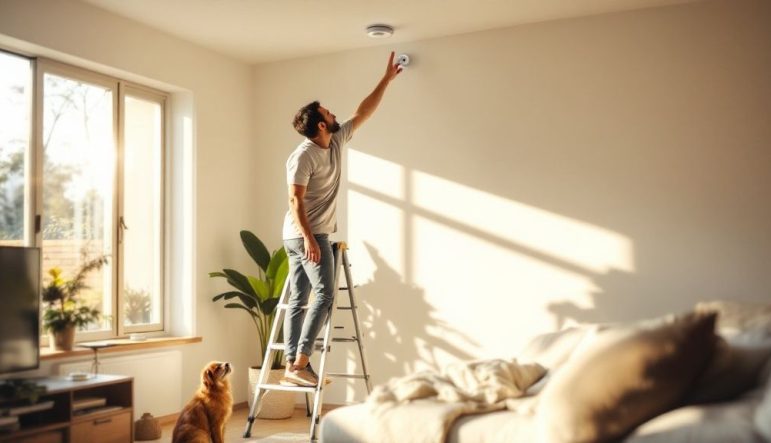
Test a Smoke Alarm: Testing your smoke alarm is as simple as it gets: just press and hold the ‘Test’ button until you hear that unmistakable, ear-piercing siren. It’s a quick check that tells you the battery and the alarm horn are good to go—a vital job to tick off your list every month.
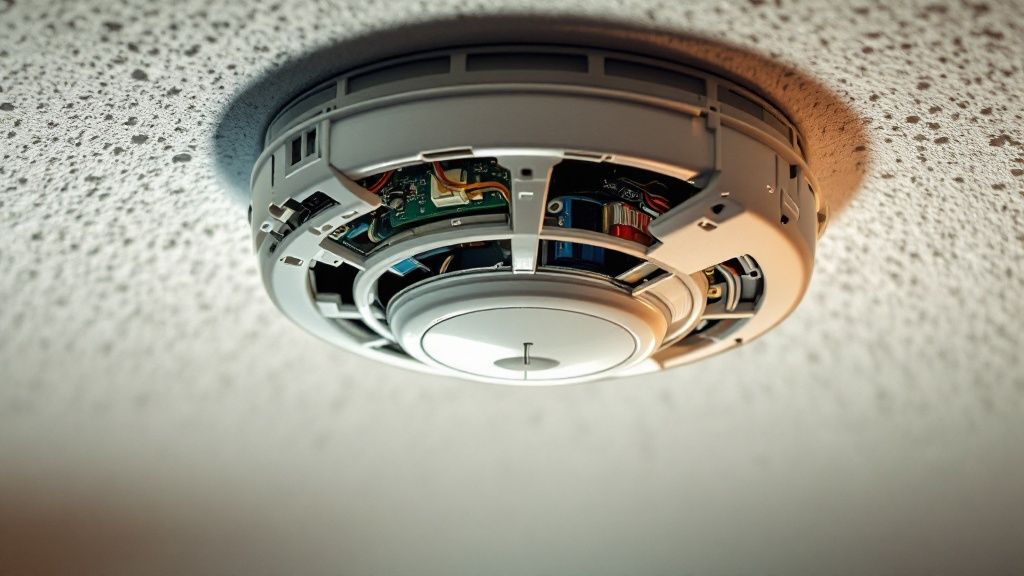
That little device on your ceiling is your silent guardian, but it’s only effective if it actually works. A smoke alarm that doesn’t sound is just a piece of plastic. Regular testing isn’t just another chore; it’s a critical household skill that ensures your first line of defence against a fire is ready when you need it most.
This has become even more urgent in modern homes. Today’s furnishings, often packed with synthetic materials, can help a fire spread terrifyingly fast. This dramatically cuts down the time you have to get everyone out safely.
Every year, Australia sees over 17,000 residential fires, with a large chunk of those happening right here in New South Wales. These incidents are far more dangerous than they used to be, thanks to modern materials that not only ignite quickly but also pump out toxic smoke, shrinking your escape window to just minutes.
A working smoke alarm can cut the risk of dying in a home fire by half. It is, without a doubt, the single most important safety device you can have to protect your family.
It doesn’t matter if your alarms are battery-operated or hardwired into your home’s mains power—they all need consistent checks. Batteries die, sensors get clogged with dust, and internal components can fail over time.
Knowing how to properly test a smoke alarm gives you peace of mind and, more importantly, control over your family’s safety. For a deeper dive, you can explore our comprehensive guide to smoke alarms in Australia. It’s a small habit that provides an invaluable layer of protection.
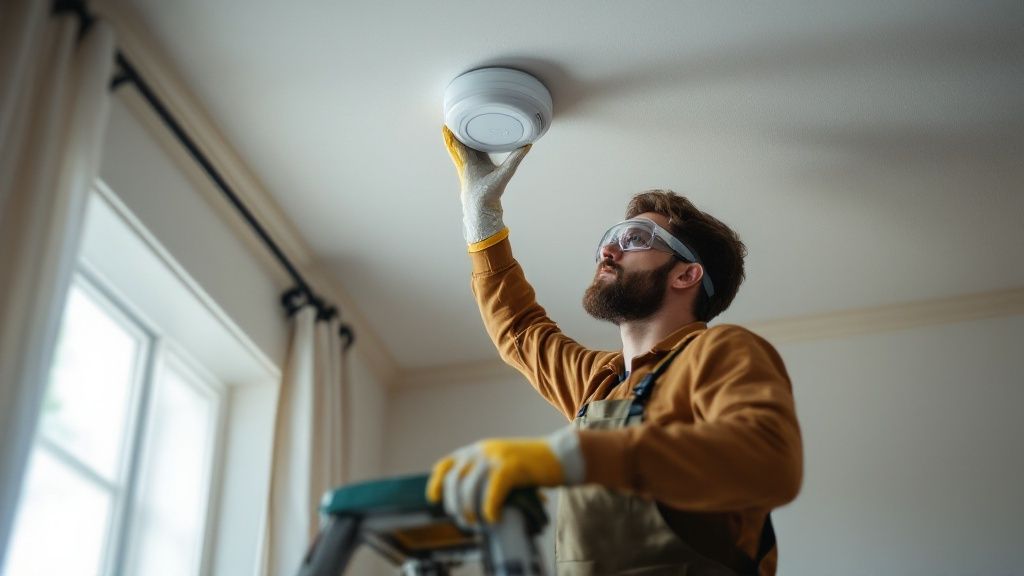
Before you press a single button, a little prep work can make the whole job a lot smoother and safer. Thinking ahead stops you from scrambling for things mid-test or giving the whole family a fright. You don’t need a full toolkit, but having the right items on hand turns a chore into a quick, effective safety check.
First things first, you need to be able to reach your alarms safely. For most ceiling-mounted units, a sturdy stepladder is a must-have—no balancing on a wobbly dining chair, please. If you have extra high or vaulted ceilings, a broom handle often does the trick to gently press the test button from the ground.
And here’s a pro tip: have the right replacement batteries with you before you start. There’s nothing more frustrating than climbing up, pulling an alarm down, and realising you don’t have a spare. Most alarms take a standard 9V or AA battery, so check what you have and be ready.
A crucial step that gets missed all the time is just giving everyone a heads-up. Let your family or housemates know you’re about to test the smoke alarms. That siren is designed to be loud and jarring, so a simple warning prevents anyone from thinking it’s a real emergency.
It’s also a good idea to put your pets in a quiet room and close the door. That high-pitched shriek can be pretty distressing for them.
Finally, while you’re up there on the ladder, use the opportunity for a quick but vital inspection.
An expired smoke alarm is just not reliable. It might still beep during a test, but its internal sensors could be degraded, meaning it won’t actually detect smoke in a real fire. Think of that 10-year mark as a hard deadline—it’s one of the most important parts of keeping your home fire-safe.
Testing your smoke alarm isn’t just ticking a box—it could save lives. With the right approach, you’ll know your alarm is ready to shout the moment danger strikes.
It all starts with the built-in test button. A quick monthly check here tells you if the battery has juice and the horn is up to scratch.
Position a sturdy stepladder or lean a broom handle against the ceiling—whatever keeps you safe and steady. Press and hold the Test button. Within a second or two, you should be met with a continuous 85-decibel blast—loud enough to wake you from a deep sleep.
If the siren roars, you’re in business. Release, and it stops. But a feeble chirp or silence? That’s your cue to swap the battery or call in a sparkie if the fault persists.
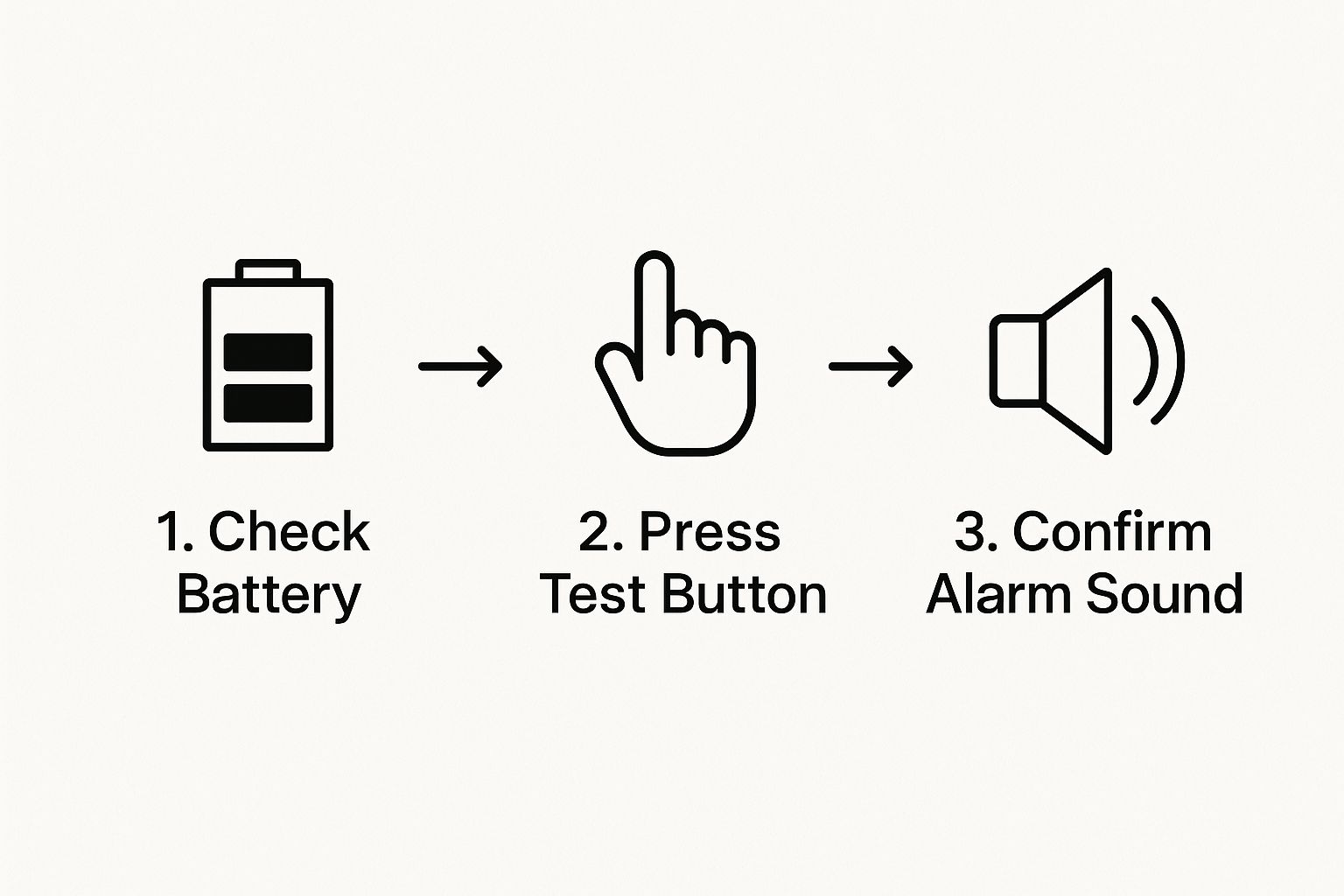
The graphic above shows how to:
The test button proves power and sound—but not the actual smoke sensor. For that, reach for a can of smoke alarm test spray. It mimics those tiny particles in real smoke, giving you a genuine detection check.
Here’s how to use it:
If it goes off, the sensing chamber is clear. Fan away lingering spray with a piece of cardboard or your broom handle.
Crucial Safety Warning: Never ignite a real flame—matches, candles and the like can wreck your detector and, far worse, start a real fire. Always stick to approved testing products.
Still undecided which approach suits you? Here’s a quick comparison:
Smoke Alarm Testing Methods Compared
| Method | Best For | How Often | Pros | Cons |
|---|---|---|---|---|
| Built-In Test Button | Quick monthly functionality check | Every Month | No extra tools, zero mess | Doesn’t test smoke sensor |
| Smoke Alarm Test Spray | Full sensor validation | Every 6 Months | Realistic test of smoke detection | Requires purchase, some residue |
Combining a monthly button press with a semi-annual spray test gives you real confidence in your alarms. That way, you’ll know they’re primed and ready when it matters most.
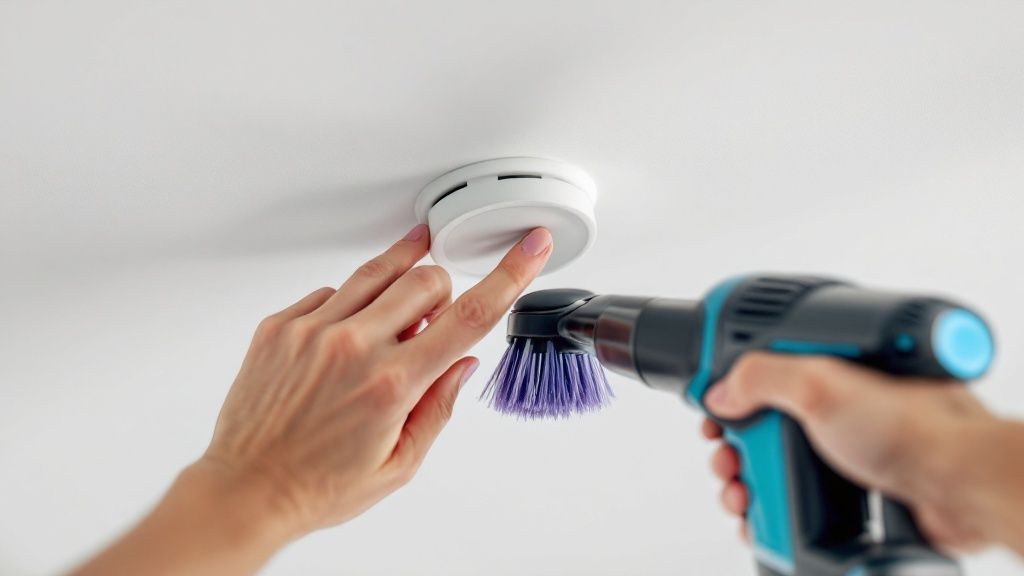
It’s a heart-stopping moment: you press the test button, expecting a piercing shriek, but get nothing but silence. When a smoke alarm fails a test, it needs immediate attention. But don’t panic—the fix is often simpler than you think. Before you assume the whole unit is dead, let’s walk through the most common culprits.
The number one reason for a silent alarm? A dead battery. Even in hardwired units, the backup battery is designed to take over during a power outage, and like any battery, it eventually runs out of juice.
This is a surprisingly common issue. Research from the International Association for Fire Safety Science found that over half of Australian households with hardwired alarms didn’t realise they still needed to change the backup batteries, a mistake that could compromise safety when it matters most.
If popping in a fresh battery doesn’t do the trick, the next step is a quick visual check. Over the years, dust, cobwebs, and even tiny insects can clog the alarm’s sensing chamber, stopping it from working correctly.
A can of compressed air is your best friend here. A few short bursts into the vents can clear out debris without you needing to take the unit apart. Just be sure to avoid household cleaners, as the chemicals can easily damage the delicate internal sensors.
Still no luck after cleaning? It’s time to check the alarm’s expiry date. Every single smoke alarm has a lifespan of 10 years from its manufacture date, which you’ll find printed on the side or back of the unit. If your alarm is older than a decade, it’s no longer considered reliable and must be replaced immediately.
If you’ve run through all these steps and the alarm still won’t make a sound, the unit itself is likely faulty. For hardwired models, the problem might also lie with the electrical connection. In either case, it’s time to call a licensed electrician to safely diagnose the issue and install a replacement. It could also be the perfect opportunity to learn more about the benefits of upgrading to wireless interconnected smoke detectors for a serious boost in home safety.
Knowing how to test your smoke alarm is one half of the puzzle. The other, equally crucial half, is understanding the laws that govern them here in Australia. Staying safe isn’t just a good idea—it’s a legal requirement, with specific rules that can change depending on which state you’re in. These regulations exist to set a minimum standard of safety for every home, whether you own it or rent it.
The legislation across Australia is firm on one thing: all homes must have working smoke alarms that meet Australian Standard AS 3786. This standard is your assurance that the device has passed strict performance and quality checks. A tragic statistic from New South Wales really brings home why this matters, revealing that 30% of fatalities in house fires happened in homes where smoke alarms were either missing or had stopped working. It’s a stark reminder of what’s at stake. You can learn more about how modern tech is helping landlords keep up in this detailed fire safety report.
To avoid any grey areas, the responsibilities for smoke alarm maintenance are clearly divided between landlords and tenants. Knowing where you stand is key to staying compliant and safe.
It’s really a partnership. The landlord provides the essential hardware, and the tenant performs the regular checks that ensure it’s always ready to go. This shared duty is the foundation of fire safety at home.
Every state also has its own unique rules, especially around the type of alarms required and where they must be installed. Queensland, for example, now mandates interconnected photoelectric alarms in specific situations. To get a clear picture of the local rules, we’ve put together a guide covering the current smoke alarm legislation in QLD.
Even when you’ve got a good handle on the basics, a few specific questions always seem to come up during smoke alarm maintenance. Getting clear, simple answers not only builds your confidence but makes sure you’re doing everything right to keep your family safe. Let’s tackle the most common queries we hear from homeowners.
Fire and Rescue authorities across Australia are all on the same page here: give the test button a firm press every single month. It’s a simple job that takes seconds.
Beyond that, you’ll want to gently vacuum the alarm’s vents every six months to stop dust from interfering with the sensor. A great trick is to get into the habit of replacing the batteries once a year on a date you’ll remember, like New Year’s Day. And no matter how well it seems to be working, the entire alarm unit must be replaced every 10 years.
You’ll mainly come across two types: ionisation and photoelectric. Ionisation alarms are designed to detect fast, flaming fires, while photoelectric alarms are much more effective at sensing the slow, smouldering fires that often happen in homes overnight.
Because of this, Australian fire services strongly recommend photoelectric alarms. They give you the earliest possible warning for the most dangerous types of house fires. If you’re looking for the best possible protection, a system of interconnected photoelectric alarms is the gold standard.
Never use an open flame, a candle, or even incense to test your alarm. This is incredibly dangerous. You can easily damage the sensitive internal parts, making the alarm useless when you need it most, and you run a serious risk of starting an actual fire.
That annoying, intermittent chirp is your smoke alarm’s way of telling you its battery is getting low. It’s a built-in safety alert that means it’s time for a fresh one, pronto.
If you’ve already put a new battery in and the chirping won’t stop, double-check that it’s connected properly. If that doesn’t fix it, the chirp could be a sign that the unit itself is faulty or has hit its 10-year expiration date. In that case, it’s time to replace the whole thing.
For professional smoke alarm installation and compliance checks, you can always rely on the licensed experts at DLG Electrical. Ensure your home is protected by visiting us at https://dlgelectrical.com.au to book a service.

Master Electrician with over 30 years of experience. Founded DLG Electrical in 2005 after international project work including electrical installations at Stamford Bridge Stadium, London(Home of Chelsea FC).

Local Electricians that can fix all Electric Hot water Systems.
Motion sensor lights are a versatile addition to any home, offering nu
