83 Jean St, Grange QLD 4051
Mon-Fri 07:30 AM - 04:00 PM - Sat - 8:00 - 12 - Sunday Closed
Figuring out your home’s electrical needs can feel like a bit of a maze, but it really doesn’t have to be. This guide is designed to give you a straightforward overview of the residential electrical services Brisbane homeowners find themselves needing, covering everything from those “help, the power’s out!” urgent repairs to essential safety upgrades and smart, energy-saving solutions. Getting your head around these services is the first step to making sure your home is safe, compliant, and running efficiently.
Think of your home’s electrical system like its central nervous system. It works silently in the background, powering everything from your morning coffee machine to the kids’ tablets at night. But when something goes wrong—a light starts flickering, a safety switch keeps tripping, or you lose power altogether—it can bring your whole day to a screeching halt. That’s when a professional residential electrician becomes your best friend.
For any Brisbane homeowner, getting a licensed professional is non-negotiable, no matter how big or small the job seems. Queensland has strict safety standards for a very good reason: they protect your family and your property from the serious risks that come with electrical faults. This guide will walk you through the most common services, break down how costs are calculated, and help you choose the right expert with confidence.
We’ve laid this guide out to build your knowledge from the ground up, so you can feel confident when you pick up the phone to call a sparky. You’ll get a real-world understanding of:
When it comes to your home’s electrical safety, there’s no room for compromise. A licensed electrician doesn’t just get a job done; they provide a guarantee that the work meets the highest Australian Standards, ensuring your long-term safety and compliance.
To give you a quick snapshot, here’s a look at the typical electrical jobs Brisbane homeowners face. Knowing what triggers these common needs can help you spot when it’s time to call in a professional.
| Common Electrical Service | Primary Benefit for Your Home | Typical Trigger or Need |
|---|---|---|
| Switchboard Upgrades | Enhances safety and capacity for modern appliances. | An old fuse box, frequent tripping, or home renovations. |
| Smoke Alarm Compliance | Ensures legal compliance and critical fire safety. | New legislation, expired alarms, or property sale/lease. |
| Hot Water System Repairs | Restores reliable access to hot water. | No hot water, a tripping circuit, or a leaking tank. |
| LED Lighting Installation | Reduces energy bills and improves home aesthetics. | High power bills, outdated fixtures, or poor lighting. |
| Security System Setup | Provides peace of mind through surveillance. | Recent break-ins in the area or a desire for home monitoring. |
Understanding these basics is the first step toward managing your home’s electrical health proactively, rather than just reacting when something breaks.
Think of your home’s wiring as its central nervous system. It’s the hidden network that silently powers every part of your daily life, from your morning coffee to your evening entertainment. Keeping this system healthy and efficient isn’t just about fixing things when they break; it’s about making your home safer, more functional, and ready for whatever modern life throws at it.
A good Brisbane electrician provides a range of core services that form the bedrock of home electrical maintenance. Understanding what these are helps you spot potential issues and know exactly what to ask for when you call in a professional.
When a circuit breaker keeps tripping or a power point gives up the ghost, it’s more than just an annoyance. It’s your home’s way of telling you something is wrong. Professional fault finding is basically detective work for your wiring. An electrician uses specialised tools to trace the problem right back to the source, whether it’s a dodgy appliance, damaged cable, or an overloaded circuit.
This process is critical because it fixes the root cause, not just the symptom. Simply flipping a switch back on without knowing why it tripped is a gamble you don’t want to take with your family’s safety.
Let’s face it, modern homes need more power points in more places than ever before. Setting up a home office, a new entertainment unit, or even just an outdoor socket for the barbie requires more than a DIY spirit. Professional installation is non-negotiable. A licensed sparkie ensures new points are wired safely to Australian Standards and placed on the right circuit to prevent overloads.
The same goes for hardwired appliances like ovens, cooktops, ceiling fans, and air conditioners. Getting these installed correctly is far more involved than just plugging them in.
A dedicated circuit for a power-hungry appliance like an air conditioner is like its own express lane on the motorway. It gets a clear, uninterrupted path to the switchboard, preventing it from causing electrical traffic jams that overload circuits shared by smaller devices.
Good lighting can completely transform the feel of a room, but it also has a huge impact on your power bills. One of the smartest moves any homeowner can make is upgrading old, power-hungry halogen or incandescent bulbs to modern LEDs.
A few key lighting services can make a world of difference:
Getting a professional to handle the installation means every fixture is wired safely and securely, giving you both stunning results and complete peace of mind. And as our homes get smarter, understanding concepts like a guide to home smart wiring is becoming essential.
The way we use electricity in Brisbane is definitely changing. With cost-of-living pressures front of mind, power bills are a major concern for many families. People are getting savvier, looking for ways to get their energy use under control through more efficient systems and smart home tech.
This shift means there’s a growing demand for electrical services that empower homeowners to manage their energy consumption and lower their bills. A qualified electrician isn’t just there to fix things anymore; they’re your partner in creating a smarter, safer, and more energy-efficient home.
When it comes to your home’s electricity, safety isn’t some optional extra—it’s the absolute foundation. Certain electrical upgrades are simply non-negotiable for protecting your family and your property. These aren’t flashy add-ons; they are the essential guardians working silently behind your walls to prevent a disaster.
Unfortunately, many older Brisbane homes are still running on outdated fuse boxes or circuit breakers that are missing modern protective features. Let’s break down why these critical safety upgrades are so important for a modern, secure home.
Think of your switchboard as the central command centre for your home’s entire electrical system. It’s the point where power from the grid gets safely distributed into different circuits that feed your lights, power points, and appliances. An old, outdated switchboard is like having an overworked, slow-to-react security guard trying to manage a busy, modern building. It just can’t keep up.
Older switchboards, especially those with old-school ceramic fuses, simply weren’t built to handle the demands of today’s homes. They lack the sophisticated safety mechanisms needed to protect against electric shock and electrical fires.
A modern switchboard, on the other hand, comes equipped with two vital pieces of technology: circuit breakers and safety switches. This combination provides a powerful, two-layered defence system that old fuse boxes just don’t have. To get the full picture of what’s involved, you can check out this detailed overview of switchboard upgrades in Brisbane.
The infographic below really shows how these essential layers of home electrical safety fit together.
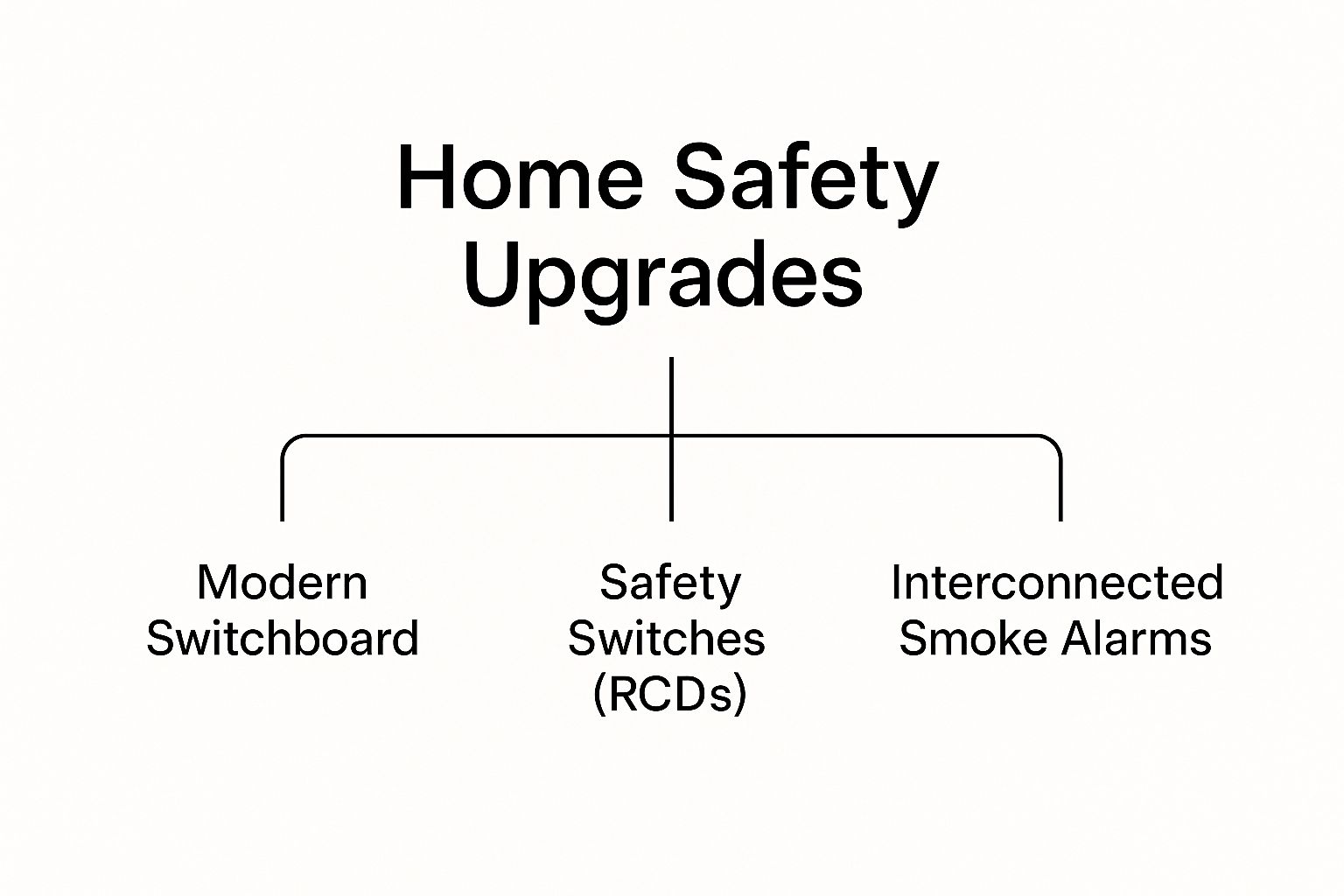
As you can see, the switchboard is the core component, with safety switches and smoke alarms acting as critical layers of protection around it.
If the switchboard is the command centre, then safety switches are the lightning-fast bodyguards on duty 24/7. Their technical name is Residual Current Devices (RCDs), and their one and only job is to save lives. They do this by constantly monitoring the flow of electricity in a circuit, watching for tiny, dangerous imbalances.
This imbalance, often called “leakage,” happens when electricity escapes its intended path—maybe through a faulty appliance or a frayed cord—and tries to find a shortcut to the ground through another object. If that object happens to be a person, the result can be a severe or even fatal electric shock.
A safety switch is designed to detect a current leakage as small as 30 milliamps and shut off the power in as little as 30 milliseconds. That’s faster than a single beat of your heart, and it’s this incredible speed that stops a dangerous situation from becoming a tragedy.
It’s a common mistake to think circuit breakers do the same thing, but they have a different job. A circuit breaker protects your wiring and appliances from overloads (drawing too much power), whereas a safety switch is there specifically to protect people from electric shock. In Queensland, having safety switches on all power point and lighting circuits isn’t just a good idea—it’s a legal requirement.
Power surges are sudden, brief spikes in your home’s voltage. They can be triggered by lightning strikes, faults in the power grid, or even your own high-powered appliances cycling on and off. While these spikes last for only a fraction of a second, they can cause catastrophic damage to your sensitive modern electronics.
A surge protector is basically a shield for your expensive devices. It sits quietly on the circuit, but the moment it detects an overvoltage, it instantly diverts that excess electricity safely to the ground, protecting everything plugged in. Without that shield, a voltage spike can fry the delicate microprocessors in your:
For homeowners looking to add another layer of protection, understanding the options for installing professional security cameras is also a smart move, as these systems depend on stable, clean power to function reliably.
Finally, no conversation about home electrical safety is complete without talking about smoke alarms. In Queensland, the laws are crystal clear and designed to give you the earliest possible warning in case of a fire. All homes must be fitted with interconnected photoelectric smoke alarms.
Here’s what that actually means:
Complying with these laws isn’t optional; it’s a legal requirement that genuinely saves lives. A qualified electrician providing residential electrical services Brisbane can perform an audit to make sure your home is fully compliant and your family is properly protected.
Getting your head around how a Brisbane electrician calculates your bill is the best way to budget properly and avoid any nasty surprises. Electrical pricing isn’t just a number plucked from thin air; it’s a careful calculation based on an electrician’s time, their expertise, the parts needed, and the complexity of the work.
Most qualified electricians in Brisbane work on a combined pricing model. It usually starts with a call-out fee, which covers the cost of getting a fully-equipped van and a licensed professional to your front door. On top of that, there’s an hourly rate for the actual labour. Think of the call-out fee as the starting point for any job, big or small.
Beyond that initial fee, the total cost is shaped by the job itself. It’s pretty logical—swapping out a single power point is going to be far cheaper than a full switchboard upgrade that takes hours and involves a lot of expensive new components. Your final invoice will always reflect that reality.
Here are the main variables that go into the final cost:
For bigger jobs like renovations or major upgrades, most electricians will offer a fixed-price quote. This is a game-changer because it gives you a clear, upfront cost for the whole project. No guesswork, no surprises. It’s something we always recommend for any significant electrical work.
There are a few other things that can nudge the final price up or down. Accessibility is a big one. If an electrician has to squeeze into a cramped sub-floor or work in a hot, dusty roof cavity, the job will take longer and require extra safety measures, which can be reflected in the quote.
The age of your home also plays a significant role. Many older Brisbane homes have wiring that simply isn’t up to today’s standards. Before a new air conditioner or oven can be installed, that old wiring might need to be replaced, adding another layer of work to the original job.
The ever-rising cost of power is also pushing homeowners to be smarter about their energy use. With statewide data showing that Queenslanders are paying around AUD 458 per quarter for electricity on average, more people are investing in energy-efficient solutions to get their bills under control. You can find more insights on this by checking out the average household energy costs on compareclub.com.au.
To put this all into perspective, let’s look at some ballpark figures for common electrical jobs around Brisbane. Just remember, these are only estimates. The only way to get a firm price for your specific needs is to get a formal quote from a licensed electrician.
| Common Electrical Service | Estimated Cost Range (AUD) | Key Considerations |
|---|---|---|
| Install a New Power Point | $150 – $250 | Depends on wall type (brick vs. plasterboard) and how easy it is to run new cable. |
| Replace a Light Fitting | $100 – $200 | Assumes the existing wiring is safe and sound. |
| Install a Ceiling Fan | $250 – $450 | Varies with the fan model and whether a new support needs to be installed in the ceiling. |
| Switchboard Upgrade | $1,200 – $3,000+ | Depends on the size of your home, the number of circuits, and the state of your existing wiring. |
At the end of the day, hiring a licensed electrician is about more than just getting a job done. It’s an investment in the safety of your home and family, ensuring all work is compliant, high-quality, and built to last.
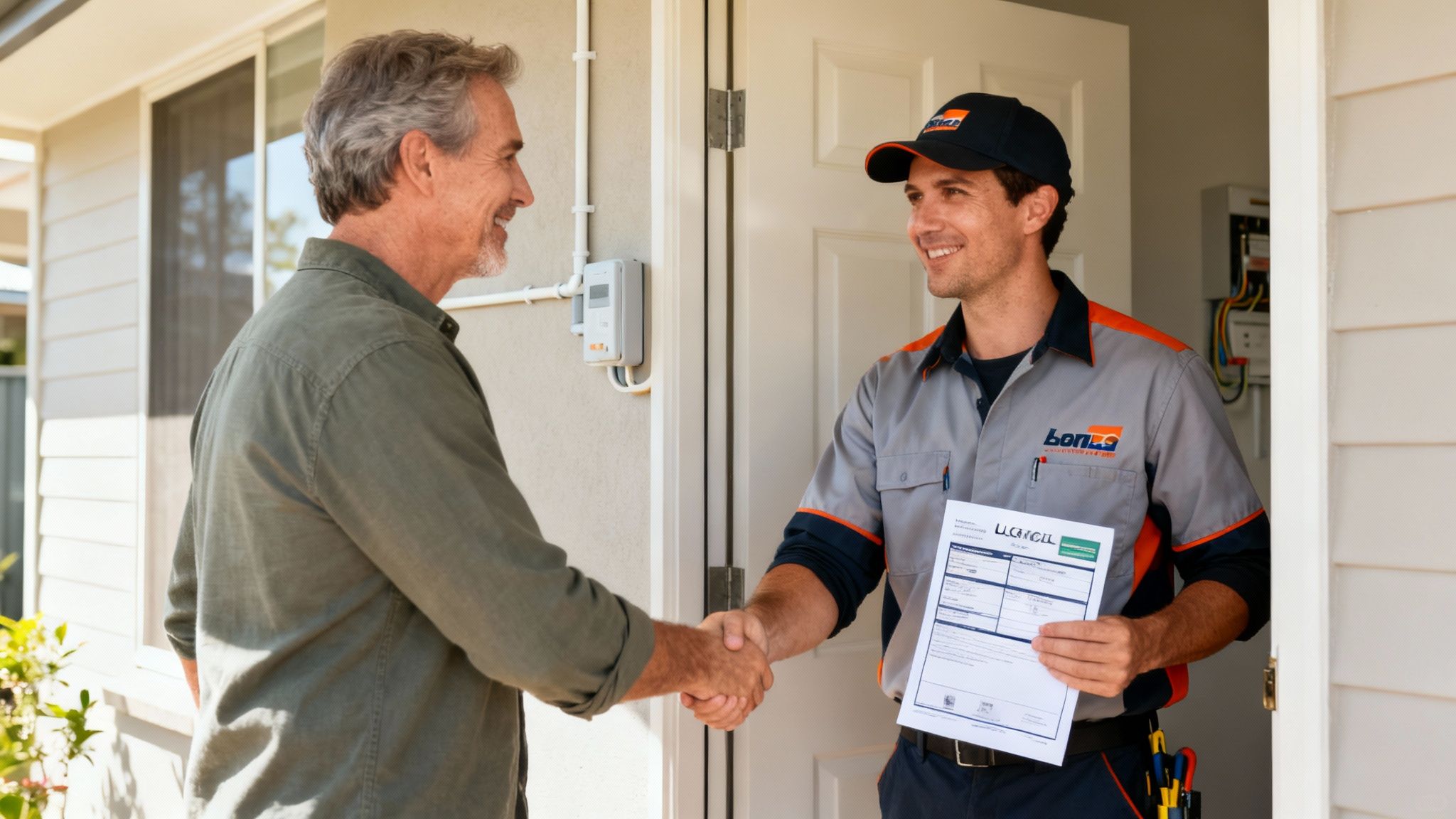
Choosing the right electrician is hands-down the most critical step in making sure any electrical work on your home is safe, compliant, and done to a high standard. In Brisbane, our safety regulations are strict for a reason—to protect homeowners. You need a professional you can genuinely trust.
This isn’t about finding the lowest price; it’s about having confidence that the job is done right, avoiding future headaches and hazards. A reliable sparkie doesn’t just fix a problem. They give you the peace of mind that your home’s electrical system is secure for your family.
Before you even think about discussing the job, your number one priority is to confirm the electrician holds a valid Queensland Electrical Contractor Licence. This isn’t just a piece of paper; it’s your guarantee that they are qualified, insured, and legally allowed to run an electrical business and work on your property.
It’s easy to check a licence number on the Electrical Safety Office (ESO) Queensland’s public register. A quick search confirms their credentials are up to date and that they meet the state’s tough safety and competency standards.
An electrical contractor licence means the business is authorised to carry out electrical work. The individual electricians they employ will also hold their own personal electrical licences, proving their technical qualifications. Always hire a licensed contractor, not just an individual with a personal licence.
Once you’ve confirmed their licence, it’s time to dig a bit deeper. Any professional electrician will be more than happy to answer your questions and show you the paperwork to back up their claims.
Here’s a quick checklist of questions to ask any potential residential electrical services Brisbane provider:
For a bit more guidance, our detailed article on choosing the right Brisbane electrician offers a few more helpful tips.
Online reviews are a fantastic tool, but you need to read them with a critical eye. Don’t just glance at the star rating; dive into what people are actually saying to spot the patterns.
Look for reviews that mention specifics like:
Authentic, detailed feedback that touches on these points is a far better indicator of a great tradesperson than a simple five-star rating with no comment. Taking these steps will help you hire an electrician who will keep your home safe and powered correctly for years to come.
When it comes to your home’s wiring, it’s natural to have a few questions. Getting straight answers is key to making smart decisions and keeping your property safe. We get asked a lot about home electrics, so we’ve put together some of the most common queries we hear from Brisbane homeowners.
Think of this as a quick guide to being proactive about your home’s electrical health, rather than just waiting for something to go wrong. Let’s dive in.
For most Brisbane homes, a professional electrical inspection every five years is a solid rule of thumb. This is especially critical for older houses, where original wiring can start to degrade and may not meet current Australian Standards. If it’s been a while, it’s time for a check-up.
We also strongly recommend getting a full inspection done before you buy a new home, after any major renovations, or if you’ve been through a significant event like a flood. A qualified electrician will assess everything from your switchboard and safety switches to your outlets and wiring, spotting potential hazards before they become serious problems.
Absolutely. Setting up smart home systems has quickly become a core service for experienced Brisbane electricians. It’s not just about fixing things anymore; it’s about integrating smart lighting, automated blinds, security cameras, and voice-controlled hubs into your home’s electrical DNA.
This isn’t a niche luxury anymore—it’s a common feature in modern homes. The key is to work with an electrician who actually specialises in this area. They’ll ensure the installation is safe and everything talks to each other correctly, giving you a seamless system that just works.
Choosing a professional for smart home setup is crucial. They don’t just connect devices; they ensure the underlying electrical infrastructure can safely support the increased load and digital communication, preventing future glitches and safety issues.
First thing’s first: your safety is the priority. If you see smoke, sparks, or fire, or if someone has received an electric shock, call 000 immediately. Don’t hesitate. If you can do it safely, go to your switchboard and turn off the main power switch to cut the electricity to the house.
For urgent but less life-threatening issues—like a sudden power outage, a weird burning smell, or a crackling noise from a power point—you should still kill the power at the main switch and call a 24-hour emergency electrician. Never try to fix an emergency electrical issue yourself. The risks are just too high.
You might hear the term “Level 2 Electrician” thrown around, but that’s mainly a New South Wales thing. Here in Queensland, the structure is different. For any electrical work that happens inside your property line, you need to hire a licensed Electrical Contractor. This is the business that is fully licensed, insured, and authorised to work on your home.
For bigger jobs that involve the power grid itself—like connecting your home to the street-level network or working on overhead power lines—an electrician needs special authorisation from the network provider, like Energex. Always double-check that your sparkie has the right credentials for the job at hand.
At DLG Electrical, we’re committed to providing safe, reliable, and compliant residential electrical services that Brisbane homeowners can count on. From routine safety checks to urgent emergency repairs, our licensed team is here to help. For a free quote or to chat about your needs, contact us today.

Master Electrician with over 30 years of experience. Founded DLG Electrical in 2005 after international project work including electrical installations at Stamford Bridge Stadium, London(Home of Chelsea FC).

Local Electricians that can fix all Electric Hot water Systems.
Motion sensor lights are a versatile addition to any home, offering nu
