83 Jean St, Grange QLD 4051
Mon-Fri 07:30 AM - 04:00 PM - Sat - 8:00 - 12 - Sunday Closed
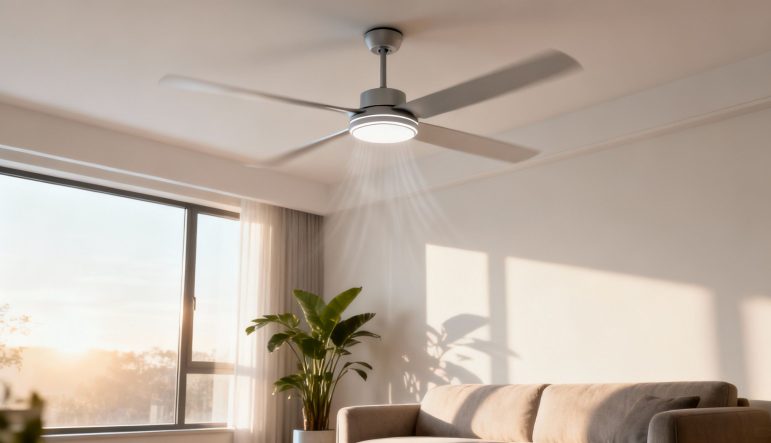
Think of a modern ceiling fan as more than just a fixture; it's one of the smartest upgrades you can make for year-round comfort, style, and energy efficiency. Fans work hand-in-hand with your air conditioner in summer and your heating in winter, helping to significantly cut down your energy bills. It’s a simple, cost-effective improvement that pays dividends long after installation.
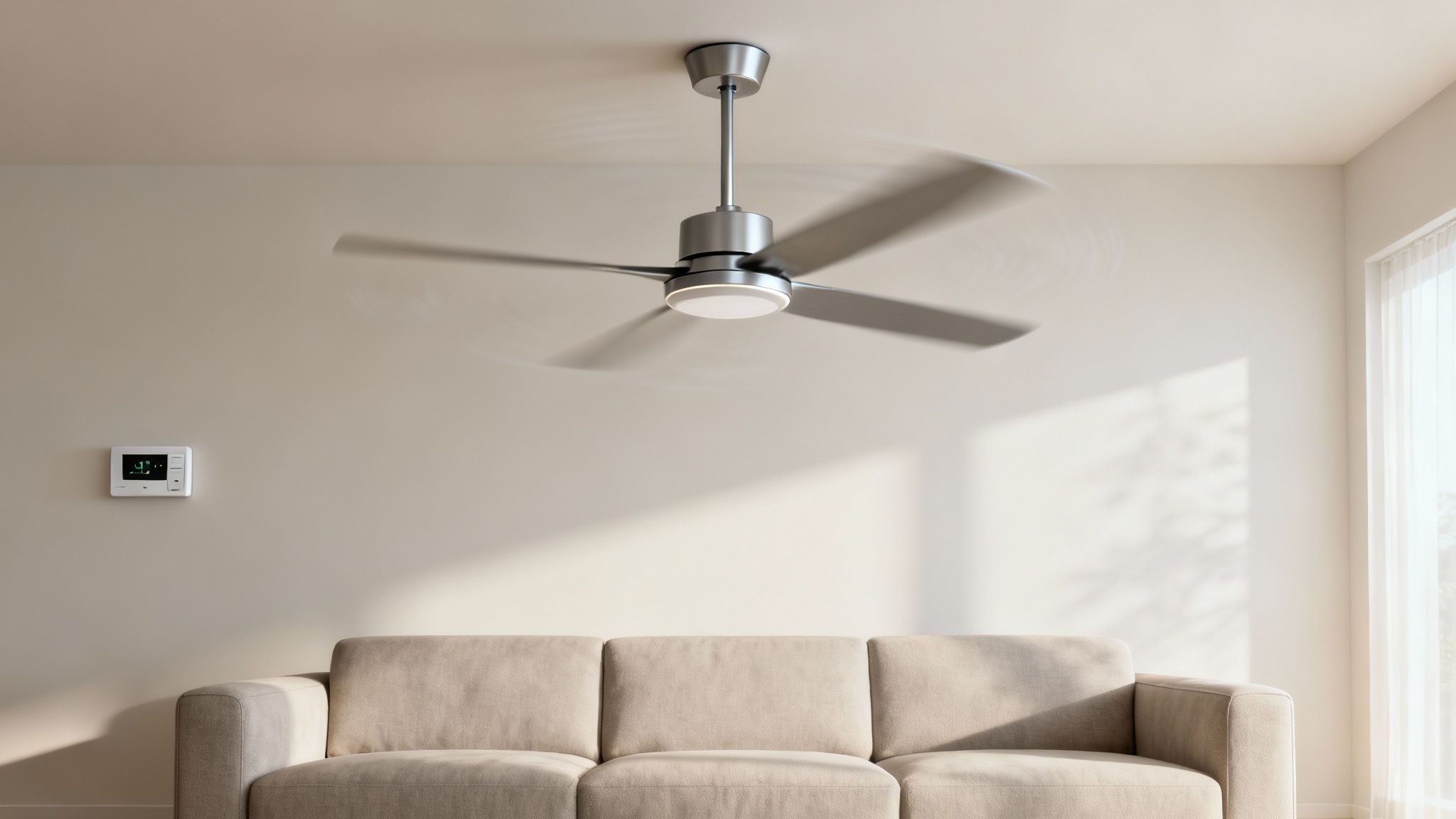
When that brutal Brisbane summer heat arrives, the first instinct for most of us is to blast the air conditioner. While it certainly cools things down, it also sends your power bills through the roof. A ceiling fan offers a much smarter, more efficient way to stay comfortable without the massive energy draw.
The magic is in the "wind-chill" effect. A fan's gentle breeze moves air across your skin, which speeds up moisture evaporation and makes you feel several degrees cooler, even though the actual room temperature hasn't dropped. This simple trick lets you ease up on the air con, bumping the thermostat up a few degrees while saving a bundle on energy costs.
But a ceiling fan isn't just a summer hero. Most modern fans come with a reverse switch, which changes the blade direction to clockwise. In winter, this gentle updraft pulls cool air upwards and pushes the warm air—which naturally rises and pools near the ceiling—back down into the room where you can actually feel it. This helps your heating system work far more efficiently, keeping you toasty without needing to crank the thermostat.
Let’s look at the numbers:
When used with your air conditioner, a ceiling fan can slash your summer cooling costs by up to 40%. It lets you raise your thermostat by about four degrees without sacrificing any comfort.
Gone are the days when a ceiling fan was a purely functional, and often clunky, appliance. Today, it’s a design statement that can anchor a room’s entire look. You can find everything from sleek, minimalist models that disappear into a modern ceiling to rustic timber-blade designs perfect for a coastal or farmhouse vibe.
A stylish fan elevates both the look and feel of your home, proving it’s an investment in design as well as comfort. It's just one piece of the puzzle; homeowners often explore smart home security devices to create a fully integrated and comfortable living space.
Today's ceiling fans are worlds away from the noisy, wobbly models of the past. Modern fans are quiet, incredibly efficient, and packed with smart features that genuinely make life easier. Forget the old days of a single pull-chain; the new breed offers a level of control that can transform your home's comfort.
The biggest leap forward is in the motor technology. What’s under the hood is the single biggest factor determining how much energy your fan uses, how quiet it is, and what it can do. Understanding the difference is your first step to making a smart choice.
Think of the difference between an old AC (Alternating Current) motor and a modern DC (Direct Current) motor like comparing a clunky old V8 to a smooth, efficient hybrid engine. An AC motor is a reliable workhorse, sure, but it’s bulky, chews through power, and usually only gives you three speeds—low, medium, and high. It gets the job done, but without much finesse.
A DC motor, on the other hand, is a game-changer. It uses magnets and clever electronics to convert power far more efficiently. The result? A motor that’s not just smaller and lighter but also uses up to 70% less energy than its AC cousin. That efficiency translates directly into lower running costs on your power bill.
On top of that, DC motors offer a much wider range of speeds, often giving you five or six settings. This means you can dial in the perfect amount of airflow, from a whisper-quiet breeze for sleeping to a powerful downdraft to tackle a scorching Brisbane afternoon. They’re also virtually silent, so you can finally get rid of that annoying hum that older fans are famous for. For a deeper dive, you can explore the differences between DC and AC fans in our detailed guide.
Beyond the motor, the next giant leap is smart technology. This is where real convenience meets efficiency, letting you control your home’s climate with incredible ease. A smart ceiling fan simply connects to your home's Wi-Fi, unlocking a whole suite of powerful controls right from your phone.
Smart fans aren't just a gimmick anymore; they're quickly becoming a standard feature for homeowners who want better control and smarter energy use. They put you in charge of automating your comfort and keeping a close eye on your power consumption.
Imagine asking Google or Alexa to turn up the fan speed while your hands are full. Or scheduling your fan to kick in 30 minutes before you get home from work, so you always walk into a cool, comfortable house. That’s not futuristic—that's what modern smart fans deliver today.
These features are more than just a novelty. They let you adjust the fan speed, set timers, and even track how much energy you’re using through an app. It's this kind of practical control that has driven the huge growth in the smart fan market, giving you powerful tools to manage your home's energy use.
When you're shopping for a smart ceiling fan, a few key features deliver the most bang for your buck in daily use.
By embracing these tech upgrades, the humble ceiling fan has evolved from a simple appliance into a sophisticated tool for managing your home’s climate. Choosing a model with a quiet, efficient DC motor and smart capabilities ensures you get the most comfort, convenience, and energy savings possible from your investment.
Picking out a ceiling fan isn't just about what looks good on the showroom floor. It's a bit of science mixed with a dash of style, and getting it wrong is one of the most common mistakes we see. A fan that’s the wrong size can lead to poor airflow, annoying wobbles and noises, and a room that just never feels quite right. The real goal is to find a fan that moves air efficiently without looking like it's about to take off.
Think of it like buying speakers for a room. You wouldn't put tiny bookshelf speakers in a massive hall and expect great sound, nor would you cram a giant concert stack into a tiny study. It’s the same principle with ceiling fans—the size has to be proportional to the space to create that perfect, gentle breeze.
This is where blade span becomes the most important factor. It's measured from the tip of one blade straight across to the tip of the opposite blade, and it’s the best indicator of a fan's cooling power. A bigger fan can move more air while spinning at a lower, quieter speed, making it far more effective and energy-efficient than a small fan whirring away on its highest setting.
Getting the blade span right is the first and most critical step. A fan that's too small for the room will struggle to push air around, leaving you with frustrating hot spots. On the flip side, a fan that's way too big can create an unpleasant, windy tunnel effect.
This visual guide is a great starting point for matching your room's dimensions to the ideal fan size.
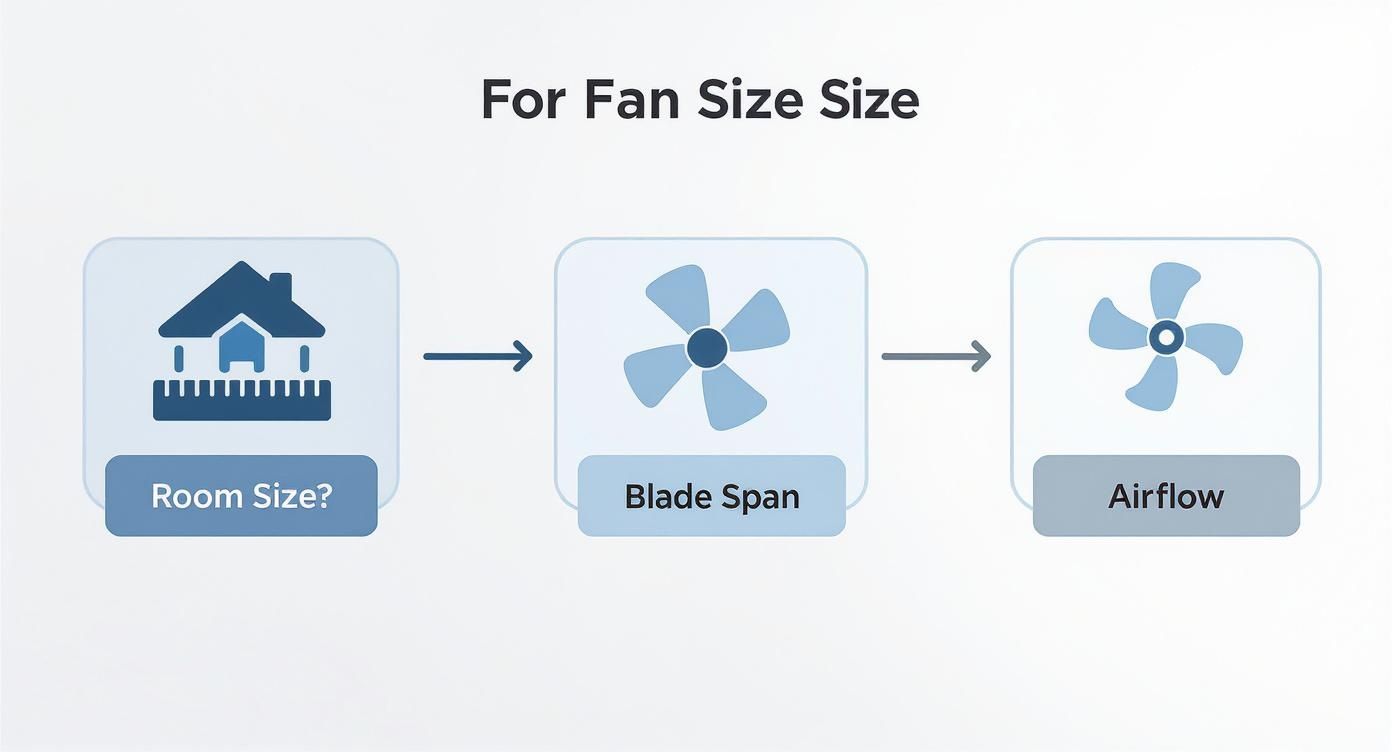
As you can see, getting the size right ensures you get that consistent, comfortable airflow without wasting energy. It's all about moving the maximum amount of air with the minimum amount of effort.
Here’s a quick reference to get you started:
Need more detailed advice? We’ve put together a comprehensive ceiling fan size guide that dives deeper into the specific measurements and recommendations.
To make it even easier, here's a quick reference table to help you choose the right ceiling fan blade span based on your room's dimensions. This ensures you get the best possible airflow and efficiency.
| Room Size (Square Metres) | Recommended Blade Span (cm) |
|---|---|
| Up to 10 | 91-107 |
| 10 to 20 | 122-132 |
| Over 20 | 137 or more |
This table serves as a solid starting point, but remember to also consider ceiling height and room shape for the perfect fit.
The distance from the fan blades to the floor is just as crucial as the blade span. For safety, the blades must be at least 2.1 metres off the ground. But for the best performance, the ideal height is somewhere between 2.4 and 2.7 metres.
For homes with standard 2.7-metre ceilings, a flush-mount or "hugger" style fan is usually the way to go. These designs sit tight against the ceiling, maximising your headroom while still moving air effectively.
If you’re blessed with high or angled ceilings, a standard fan just won’t do the job. It will be mounted too high up to create a noticeable breeze down where you live. The fix for this is a downrod—an extension pole that lowers the fan into that optimal airflow zone. Calculating the length is straightforward: take your ceiling height, subtract the ideal fan height (around 2.7m) and the height of the fan motor itself, and that’s the downrod length you need.
Okay, once you've nailed the technical specs, you get to the fun part: how it looks. A ceiling fan should feel like a natural part of the room, not an industrial afterthought that sticks out like a sore thumb. A great tip is to choose a fan that blends in with your ceiling for a clean, subtle look.
One last thing to think about is a light. Many fans come with an integrated light, which can be really convenient. If you go this route, choose a model with a single, simple light source. Try to avoid fans with ornate glass shades or multiple bulbs—they can date a room very quickly and draw too much attention. Remember, the goal here is function and flow, not a flashy centrepiece.
So you’ve found the perfect ceiling fan. The temptation to grab the tools and save a few dollars with a DIY install can be pretty strong. But hold on—this is one of those home projects where cutting corners isn't just a bad idea; it’s genuinely dangerous.
Installing a ceiling fan involves a tricky mix of electrical wiring and heavy structural loads. It’s a job that should be left strictly to the pros. Trying to install it yourself is a gamble with your home's safety. Get the wiring wrong, and you’ve got a serious fire hazard. Fail to secure it properly, and you could have a heavy, spinning appliance falling from the ceiling. It’s simply not worth the risk.
In Australia, hiring a licensed electrician for a ceiling fan installation isn't just a recommendation—it's a legal requirement. These professionals have the training to handle live wiring safely, ensure every connection is solid, and make certain the whole setup complies with our strict national standards.
Ceiling fan installations, particularly for ceilings 2.4 metres or higher, are regulated to protect homeowners from the very real risks of electrical work. It's all about ensuring the job is done right and everyone stays safe.
Plus, there's another angle to consider. A professional installation protects your manufacturer's warranty and your home insurance policy. Both can be voided by uncertified electrical work, leaving you exposed if something goes wrong down the track.
A ceiling fan isn't like a standard light fitting. It's a heavy, moving appliance that creates constant vibration and force. A typical fan can weigh anywhere from 7 to 23 kilograms, and that’s before you factor in the torque it generates while spinning.
For this reason, you can't just screw it into the plasterboard or attach it to a standard junction box designed for a lightweight pendant. Those fittings were never designed to handle that kind of load.
A professional electrician will never take a shortcut here. They’ll either install a dedicated ceiling fan brace between the ceiling joists or mount the fan directly to a joist. This creates a rock-solid anchor point that can safely support the fan's weight and operational forces for years to come.
Without that proper support, the fan will inevitably start to wobble and make noise. Eventually, it could even pull itself free from the ceiling.
Knowing what a proper installation looks like helps you have a confident conversation with your electrician. Here’s a rundown of what a professional from DLG Electrical will do:
Because installing a ceiling fan involves similar electrical principles to other fixtures, this guide on how to install light fixtures safely offers some useful related insights. When you entrust your ceiling fan installation to a professional from DLG Electrical, you’re guaranteeing a safe, compliant, and perfectly functioning addition to your home.

A little bit of care goes a long way in keeping your ceiling fan running quietly and efficiently for years. Just like any other appliance, regular maintenance is the key to longevity and performance. Thankfully, keeping your fan in top shape is surprisingly simple.
This basic upkeep can head off common issues like wobbling, strange noises, and poor airflow before they turn into real headaches. A clean, well-maintained fan doesn't just look better—it works better, too.
A great habit to get into is performing a quick check-up twice a year, usually when you switch the fan’s direction for summer and winter. This proactive approach ensures everything is secure, clean, and ready to go, seriously extending the life of your unit.
Here’s a simple checklist to run through:
A common myth is that ceiling fan motors need regular oiling. The truth is, most modern fans, especially those with DC motors, have sealed bearings. They’re designed to be maintenance-free and require no lubrication for their entire lifespan.
Even with the best care, you might run into an issue now and then. Before you reach for the phone, many common problems have simple fixes you can investigate yourself.
Problem 1: The Fan Is Wobbling
A wobbly fan isn't just distracting; it puts unnecessary strain on its mounting hardware. The culprit is almost always an imbalance, usually from dirty blades or loose screws.
Problem 2: The Fan Is Making Strange Noises
A gentle hum is normal, but any clanking, grinding, or loud buzzing is a clear sign that something’s not right.
If you've run through these checks and your fan is still acting up, it’s time to stop troubleshooting and call in the experts. For any complex issues—especially strange noises or electrical problems—the safest bet is to have a licensed electrician from DLG Electrical diagnose and fix it properly.
Even after covering all the bases on styles, sizes, and features, you probably still have a few questions rattling around. That’s perfectly normal. This is where we tackle the most common queries we get from Brisbane homeowners, giving you clear, straight-up answers to help you lock in your decision.
Think of this as the final piece of the puzzle. We’re moving past the brochure specs and getting into the real-world details of owning and using a ceiling fan day-to-day.
This is the big one, and the answer is usually a pleasant surprise. While the exact usage depends on the motor and speed, the difference between a fan and an air conditioner is just massive.
A modern DC motor ceiling fan running flat out might use around 30 watts. On a low, lazy spin, that can drop to just 4 or 5 watts. Now, compare that to a typical reverse cycle air conditioner, which can chew through anywhere from 2,000 to 5,000 watts every hour.
Let’s put that in real terms:
The bottom line is pretty simple: you could run a ceiling fan for an entire day for less than it costs to run your air con for a single hour. This incredible efficiency is exactly why they’re making such a huge comeback.
While it’s incredibly cheap to run, remember that a ceiling fan cools people, not rooms. The cooling effect comes from the air moving across your skin—what’s known as the wind-chill effect. If there’s no one in the room to feel that breeze, the fan is just spinning away, using power for no real benefit.
The best habit to get into is to only run the fan when you're in the room. Treat it just like a light switch: on when you enter, off when you leave. A lot of the new smart fans make this even easier with timers and app controls, so you can have it switch on just before you walk in the door.
Absolutely. This is probably the most overlooked feature of a modern ceiling fan. When the cooler months roll around, you just need to flick the switch to reverse the fan’s direction, so the blades spin clockwise.
Instead of pushing air down, this motion gently pulls the cooler air up towards the ceiling. Doing this displaces all the warm air that has naturally risen and pooled up high, pushing it back down the walls and into the room where you can actually feel it. The result is a much more evenly heated space, which means your heater doesn't have to work as hard, and you can often turn the thermostat down a notch.
A good quality ceiling fan should give you a solid 10 to 15 years of service, sometimes even longer if you look after it. But like any appliance, they don’t last forever. There are a few clear signs that it might be time for an upgrade or a call to DLG Electrical for a repair.
Keep an eye (and an ear) out for these tell-tale signs:
It’s not your imagination; you’re seeing more ceiling fans everywhere, and for good reason. The Australian ceiling fan market is growing steadily, reflecting a big shift in how we think about energy efficiency at home. In 2024, the market was valued at around USD 220.38 million and is expected to climb to USD 265.07 million by 2030. If you want to dive into the numbers, you can read the full research about the Australian ceiling fan market.
This growth is driven by people like you—homeowners looking for practical ways to cut their power bills and reduce their environmental impact without sweltering through summer. With super-efficient DC motors and smart home features now standard, the humble ceiling fan has become an essential part of modern, comfortable living.
Ready to upgrade your home with a stylish and energy-efficient ceiling fan? The expert team at DLG Electrical provides professional, safe, and compliant installation services across Brisbane. From helping you choose the right model to ensuring a flawless, wobble-free setup, we handle every detail so you can enjoy the benefits right away. Contact us for a free quote and discover why we are Brisbane's trusted electrical solution. Learn more about our services at https://dlgelectrical.com.au.

Master Electrician with over 30 years of experience. Founded DLG Electrical in 2005 after international project work including electrical installations at Stamford Bridge Stadium, London(Home of Chelsea FC).

Local Electricians that can fix all Electric Hot water Systems.
Motion sensor lights are a versatile addition to any home, offering nu
